The Books of Samuel · The Roof, the Letter and the Parable
He passed the sentence himself.Out loud. In front of everybody.
This is the ugliest thing David ever does, and it is told with extraordinary restraint — a face on a roof, a hand on a parapet, a sealed letter walking away down a corridor. Then a year of silence, and an old prophet with a story about a poor man's lamb. Every scene below is a real frame from our animated film.
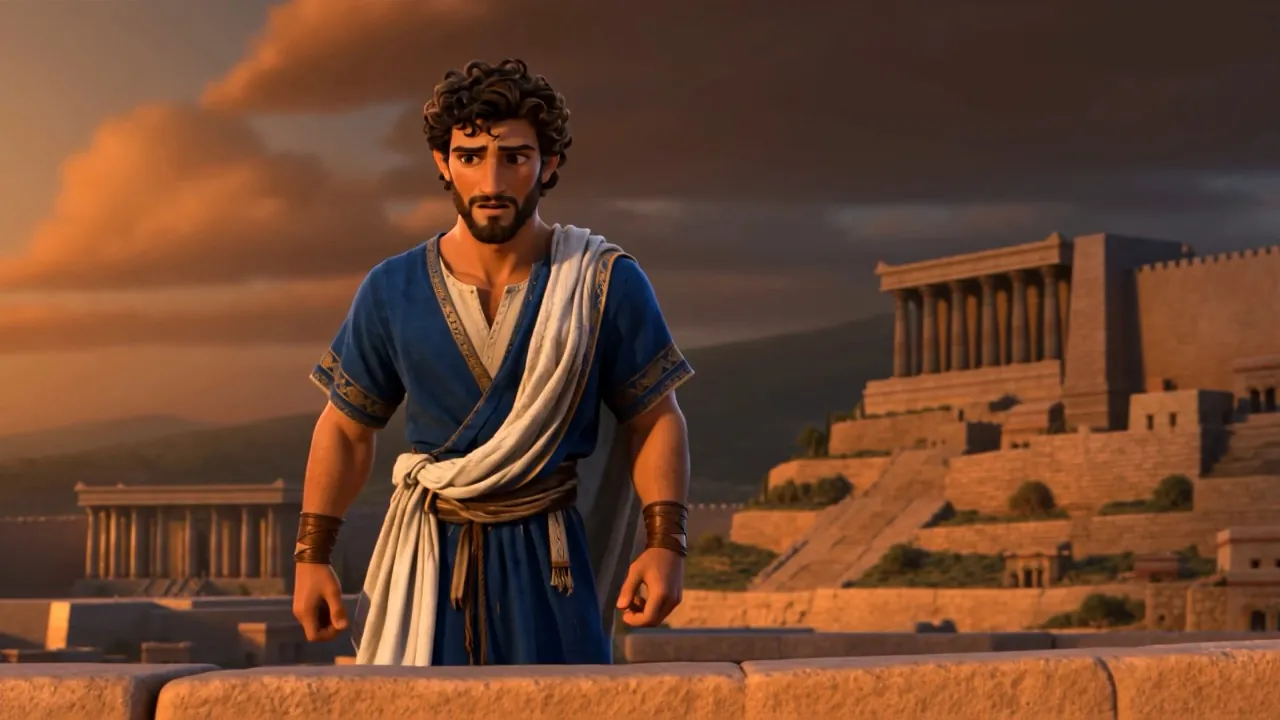
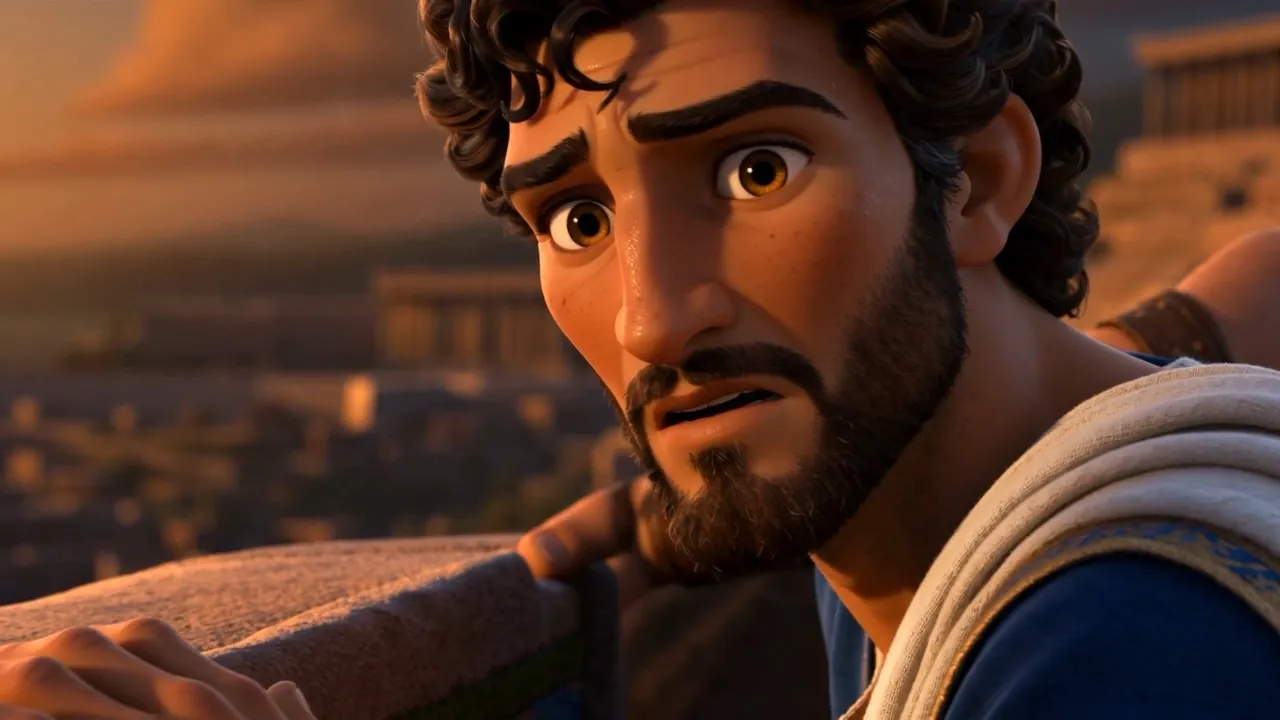

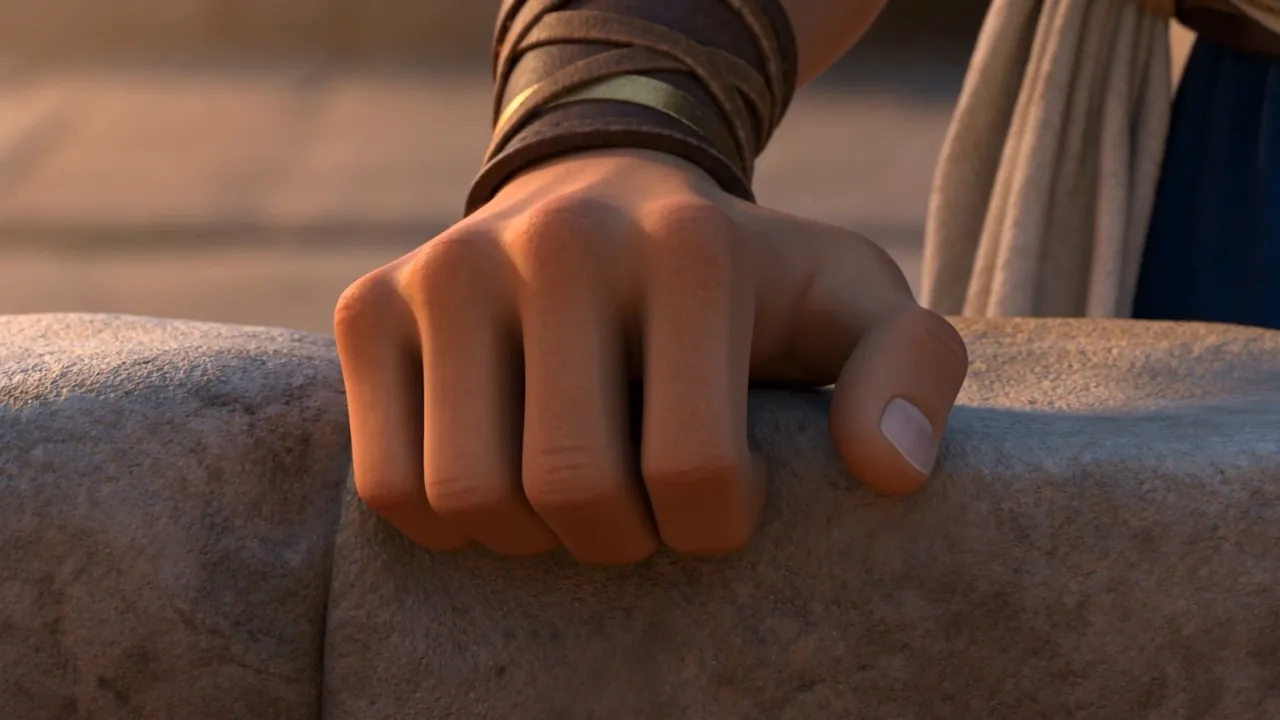
At the time when kings go out to battle… David stayed at Jerusalem. That sentence is the hinge of the whole book. He is at the top of everything now: the wars are being won by other people, the kingdom is settled, and for the first time in his life there is nothing he urgently has to do. So he walks on the roof in the evening. And a hand tightens on the parapet. 2 Samuel 11 : 1–2
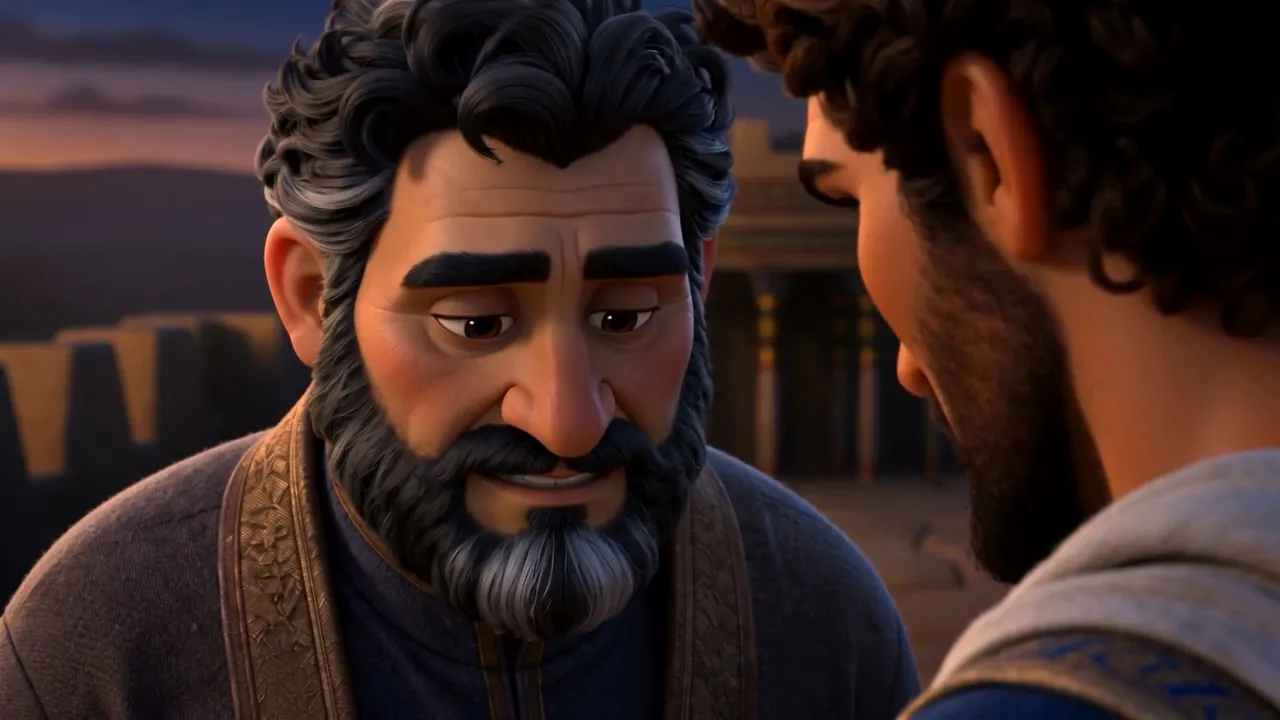

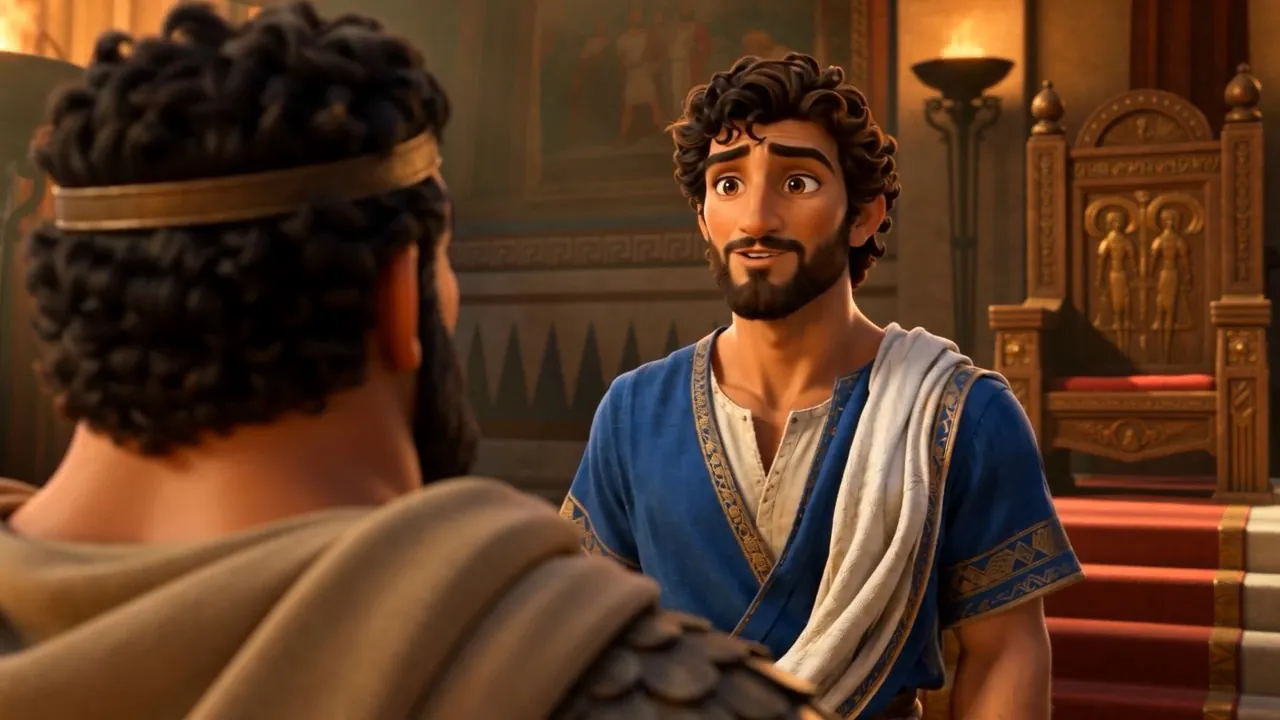
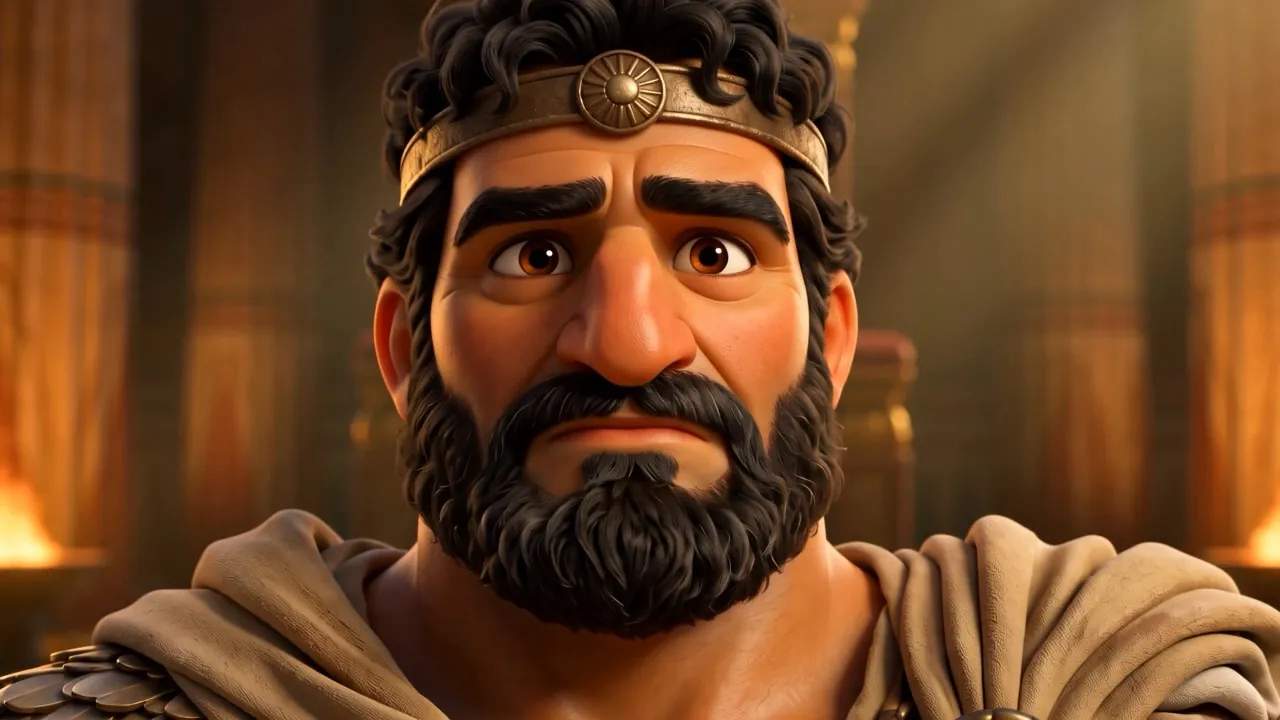
And he was told. A servant comes back with the answer, and it is not just a name — it is a warning bell with three clappers. She is somebody's daughter. She is somebody's wife. And her husband is Uriah the Hittite, one of David's own Thirty, who slept in the caves with him when he had nothing. Every fact in that sentence is a reason to stop. He sends anyway. 2 Samuel 11 : 3–4
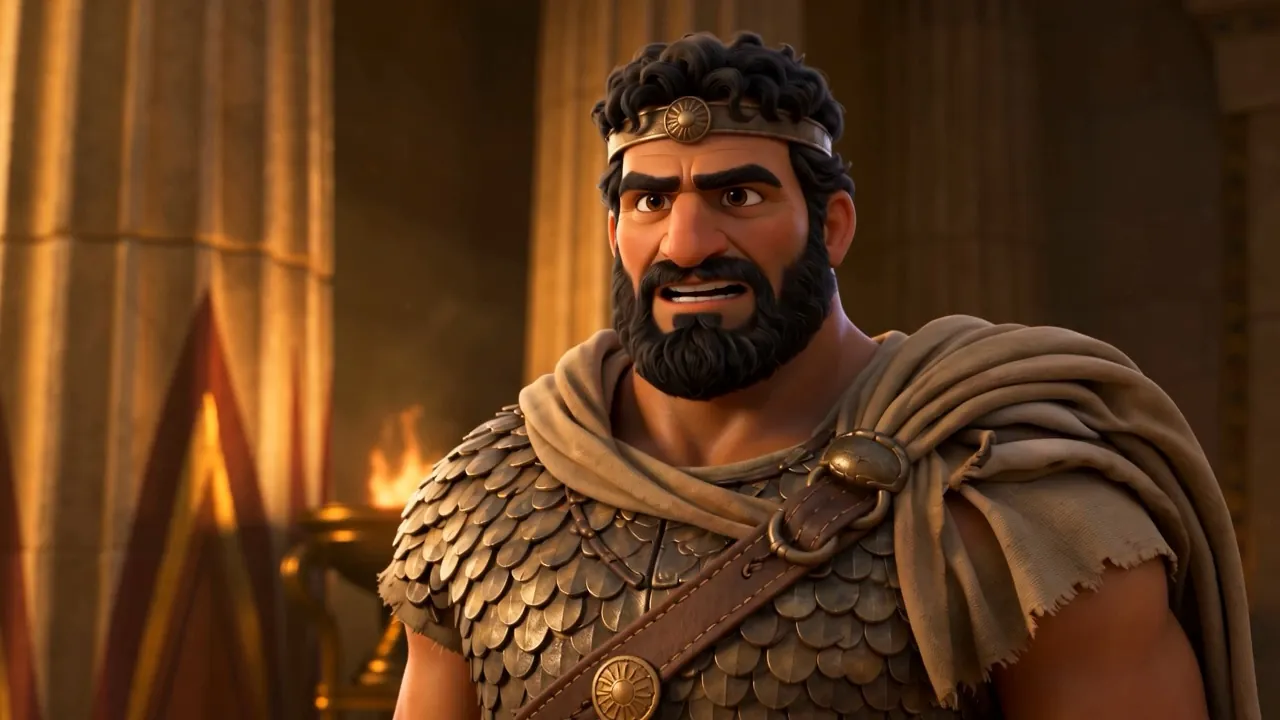
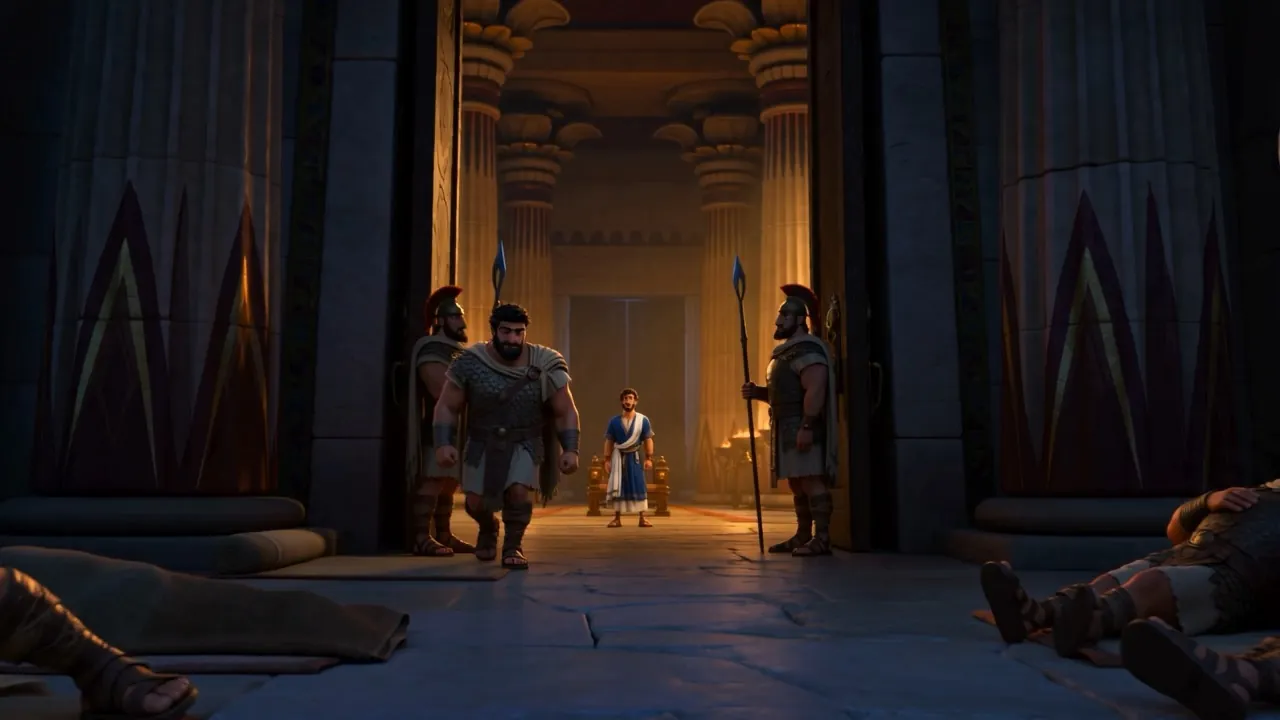
Then the part that should have stopped him, and nearly does. He calls Uriah home from the siege and tells him to go and spend the night with his wife. And Uriah will not. He sleeps at the palace door with the servants, and when the king asks why, he says: the ark, and Israel, and Judah are staying in tents… shall I then go into my house? The foreign soldier has more reverence than the king. 2 Samuel 11 : 6–11
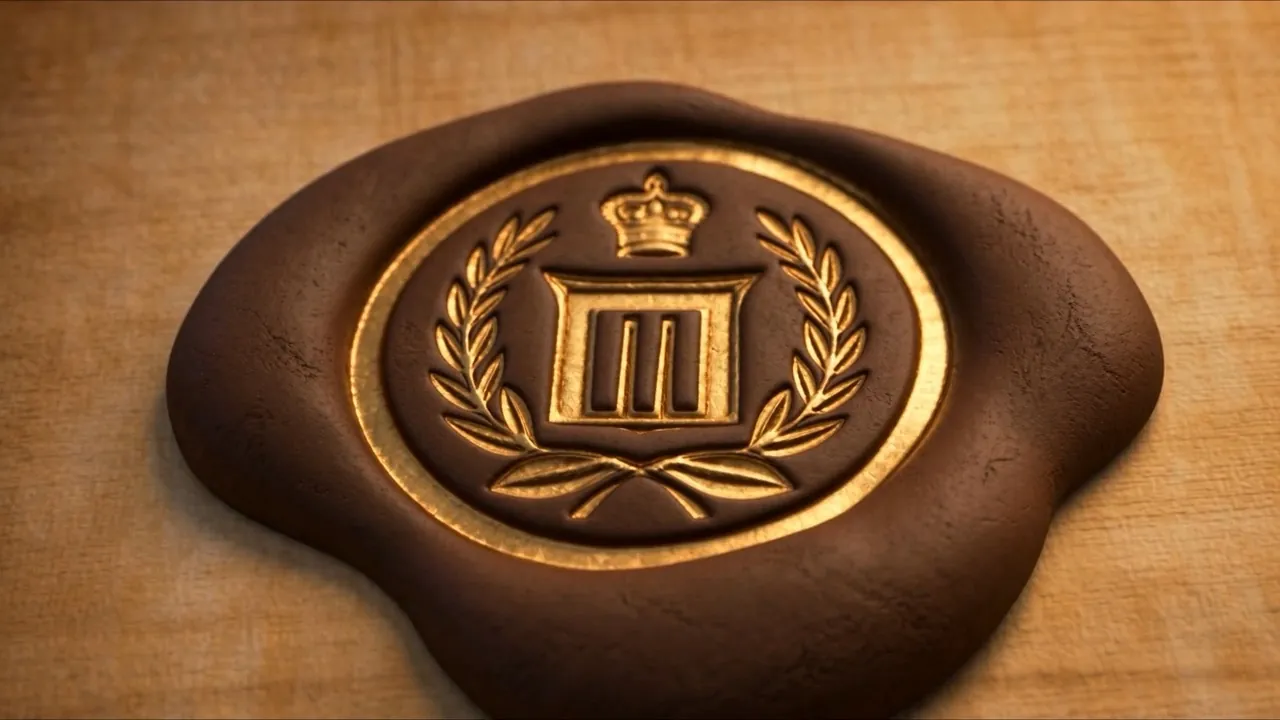

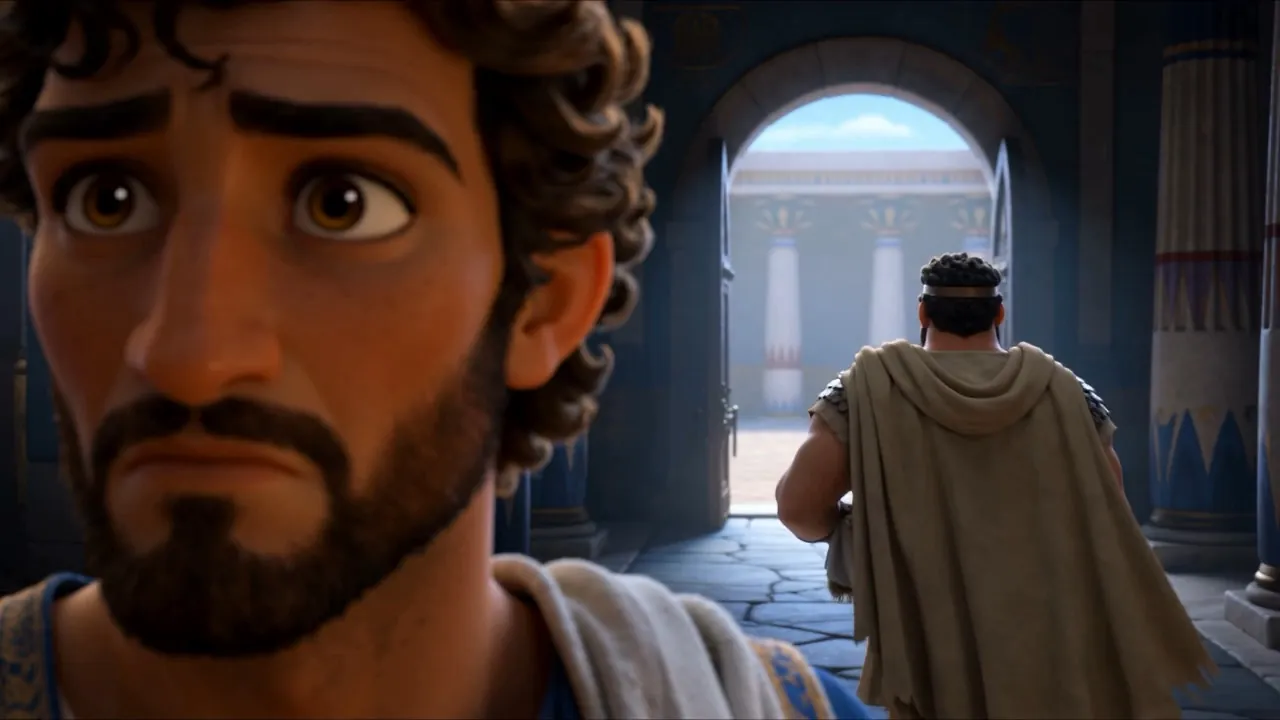
When decency will not solve his problem, David solves it the other way. He writes a short note to his commander at the siege — put Uriah where the fighting is fiercest, then pull back from him — seals it, and hands it to Uriah to carry. And the king watches his own soldier walk the length of the hall and out into the light, carrying the letter that arranges his death. 2 Samuel 11 : 14–15
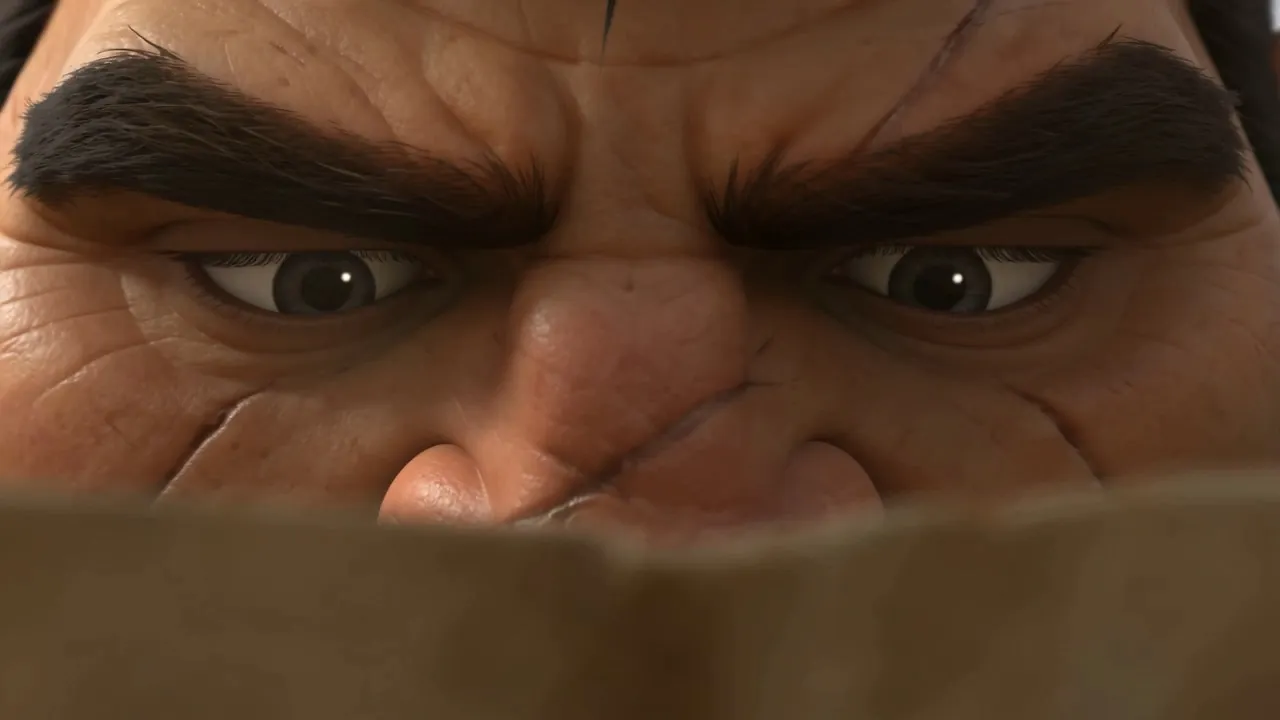
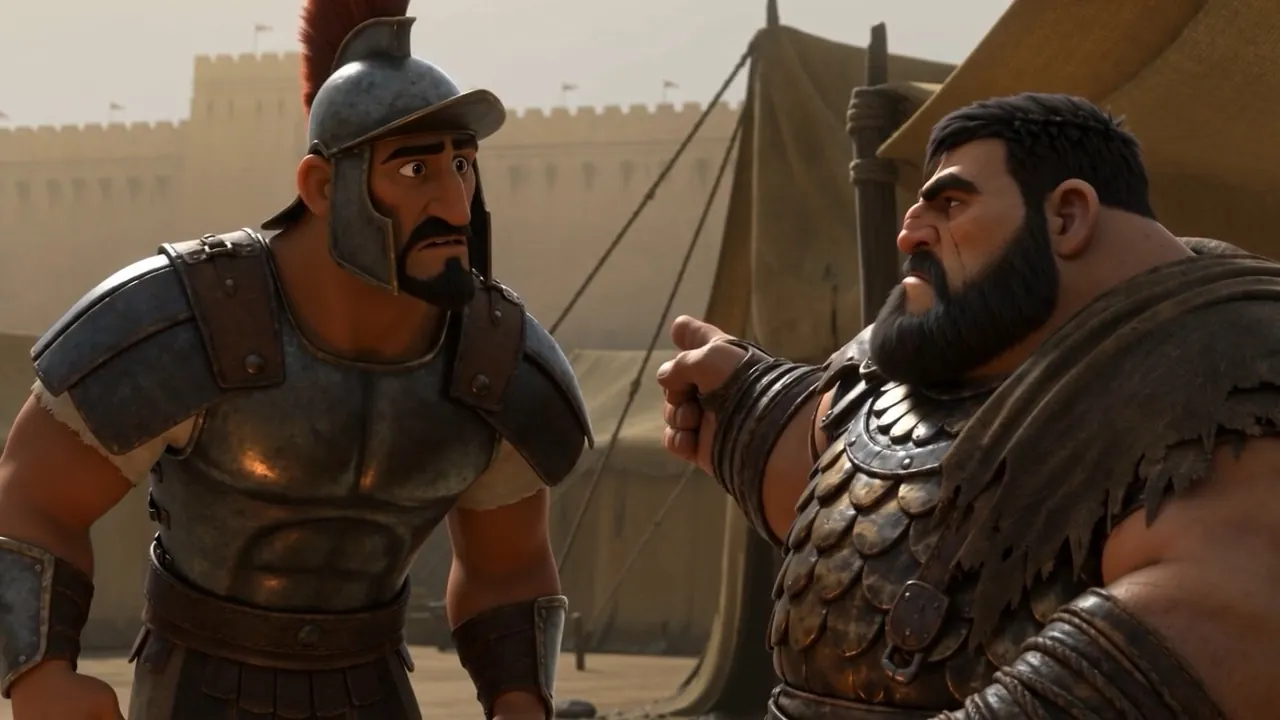
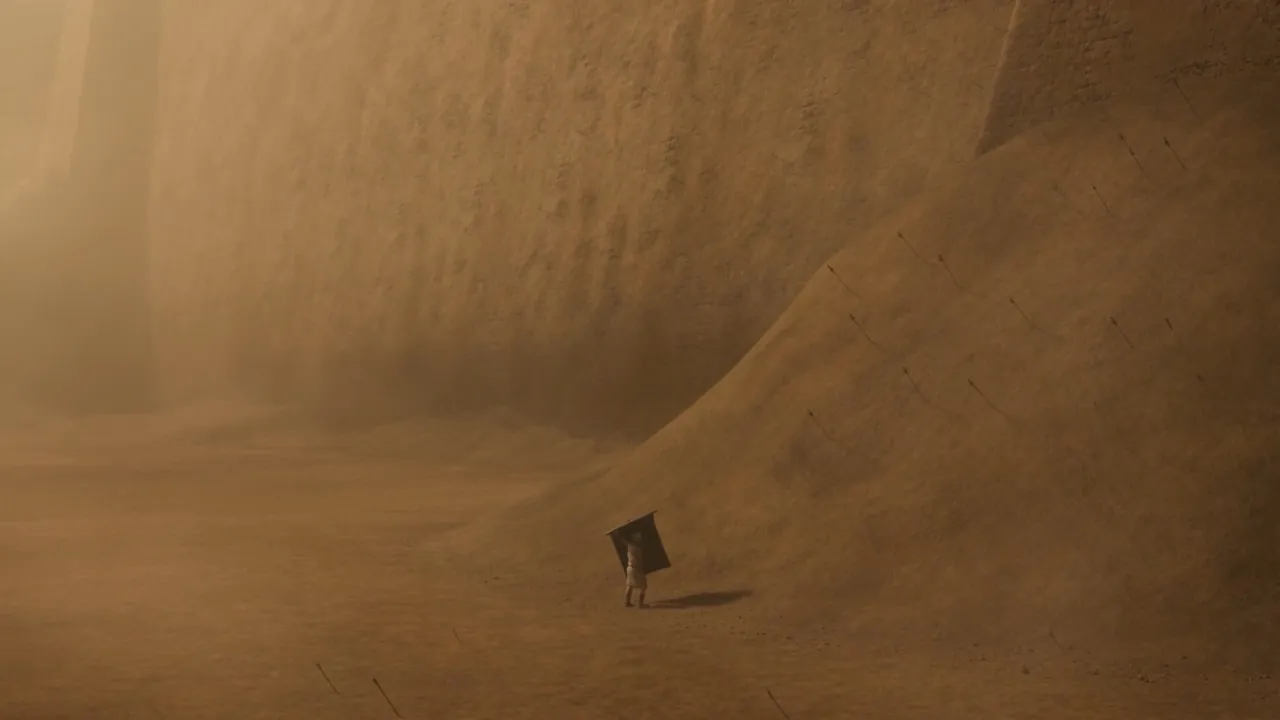
The messenger comes back with the casualty list and the one line David is waiting for at the end of it. And the king sends back a sentence that shows how far down he has gone: do not let this thing displease you, for the sword devours one as well as another. Then he waits a decent interval and marries the widow. It is tidy. Nobody knows. But the thing displeased the LORD. 2 Samuel 11 : 18–27
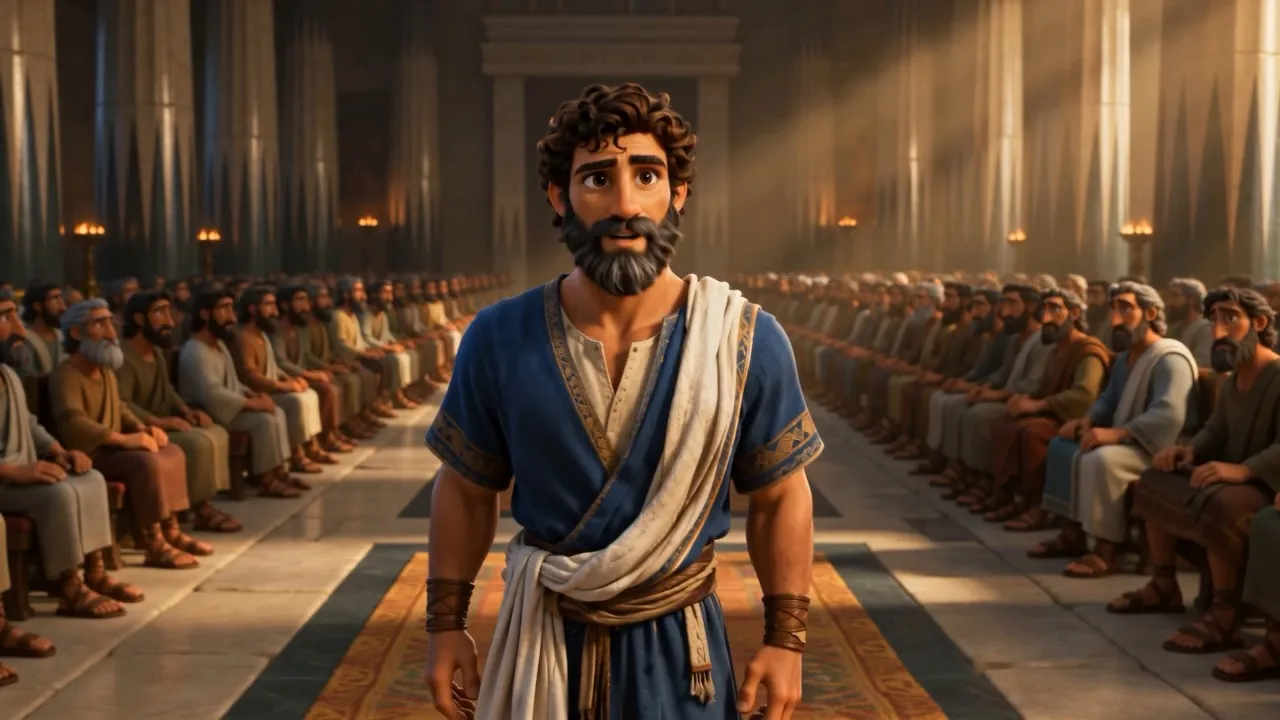
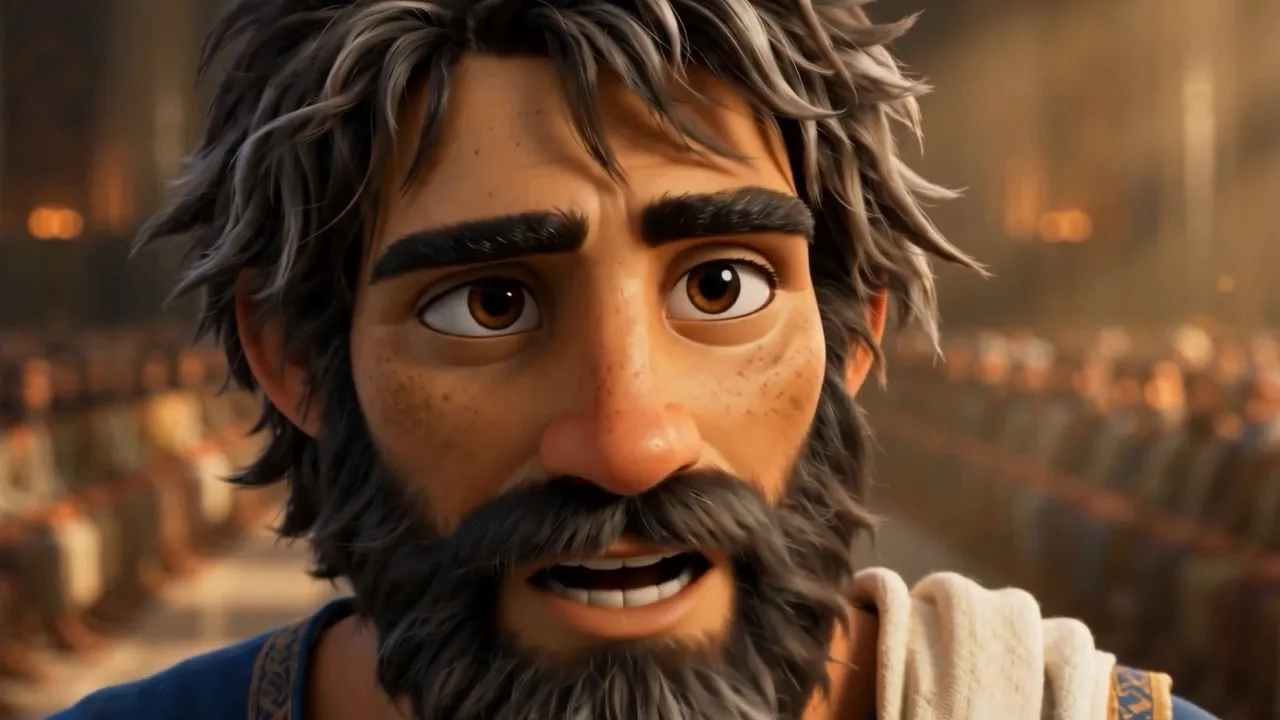

About a year goes by. Nothing happens. The king holds court, hears cases, runs a kingdom. And then Nathan walks up the middle of the throne hall — and does not accuse anybody of anything. He asks for a judgment on a legal matter, which is exactly what a king is for. There were two men in one city; one rich, and one poor. David settles back to listen. 2 Samuel 12 : 1
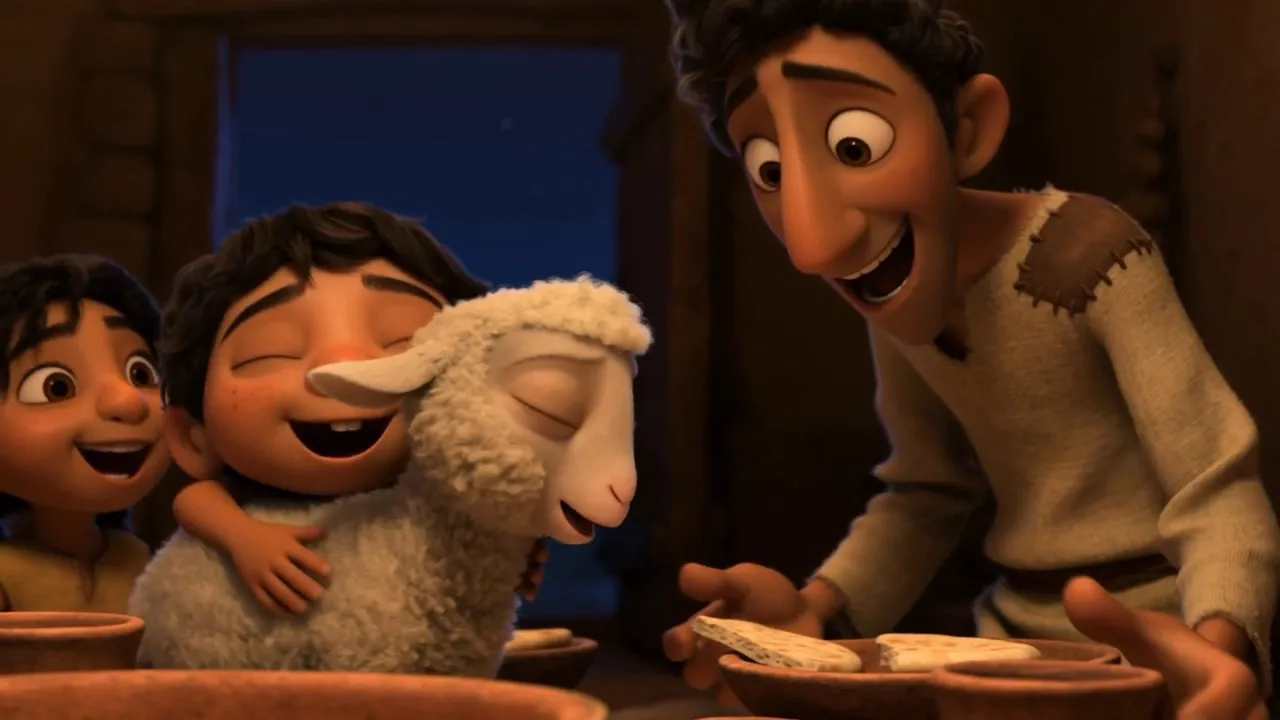
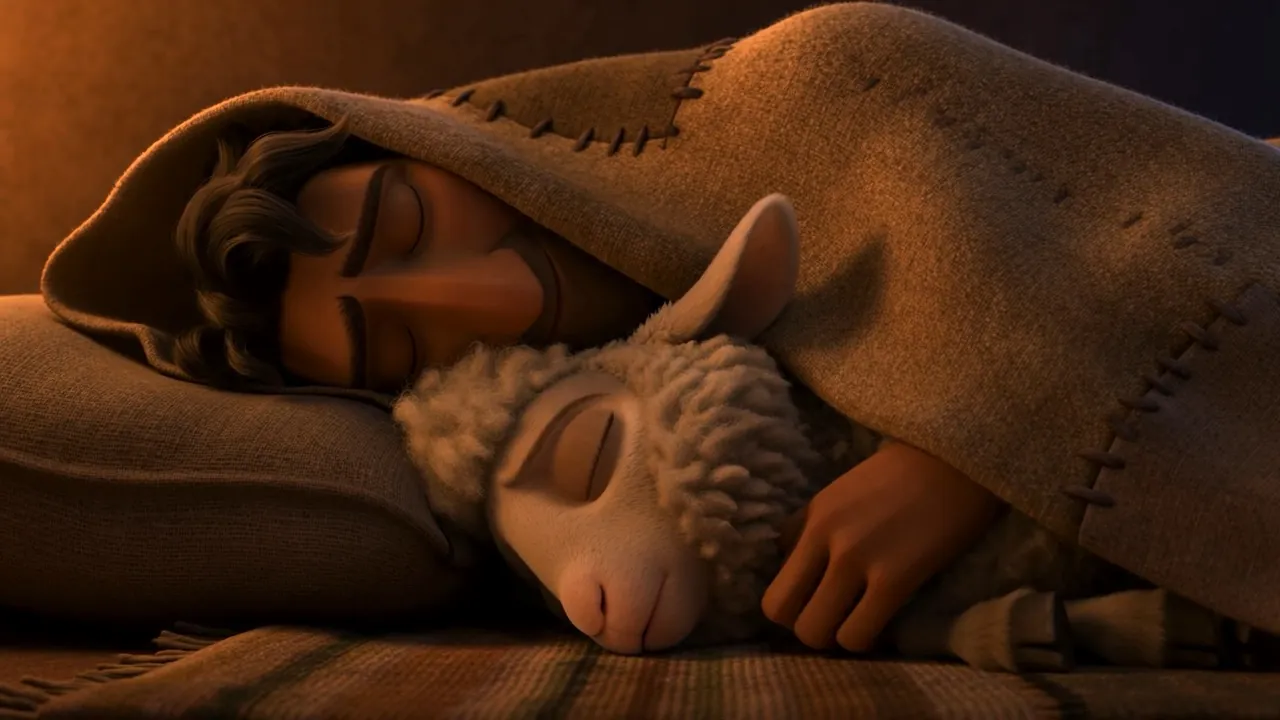
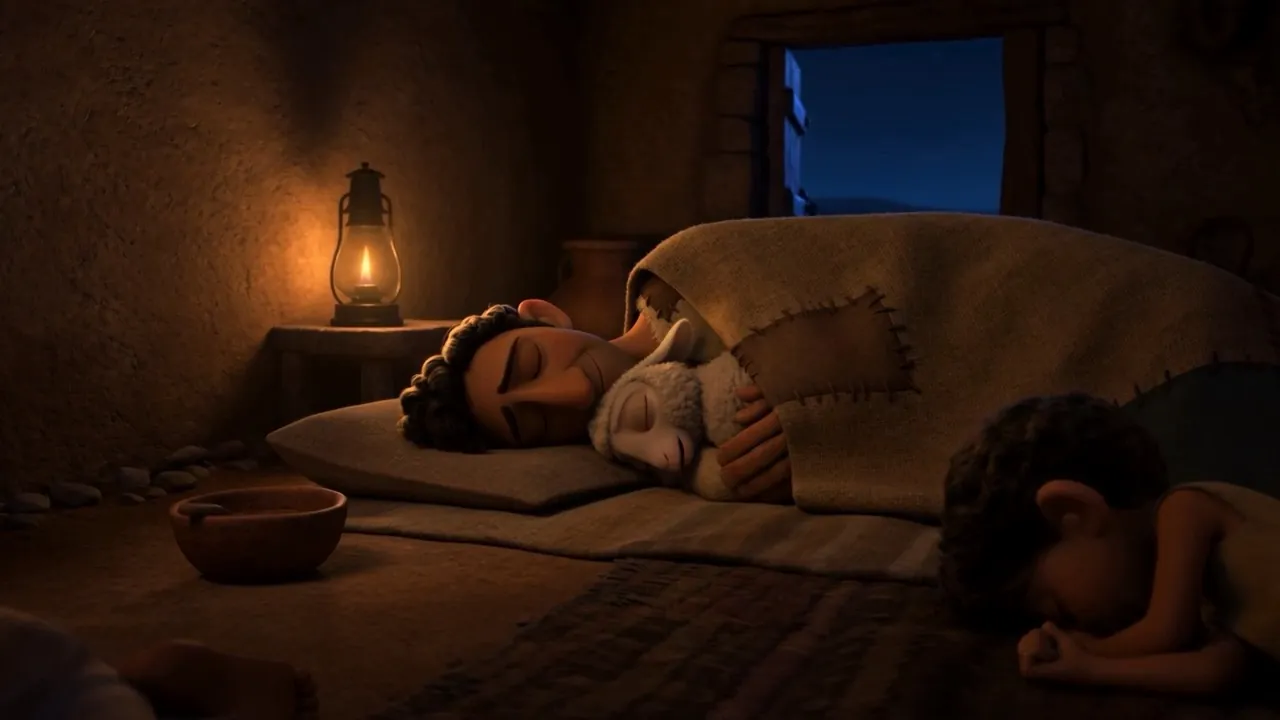
The poor man had nothing but one little ewe lamb. A one-room house at supper, a family feeding it bread out of their own hands, the children with their arms round it — and then everyone asleep on the mats at night with the lamb tucked in among them. It ate of his own food, drank of his own cup, lay in his arms, and was like a daughter to him. 2 Samuel 12 : 3

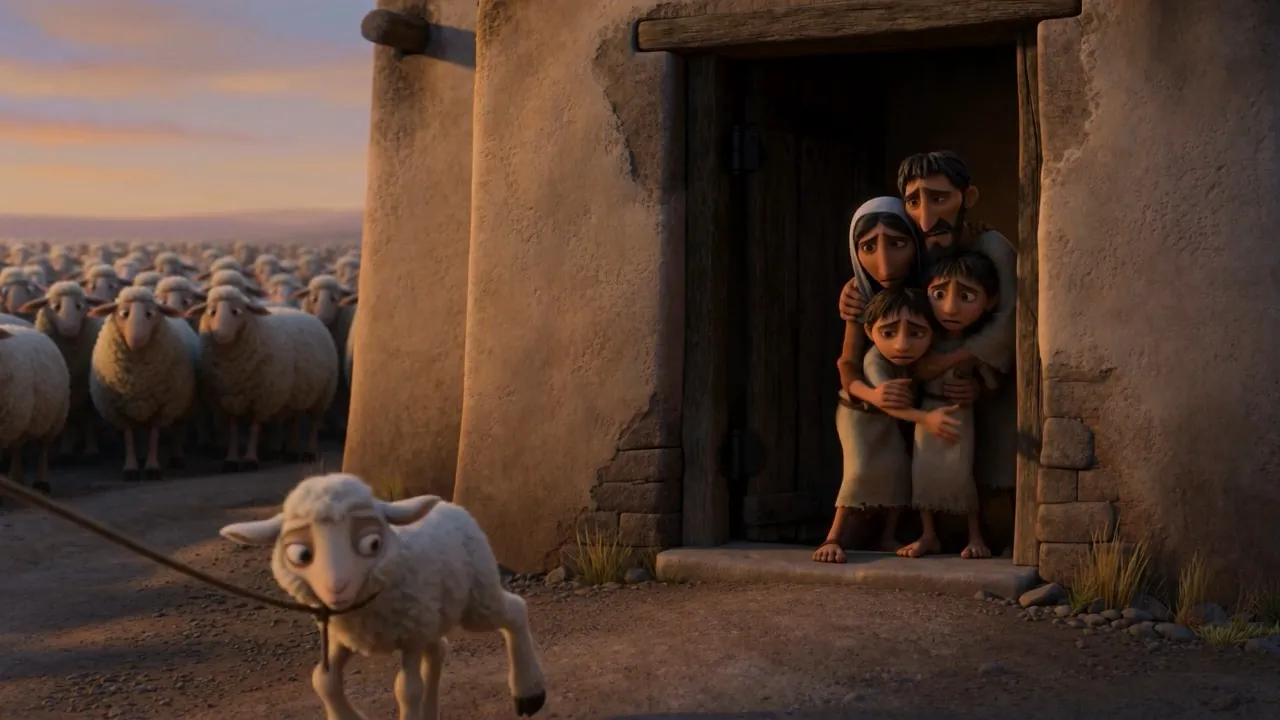

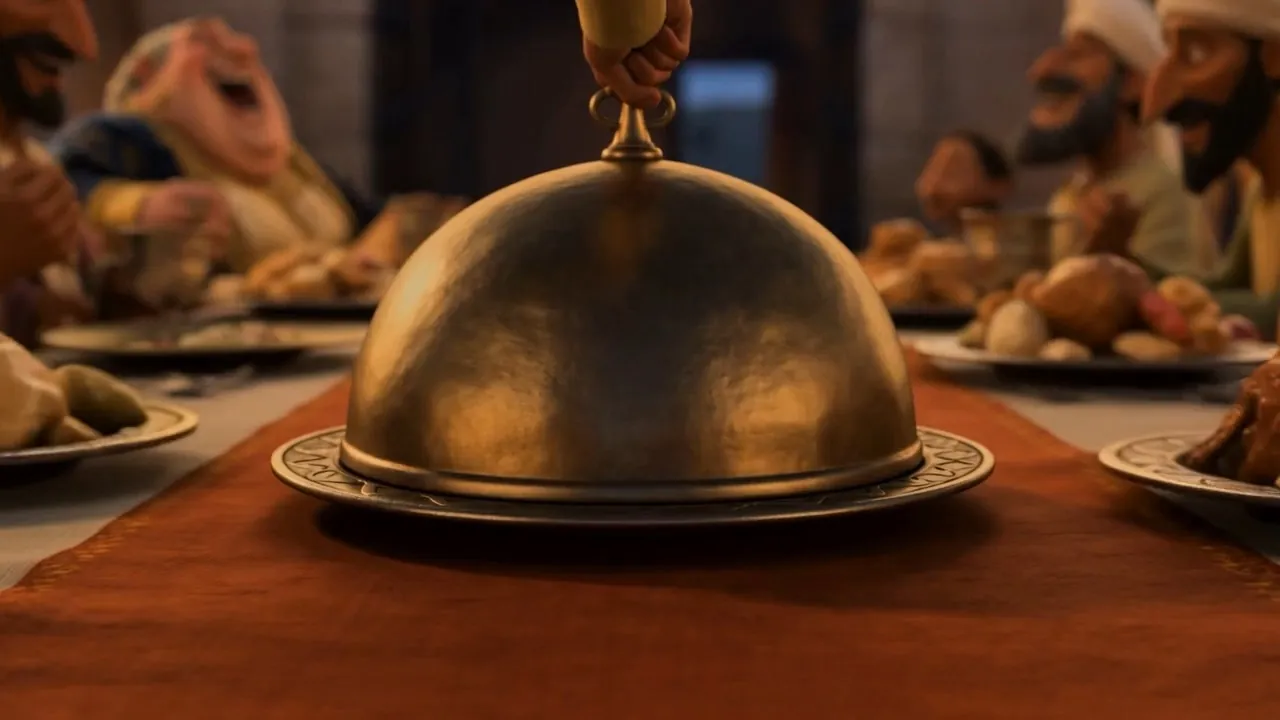

A guest arrives at the rich man's house, and the rich man — who has flocks beyond counting — will not touch his own animals. He sends for the poor man's lamb instead. And David comes up out of his chair in a fury: as the LORD lives, the man who has done this deserves to die, because he had no pity. He has just passed sentence, in front of his whole court. 2 Samuel 12 : 4–6
Interlude · The judgment seat
You heard the case exactly as the king heard it. Is his sentence just?
Nathan is watching you weigh it, too.
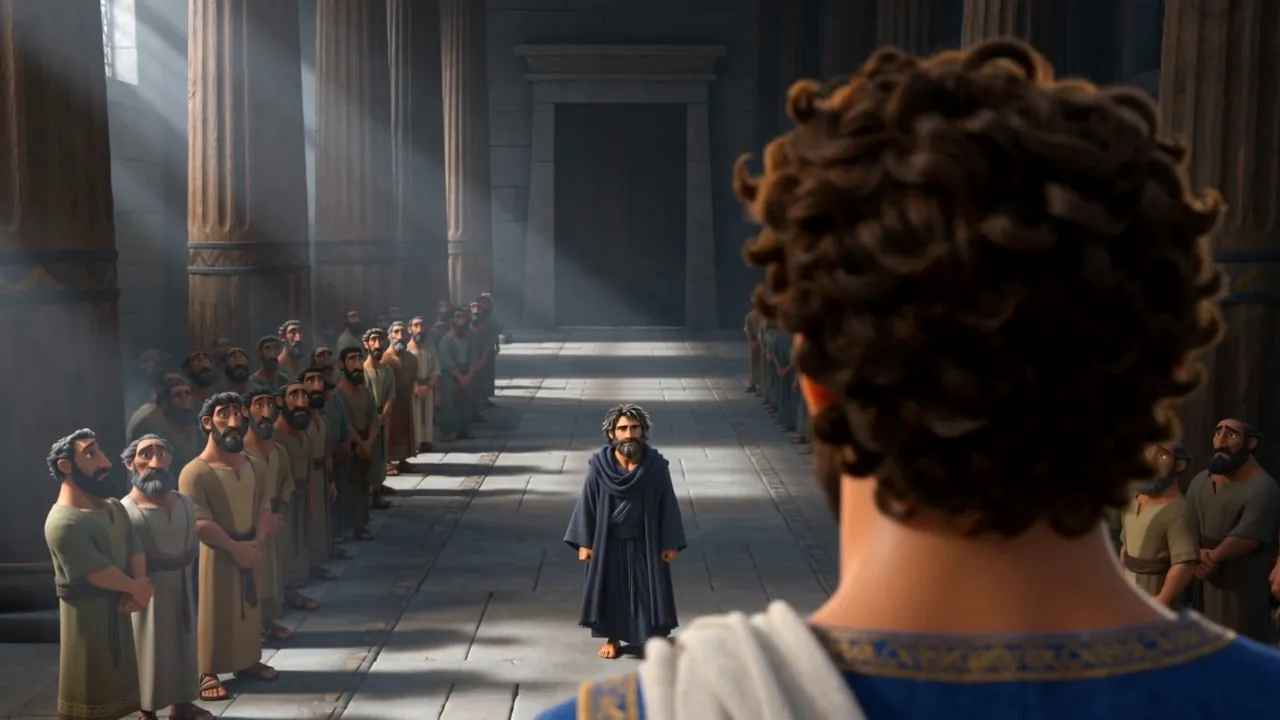
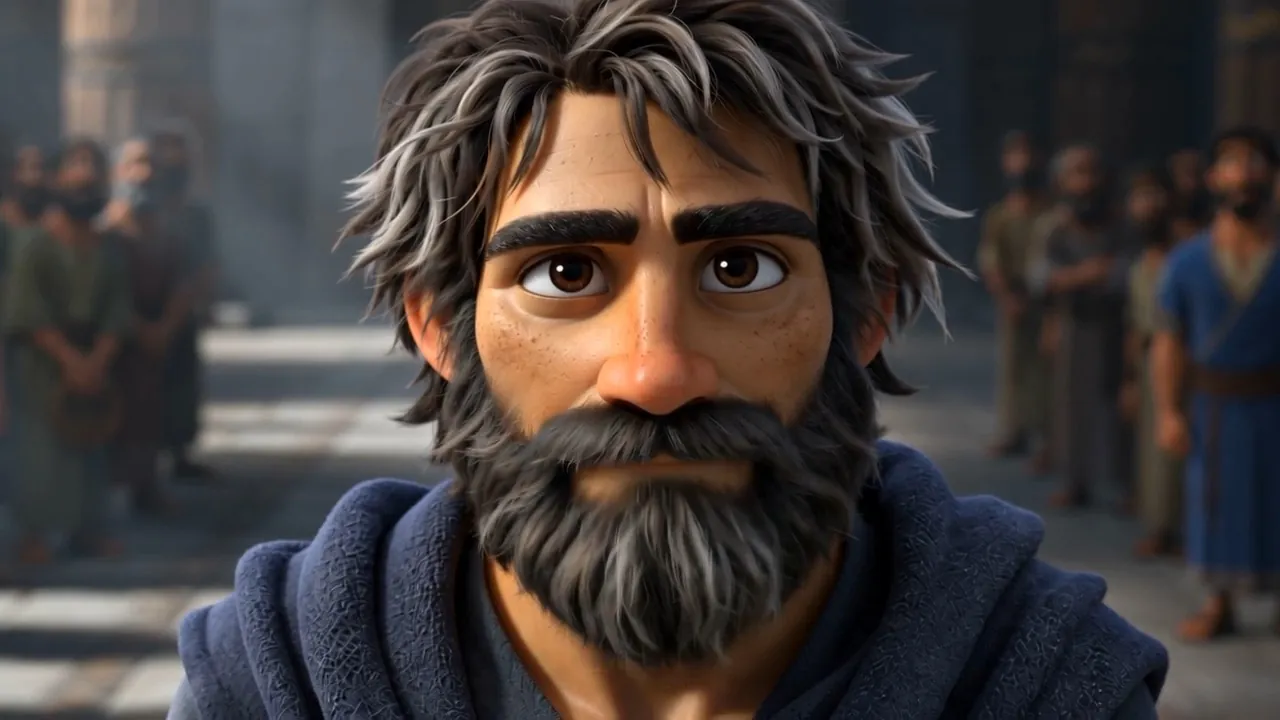


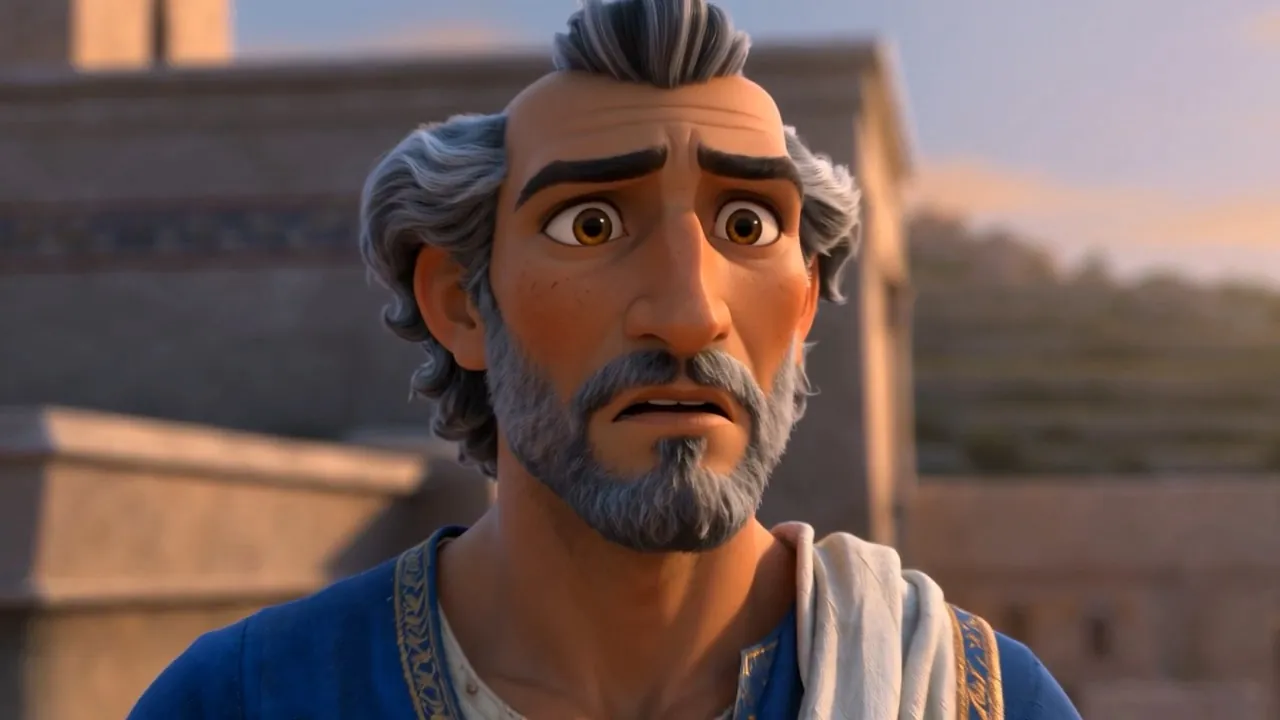
You are the man. Four words — and then his face, while they land: first a flicker of not understanding, then understanding, then the whole weight of it at once. He has just sentenced himself, out loud, in public, and everyone in the hall heard him. That is what the parable was for: not to inform him, but to get him to say what he truly thought before he knew who he was talking about. 2 Samuel 12 : 7
Nathan said to David: You are the man.
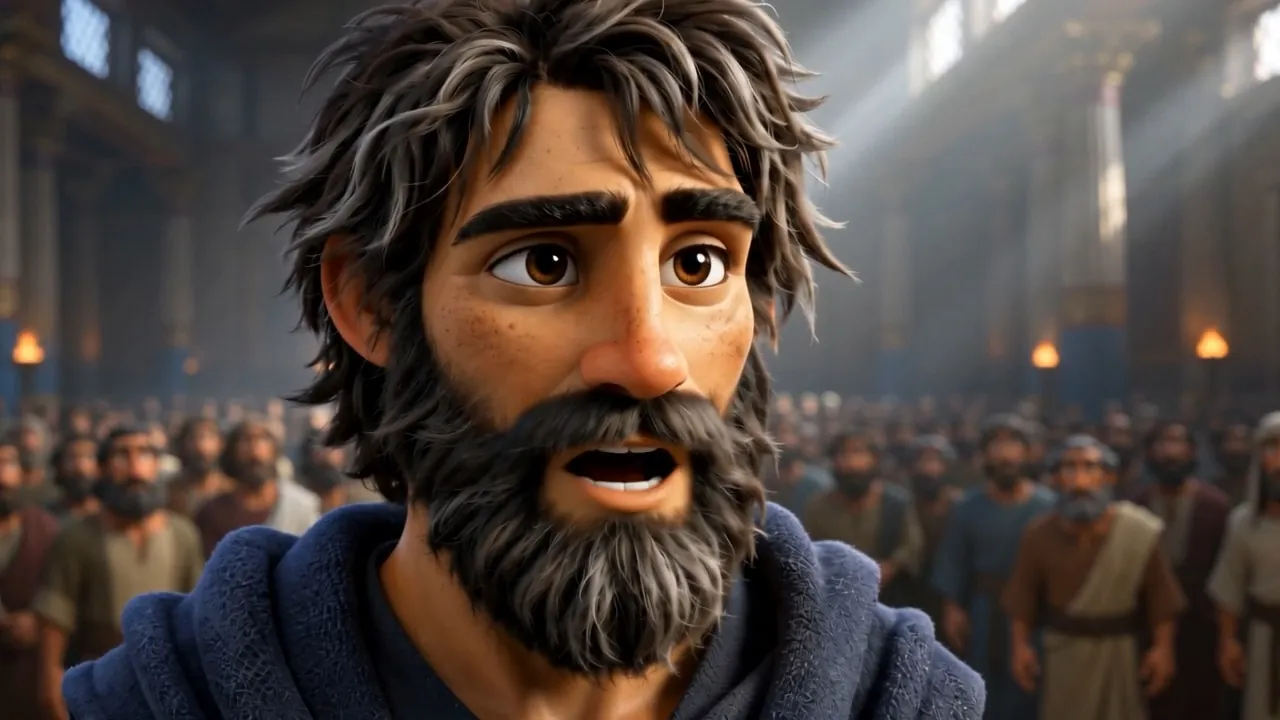

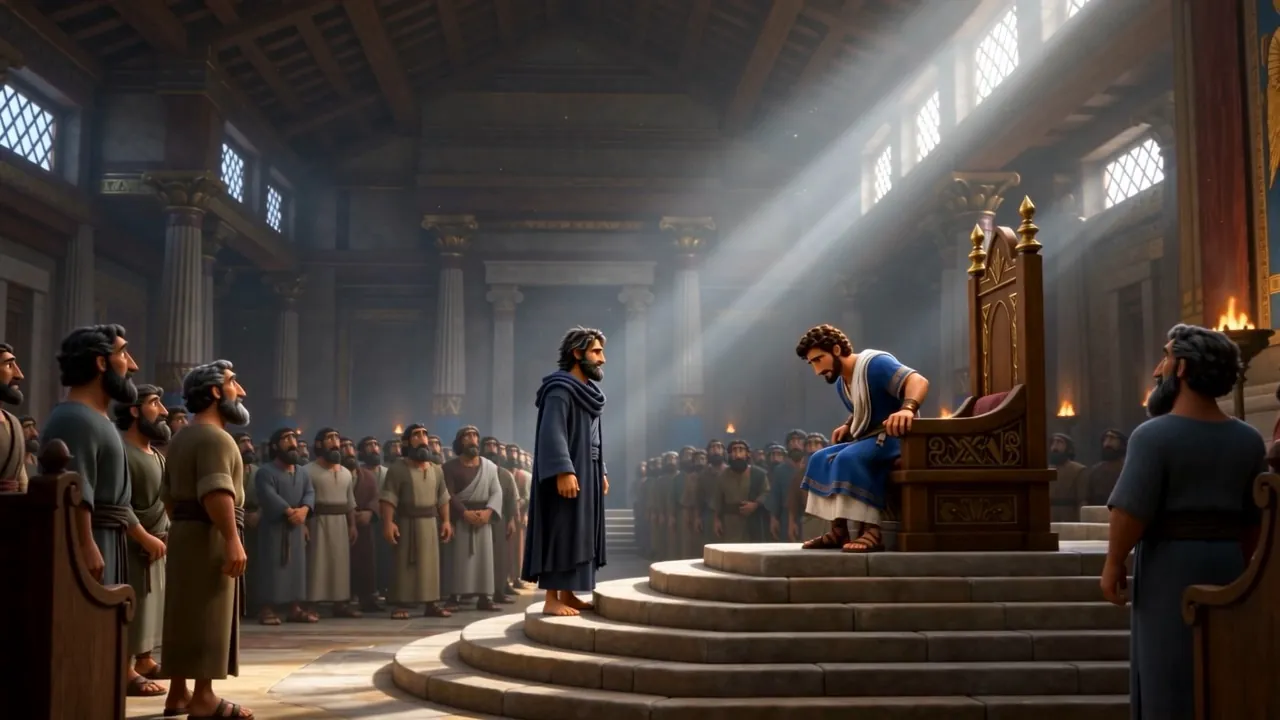
What Nathan says next is mostly a list of gifts. I anointed you king. I delivered you out of the hand of Saul. I gave you your master's house — and if that had been too little, I would have given you much more. Why have you despised the word of the LORD? That is the wound in it: not a broken rule, but this done to Someone who had never been anything but generous. 2 Samuel 12 : 7–12
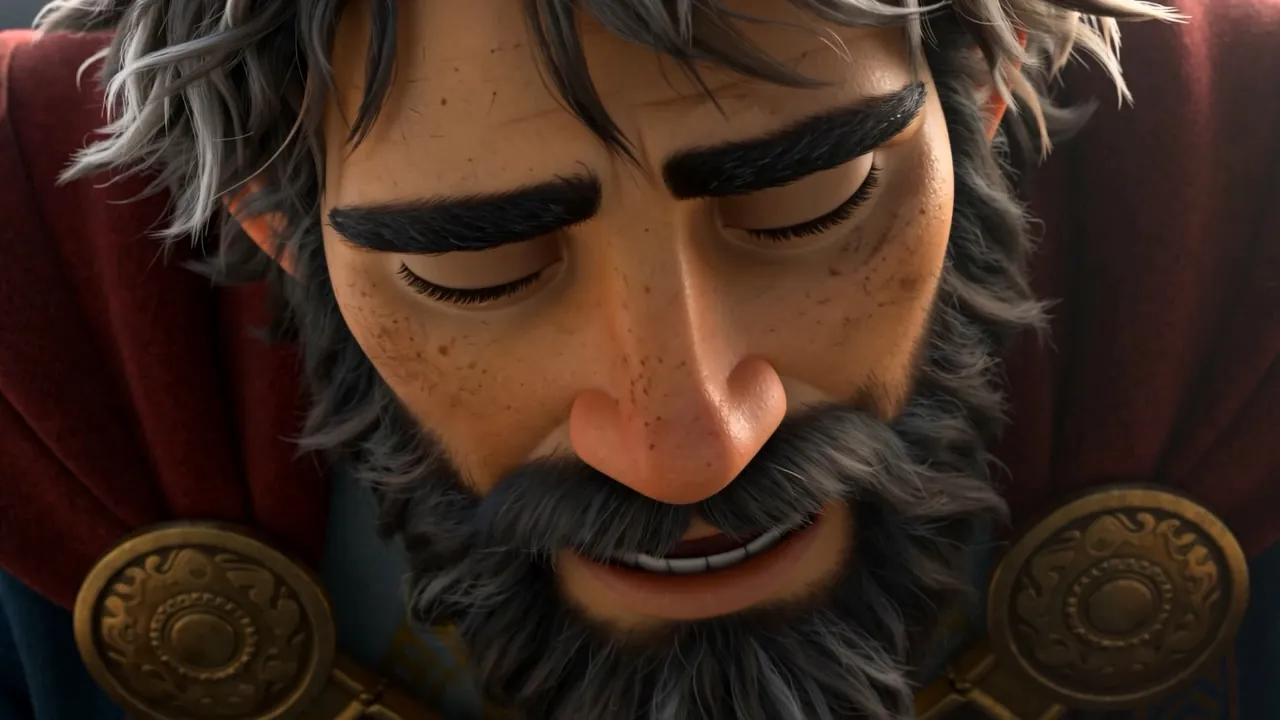
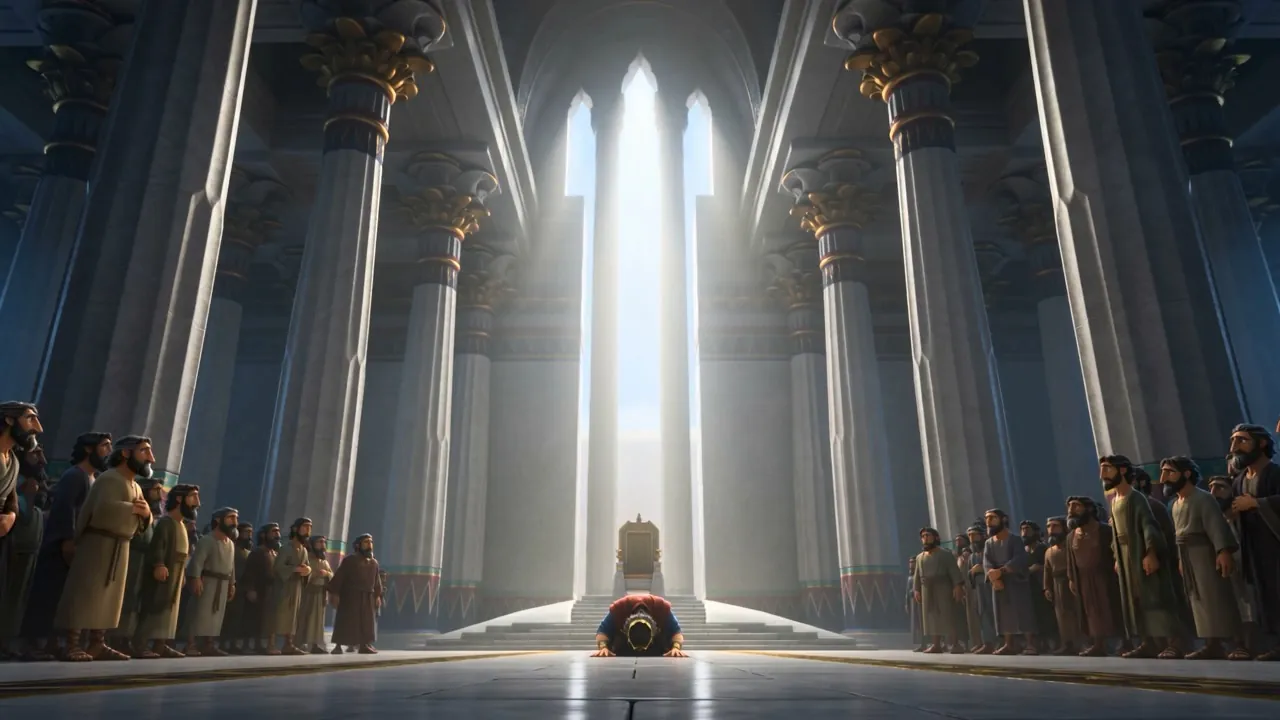

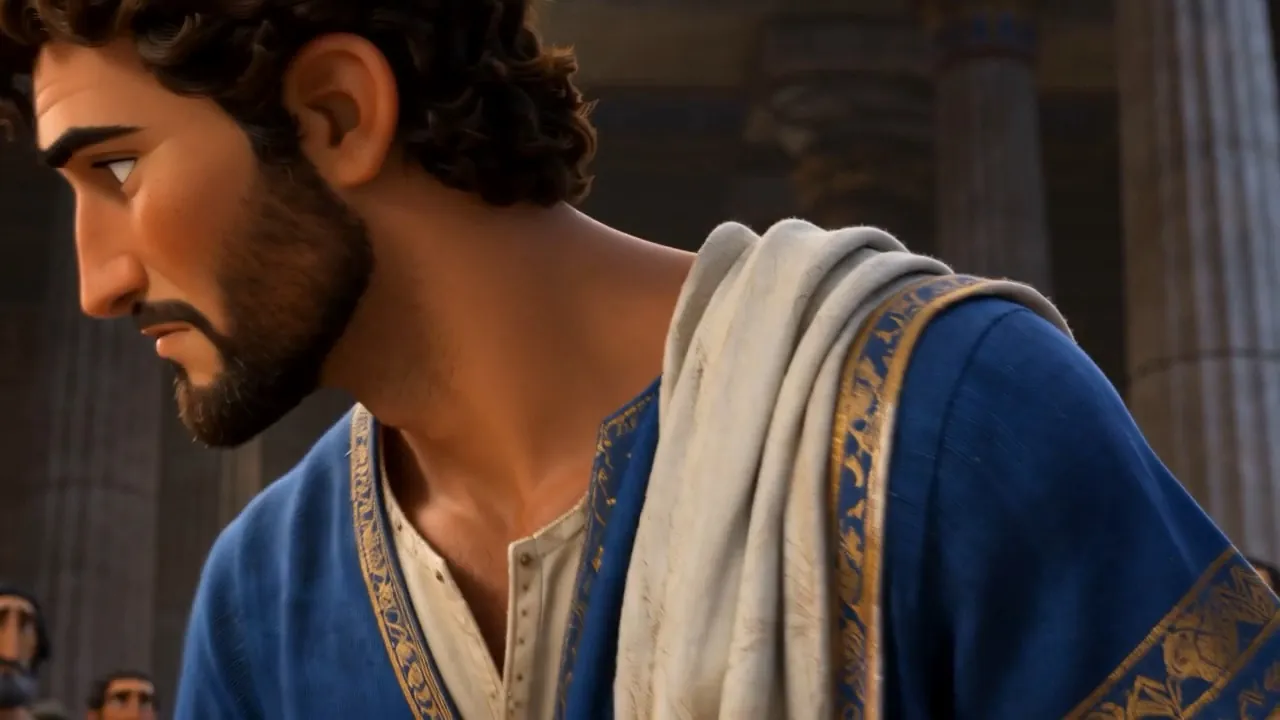
And here is the difference between this man and the one he replaced. Saul, caught, explained. David says four words — I have sinned against the LORD — and stops. No excuse, no context, no blame. Nathan tells him the LORD has put away his sin. And the consequences arrive anyway, because forgiveness is not a world where nothing happened. Somewhere in these days he writes Psalm 51. 2 Samuel 12 : 13–23
Create in me a clean heart, God. Renew a right spirit within me.
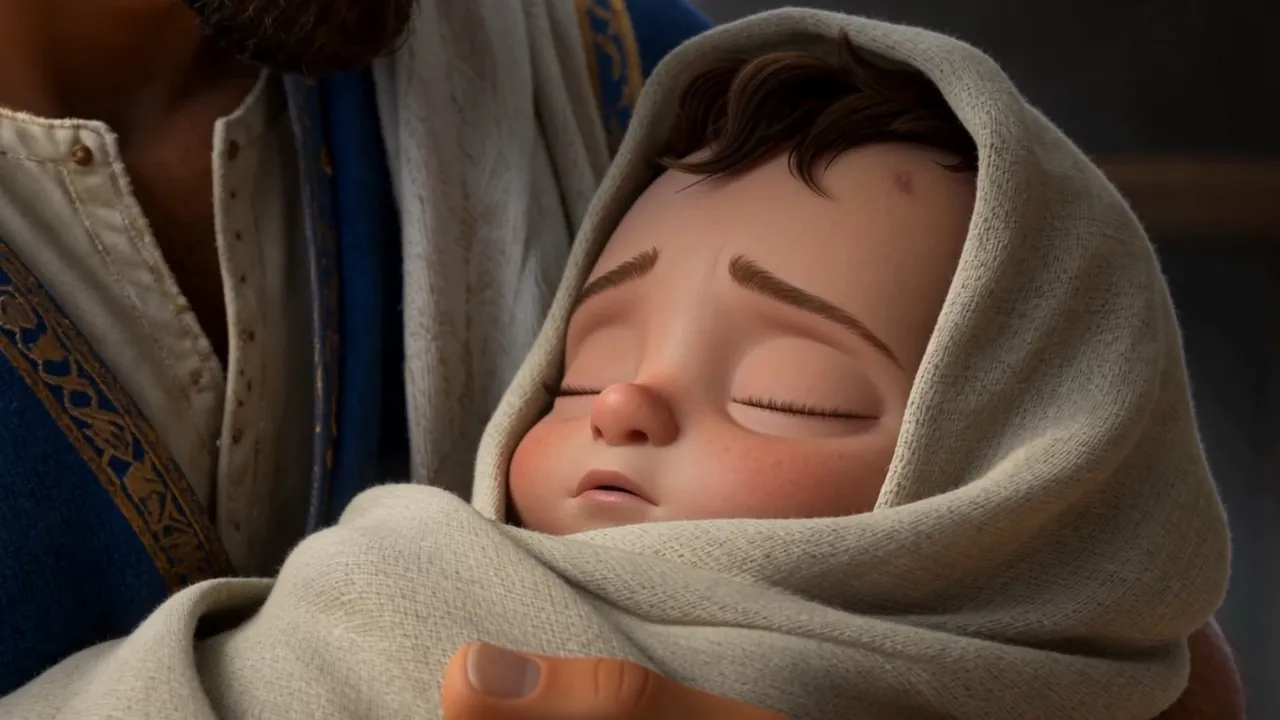

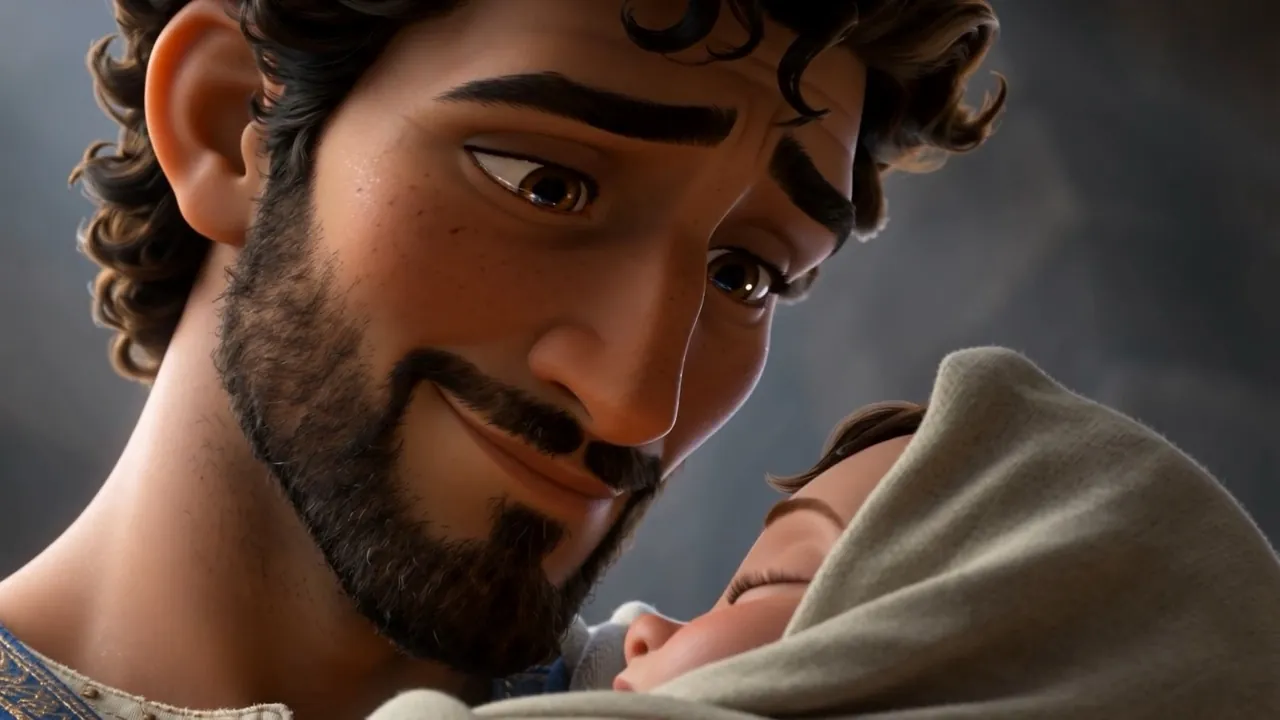
And then the chapter does something almost unbearable in its kindness. David goes and comforts Bathsheba, and in time there is another son, and they call him Solomon. And the text adds four words with no explanation attached: and the LORD loved him. Nothing here is tidied away. But God does not walk out — He stays, and builds something out of the wreckage anyway. 2 Samuel 12 : 24–25
After the story
Forgiveness is not a world where nothing happened.
Two things are true in this episode and the book refuses to drop either one. David is forgiven — immediately, completely, on four words and no excuses — and the damage he set in motion runs on anyway, through his own family, for the rest of his life. What separates him from Saul is not that he sinned less; by any measure he sinned worse. It is what he did when he was caught. Saul explained. David said "I have sinned against the LORD" and stopped talking, and then wrote the whole humiliating thing up as a song and handed it to the choir director to be sung in public forever. That is Psalm 51, and it is why a man who did this is still called a man after God's own heart — not because the record is clean, but because when he was shown the truth about himself he did not argue with it.
Voices of the throne hall · hover or tap to turn
Nathan
"You are the man… 'I anointed you king over Israel, and I delivered you out of the hand of Saul.'"
— 2 Samuel 12:7
David
"I have sinned against Yahweh."
— 2 Samuel 12:13
The Lamb
"It ate of his own food, drank of his own cup, and lay in his bosom, and was like a daughter to him."
— 2 Samuel 12:3The Books of Samuel
How closely were you watching?
1. How does the account of David's fall begin?
2 Samuel 11:1. That one sentence is the hinge of the whole book — he had, for the first time, nothing he urgently had to do.
2. What does Uriah refuse to do when he is called home?
2 Samuel 11:11. The foreign soldier shows more reverence for the ark of Israel than Israel's king does — and says so to his face.
3. What is Nathan's story about?
2 Samuel 12:1–4. The lamb ate from his plate, drank from his cup and lay in his arms — "like a daughter to him."
4. What does David say when Nathan tells him "You are the man"?
2 Samuel 12:13. Four words, no excuse and no context — the exact opposite of how Saul answered when he was caught.
What this story teaches
The warning usually comes before the fall.
He was told exactly who she was — a daughter, a wife, and the wife of one of his own Thirty. Three reasons to stop, delivered before anything happened. Being warned is not the same as being stopped, and the gap between them is where most damage lives.
"Why have you despised Yahweh's word, to do that which is evil in his sight?" 2 Samuel 12:9We judge in others what we excuse in ourselves.
David heard about a rich man taking a poor man's only lamb and was genuinely, furiously outraged. He had done the same thing that year and felt nothing. The parable did not tell him anything new; it just got him to say out loud what he really thought before he knew who he was talking about.
"As Yahweh lives, the man who has done this deserves to die!" 2 Samuel 12:5Real repentance stops explaining.
Saul, caught, gave reasons. David said four words and offered no context at all — and then published the confession as a song for the whole nation to sing. That is the difference the whole book turns on.
"Purify me with hyssop, and I will be clean. Wash me, and I will be whiter than snow." Psalm 51:7Read the scripture itself. 2 Samuel 12 · Psalm 51 · World English Bible
2 Samuel 12
1Yahweh sent Nathan to David. He came to him, and said to him, “There were two men in one city; the one rich, and the other poor.
2The rich man had very many flocks and herds,
3but the poor man had nothing, except one little ewe lamb, which he had bought and raised. It grew up together with him, and with his children. It ate of his own food, drank of his own cup, and lay in his bosom, and was like a daughter to him.
4A traveler came to the rich man, and he spared to take of his own flock and of his own herd, to prepare for the wayfaring man who had come to him, but took the poor man’s lamb, and prepared it for the man who had come to him.”
5David’s anger burned hot against the man, and he said to Nathan, “As Yahweh lives, the man who has done this deserves to die!
6He must restore the lamb fourfold, because he did this thing, and because he had no pity!”
7Nathan said to David, “You are the man. This is what Yahweh, the God of Israel, says: ‘I anointed you king over Israel, and I delivered you out of the hand of Saul.
8I gave you your master’s house, and your master’s wives into your bosom, and gave you the house of Israel and of Judah; and if that would have been too little, I would have added to you many more such things.
9Why have you despised Yahweh’s word, to do that which is evil in his sight? You have struck Uriah the Hittite with the sword, and have taken his wife to be your wife, and have slain him with the sword of the children of Ammon.
10Now therefore the sword will never depart from your house, because you have despised me, and have taken Uriah the Hittite’s wife to be your wife.’
11“This is what Yahweh says: ‘Behold, I will raise up evil against you out of your own house; and I will take your wives before your eyes, and give them to your neighbor, and he will lie with your wives in the sight of this sun.
12For you did this secretly, but I will do this thing before all Israel, and before the sun.’”
13David said to Nathan, “I have sinned against Yahweh.” Nathan said to David, “Yahweh also has put away your sin. You will not die.
14However, because by this deed you have given great occasion to Yahweh’s enemies to blaspheme, the child also who is born to you will surely die.”
15Nathan departed to his house. Yahweh struck the child that Uriah’s wife bore to David, and it was very sick.
16David therefore begged God for the child; and David fasted, and went in, and lay all night on the ground.
17The elders of his house arose beside him, to raise him up from the earth: but he would not, and he didn’t eat bread with them.
18On the seventh day, the child died. David’s servants were afraid to tell him that the child was dead, for they said, “Behold, while the child was yet alive, we spoke to him, and he didn’t listen to our voice. How will he then harm himself, if we tell him that the child is dead?”
19But when David saw that his servants were whispering together, David perceived that the child was dead; and David said to his servants, “Is the child dead?” They said, “He is dead.”
20Then David arose from the earth, and washed, and anointed himself, and changed his clothing; and he came into Yahweh’s house, and worshiped. Then he came to his own house; and when he requested, they set bread before him, and he ate.
21Then his servants said to him, “What is this that you have done? You fasted and wept for the child while he was alive, but when the child was dead, you rose up and ate bread.”
22He said, “While the child was yet alive, I fasted and wept; for I said, ‘Who knows whether Yahweh will not be gracious to me, that the child may live?’
23But now he is dead, why should I fast? Can I bring him back again? I will go to him, but he will not return to me.”
24David comforted Bathsheba his wife, and went in to her, and lay with her. She bore a son, and he called his name Solomon. Yahweh loved him;
25and he sent by the hand of Nathan the prophet, and he named him Jedidiah, for Yahweh’s sake.
26Now Joab fought against Rabbah of the children of Ammon, and took the royal city.
27Joab sent messengers to David, and said, “I have fought against Rabbah. Yes, I have taken the city of waters.
28Now therefore gather the rest of the people together, and encamp against the city, and take it; lest I take the city, and it be called by my name.”
29David gathered all the people together, and went to Rabbah, and fought against it, and took it.
30He took the crown of their king from off his head; and its weight was a talent of gold, and in it were precious stones; and it was set on David’s head. He brought a great quantity of plunder out of the city.
31He brought out the people who were in it, and put them under saws, under iron picks, under axes of iron, and made them pass through the brick kiln; and he did so to all the cities of the children of Ammon. Then David and all the people returned to Jerusalem.
Psalm 51
1Have mercy on me, God, according to your loving kindness. According to the multitude of your tender mercies, blot out my transgressions.
2Wash me thoroughly from my iniquity. Cleanse me from my sin.
3For I know my transgressions. My sin is constantly before me.
4Against you, and you only, I have sinned, and done that which is evil in your sight; that you may be proved right when you speak, and justified when you judge.
5Behold, I was born in iniquity. In sin my mother conceived me.
6Behold, you desire truth in the inward parts. You teach me wisdom in the inmost place.
7Purify me with hyssop, and I will be clean. Wash me, and I will be whiter than snow.
8Let me hear joy and gladness, That the bones which you have broken may rejoice.
9Hide your face from my sins, and blot out all of my iniquities.
10Create in me a clean heart, O God. Renew a right spirit within me.
11Don’t throw me from your presence, and don’t take your holy Spirit from me.
12Restore to me the joy of your salvation. Uphold me with a willing spirit.
13Then I will teach transgressors your ways. Sinners shall be converted to you.
14Deliver me from the guilt of bloodshed, O God, the God of my salvation. My tongue shall sing aloud of your righteousness.
15Lord, open my lips. My mouth shall declare your praise.
16For you don’t delight in sacrifice, or else I would give it. You have no pleasure in burnt offering.
17The sacrifices of God are a broken spirit. A broken and contrite heart, O God, you will not despise.
18Do well in your good pleasure to Zion. Build the walls of Jerusalem.
19Then you will delight in the sacrifices of righteousness, in burnt offerings and in whole burnt offerings. Then they will offer bulls on your altar.
World English Bible (WEB) — a public-domain modern English translation. Read it freely, share it freely.
The Books of Samuel — animated film 70% in production
These scenes are real frames from the film.
Help us finish it — and every story like it — free for the world.