The Book of Revelation · The Goldsmith and the Little Scroll
Take it and eat it.Sweet as honey. Bitter after.
Between the sixth trumpet and the seventh, the story stops to look at people. A goldsmith polishing a little god in a ruined square. An old man on a headland with his face in his hands. A hard man climbing a dark path with a bowl of soup. And then an angel of cloud and fire, one foot on the sea and one on the land, holding out a scroll small enough to eat. Every scene below is a real frame from our animated film.
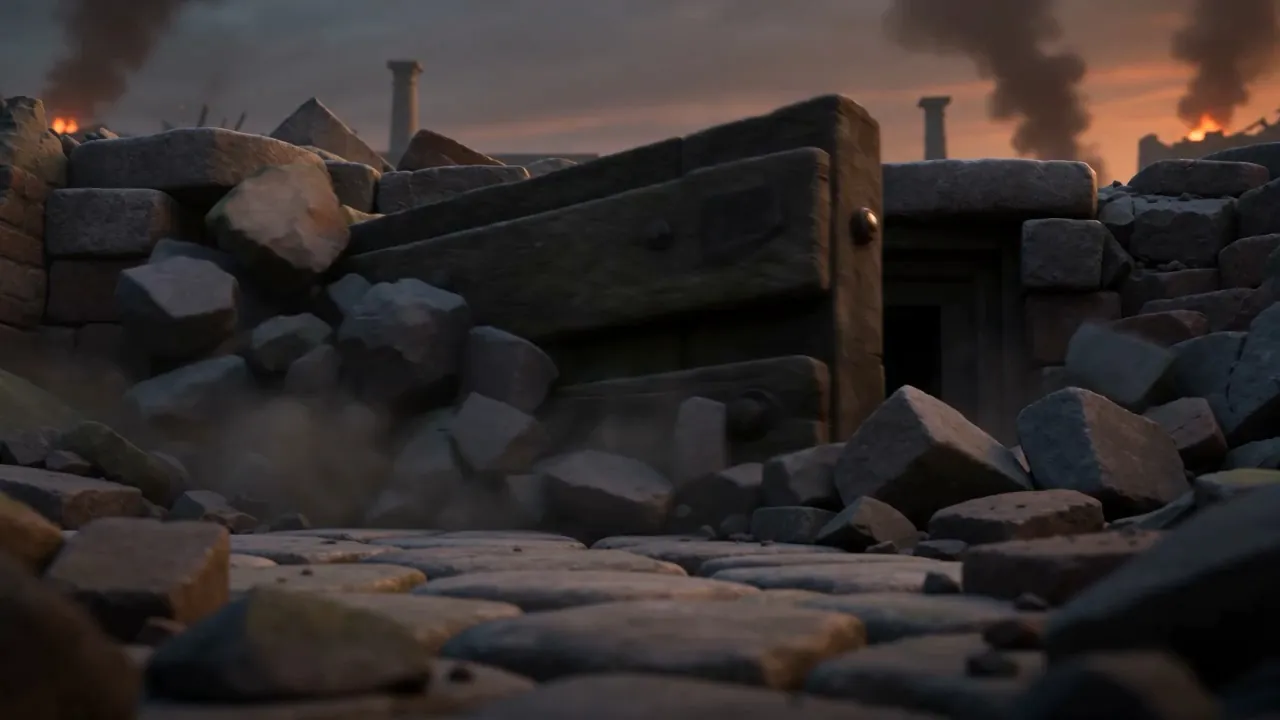
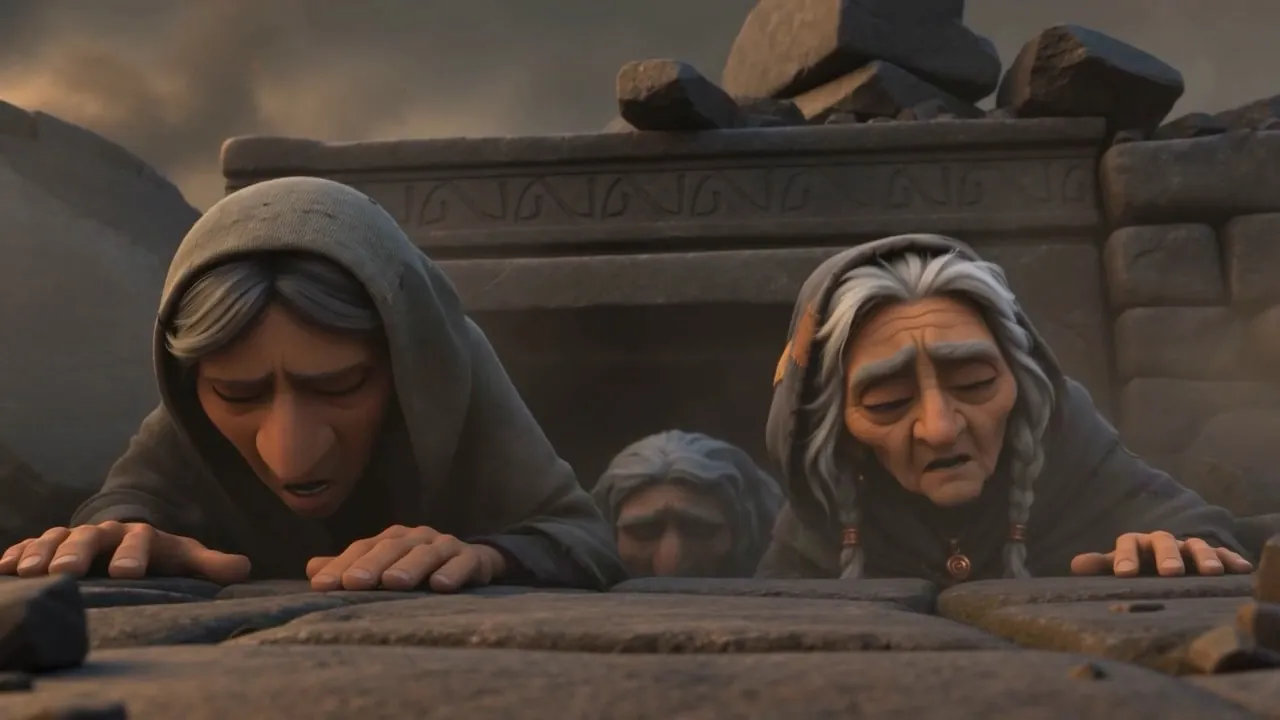
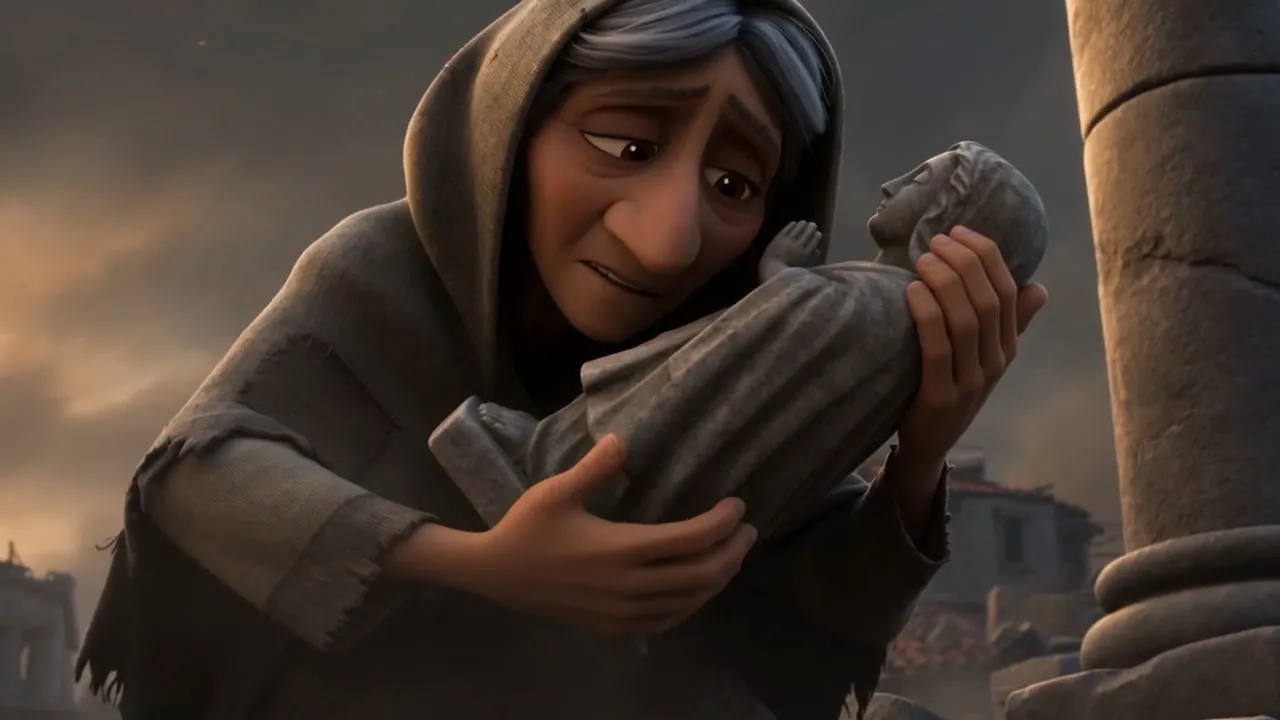
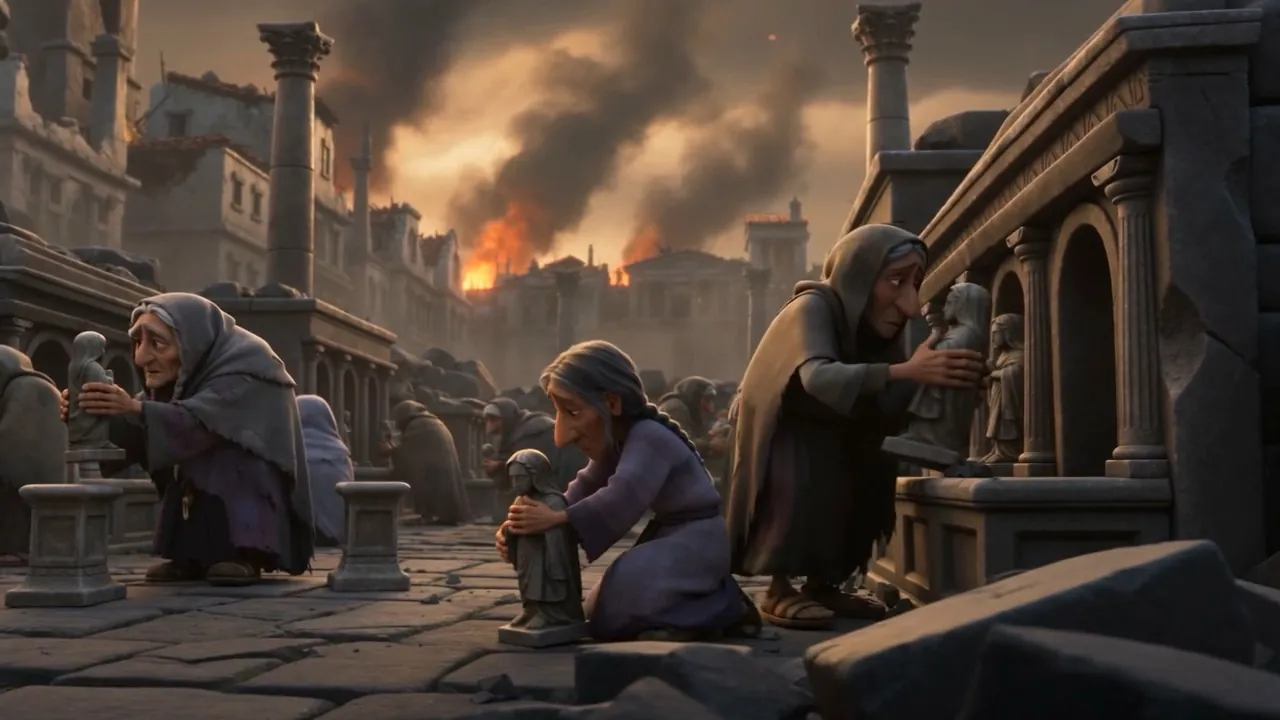
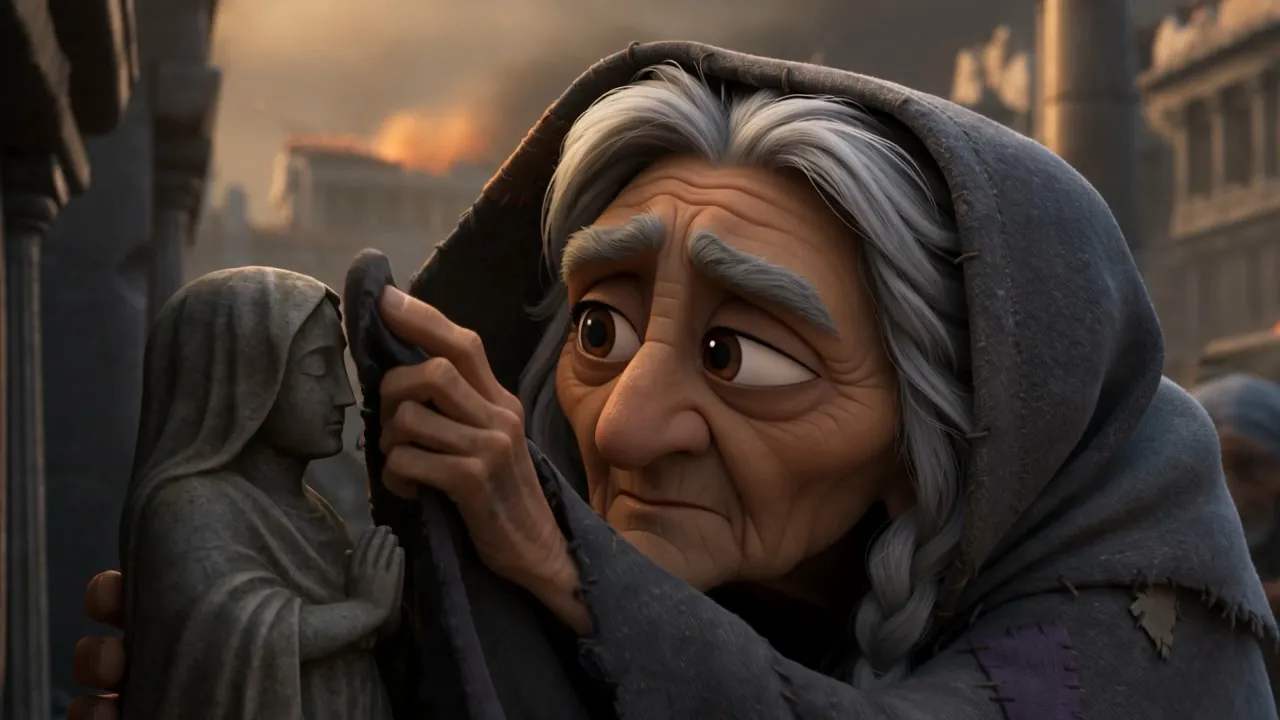
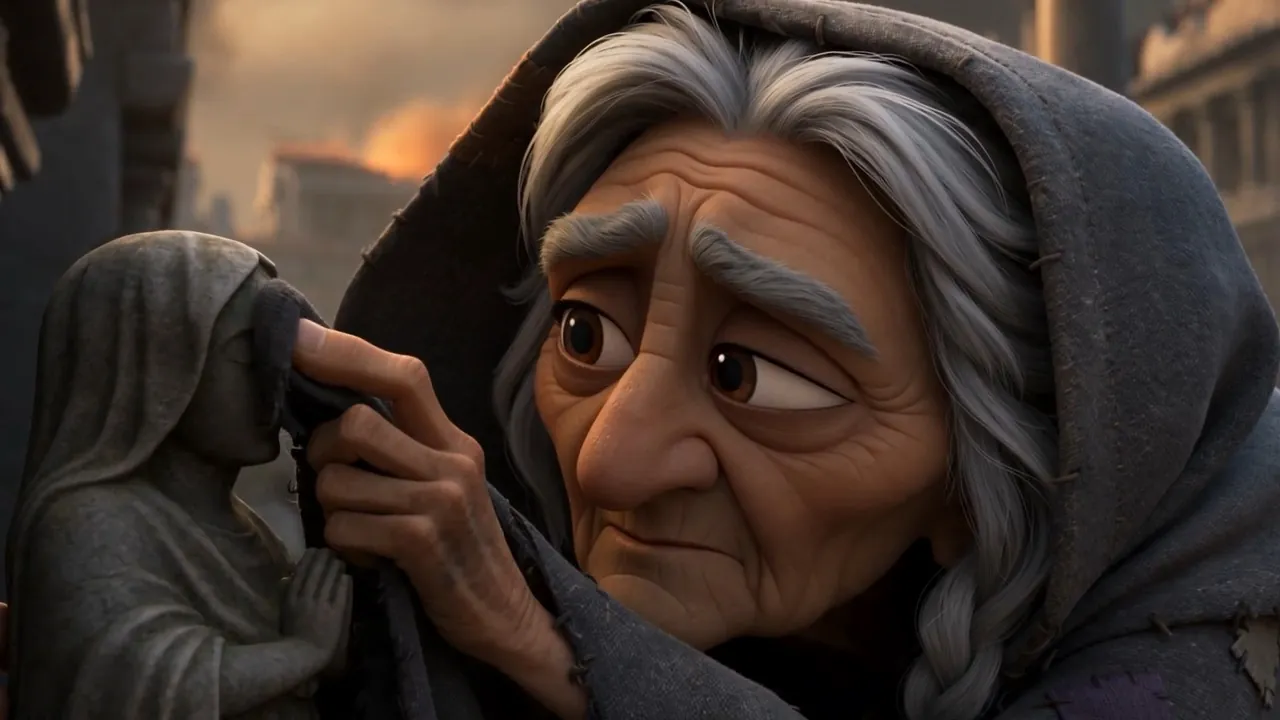
The rest of mankind, who were not killed with these plagues, didn't repent of the works of their hands. Six trumpets have sounded, and the smoke is still in the air. A cellar door heaves open in a broken square and the survivors climb out into the dusk — and the very first thing they do is not water, and not bread. A man rights a fallen pedestal. A woman lifts a little stone god out of the rubble and holds it against her shoulder the way you carry a child out of a fire. All along the square the small blind faces go back up on their plinths, one by one, dusted and straightened and turned to face the street. Revelation 9 : 20
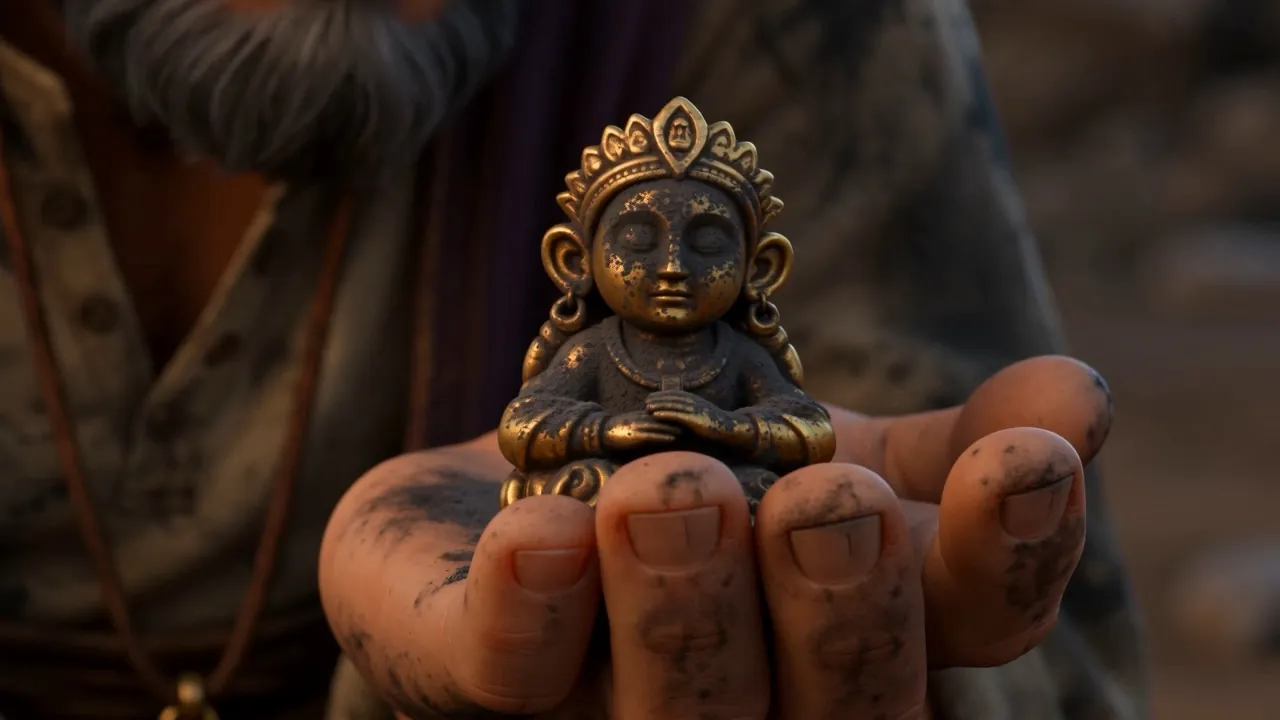
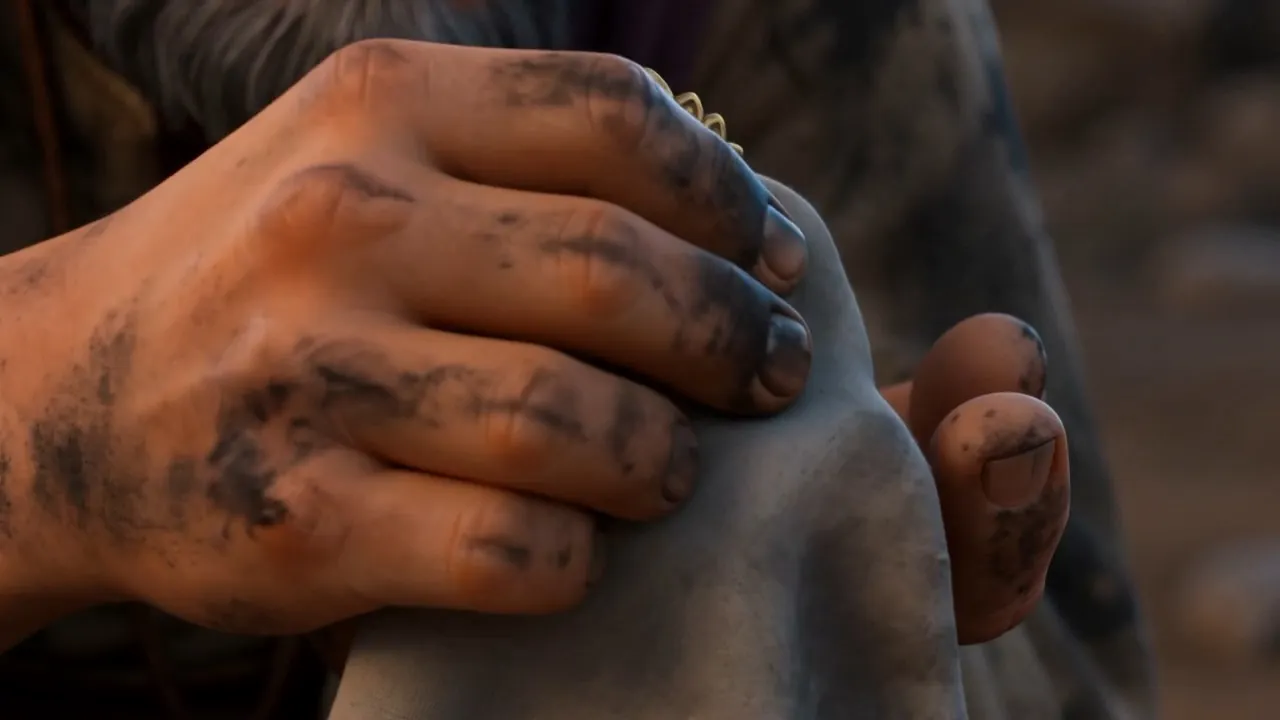
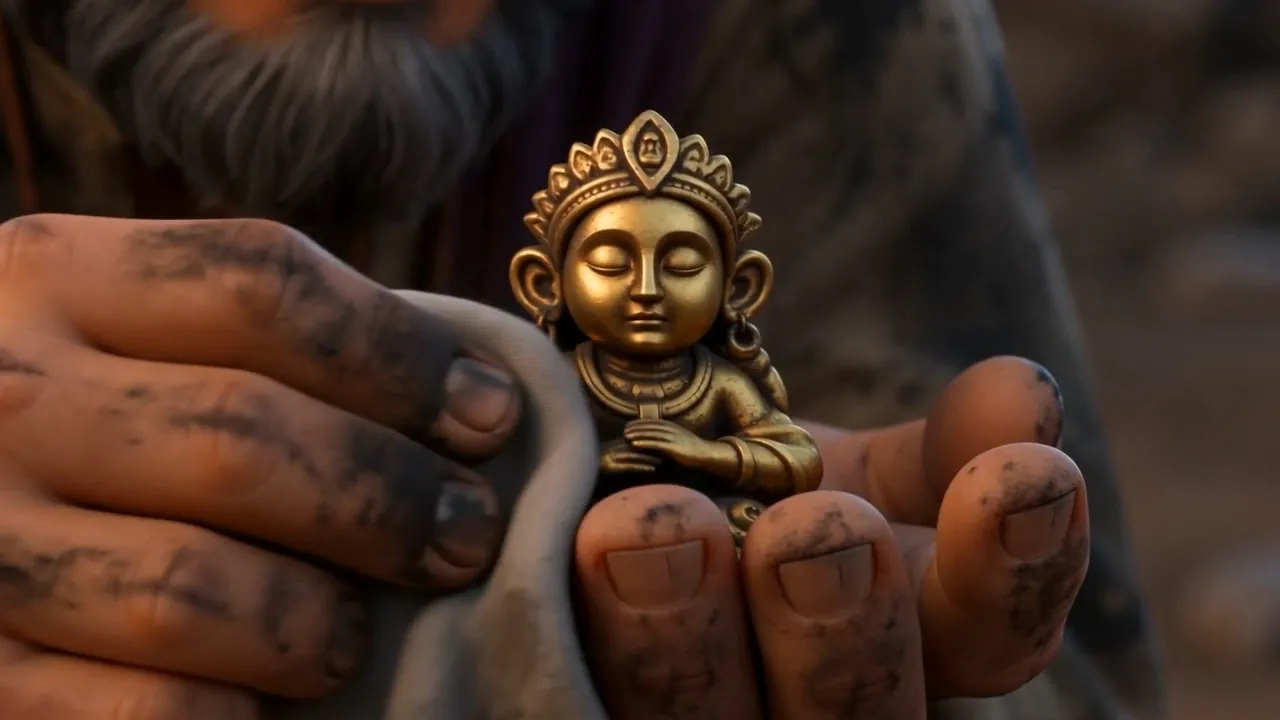
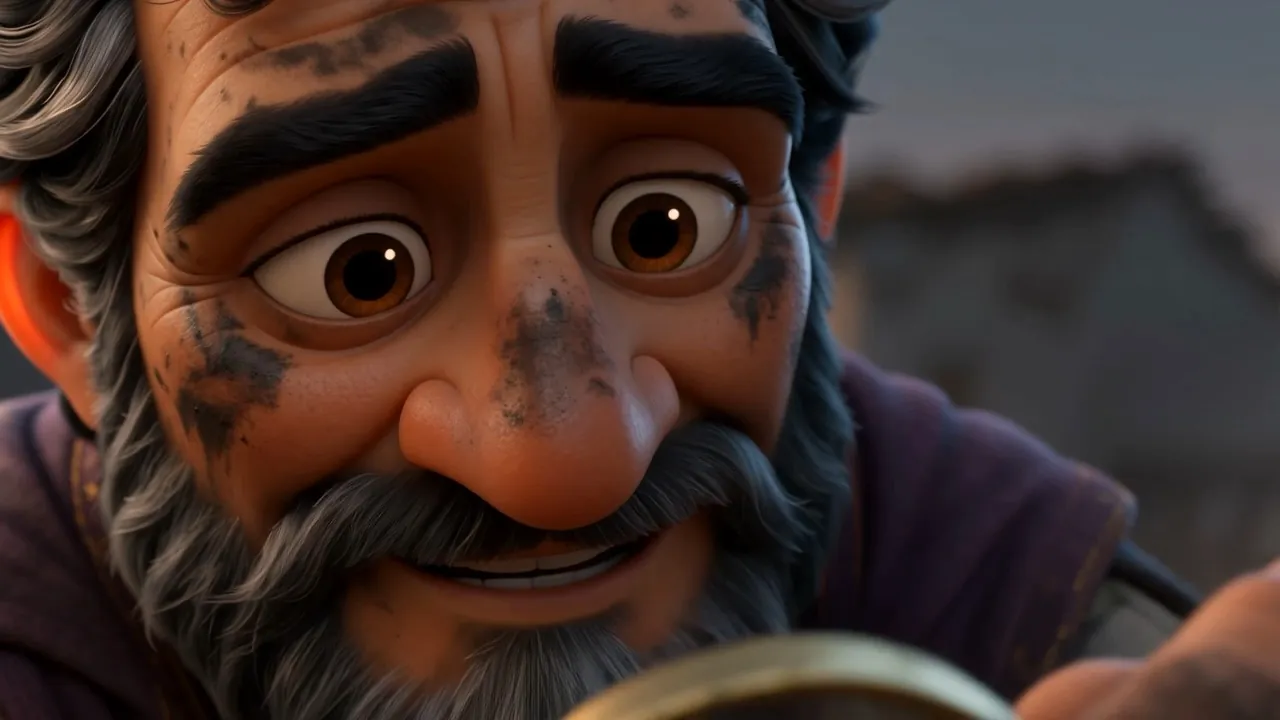
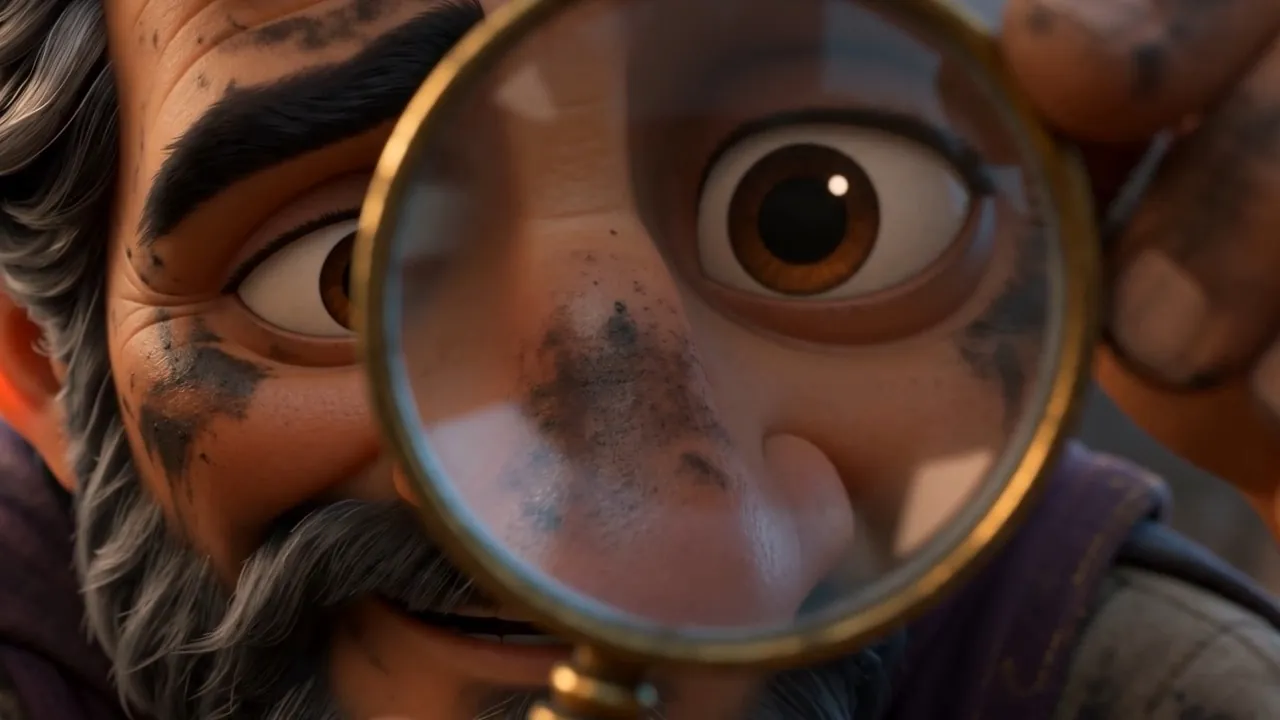
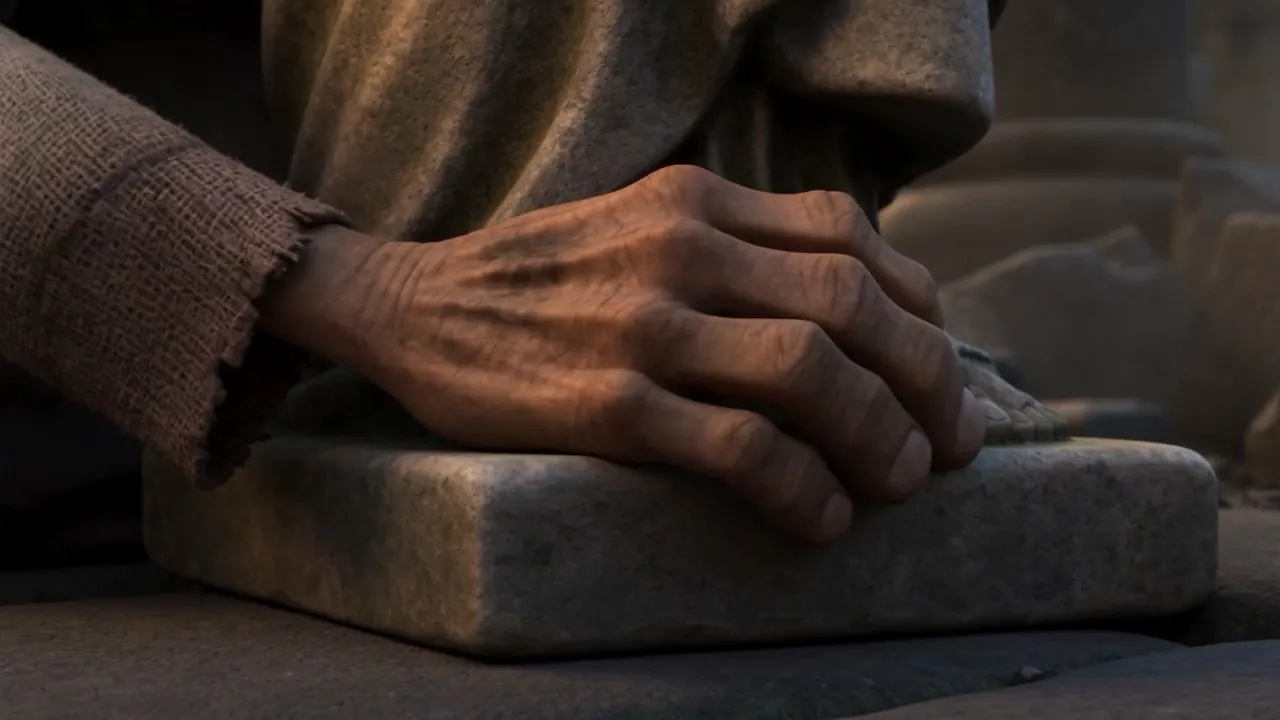
He has enormous, careful hands, a magnifying crystal on a cord, and no roof left on his house. He sits at his righted bench with his city smoking behind his shoulders and polishes a little golden god, breathing on it, lifting the soot off its face with his thumb, murmuring to it that it is all right now, that it is over. He raises the crystal and inspects it for hurts. He sets it upright and straightens its feet and pats it once, and goes on polishing. It is the saddest arithmetic in the book — not cruelty, but a masterpiece of love, spent on something that cannot hear a word of it. Revelation 9 : 20
"There. Good as new. It is over now… it is over."
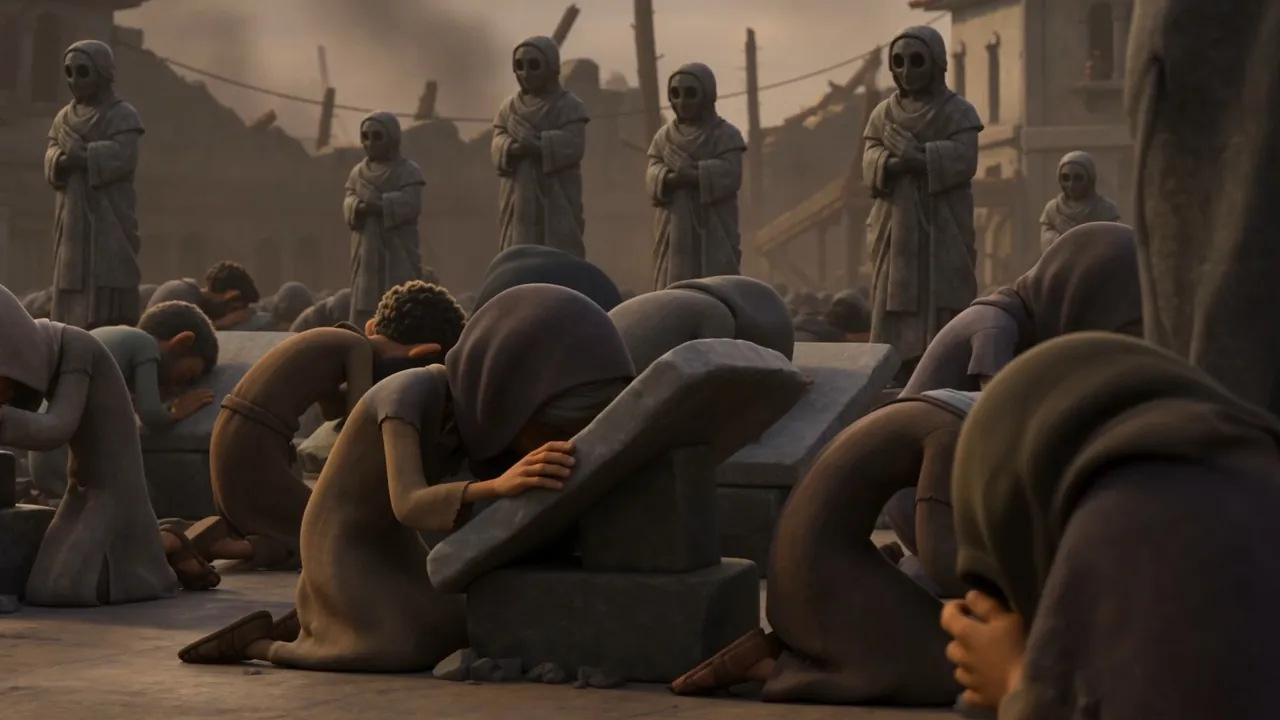
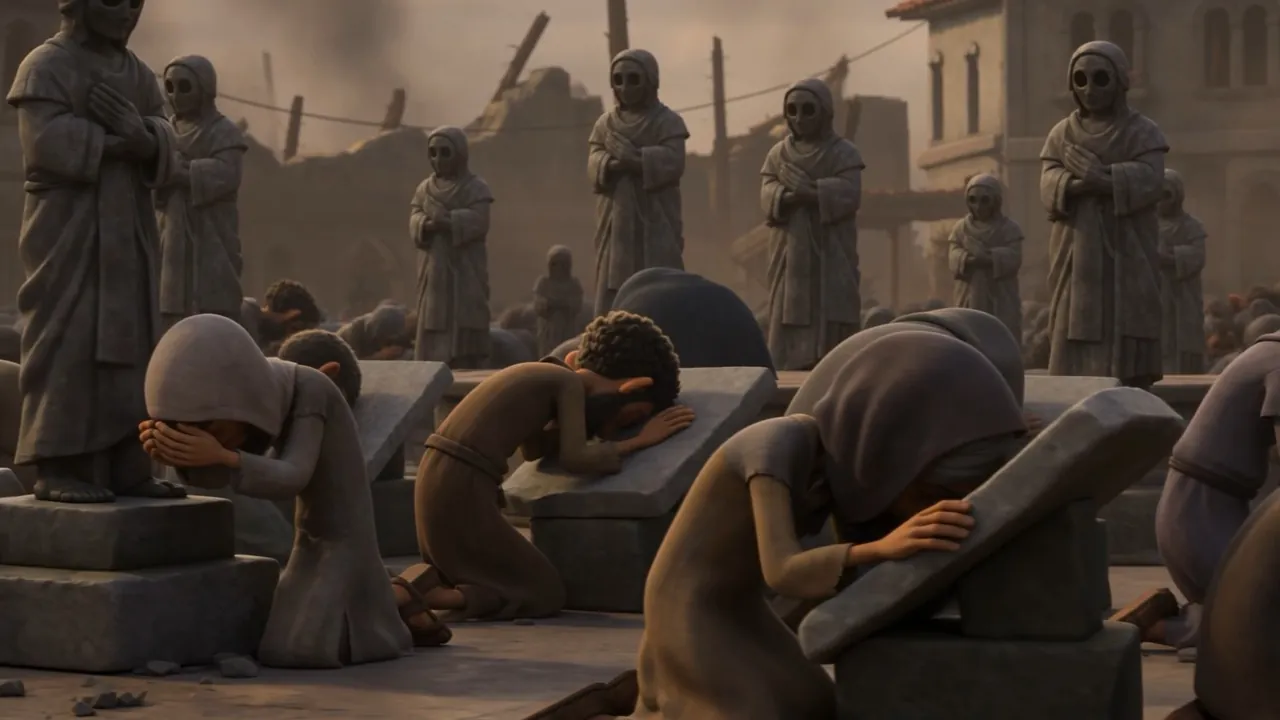
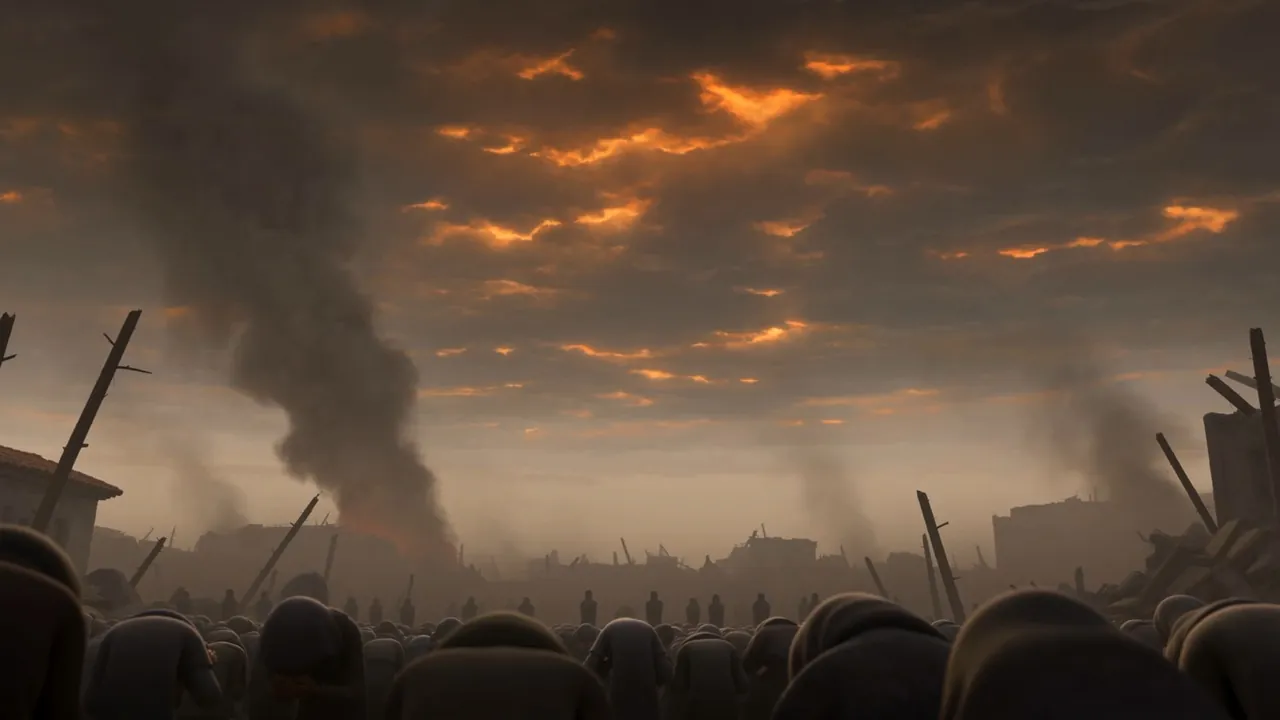
…the idols of gold, and of silver, and of brass, and of stone, and of wood; which can't see, hear, or walk. Along the street a shopkeeper straightens his sign before he answers the neighbour calling from under the rubble. In the square a whole row of people kneel with their foreheads on the stones, bowing together to faces that have no eyes. And over all of it the sky is churning ember and smoke, horizon to horizon, asking with every colour it has. Every knee in the square is bent. Not one of them is bent the right way. Revelation 9 : 20
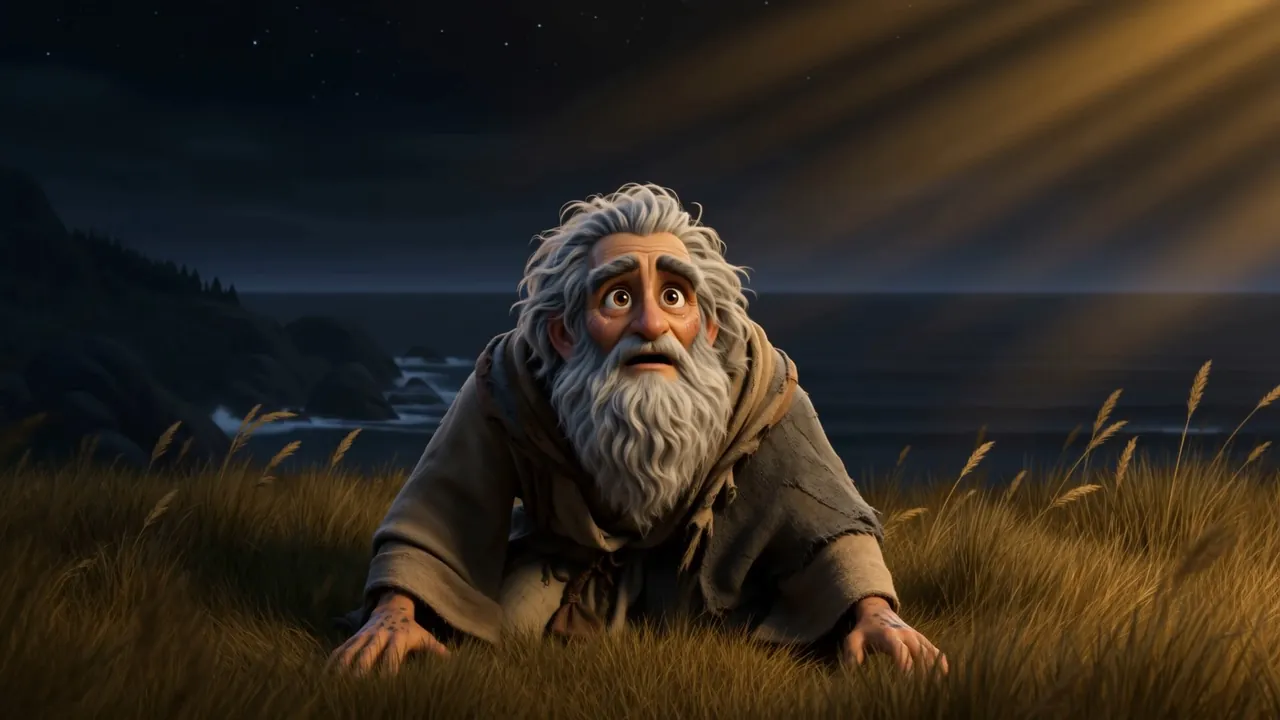
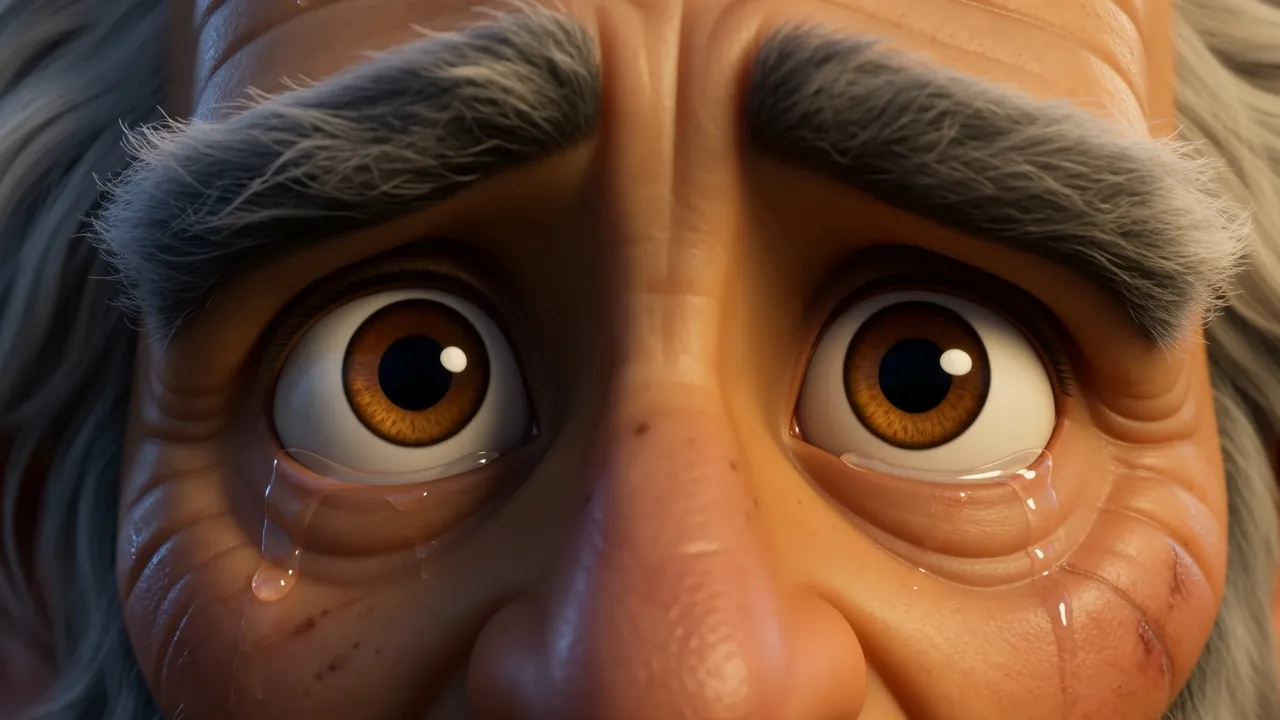
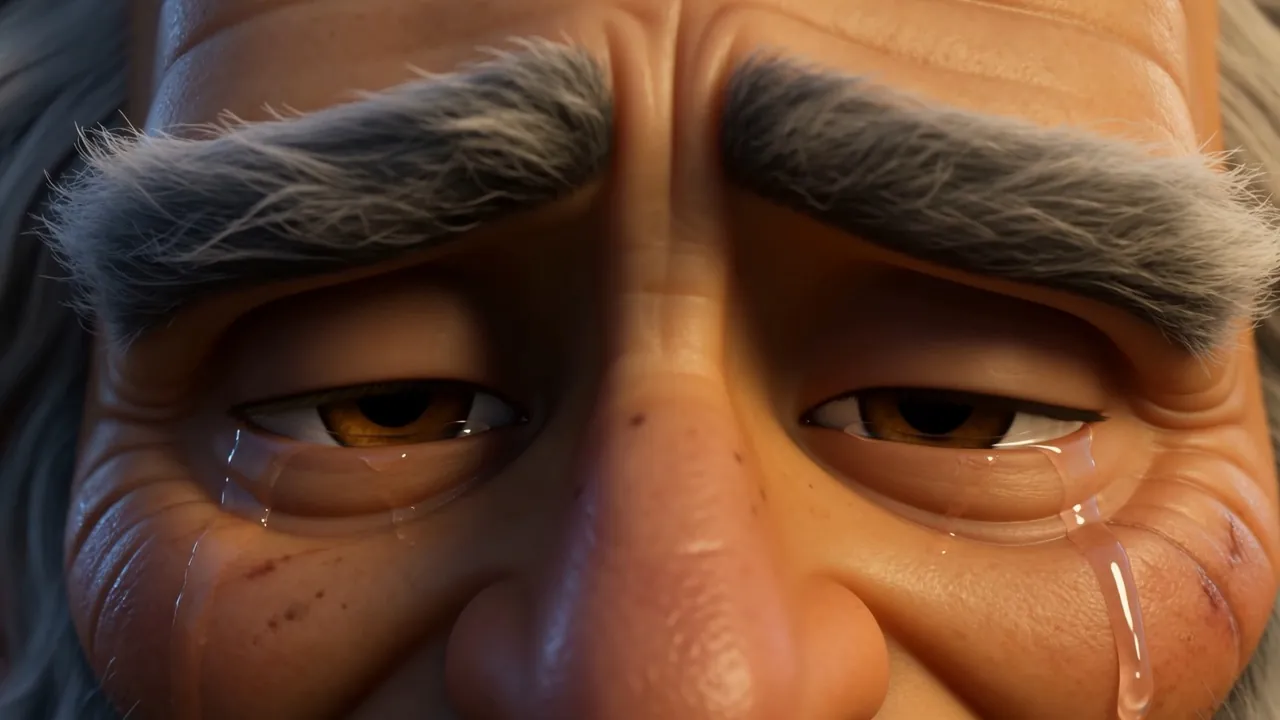
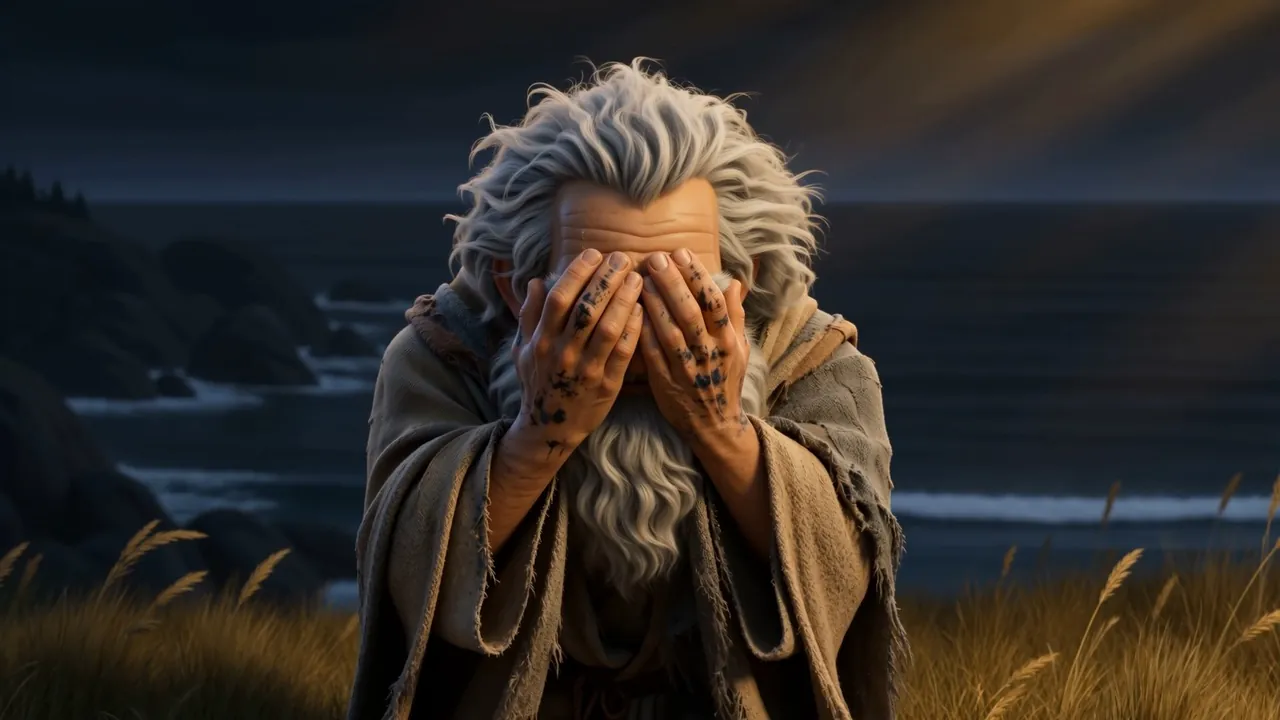
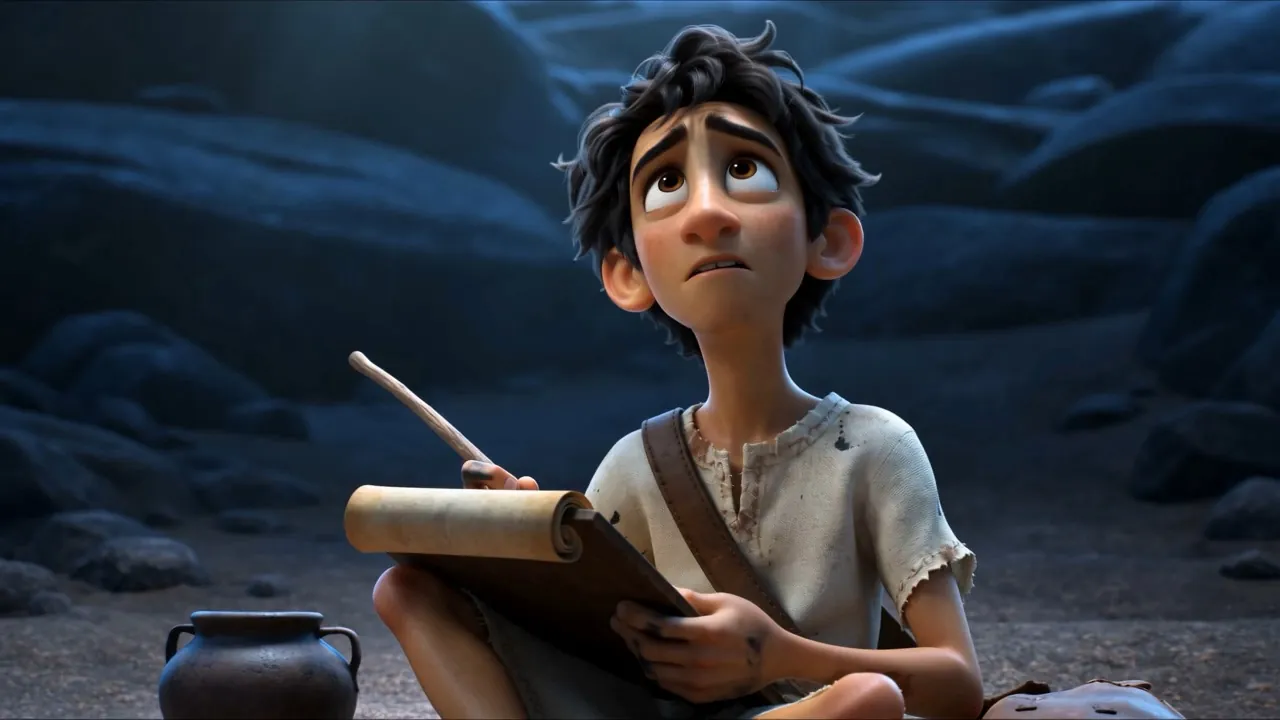
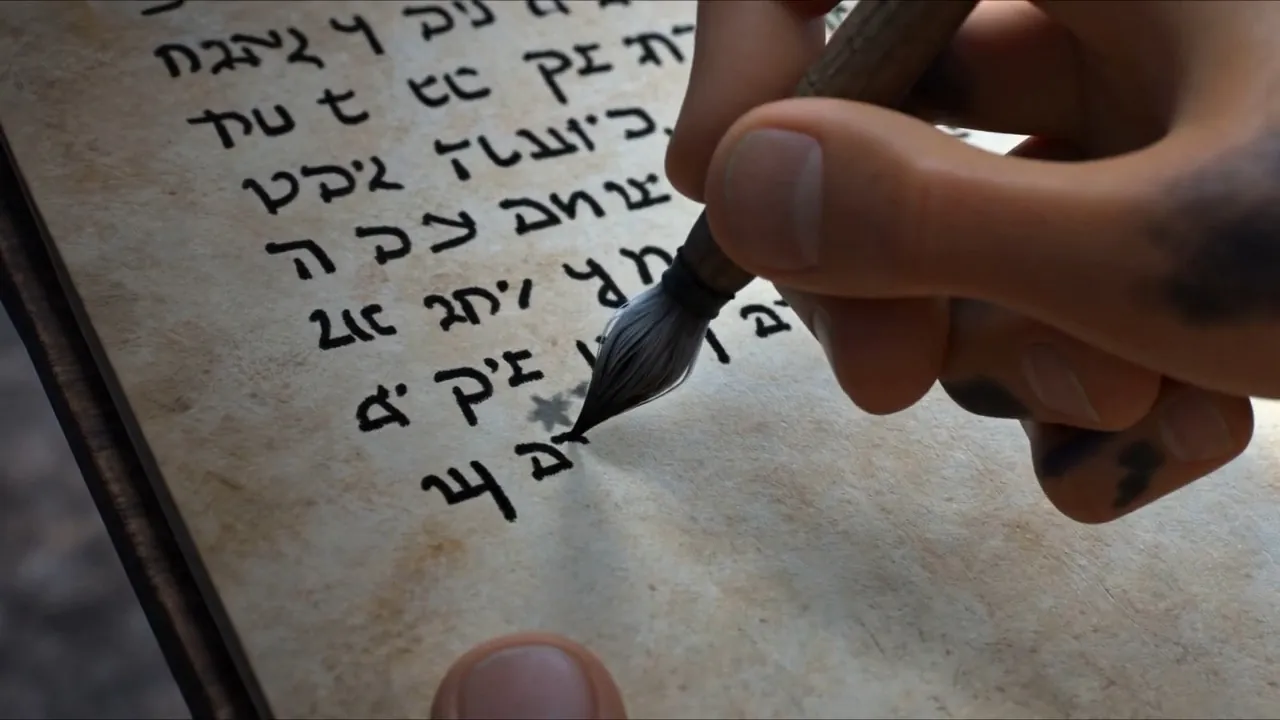
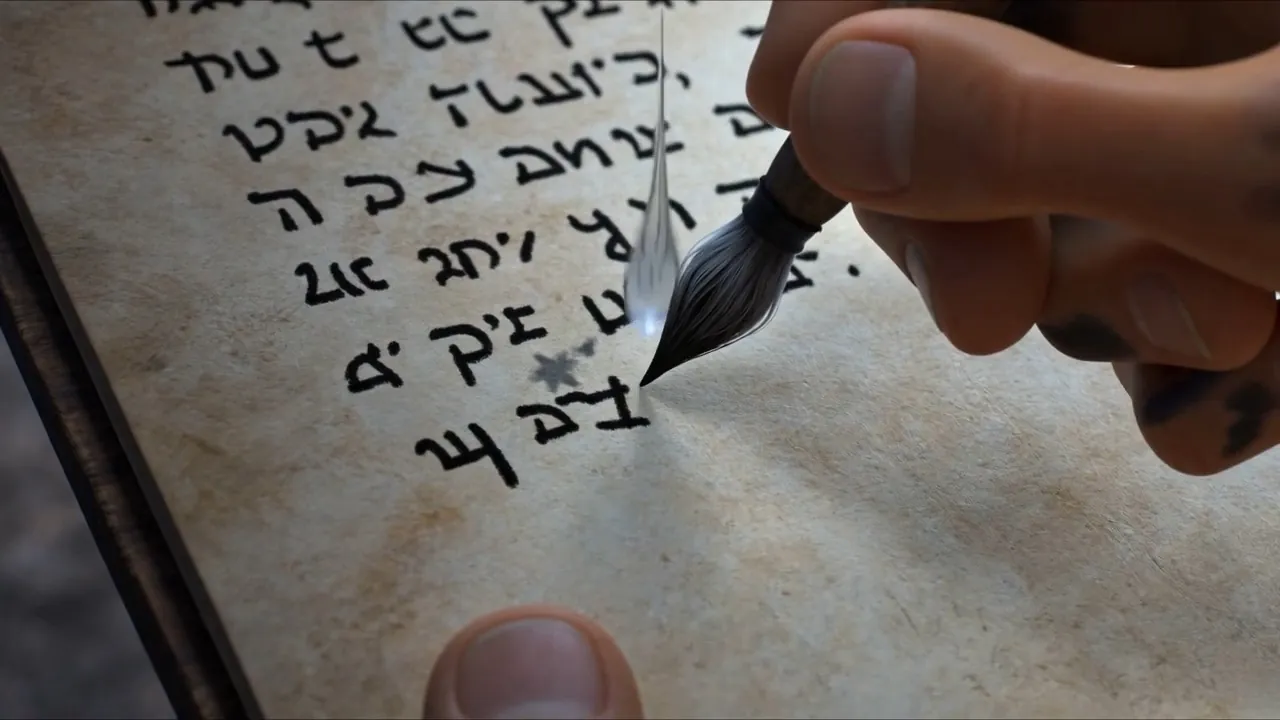
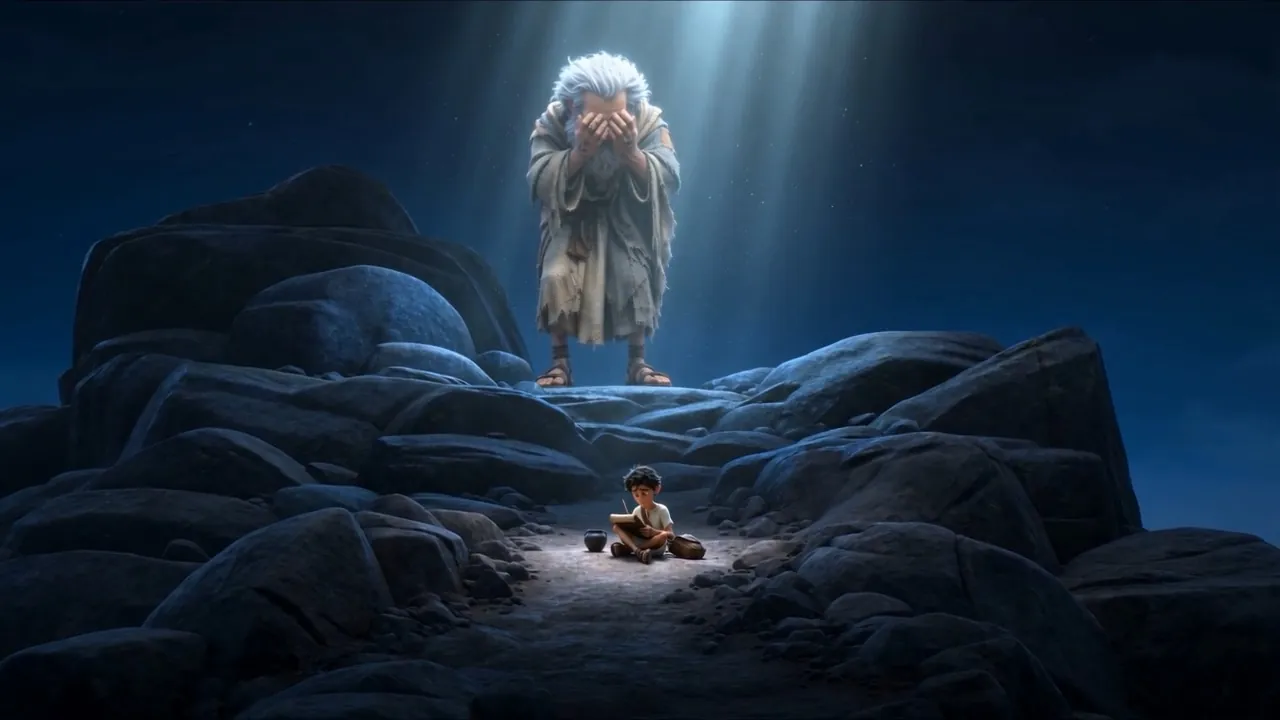
All of this is being shown to one man, and this is where it lands on him. John is kneeling on his headland with the vision hanging over the sea like sheet-lightning that will not end, and the huge boy's eyes — the eyes that drank in the throne and the Lamb and a galaxy of angels without blinking — slowly close. He lifts both big ink-stained hands and covers his face with them. Shoulders very still. Grief past shaking. Further down the path Prochorus watches his teacher grieve, sets his jaw, and goes on writing; and when a tear falls on the wet ink and blooms a little grey star in the letters, he writes around it, and around the next one too. The book was watered as it was written.
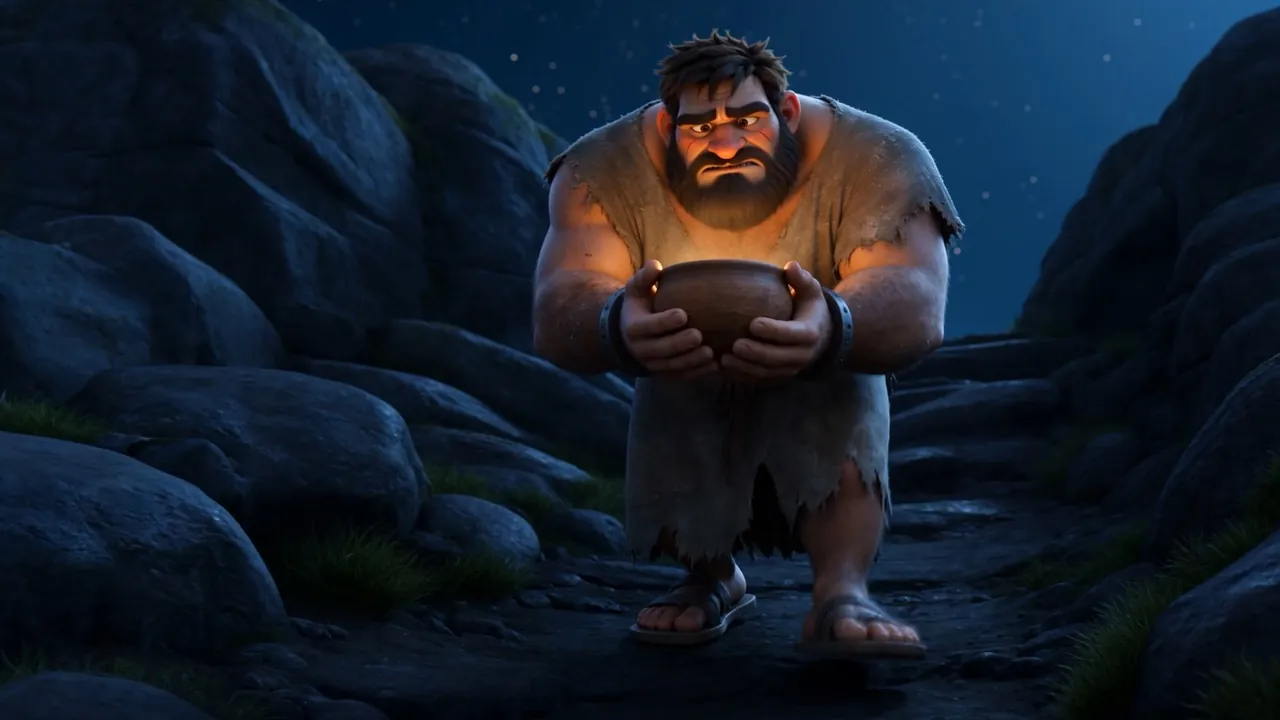
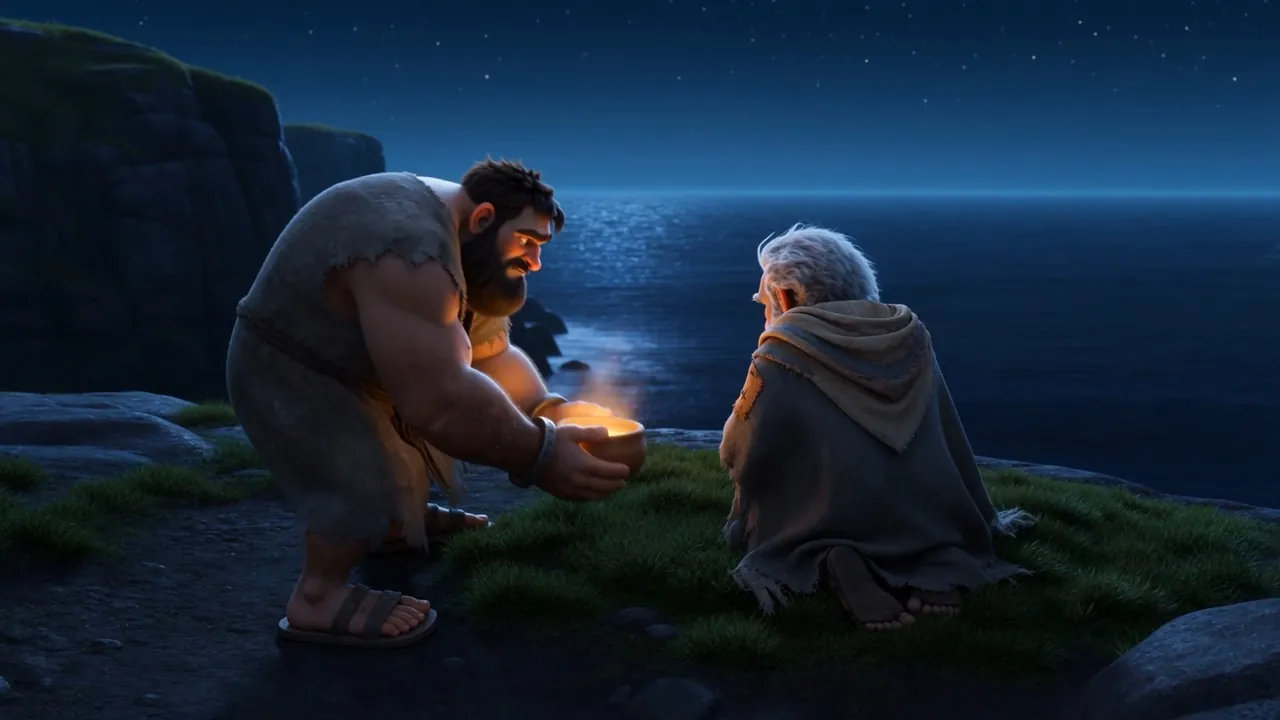
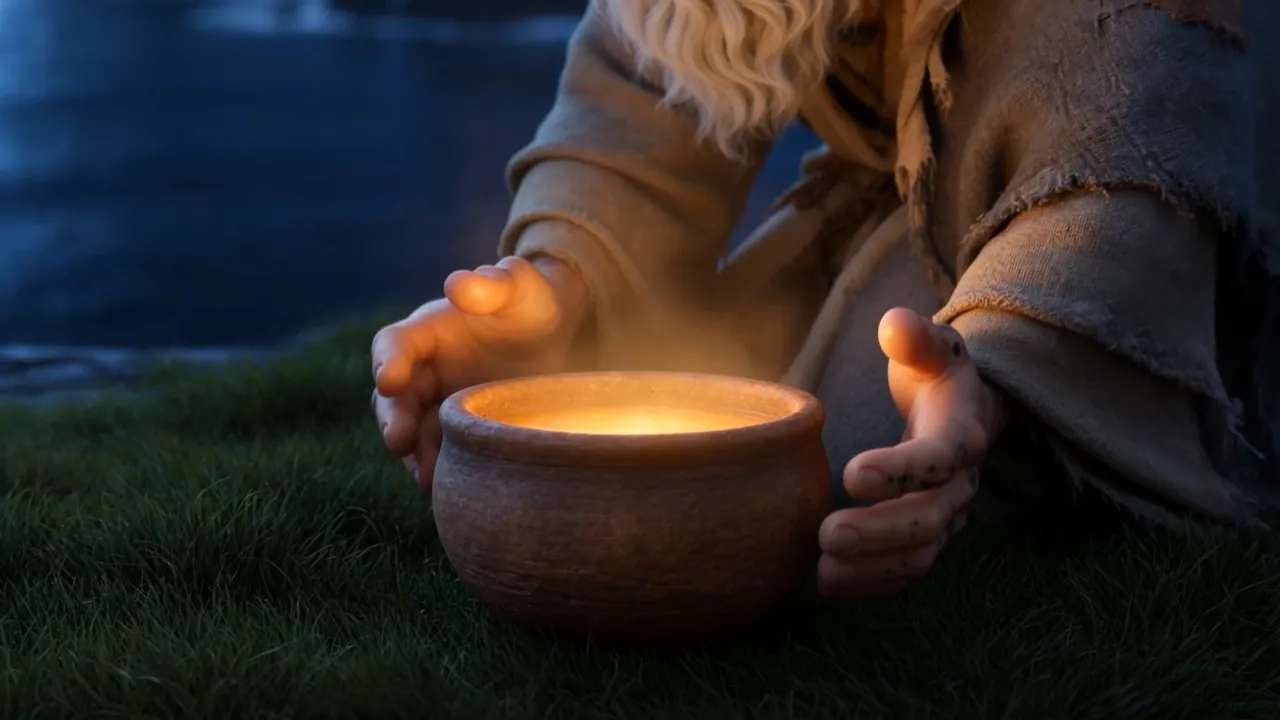
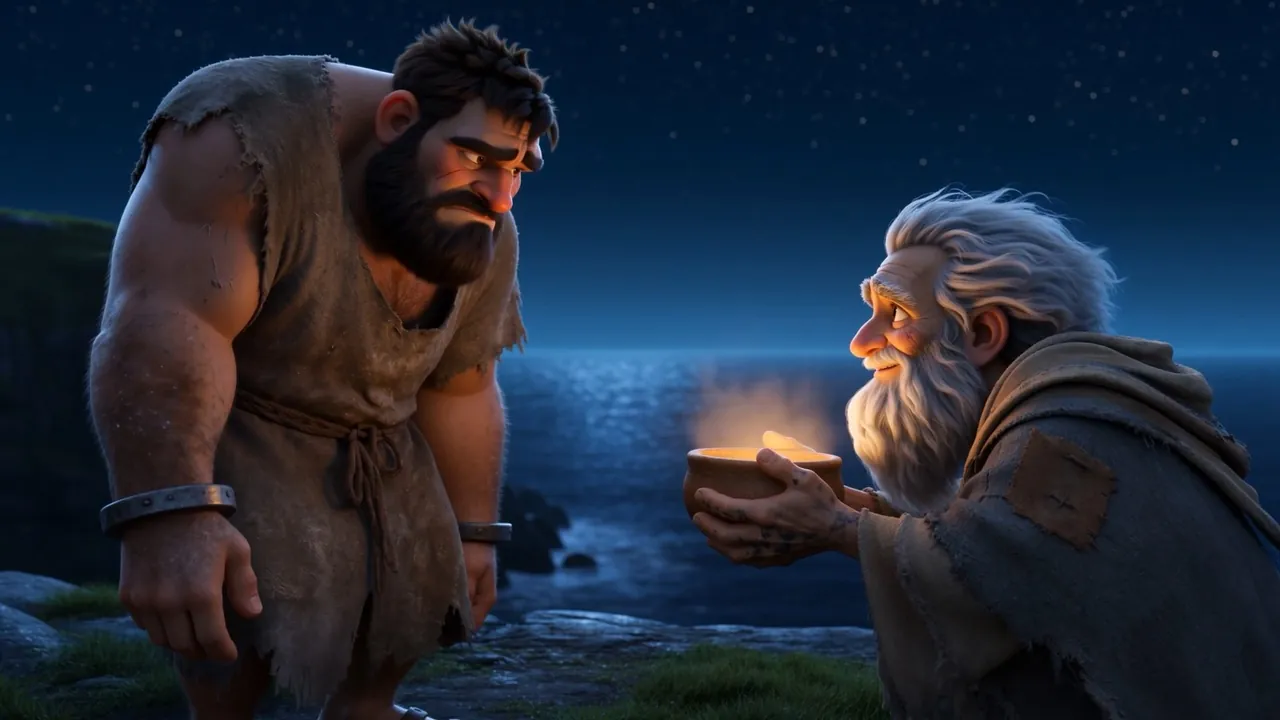
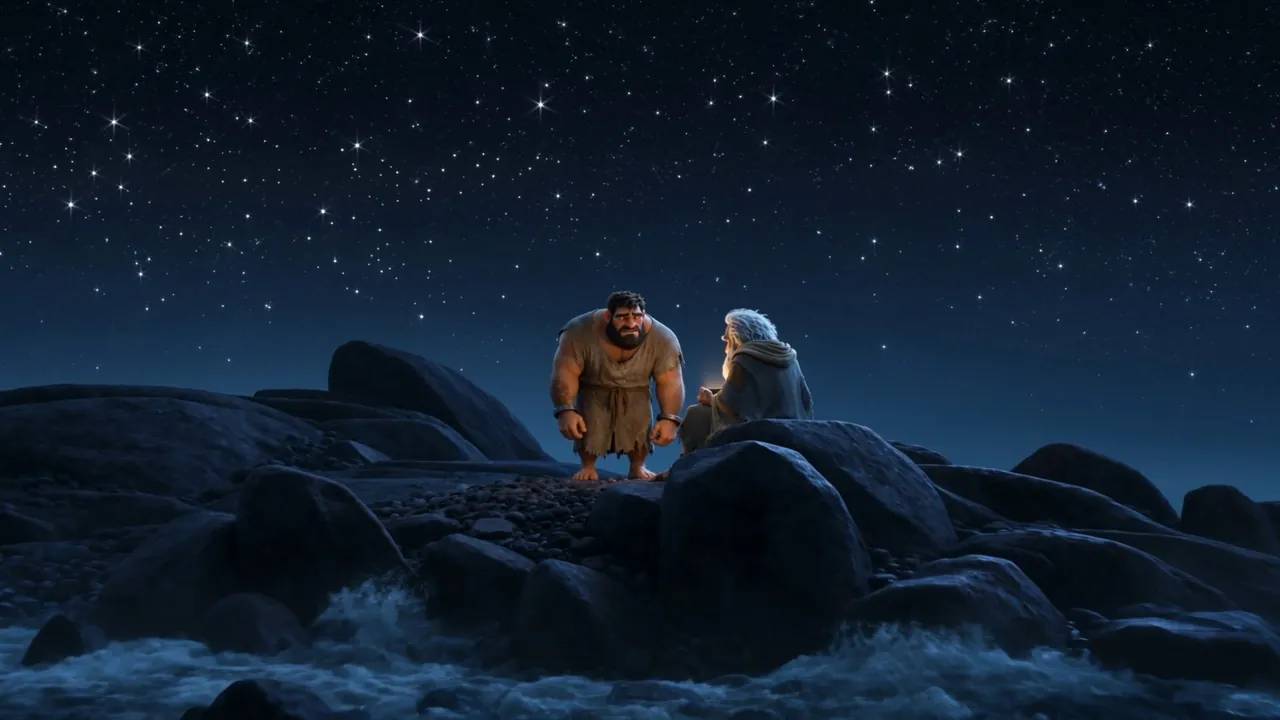
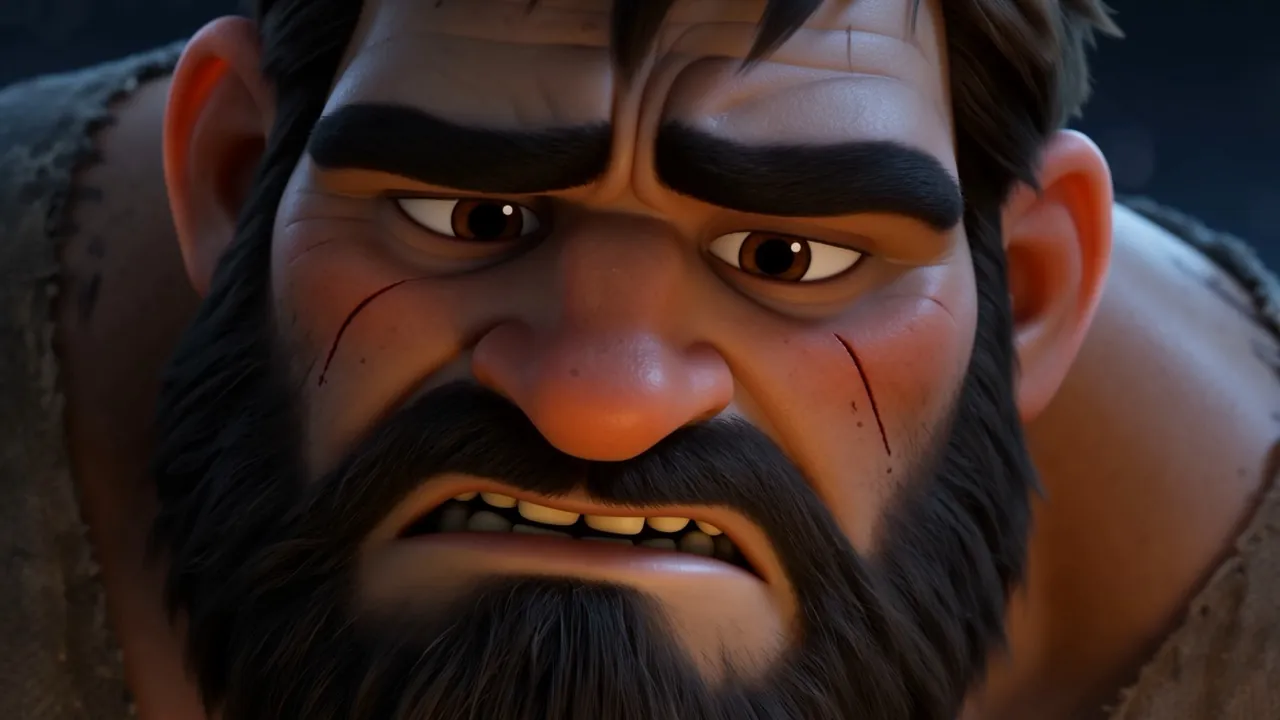
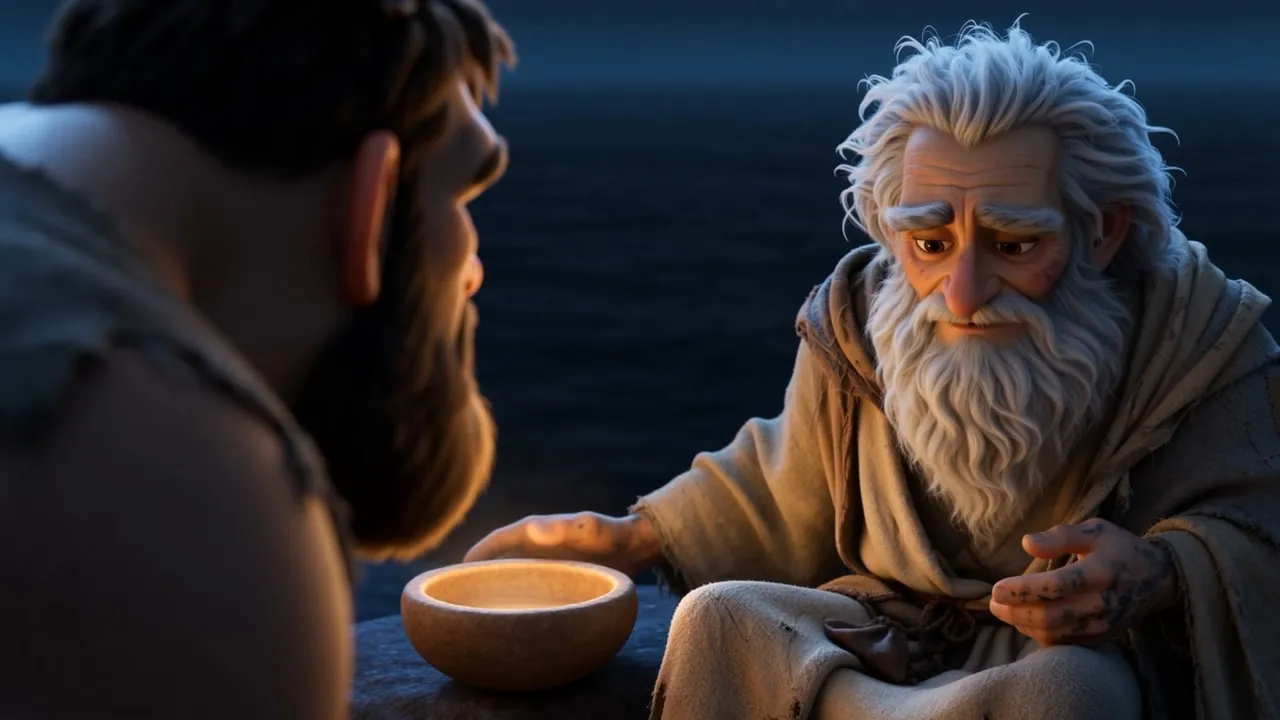
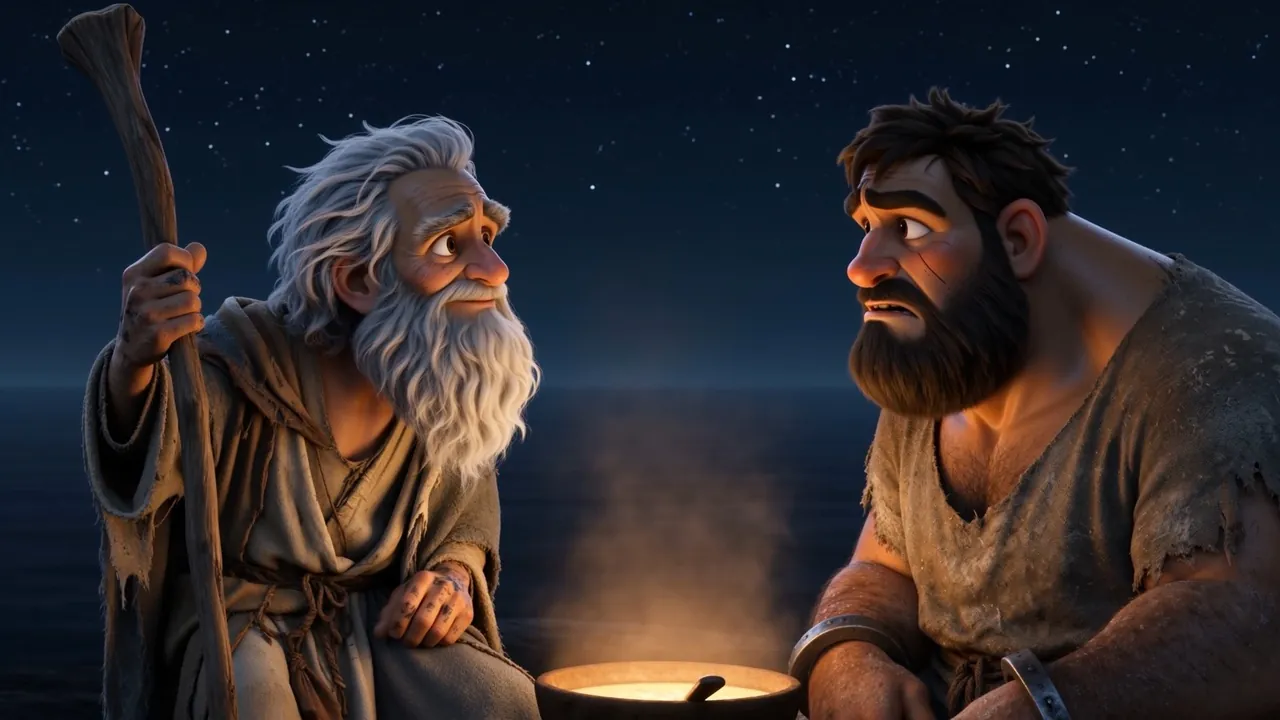
The quarry thief carries the bowl up the dark path the way a man carries a sparrow — too carefully, elbows out, scowling at the soup in case it bolts. He sets it down in the grass beside the kneeling old man. You did not come down for supper. The matron says if you starve on her island she will never forgive you. John takes it in both hands, warm-eyed, and thanks her for it. And then the thief does not go. He shifts. He looks at the sea, and at his own knuckles. And at last, dragged all the way up from the quarry floor, the real question: the things you see, old man — is it bad? What is coming?
"Is it bad? What is coming?"
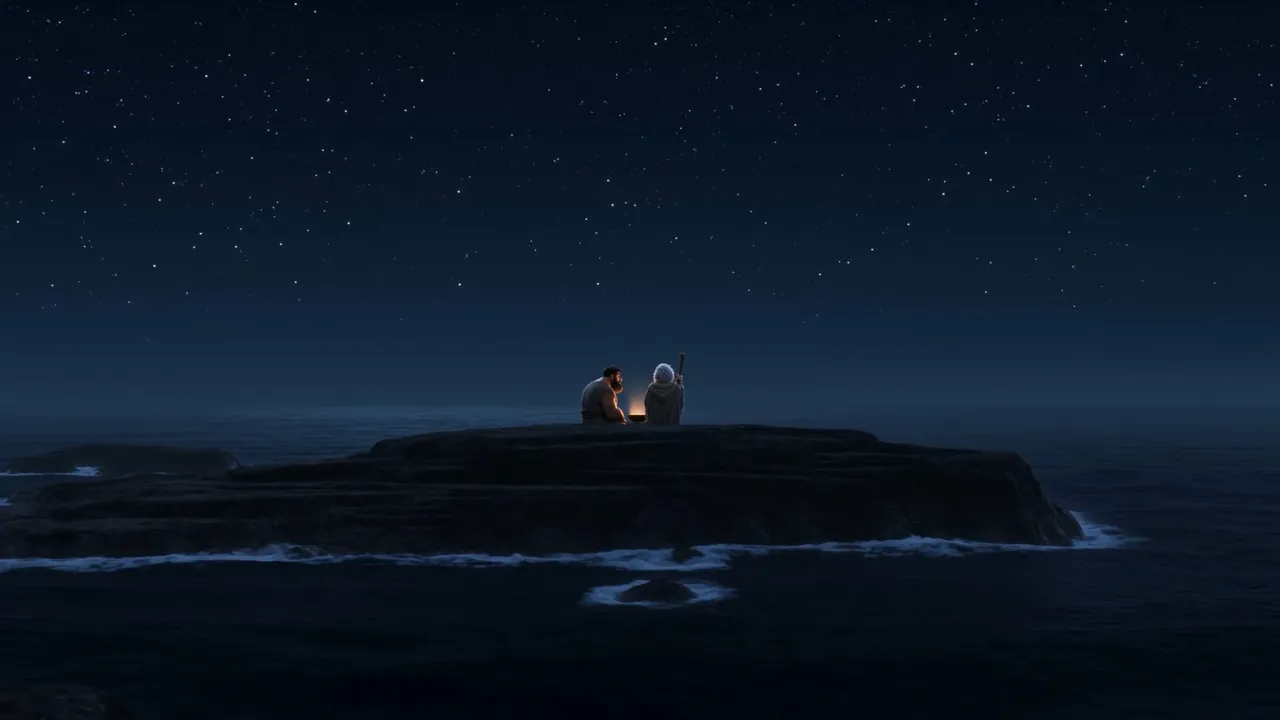
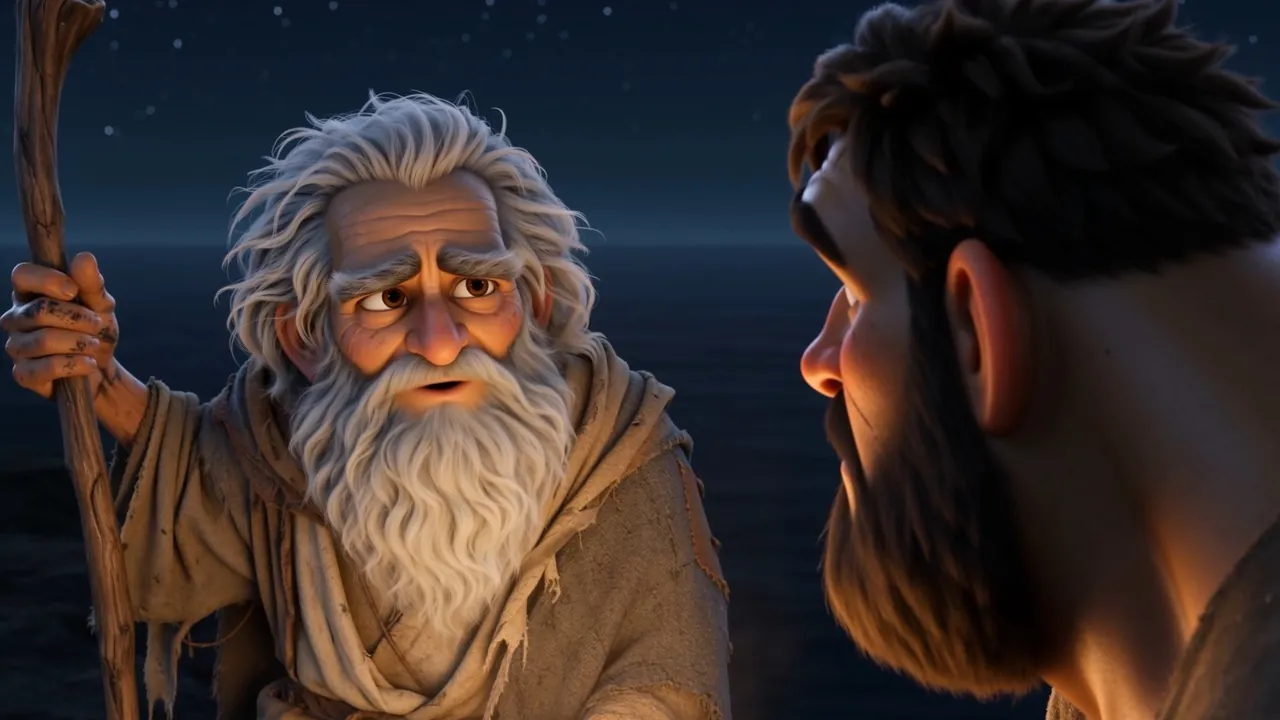
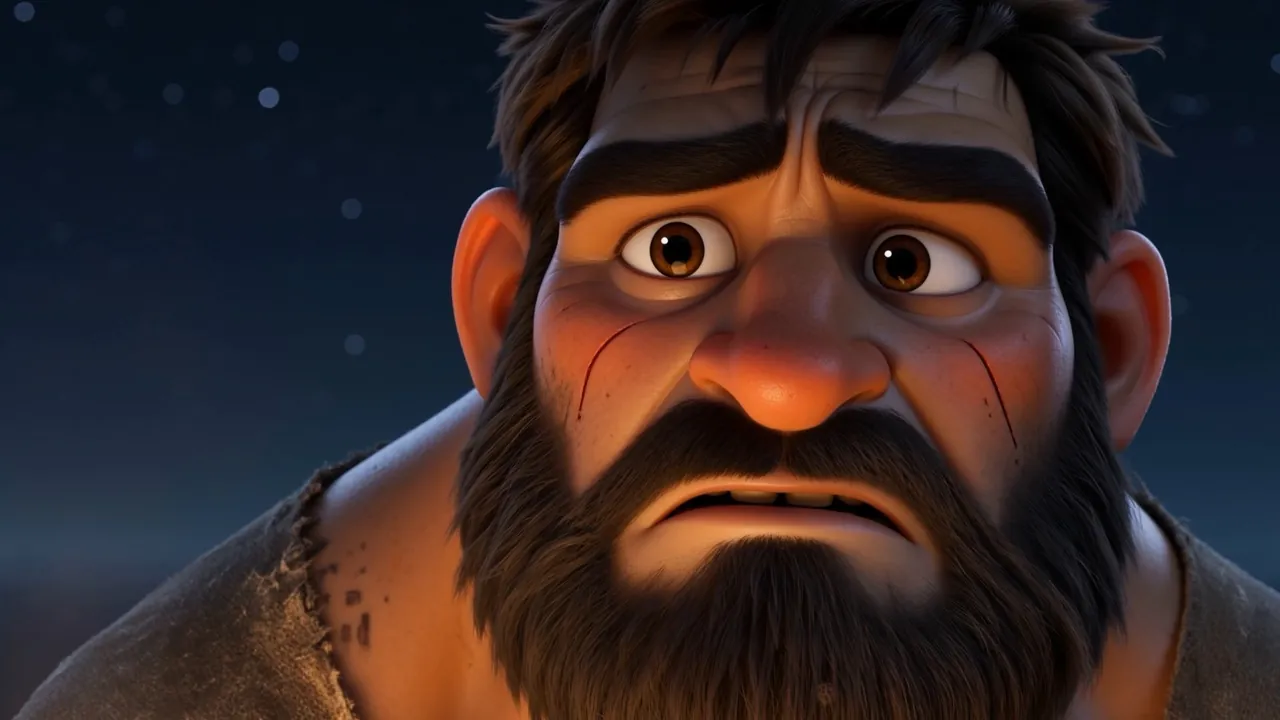
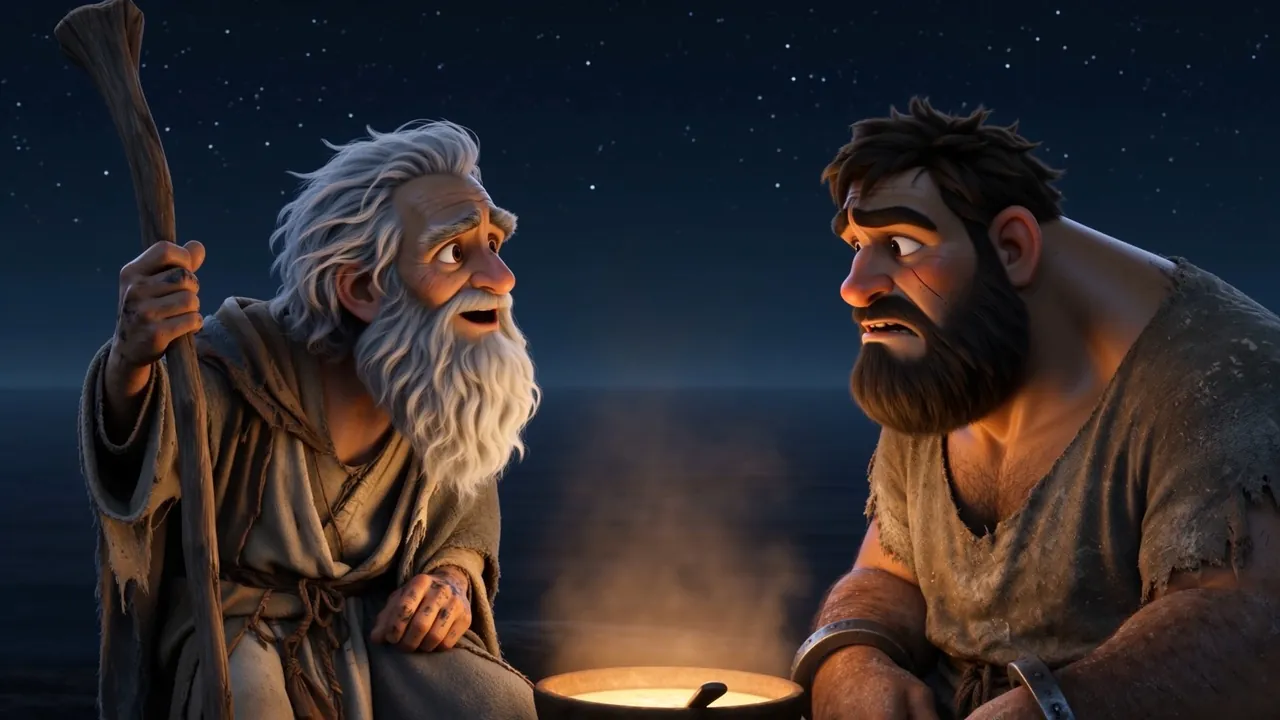
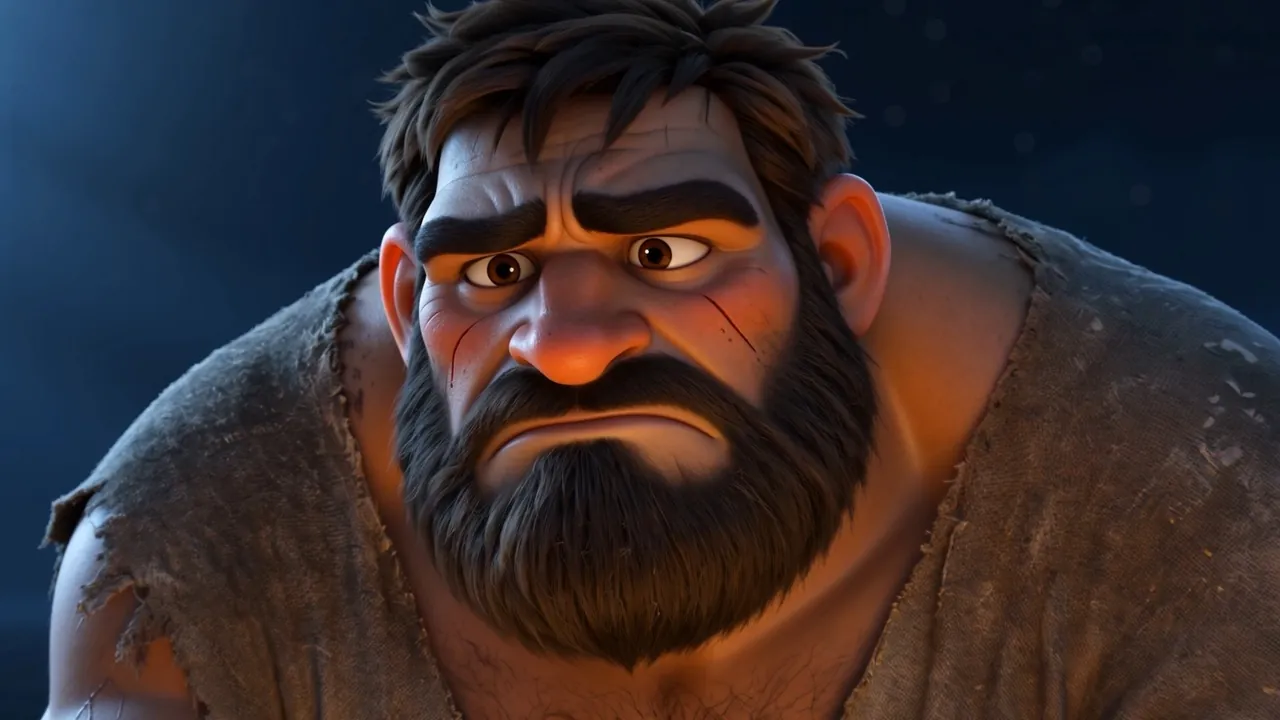
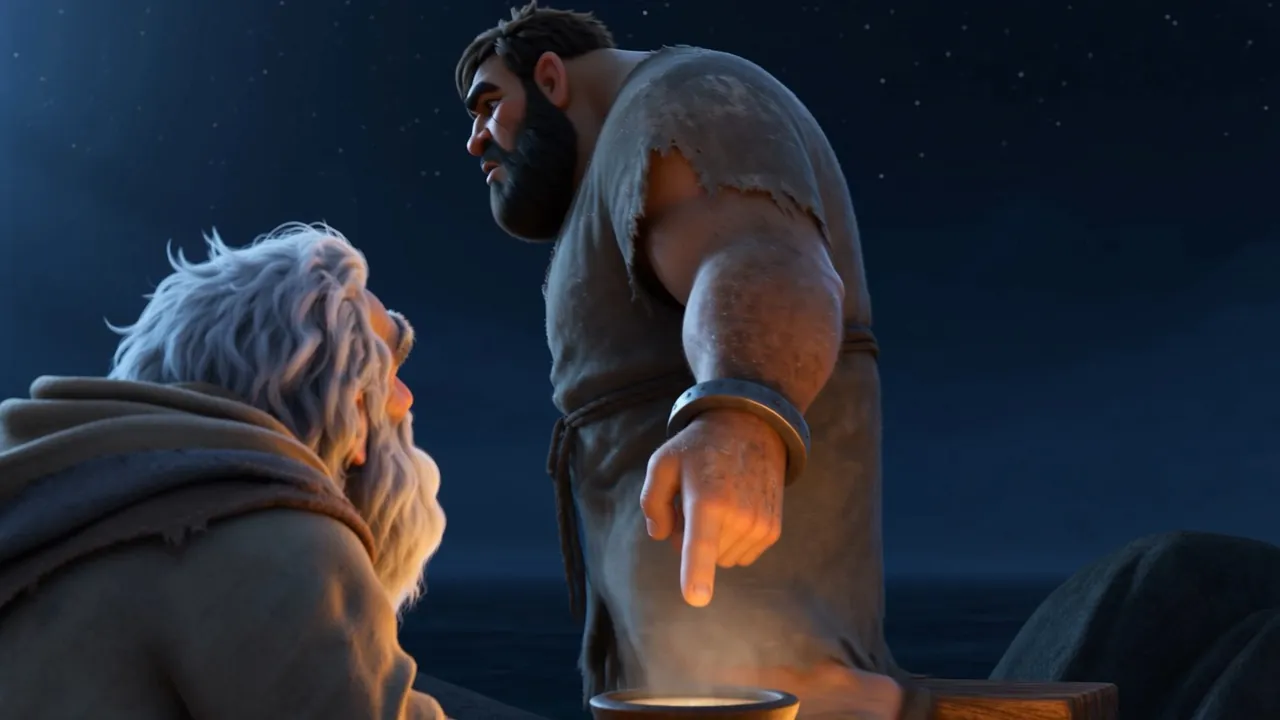
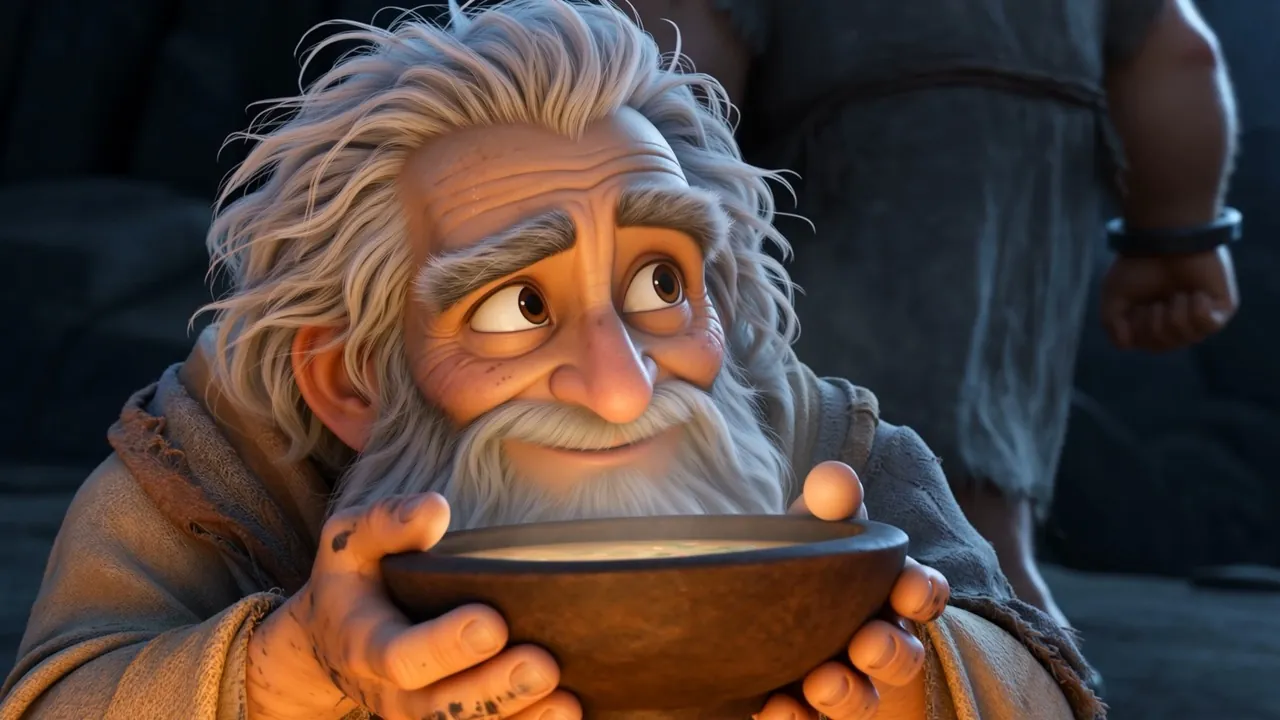
Some of it is hard, friend. Hard as quarry stone. The jaw tightens — stone he understands. Then John turns, and the huge eyes come up warm as banked coals: and then it is more wonderful than anything I have words for. The hard part is not the end of the story. You can watch the man recalculating his whole future with both hands. What comes out is one word — good — and the barest thaw at the corner of the scowl, caught in the act and hastily reinstalled. Then he straightens, turns away, and points a finger at the bowl: eat your soup. And the old man lifts it in both hands like a scolded child, eyes twinkling over the rim.
"The hard part is not the end of the story."
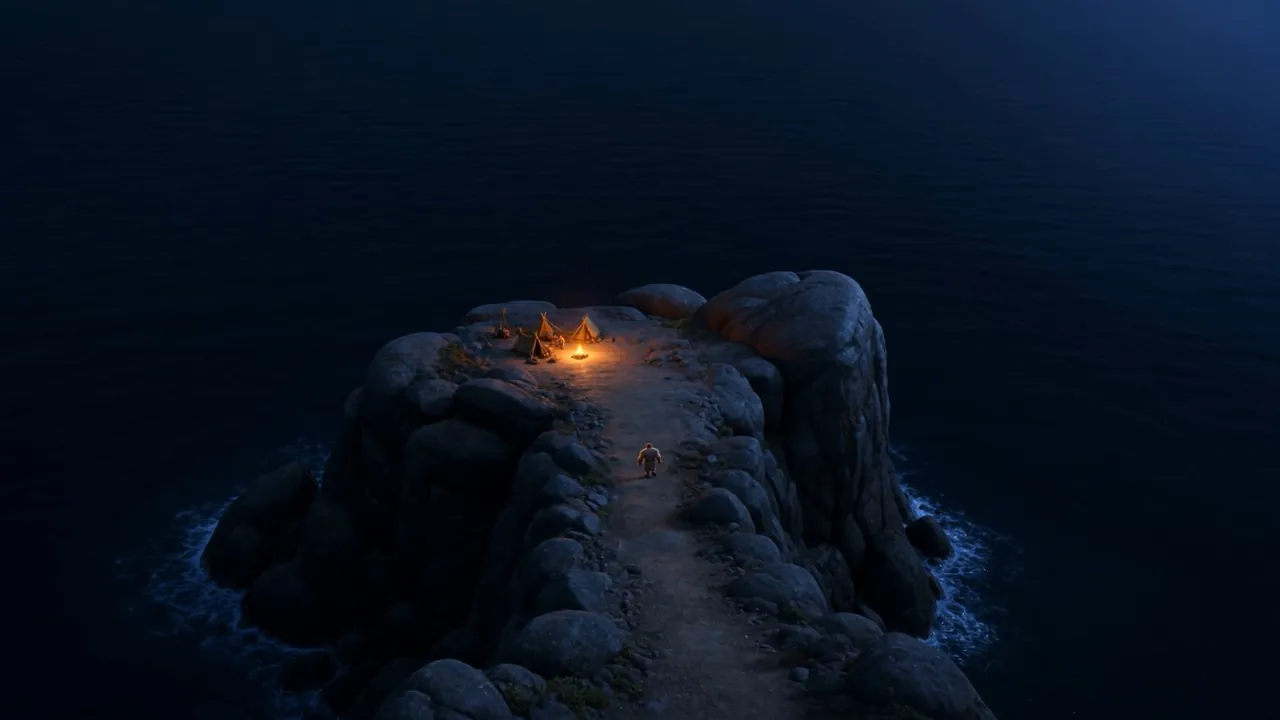
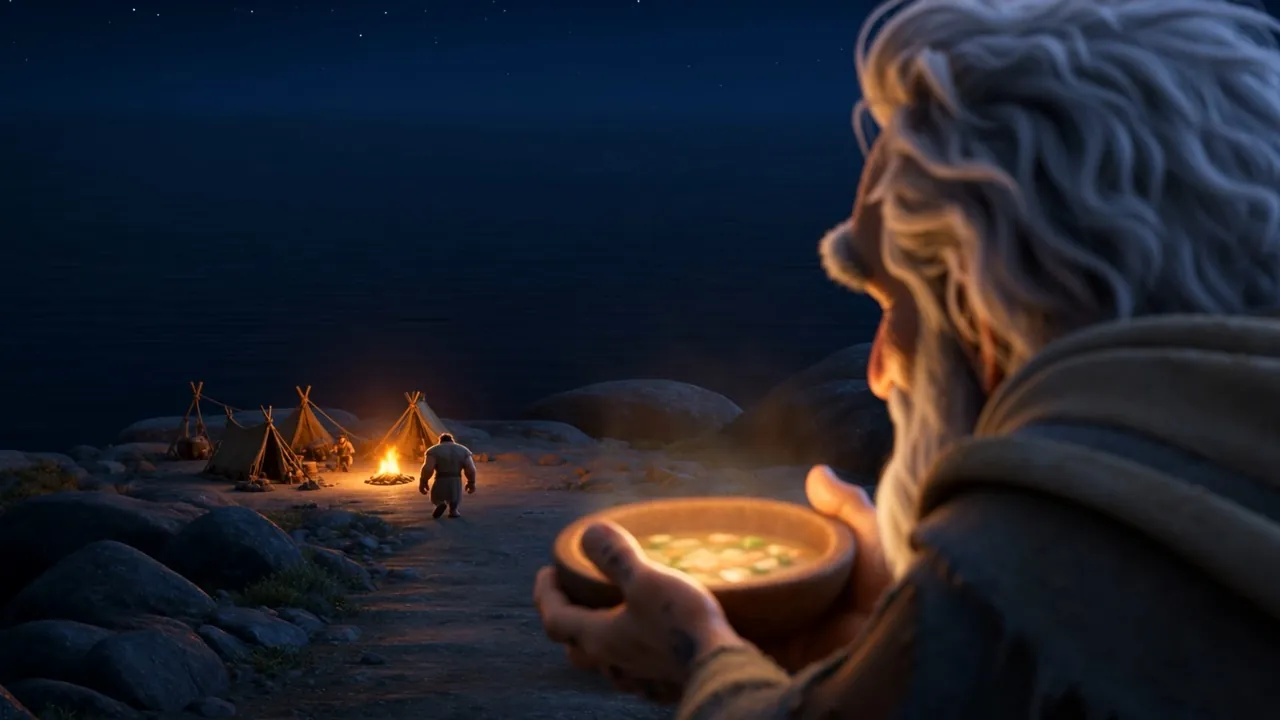
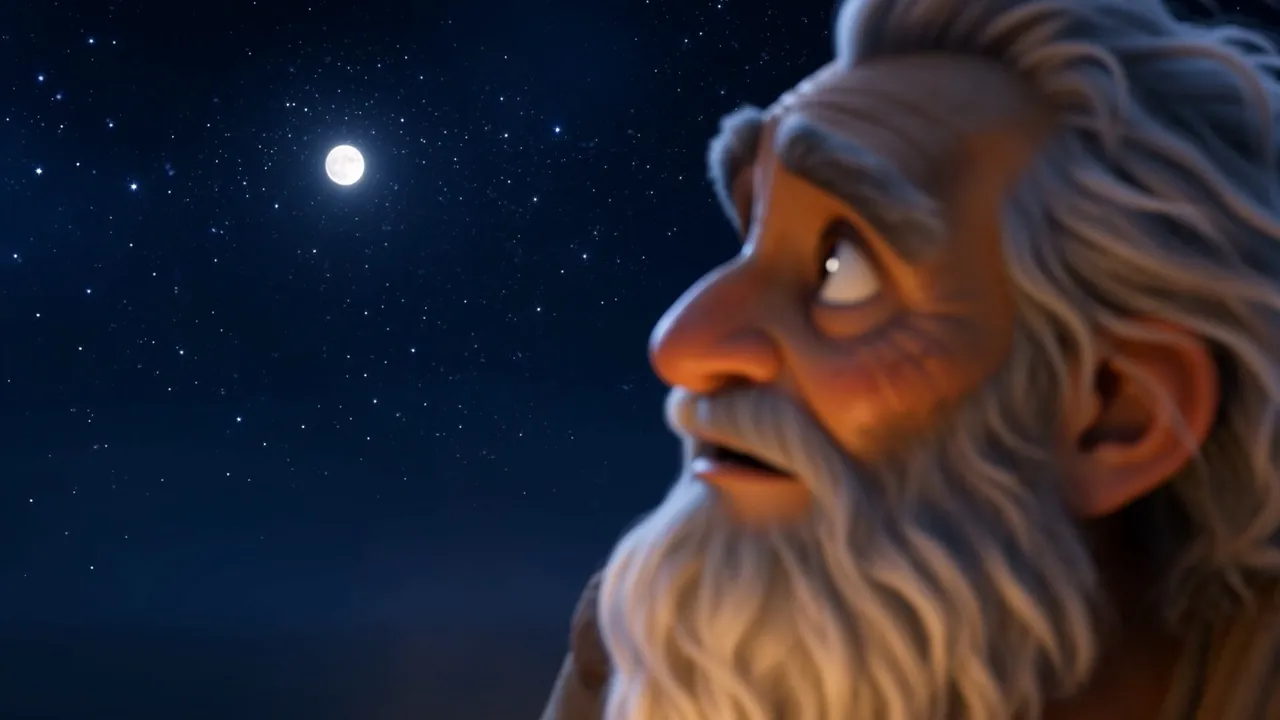
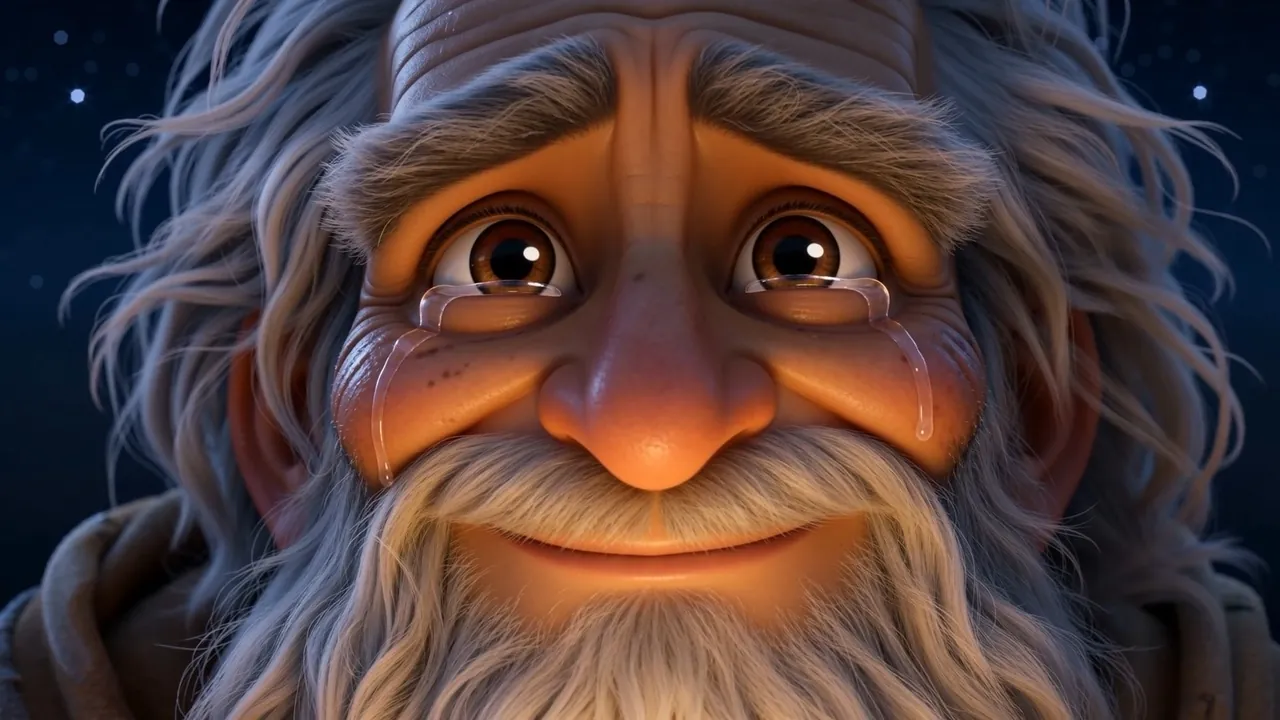
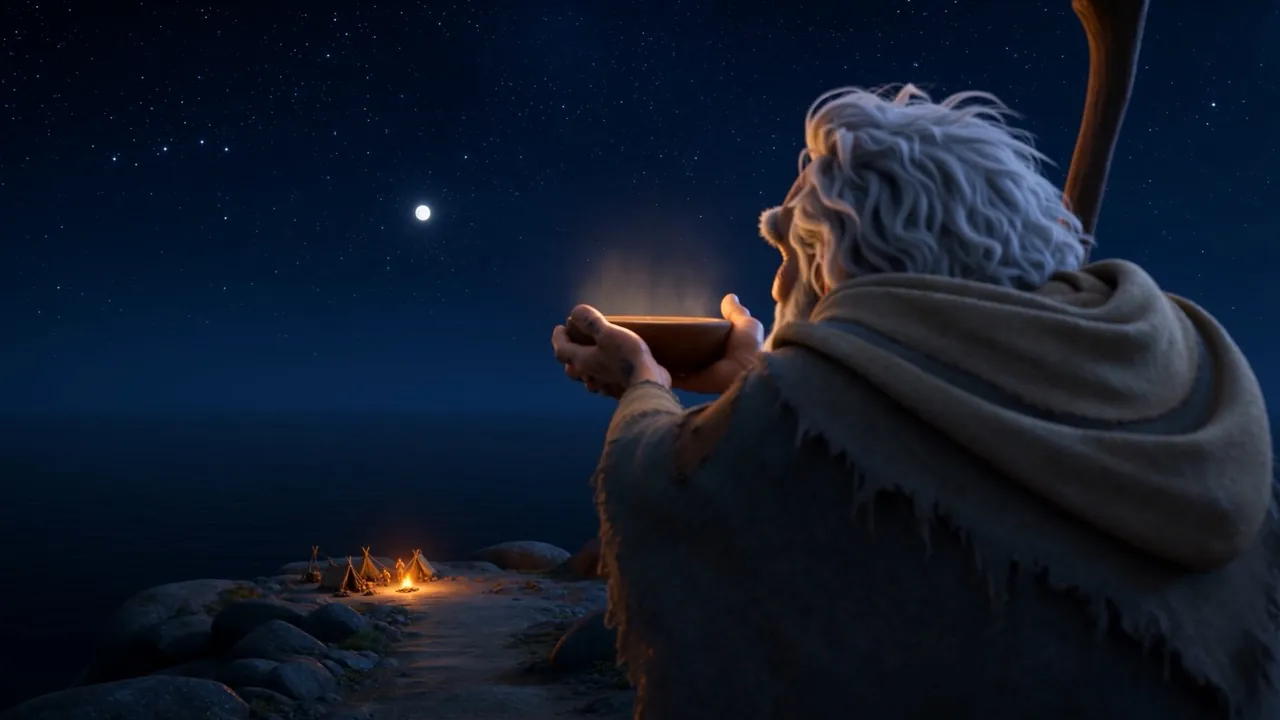
The thief goes down the path sure-footed, a small dense silhouette dropping between the rocks toward the ring of firelight far below, and John watches him the whole way down the way shepherds watch. Then he looks at the soup. Then up at the stars. Then back down at the little figure reaching the fire. And he smiles — slow and full, tears and starlight in the same huge eyes — and lifts the bowl an inch toward heaven: a toast, to Whoever is clearly still hiring. The ledger of the night: one bowl of soup received; one man walking home.
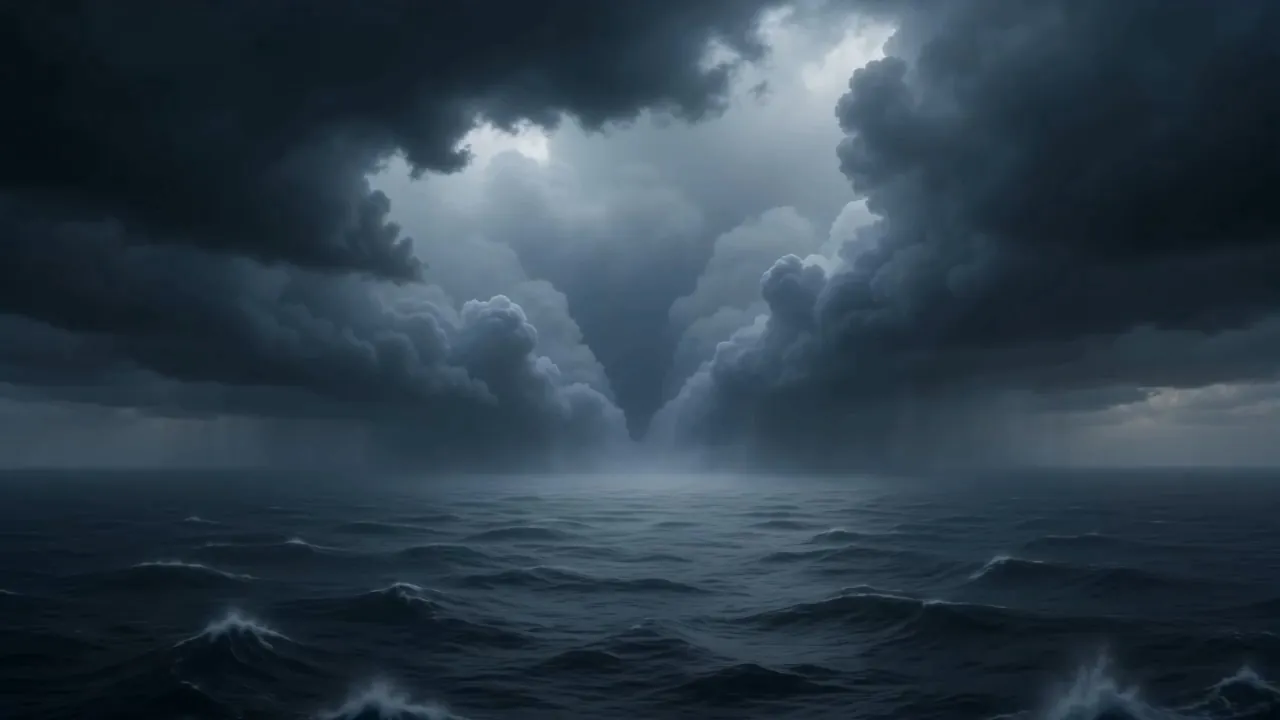
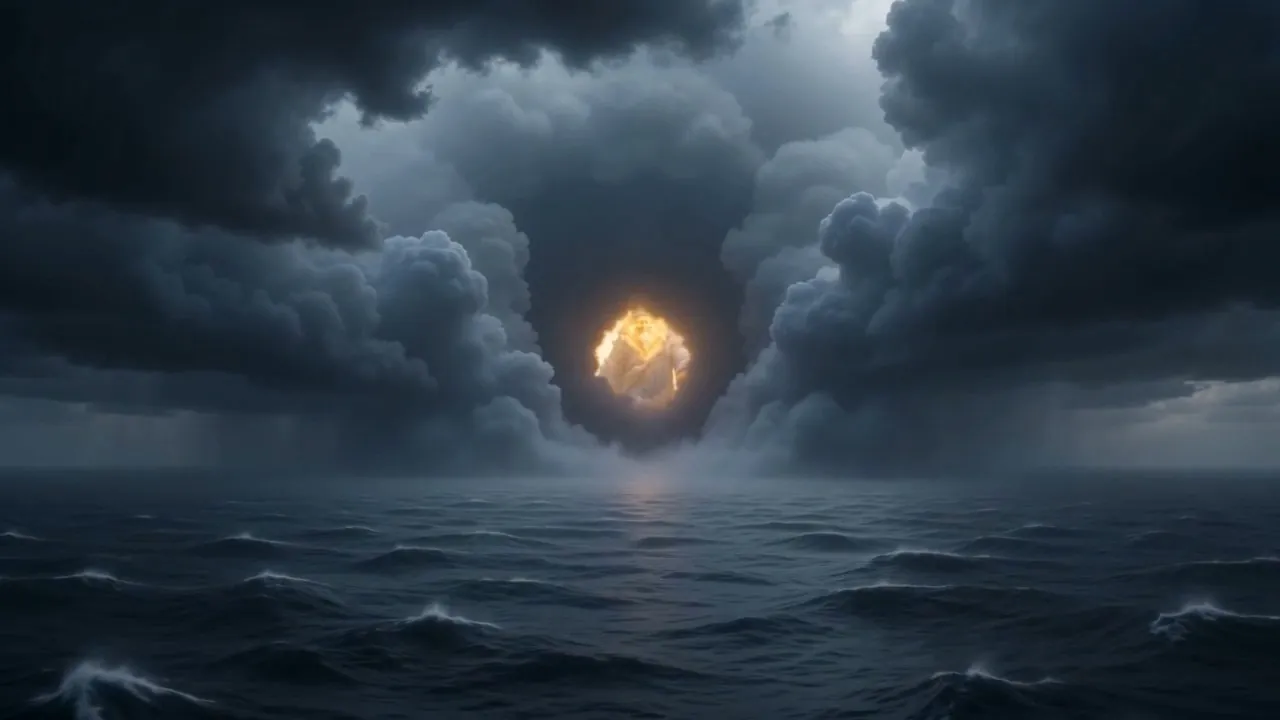
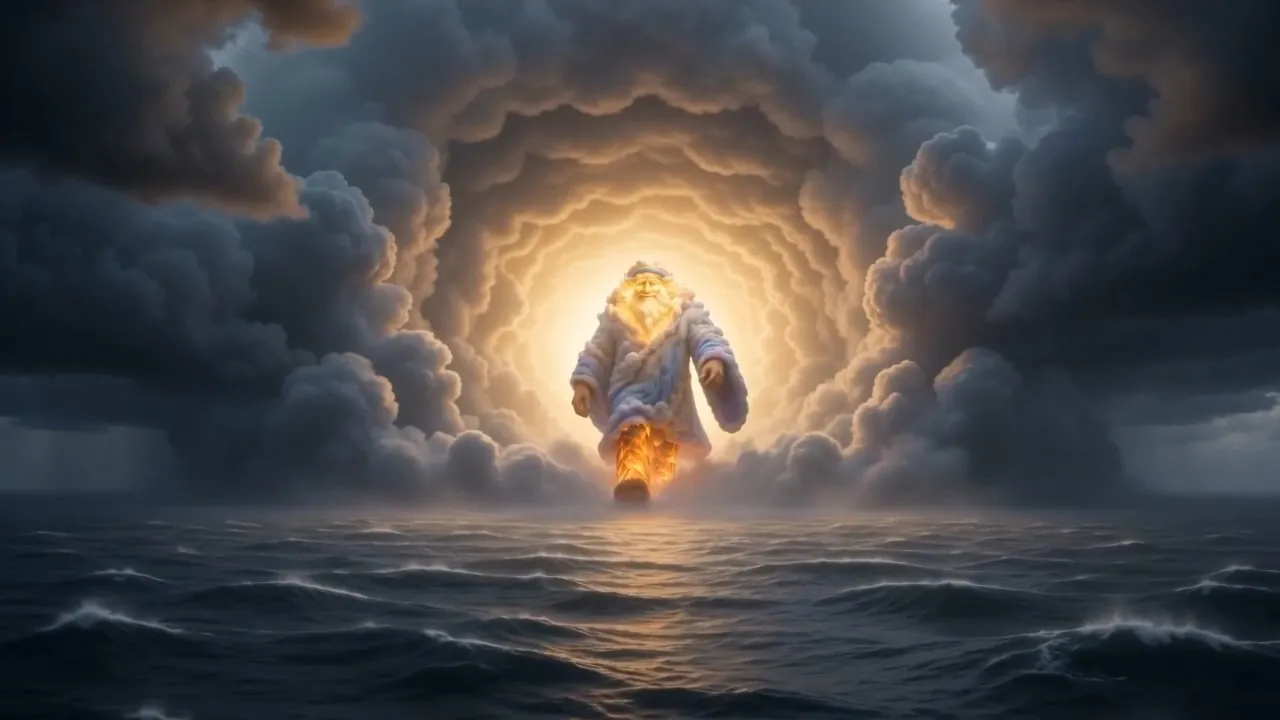
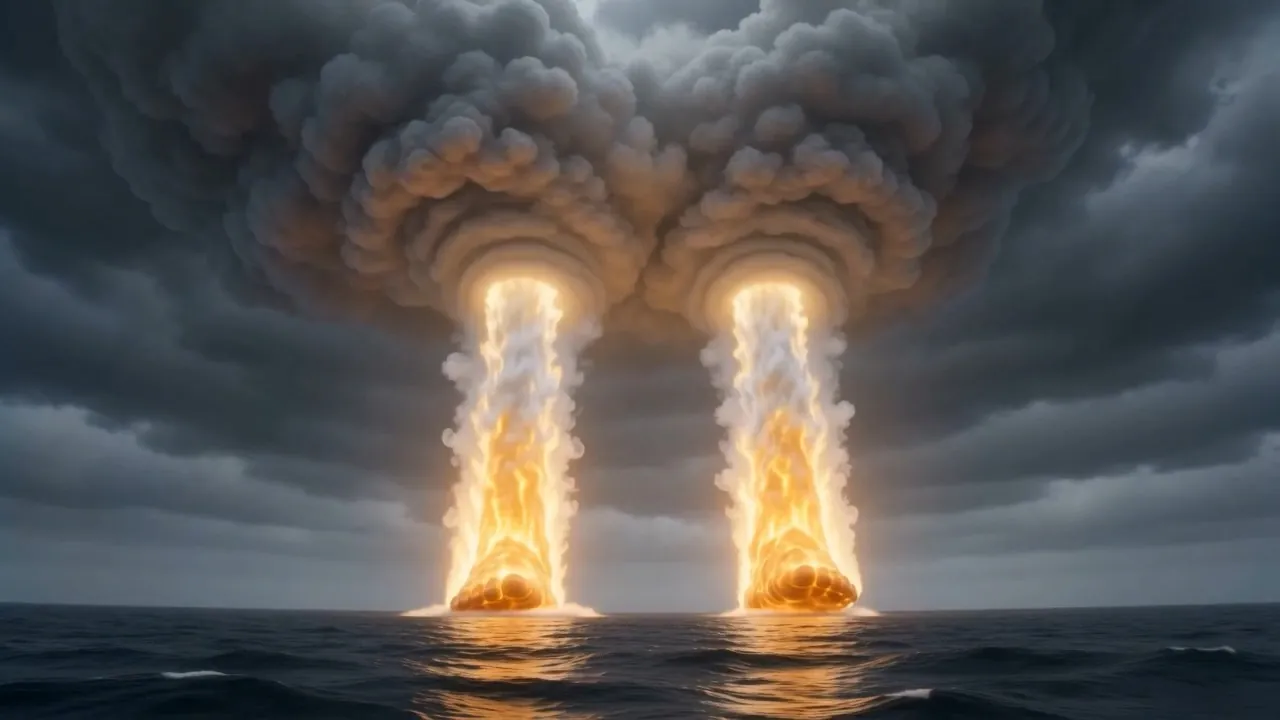
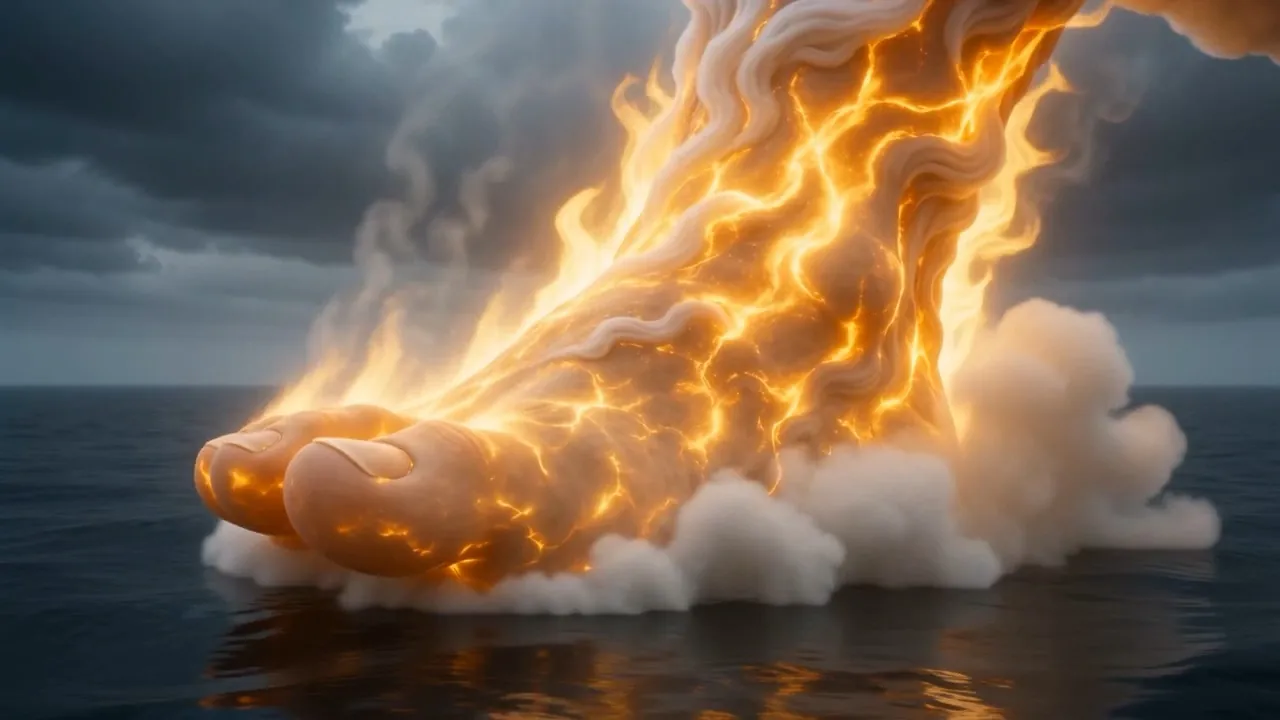
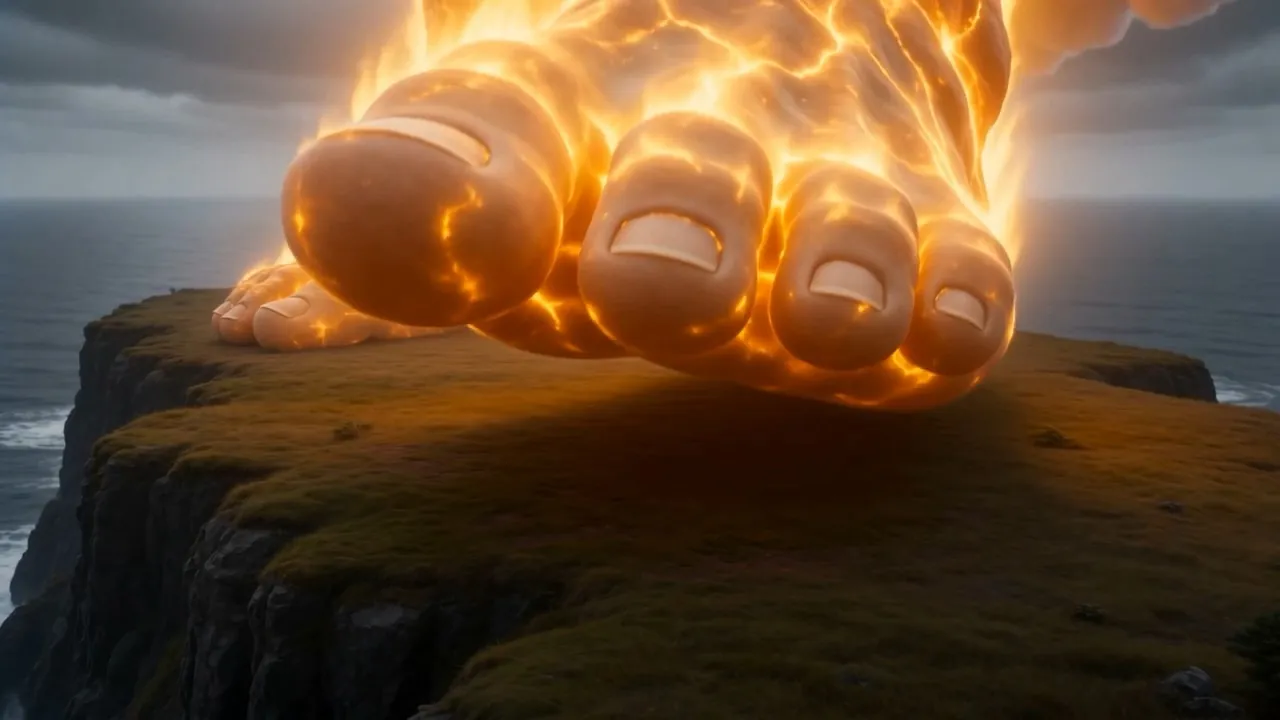
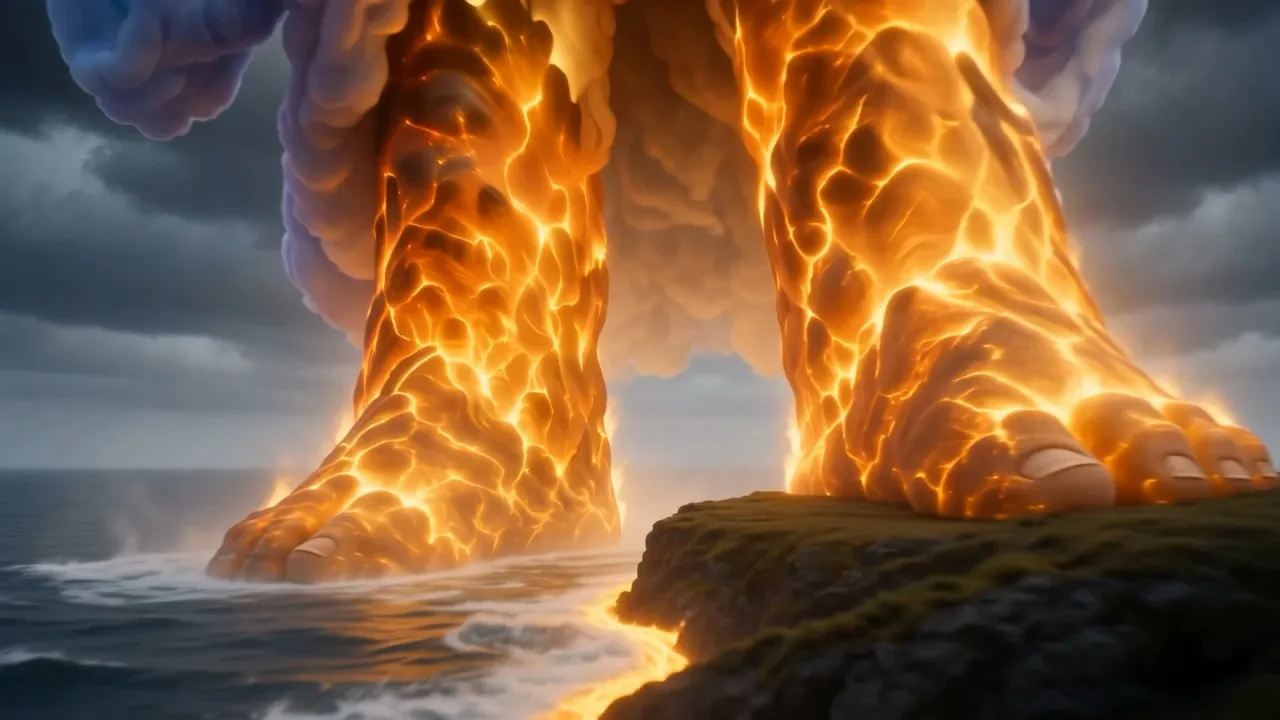
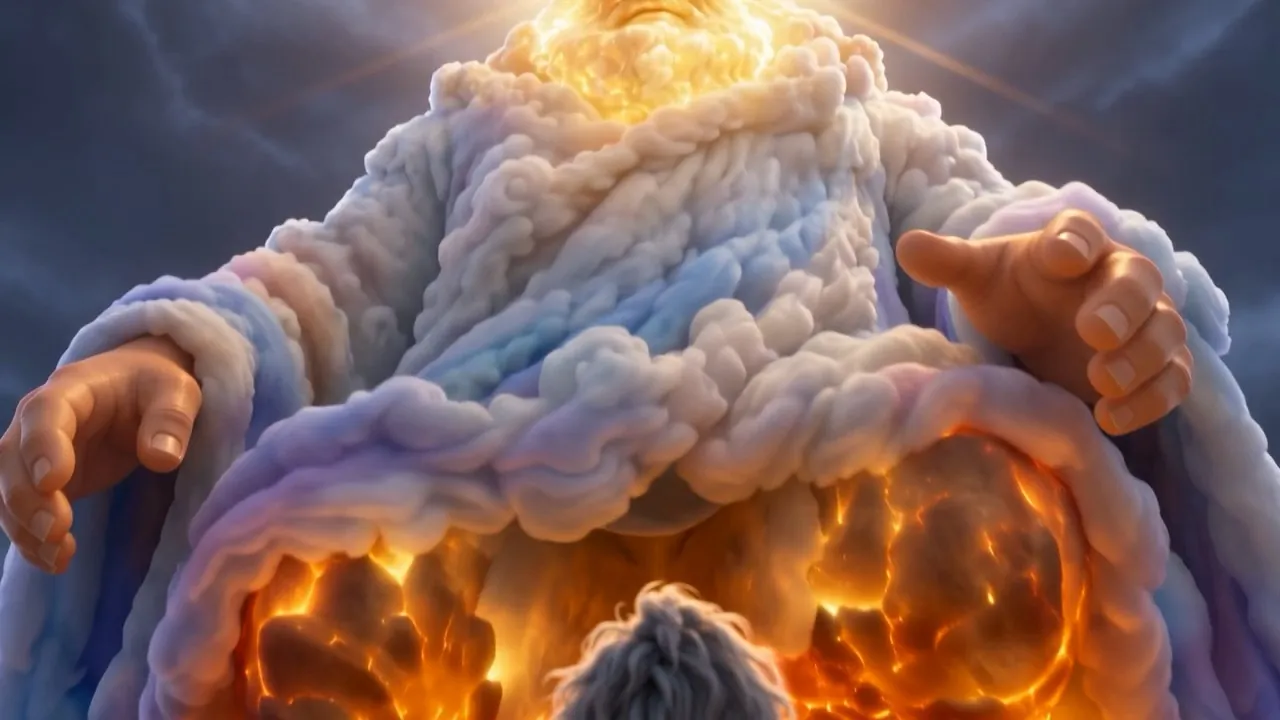
I saw a mighty angel coming down out of the sky, clothed with a cloud. A rainbow was on his head. His face was like the sun, and his feet like pillars of fire. He wears the weather — hems of rain, folds of squall, lightning stitched along the sleeve-lines — and a full arc of living colour rests on his brow like a coronet above a face no eye can finish looking at. Then he plants his feet. The right one comes down on the open sea, which takes the weight like paving and sends rings of calm spreading out around the burning sole; the left one settles on the dark headland with a deep boom, and the grass lies flat in a circle, and not one blade of it burns. Revelation 10 : 1–2
A rainbow was on his head. His face was like the sun, and his feet like pillars of fire.
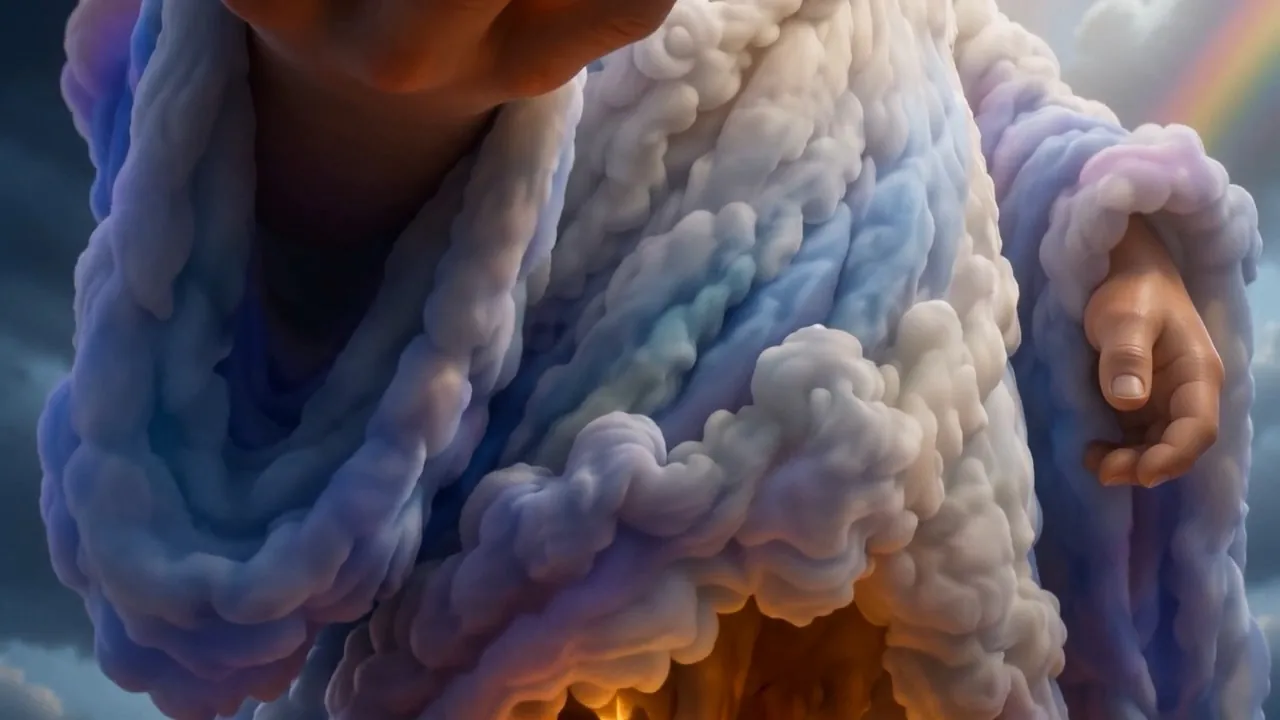
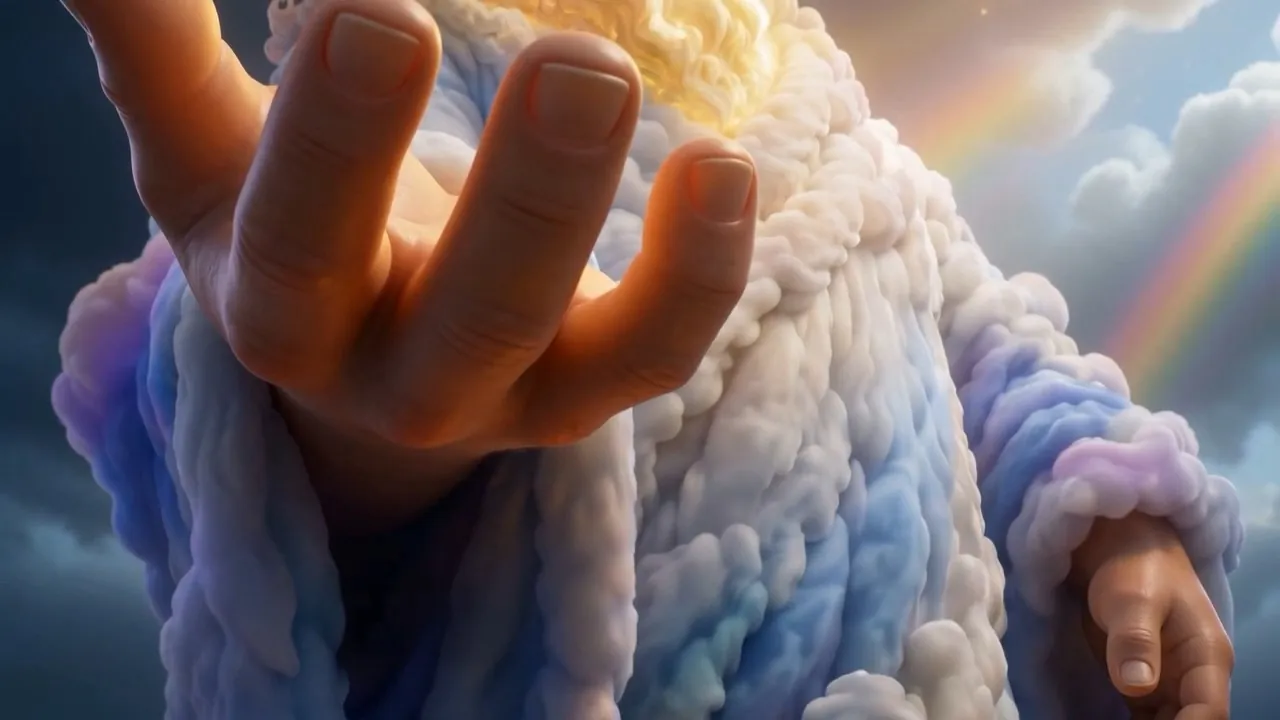
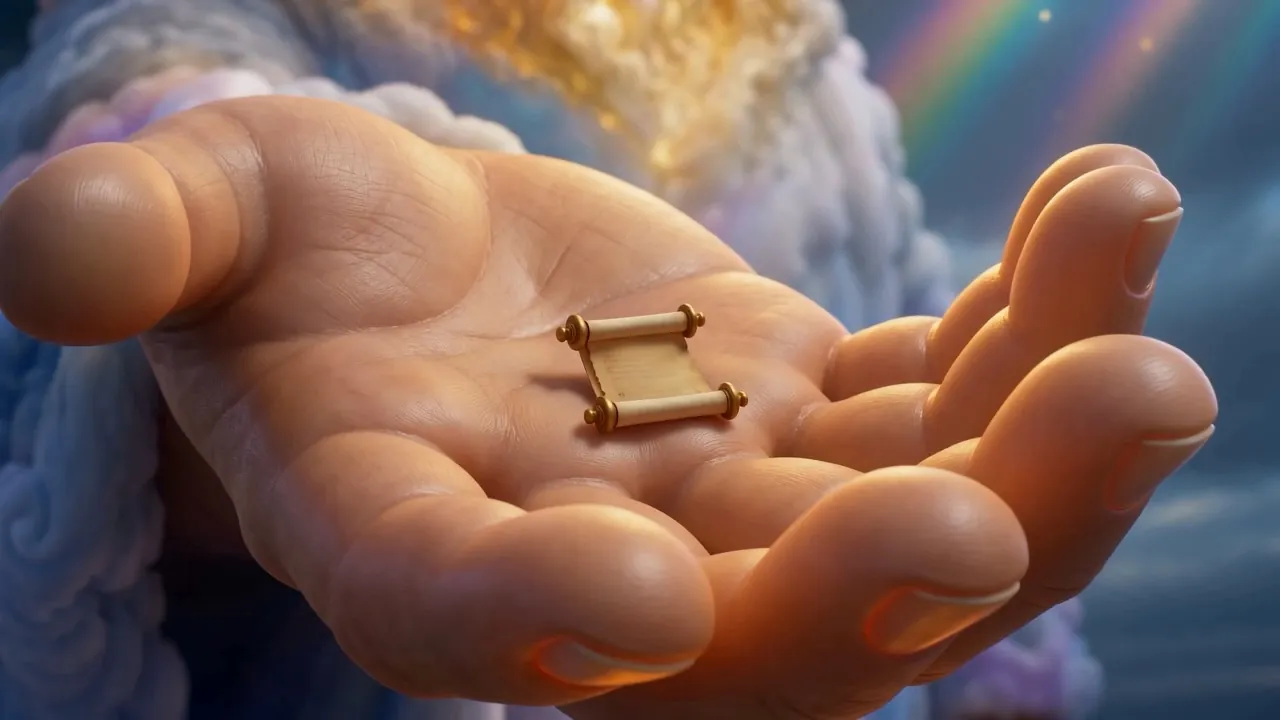
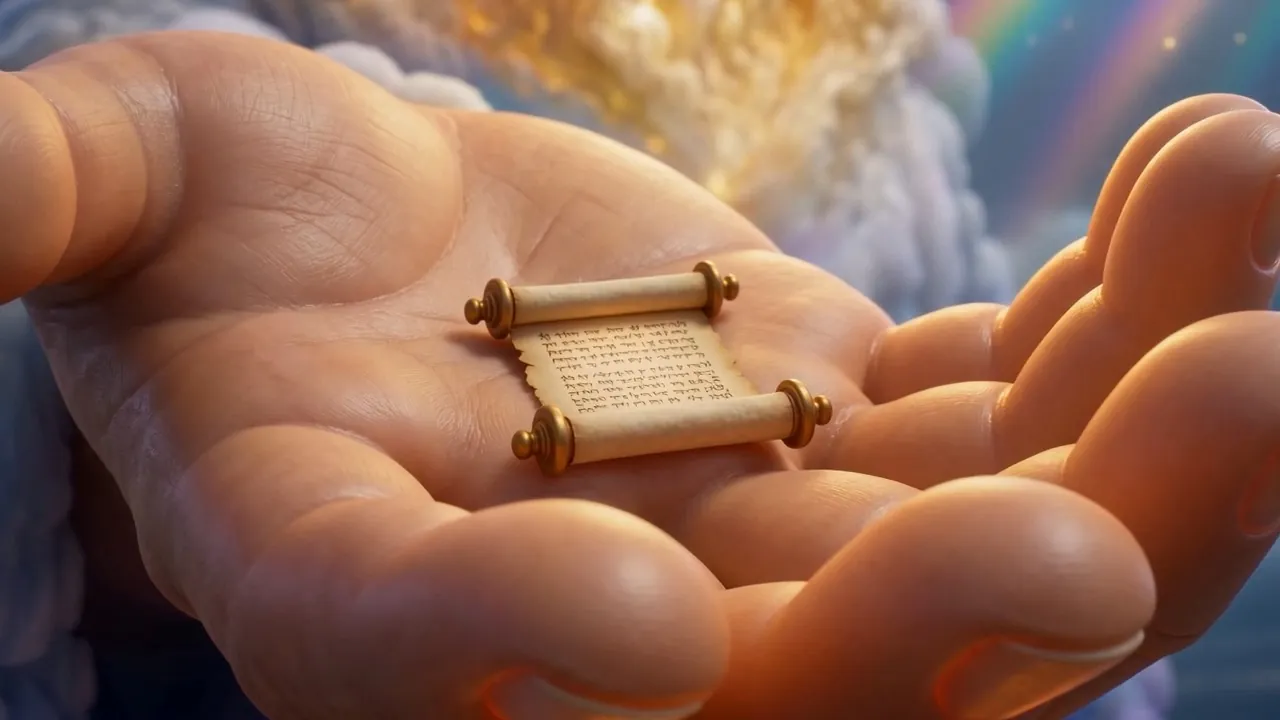
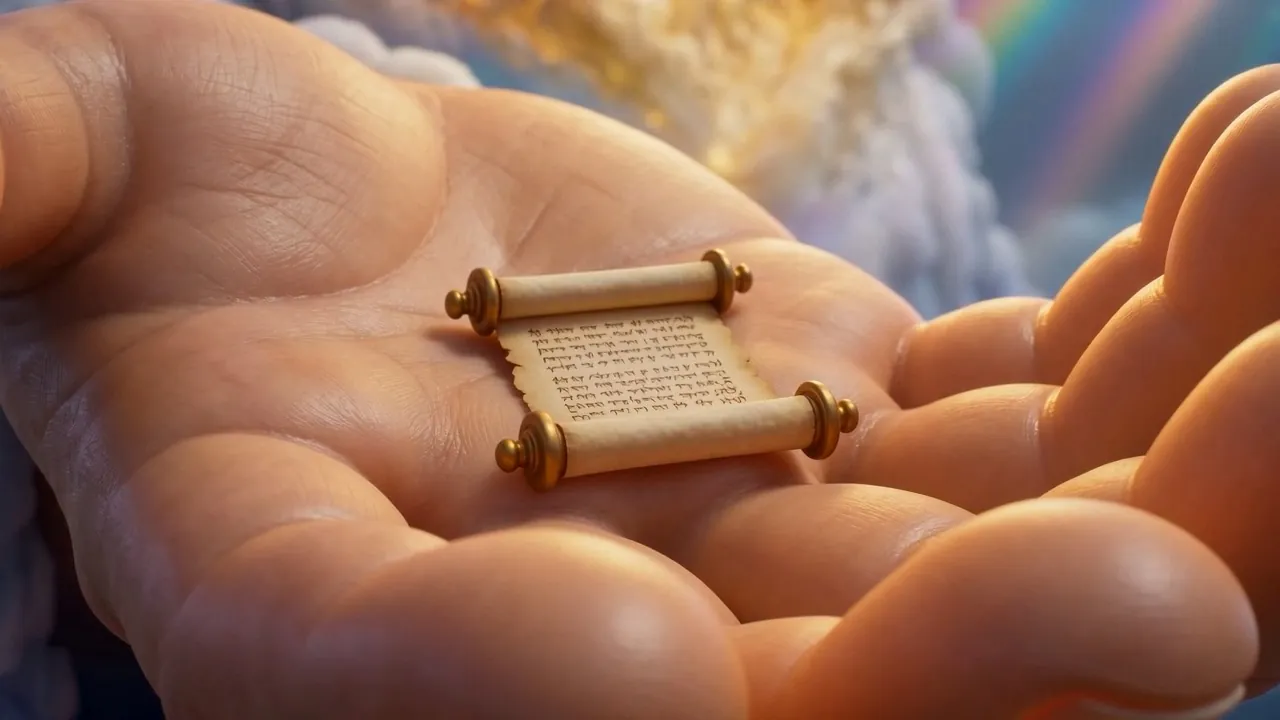
He had in his hand a little open book. Heaven's biggest messenger is carrying heaven's smallest parcel. Go up the robe of cloud to the upturned palm — a whole landscape of a hand, ridged and vast — and there in the middle of it lies one little scroll, unrolled, the sort of page a person could hold in one hand and read in an afternoon. The scale of it is the joke, and the joke is the point: the weight of glory, and the word that outweighs it. Revelation 10 : 2
He had in his hand a little open book.
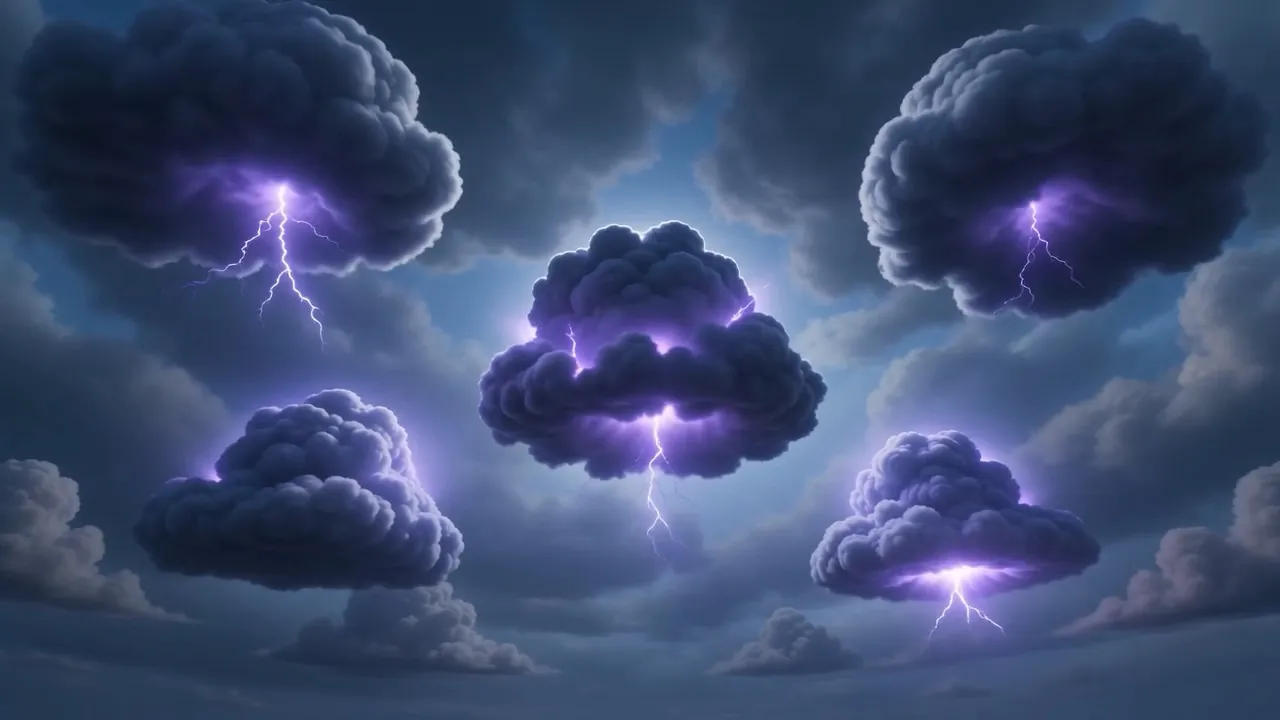
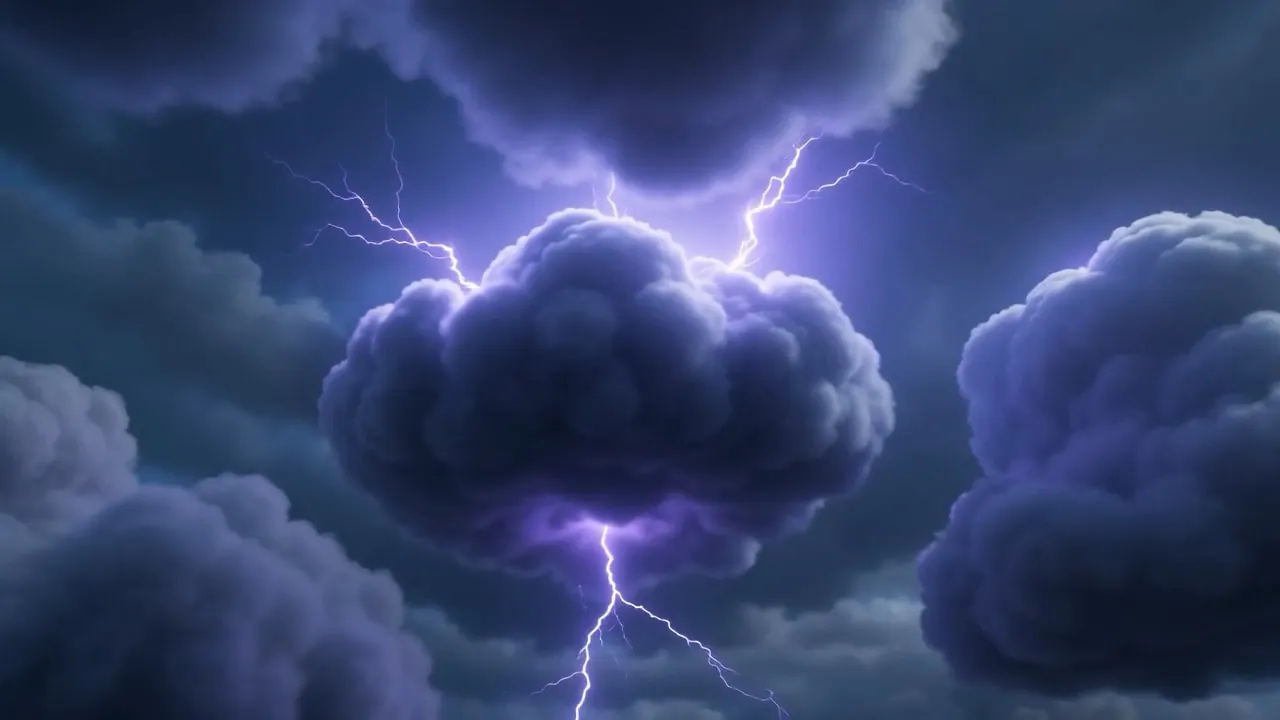
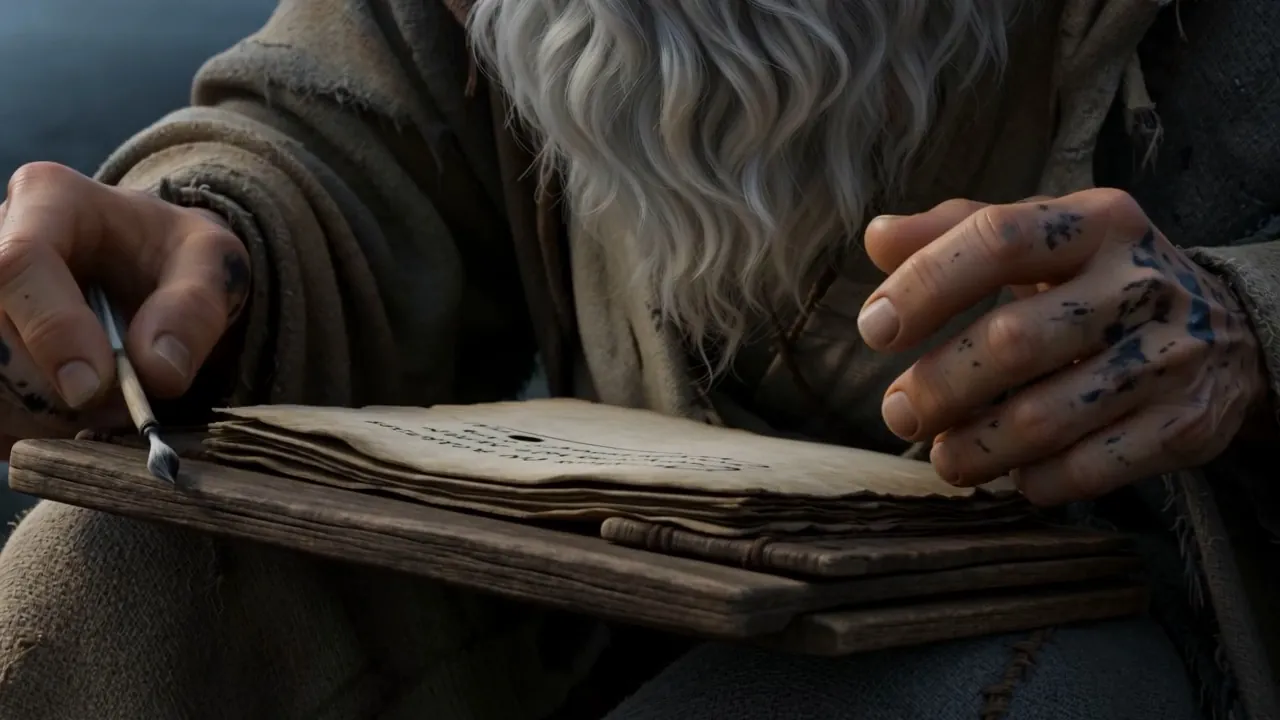
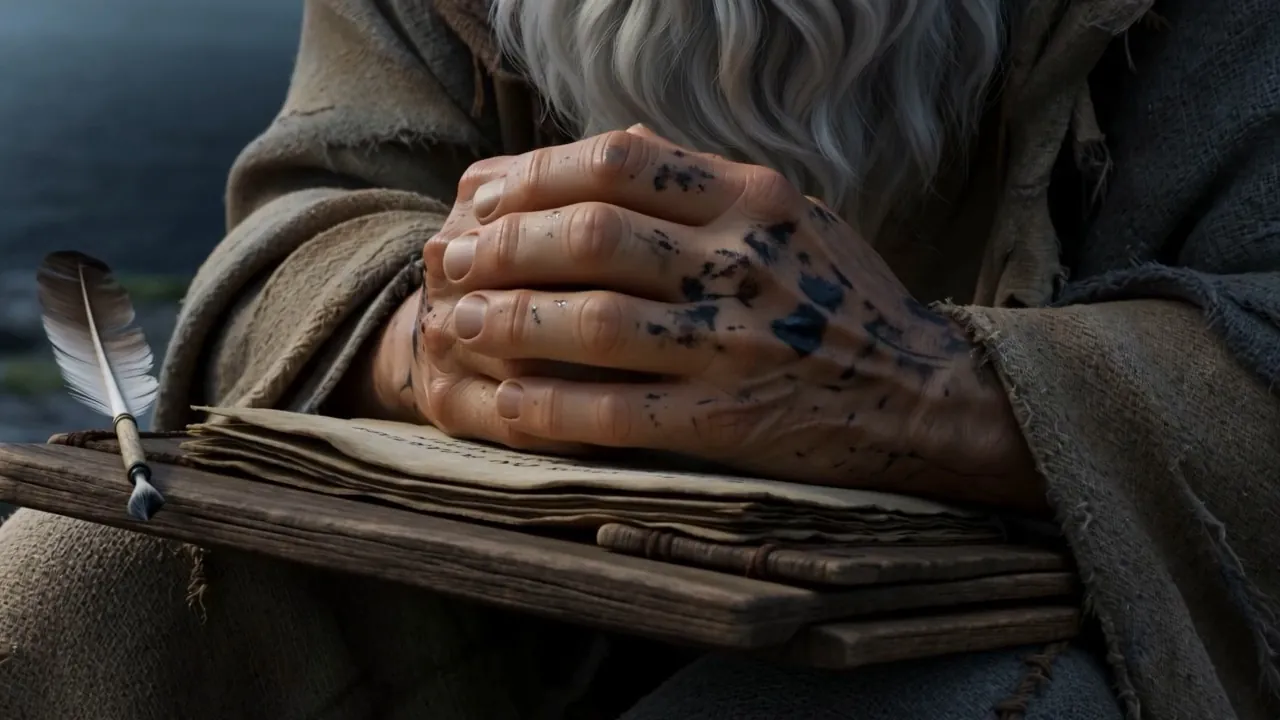
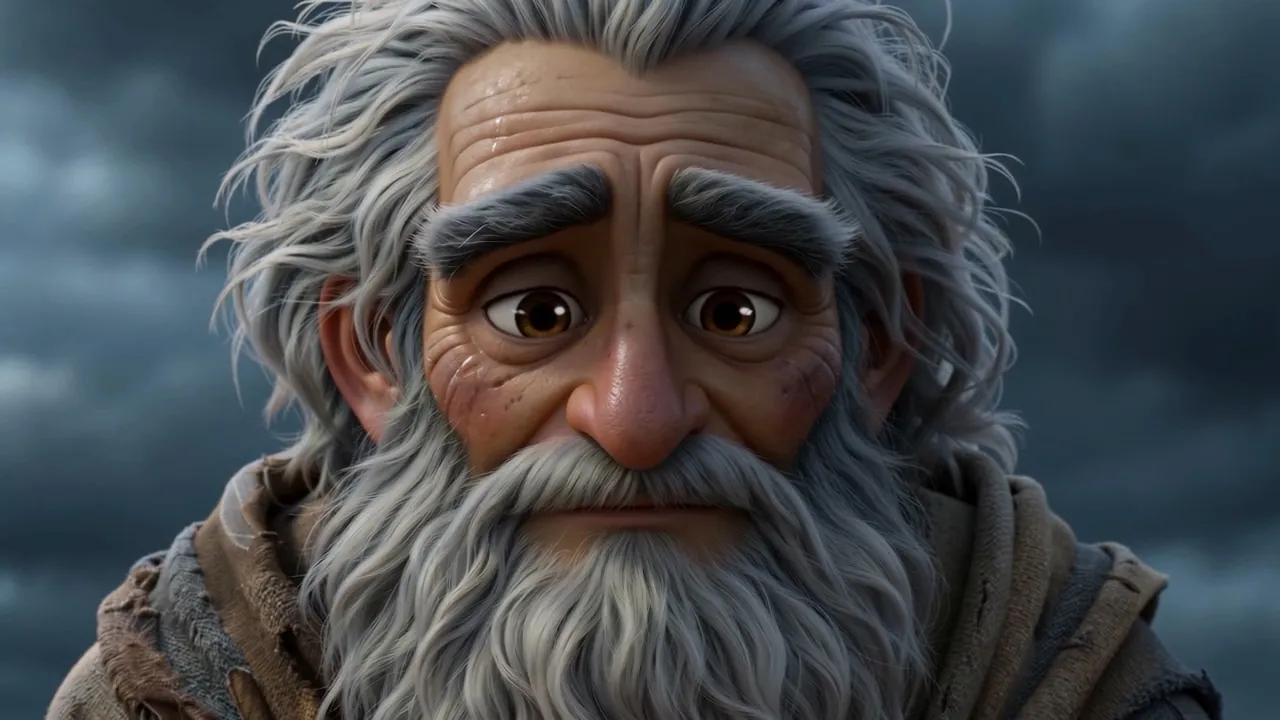
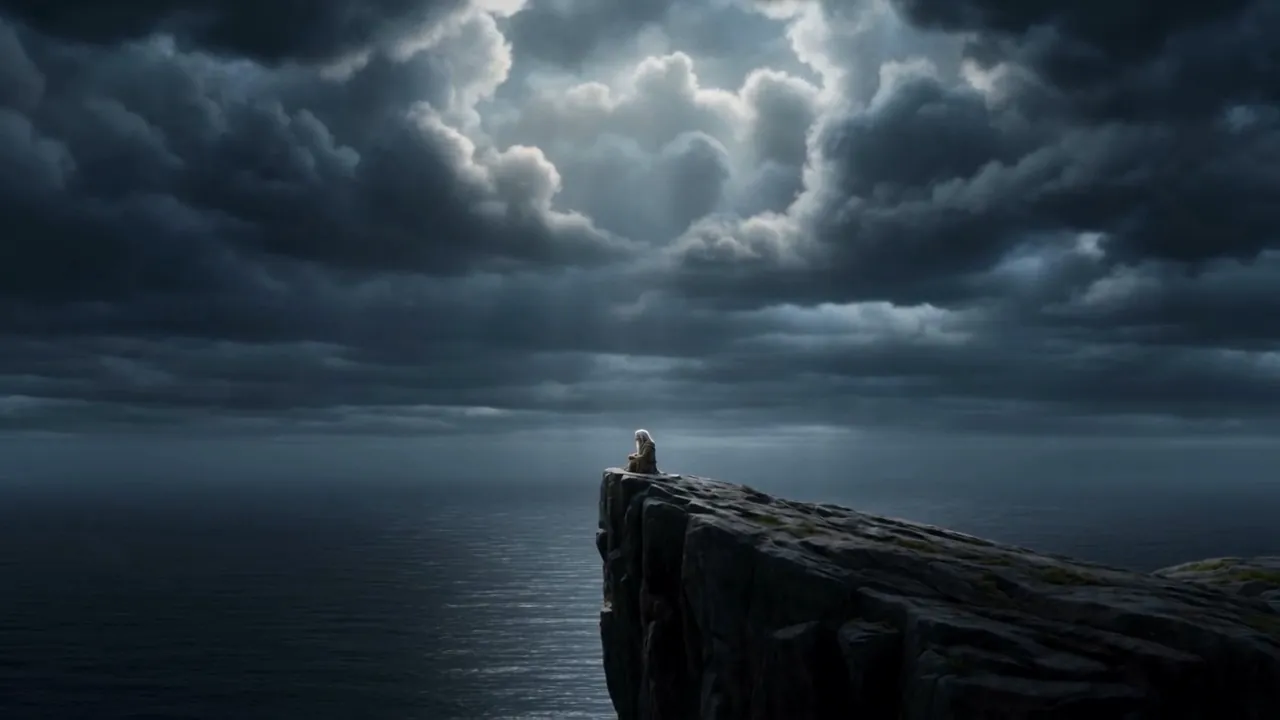
He cried with a loud voice, as a lion roars. When he cried, the seven thunders uttered their voices. The sea shivers flat under the shout, and then the storm answers — voices out of the stacked clouds, one quarter of heaven after another, vast and articulate, saying things almost understood. John is already down on one knee taking dictation like a man bailing a boat. Then a voice above the thunder tells him to seal it up and not write it, and the nib stops in the middle of a letter with the ink blooming a little star around it. He draws one straight line under the half-finished sentence, lays the pen down beside the board, and folds his hands over the page. Some things belong to God alone. John has just filed one, correctly. Revelation 10 : 3–4
Seal up the things which the seven thunders said, and don't write them.
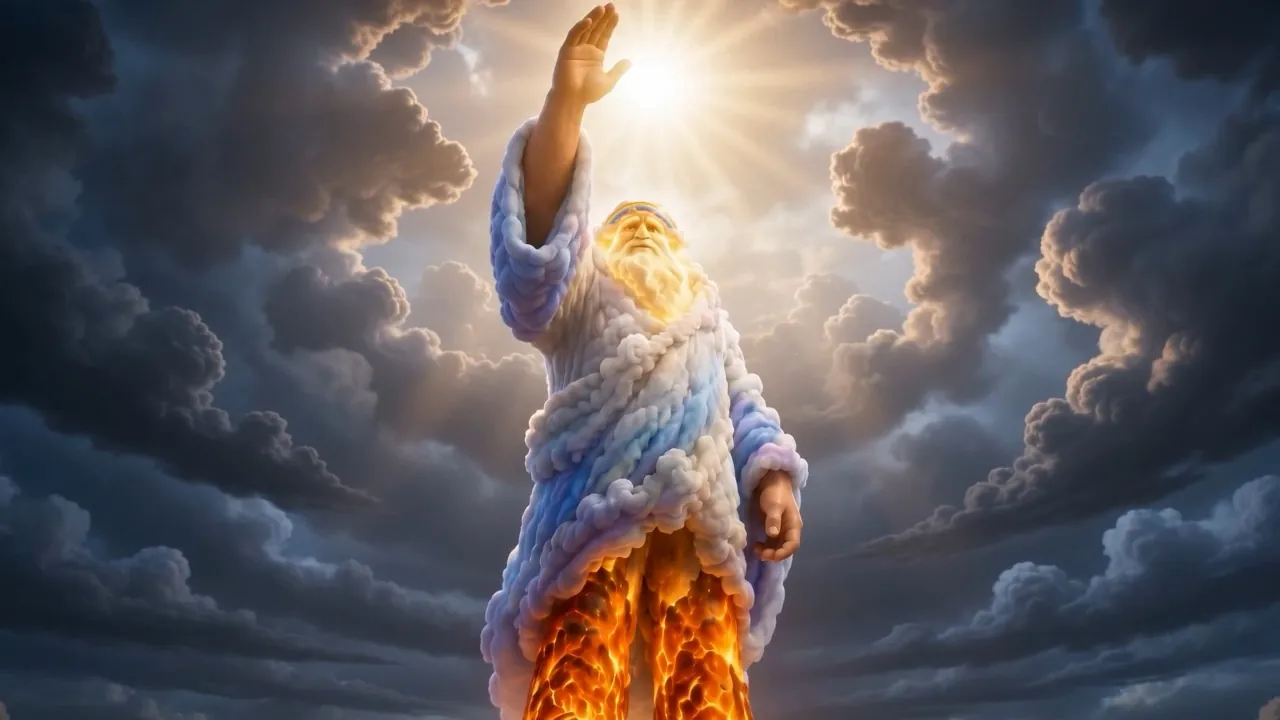
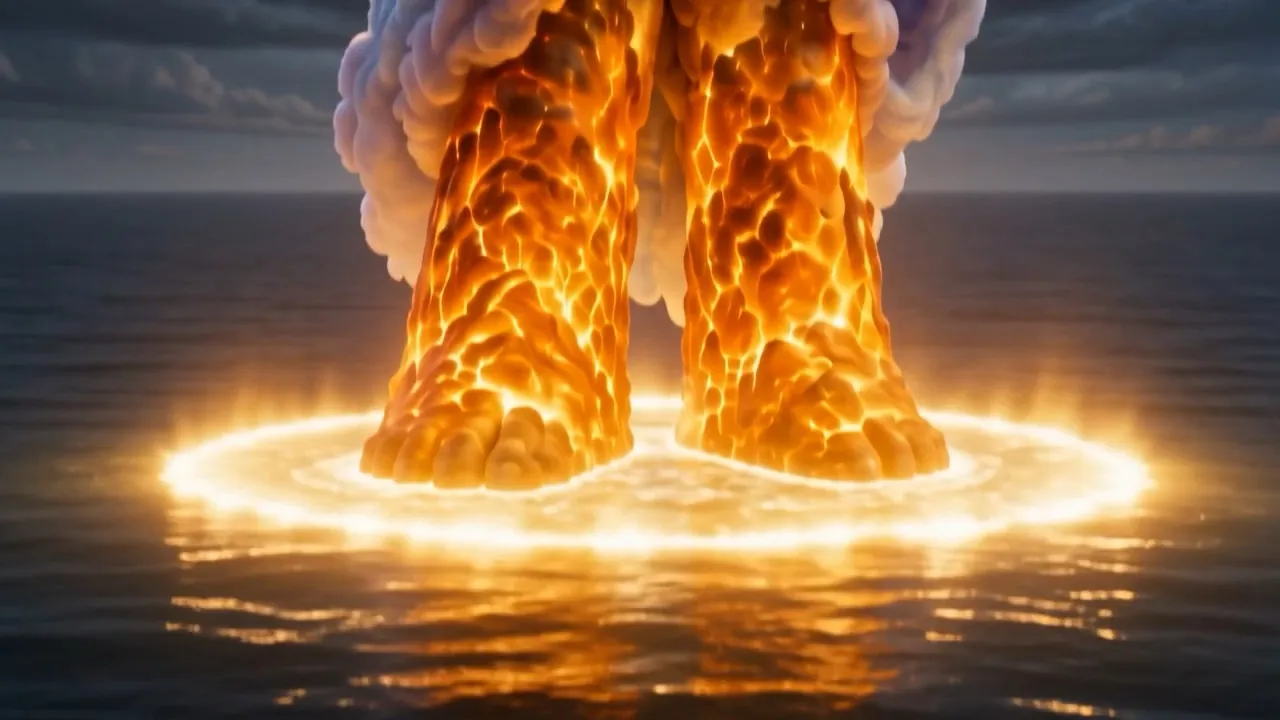
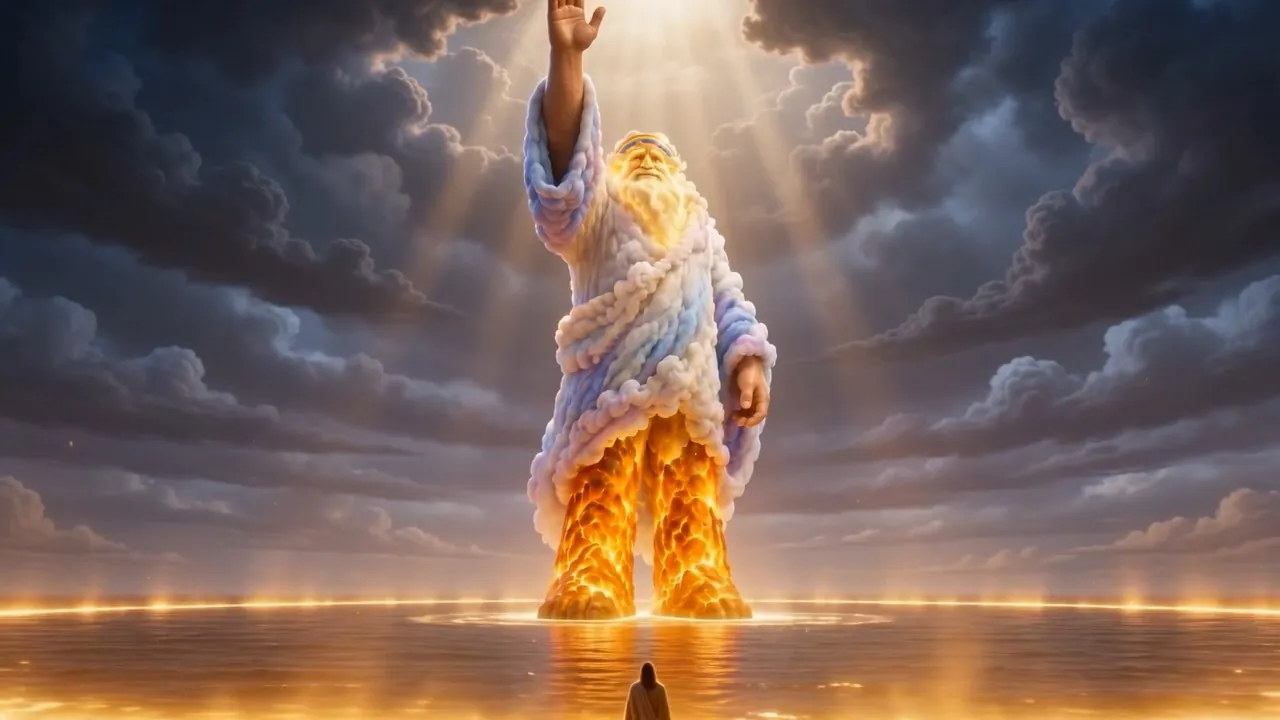
The angel whom I saw standing on the sea and on the land lifted up his right hand to the sky, and swore by him who lives forever and ever… that there will no longer be delay. The storm goes still around him and every cloud attends. The enormous hand rises past the rainbow crown into the high light, the colour on his brow deepening band by band, and the oath rolls out around the rim of the sky: in the days of the seventh trumpet, when that angel sounds, the mystery of God is finished — exactly as He said it would be to His servants the prophets. The light of it spreads over the water in a ring. History has just been given its deadline. Revelation 10 : 5–7
There will no longer be delay.
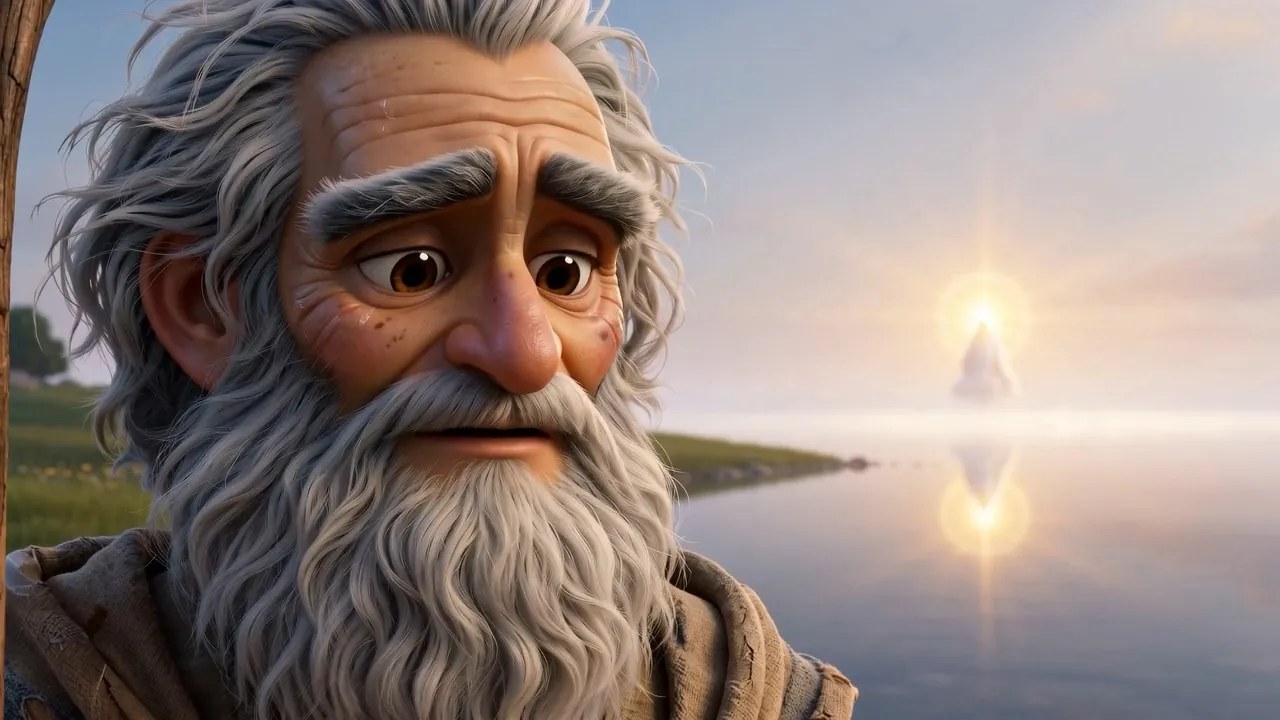
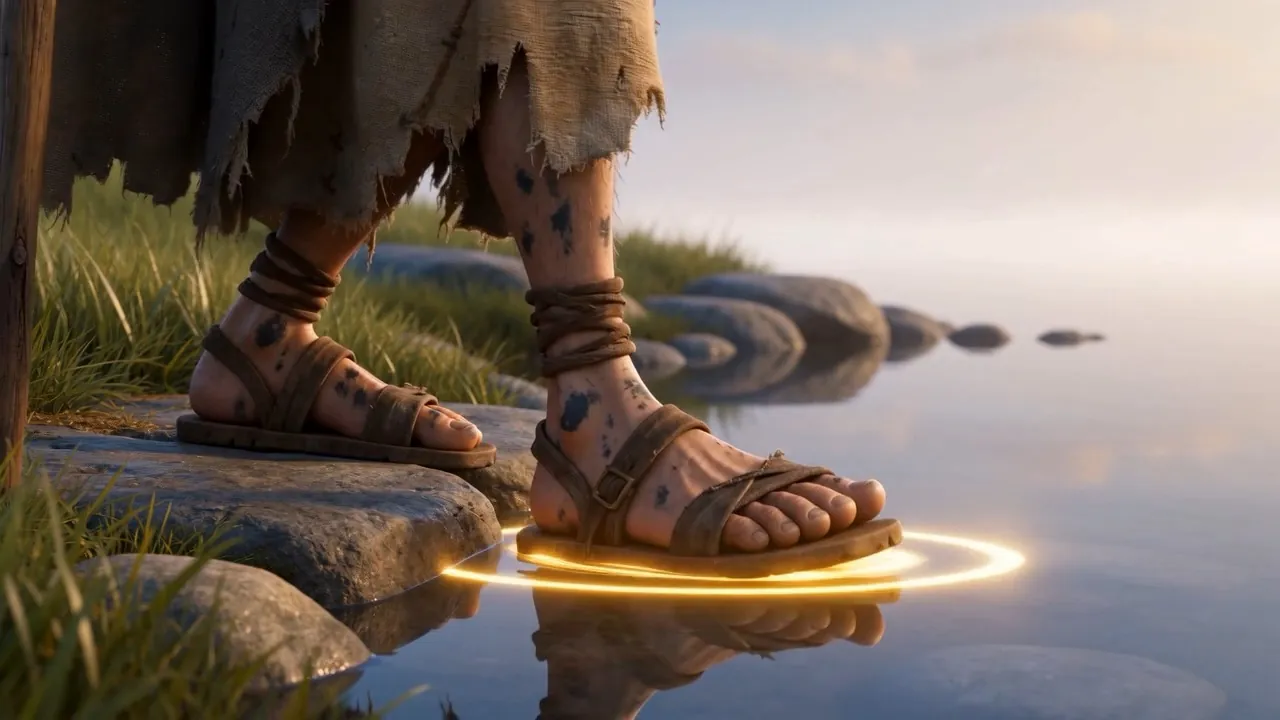
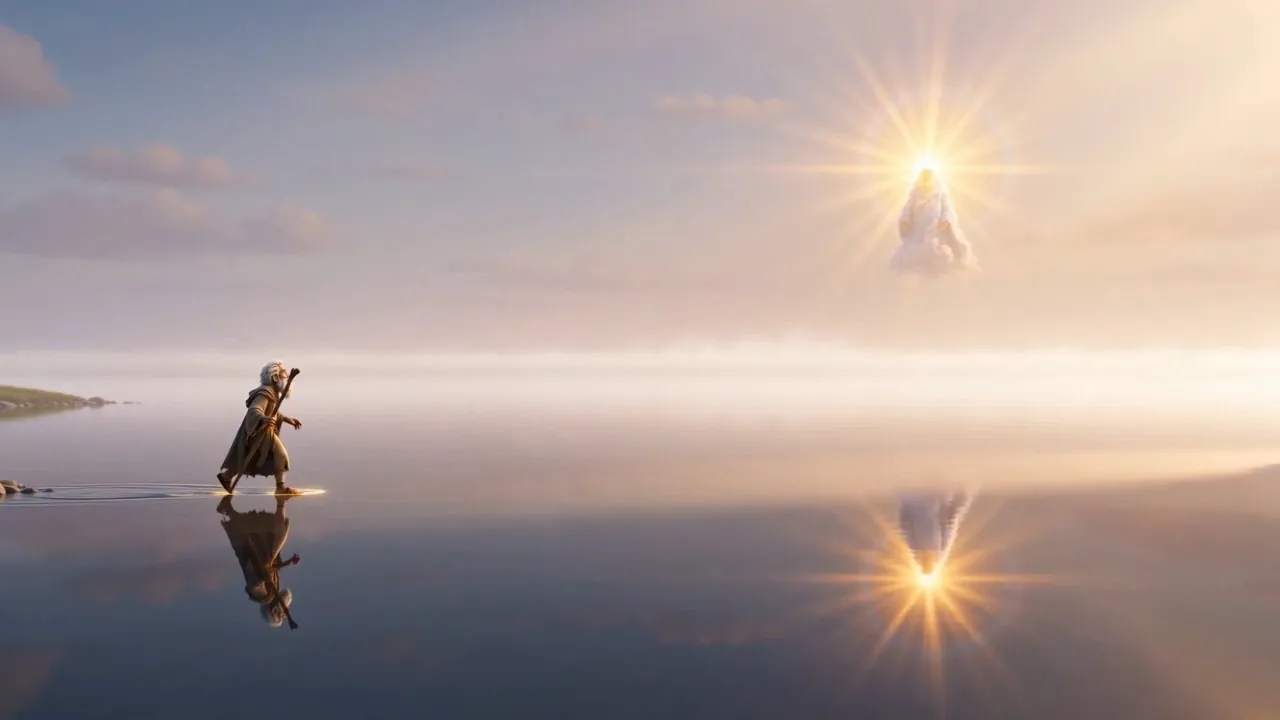
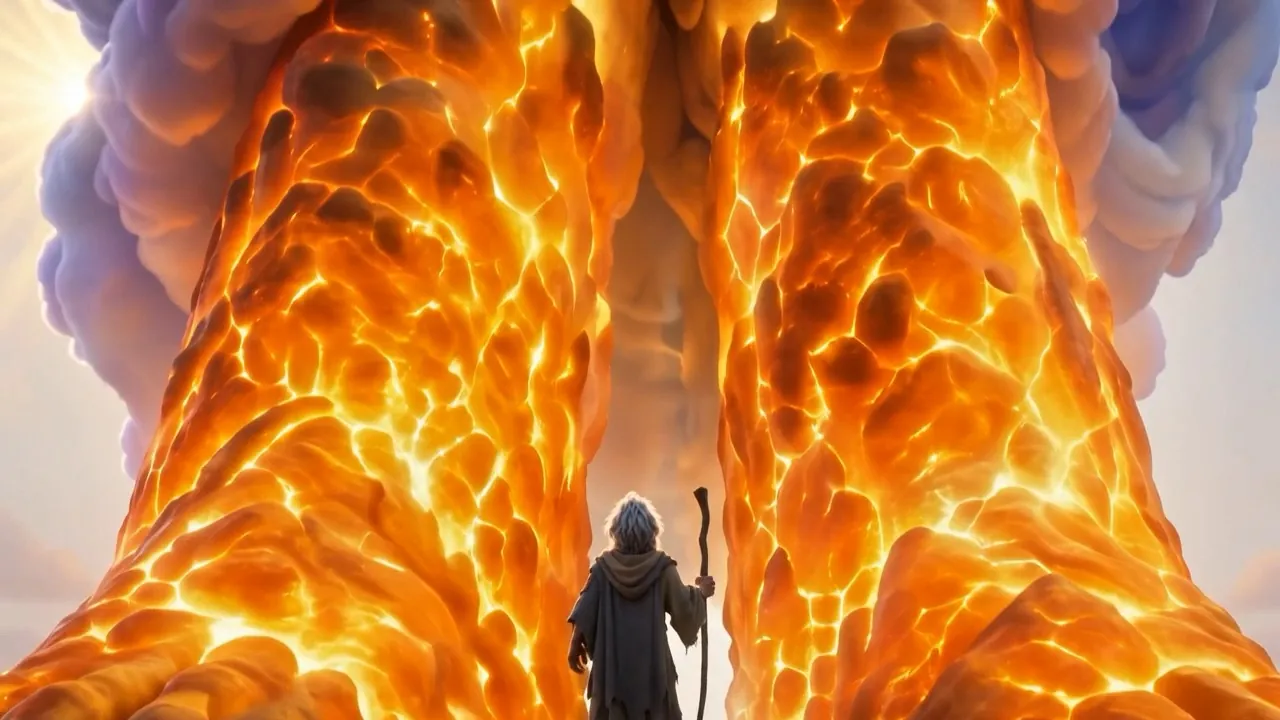
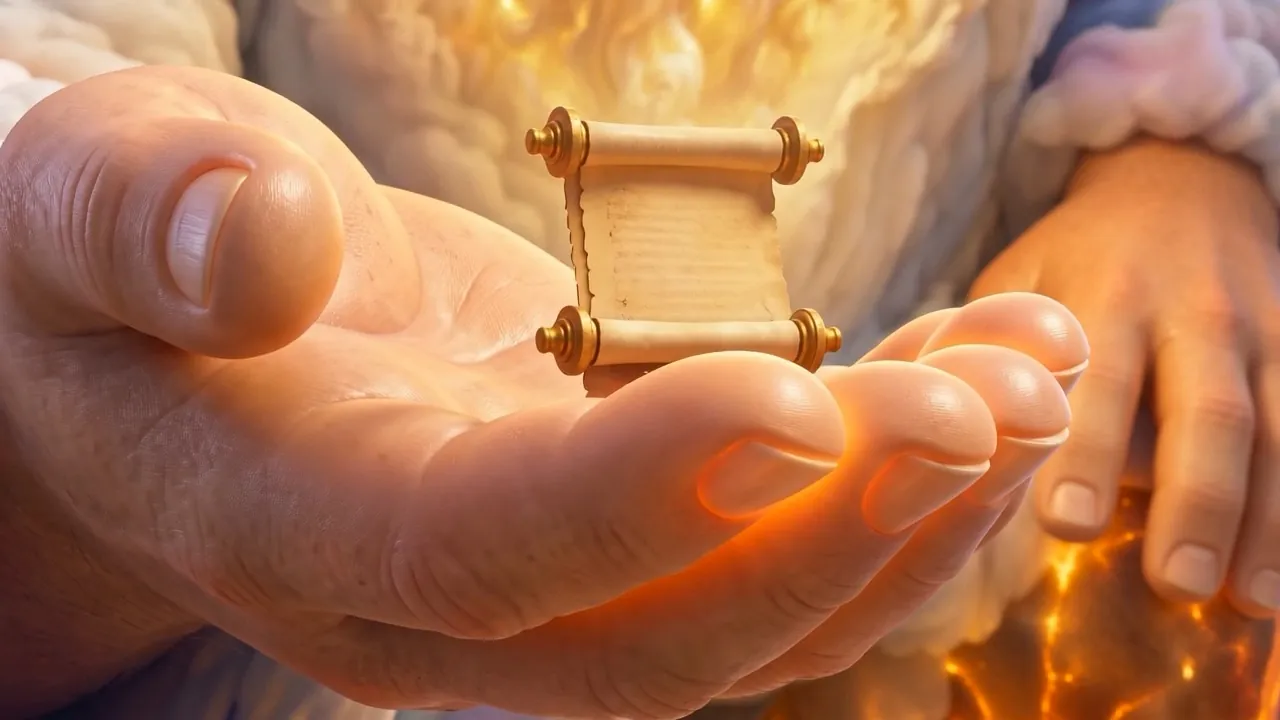
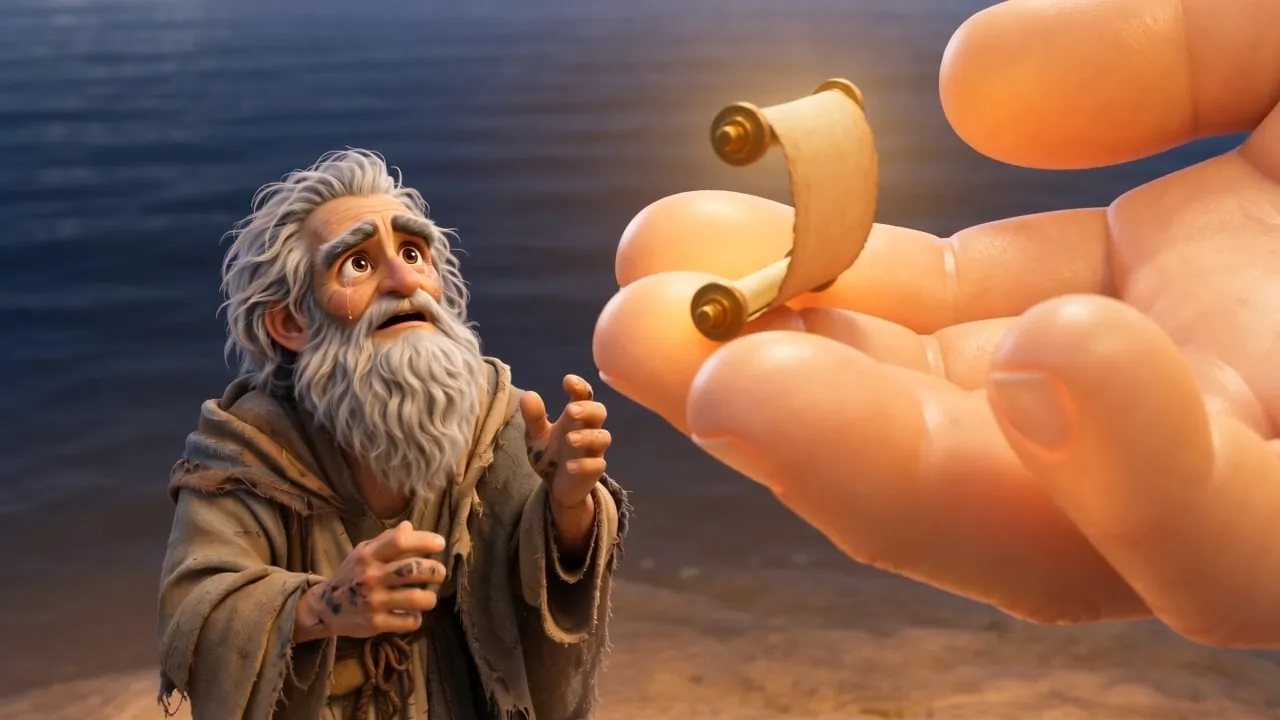
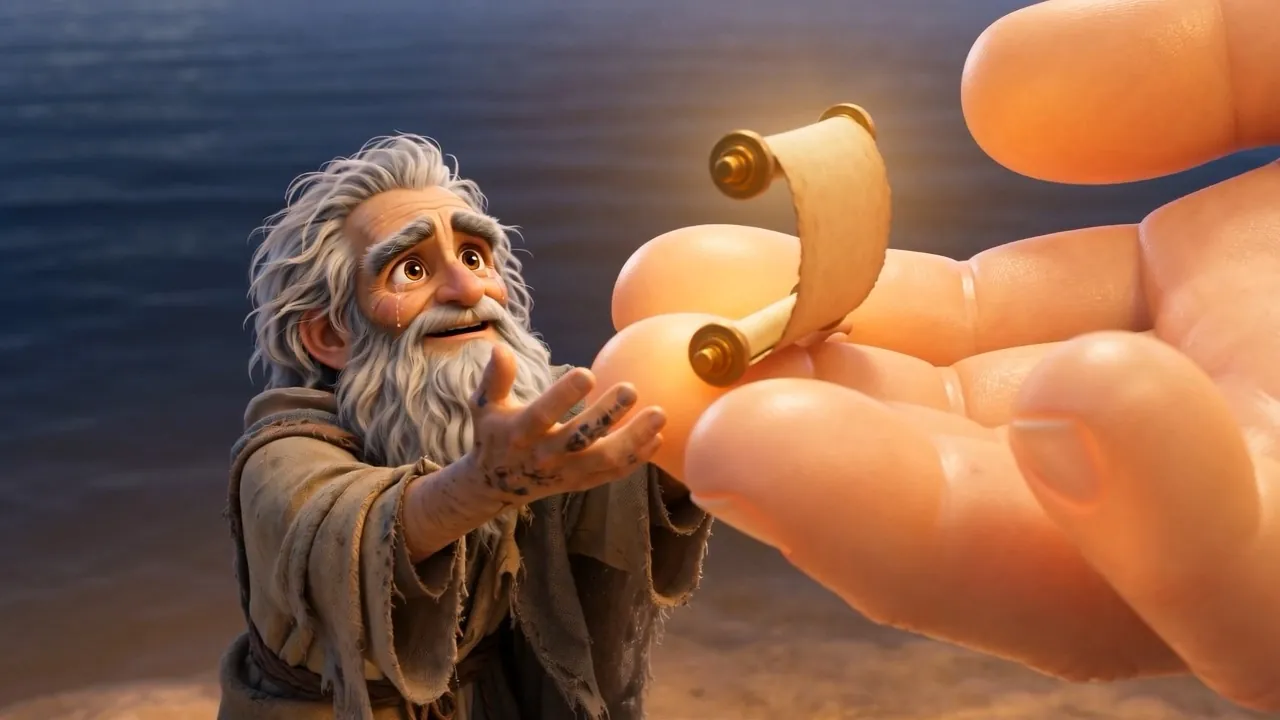
Go, take the book which is open in the hand of the angel who stands on the sea and on the land. John leaves his staff in the grass, looks from the far cosmic figure down to the water and back — and steps on. It holds. He walks out across the vision-sea with his cloak snapping and his arms out a little for balance, exactly like a man crossing wet flagstones, and the giant ahead grows and grows and grows, until John passes into the shadow of a sandal-strap taller than he is. Then the mountain bends. The great hand comes down and offers the little scroll on one fingertip, with the care of somebody feeding a bird, and the old man reaches up with both hands and takes it. The gentlest handoff in the whole book. Revelation 10 : 8–9
"Take it, and eat it. In your mouth it will be as sweet as honey."
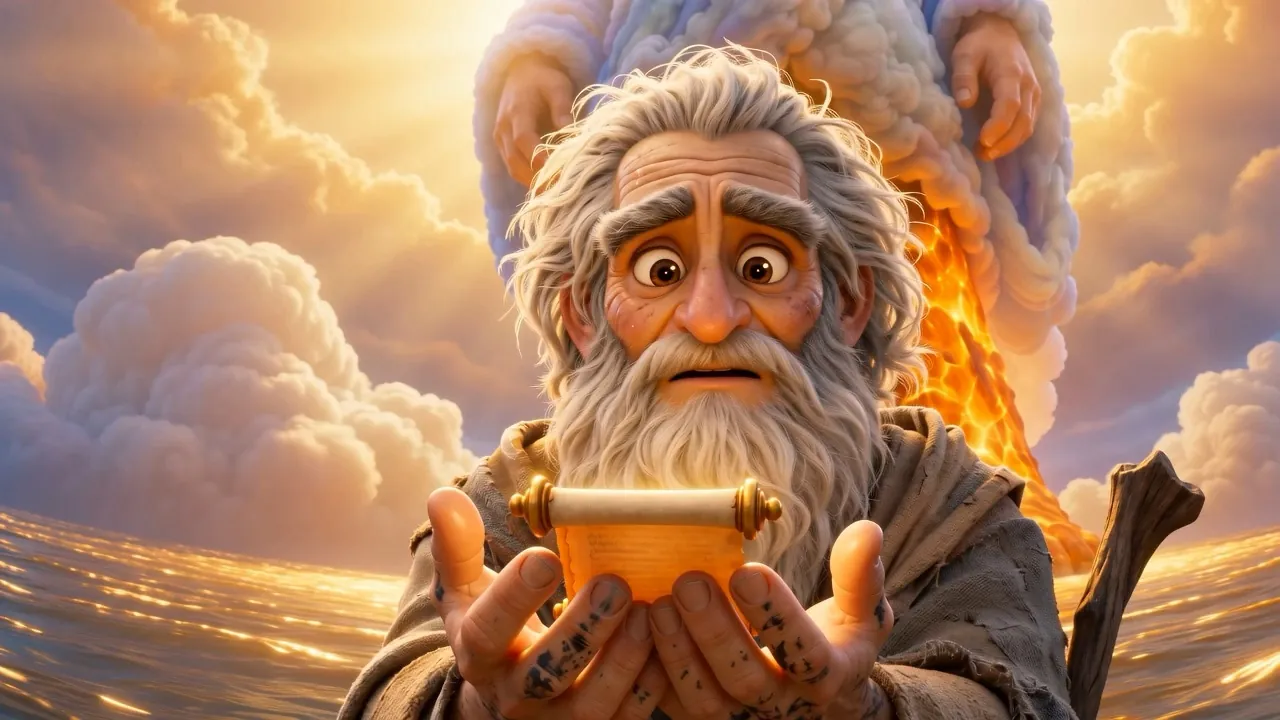
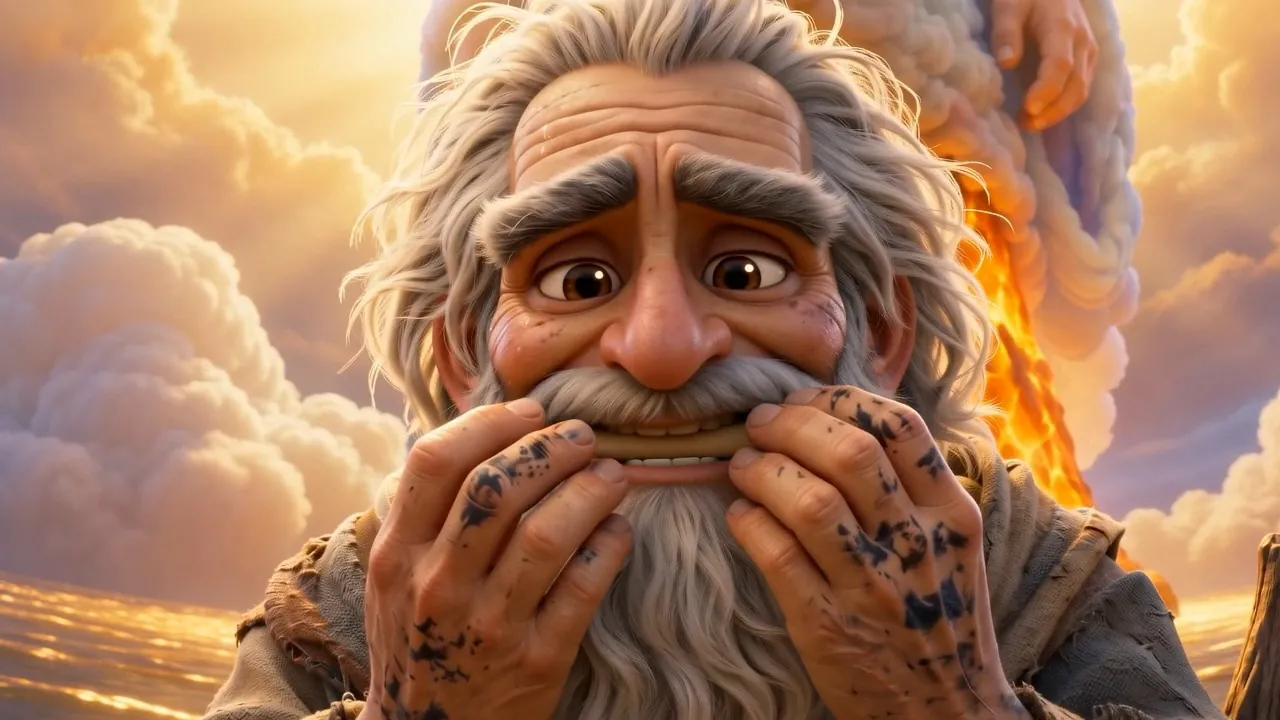
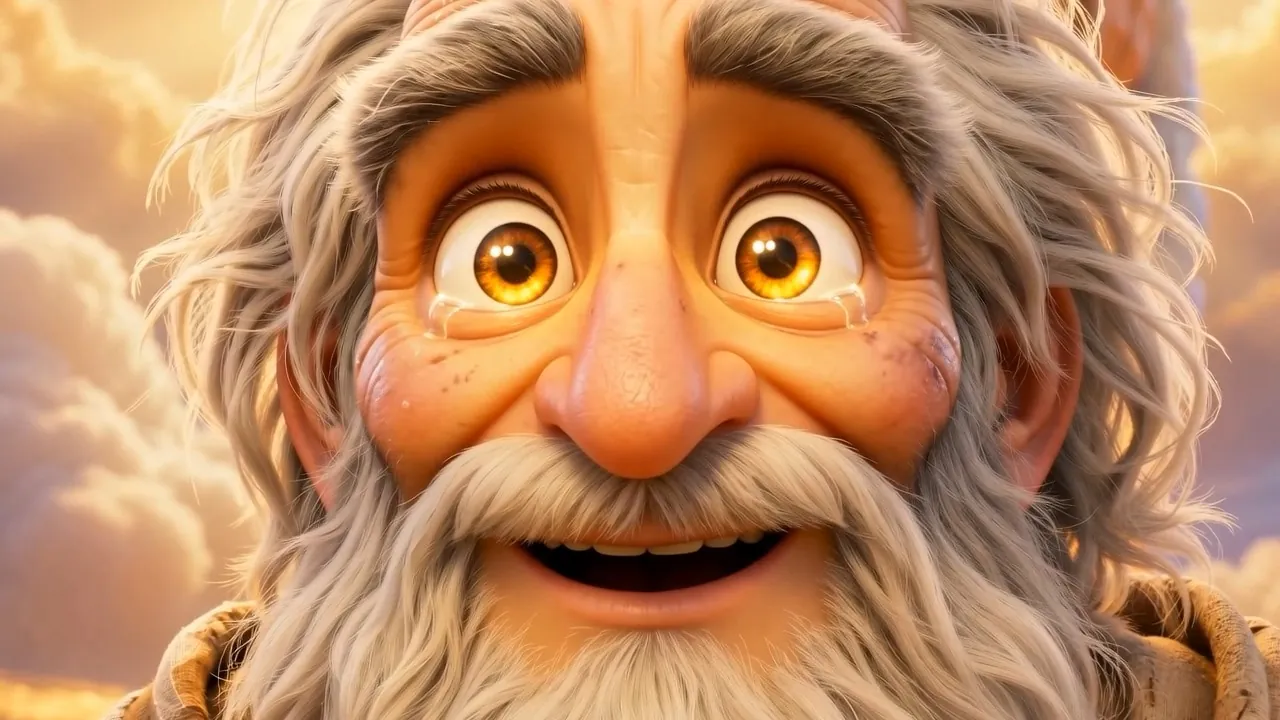
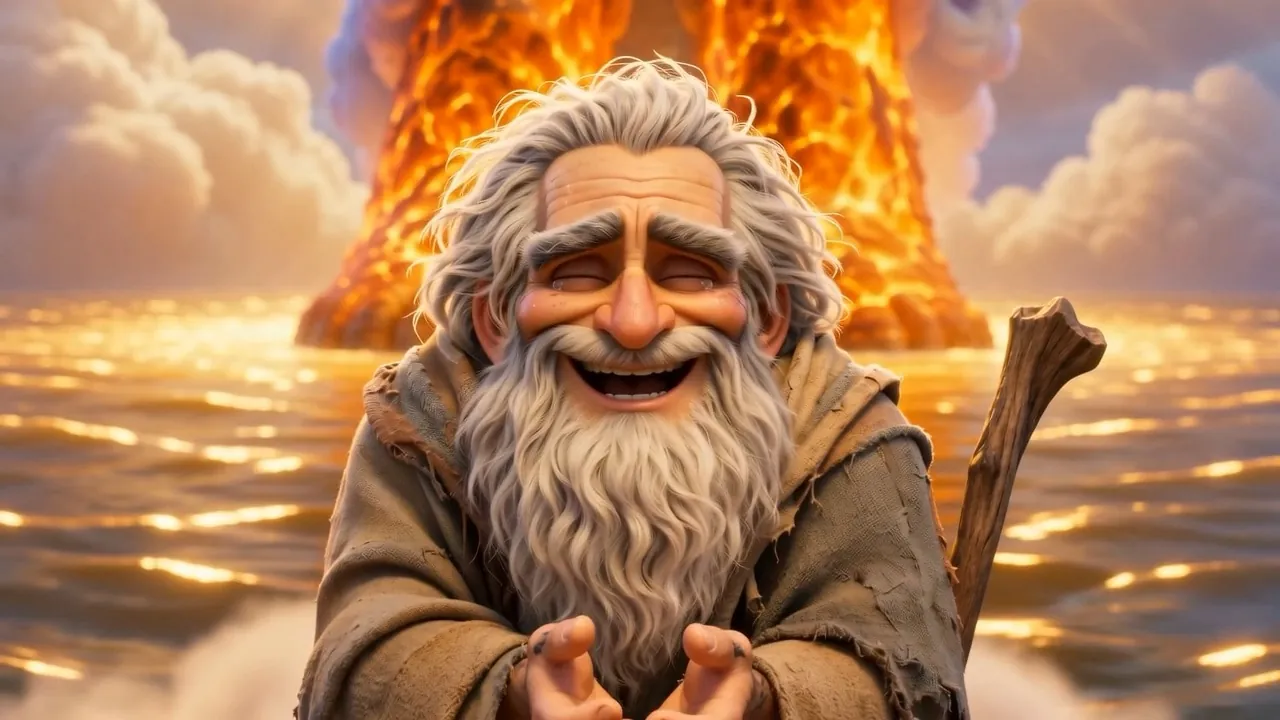
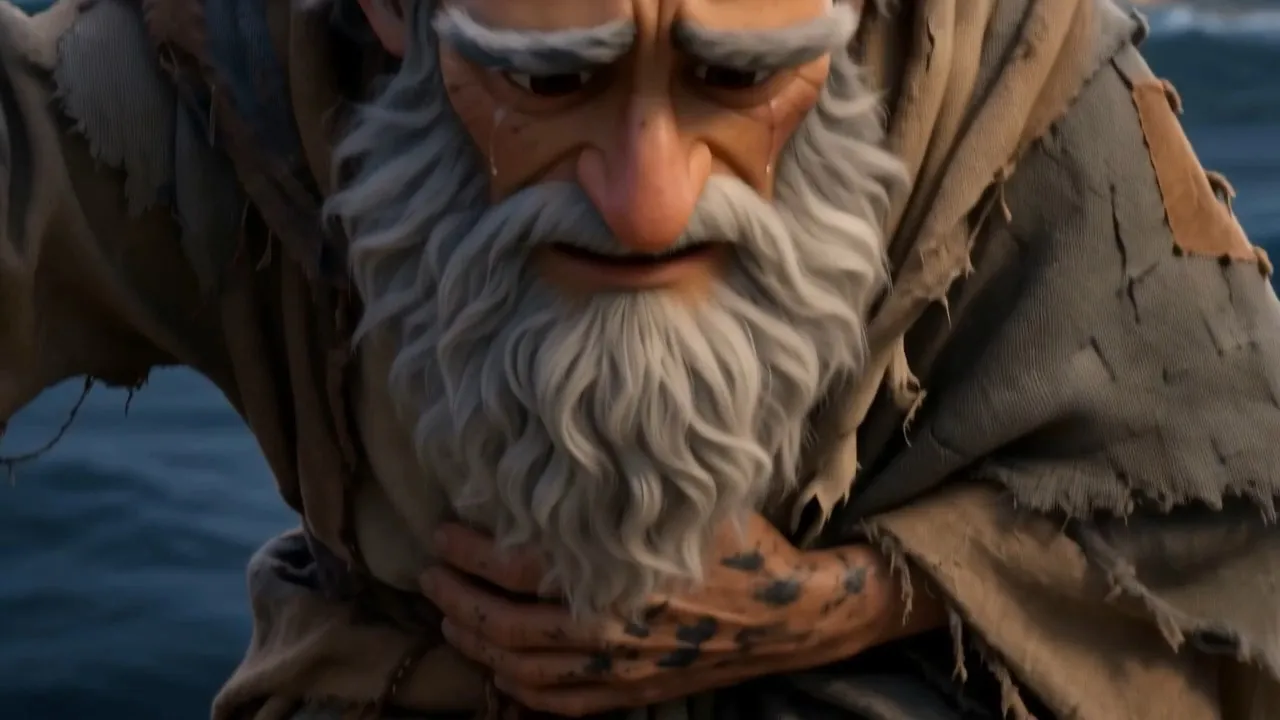
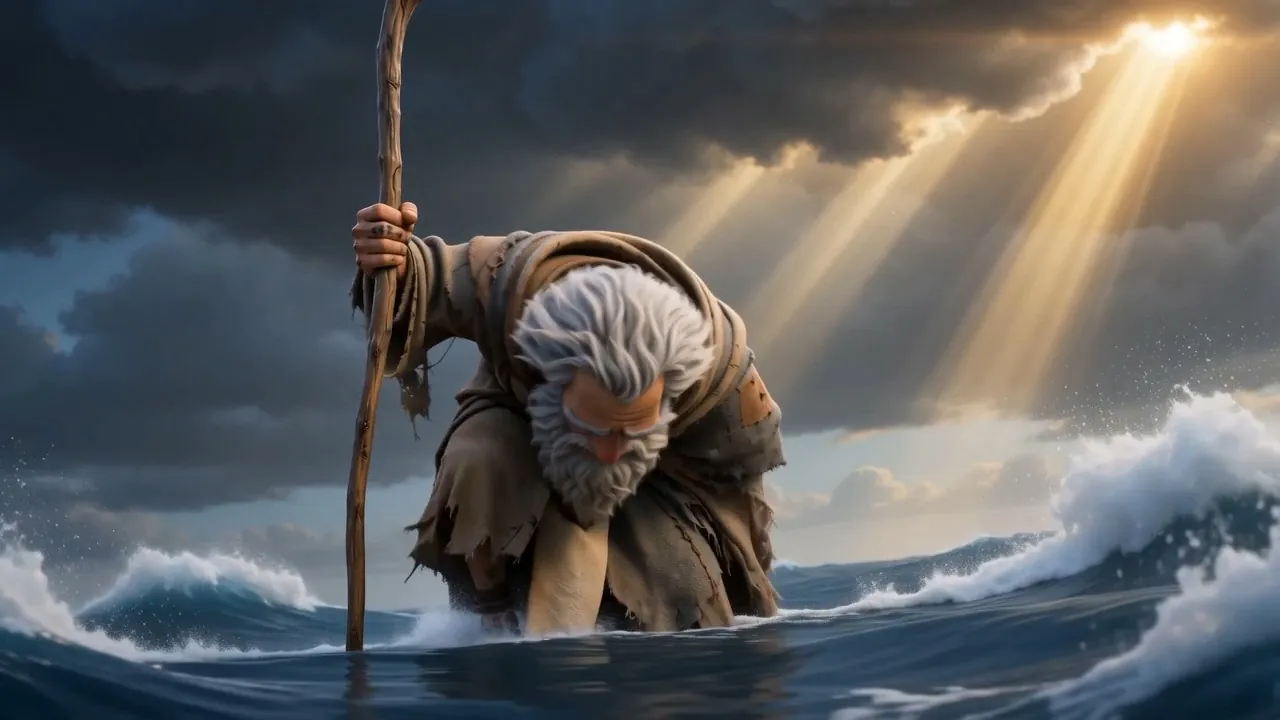
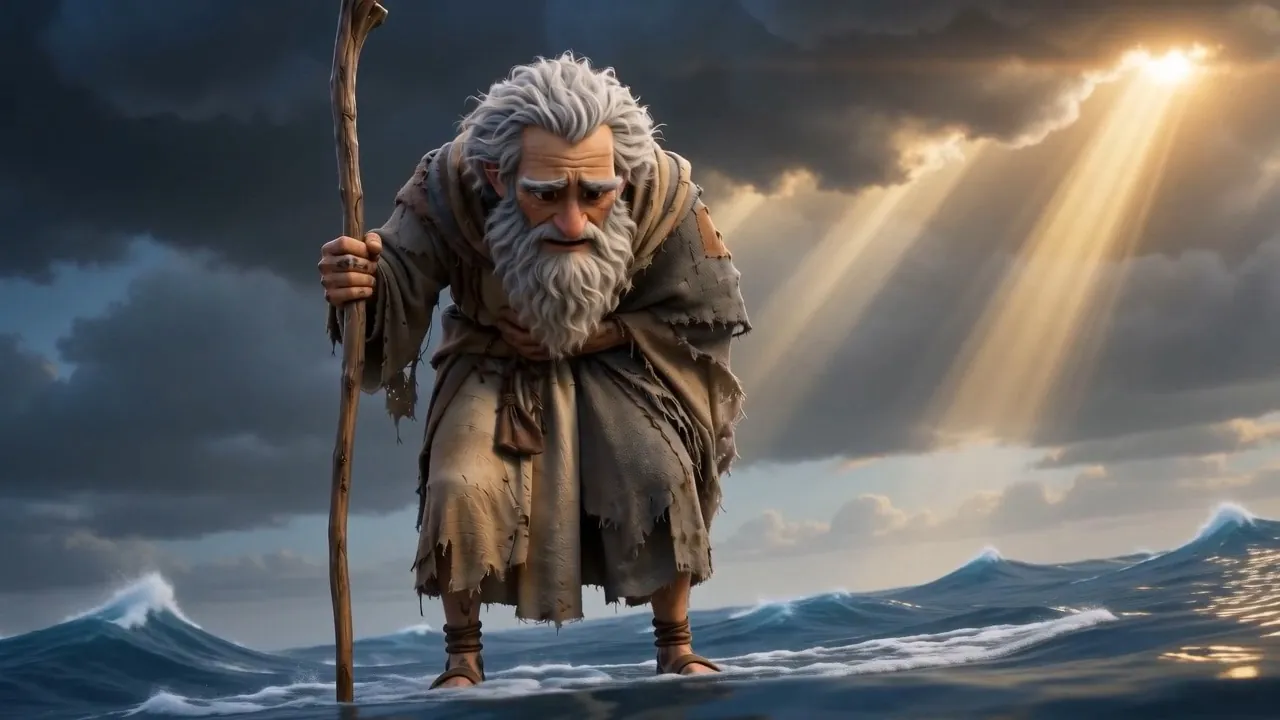
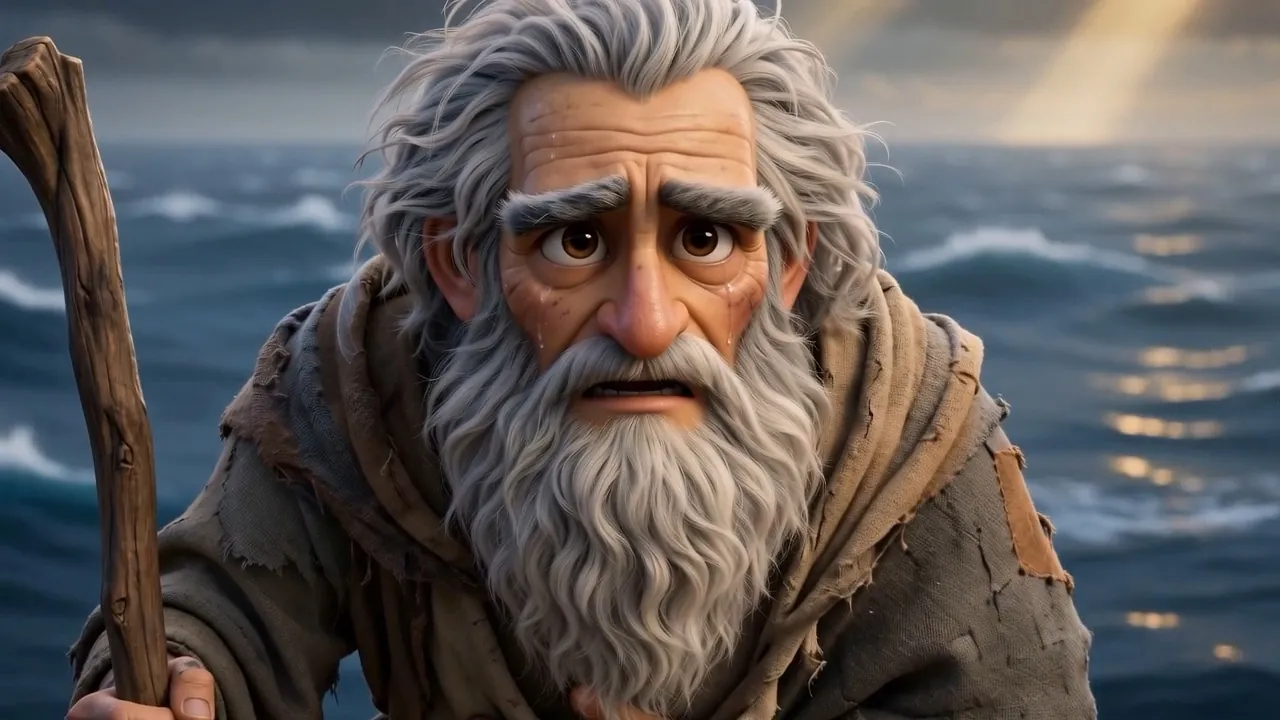
I took the little book out of the angel's hand, and ate it up. It was as sweet as honey in my mouth. When I had eaten it, my stomach was made bitter. He folds it small and takes it like bread — and his eyebrows fly up, and delight goes off across the old face like a firework. He laughs out loud with his mouth full and looks up at the giant with shameless wonder: have you tasted this? Then the grin falters. His hand goes to his middle and he bends slowly forward, because the sweetness has turned in him — heavy, sour, the grief inside the glory. He straightens with an effort and nods slowly to himself: both. Both are true. And the vast voice comes down gentle and grave at once — you must prophesy again, about many peoples and nations and languages and kings — and an old man swallows the whole bittersweet future and squares up to tell it. Revelation 10 : 10–11
It was as sweet as honey in my mouth. When I had eaten it, my stomach was made bitter.
After the story
Honey in the mouth. Stone in the keeping.
Revelation is honest about what it costs to carry good news. The scroll really is sweet — John laughs out loud with his mouth full, an old man grinning like a boy at a stolen honeycomb — and then it turns in him, and he folds forward with his hand pressed to his middle, and both things are true at once. That is the whole chapter in one bite. And it is the same thing he had already said, plainly, to a hard man holding a bowl of soup on a dark path: some of it is hard, friend. And the hard part is not the end of the story.
Voices of the little scroll · hover or tap to turn
The Goldsmith
"The rest of mankind… didn't repent of the works of their hands… the idols of gold… which can neither see, hear, nor walk."
— Revelation 9:20
The Mighty Angel
"Take it, and eat it up. It will make your stomach bitter, but in your mouth it will be as sweet as honey."
— Revelation 10:9
John
"I took the little book out of the angel's hand, and ate it up. It was as sweet as honey in my mouth."
— Revelation 10:10The Book of Revelation
How closely were you watching?
1. What is the first thing the survivors do when they climb out of the ruins?
Revelation 9:20 — after six trumpets, "the rest of mankind… didn't repent of the works of their hands."
2. What does the quarry thief bring up the dark path — and what does he finally ask?
The whole interlude turns on it: a hard man does a soft thing badly, and then asks the only question that matters.
3. How is the mighty angel described?
Revelation 10:1 — and he sets his right foot on the sea and his left on the land, standing across the whole world.
4. What is John told not to write down?
"Seal up the things which the seven thunders said, and don't write them" (Revelation 10:4). He rules a line under the half-written sentence and lays the pen down.
5. How does the little scroll taste?
Revelation 10:10. Sweet to receive, heavy to carry — and then: "You must prophesy again."
What this story teaches
Care aimed at the wrong thing.
The goldsmith is not cruel. He is gentle, skilled and devoted — and every bit of it is spent on a face that cannot see him. That is what the chapter grieves over: not hardness, but love pointed somewhere it can never be answered.
"The idols of gold… which can't see, hear, or walk." Revelation 9:20Some things are sealed, and it is a kindness.
John hears seven thunders speak, and he is told not to write a word of it. He rules one straight line under the unfinished sentence and lays the pen down. Trusting God includes not being told everything.
"Seal up the things which the seven thunders said, and don't write them." Revelation 10:4Hard — and not the end.
Asked straight out whether what is coming is bad, John does not soften it and does not stop there. Hard as quarry stone, he says, and then more wonderful than he has words for. Both halves, in that order, every time.
"It will make your stomach bitter, but in your mouth it will be as sweet as honey." Revelation 10:9Read the scripture itself. Revelation 9 : 20–21 and Revelation 10 · World English Bible
Revelation 9 : 20–21
20The rest of mankind, who were not killed with these plagues, didn’t repent of the works of their hands, that they wouldn’t worship demons, and the idols of gold, and of silver, and of brass, and of stone, and of wood; which can’t see, hear, or walk.
21They didn’t repent of their murders, their sorceries, their sexual immorality, or their thefts.
Revelation 10
1I saw a mighty angel coming down out of the sky, clothed with a cloud. A rainbow was on his head. His face was like the sun, and his feet like pillars of fire.
2He had in his hand a little open book. He set his right foot on the sea, and his left on the land.
3He cried with a loud voice, as a lion roars. When he cried, the seven thunders uttered their voices.
4When the seven thunders sounded, I was about to write; but I heard a voice from the sky saying, “Seal up the things which the seven thunders said, and don’t write them.”
5The angel whom I saw standing on the sea and on the land lifted up his right hand to the sky,
6and swore by him who lives forever and ever, who created heaven and the things that are in it, the earth and the things that are in it, and the sea and the things that are in it, that there will no longer be delay,
7but in the days of the voice of the seventh angel, when he is about to sound, then the mystery of God is finished, as he declared to his servants, the prophets.
8The voice which I heard from heaven, again speaking with me, said, “Go, take the book which is open in the hand of the angel who stands on the sea and on the land.”
9I went to the angel, telling him to give me the little book. He said to me, “Take it, and eat it up. It will make your stomach bitter, but in your mouth it will be as sweet as honey.”
10I took the little book out of the angel’s hand, and ate it up. It was as sweet as honey in my mouth. When I had eaten it, my stomach was made bitter.
11They told me, “You must prophesy again over many peoples, nations, languages, and kings.”
World English Bible (WEB) — a public-domain modern English translation. Read it freely, share it freely.
The Book of Revelation — animated film 30% in production
These scenes are real frames from the film.
Help us finish it — and every story like it — free for the world.