The Books of Kings · Elijah
The fireand the rain.
One prophet walks into the throne room of the most powerful king in Israel and shuts the sky. Three years later, he stands alone against four hundred and fifty. Every scene below is a real frame from our animated film.







Israel had had bad kings before. Then came Ahab, who married a Sidonian princess named Jezebel and let her bring her gods home with her — and did more to provoke Yahweh, the God of Israel, to anger than all the kings of Israel who were before him. He wasn't cruel so much as comfortable: a man on an ivory couch, letting someone else decide what his kingdom would worship. 1 Kings 16 : 30–33




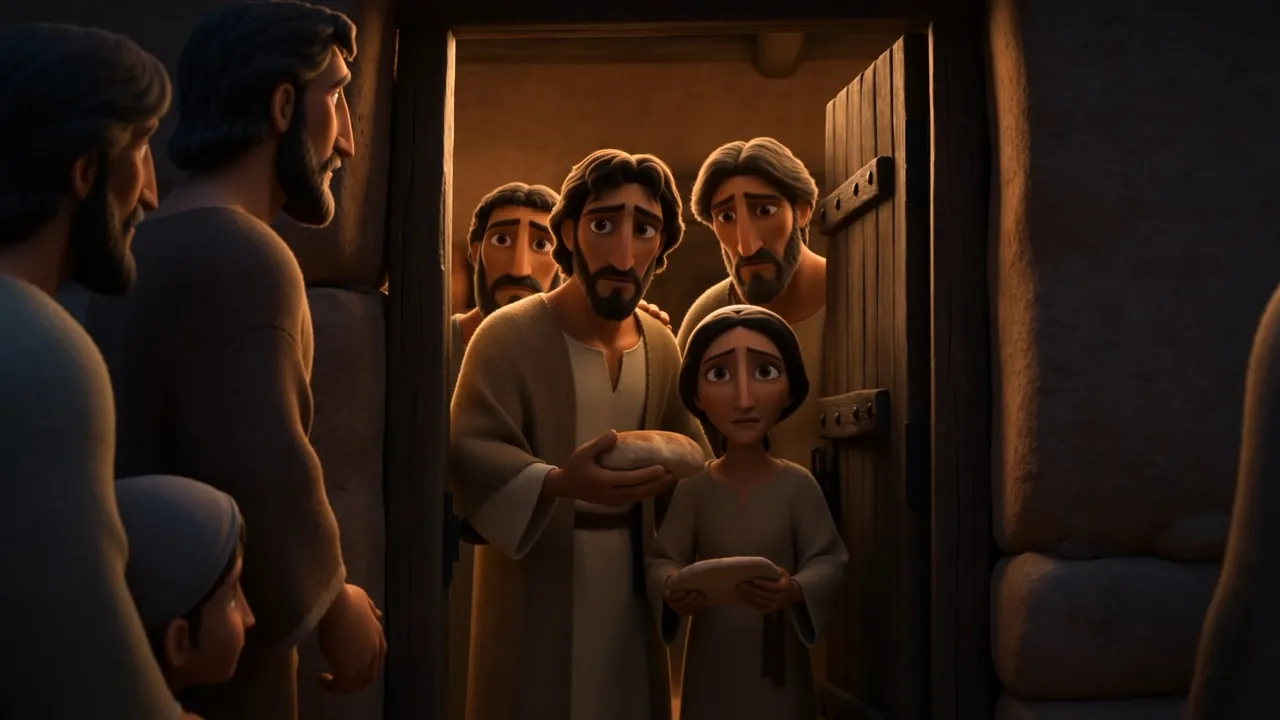


Jezebel started killing the prophets of Yahweh. And in Ahab's own household there was a man named Obadiah who feared Yahweh greatly — the king's palace manager, of all people — who took a hundred of them, hid them fifty to a cave, and fed them bread and water through the whole famine. The bravest man in the kingdom had an office job. 1 Kings 18 : 3–4
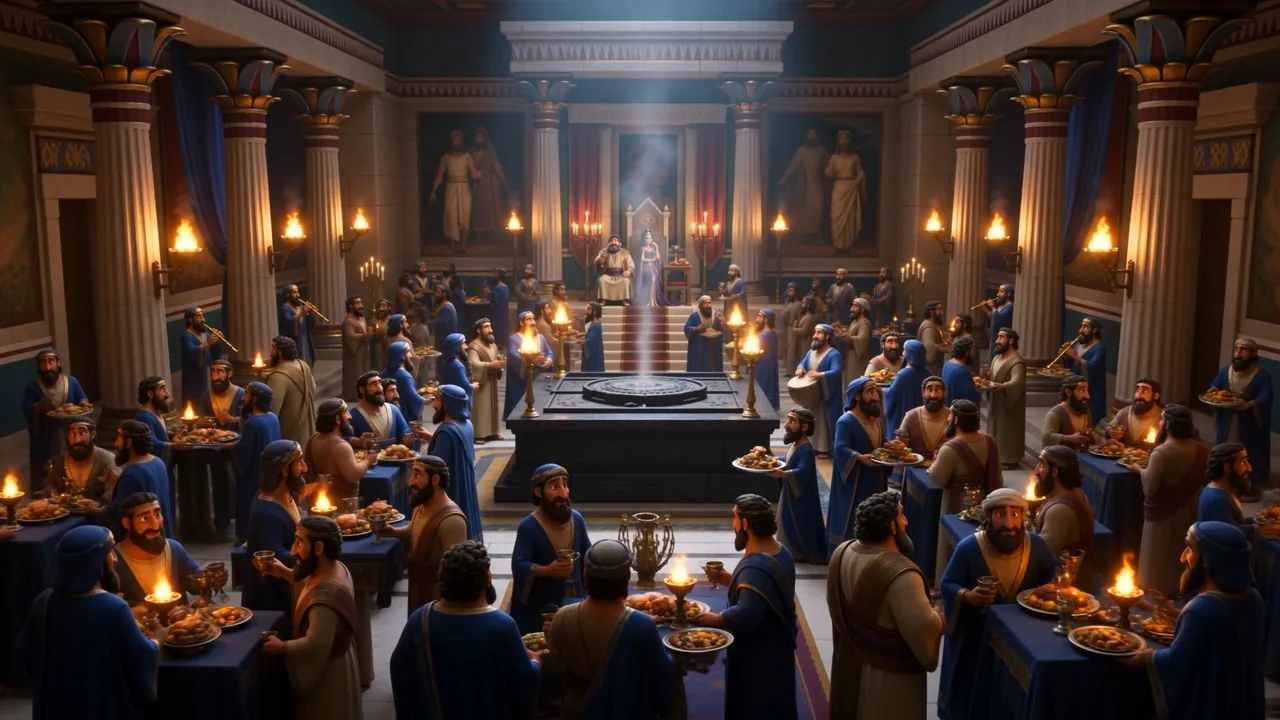

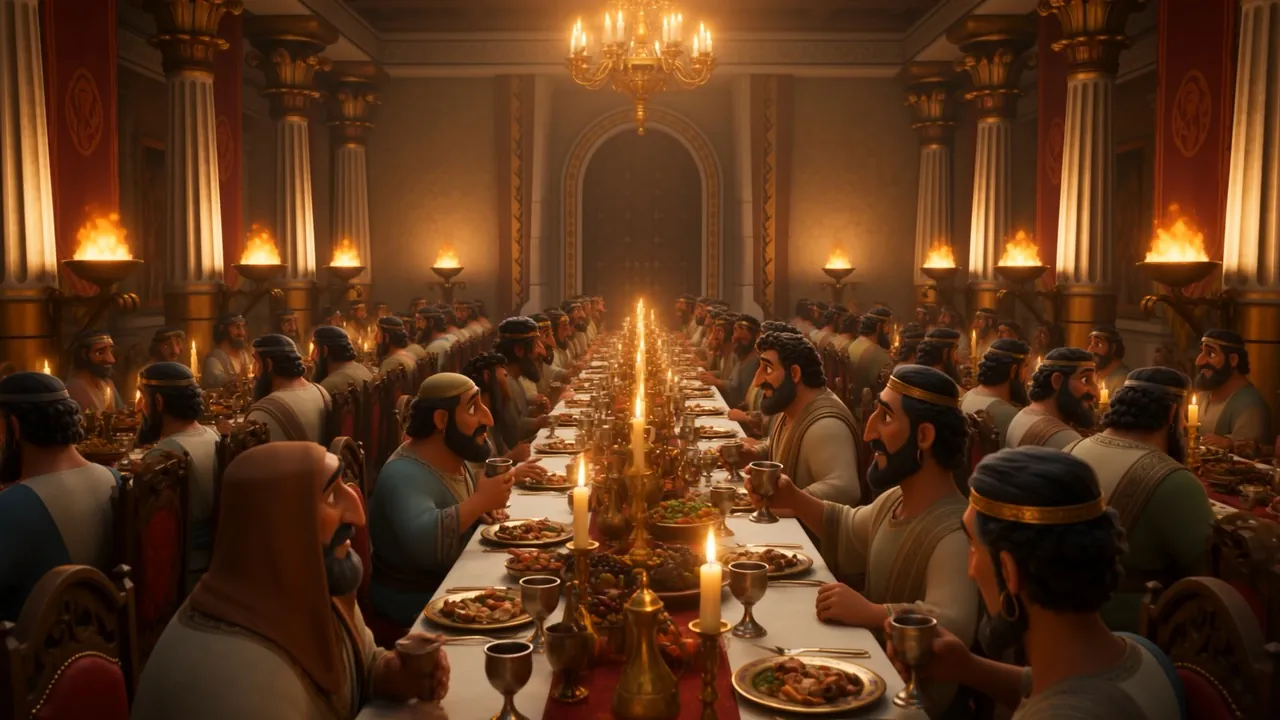



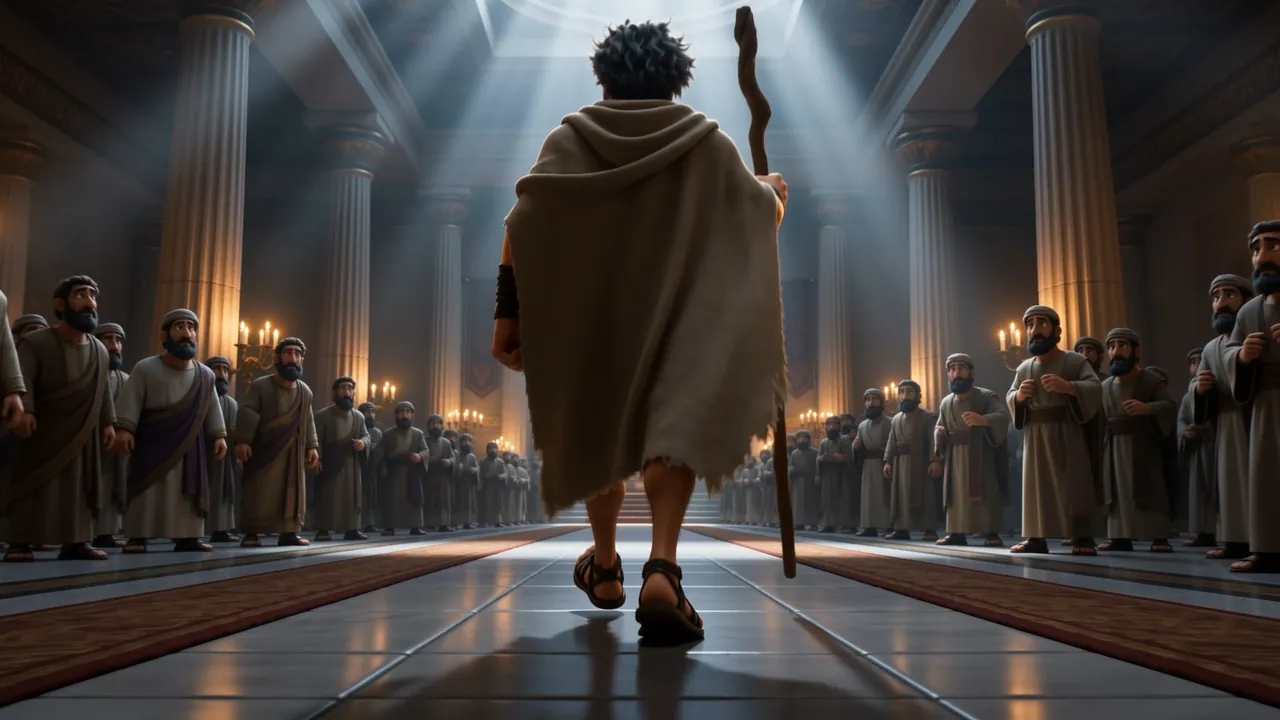
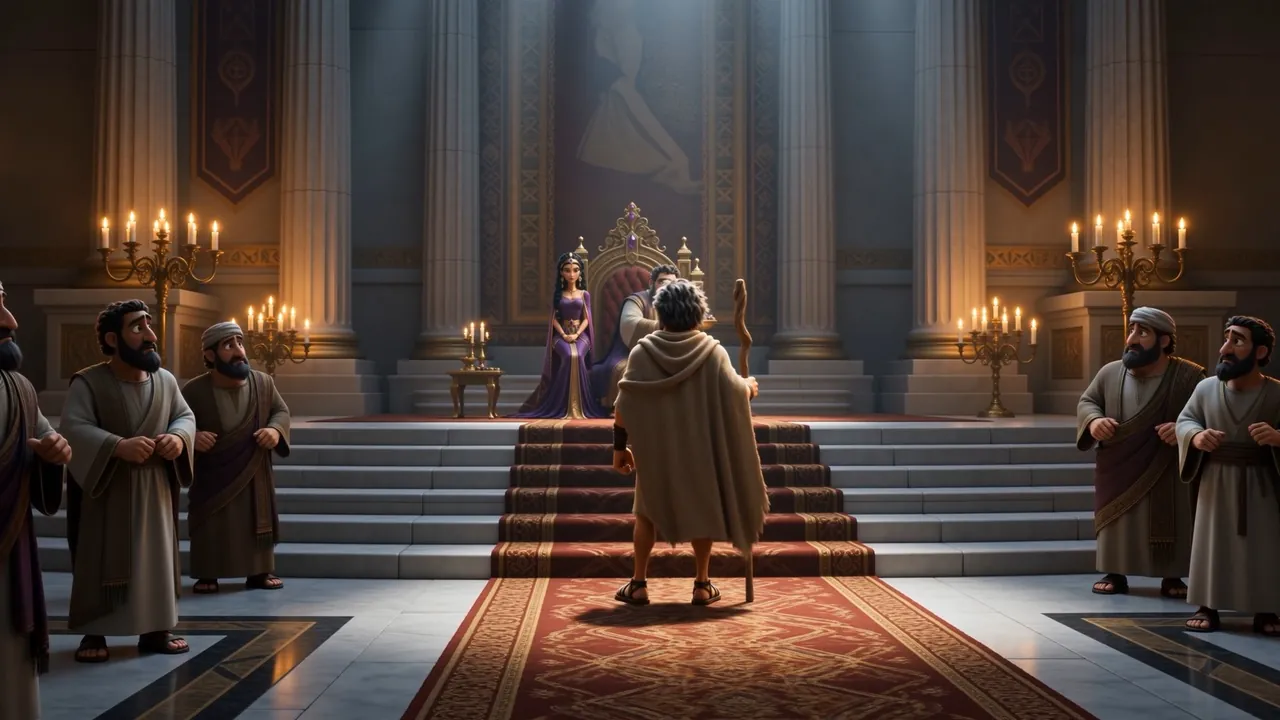

Scripture gives him no introduction whatsoever. No call story, no genealogy, no warning — just a door and a sentence. Elijah the Tishbite, who was of the foreigners of Gilead, said to Ahab… A man out of nowhere, in a hair cloak, standing in a banqueting hall full of people who worshipped the storm god. 1 Kings 17 : 1
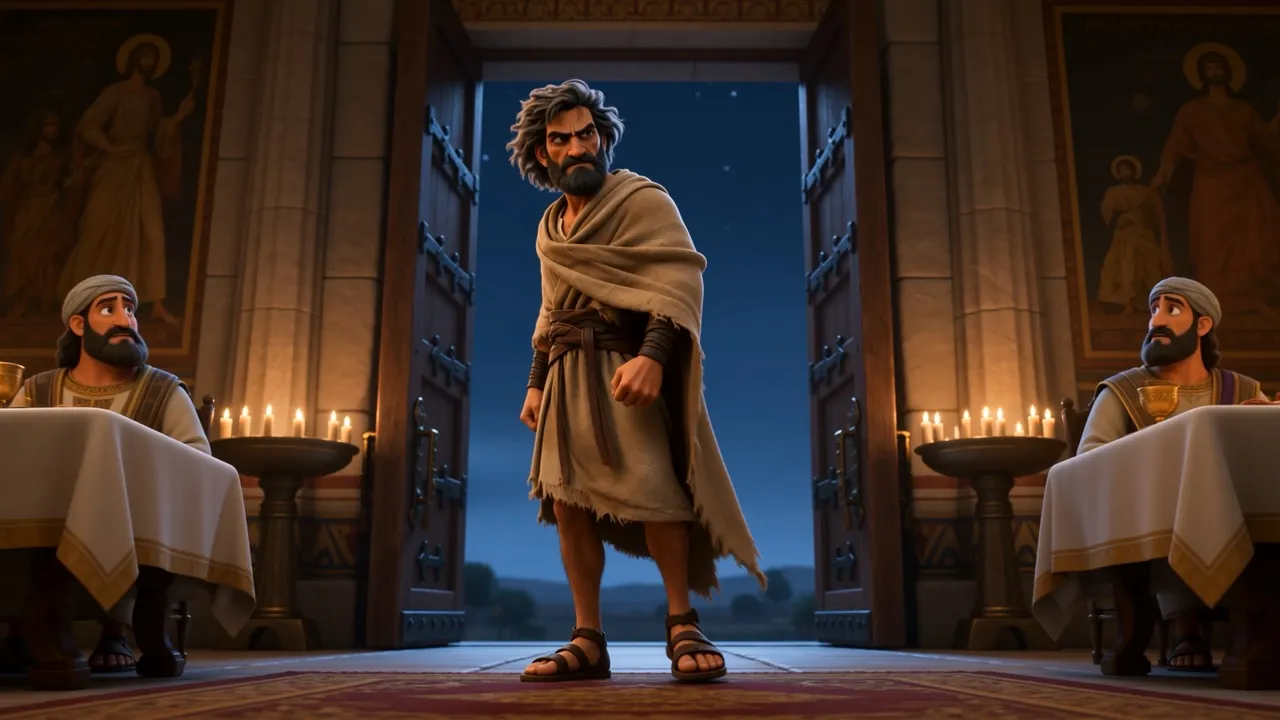





The god Jezebel had imported was Baal — the god of storm and rain, whose whole job was making things grow. So Elijah aimed at exactly that: “As Yahweh, the God of Israel, lives, before whom I stand, there shall not be dew nor rain these years, but according to my word.” Then he walked out. No demands, no negotiation. Just the sky, closing. 1 Kings 17 : 1
Not dew nor rain — but according to my word.









And it didn't rain. Not that season, not the next, not the one after that. It goes the way a farmer would remember it: the terraces going from green to gold to grey, the streams thinning to threads, the sky like hammered brass every single morning. Baal's own specialty, failing, in Baal's own country.






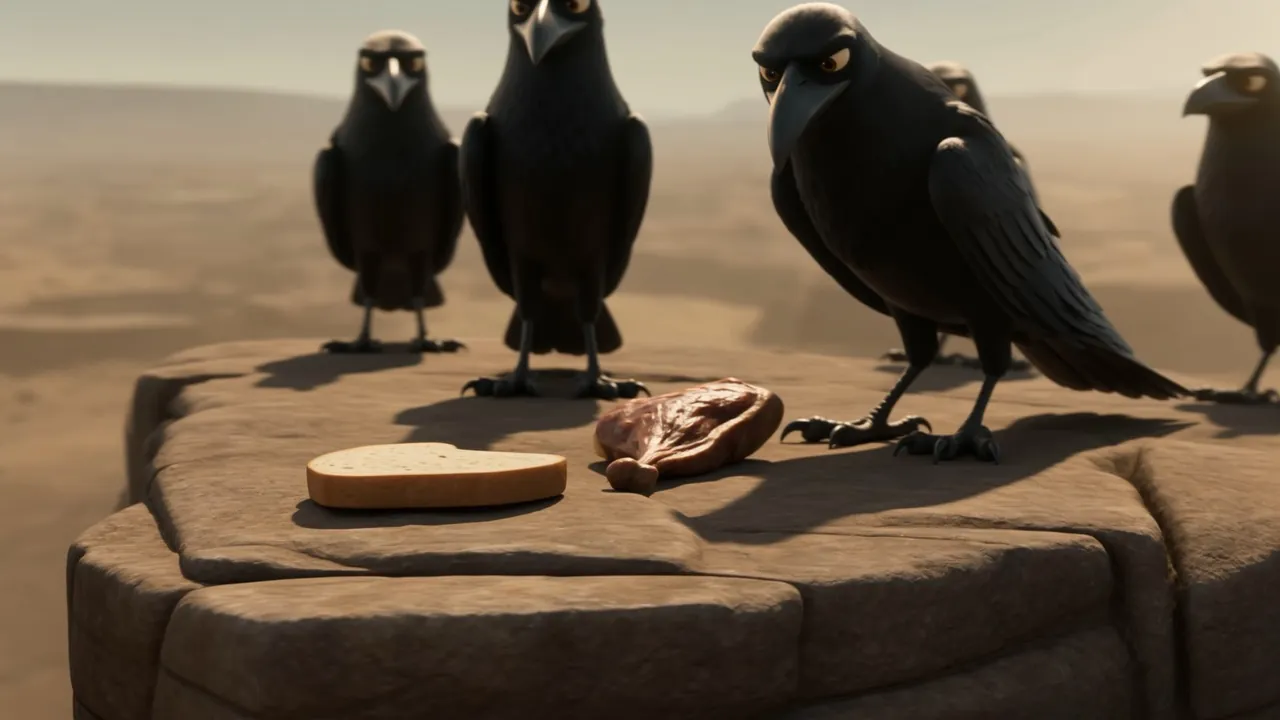


God sent him to hide in a ravine called Kerith — and then fed him with the least kosher waiters imaginable. The ravens brought him bread and meat in the morning, and bread and meat in the evening; and he drank from the brook. Unclean birds, scavengers, carrying clean food twice a day to a prophet in a hole in the ground. God's provision rarely looks the way we'd have arranged it. 1 Kings 17 : 5–6


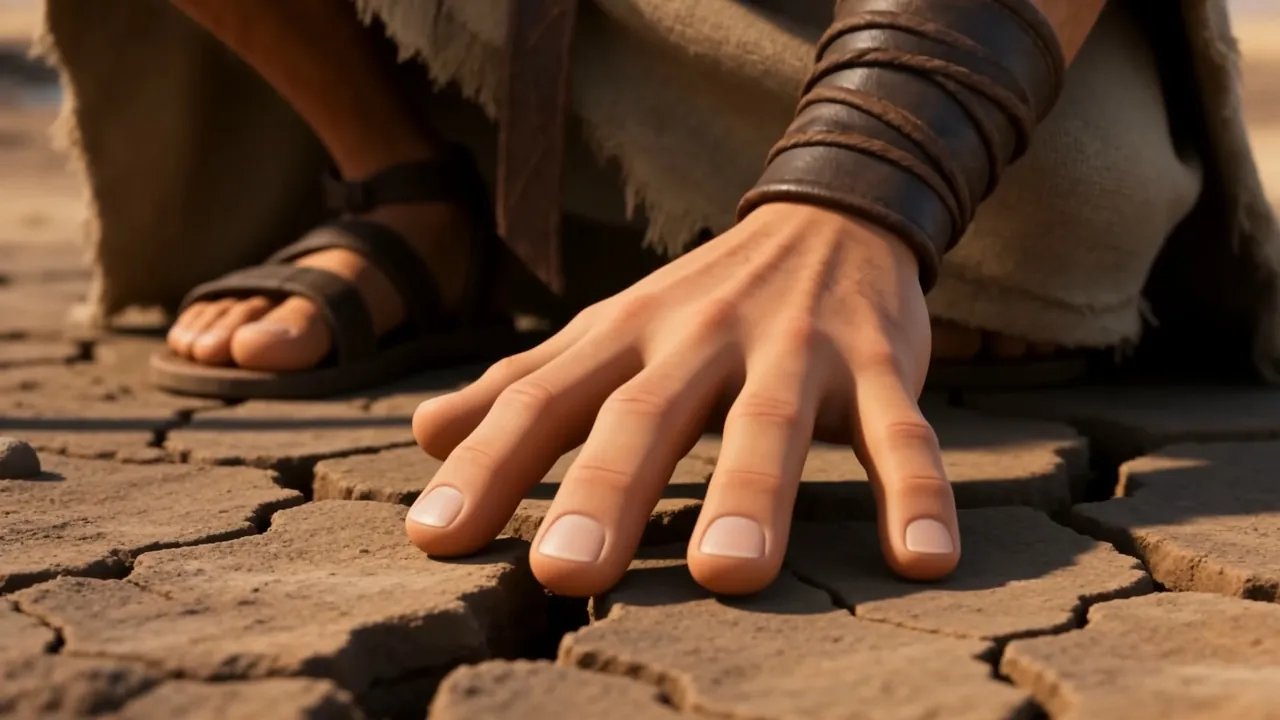





Then the thing that always tests us most: the provision itself ran out. After a while, the brook dried up, because there was no rain in the land. He had obeyed perfectly and the water still stopped. Being in exactly the right place is no promise that the right place stays comfortable — sometimes a dry brook is just God's way of saying time to move. 1 Kings 17 : 7



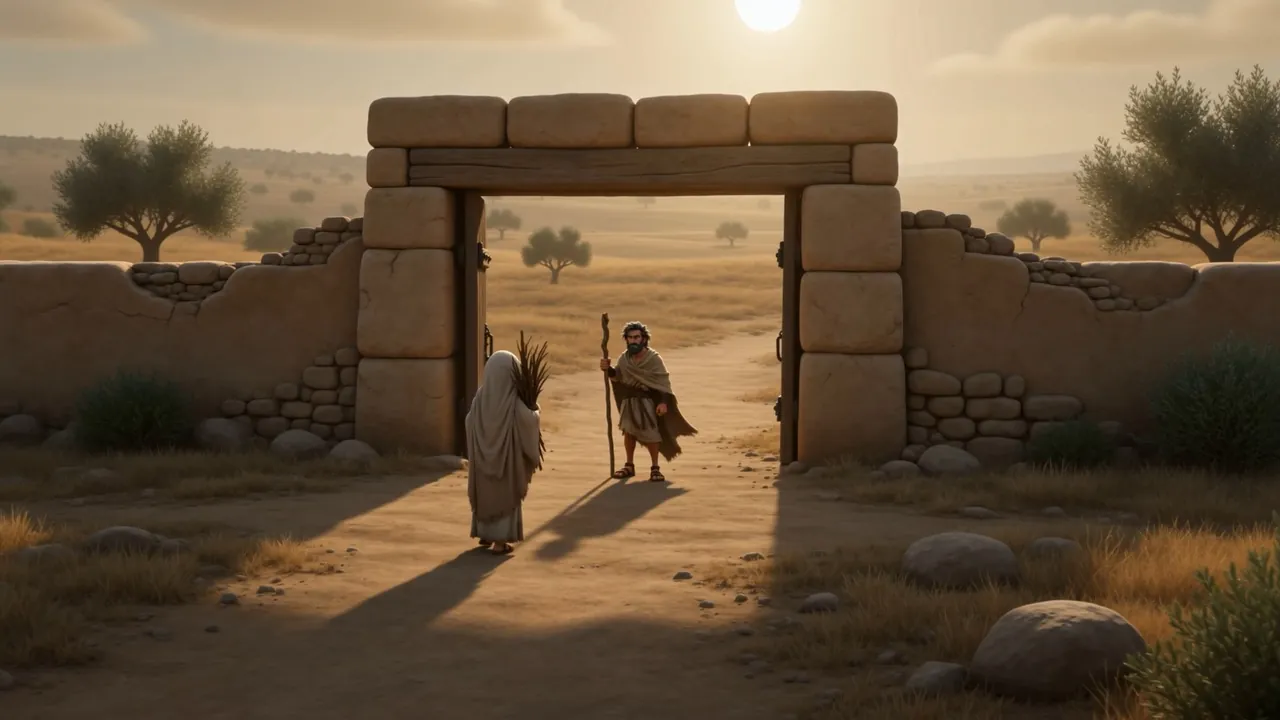
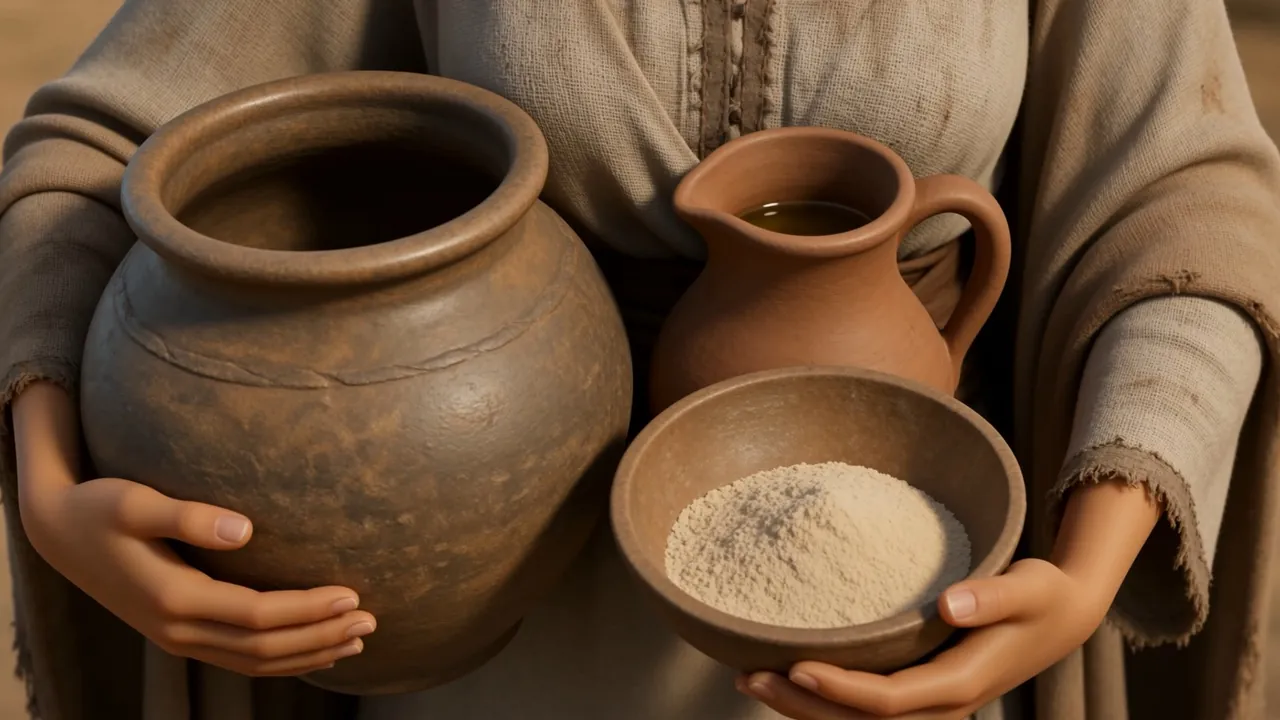

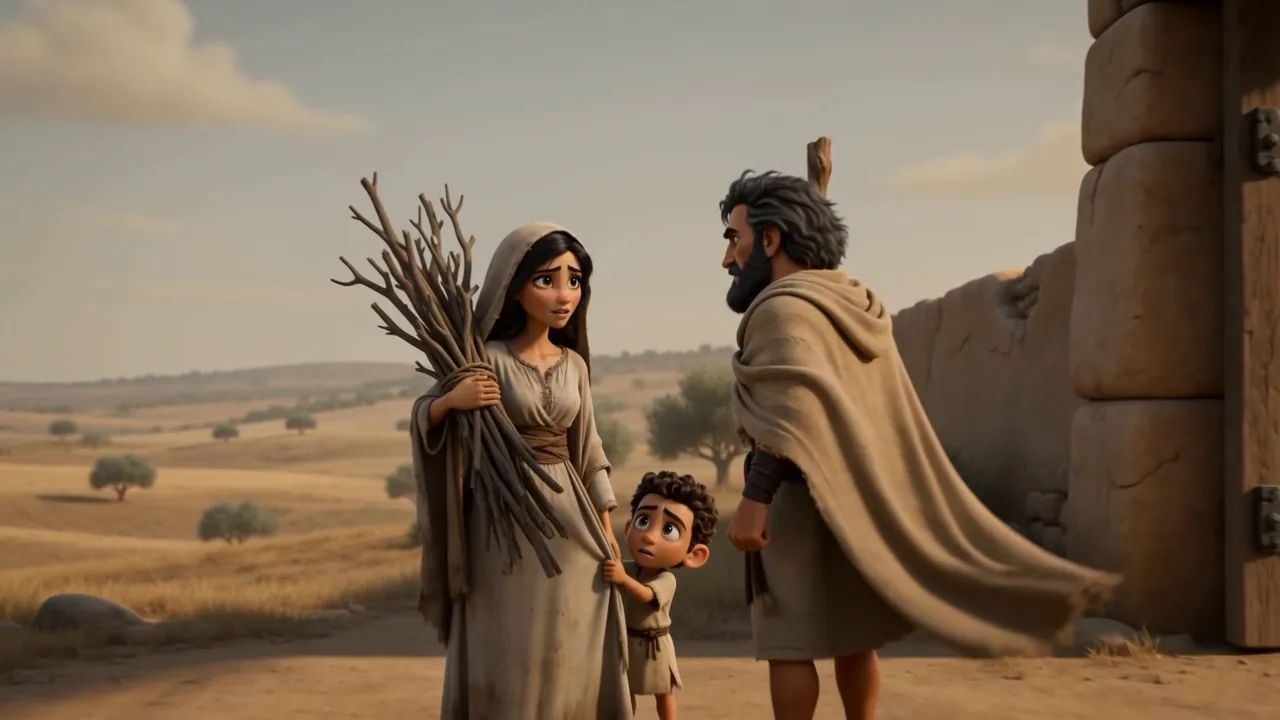
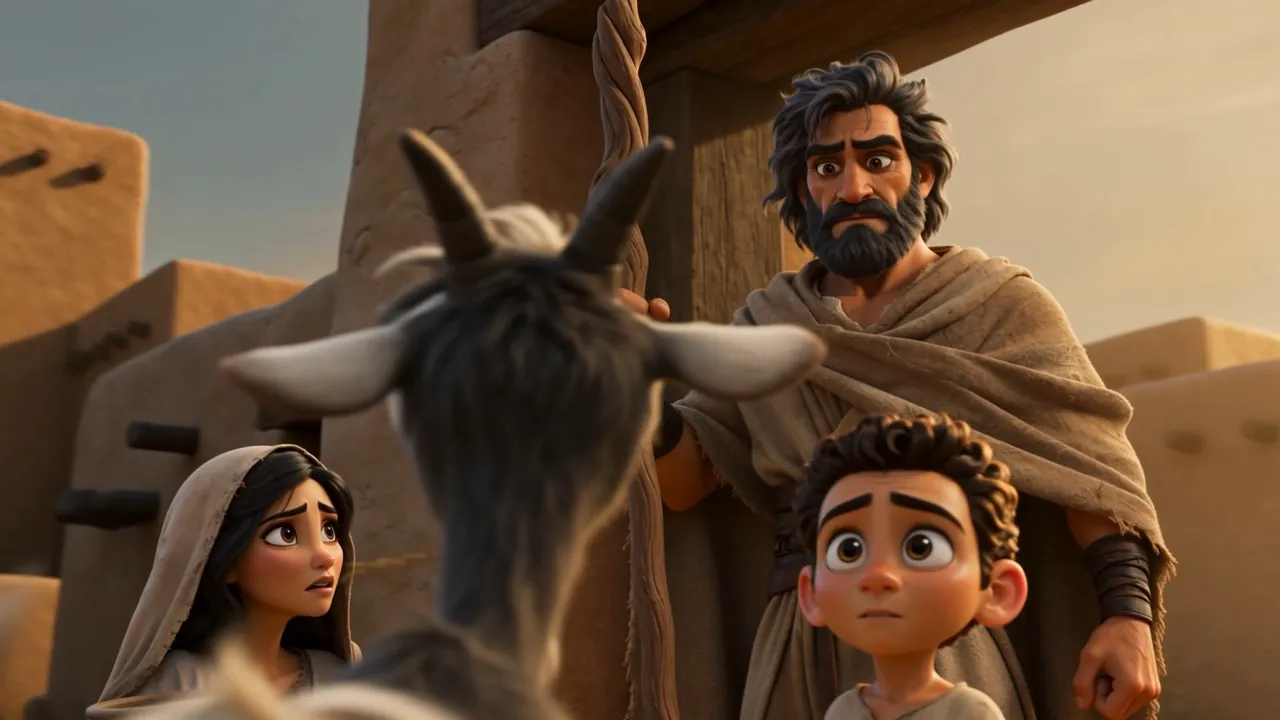

So God sent him out of Israel entirely — to Zarephath, in Jezebel's own homeland, to be fed by a widow who was down to her last handful. Make me a little cake first, he said. And she answered with the most honest sentence in the chapter: “I don't have a loaf, but a handful of meal in a jar and a little oil in a jar. Behold, I am gathering two sticks, that I may go in and bake it for me and my son, that we may eat it — and die.” 1 Kings 17 : 12
“…that we may eat it, and die.”
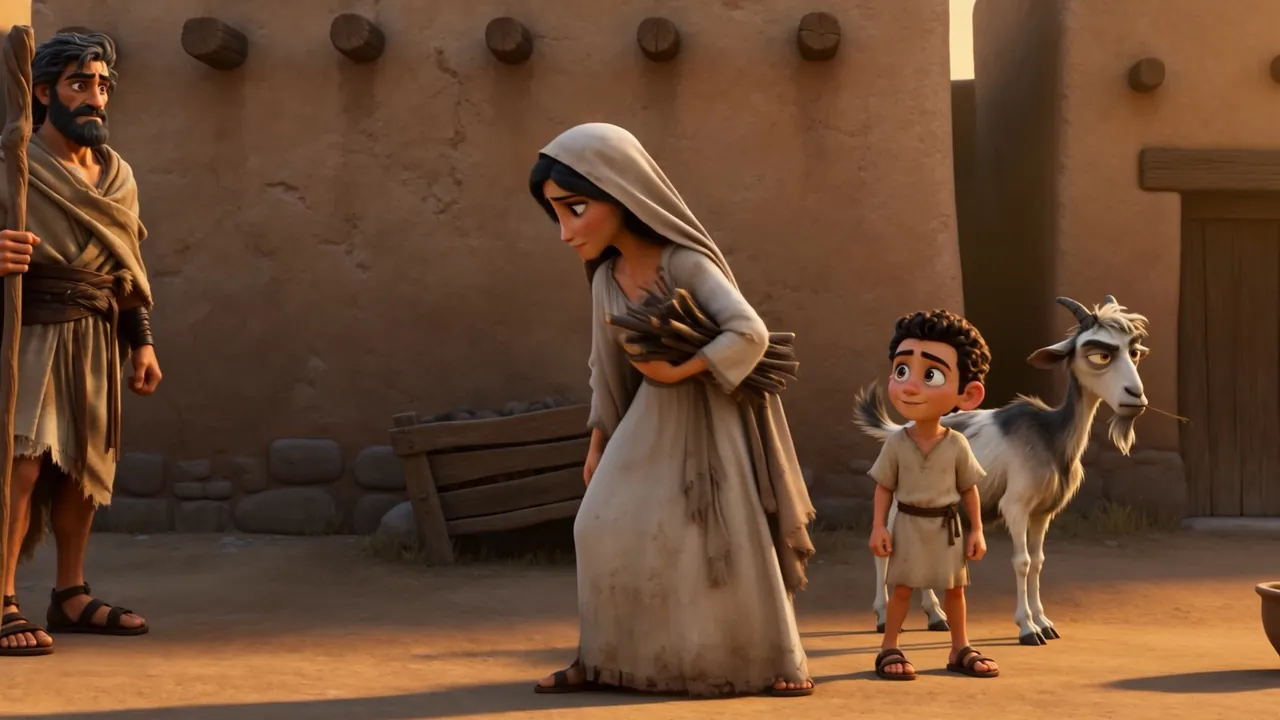
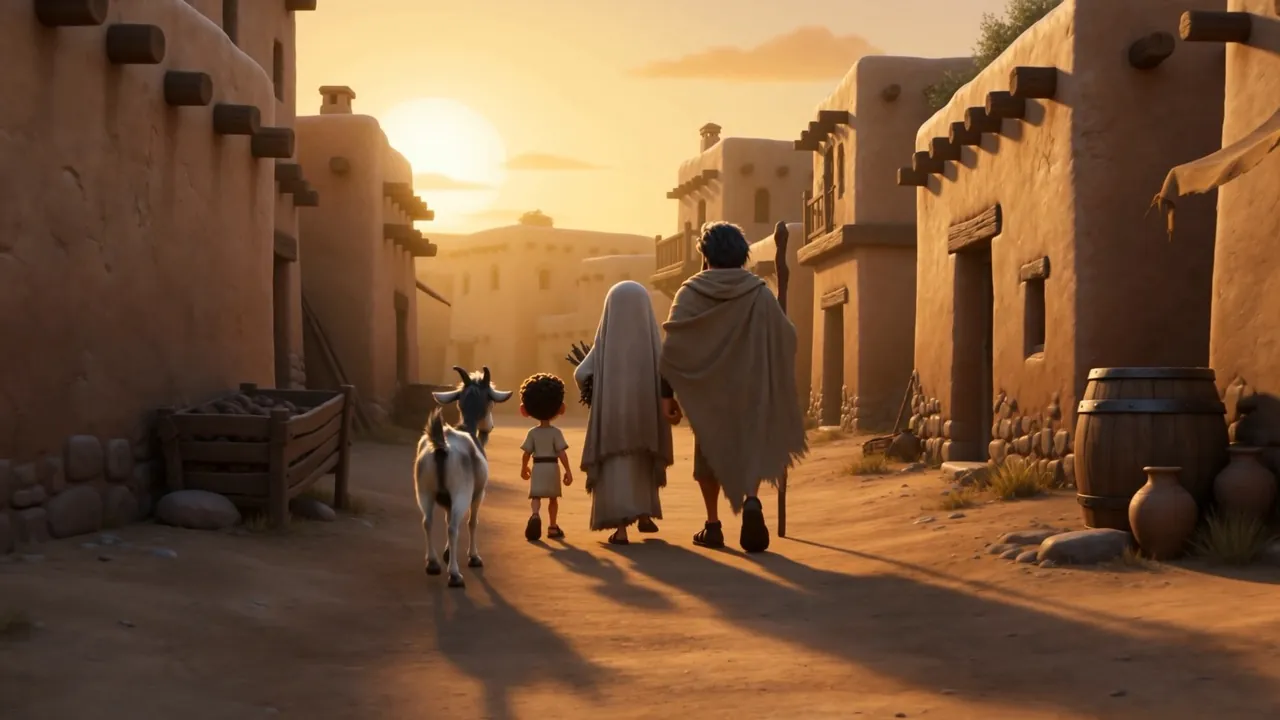




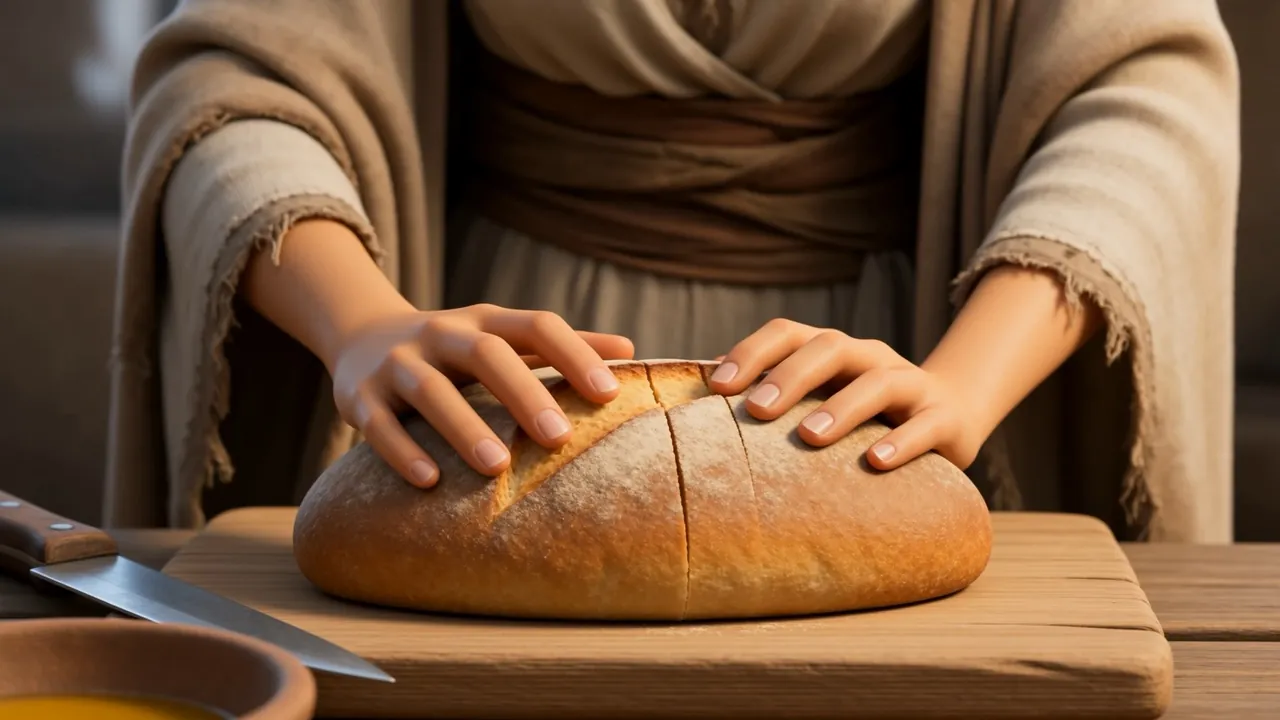
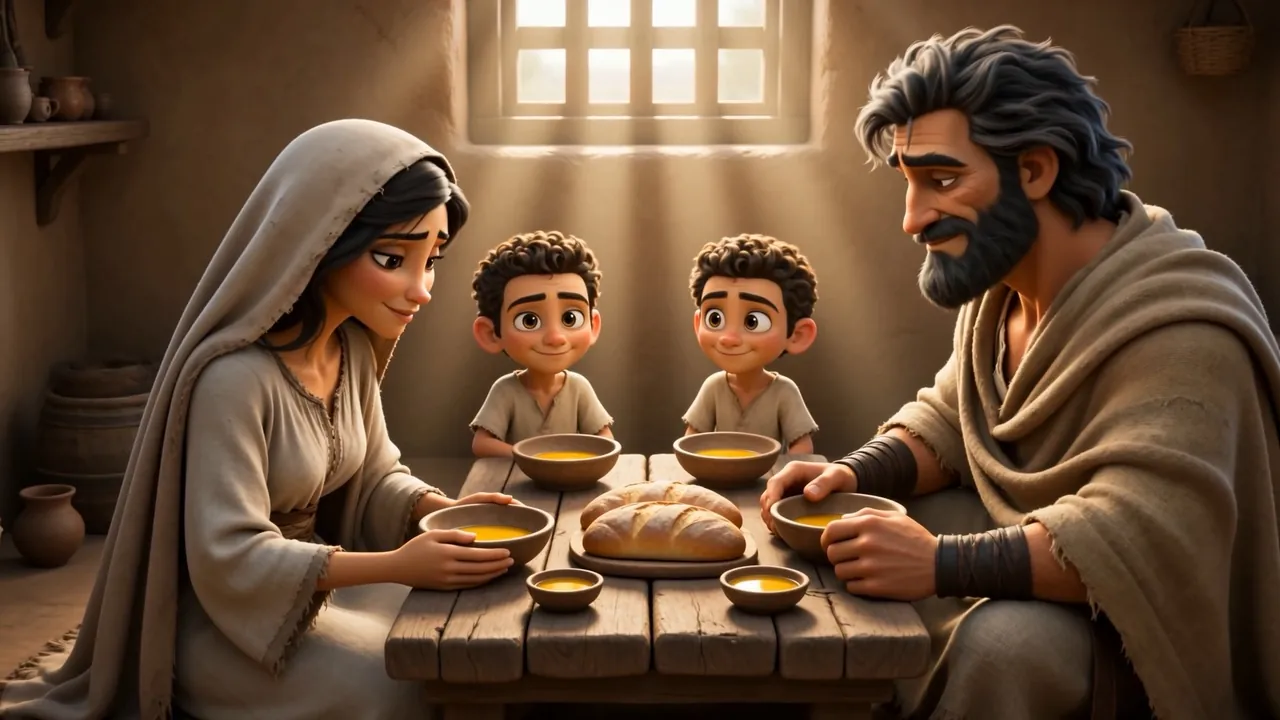

She did it — gave the last of it away to a stranger with an accent from the country that was starving her own. And then: the jar of meal didn't empty, and the jar of oil didn't fail, according to Yahweh's word. Not a mountain of grain. Just always enough for today, every day, for years — which is a slower and much harder kind of miracle to trust. 1 Kings 17 : 15–16








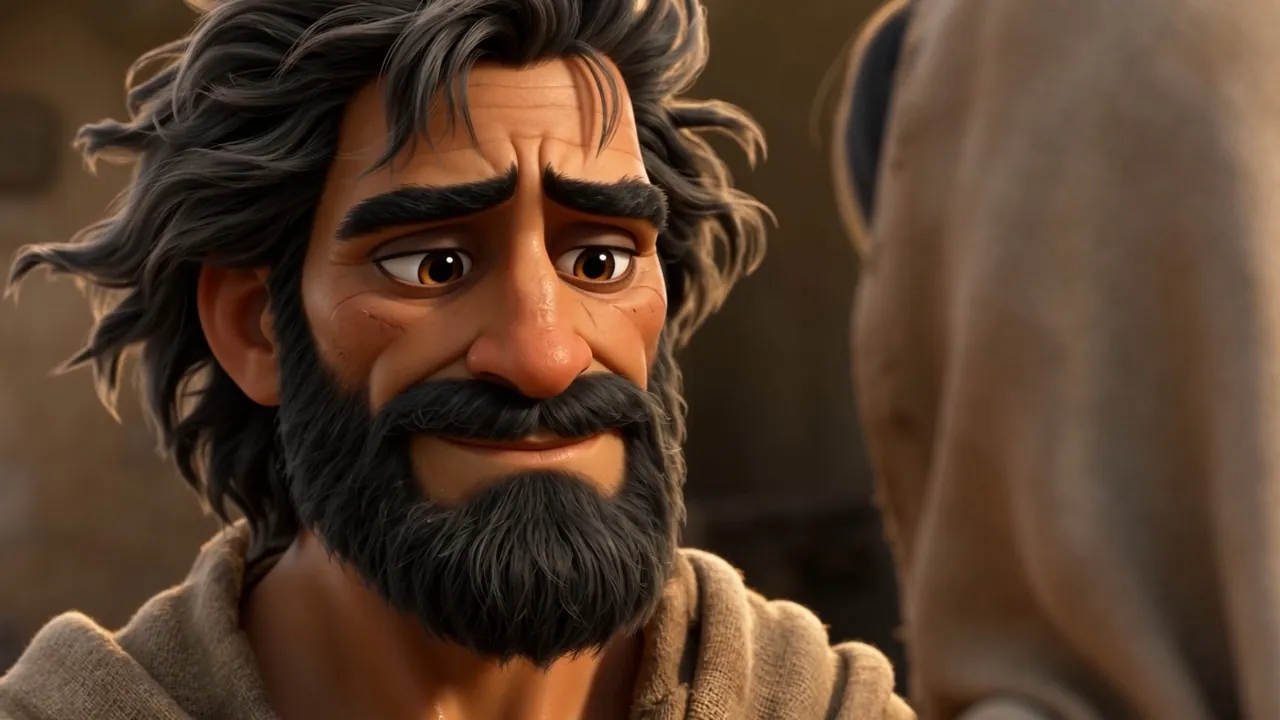
Then the boy stopped breathing, and the woman said the thing grief always says: have you come to bring my sin to memory, and to kill my son? Elijah carried him upstairs and argued with God about it — out loud, angrily, three times over the small body. And the child breathed. His mother's verdict is the point of the whole chapter: “Now I know that you are a man of God, and that Yahweh's word in your mouth is true.” 1 Kings 17 : 17–24
Now I know that your word is true.

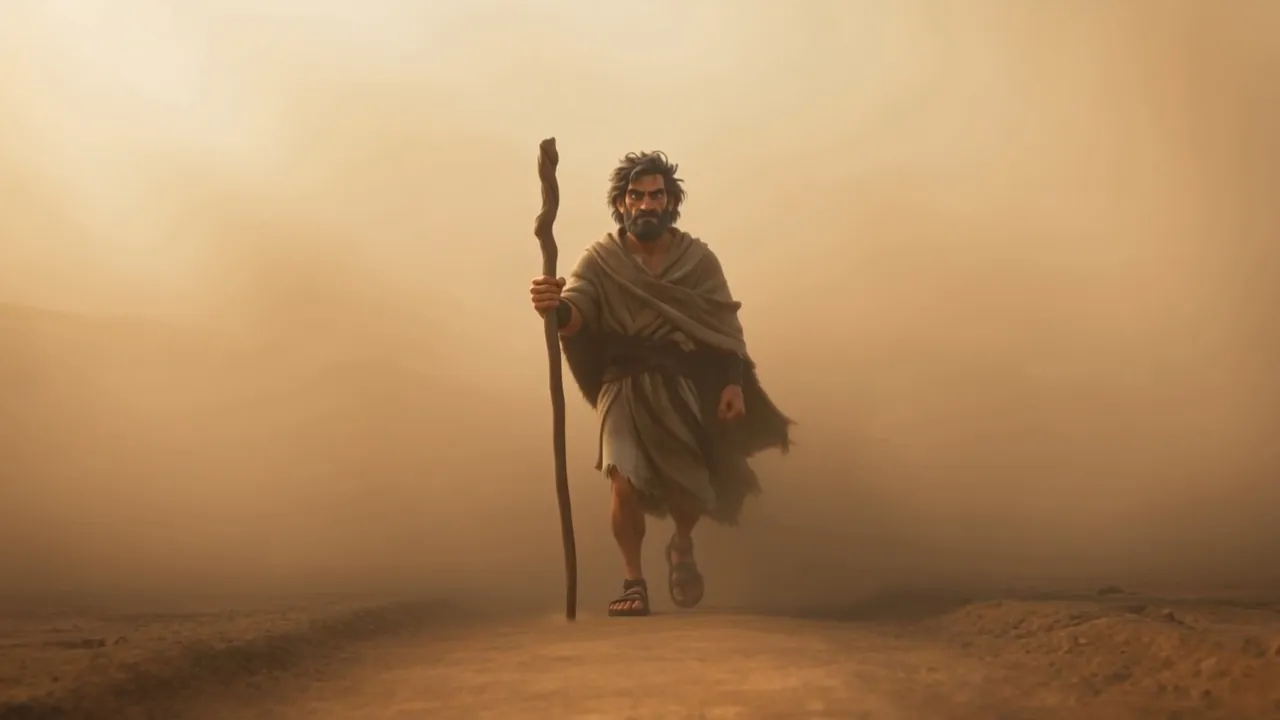

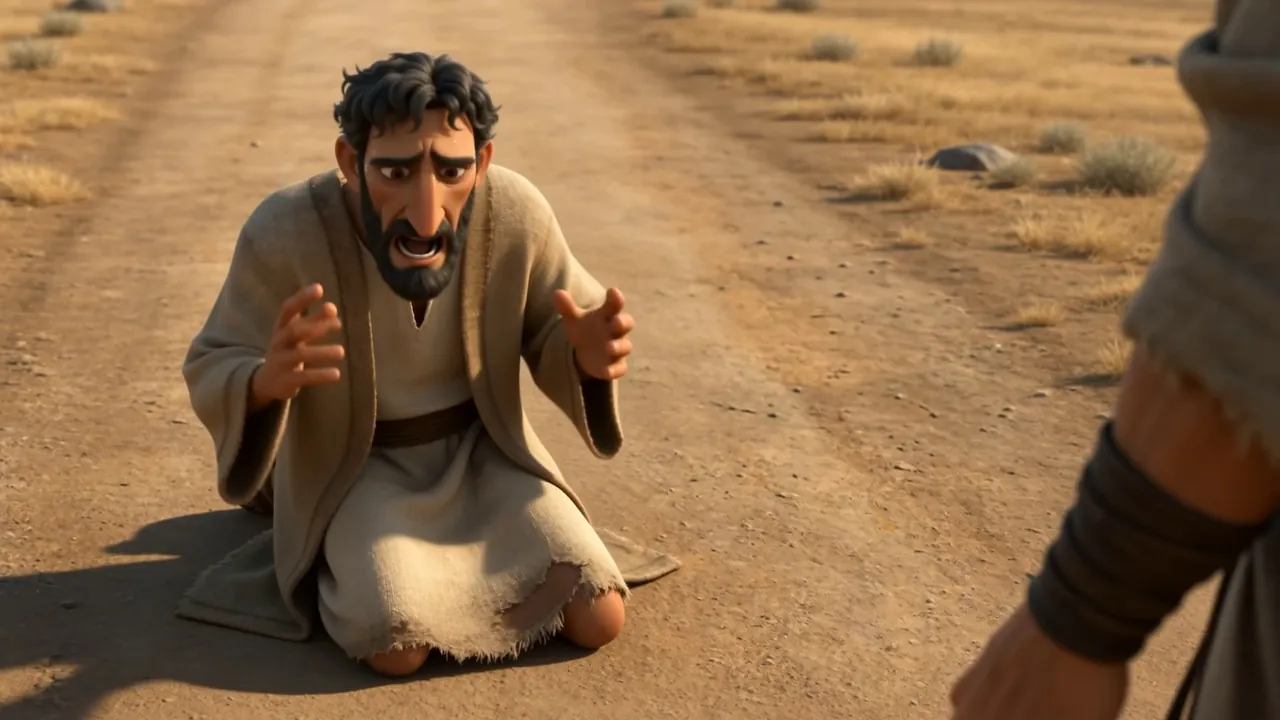


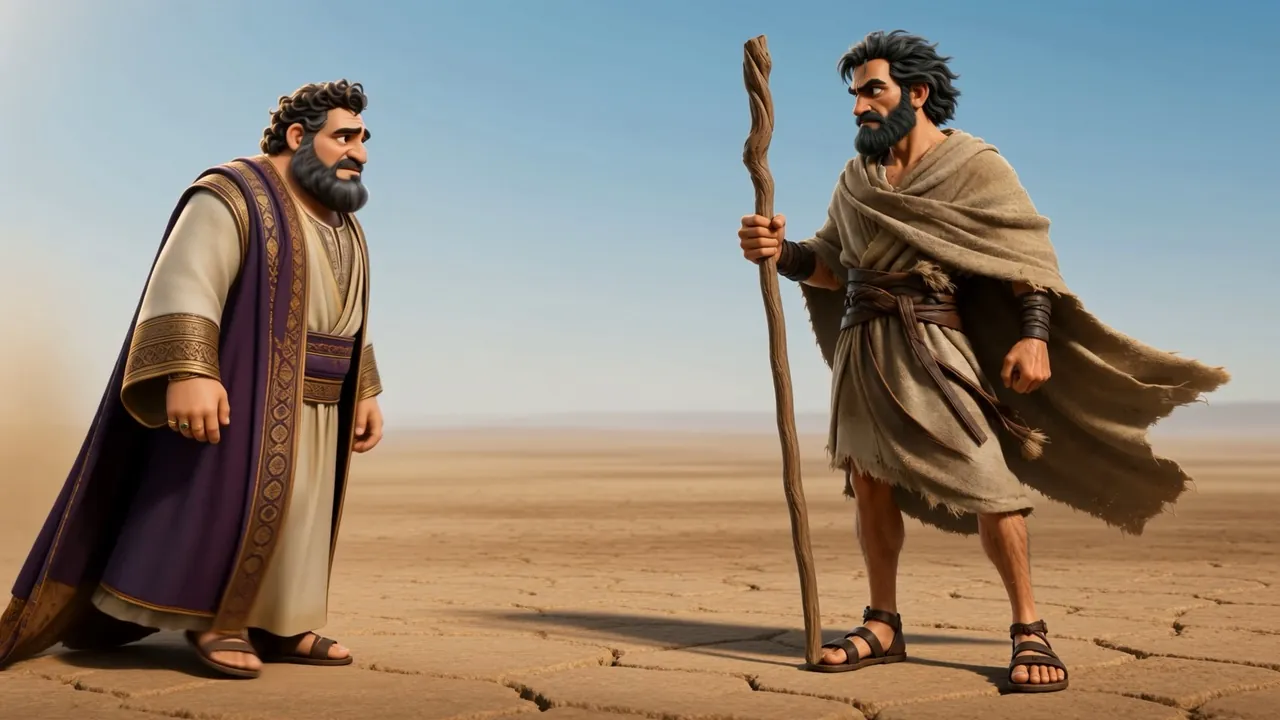

Three years in, God said: go show yourself to Ahab, and I will send rain. On the road Elijah met Obadiah — who nearly fainted. Tell the king you found me, said Elijah. “What have I sinned,” said Obadiah, “that you would deliver your servant into the hand of Ahab, to kill me?” If the Spirit carries you off again, I'm a dead man. Elijah swore he'd stay put. Obadiah went and got the king. 1 Kings 18 : 7–15
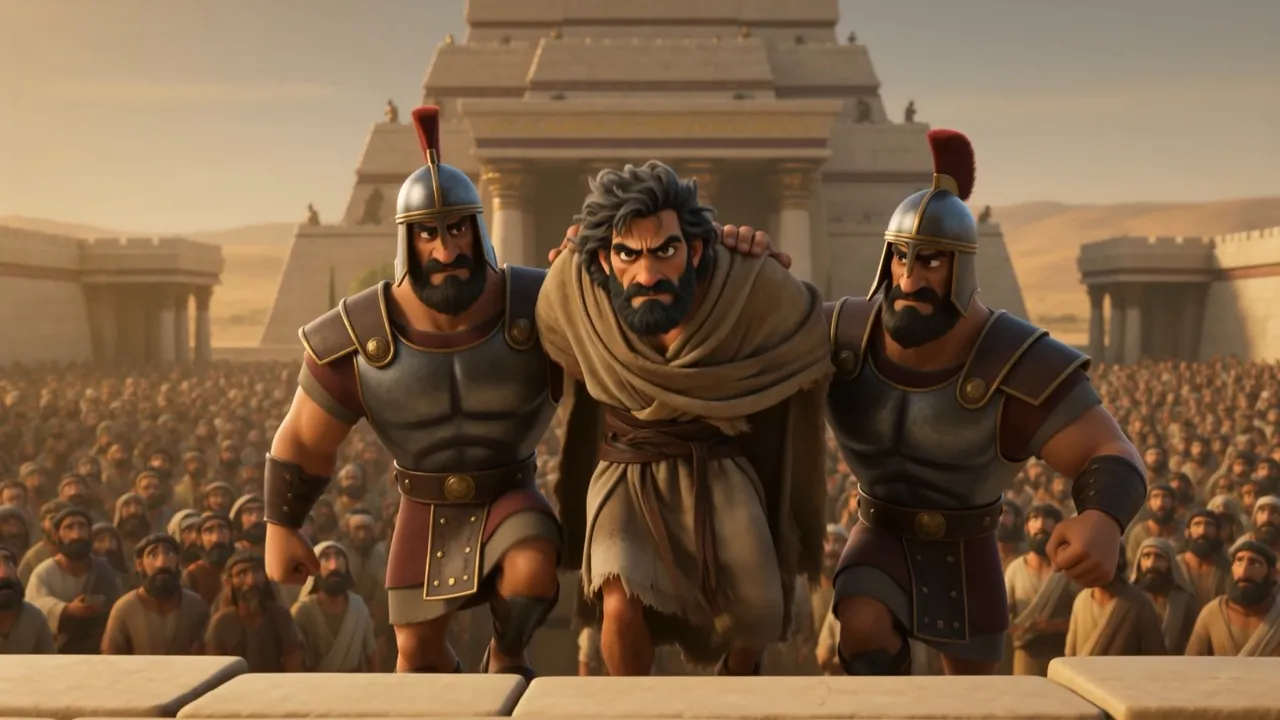
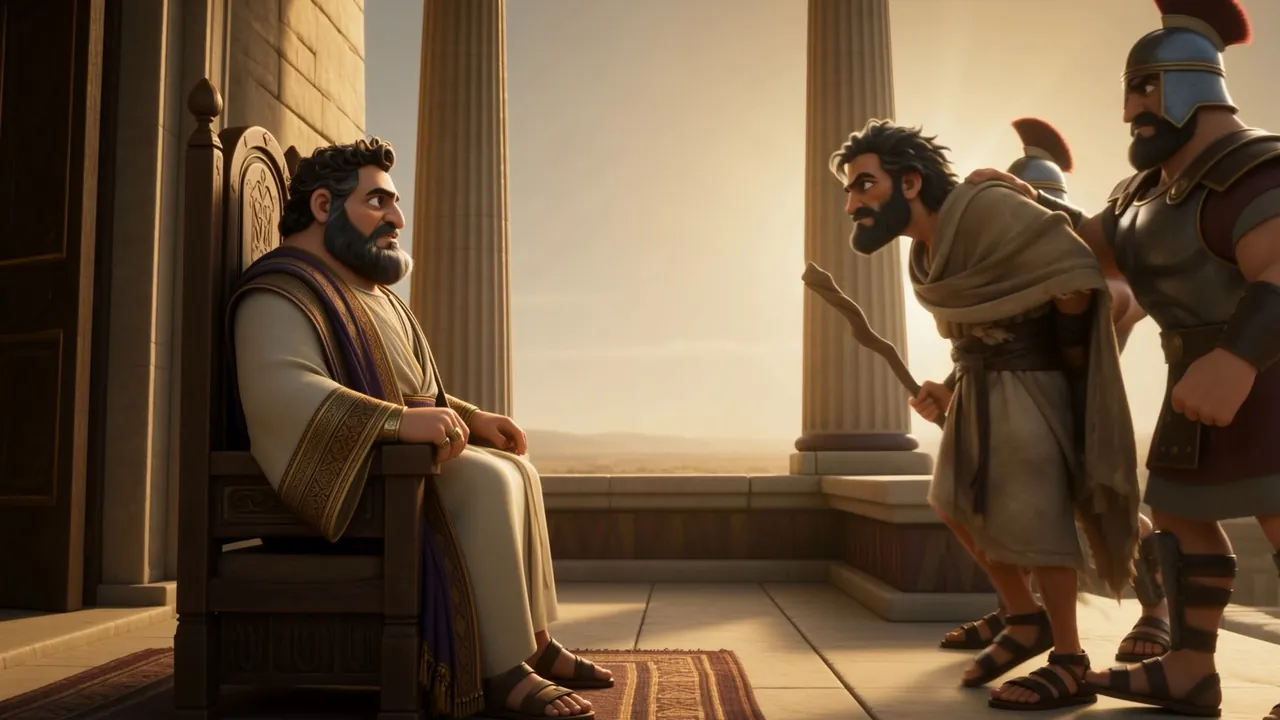

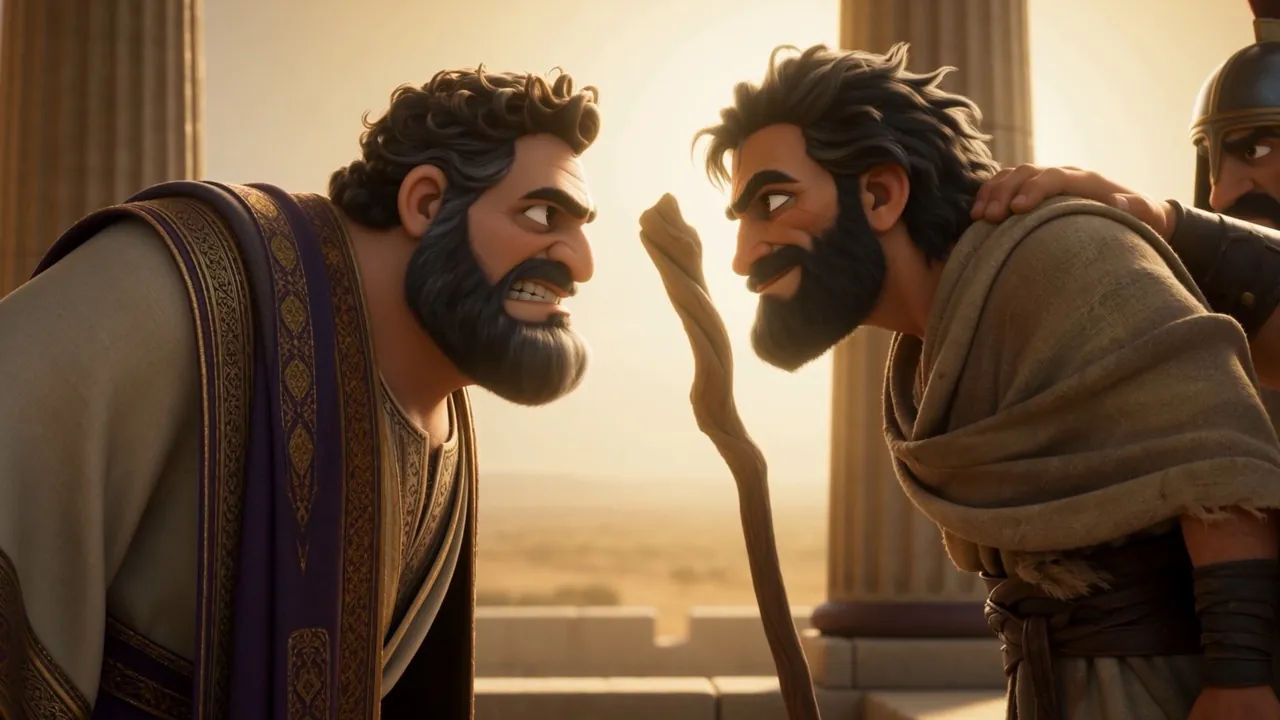
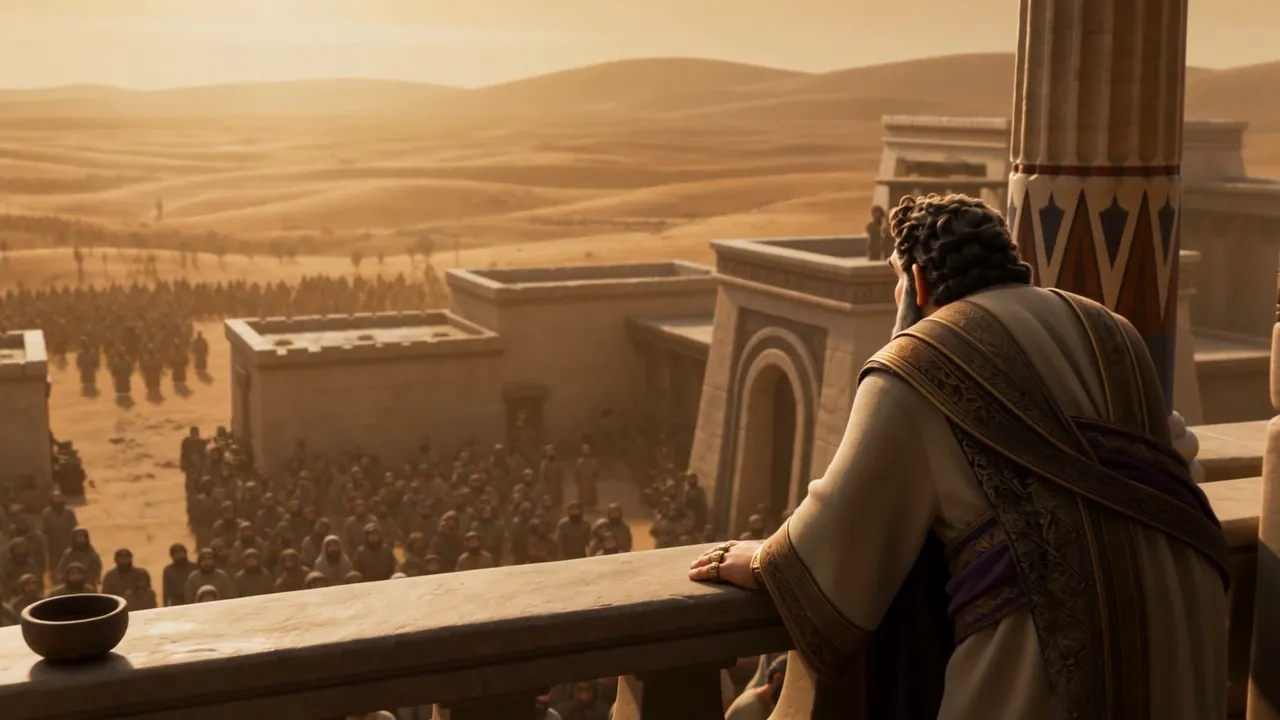

The king got his line in first: “Is that you, you troubler of Israel?” And Elijah handed it straight back: “I have not troubled Israel, but you have, and your father's house, in that you have forsaken the commandments of Yahweh, and you have followed the Baals.” Then he named his terms — send for all Israel, and for the four hundred and fifty prophets of Baal. Meet me on Carmel. 1 Kings 18 : 17–19
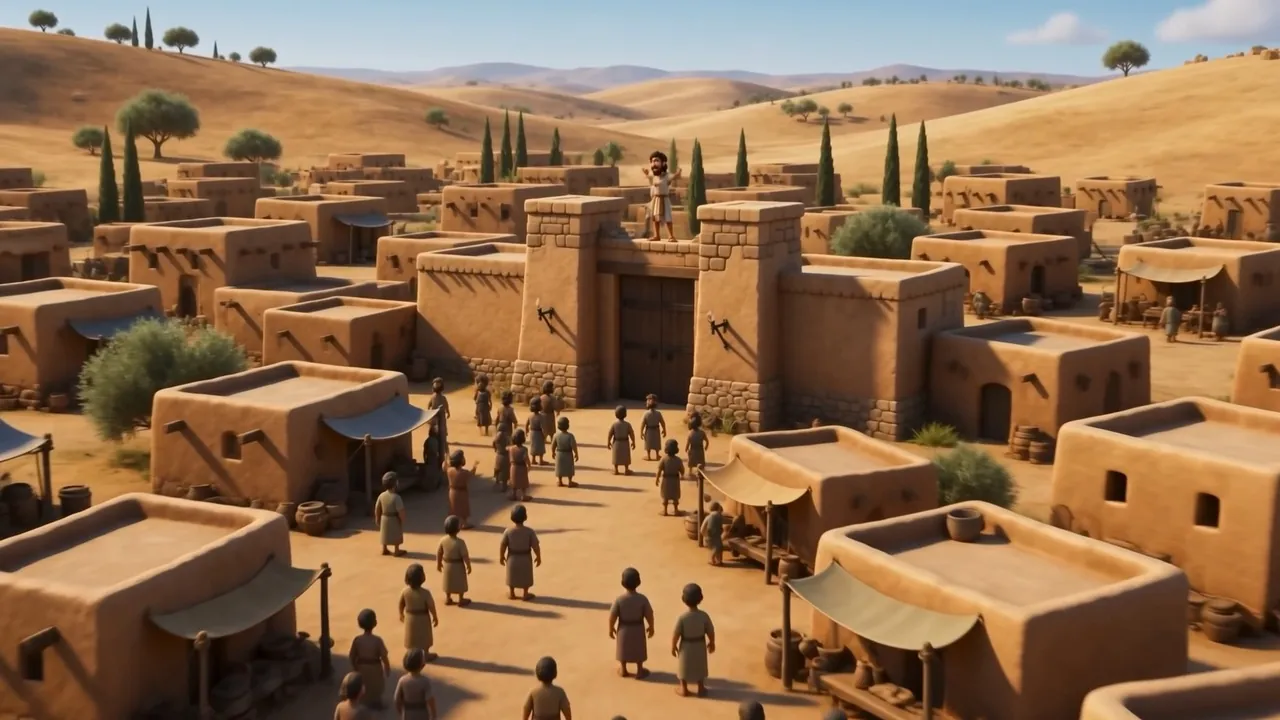



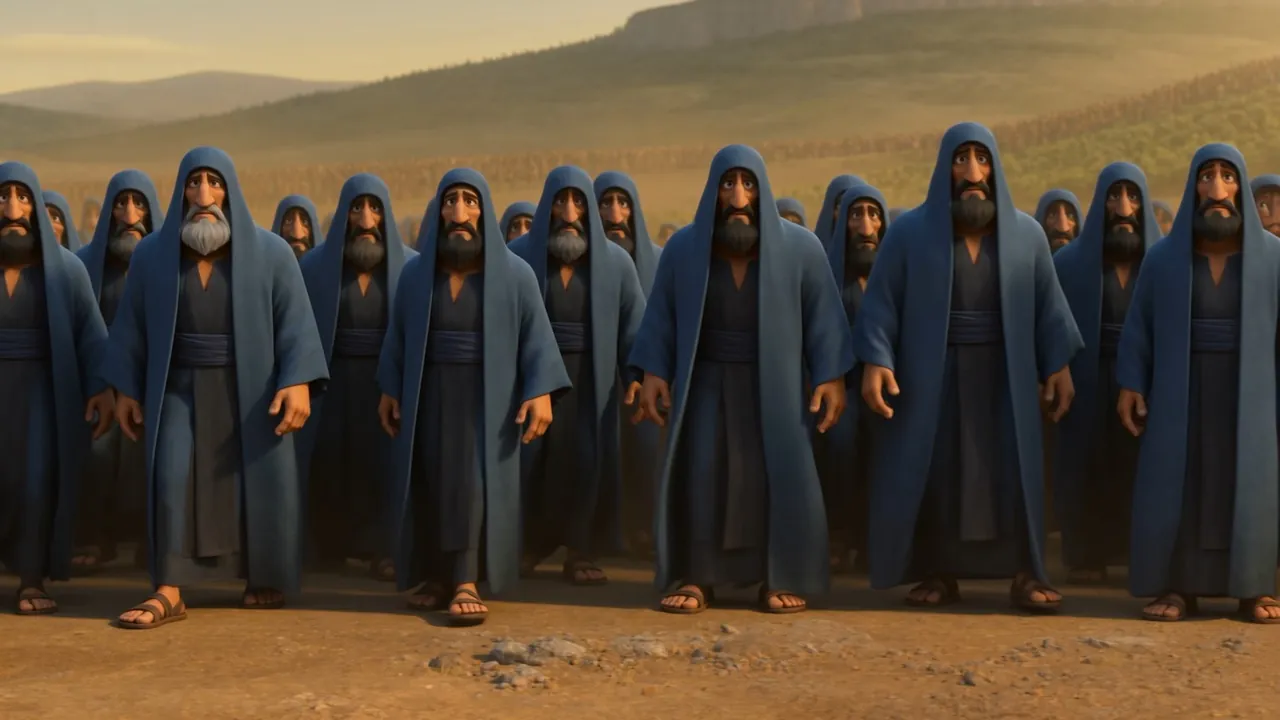
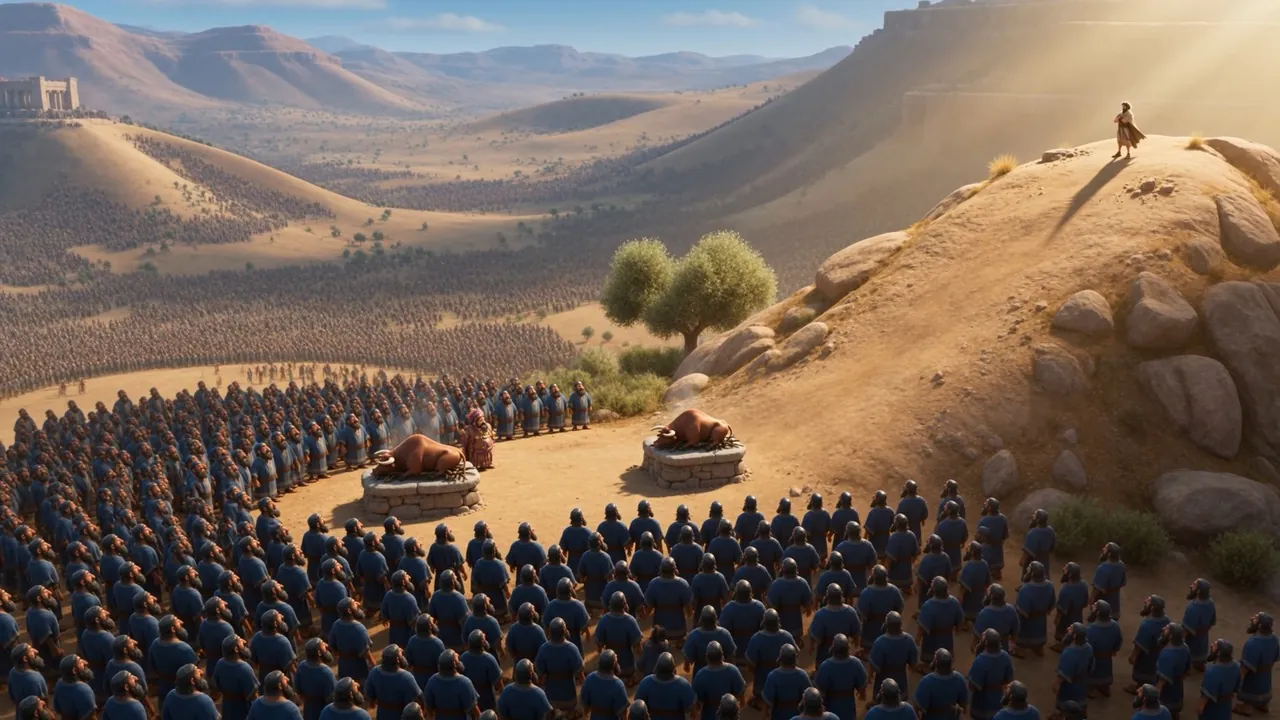


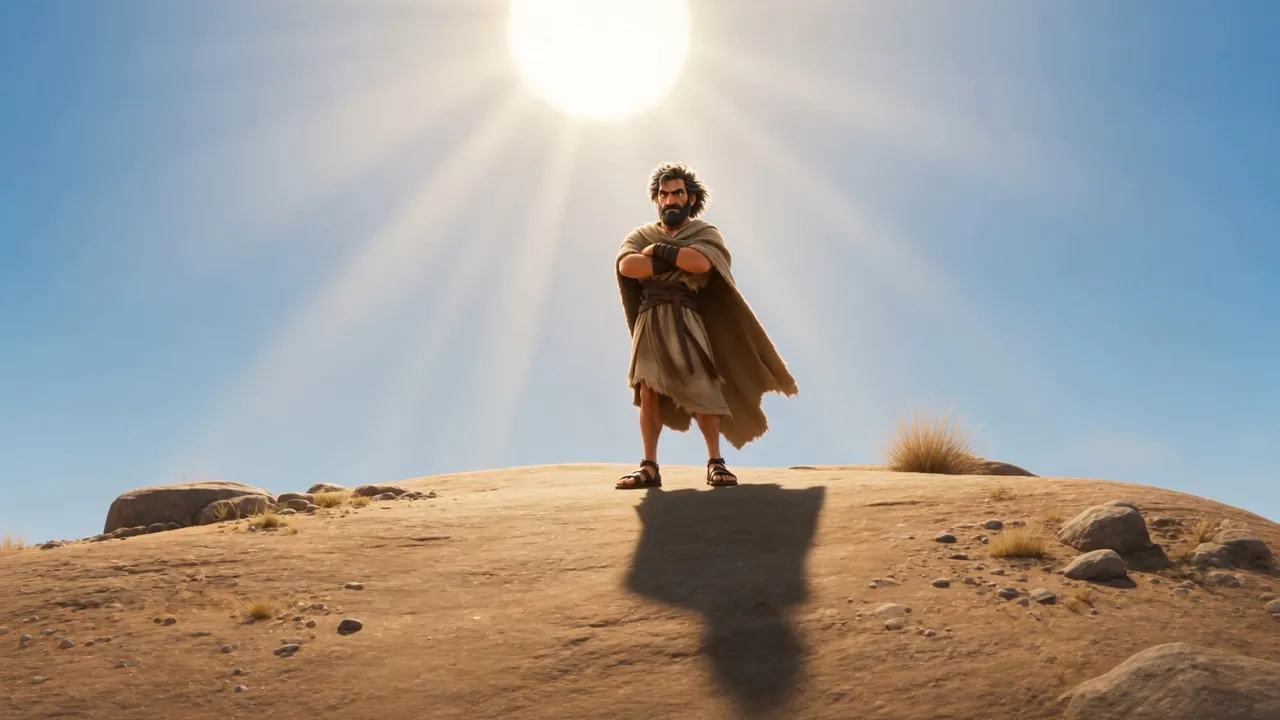
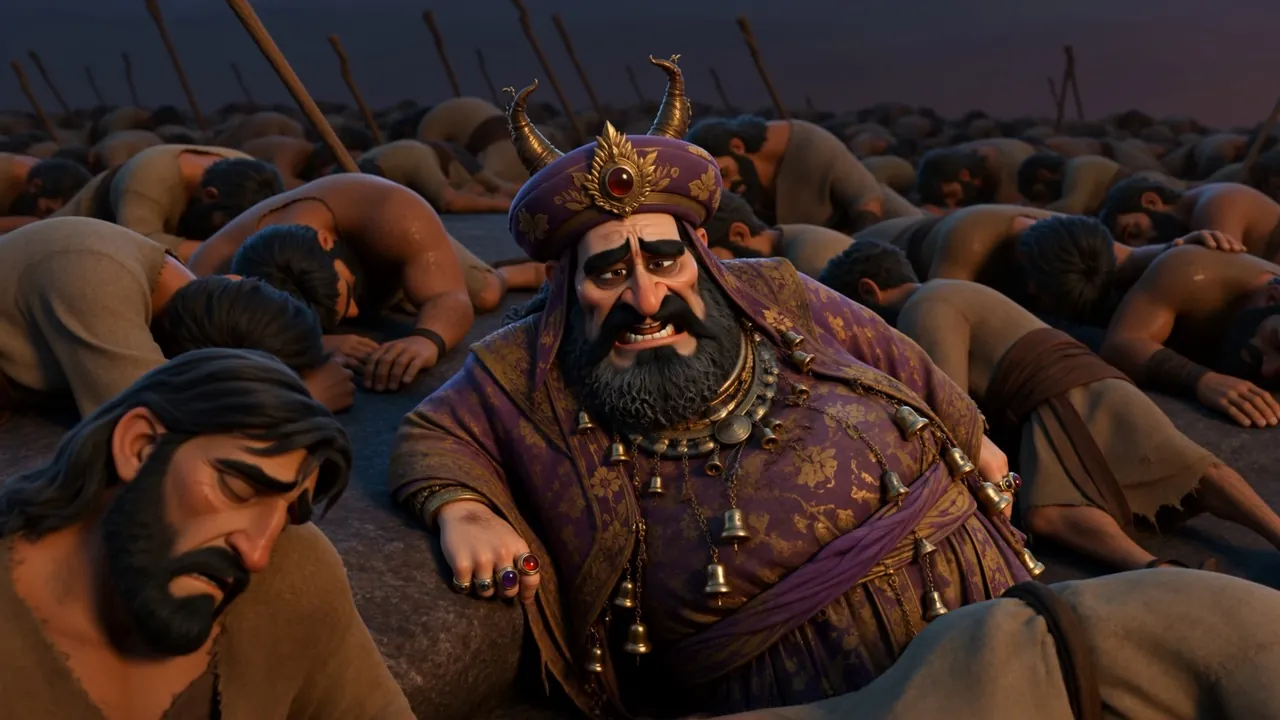
They came from everywhere — a whole starving nation walking up one hill to watch. On one side, four hundred and fifty prophets in blue, with a king and a queen's money behind them. On the other side, one man in a hair cloak who had spent three years being fed by birds and a foreign widow. The arithmetic is exactly right. 1 Kings 18 : 20
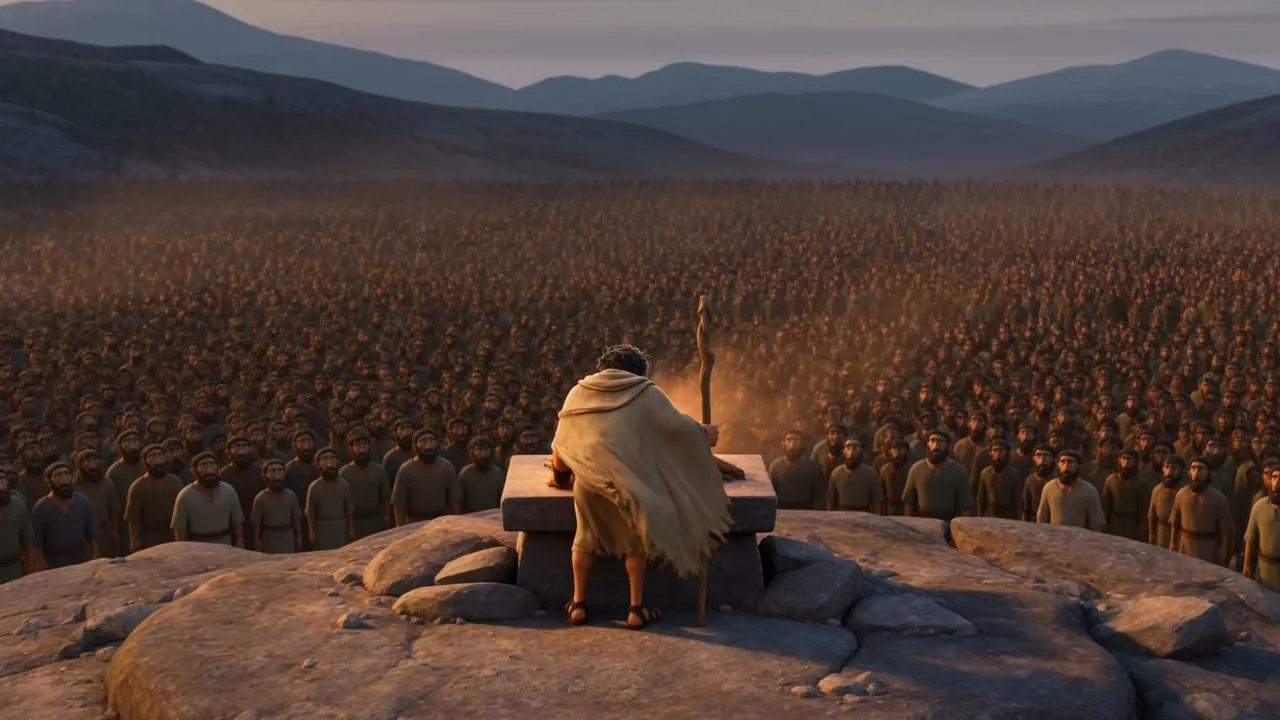

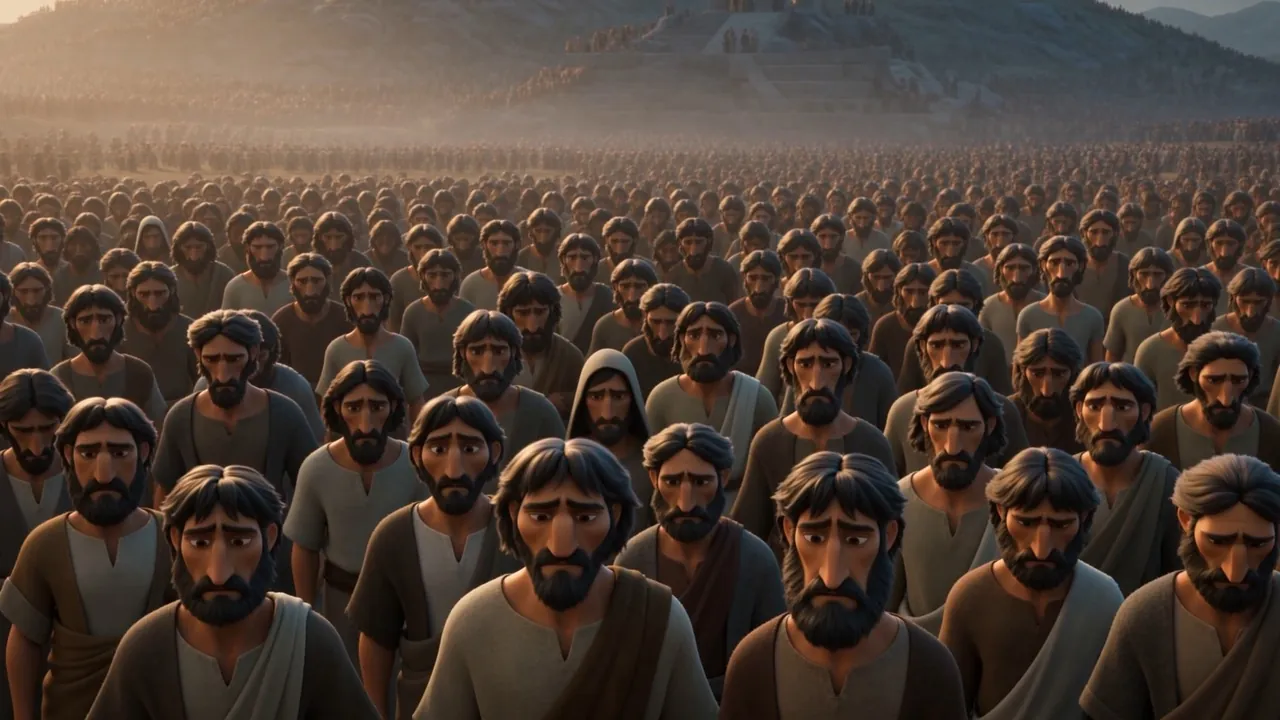
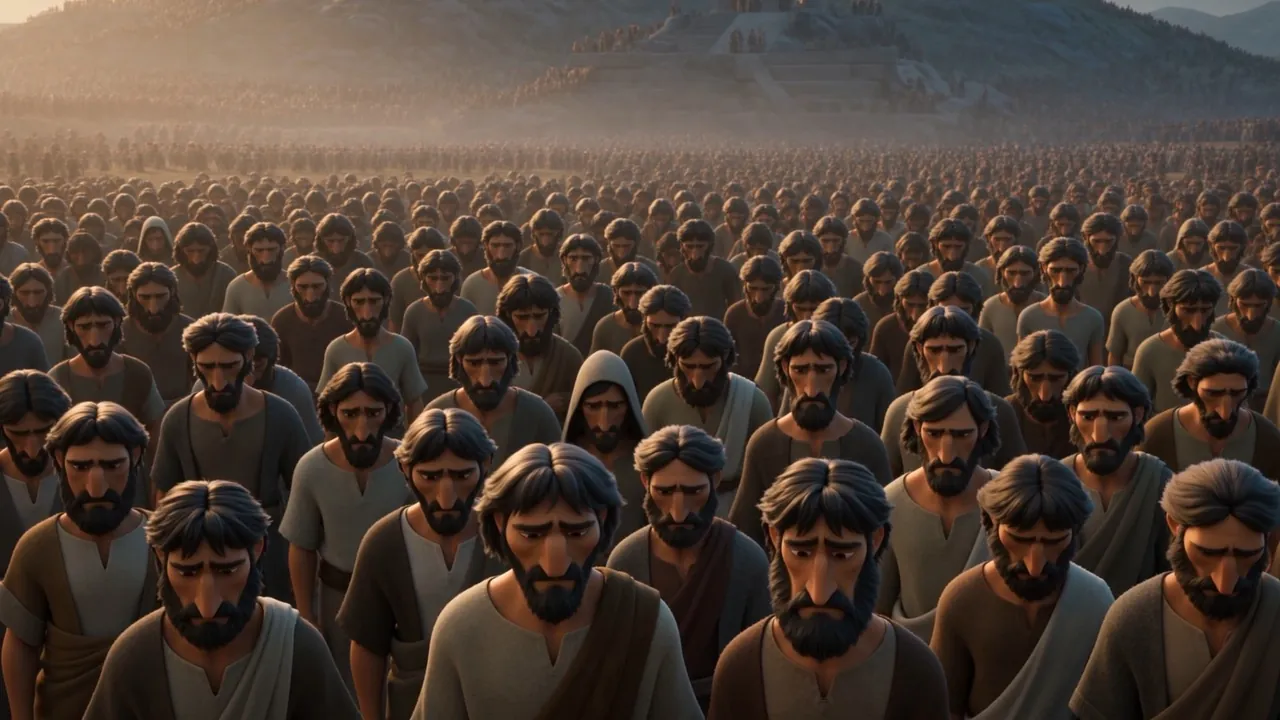



He didn't start with Baal. He started with the crowd — the ordinary, hedging, keep-your-options-open crowd: “How long will you waver between two sides? If Yahweh is God, follow him; but if Baal, then follow him.” And scripture records the most damning response in the book: the people didn't say a word. Then the terms: two bulls, two altars, no fire. The God who answers by fire, let him be God. 1 Kings 18 : 21–24
How long will you waver between two sides?




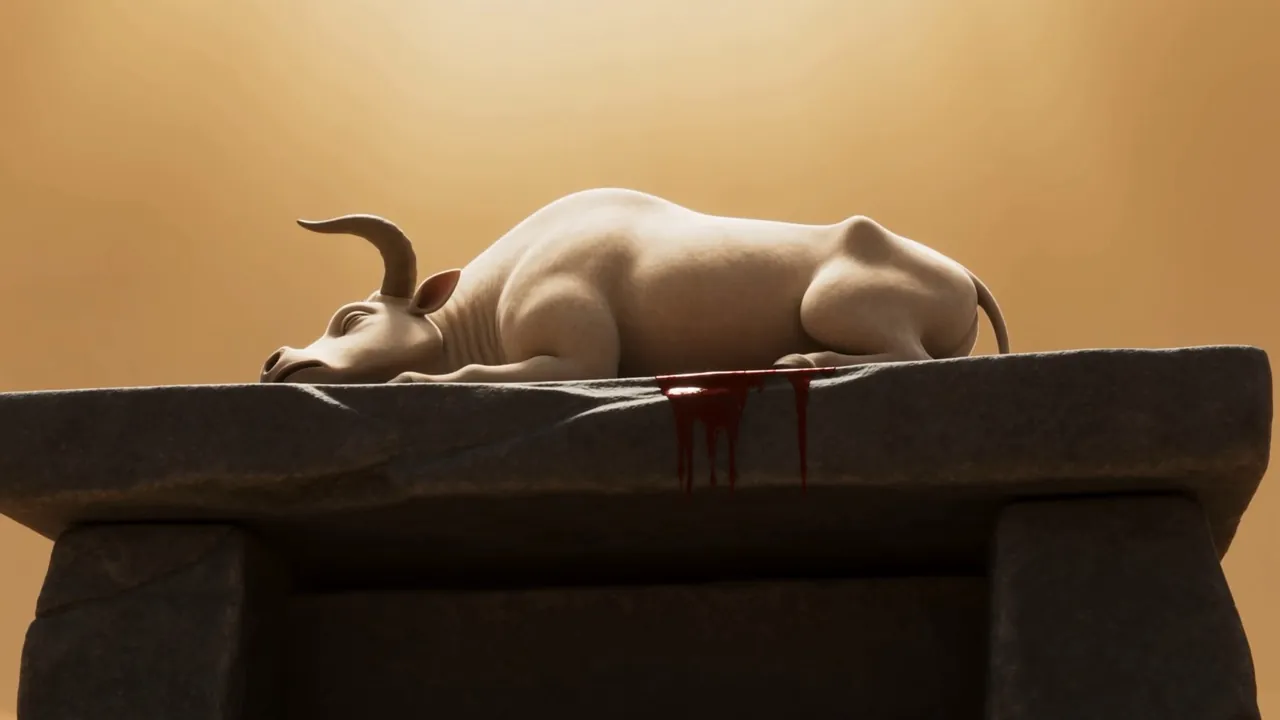




They went first, and they went all day. From morning until noon: “Baal, hear us!” But there was no voice, and nobody answered. At noon Elijah started heckling — maybe he's deep in thought, or busy, or on a journey, or asleep and needs waking. They shouted louder, and cut themselves, and raved until evening. There was no voice; no one answered; no one paid attention. 1 Kings 18 : 26–29
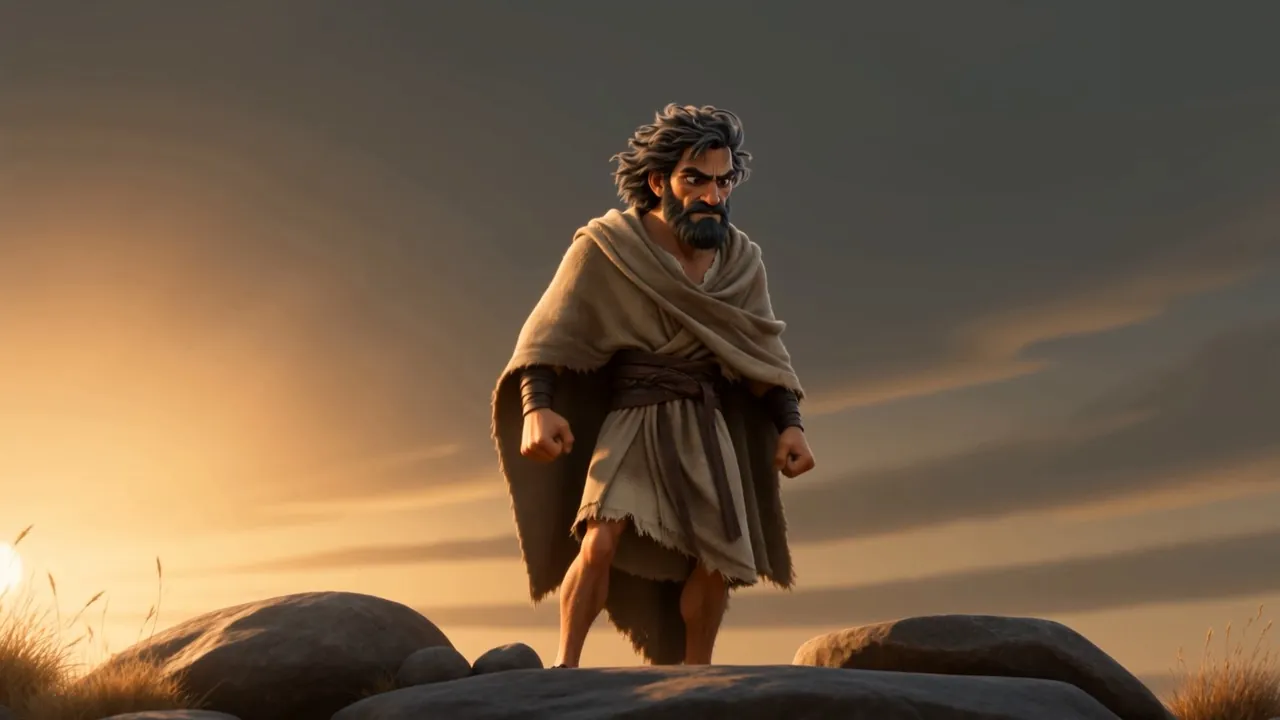



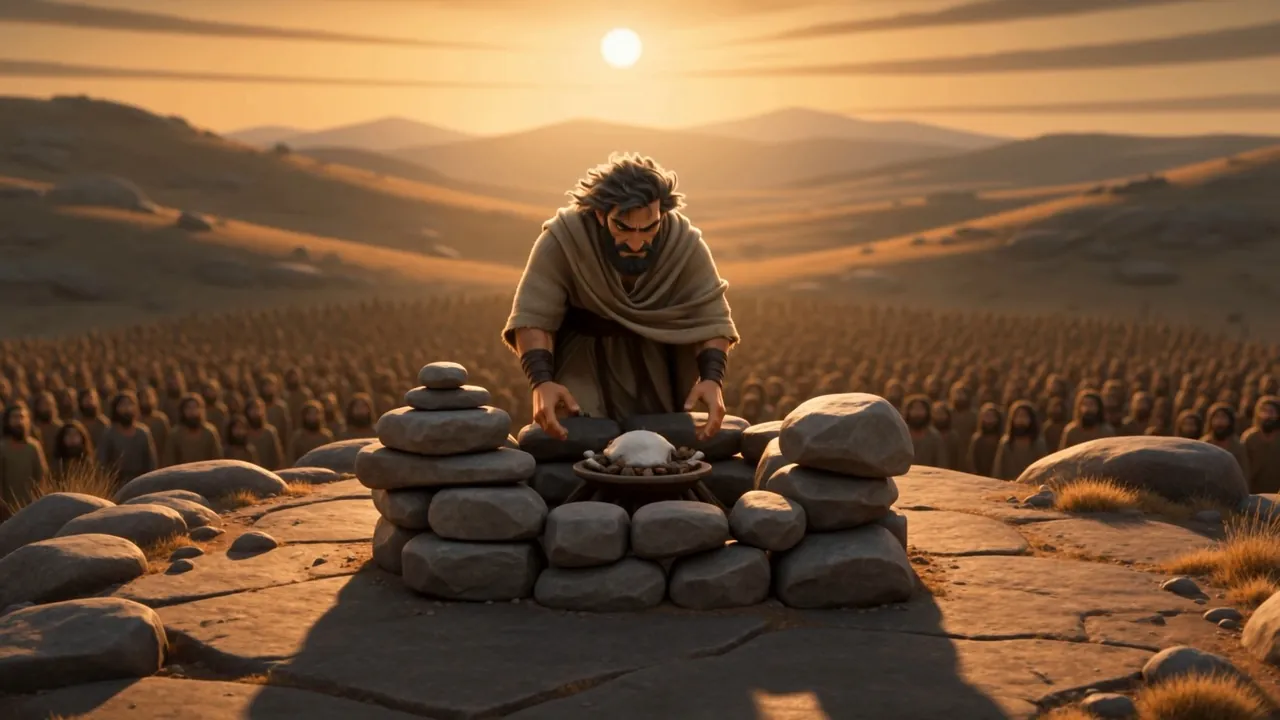




Then he did the strangest thing on the mountain. He rebuilt the ruined altar with twelve stones — according to the number of the tribes — for a nation that had split in two and wasn't speaking. He dug a trench around it. And then he had them pour water over everything, three times, until the wood was soaked and the trench was full. In a drought. When water was worth more than gold. 1 Kings 18 : 30–35
On Carmel · Playable
The fire is Yahweh’s. The water is yours.
“Let it be known today that you are God in Israel… Hear me, Yahweh, hear me, that this people may know that you, Yahweh, are God.”
1 Kings 18 : 36–37Then Yahweh’s fire fell — and licked up the water that was in the trench.
1 Kings 18 : 38


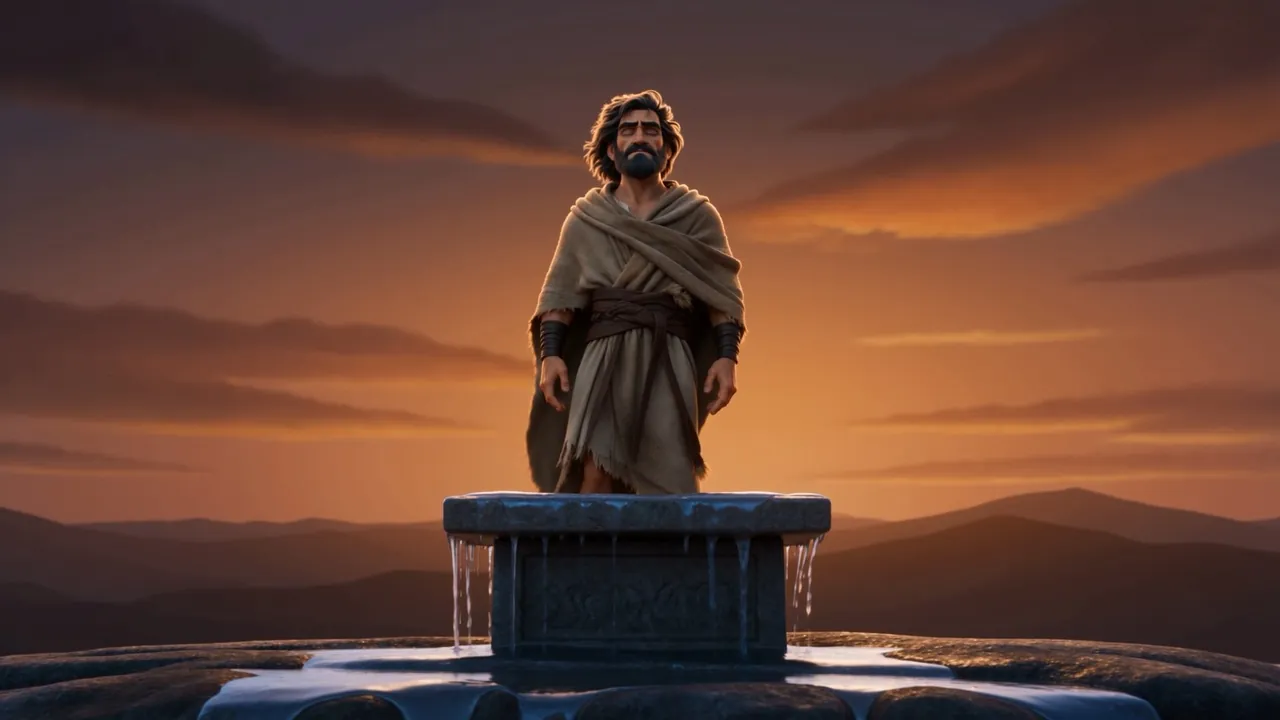
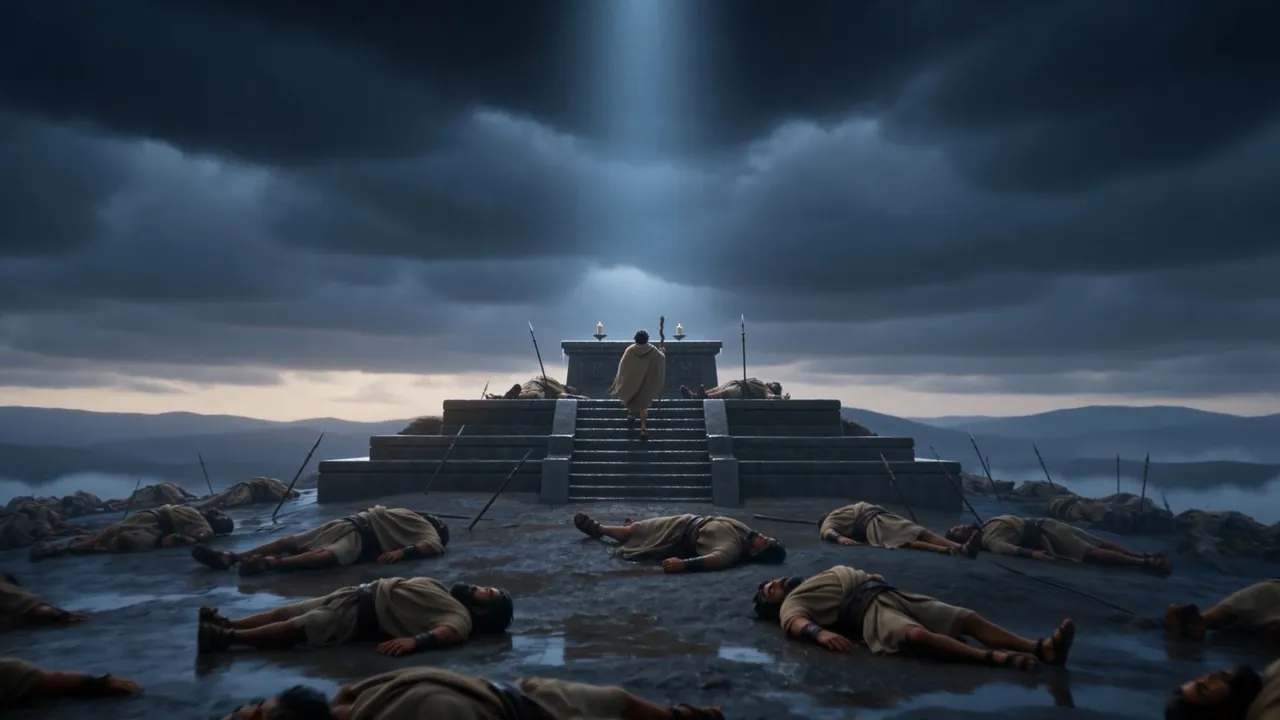

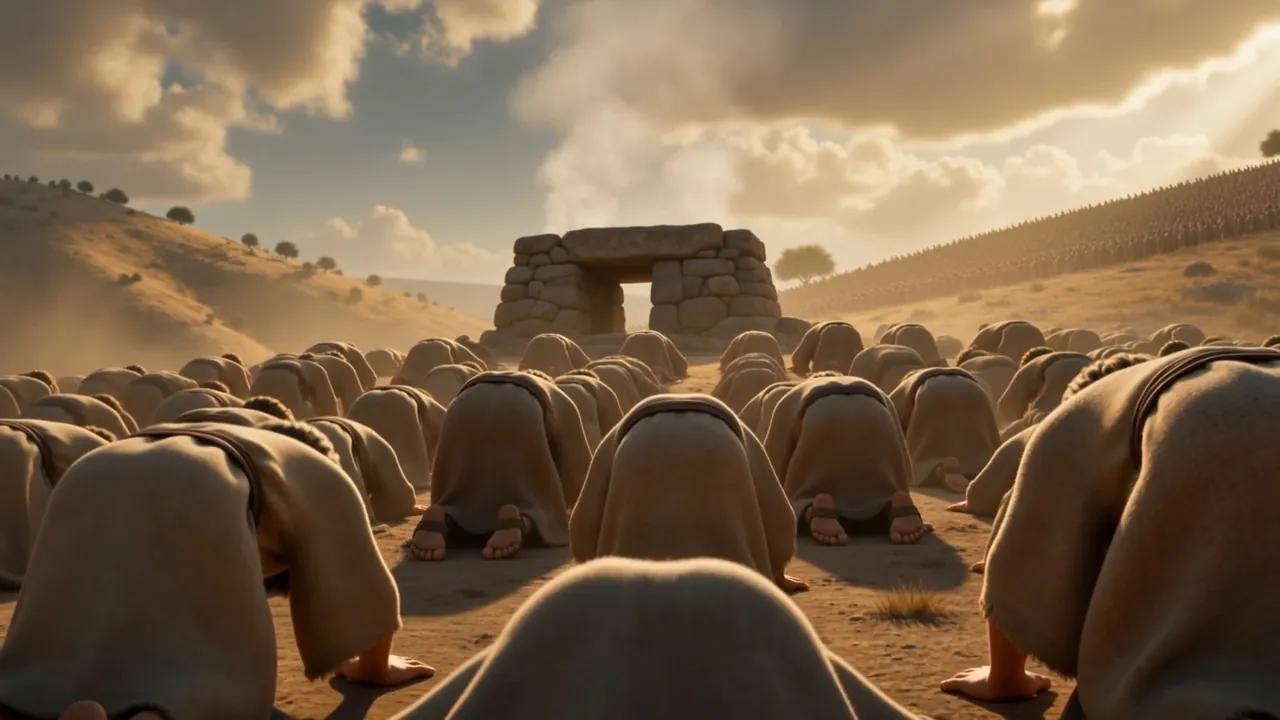
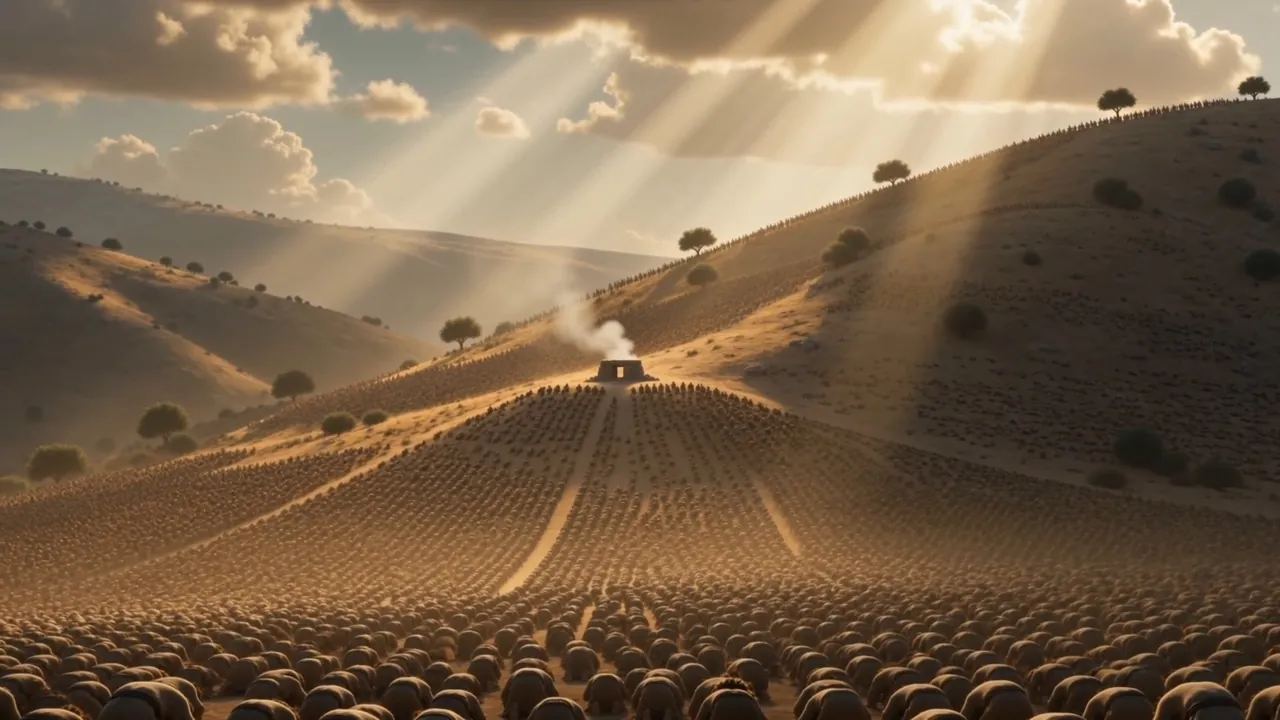
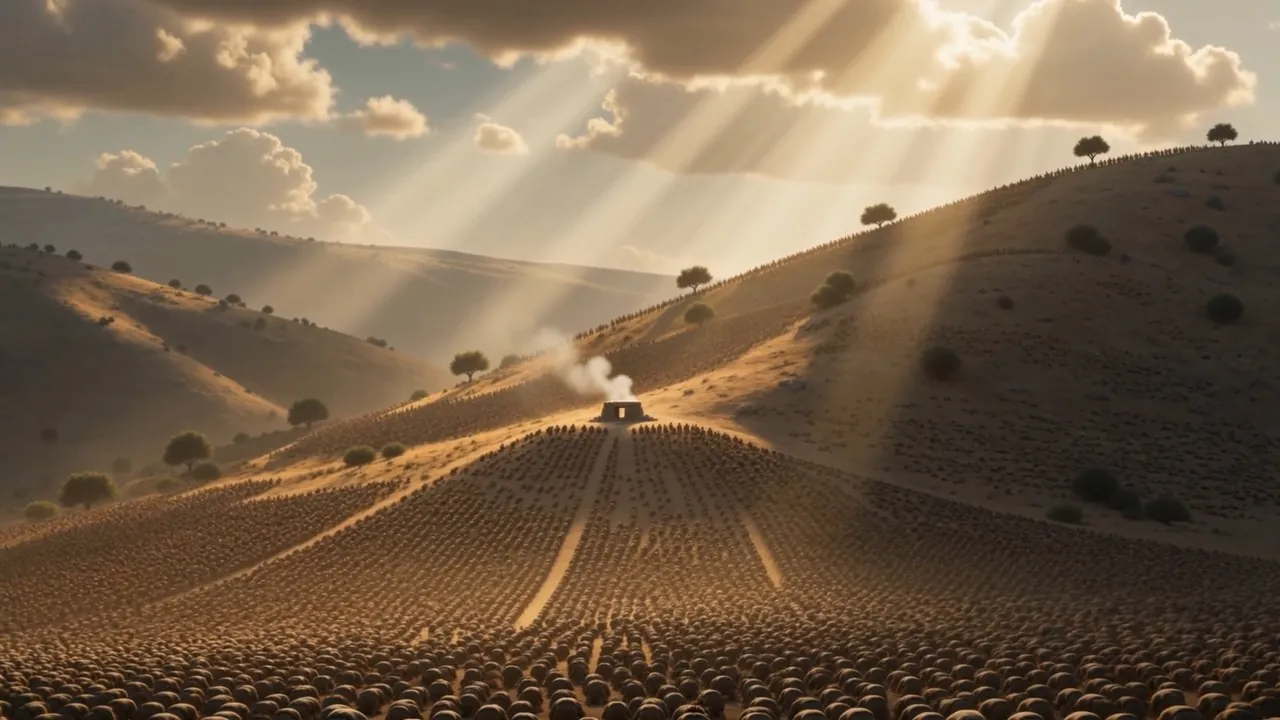
No dancing. No shouting. One short prayer at the time of the evening offering — “let it be known this day that you are God in Israel… that this people may know that you, Yahweh, are God, and that you have turned their heart back again.” Then Yahweh's fire fell, and consumed the burnt offering, and the wood, and the stones, and the dust, and licked up the water that was in the trench. And a whole nation went face-down in the dirt. 1 Kings 18 : 36–39
Yahweh, he is God.
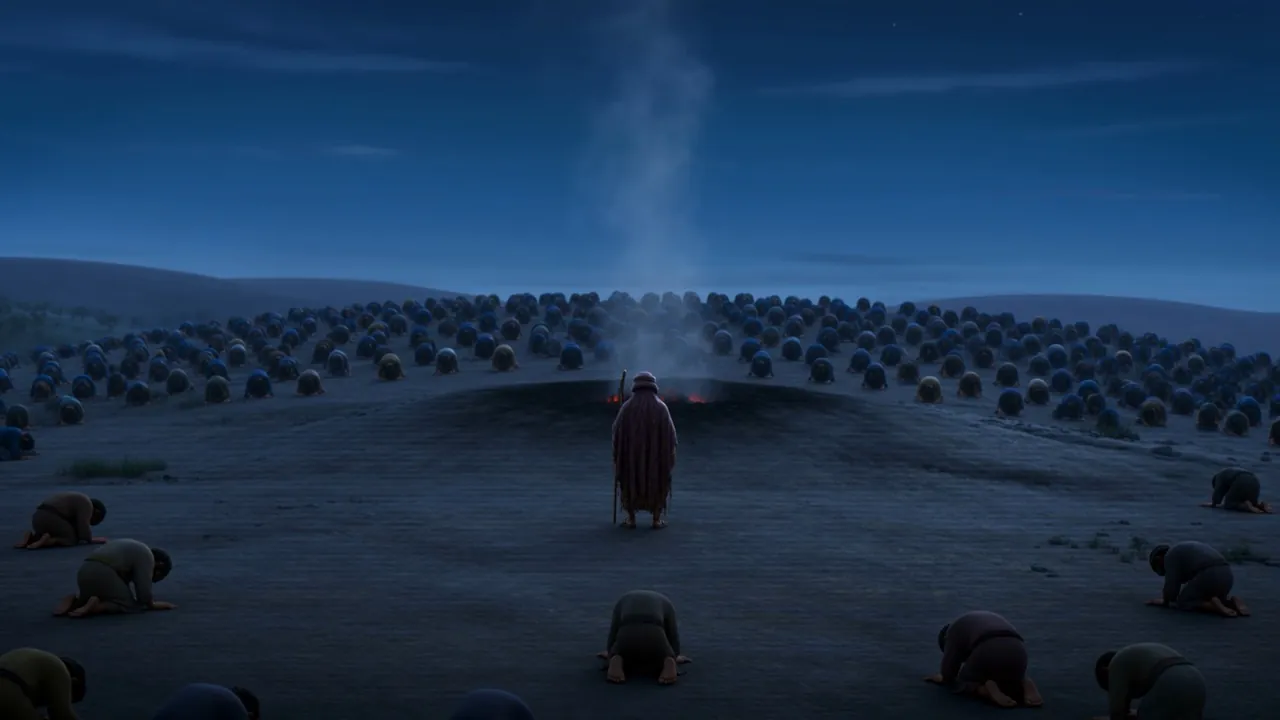

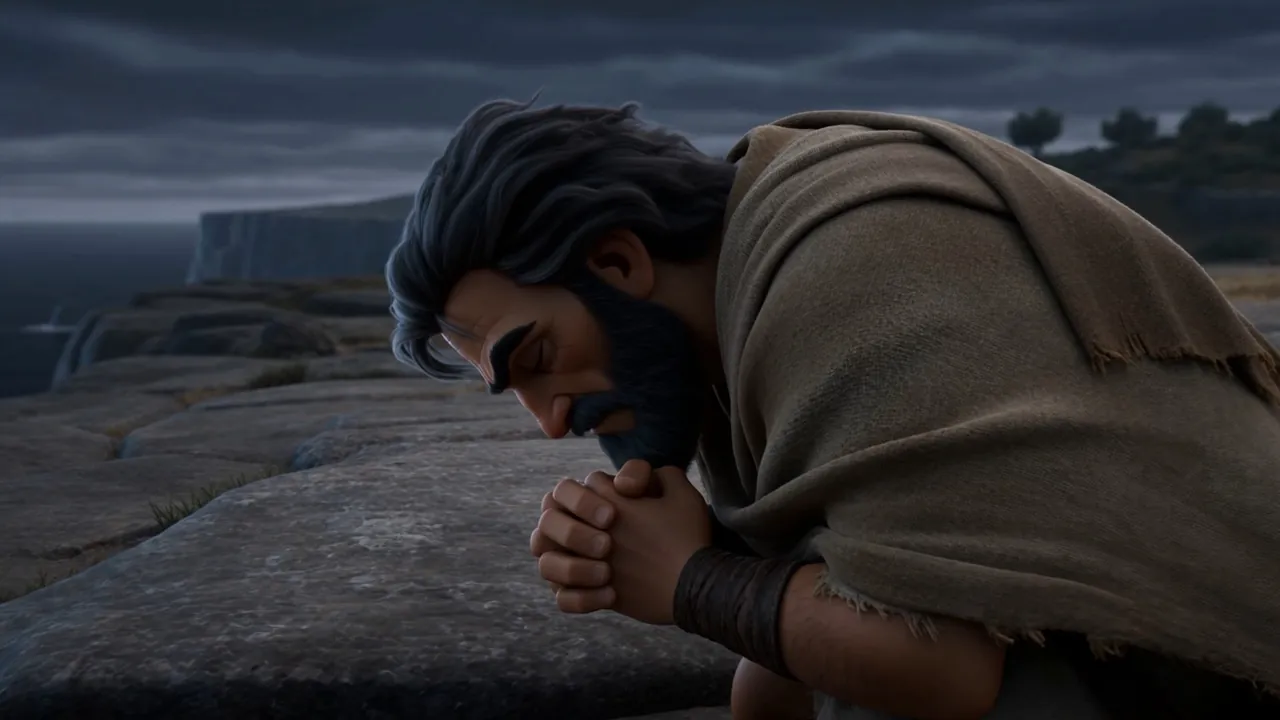





Then he climbed to the top of Carmel, put his head between his knees, and prayed for the rain he had already promised. Go up now, look toward the sea, he told his servant. Nothing. Go again — seven times. And on the seventh: “Behold, a small cloud, like a man's hand, is rising out of the sea.” That was enough. He sent word to the king to hitch up and run for it. 1 Kings 18 : 42–44
A cloud, small as a man’s hand.



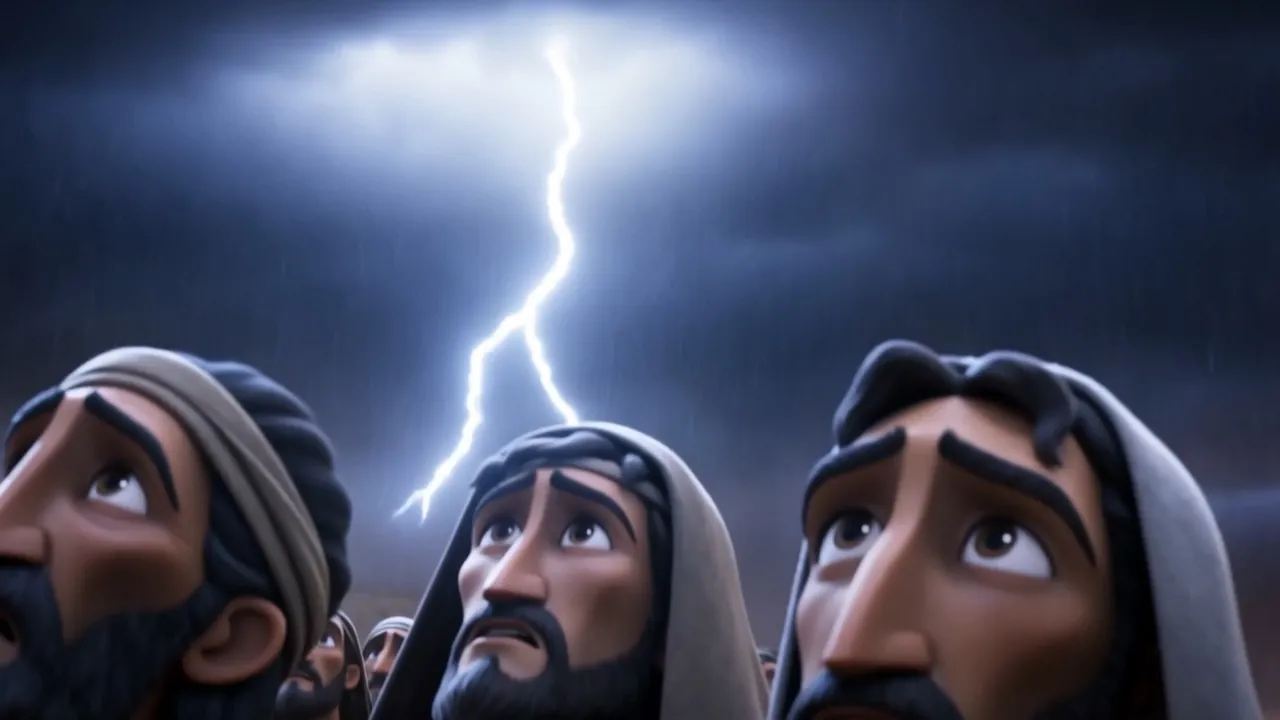





In a little while, the sky grew black with clouds and wind, and there was a great rain. Three and a half years of dust turned to mud in an hour. And then the detail nobody makes up: the hand of Yahweh was on Elijah; and he tucked his cloak into his belt and ran before Ahab to the entrance of Jezreel — an old man outrunning a chariot, laughing, in the rain he had prayed down. 1 Kings 18 : 45–46









Ahab told Jezebel everything — the fire, the rain, all of it. She didn't argue with the miracle. She just sent a messenger: “So let the gods do to me, and more also, if I don't make your life as the life of one of them by tomorrow about this time.” And the man who had faced four hundred and fifty prophets without blinking read the note, and ran for his life. The fire didn't break him. One threatening letter did. 1 Kings 19 : 1–3
And he was afraid, and ran for his life.
That is the honest ending of the greatest day in Elijah's life: a burnt mountain, a soaked country, and a prophet running south alone because a queen wrote him a letter. Fire from heaven doesn't inoculate anybody against fear. What happens next is the tenderest thing in the book — God does not scold him. He lets him sleep, feeds him twice, and then meets him on a mountain in a sound so quiet you could miss it.

Voices of the mountain · hover or tap to turn
Elijah
"How long will you waver between the two sides? If Yahweh is God, follow him; but if Baal, then follow him."
— 1 Kings 18:21
The Widow
"…I am gathering two sticks, that I may go in and bake it for me and my son, that we may eat it, and die."
— 1 Kings 17:12
The People
"Yahweh, he is God! Yahweh, he is God!"
— 1 Kings 18:39Before the broom tree
How closely were you watching the mountain?
1. Who fed Elijah at the brook Kerith?
"The ravens brought him bread and meat in the morning, and bread and meat in the evening" — unclean scavengers running a clean delivery service (1 Kings 17:6).
2. What did the widow of Zarephath have left when Elijah arrived?
She was gathering two sticks to bake a last meal for herself and her son "that we may eat it, and die" — and gave it away first (1 Kings 17:12).
3. What did Elijah do to his altar before praying?
Twelve stones for twelve tribes, then twelve jars of water in the middle of a drought — no possibility of a trick (1 Kings 18:30–35).
4. What finally made Elijah run away?
He faced 450 prophets and a king without flinching — then one letter from the queen sent him south for his life (1 Kings 19:1–3).
What this story teaches
God answers by fire — and by bread.
The same God who dropped fire on Carmel spent three quiet years feeding one prophet by raven and one widow by jar. The spectacular miracle and the daily one come from the same hand.
“The jar of meal didn’t empty, and the jar of oil didn’t fail.” 1 Kings 17 : 16Stop limping between two opinions.
Elijah's hardest words weren't for the prophets of Baal — they were for the crowd that wanted to keep both gods on the shelf, just in case. Their silence was the real problem on that mountain.
“How long will you waver between two sides?” 1 Kings 18 : 21Look for the small cloud.
The answer to a three-year drought showed up the size of a hand on the horizon — and only after seven trips to look. God's biggest answers often arrive small enough to miss if you stop checking.
“Behold, a small cloud, like a man’s hand, is rising out of the sea.” 1 Kings 18 : 44Read the scripture itself. 1 Kings 17–18 · World English Bible
1 Kings 17
1Elijah the Tishbite, who was one of the settlers of Gilead, said to Ahab, “As Yahweh, the God of Israel, lives, before whom I stand, there shall not be dew nor rain these years, but according to my word.”
2Then Yahweh’s word came to him, saying,
3“Go away from here, turn eastward, and hide yourself by the brook Cherith, that is before the Jordan.
4You shall drink from the brook. I have commanded the ravens to feed you there.”
5So he went and did according to Yahweh’s word; for he went and lived by the brook Cherith that is before the Jordan.
6The ravens brought him bread and meat in the morning, and bread and meat in the evening; and he drank from the brook.
7After a while, the brook dried up, because there was no rain in the land.
8Yahweh’s word came to him, saying,
9“Arise, go to Zarephath, which belongs to Sidon, and stay there. Behold, I have commanded a widow there to sustain you.”
10So he arose and went to Zarephath; and when he came to the gate of the city, behold, a widow was there gathering sticks. He called to her, and said, “Please get me a little water in a jar, that I may drink.”
11As she was going to get it, he called to her, and said, “Please bring me a morsel of bread in your hand.”
12She said, “As Yahweh your God lives, I don’t have a cake, but a handful of meal in a jar, and a little oil in a jar. Behold, I am gathering two sticks, that I may go in and bake it for me and my son, that we may eat it, and die.”
13Elijah said to her, “Don’t be afraid. Go and do as you have said; but make me a little cake from it first, and bring it out to me, and afterward make some for you and for your son.
14For Yahweh, the God of Israel says, ‘The jar of meal will not run out, and the jar of oil will not fail, until the day that Yahweh sends rain on the earth.’”
15She went and did according to the saying of Elijah; and she, and he, and her house, ate many days.
16The jar of meal didn’t run out, and the jar of oil did not fail, according to Yahweh’s word, which he spoke by Elijah.
17After these things, the son of the woman, the mistress of the house, became sick; and his sickness was so severe that there was no breath left in him.
18She said to Elijah, “What have I to do with you, you man of God? You have come to me to bring my sin to memory, and to kill my son!”
19He said to her, “Give me your son.” He took him out of her bosom, and carried him up into the room where he stayed, and laid him on his own bed.
20He cried to Yahweh, and said, “Yahweh my God, have you also brought evil on the widow with whom I am staying, by killing her son?”
21He stretched himself on the child three times, and cried to Yahweh, and said, “Yahweh my God, please let this child’s soul come into him again.”
22Yahweh listened to the voice of Elijah; and the soul of the child came into him again, and he revived.
23Elijah took the child, and brought him down out of the room into the house, and delivered him to his mother; and Elijah said, “Behold, your son lives.”
24The woman said to Elijah, “Now I know that you are a man of God, and that Yahweh’s word in your mouth is truth.”
1 Kings 18
1After many days, Yahweh’s word came to Elijah, in the third year, saying, “Go, show yourself to Ahab; and I will send rain on the earth.”
2Elijah went to show himself to Ahab. The famine was severe in Samaria.
3Ahab called Obadiah, who was over the household. (Now Obadiah feared Yahweh greatly;
4for when Jezebel cut off Yahweh’s prophets, Obadiah took one hundred prophets, and hid them by fifty in a cave, and fed them with bread and water.)
5Ahab said to Obadiah, “Go through the land, to all the springs of water, and to all the brooks. Perhaps we may find grass and save the horses and mules alive, that we not lose all the animals.”
6So they divided the land between them to pass throughout it. Ahab went one way by himself, and Obadiah went another way by himself.
7As Obadiah was on the way, behold, Elijah met him. He recognized him, and fell on his face, and said, “Is it you, my lord Elijah?”
8He answered him, “It is I. Go, tell your lord, ‘Behold, Elijah is here!’”
9He said, “How have I sinned, that you would deliver your servant into the hand of Ahab, to kill me?
10As Yahweh your God lives, there is no nation or kingdom where my lord has not sent to seek you. When they said, ‘He is not here,’ he took an oath of the kingdom and nation, that they didn’t find you.
11Now you say, ‘Go, tell your lord, “Behold, Elijah is here.”’
12It will happen, as soon as I leave you, that Yahweh’s Spirit will carry you I don’t know where; and so when I come and tell Ahab, and he can’t find you, he will kill me. But I, your servant, have feared Yahweh from my youth.
13Wasn’t it told my lord what I did when Jezebel killed Yahweh’s prophets, how I hid one hundred men of Yahweh’s prophets with fifty to a cave, and fed them with bread and water?
14Now you say, ‘Go, tell your lord, “Behold, Elijah is here”.’ He will kill me.”
15Elijah said, “As Yahweh of Armies lives, before whom I stand, I will surely show myself to him today.”
16So Obadiah went to meet Ahab, and told him; and Ahab went to meet Elijah.
17When Ahab saw Elijah, Ahab said to him, “Is that you, you troubler of Israel?”
18He answered, “I have not troubled Israel; but you, and your father’s house, in that you have forsaken Yahweh’s commandments, and you have followed the Baals.
19Now therefore send, and gather to me all Israel to Mount Carmel, and four hundred fifty of the prophets of Baal, and four hundred of the prophets of the Asherah, who eat at Jezebel’s table.”
20So Ahab sent to all the children of Israel, and gathered the prophets together to Mount Carmel.
21Elijah came near to all the people, and said, “How long will you waver between the two sides? If Yahweh is God, follow him; but if Baal, then follow him.” The people didn’t say a word.
22Then Elijah said to the people, “I, even I only, am left as a prophet of Yahweh; but Baal’s prophets are four hundred fifty men.
23Let them therefore give us two bulls; and let them choose one bull for themselves, and cut it in pieces, and lay it on the wood, and put no fire under; and I will dress the other bull, and lay it on the wood, and put no fire under it.
24You call on the name of your god, and I will call on Yahweh’s name. The God who answers by fire, let him be God.” All the people answered, “What you say is good.”
25Elijah said to the prophets of Baal, “Choose one bull for yourselves, and dress it first; for you are many; and call on the name of your god, but put no fire under it.”
26They took the bull which was given them, and they dressed it, and called on the name of Baal from morning even until noon, saying, “Baal, hear us!” But there was no voice, and nobody answered. They leaped about the altar which was made.
27At noon, Elijah mocked them, and said, “Cry aloud; for he is a god. Either he is deep in thought, or he has gone somewhere, or he is on a journey, or perhaps he sleeps and must be awakened.”
28They cried aloud, and cut themselves in their way with knives and lances, until the blood gushed out on them.
29When midday was past, they prophesied until the time of the evening offering; but there was no voice, no answer, and nobody paid attention.
30Elijah said to all the people, “Come near to me!”; and all the people came near to him. He repaired Yahweh’s altar that had been thrown down.
31Elijah took twelve stones, according to the number of the tribes of the sons of Jacob, to whom Yahweh’s word came, saying, “Israel shall be your name.”
32With the stones he built an altar in Yahweh’s name. He made a trench around the altar, large enough to contain two seahs of seed.
33He put the wood in order, and cut the bull in pieces, and laid it on the wood. He said, “Fill four jars with water, and pour it on the burnt offering, and on the wood.”
34He said, “Do it a second time”; and they did it the second time. He said, “Do it a third time”; and they did it the third time.
35The water ran around the altar; and he also filled the trench with water.
36At the time of the evening offering, Elijah the prophet came near, and said, “Yahweh, the God of Abraham, of Isaac, and of Israel, let it be known today that you are God in Israel, and that I am your servant, and that I have done all these things at your word.
37Hear me, Yahweh, hear me, that this people may know that you, Yahweh, are God, and that you have turned their heart back again.”
38Then Yahweh’s fire fell, and consumed the burnt offering, the wood, the stones, and the dust, and licked up the water that was in the trench.
39When all the people saw it, they fell on their faces. They said, “Yahweh, he is God! Yahweh, he is God!”
40Elijah said to them, “Seize the prophets of Baal! Don’t let one of them escape!” They seized them; and Elijah brought them down to the brook Kishon, and killed them there.
41Elijah said to Ahab, “Get up, eat and drink; for there is the sound of abundance of rain.”
42So Ahab went up to eat and to drink. Elijah went up to the top of Carmel; and he bowed himself down on the earth, and put his face between his knees.
43He said to his servant, “Go up now, and look toward the sea.” He went up, and looked, and said, “There is nothing.” He said, “Go again” seven times.
44On the seventh time, he said, “Behold, a small cloud, like a man’s hand, is rising out of the sea.” He said, “Go up, tell Ahab, ‘Get ready and go down, so that the rain doesn’t stop you.’”
45In a little while, the sky grew black with clouds and wind, and there was a great rain. Ahab rode, and went to Jezreel.
46Yahweh’s hand was on Elijah; and he tucked his cloak into his belt and ran before Ahab to the entrance of Jezreel.
World English Bible (WEB) — a public-domain modern English translation. Read it freely, share it freely.
The Books of Kings — animated film 30% in production
These scenes are real frames from the film.
Help us finish it — and every story like it — free for the world.