The Book of Judges · How It Ends
Right inhis own eyes.
A silver idol in an ordinary house, a whole nation face down in the grass with its swords stuck in the ground — and then, without a word, a sunrise over a wheat field outside Bethlehem. Every scene below is a real frame from our animated film.
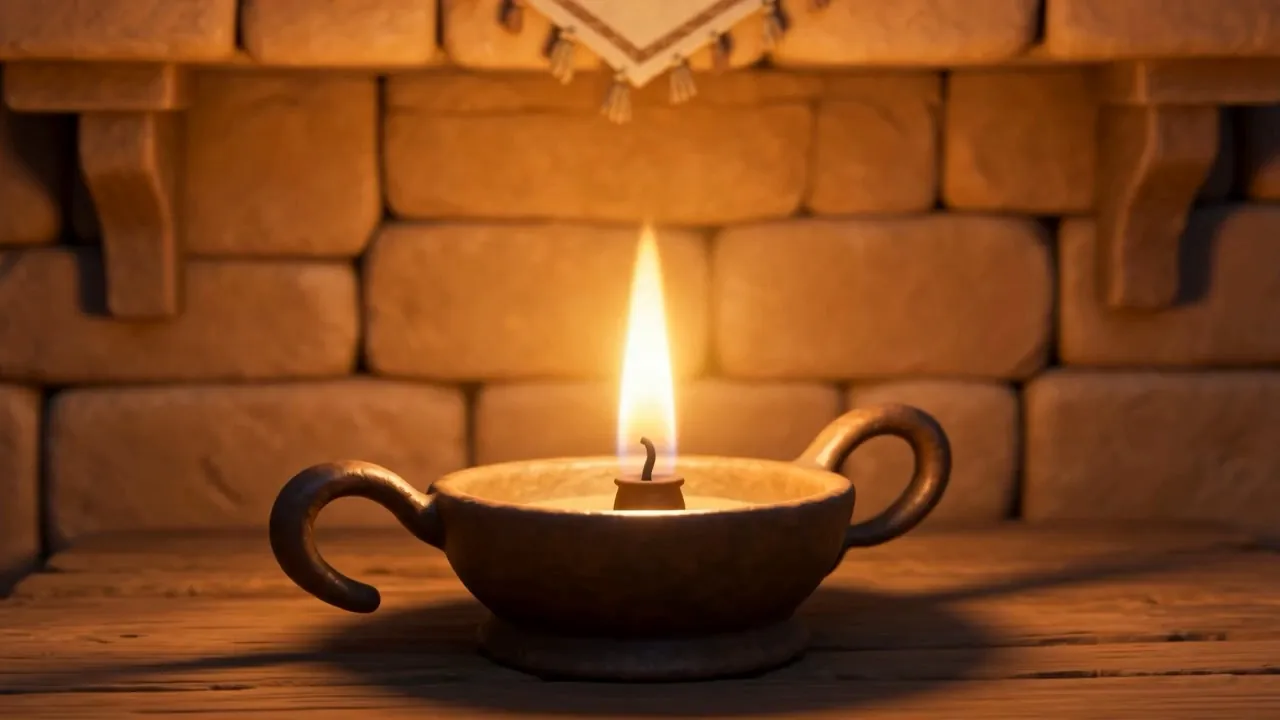
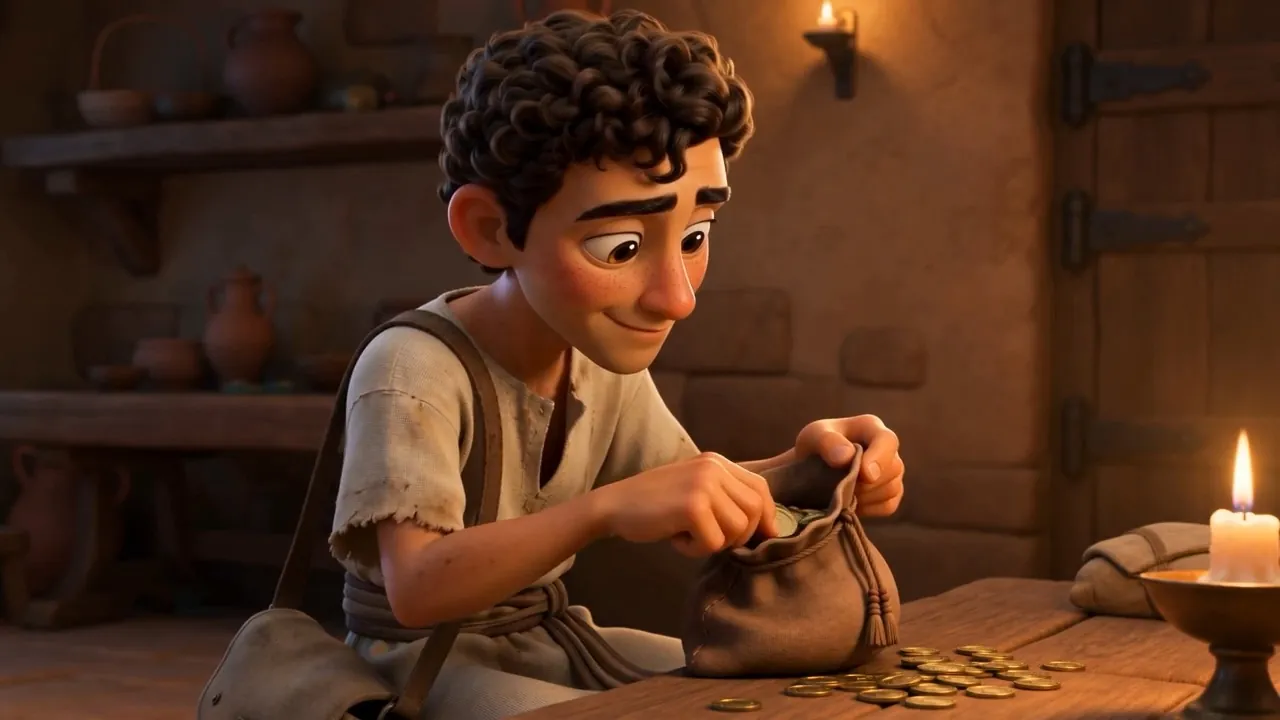
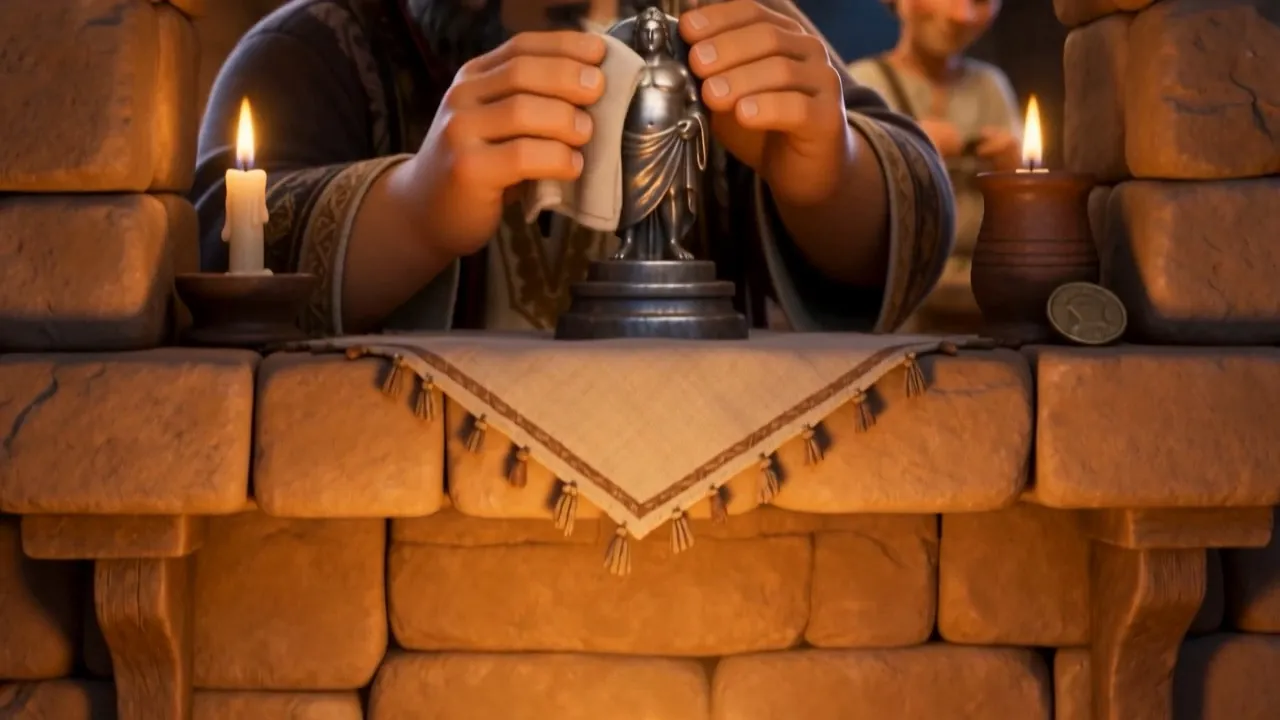
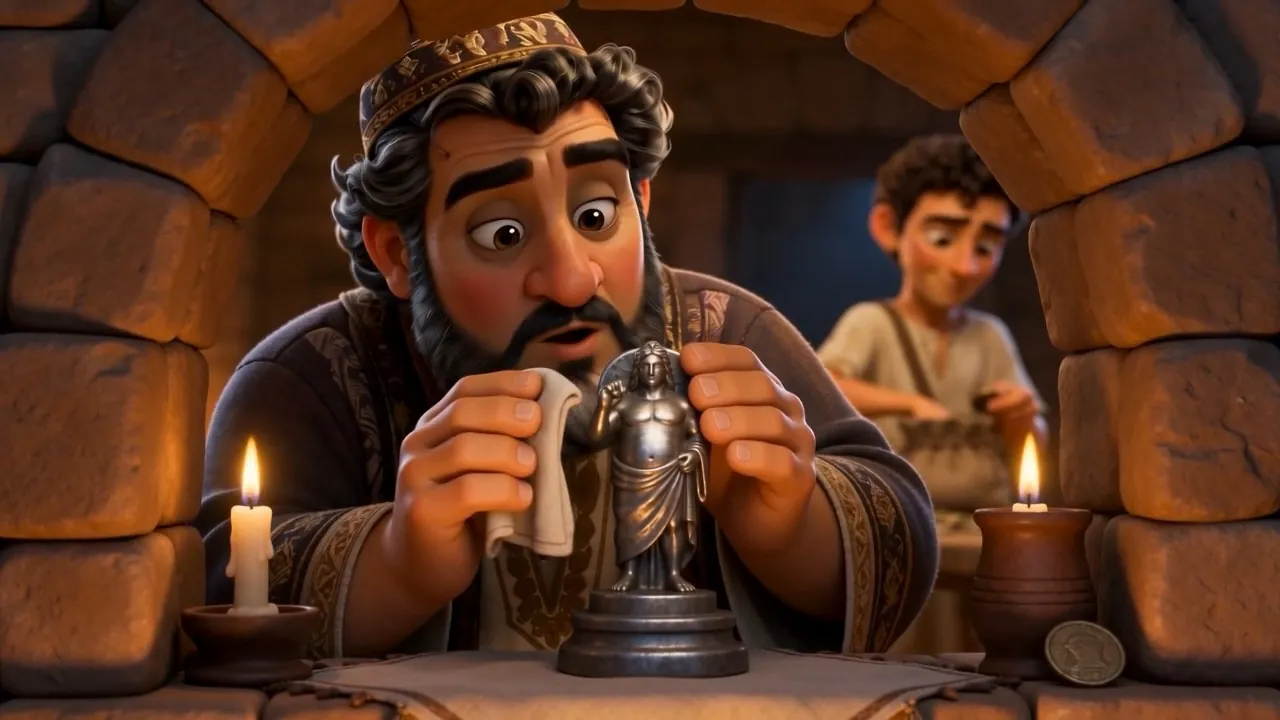
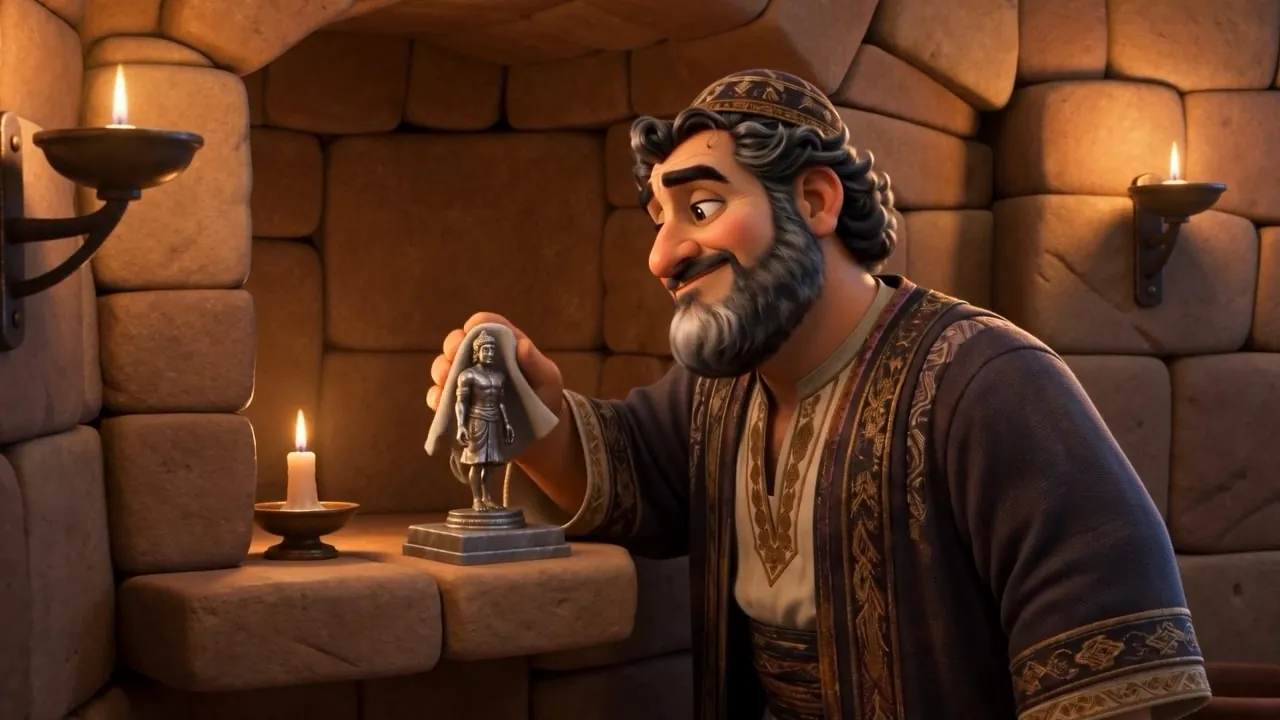
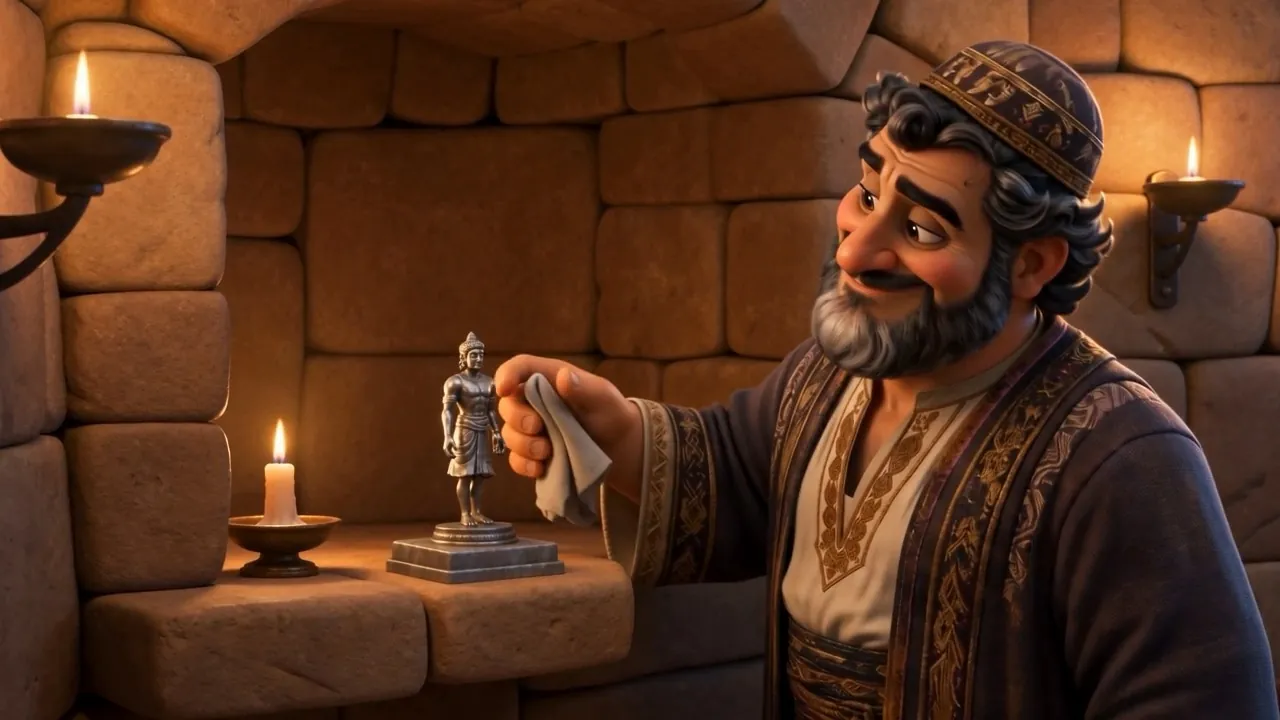
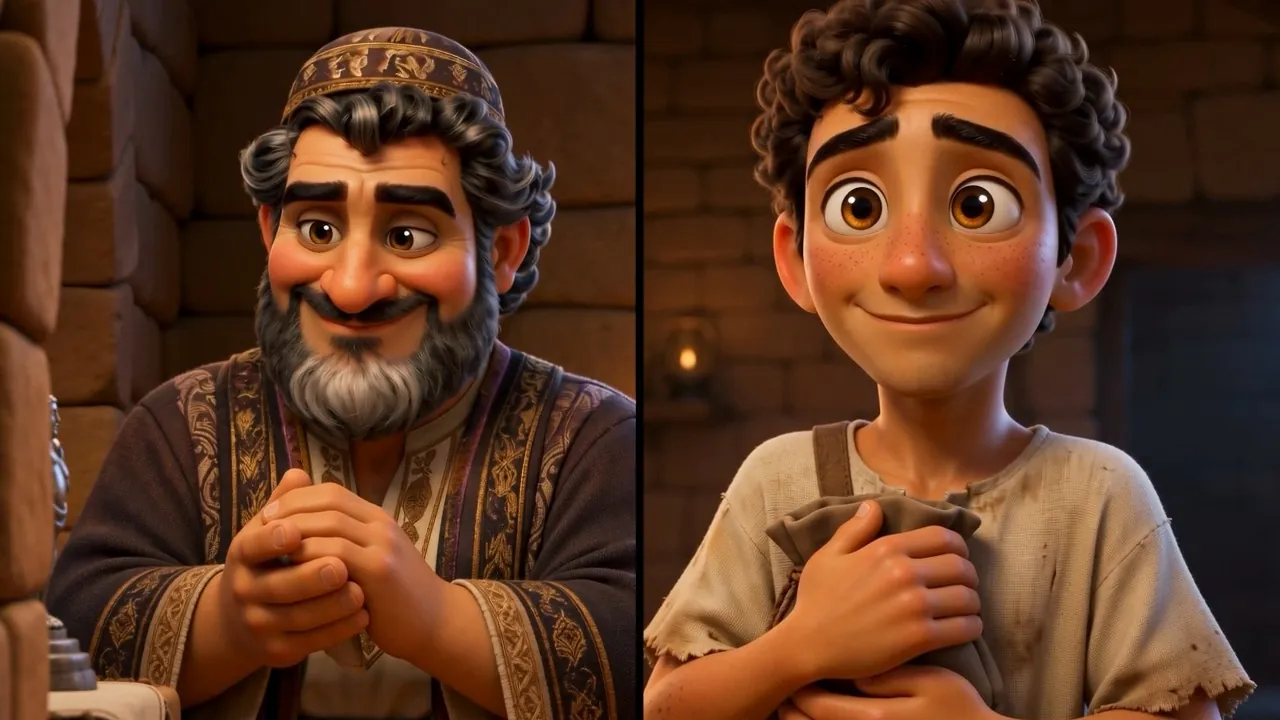
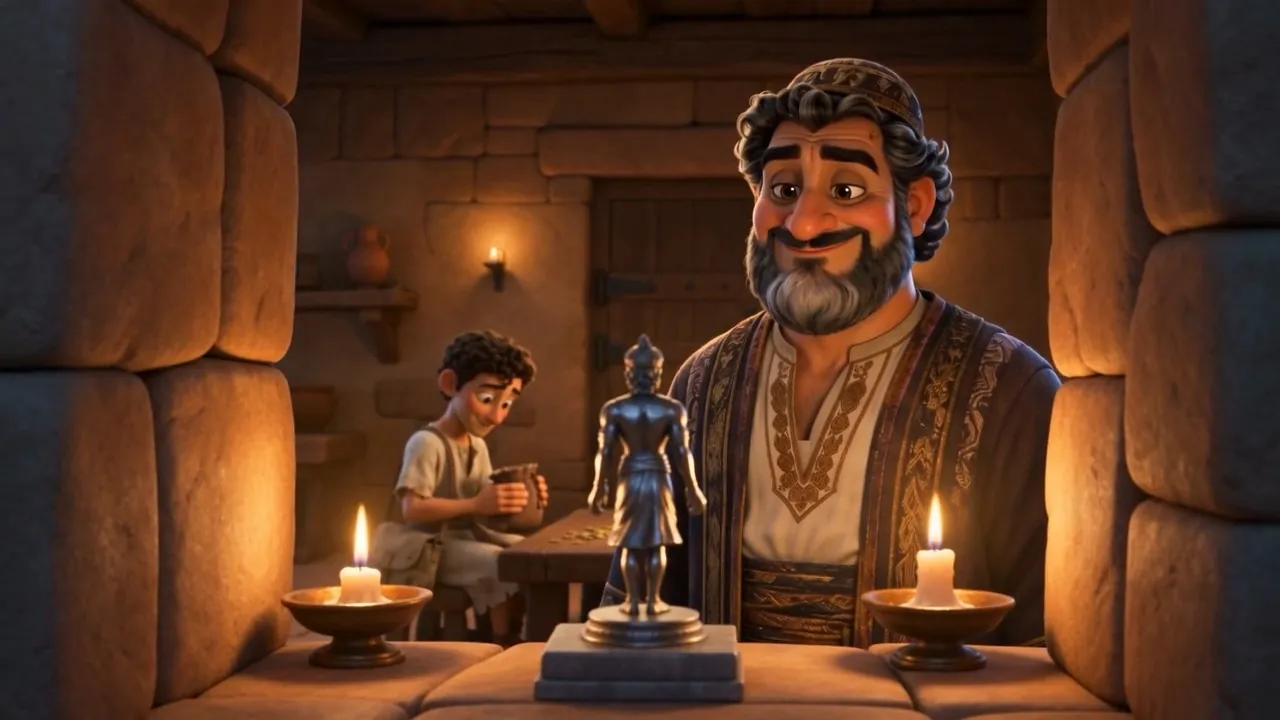
The book ends with two stories it does not comment on. In the first, a man named Micah takes eleven hundred pieces of silver, has some of it cast into an image, sets it up in his own house, and hires a passing young Levite to be his personal priest. “Now I know that Yahweh will do me good, since I have a Levite as my priest.” Everything about that sentence is wrong, and nobody in the story notices. Judges 17 : 1–13
He made a house of gods.
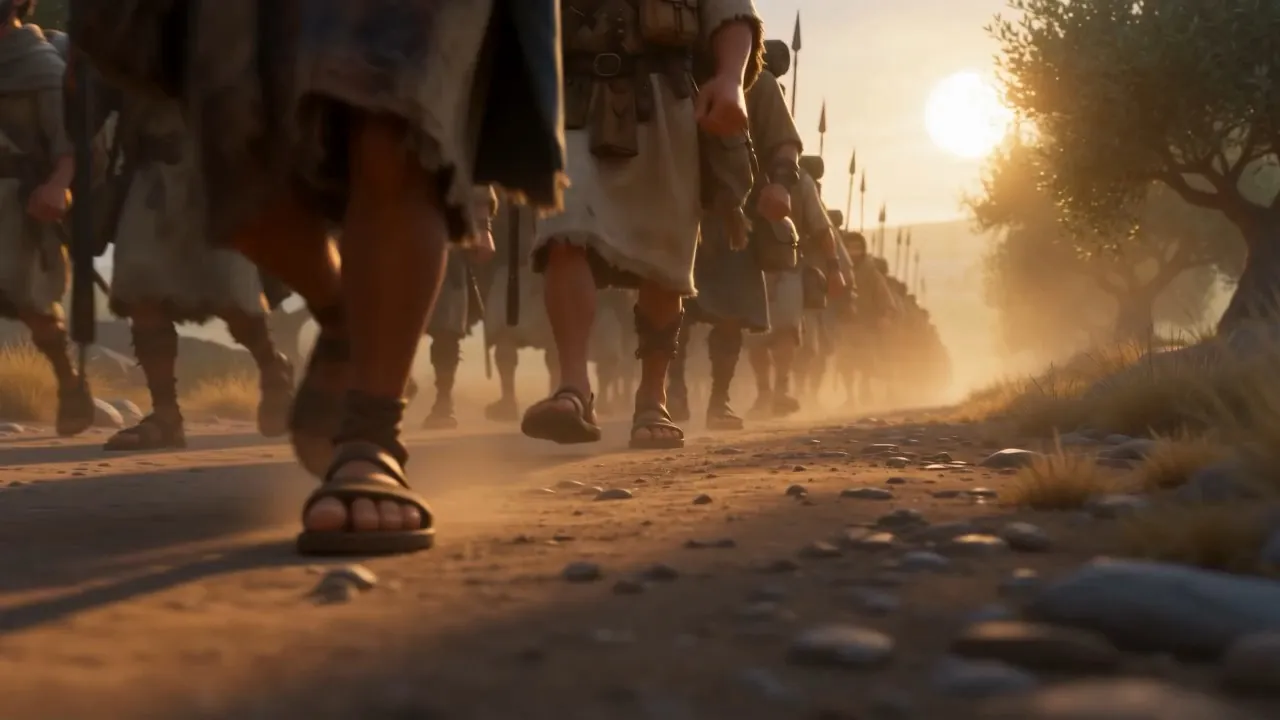
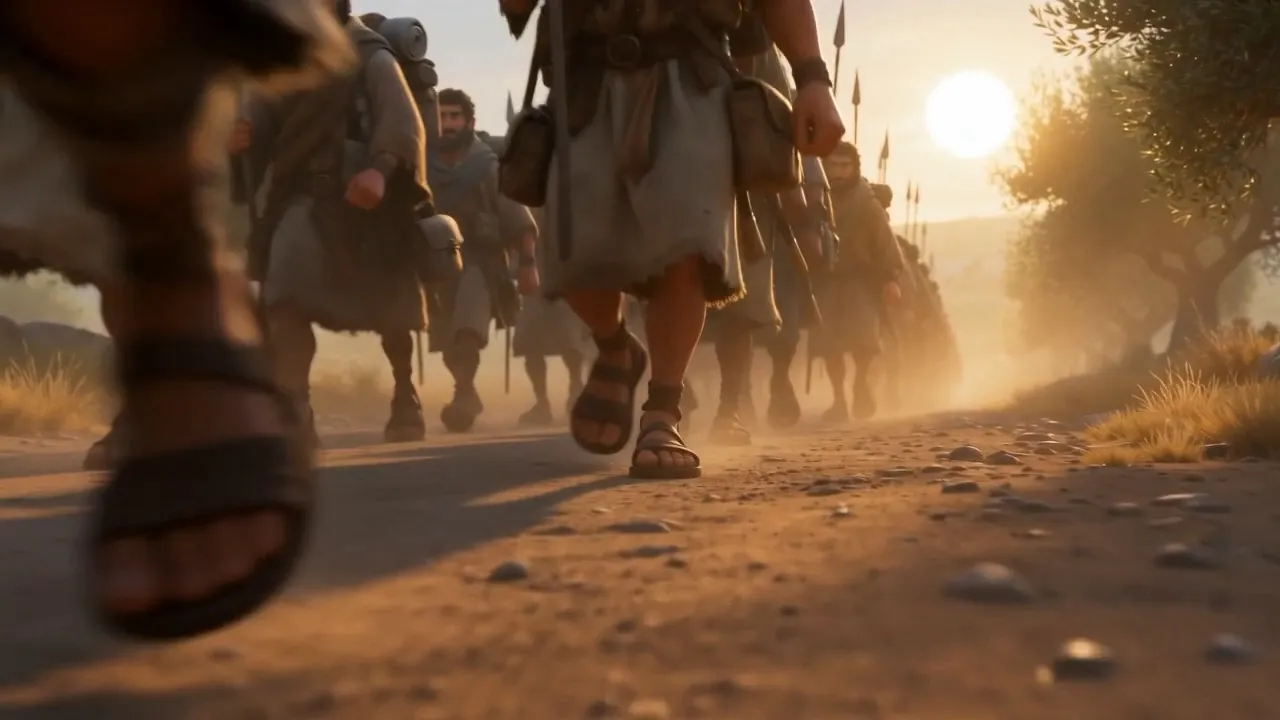
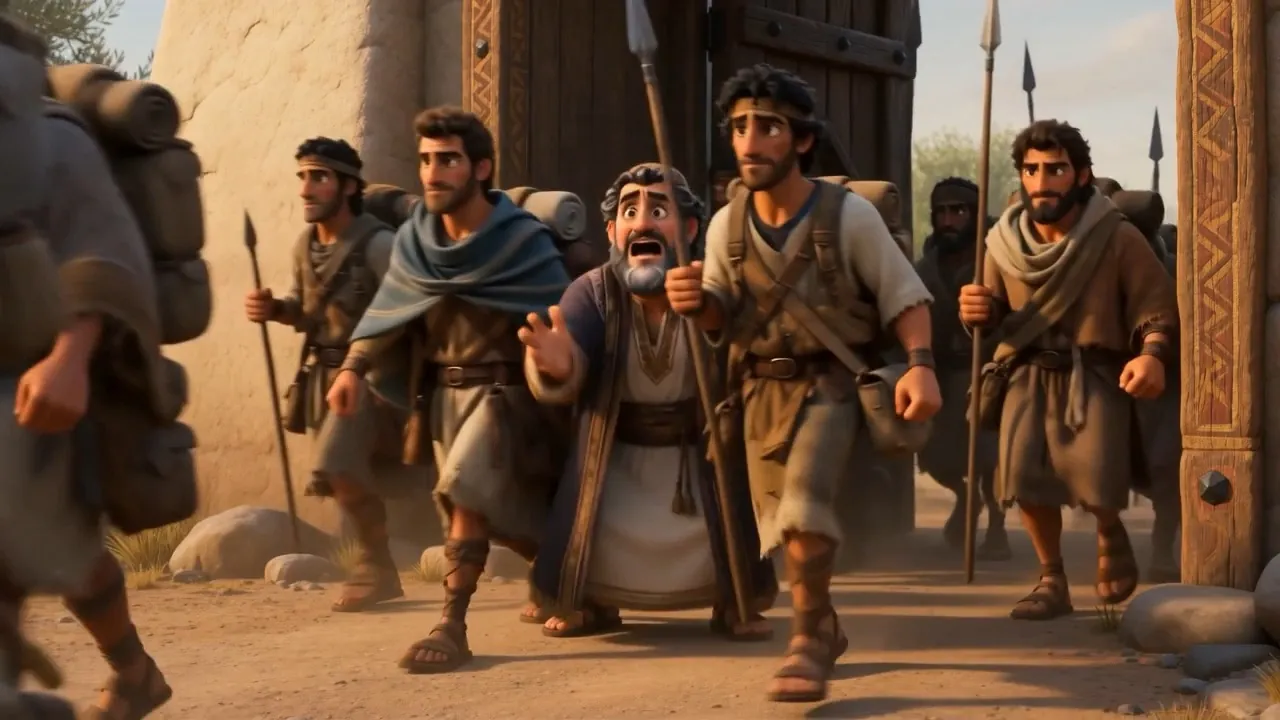
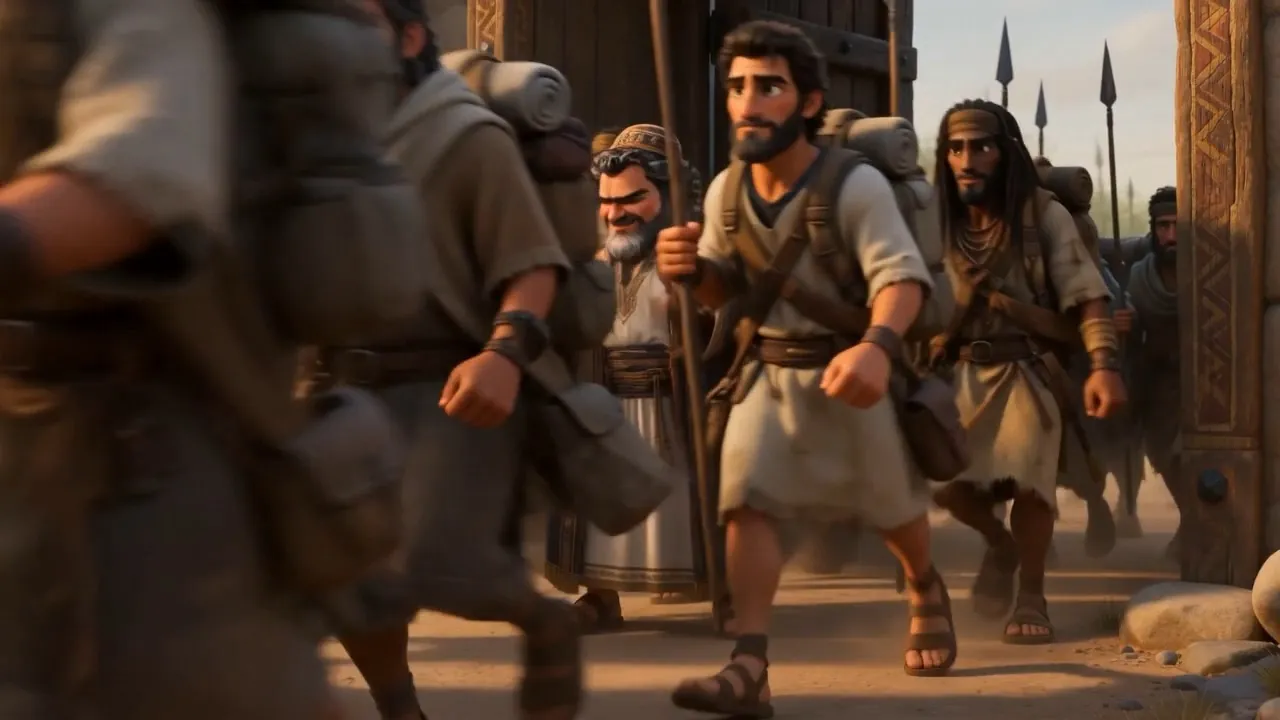
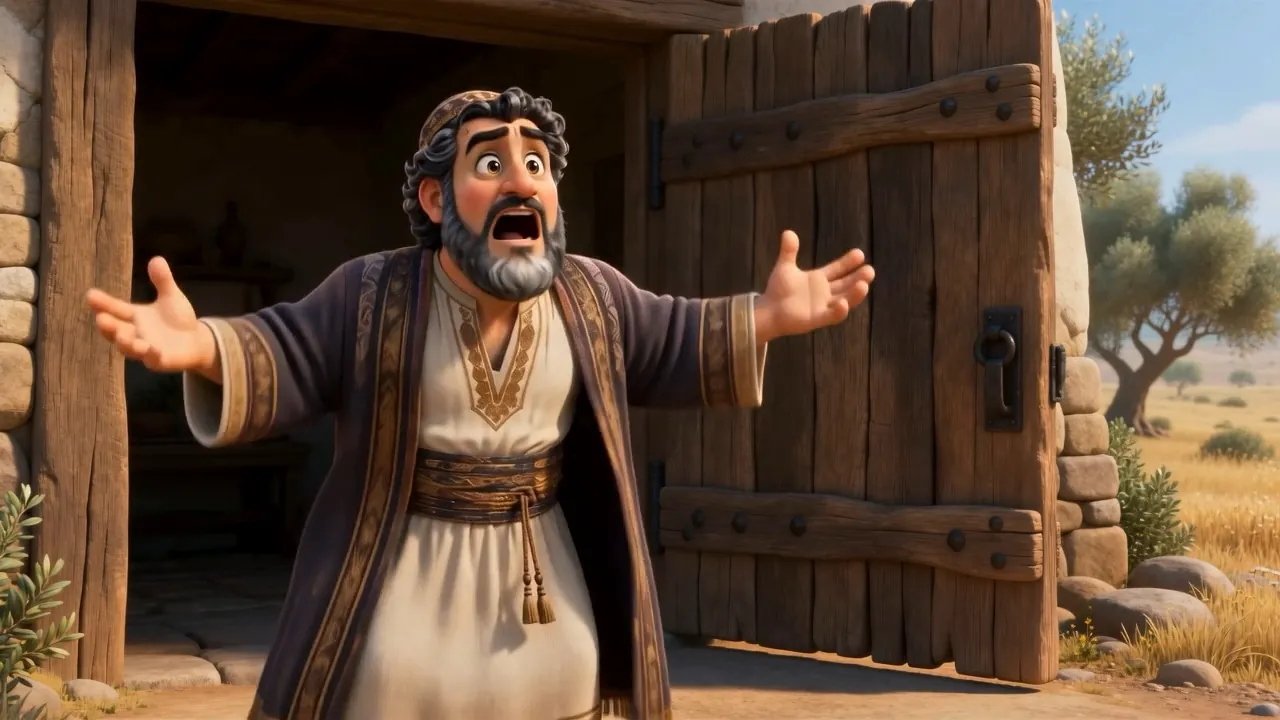
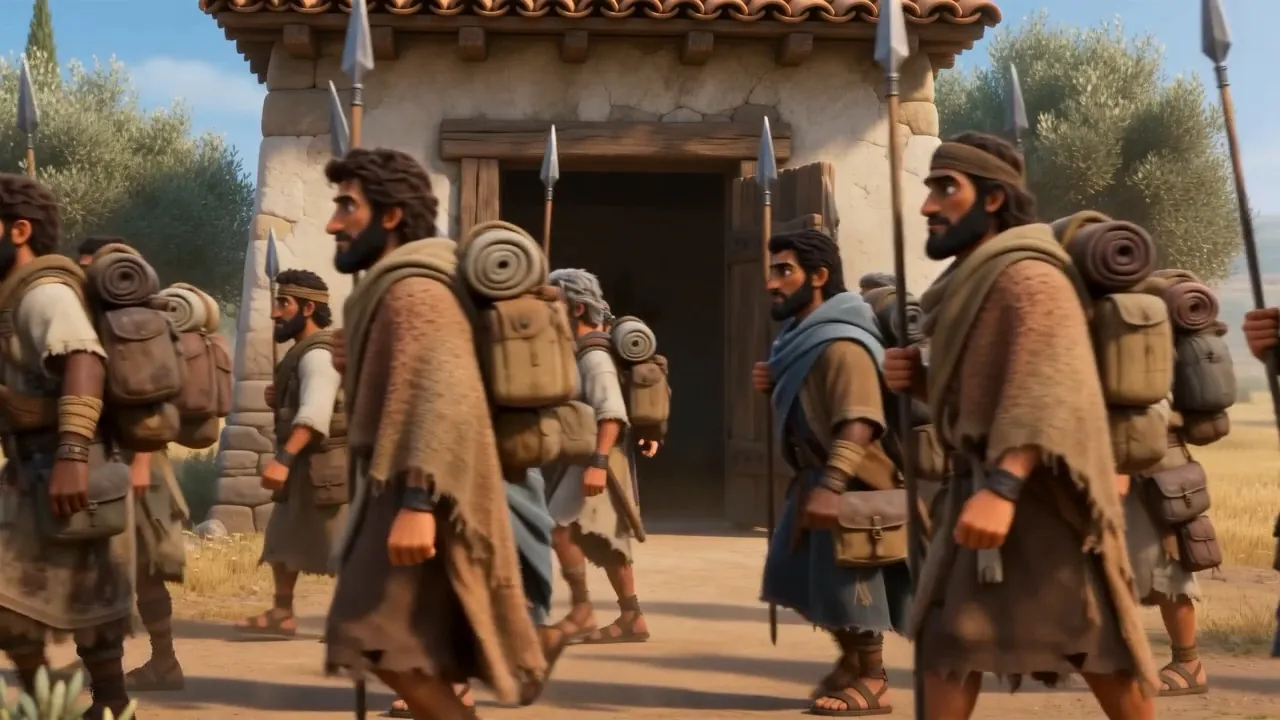
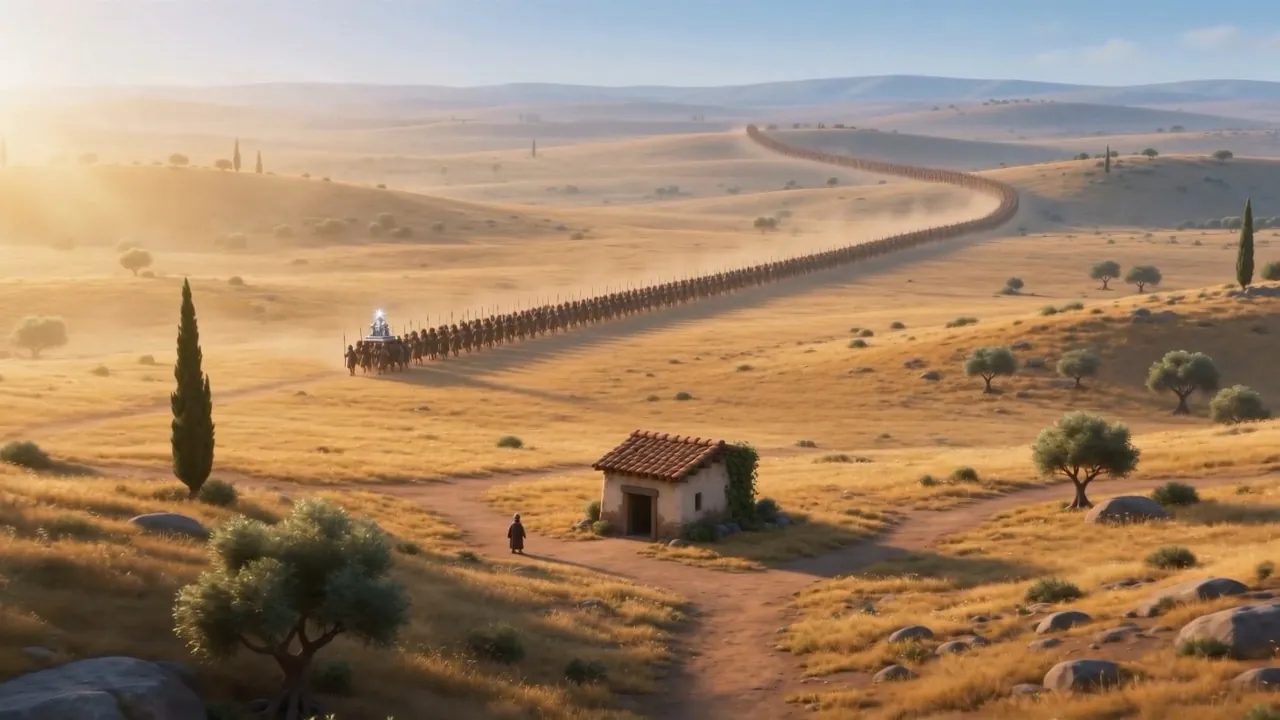
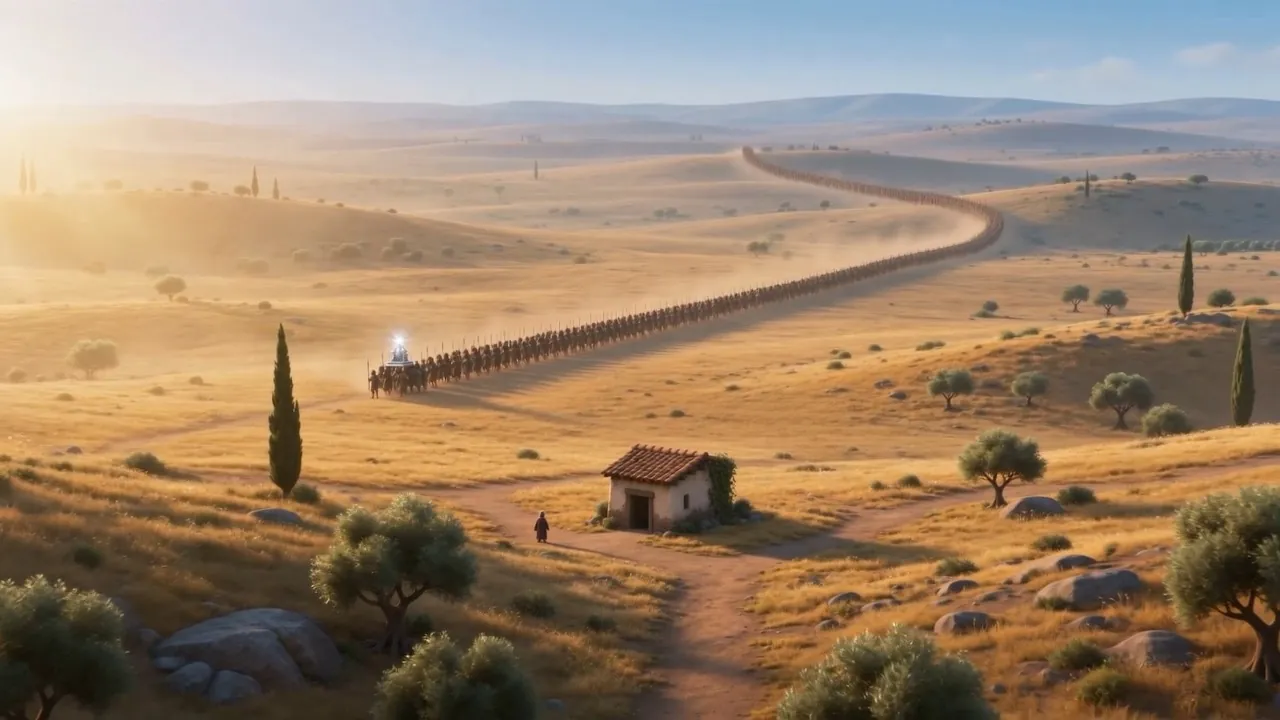
Six hundred armed men of Dan came past looking for somewhere to live, helped themselves to the image and the priest, and offered the young Levite a promotion on the way out: better to be priest to a tribe than to one man's house. He went cheerfully. When Micah ran after them they told him to be quiet or lose his family, and he turned and went back to his house. Judges 18 : 14–26
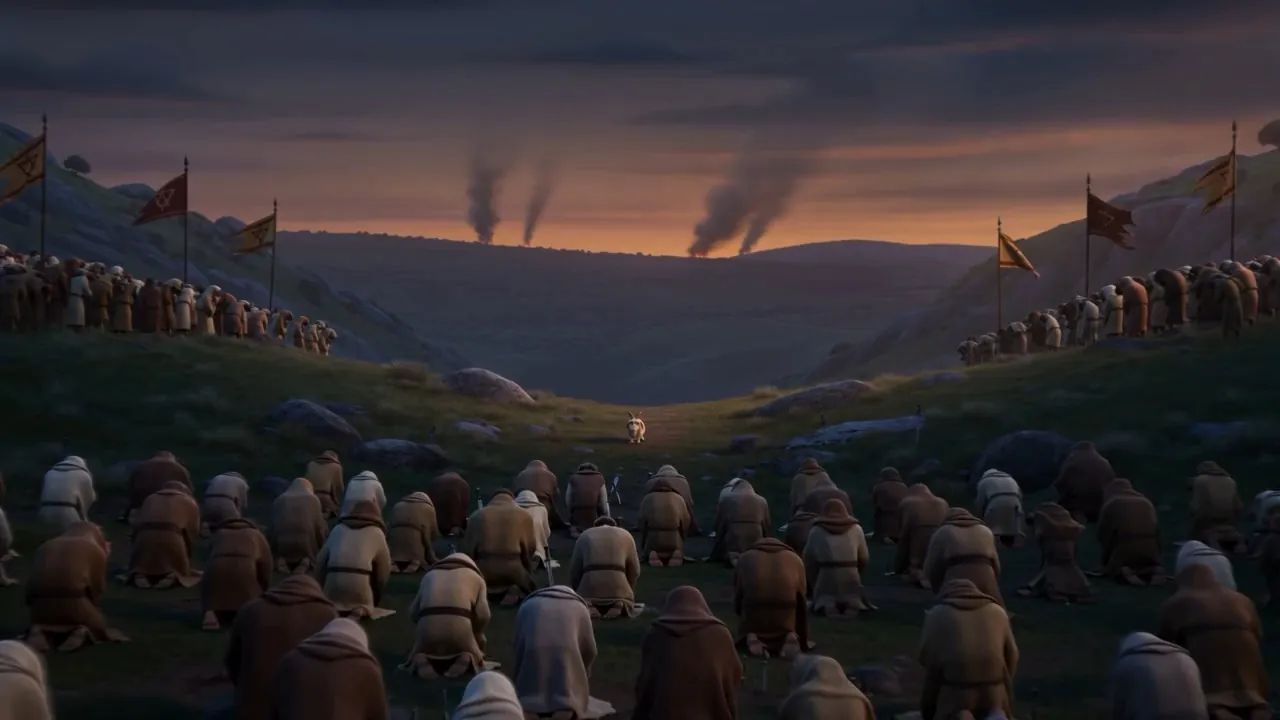
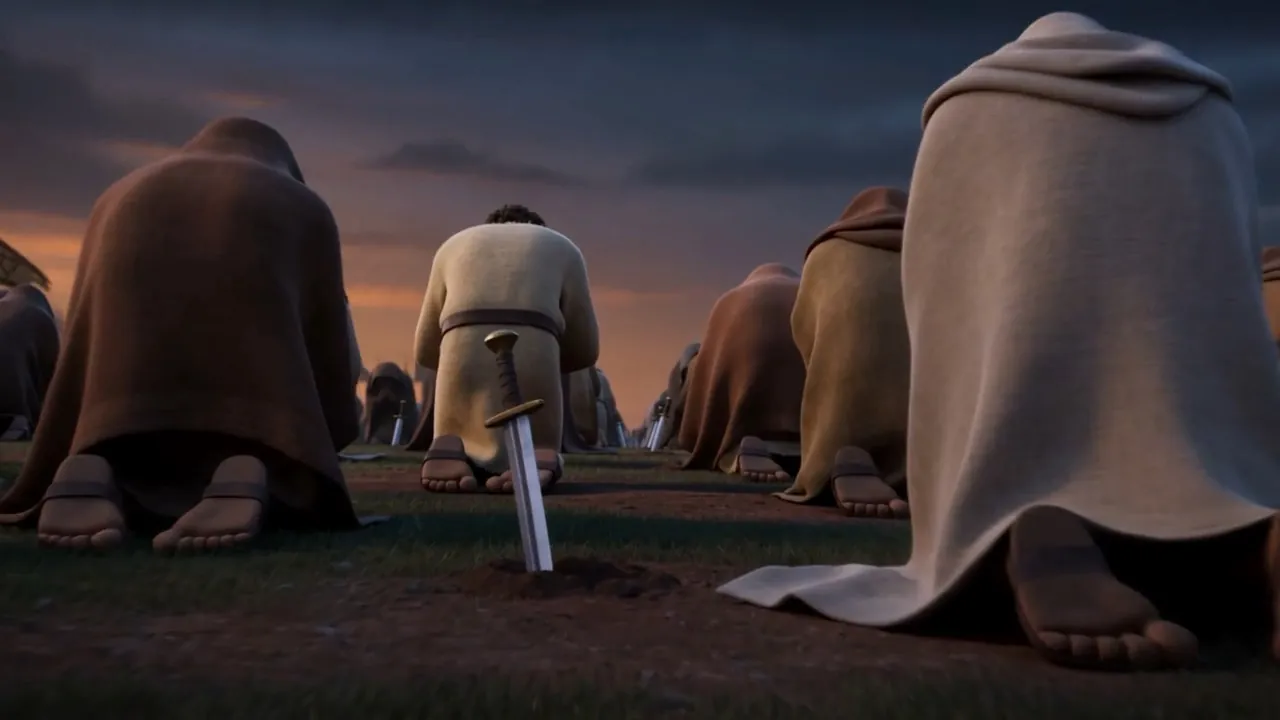
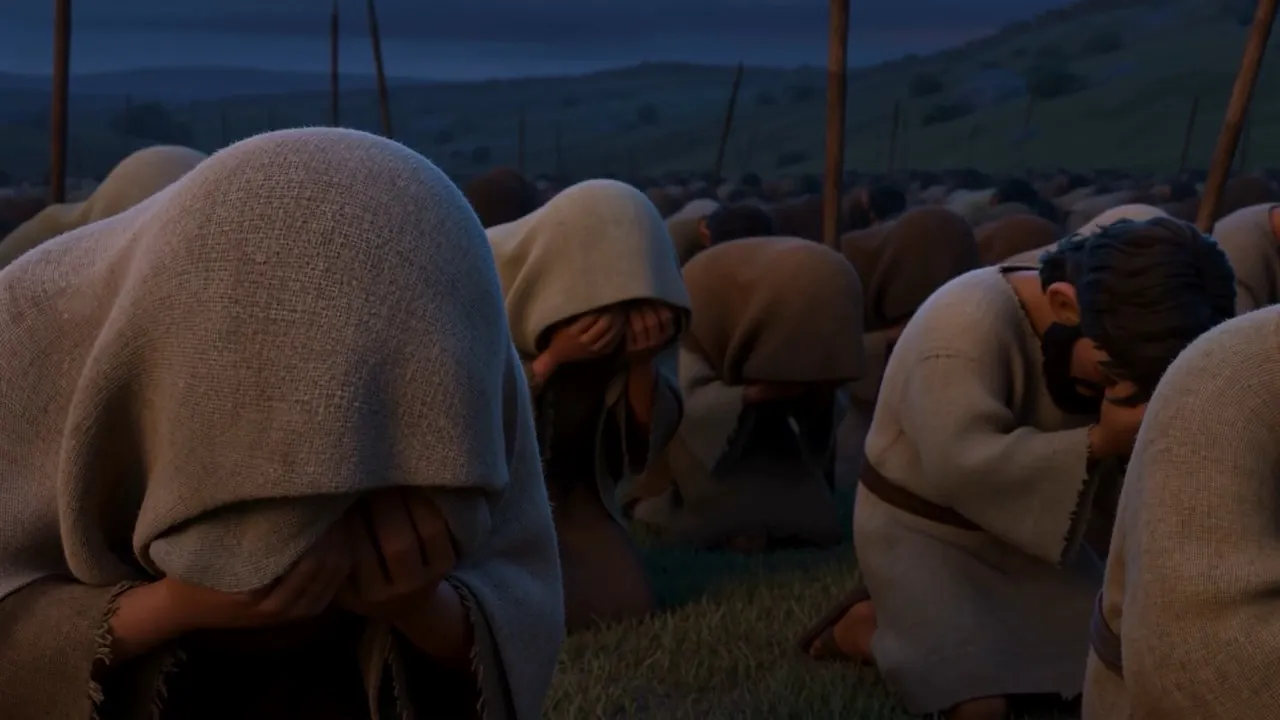
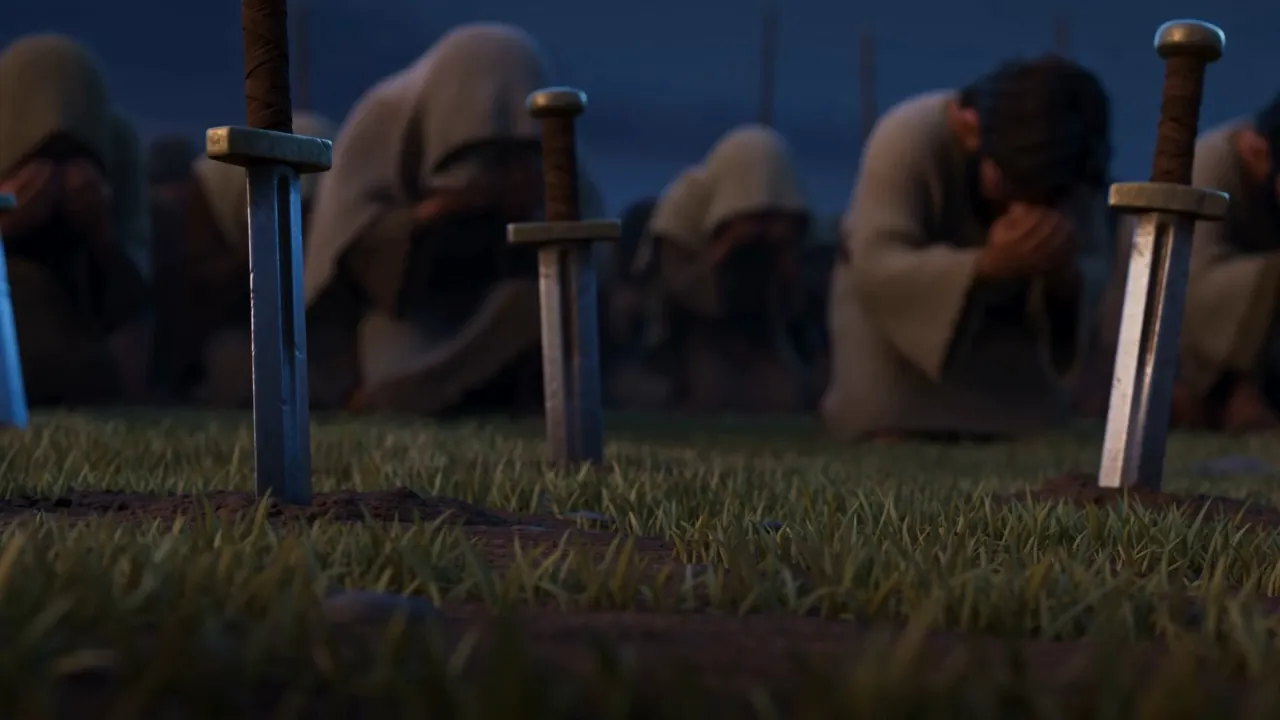
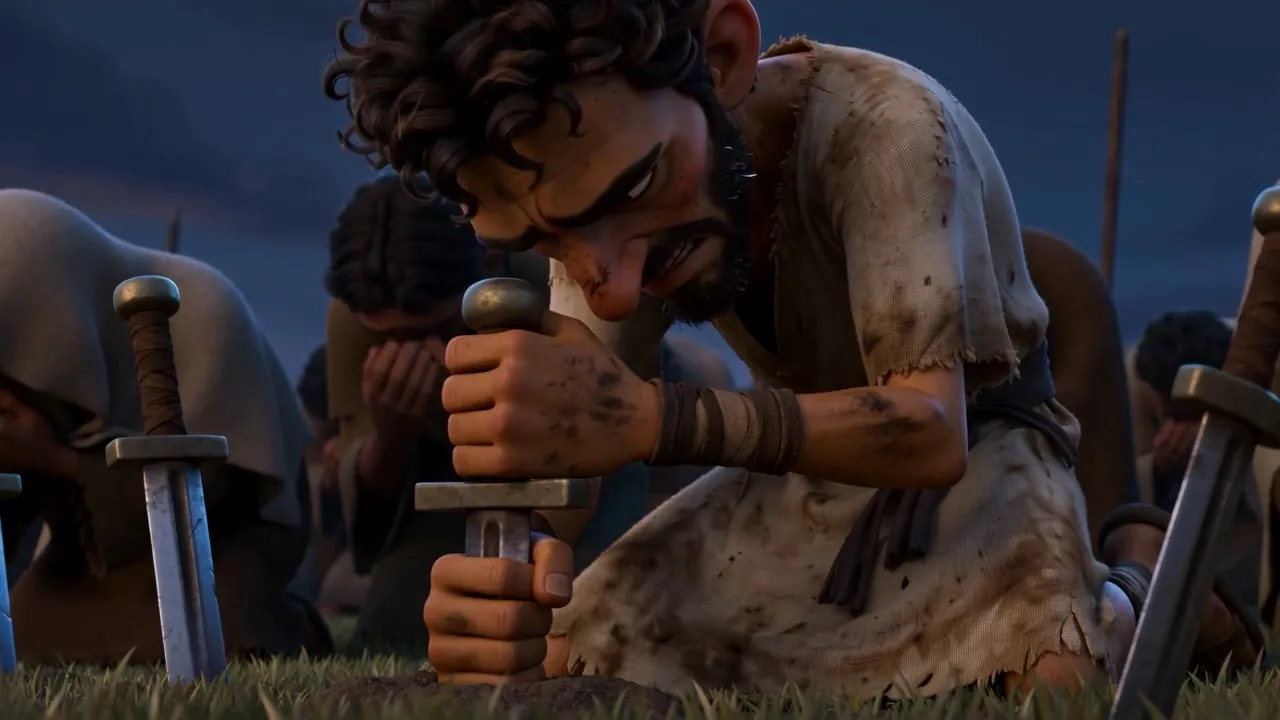
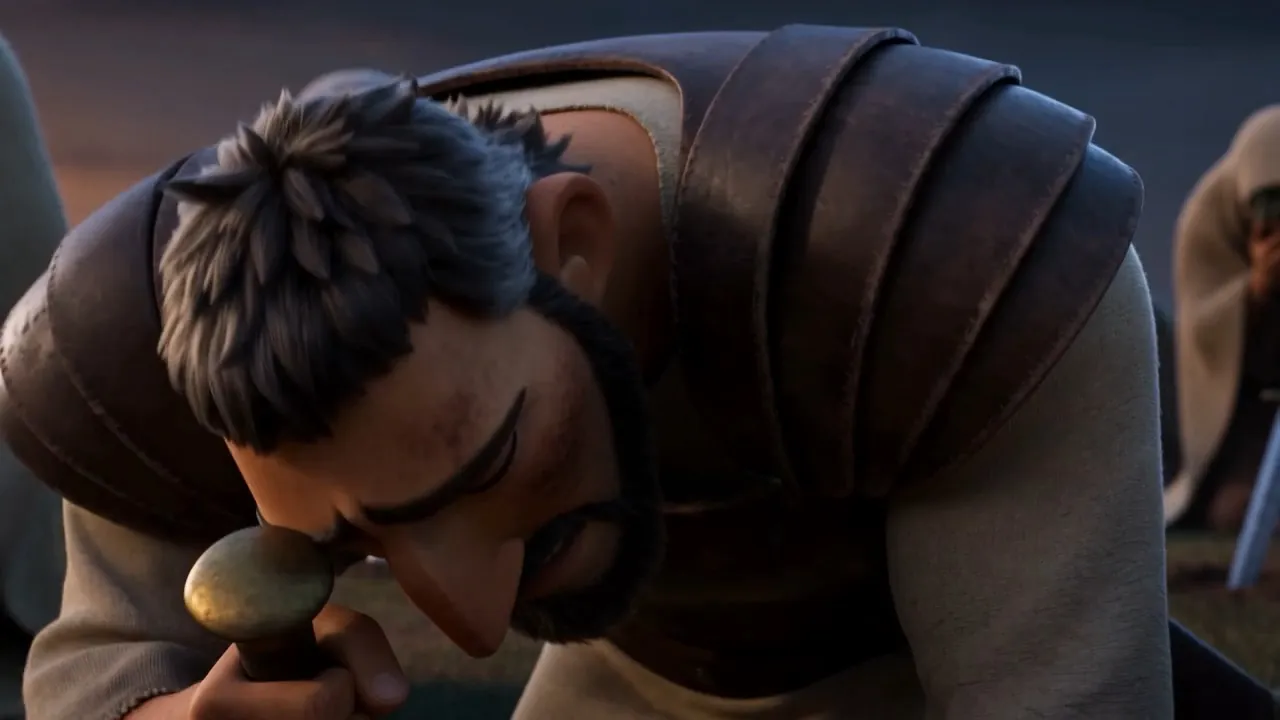


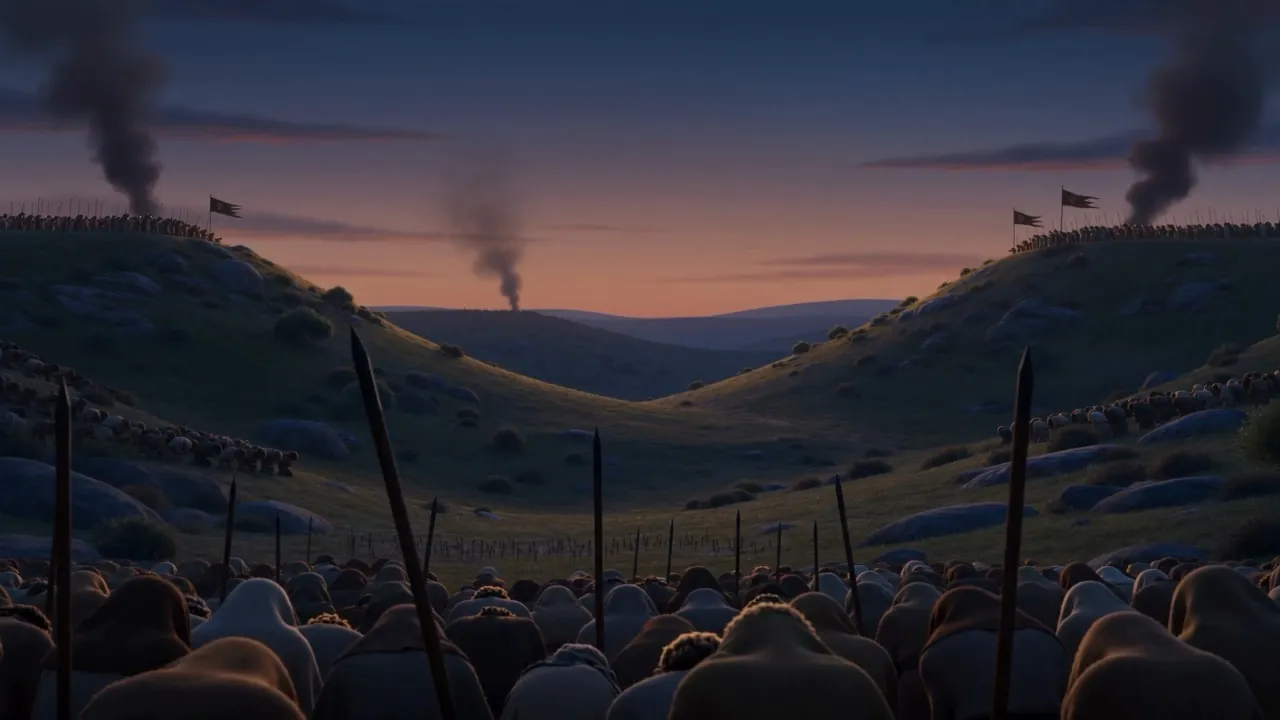
The second story is worse, and it is never shown: a night in Gibeah so terrible that it ended with eleven tribes at war with the twelfth, and Benjamin very nearly gone from Israel altogether. What you get instead is the morning after — a whole nation face down in the grass with their swords stuck in the ground, weeping at Bethel, and the book's own verdict repeated one last time: in those days there was no king in Israel. Everyone did that which was right in his own eyes. Judges 19–21 · 21 : 25
No king in Israel.
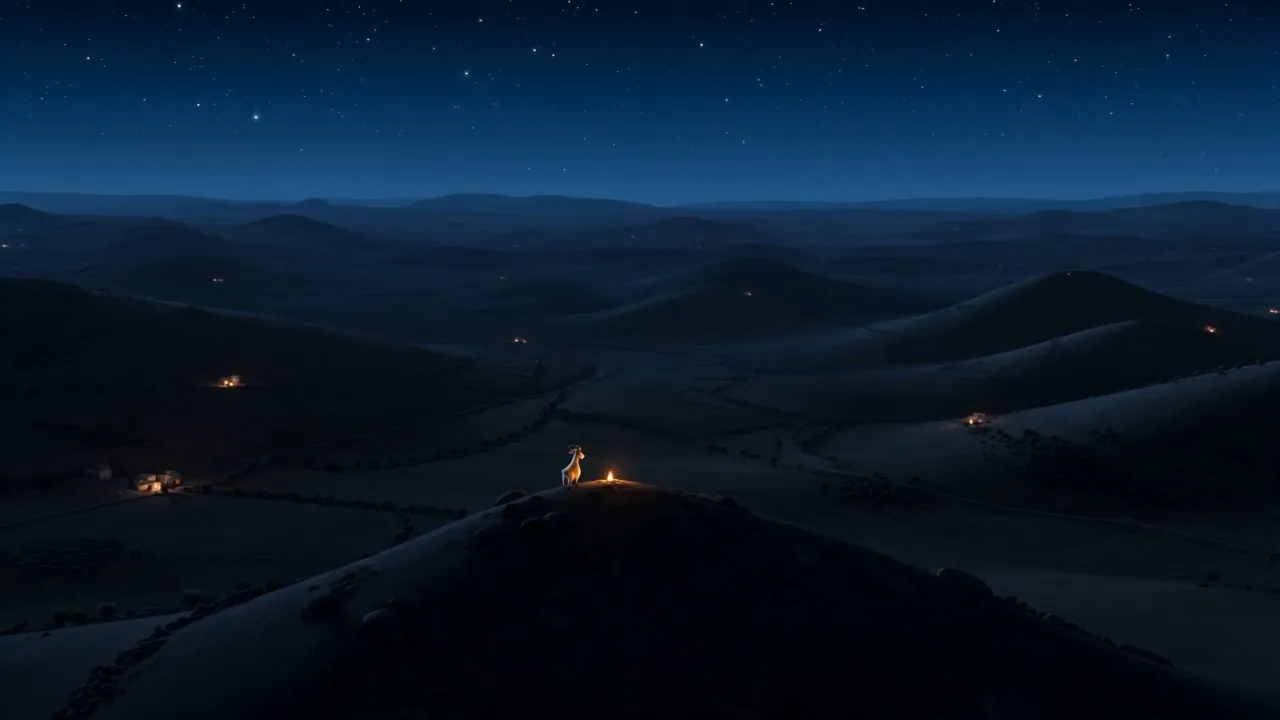
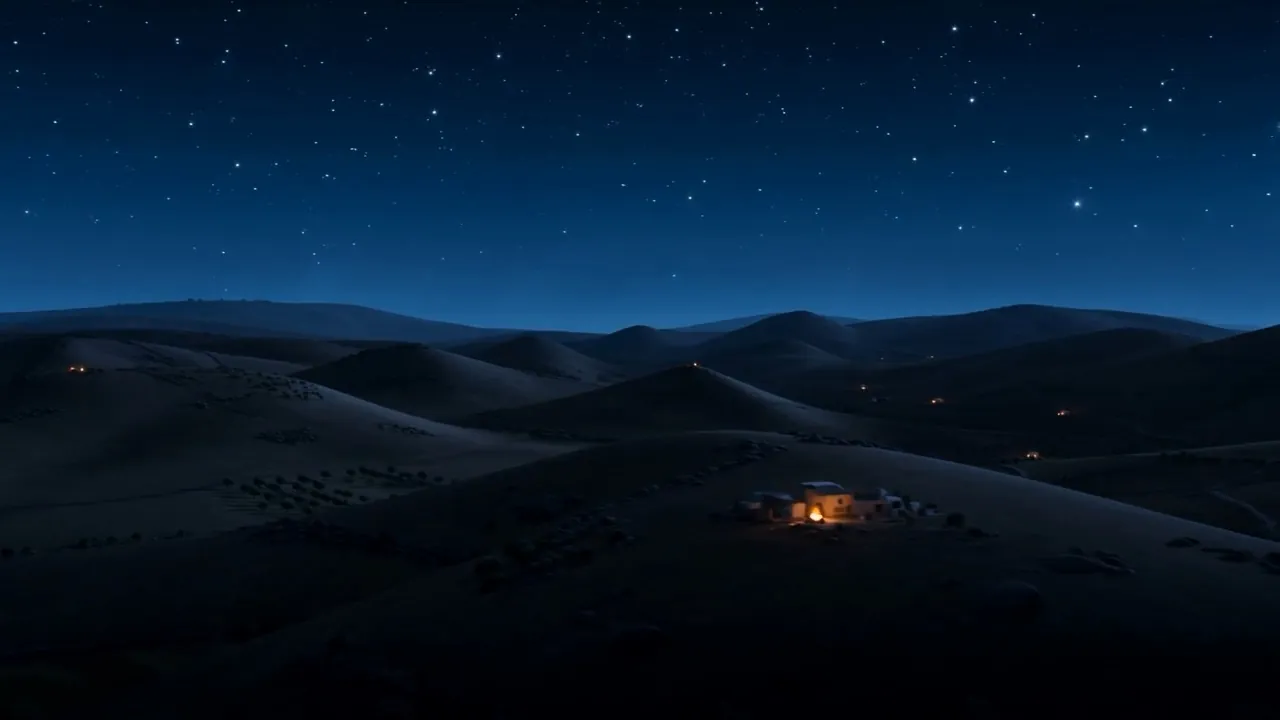
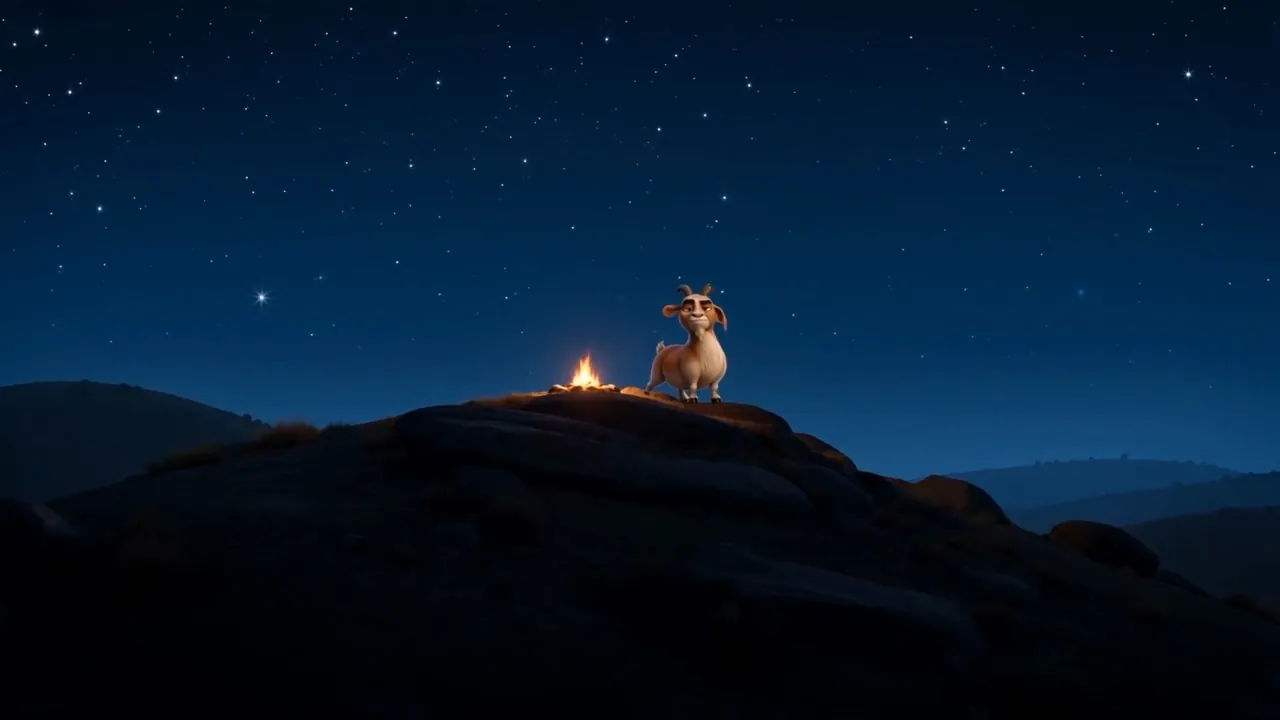
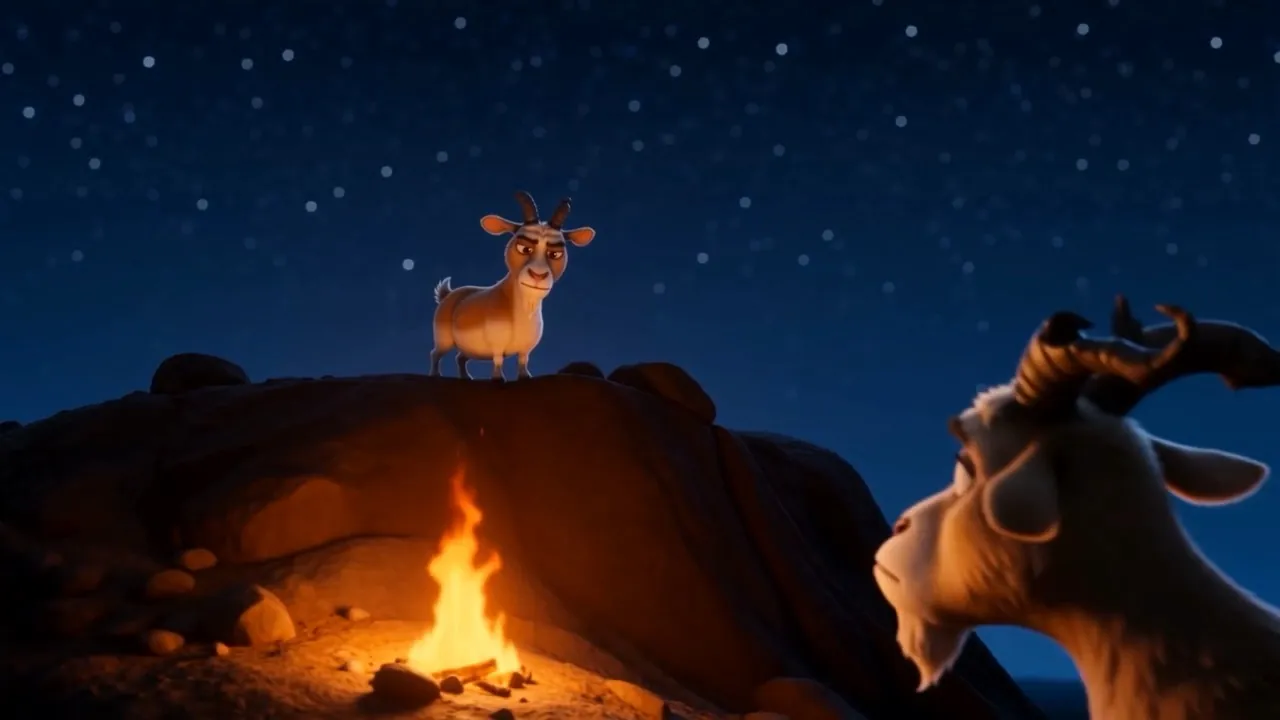


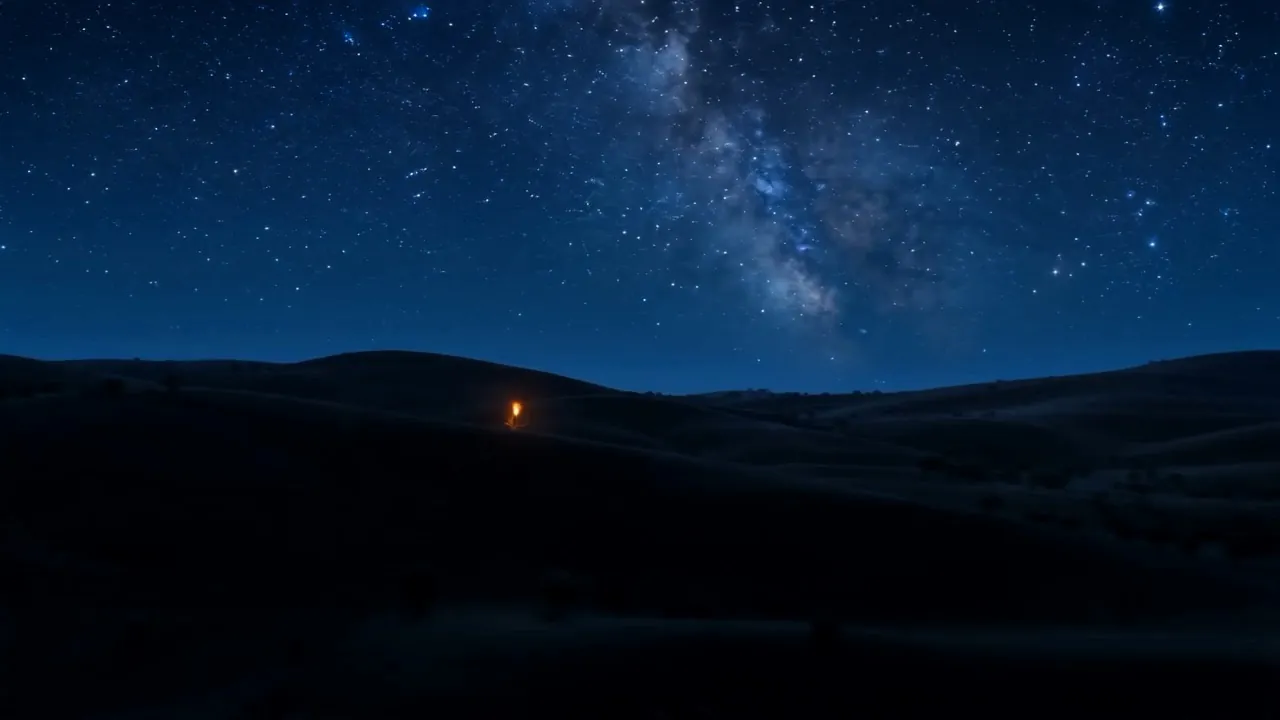
Three hundred and fifty years of this. Seven cycles, twelve judges, and a nation that has now fought itself. The whole country goes dark and stays dark — and then the last watch of the night goes to a pair of goats who have seen the entire book and have opinions. Judges 21 : 25


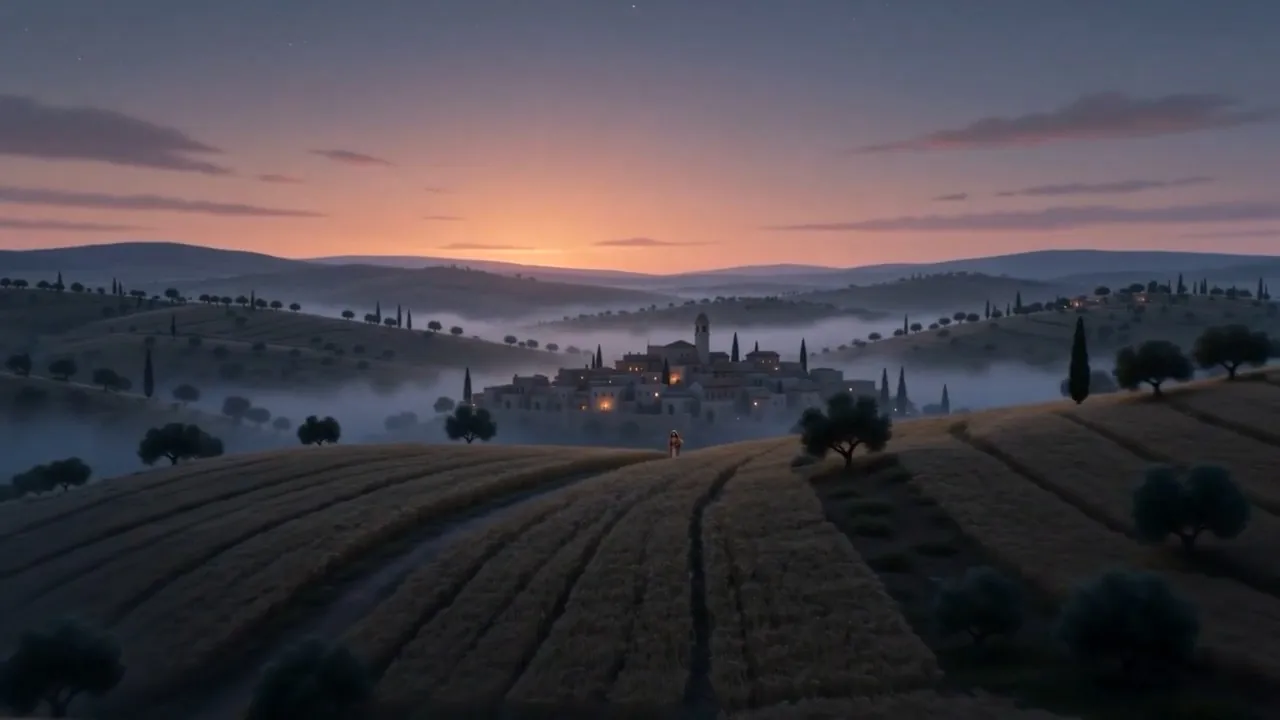
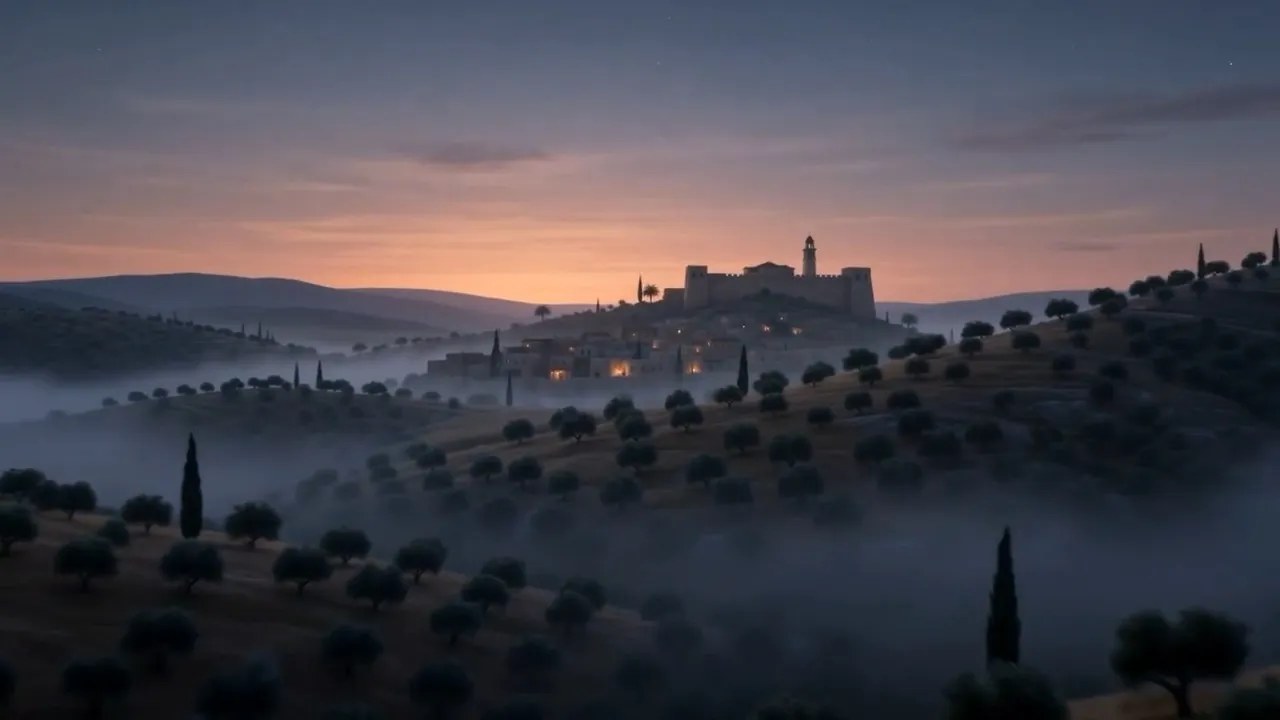
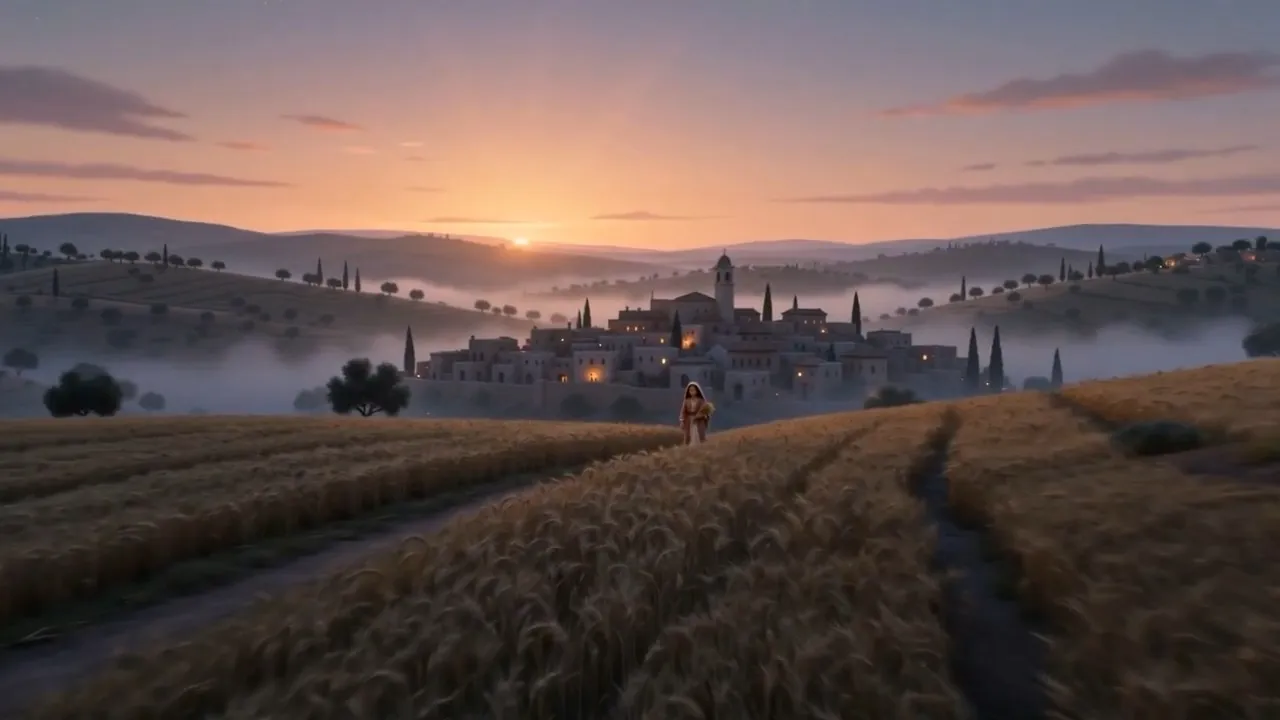
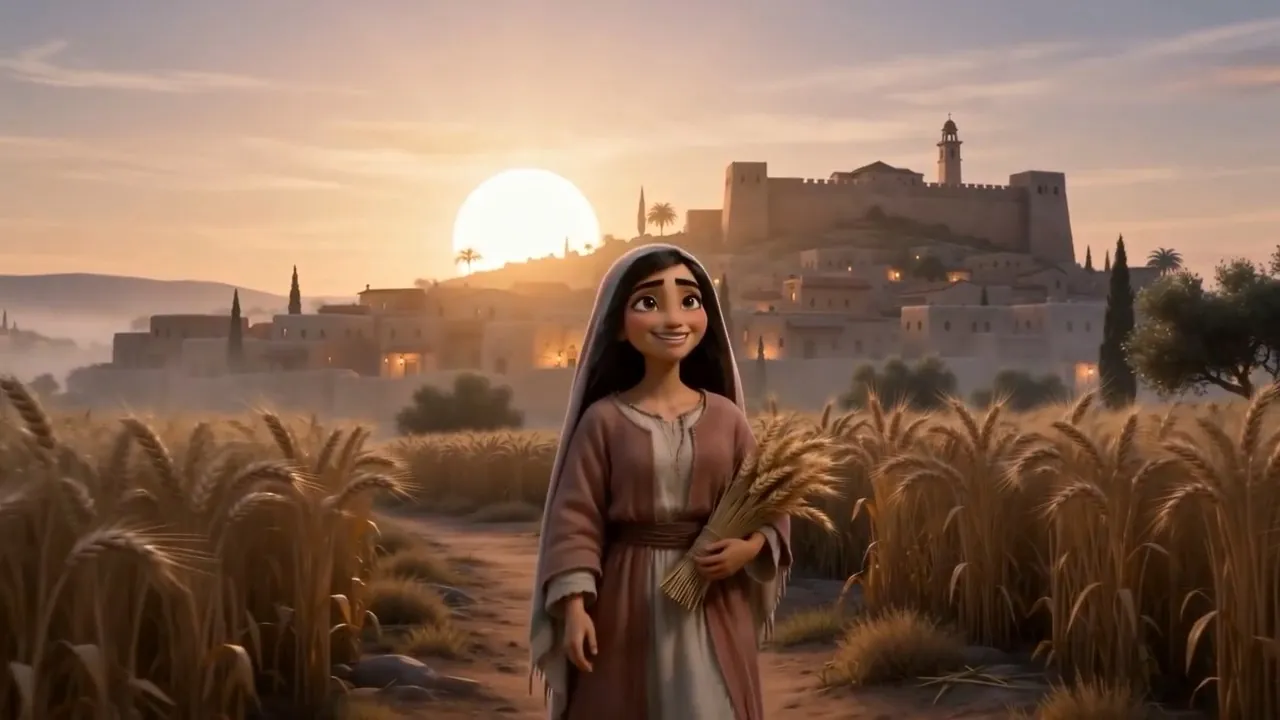
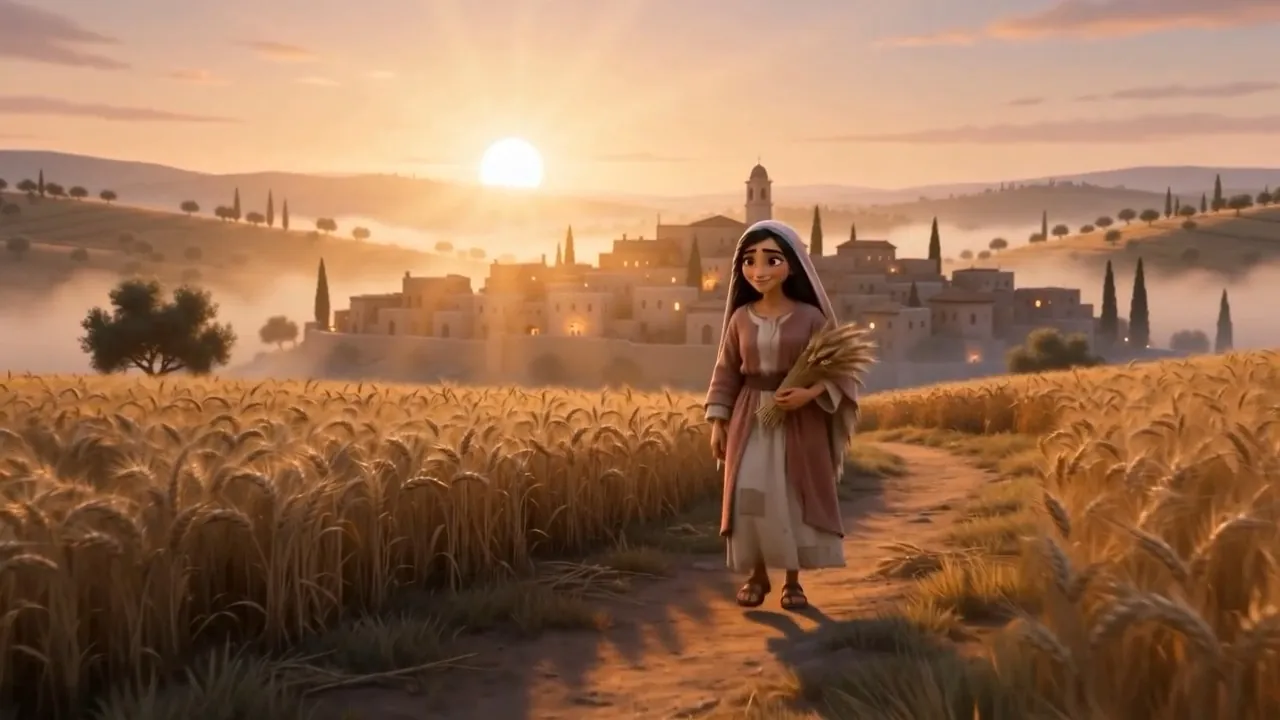
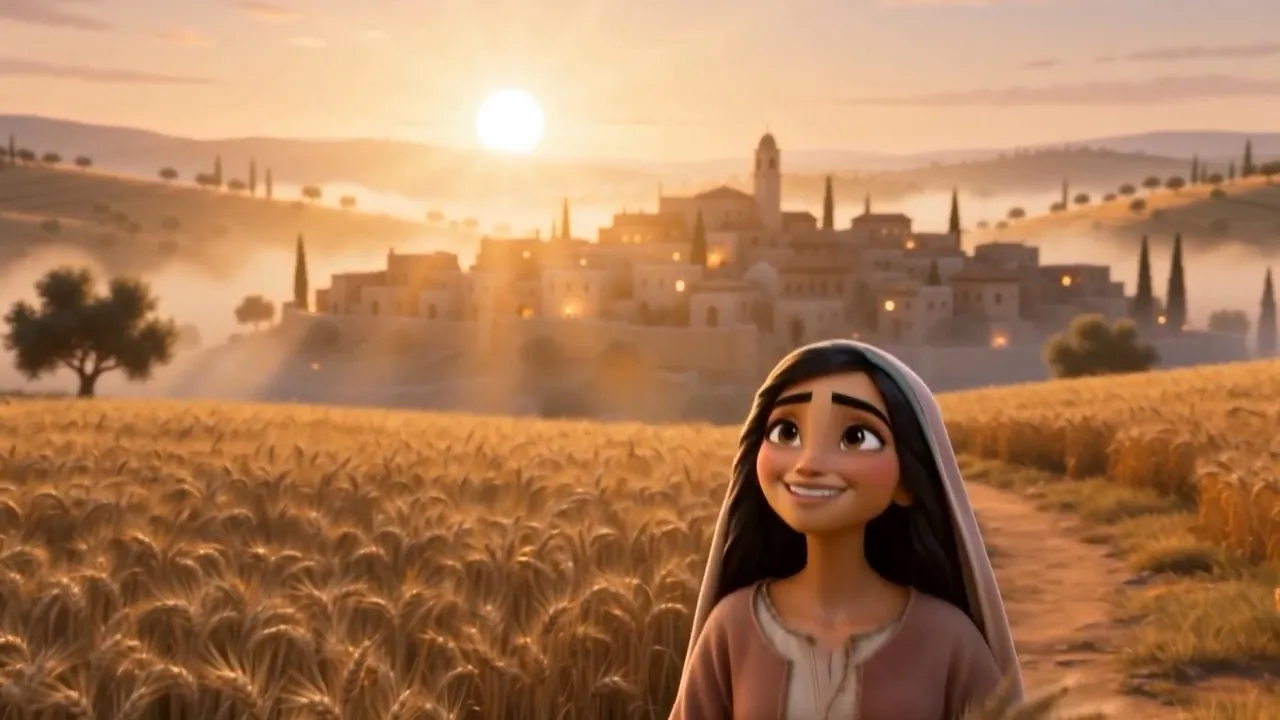
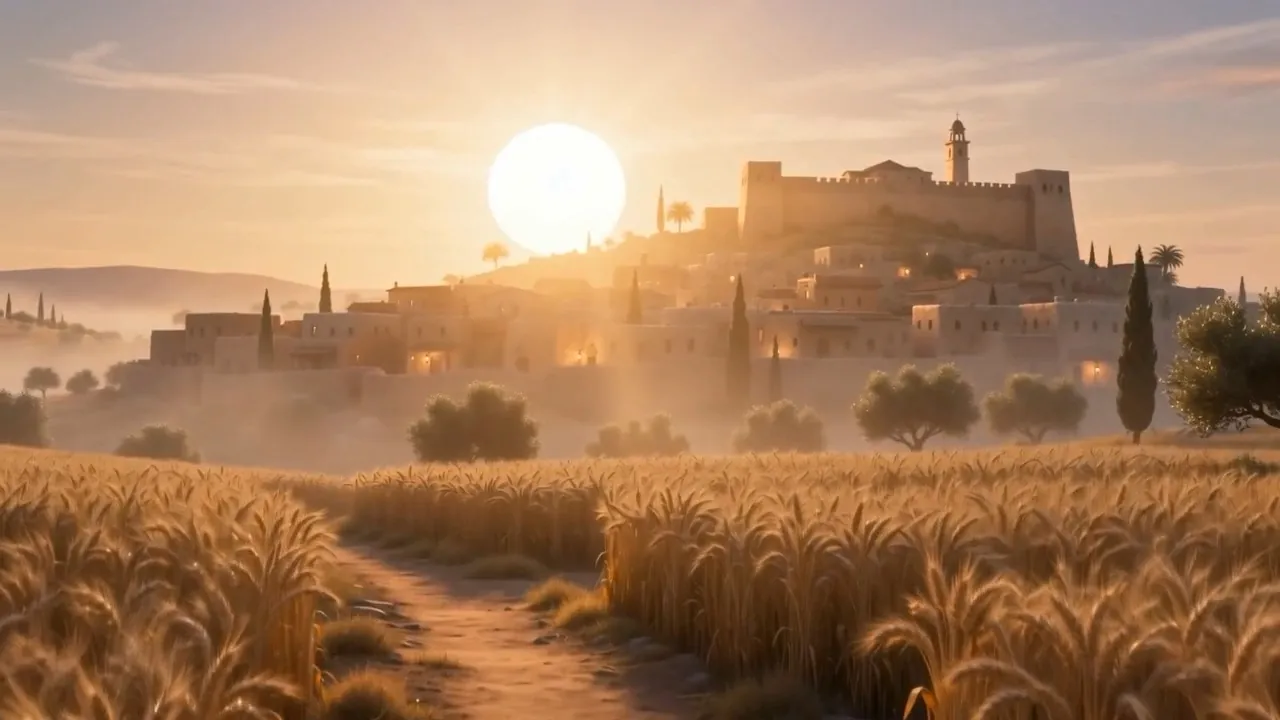
And then something happens that the Book of Judges itself does. It cuts to a wheat field at sunrise, and a young woman gleaning at the edge of it, walking up toward a small town on a hill. The town is Bethlehem. The next book in the Bible opens with the words “in the days when the judges judged” — and it is a story about an immigrant widow, a decent farmer and a baby who turns out to be King David's grandfather. After twenty-one chapters of the worst of everybody, the answer starts quietly, in a field, with two people being kind. Ruth 1 : 1
In the days when the judges judged…
Interlude · In the field
She gathers at the edge of the field. Glean behind her.
The reapers leave standing stalks for whoever comes after. Pick up what is left for you.
After the story
That is the whole book, in seven episodes.
It opened with a generation who had personally seen a sea split, and it ends with their descendants at war with each other over an atrocity, and a private shrine in a family home that nobody thinks is strange. Judges never tells you what to conclude. It just puts the same sentence at the end of every story — there was no king in Israel; everyone did what was right in his own eyes — and lets you watch where that goes. And then it points, without comment, at a wheat field.
Voices of a kingless land · hover or tap to turn
Micah
"Now know I that Yahweh will do good to me, since I have a Levite as my priest."
— Judges 17:13
The Danites
"Is it better for you to be priest to the house of one man, or to be priest to a tribe…?"
— Judges 18:19
Israel
"In those days there was no king in Israel. Everyone did that which was right in his own eyes."
— Judges 21:25How it ends
How closely were you watching?
1. What did Micah set up in his own house?
And he was pleased with it: "Now I know that Yahweh will do me good, since I have a Levite as my priest" (Judges 17:13).
2. What happened to Micah's idol and priest?
Better to be priest to a whole tribe than to one man's house — so he went. Micah followed, was told to be quiet, and went home (Judges 18:19–26).
3. What is the last line of the Book of Judges?
The book repeats it through its final chapters like a drumbeat, and ends on it (Judges 21:25).
4. Which book picks the story up from here?
Set in the same era, in a wheat field outside Bethlehem, and it ends with the great-grandfather of King David (Ruth 1:1, 4:17).
What this story teaches
Sincerity is not the same as truth.
Micah was delighted with his shrine and genuinely expected God to bless it. He was not being cynical. He simply had no idea what he was doing, and there was nobody left to tell him.
"Now know I that Yahweh will do good to me, since I have a Levite as my priest." Judges 17:13"Right in his own eyes" is not freedom.
The book's last line sounds like liberty. Twenty-one chapters have just shown what it actually produces, and the final image of it is a nation kneeling in a field, weeping, with its swords in the ground.
"Everyone did that which was right in his own eyes." Judges 17:6The answer starts small.
After all of that, the Bible's next move is not a king or an army. It is a widow, a field, and two people being kind — and the great-grandson of that kindness is David.
"In the days when the judges judged…" Ruth 1:1Read the scripture itself. Judges 17 – 21 · World English Bible
Judges 17
1There was a man of the hill country of Ephraim, whose name was Micah.
2He said to his mother, “The eleven hundred pieces of silver that were taken from you, about which you uttered a curse, and also spoke it in my ears, behold, the silver is with me. I took it.” His mother said, “May Yahweh bless my son!”
3He restored the eleven hundred pieces of silver to his mother, then his mother said, “I most certainly dedicate the silver to Yahweh from my hand for my son, to make a carved image and a molten image. Now therefore I will restore it to you.”
4When he restored the money to his mother, his mother took two hundred pieces of silver, and gave them to a silversmith, who made a carved image and a molten image out of it. It was in the house of Micah.
5The man Micah had a house of gods, and he made an ephod, and teraphim, and consecrated one of his sons, who became his priest.
6In those days there was no king in Israel. Everyone did that which was right in his own eyes.
7There was a young man out of Bethlehem Judah, of the family of Judah, who was a Levite; and he lived there.
8The man departed out of the city, out of Bethlehem Judah, to live where he could find a place, and he came to the hill country of Ephraim, to the house of Micah, as he traveled.
9Micah said to him, “Where did you come from?” He said to him, “I am a Levite of Bethlehem Judah, and I am looking for a place to live.”
10Micah said to him, “Dwell with me, and be to me a father and a priest, and I will give you ten pieces of silver per year, a suit of clothing, and your food.” So the Levite went in.
11The Levite was content to dwell with the man; and the young man was to him as one of his sons.
12Micah consecrated the Levite, and the young man became his priest, and was in the house of Micah.
13Then Micah said, “Now know I that Yahweh will do good to me, since I have a Levite as my priest.”
Judges 18
1In those days there was no king in Israel. In those days the tribe of the Danites sought an inheritance to dwell in; for to that day, their inheritance had not fallen to them among the tribes of Israel.
2The children of Dan sent five men of their family from their whole number, men of valor, from Zorah, and from Eshtaol, to spy out the land, and to search it. They said to them, “Go, explore the land!” They came to the hill country of Ephraim, to the house of Micah, and lodged there.
3When they were by the house of Micah, they knew the voice of the young man the Levite; so they went over there, and said to him, “Who brought you here? What do you do in this place? What do you have here?”
4He said to them, “Thus and thus has Micah dealt with me, and he has hired me, and I am become his priest.”
5They said to him, “Please ask counsel of God, that we may know whether our way which we go shall be prosperous.”
6The priest said to them, “Go in peace. Your way in which you go is before Yahweh.”
7Then the five men departed, and came to Laish, and saw the people who were there, how they lived in safety, in the way of the Sidonians, quiet and secure; for there was no one in the land, possessing authority, that might put them to shame in anything, and they were far from the Sidonians, and had no dealings with anyone else.
8They came to their brothers at Zorah and Eshtaol; and their brothers asked them, “What do you say?”
9They said, “Arise, and let us go up against them; for we have seen the land, and behold, it is very good. Do you stand still? Don’t be slothful to go and to enter in to possess the land.
10When you go, you will come to an unsuspecting people, and the land is large; for God has given it into your hand, a place where there is no lack of anything that is in the earth.”
11The family of the Danites set out from Zorah and Eshtaol, with six hundred men armed with weapons of war.
12They went up and encamped in Kiriath Jearim, in Judah. Therefore they called that place Mahaneh Dan, to this day. Behold, it is behind Kiriath Jearim.
13They passed from there to the hill country of Ephraim, and came to the house of Micah.
14Then the five men who went to spy out the country of Laish answered, and said to their brothers, “Do you know that there is in these houses an ephod, and teraphim, and a carved image, and a molten image? Now therefore consider what you have to do.”
15They went over there, and came to the house of the young Levite man, even to the house of Micah, and asked him how he was doing.
16The six hundred men armed with their weapons of war, who were of the children of Dan, stood by the entrance of the gate.
17The five men who went to spy out the land went up, and came in there, and took the engraved image, the ephod, the teraphim, and the molten image; and the priest stood by the entrance of the gate with the six hundred men armed with weapons of war.
18When these went into Micah’s house, and took the engraved image, the ephod, the teraphim, and the molten image, the priest said to them, “What are you doing?”
19They said to him, “Hold your peace, put your hand on your mouth, and go with us, and be to us a father and a priest. Is it better for you to be priest to the house of one man, or to be priest to a tribe and a family in Israel?”
20The priest’s heart was glad, and he took the ephod, the teraphim, and the engraved image, and went with the people.
21So they turned and departed, and put the little ones, the livestock, and the goods before them.
22When they were a good way from the house of Micah, the men who were in the houses near Micah’s house gathered together and overtook the children of Dan.
23As they cried to the children of Dan, they turned their faces, and said to Micah, “What ails you, that you come with such a company?”
24He said, “You have taken away my gods which I made, and the priest, and have gone away! What more do I have? How can you ask me, ‘What ails you?’”
25The children of Dan said to him, “Don’t let your voice be heard among us, lest angry fellows fall on you, and you lose your life, with the lives of your household.”
26The children of Dan went their way; and when Micah saw that they were too strong for him, he turned and went back to his house.
27They took that which Micah had made, and the priest whom he had, and came to Laish, to a people quiet and unsuspecting, and struck them with the edge of the sword; then they burned the city with fire.
28There was no deliverer, because it was far from Sidon, and they had no dealings with anyone else; and it was in the valley that lies by Beth Rehob. They built the city, and lived in it.
29They called the name of the city Dan, after the name of Dan their father, who was born to Israel; however the name of the city used to be Laish.
30The children of Dan set up for themselves the engraved image; and Jonathan, the son of Gershom, the son of Moses, and his sons were priests to the tribe of the Danites until the day of the captivity of the land.
31So they set up for themselves Micah’s engraved image which he made, and it remained all the time that God’s house was in Shiloh.
Judges 21
1Now the men of Israel had sworn in Mizpah, saying, “None of us will give his daughter to Benjamin as a wife.”
2The people came to Bethel, and sat there until evening before God, and lifted up their voices, and wept severely.
3They said, “Yahweh, the God of Israel, why has this happened in Israel, that there should be one tribe lacking in Israel today?”
4On the next day, the people rose early, and built an altar there, and offered burnt offerings and peace offerings.
5The children of Israel said, “Who is there among all the tribes of Israel who didn’t come up in the assembly to Yahweh?” For they had made a great oath concerning him who didn’t come up to Yahweh to Mizpah, saying, “He shall surely be put to death.”
6The children of Israel grieved for Benjamin their brother, and said, “There is one tribe cut off from Israel today.
7How shall we provide wives for those who remain, since we have sworn by Yahweh that we will not give them of our daughters to wives?”
8They said, “What one is there of the tribes of Israel who didn’t come up to Yahweh to Mizpah?” Behold, no one came from Jabesh Gilead to the camp to the assembly.
9For when the people were counted, behold, there were none of the inhabitants of Jabesh Gilead there.
10The congregation sent twelve thousand of the most valiant men there, and commanded them, saying, “Go and strike the inhabitants of Jabesh Gilead with the edge of the sword, with the women and the little ones.
11This is the thing that you shall do: you shall utterly destroy every male, and every woman who has lain with a man.”
12They found among the inhabitants of Jabesh Gilead four hundred young virgins, who had not known man by lying with him; and they brought them to the camp to Shiloh, which is in the land of Canaan.
13The whole congregation sent and spoke to the children of Benjamin who were in the rock of Rimmon, and proclaimed peace to them.
14Benjamin returned at that time; and they gave them the women whom they had saved alive of the women of Jabesh Gilead. There still weren’t enough for them.
15The people grieved for Benjamin, because Yahweh had made a breach in the tribes of Israel.
16Then the elders of the congregation said, “How shall we provide wives for those who remain, since the women are destroyed out of Benjamin?”
17They said, “There must be an inheritance for those who are escaped of Benjamin, that a tribe not be blotted out from Israel.
18However we may not give them wives of our daughters, for the children of Israel had sworn, saying, ‘Cursed is he who gives a wife to Benjamin.’”
19They said, “Behold, there is a feast of Yahweh from year to year in Shiloh, which is on the north of Bethel, on the east side of the highway that goes up from Bethel to Shechem, and on the south of Lebonah.”
20They commanded the children of Benjamin, saying, “Go and lie in wait in the vineyards,
21and see, and behold, if the daughters of Shiloh come out to dance in the dances, then come out of the vineyards, and each man catch his wife of the daughters of Shiloh, and go to the land of Benjamin.
22It shall be, when their fathers or their brothers come to complain to us, that we will say to them, ‘Grant them graciously to us, because we didn’t take for each man his wife in battle, neither did you give them to them, otherwise you would now be guilty.’”
23The children of Benjamin did so, and took wives for themselves, according to their number, of those who danced, whom they carried off. They went and returned to their inheritance, built the cities, and lived in them.
24The children of Israel departed from there at that time, every man to his tribe and to his family, and they each went out from there to his own inheritance.
25In those days there was no king in Israel. Everyone did that which was right in his own eyes.
World English Bible (WEB) — a public-domain modern English translation. Read it freely, share it freely.
The Book of Judges — animated film in production
These scenes are real frames from the film.
Help us finish it — and every story like it — free for the world.