The Book of Jonah · The City Turns
Let neither mannor beast.
What eight words did to Nineveh: a king in ashes, a decree that names his own state's violence as the problem, spears stacked along the wall in the dark, and sackcloth on the sheep — because the text says so. Every scene below is a real frame from our animated film.
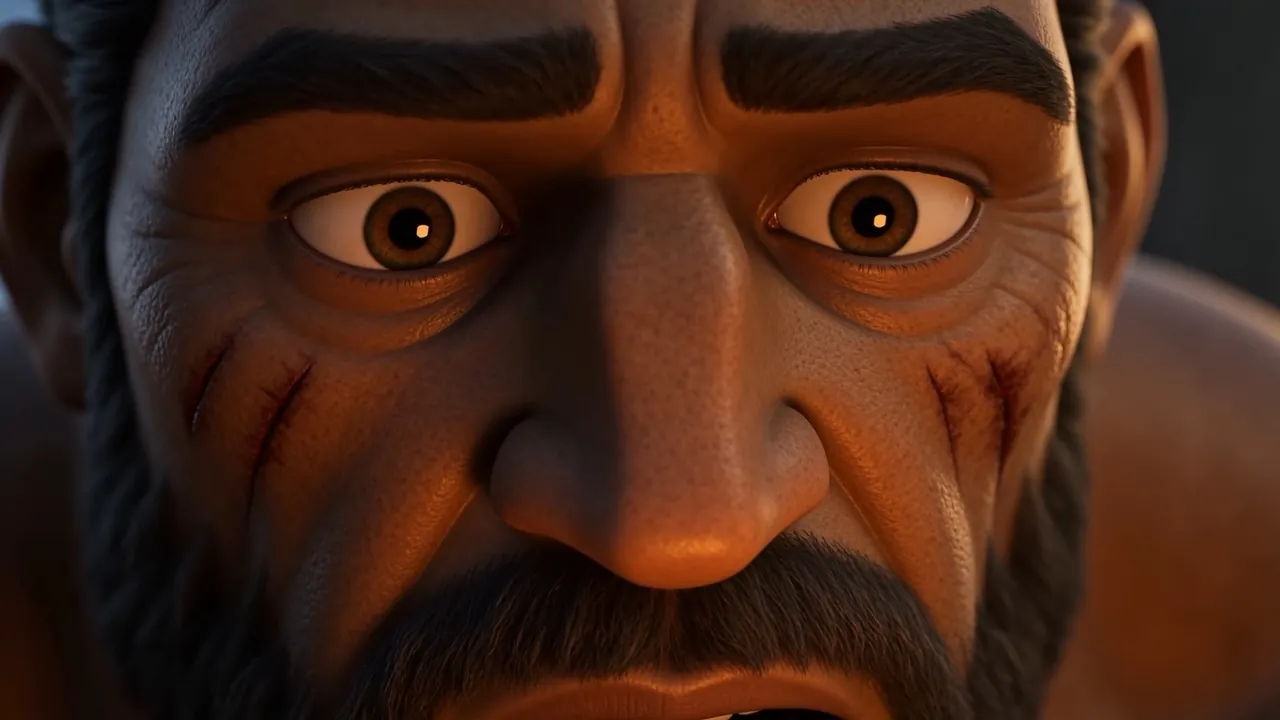
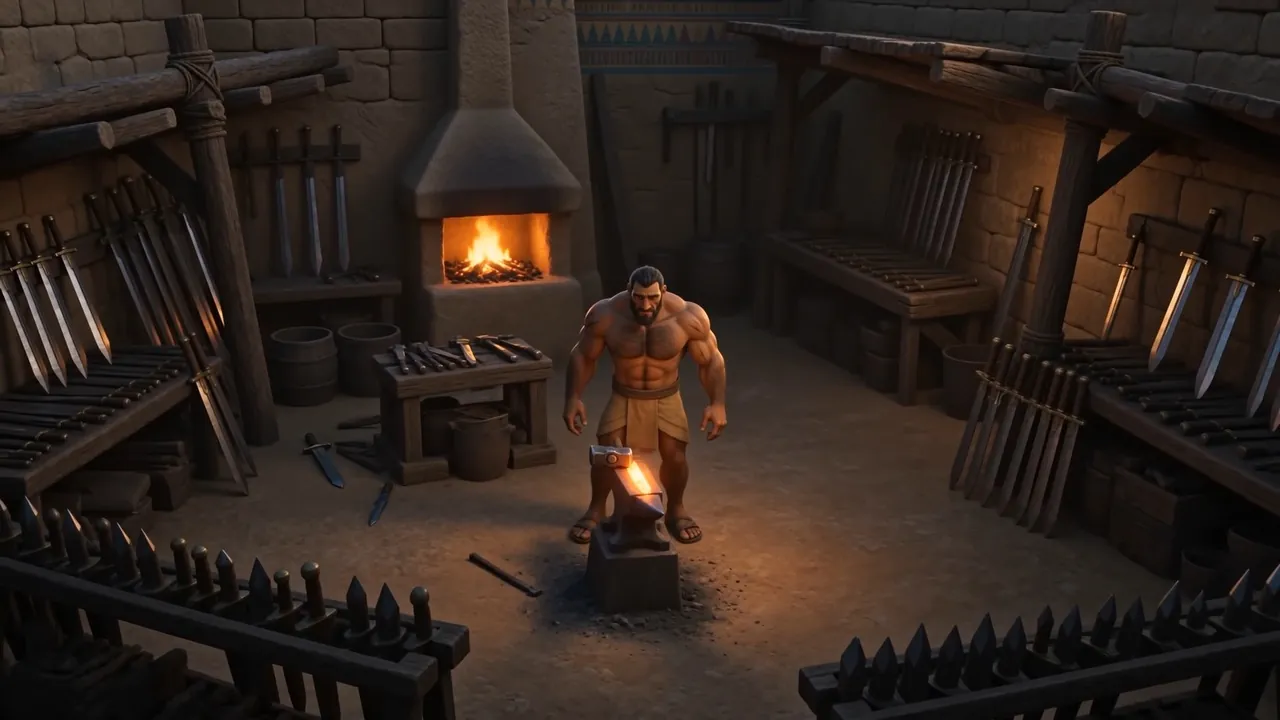
It is worth remembering what this city actually was. Nineveh ran an empire on terror as deliberate policy — deportations, flayings, cities emptied — and it was very good at it. There is a shot of a scarred man's eyes, and then a shot of a forge with swords racked floor to ceiling. This is the place that has been coming for Israel for a hundred years. Nahum 3 : 1
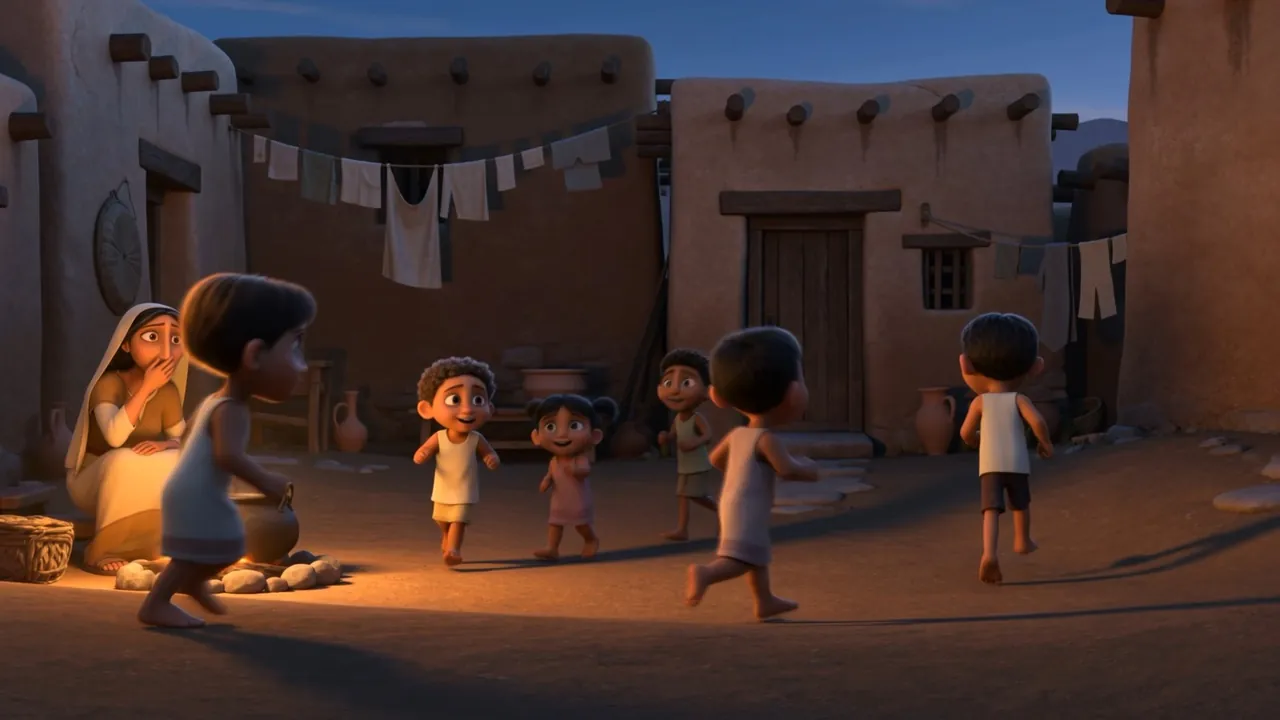
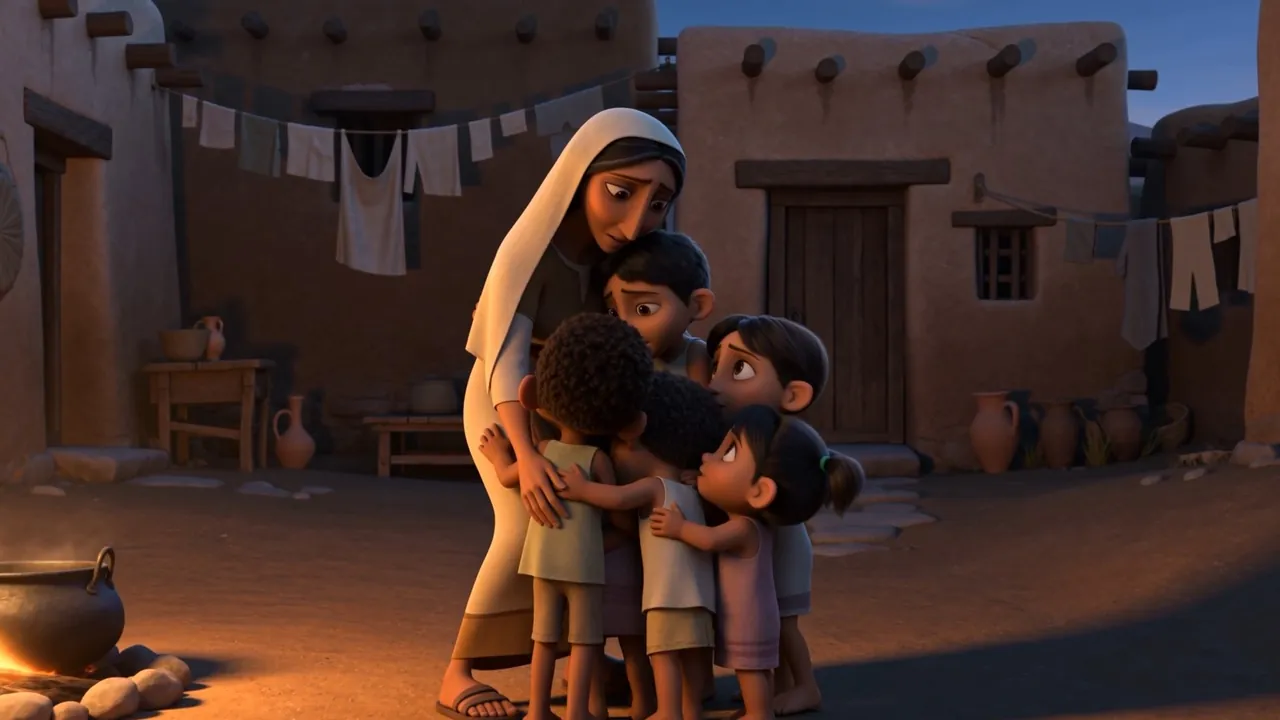
And also, at the same time, this: a courtyard at dusk with washing on the line and children running about in it, and a mother who hears something in the street and gathers all of them in against her at once. Both things are true of the same city. That is the difficulty the whole book is built on, and Jonah never once manages to hold both. Jonah 4 : 11
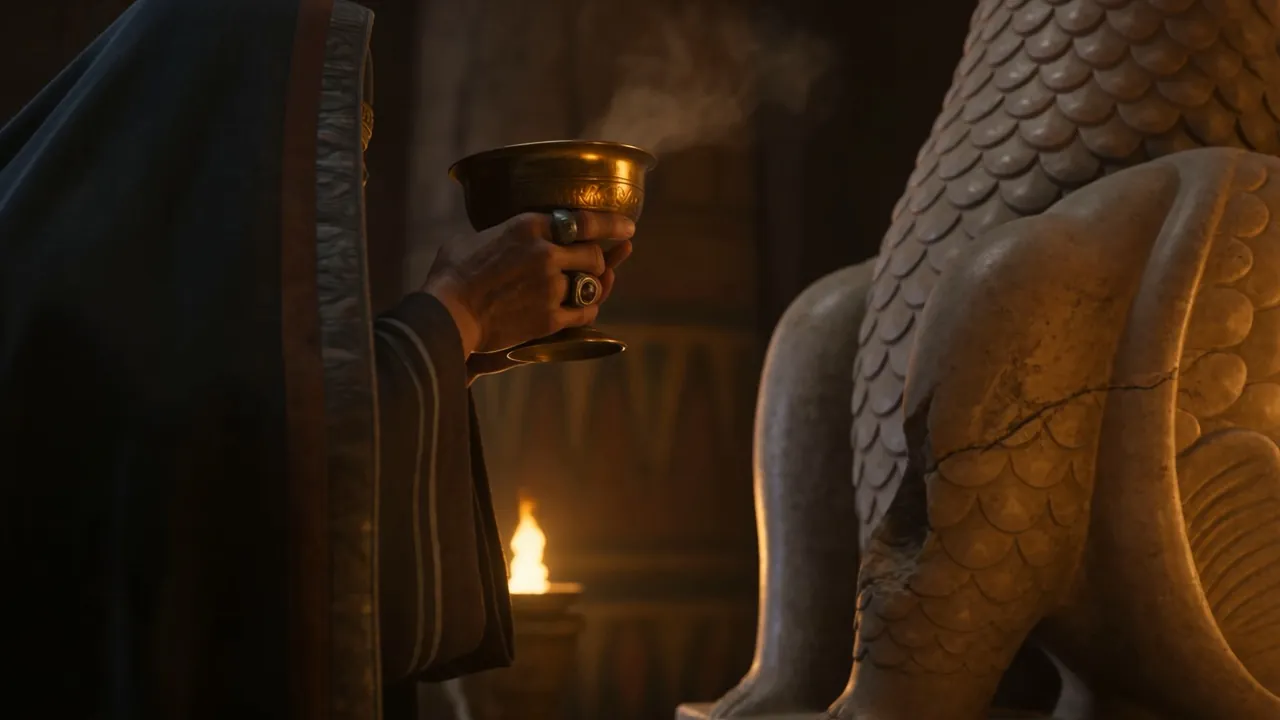
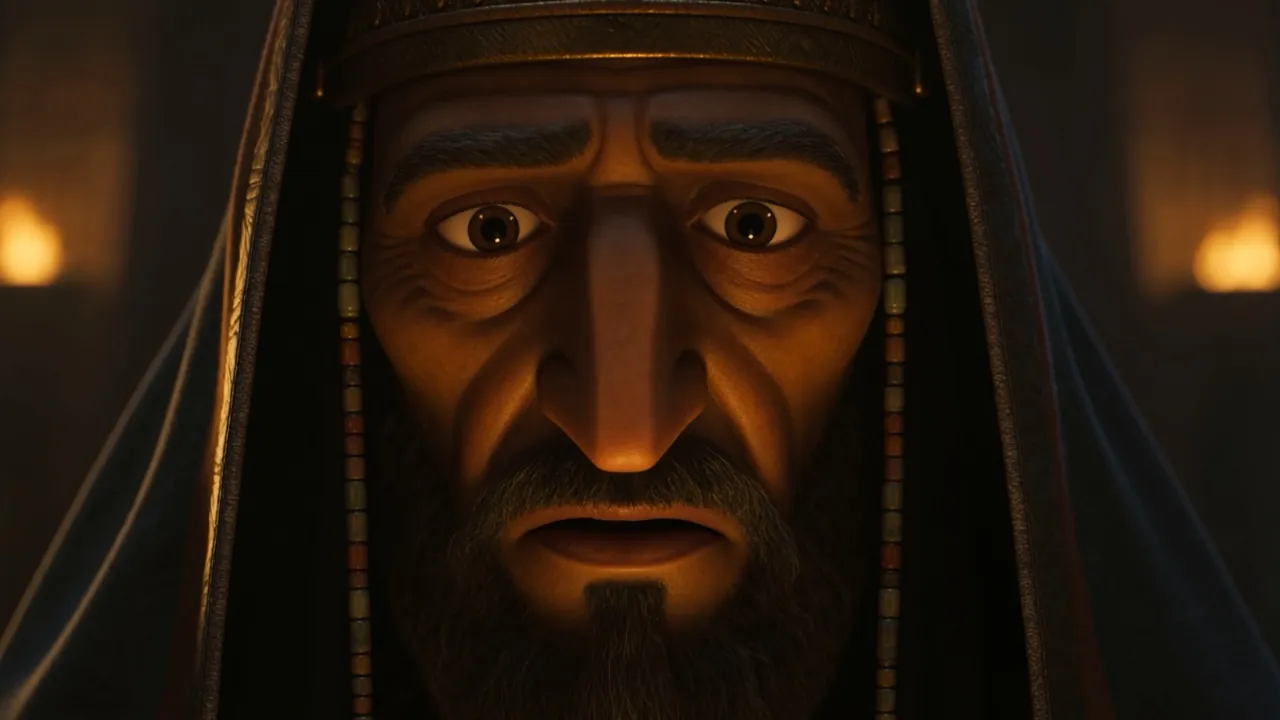
It takes a while to climb. First the streets, then the districts, then the officials, and finally a hand with a heavy ring setting down a gold cup beside a stone lion — and the face of the most powerful man in the world listening to a report he does not like at all. Nobody has arrested the foreigner. That is somehow worse. Jonah 3 : 6
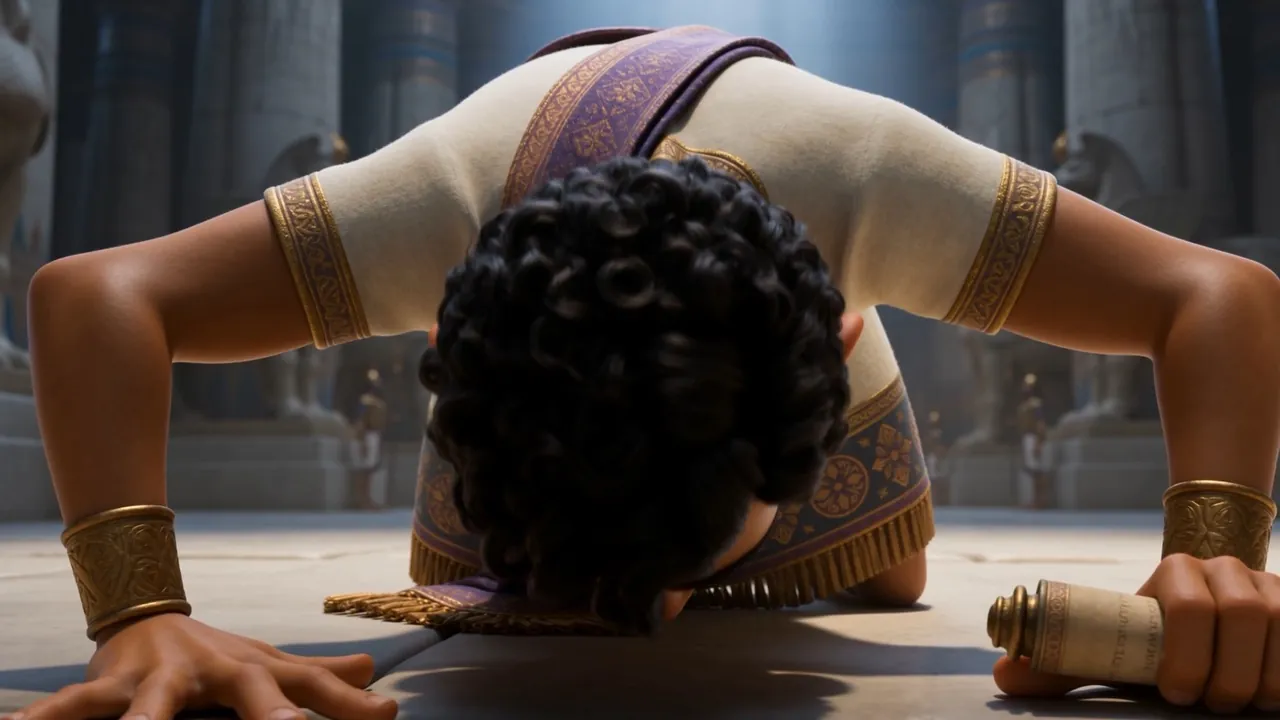

Somebody has to actually say it, and that job goes to a young official who is plainly terrified. He goes flat on the marble before he speaks a word, and there is a close-up of his face with one eye squeezed shut, because historically the people who brought this king bad news did not have long careers. He says it anyway. Jonah 3 : 6
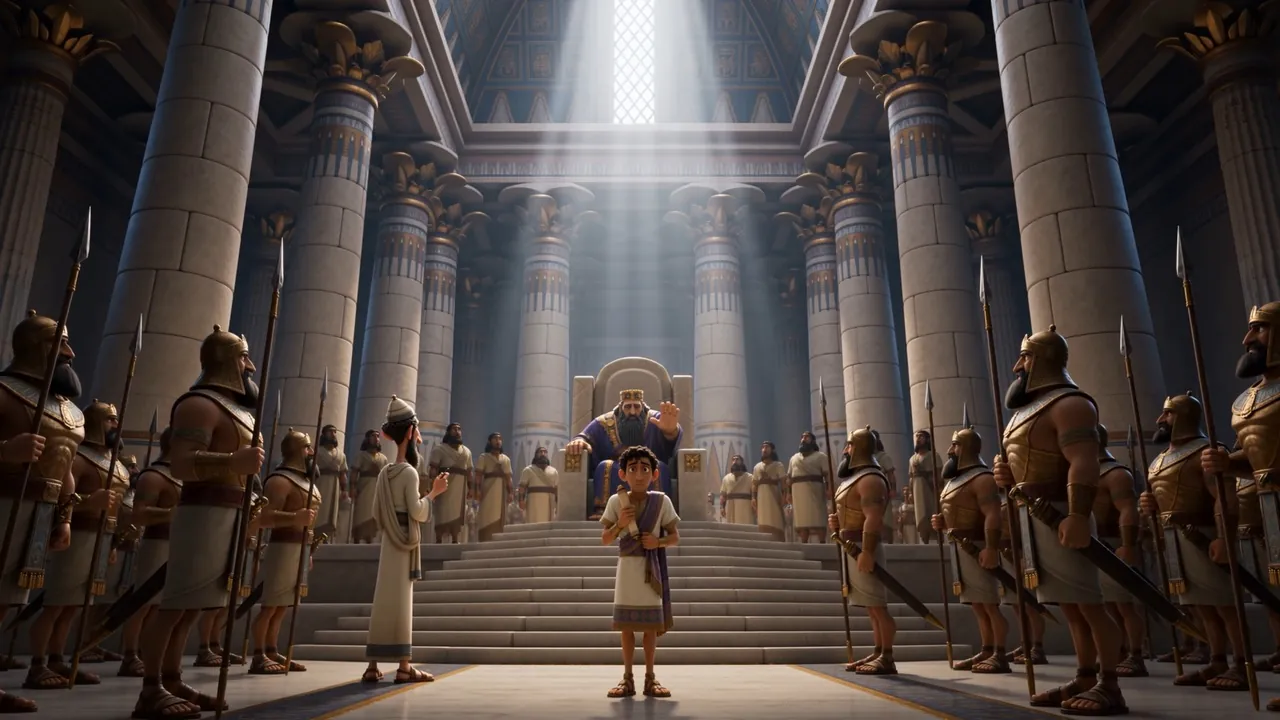
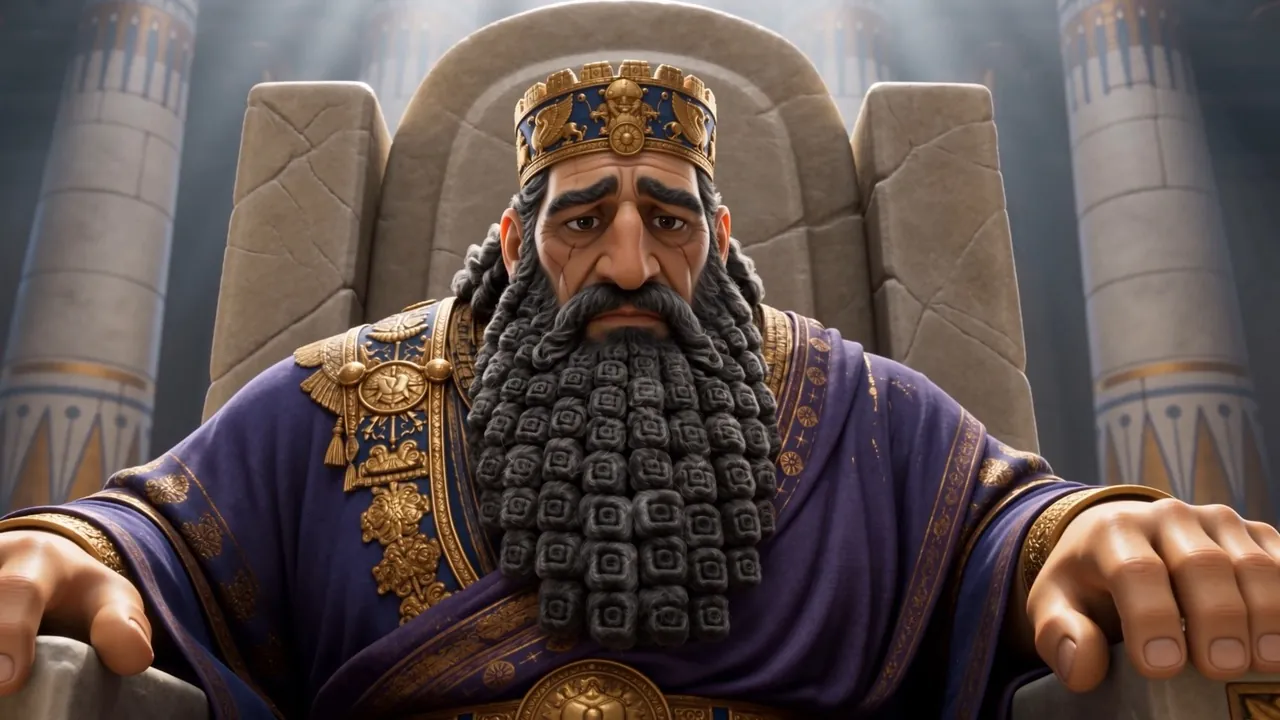
The hall he says it in is designed to end conversations — a hundred spearmen down each side and a throne at the top of a staircase. And the king listens. And then the most powerful man in the world gets up, takes off his robe, puts on sacking and sits down in ashes, which is the single least likely sentence in the Old Testament. Jonah 3 : 6
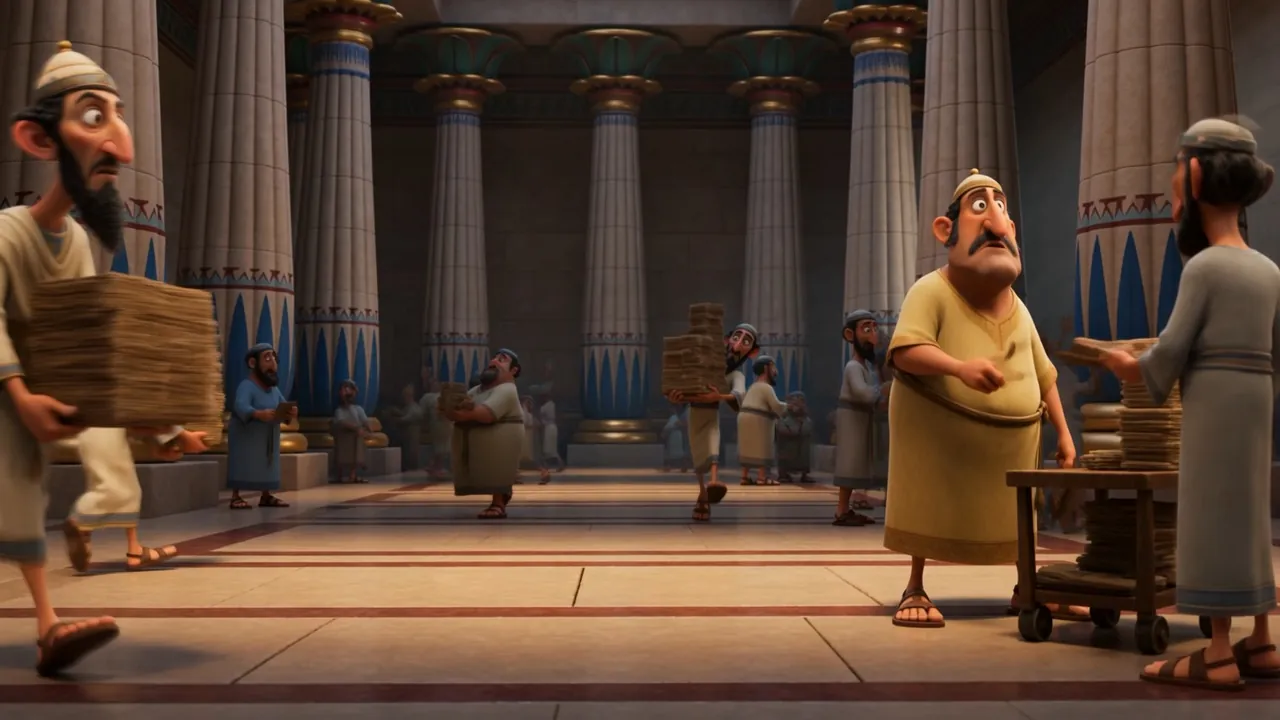
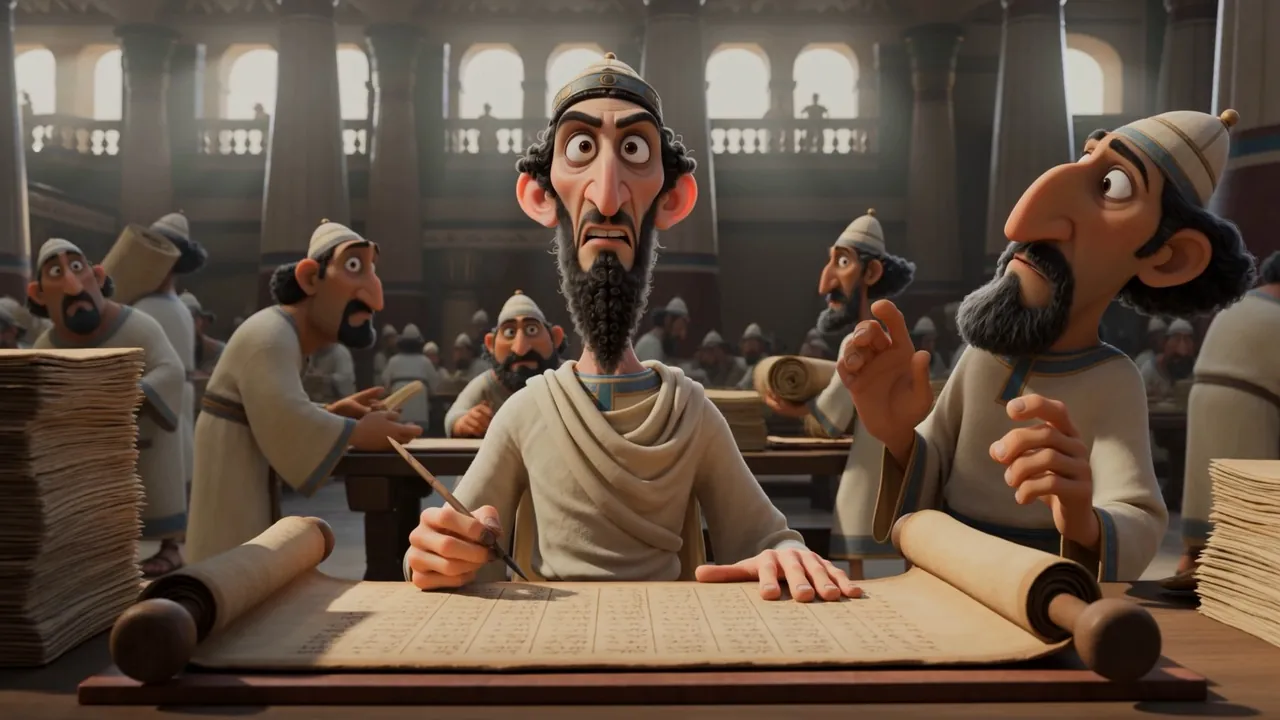
Then he makes it law, and the wording is remarkable for a man in his position: let everyone turn from his evil way and from the violence that is in his hands — which is a king naming his own state's business as the problem. Scribes copy it out by the crateload and runners carry it into every quarter of a city three days wide. Jonah 3 : 7–8
Let them turn, every one, from his evil way and from the violence that is in his hands.
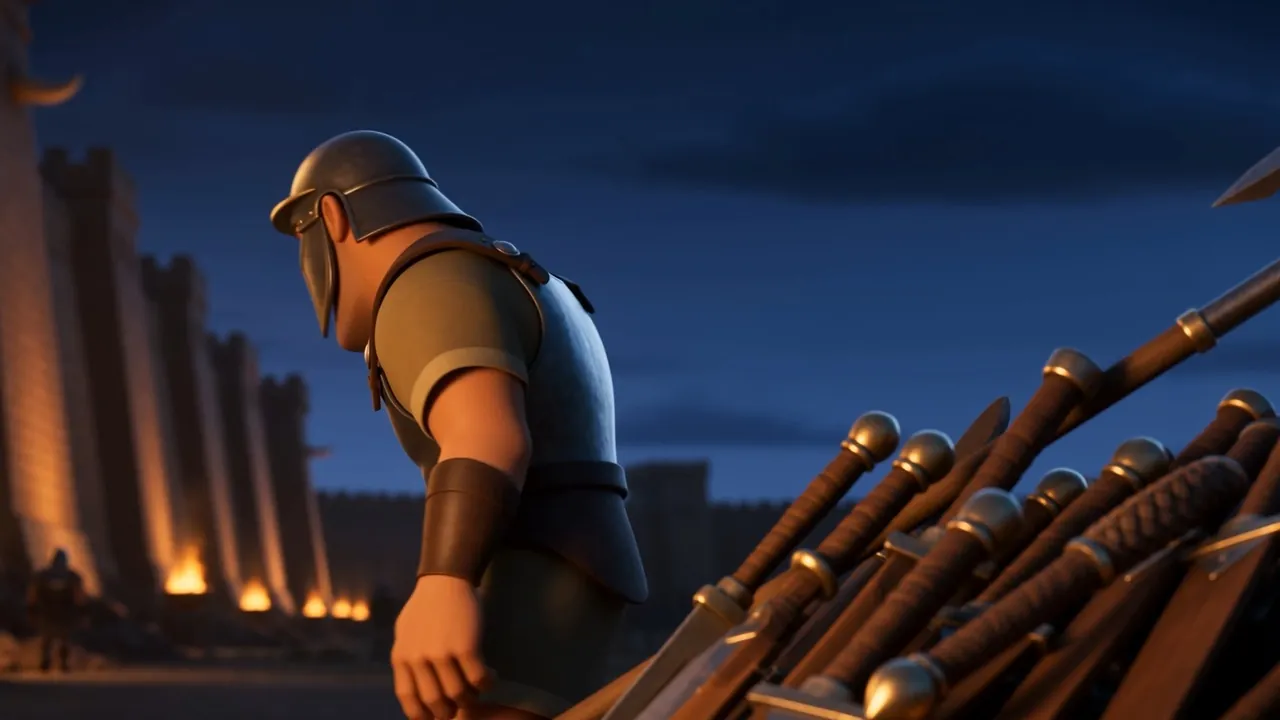
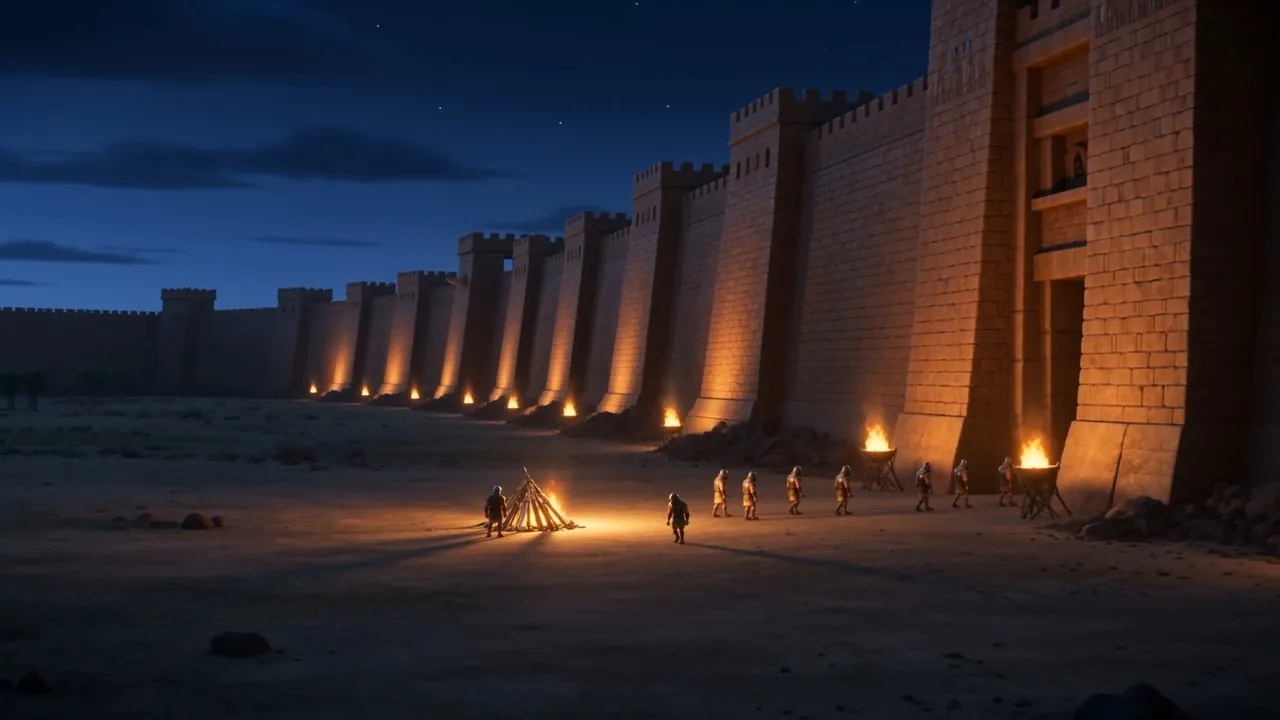
And here is how a nation repenting of violence is shown, which is better than any speech: one soldier walks to the base of the city wall in the dark and lays his spears down against it. Then another. And then a wide shot of the wall running off into the night with braziers along it and weapons stacked the whole way. Nobody ordered a parade. They just stopped. Jonah 3 : 8
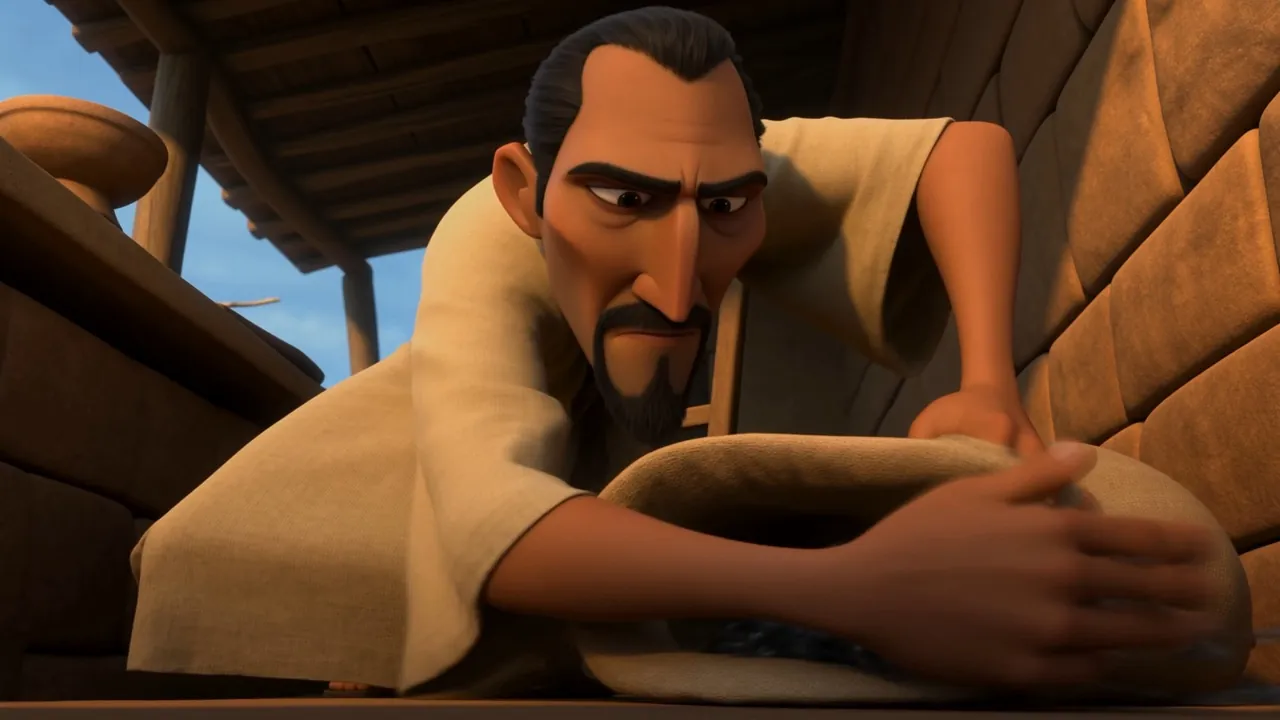
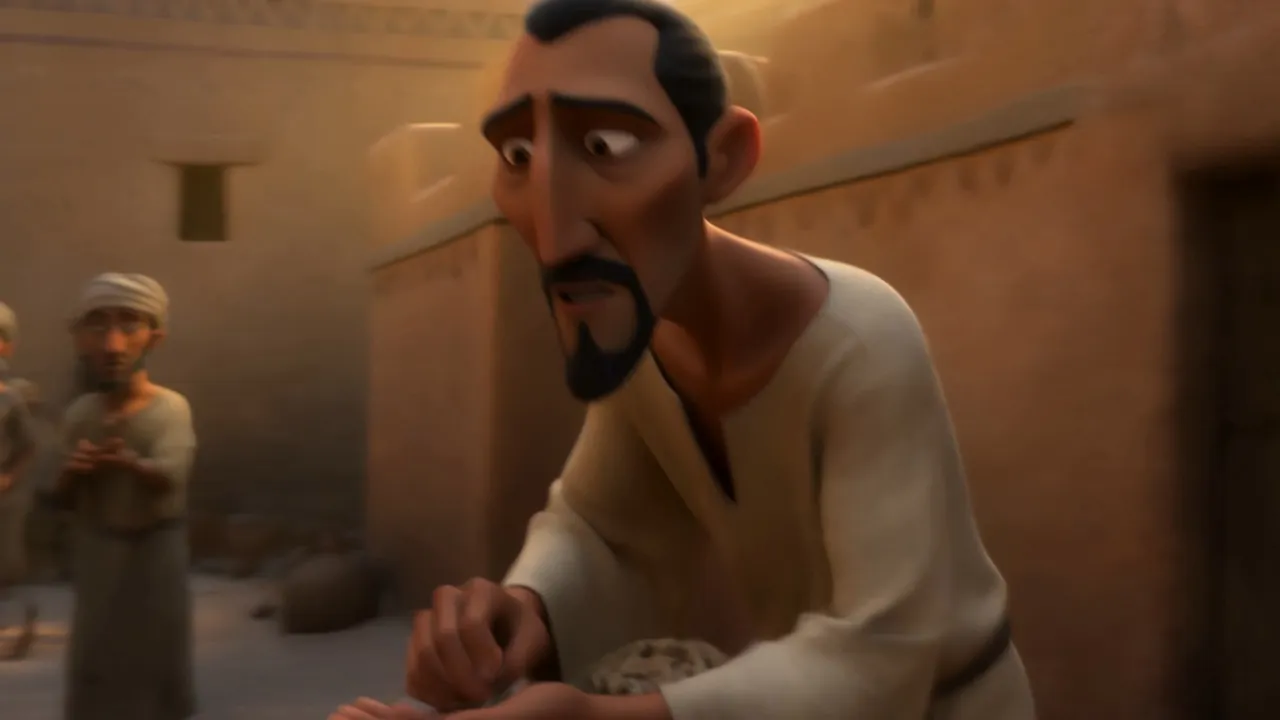
It goes all the way down to the small stuff. In a back street a grain merchant leans over his sacks with a very particular expression — the face of somebody recalculating something he has been quietly getting away with for years — and then counts out coins he does not have to count out. Repentance in this city is mostly admin, and it is mostly done by people nobody is watching. Jonah 3 : 8
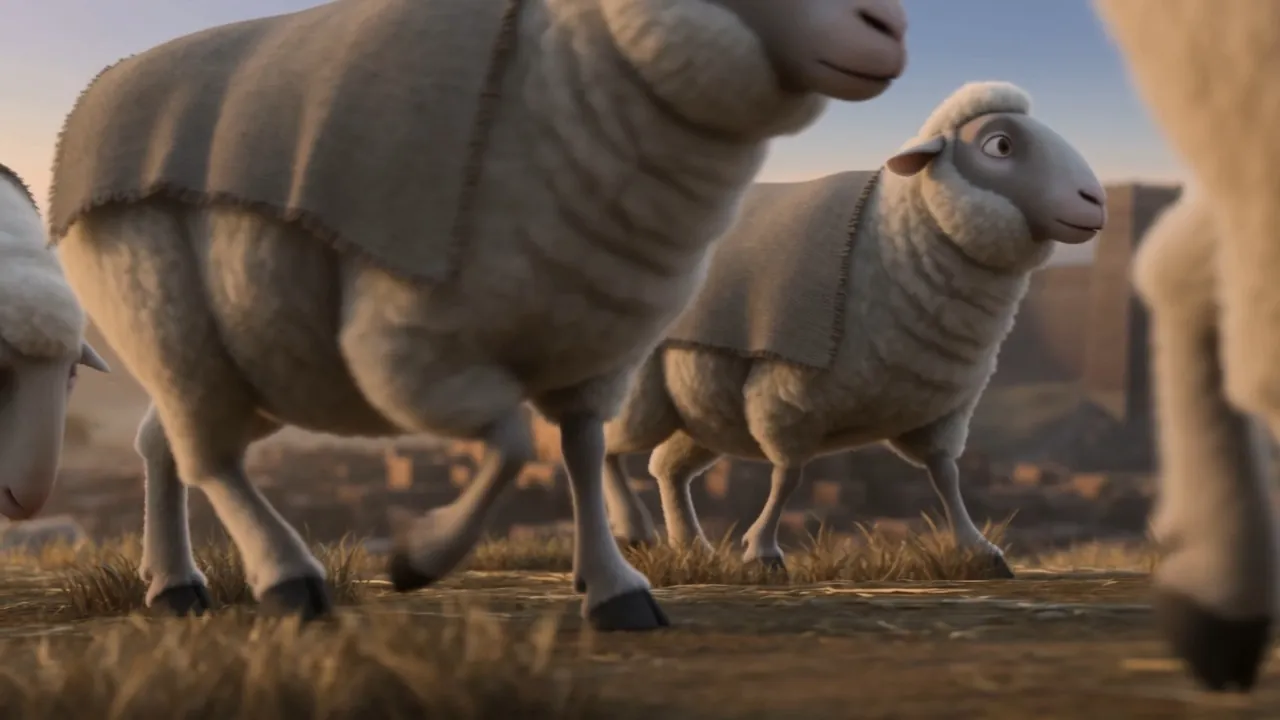
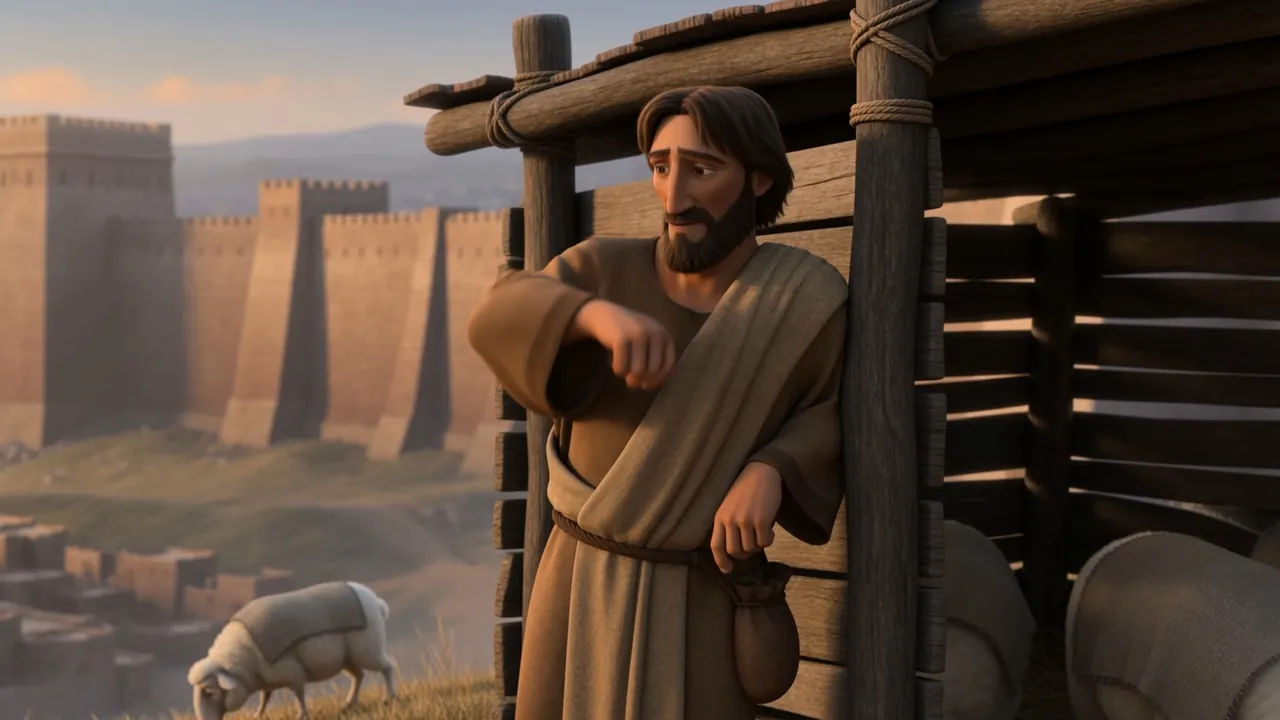
And then the detail everybody assumes was invented for the cartoon, which is in fact word for word in the text: let neither man nor beast, herd nor flock, taste anything… but let them be covered with sackcloth. So the sheep are put in sacking. Their shepherd leans on the pen looking out at his city, and does not crack a smile about it once. Jonah 3 : 7–8
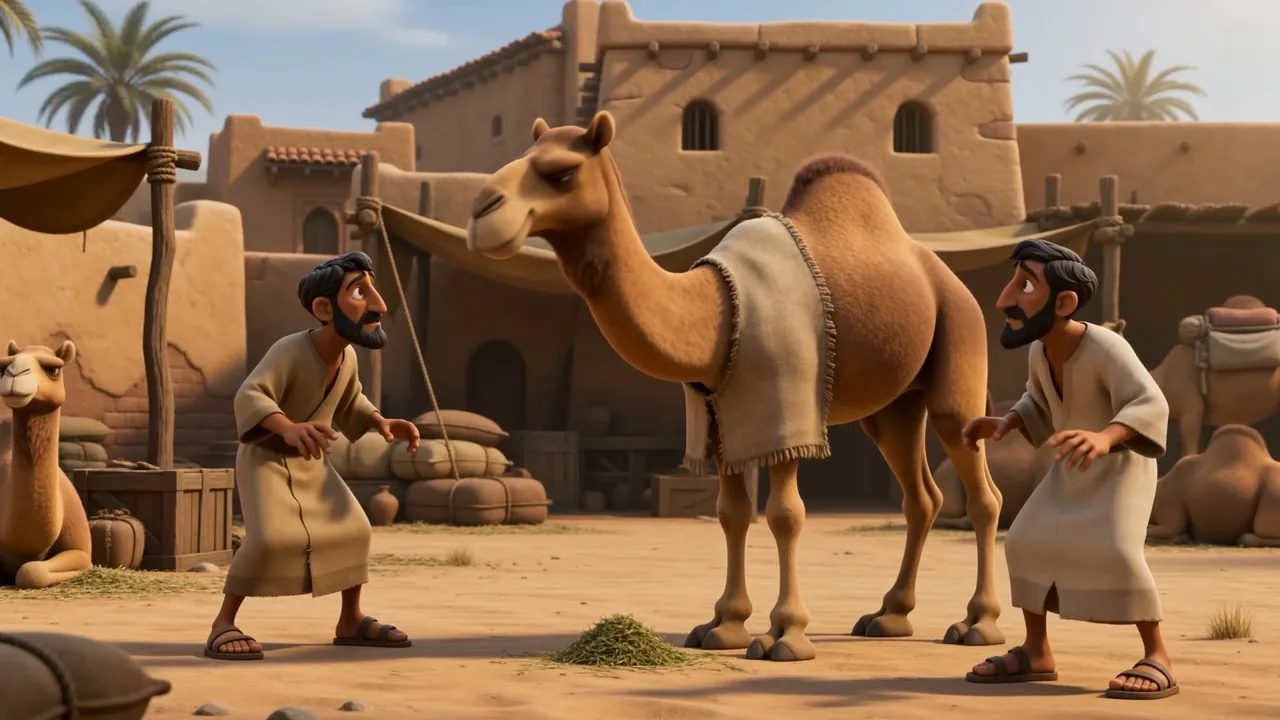
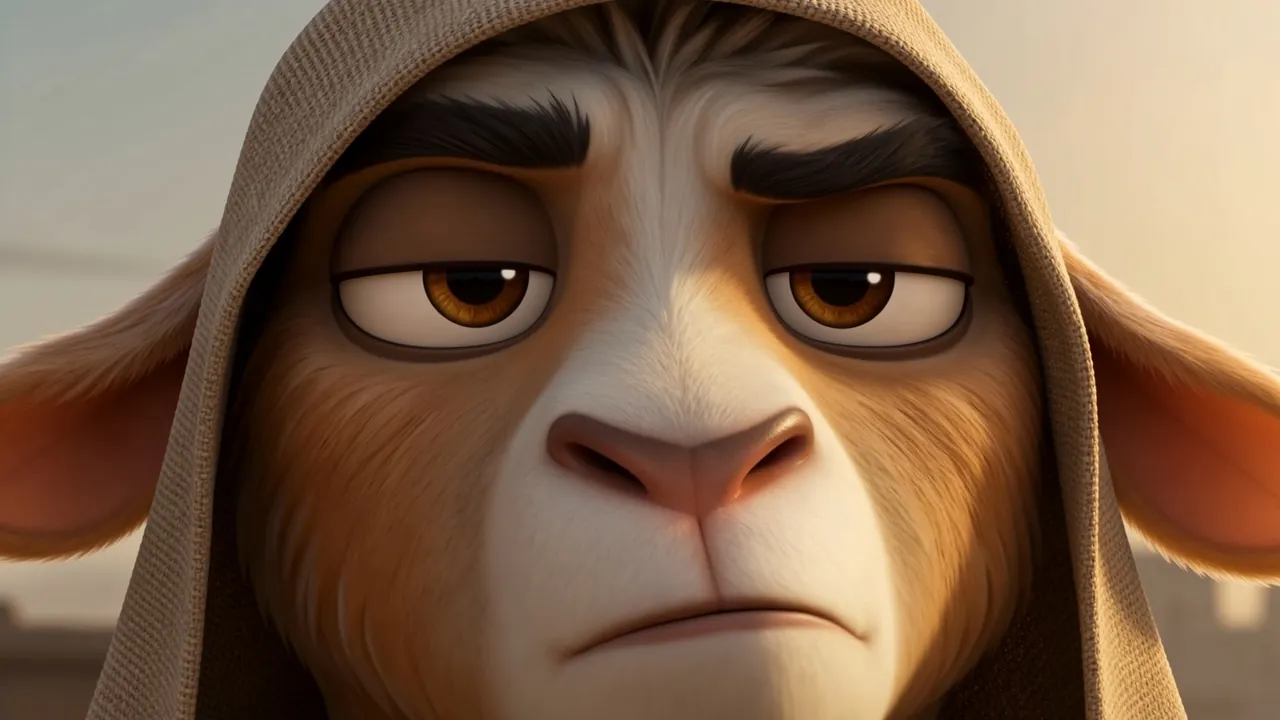
The camels get theirs. The cattle get theirs. And then there is a close-up of a goat in a sackcloth hood with its ears out sideways and an expression of such total dejection that it should not be legal, sitting on a wall over the rooftops looking genuinely sorry for what it has done. It is the funniest frame in the book and it is also, technically, scripture. Jonah 3 : 8
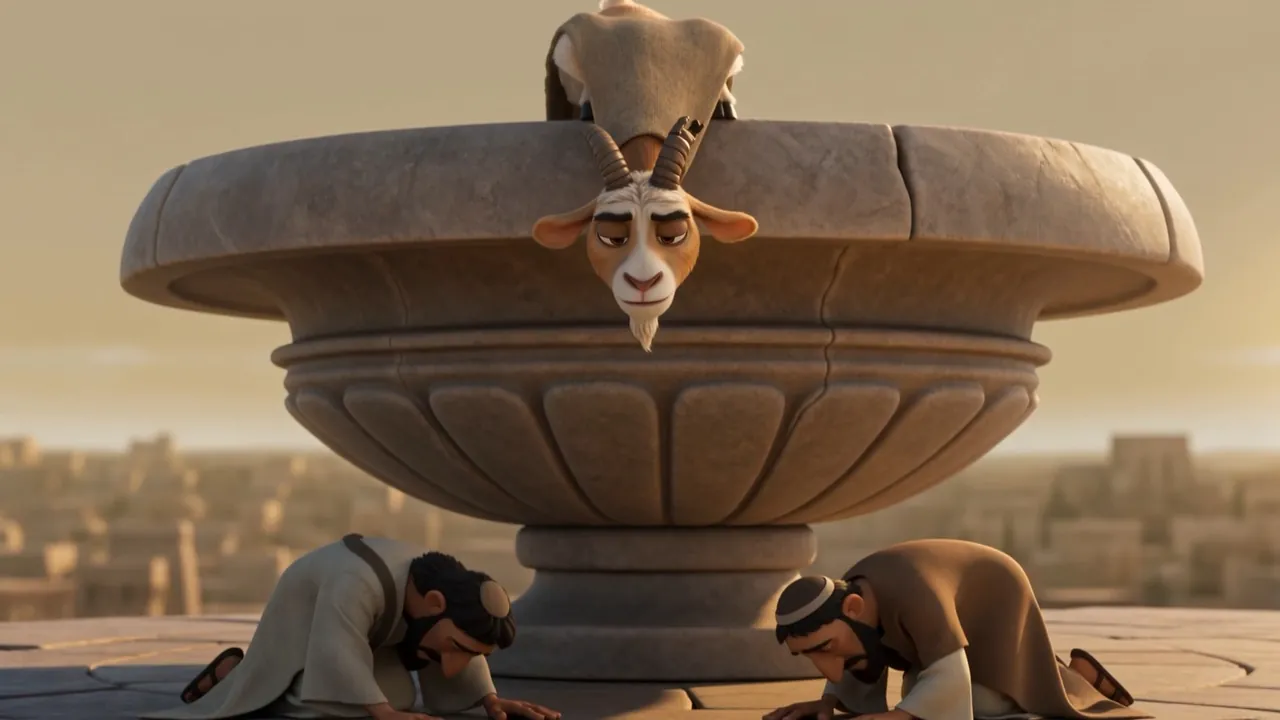

Two men go down flat on the paving beside a public basin with the goat looking on over the rim. A baker the size of a door stands over his loaves with his shoulders down, unable to do the one thing he knows how to do. Nobody is performing. The whole city has simply stopped what it was doing, at the same time, on the word of a foreigner. Jonah 3 : 5
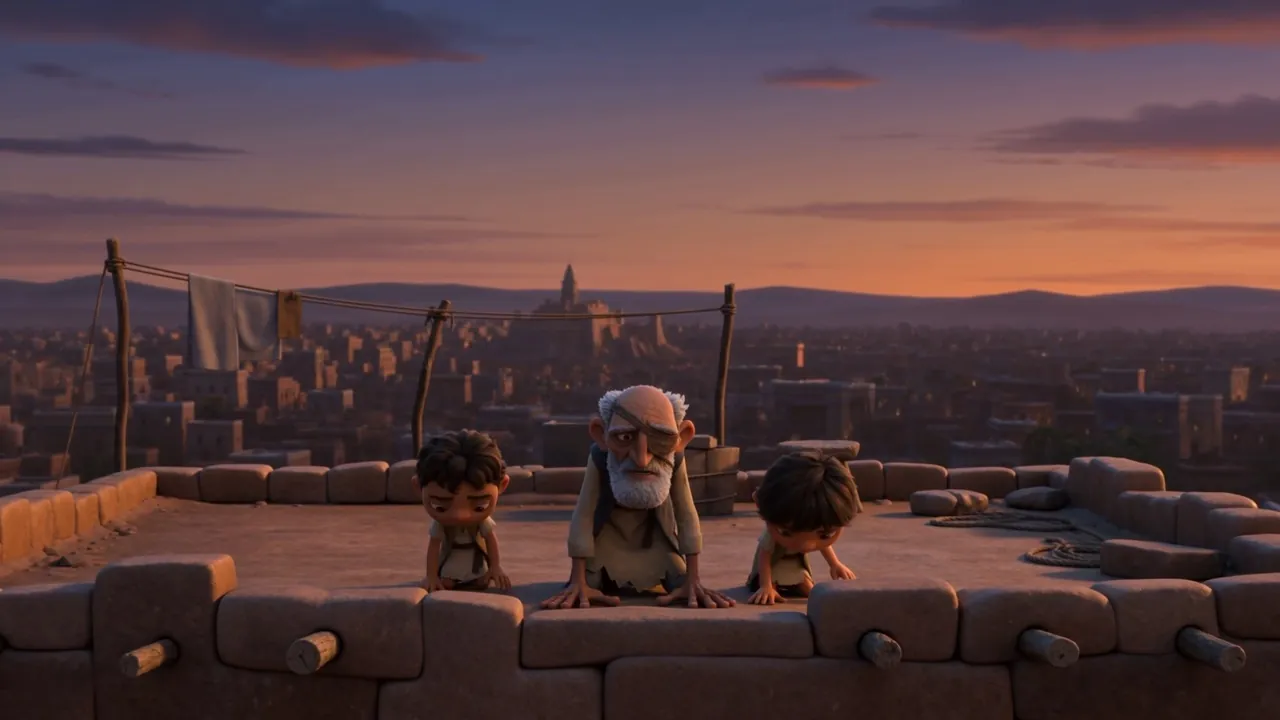
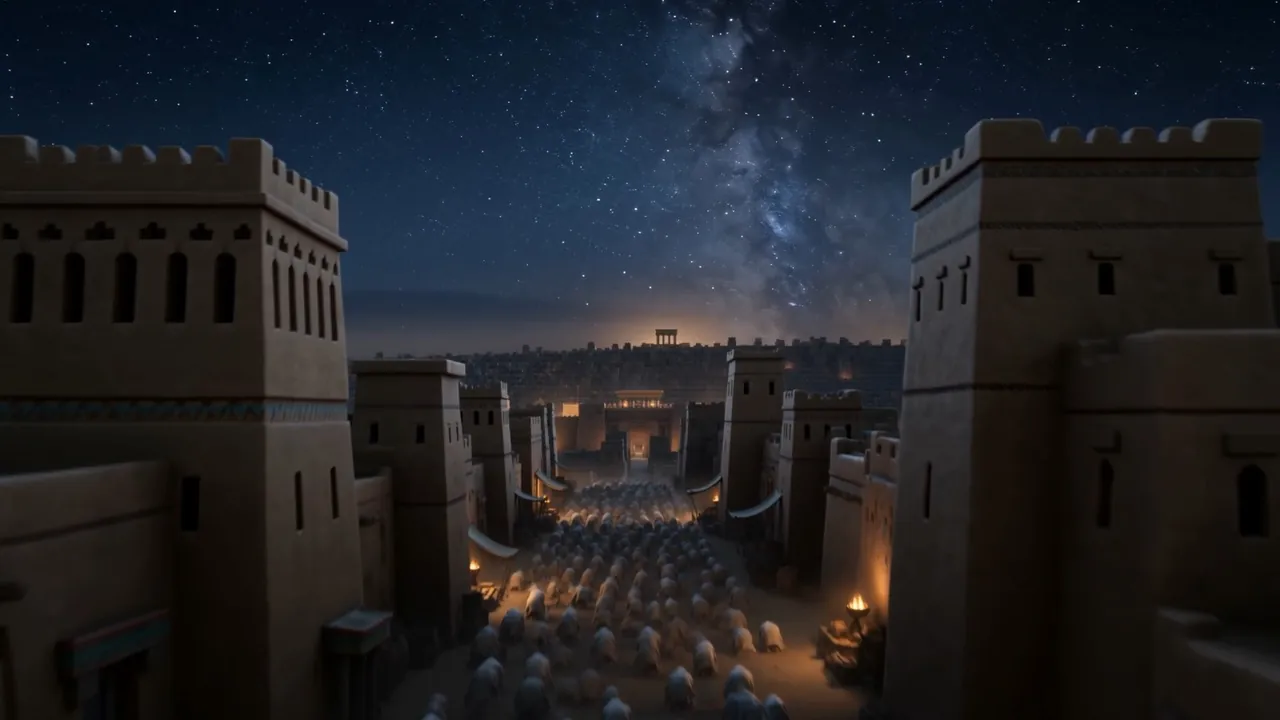
And it does not last an evening. On a rooftop above the city an old man kneels at the parapet at first light with a grandchild on either side of him, all three of them bowed. Down in the streets people stay out all night under the stars with the braziers lit, in rows, waiting — for forty days, without knowing whether any of it is working. Jonah 3 : 5
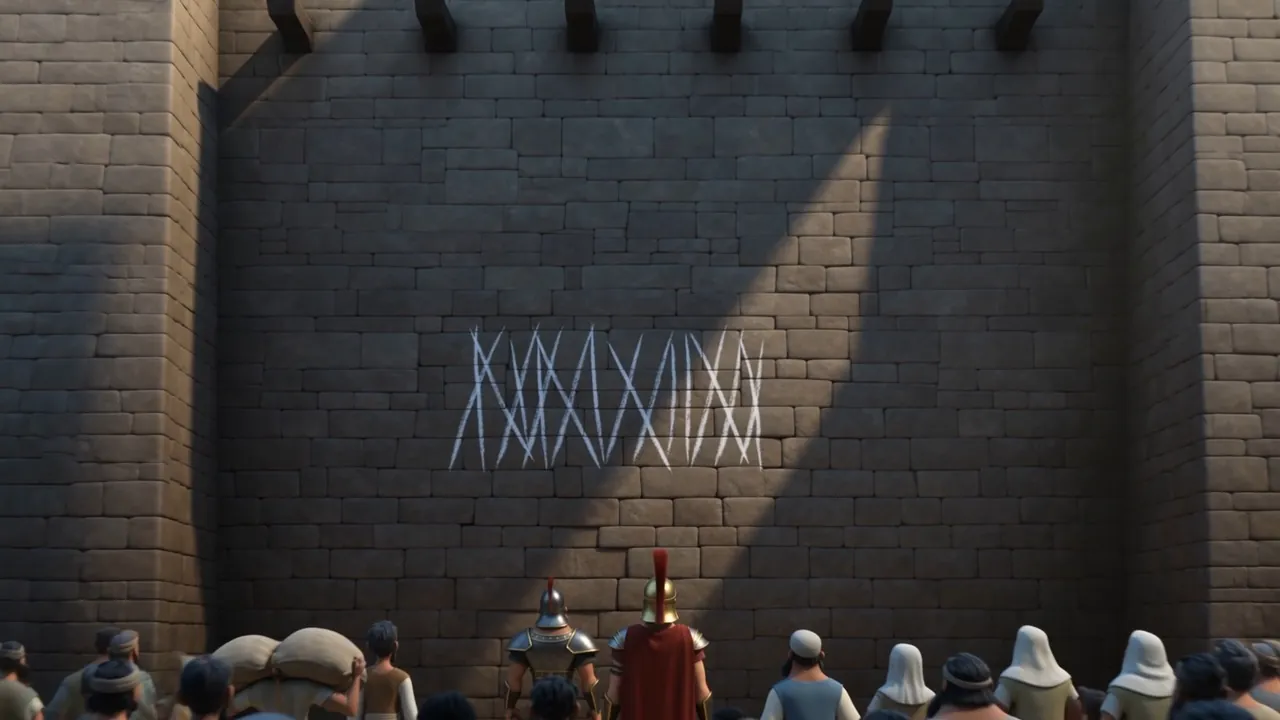
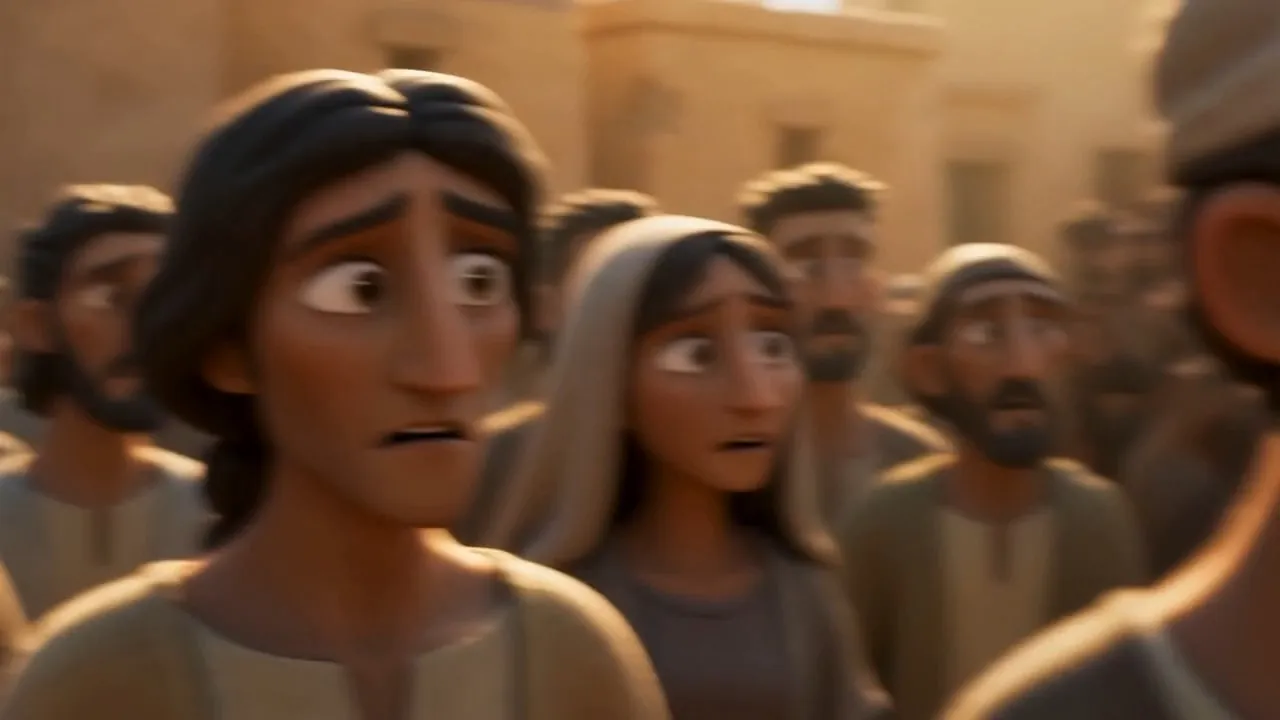
Somebody starts keeping score on the city wall — a row of tally marks going up one a day where everyone can see them, which is either faith or a countdown depending on the hour. And on the fortieth morning the streets fill before sunrise with people who did not go to bed, standing there watching the sky over their own rooftops. Jonah 3 : 4
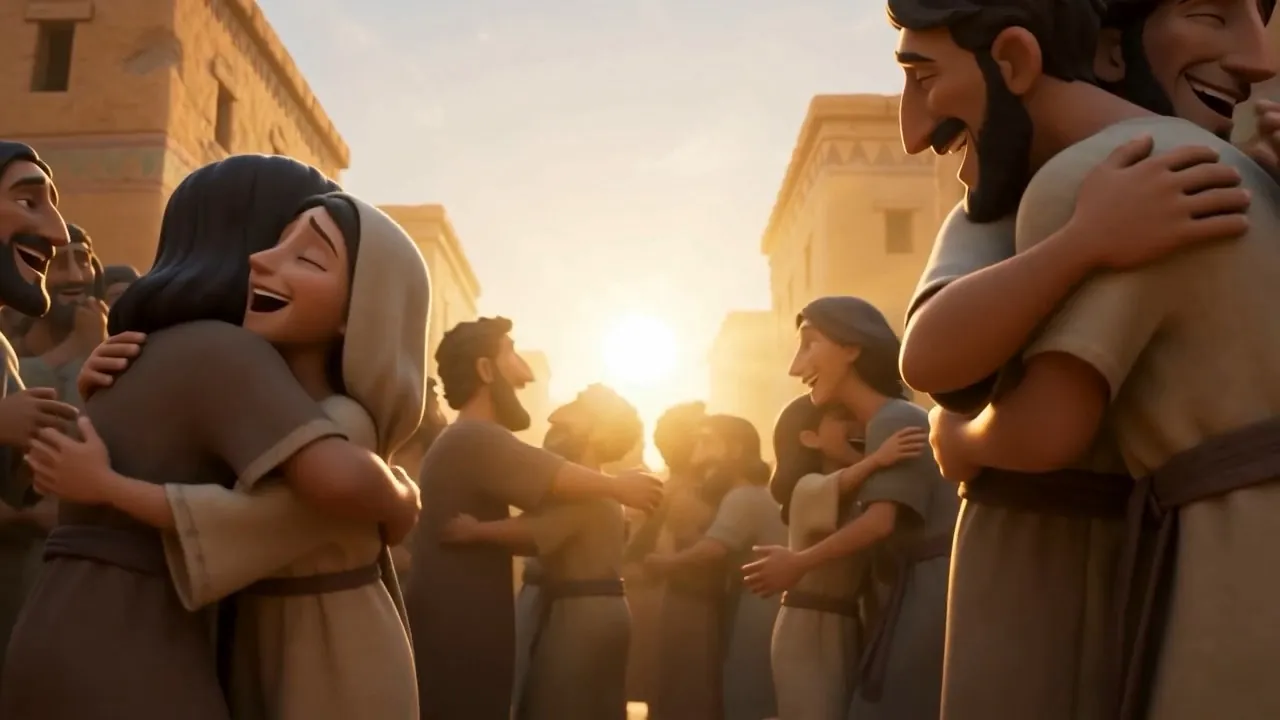
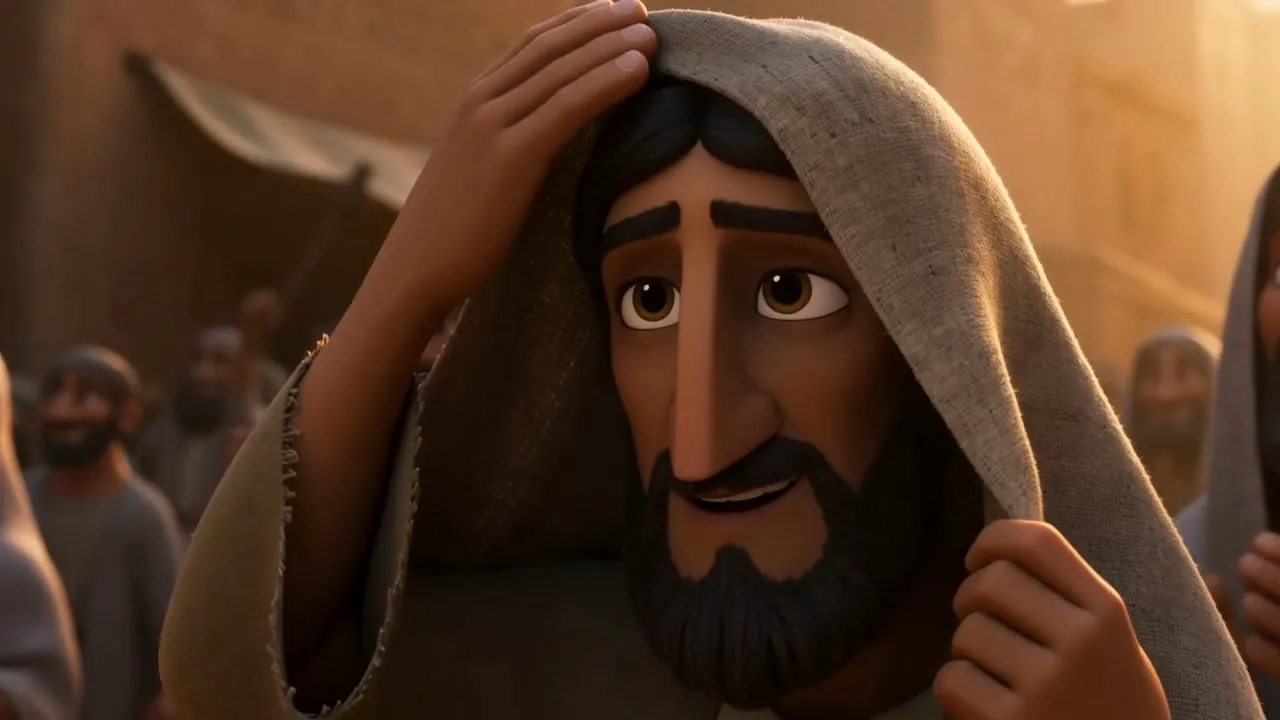
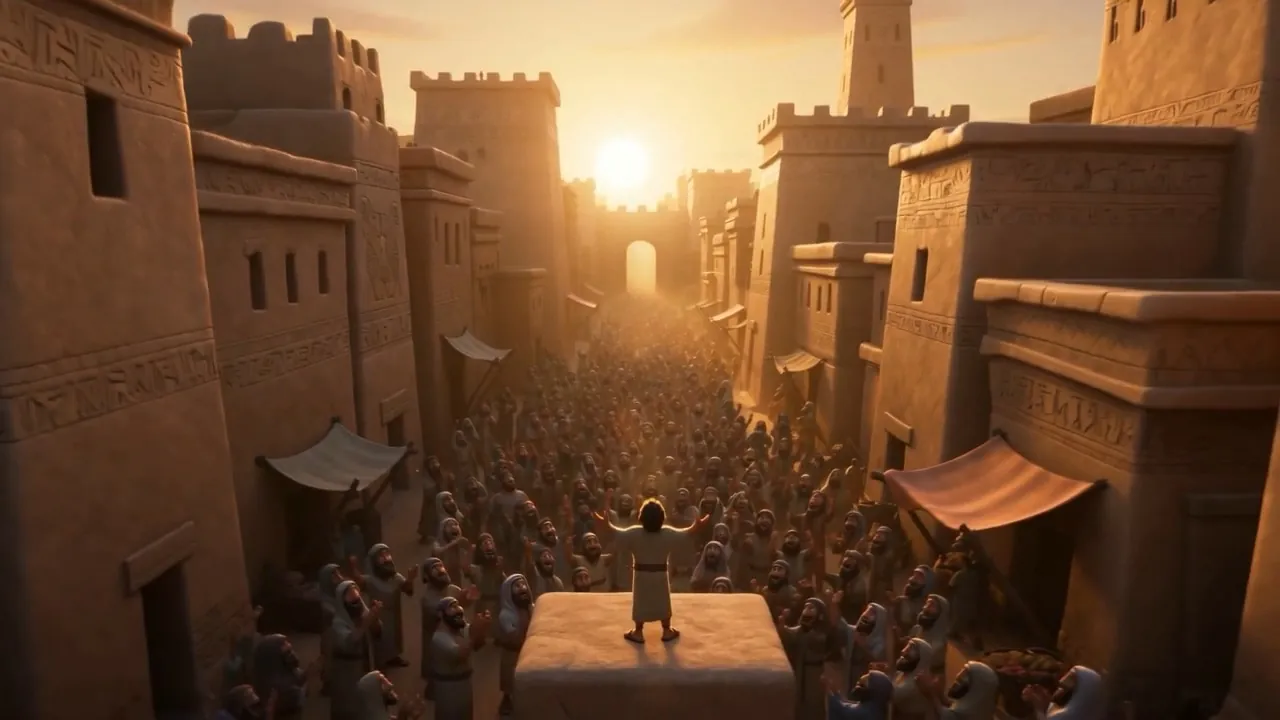
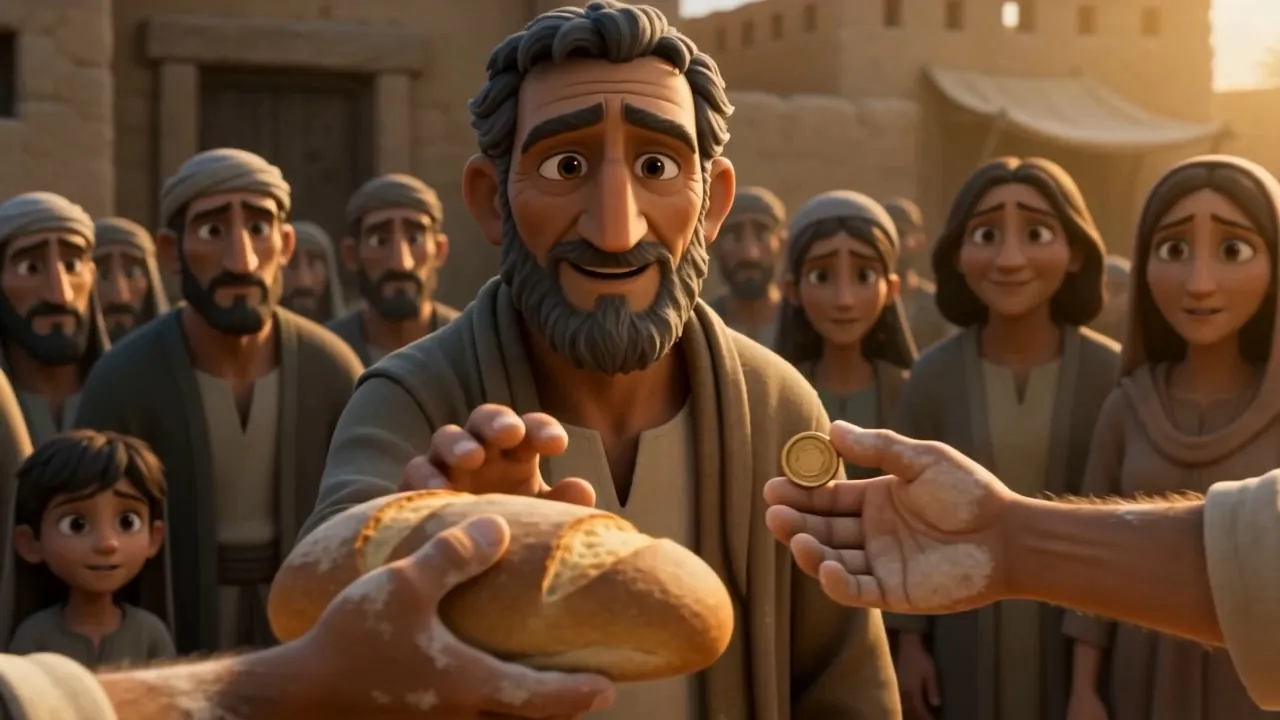
And the sun comes up, and nothing happens. Nothing at all. God saw their works, that they turned from their evil way, and God relented. A man pulls the sacking off his head and cannot speak. The street comes apart with people holding each other. And the baker starts handing out loaves and waving the money away, which is how you can tell it was real. Jonah 3 : 10
After the story
He named the violence. His own.
The king's decree is the most surprising thing in the book and almost nobody quotes the second half of it. Let them turn every one from his evil way — fine, standard — and from the violence that is in his hands. That is the head of the Assyrian state, whose entire foreign policy was industrialised terror, standing up in front of his own court and naming the thing his kingdom was built on. He does not order the foreigner arrested. He does not consult his priests. He takes off the robe, sits down in the ash, and makes the fast universal — down to the livestock, which is why there is a goat in a sackcloth hood looking genuinely ashamed of itself on a wall over the city. And then forty days of tally marks, and a morning where nothing happens at all.
Voices of the sackcloth · hover or tap to turn
The King
"Who knows whether God will not turn and relent, and turn away from his fierce anger, so that we might not perish?"
— Jonah 3:9
The People
"God saw their works, that they turned from their evil way. God relented of the disaster…"
— Jonah 3:10
The Goat
"Let them be covered with sackcloth, both man and animal, and let them cry mightily to God."
— Jonah 3:8The Book of Jonah
How closely were you watching?
1. What does the king of Nineveh do?
Jonah 3:6 — the most powerful man in the world, in the ash, on the word of a foreign stranger.
2. What does his decree say to turn from?
Jonah 3:8. A king naming his own empire's core business as the sin.
3. Who is included in the fast?
Jonah 3:7 — neither man nor beast. Which is where the sackcloth goat comes from.
4. What happens on the fortieth day?
Jonah 3:10. God saw their works, that they turned, and did not do it.
What this story teaches
He repented of the violence by name.
Not a generic apology. The king of Assyria stood up and identified the violence in his own hands as the thing to turn from — which is the hardest sentence any head of state ever has to say.
"Let them turn everyone from his evil way, and from the violence that is in his hands." Jonah 3:8The animals are in the text.
Jonah 3:7–8. Neither man nor beast, herd nor flock. The sackcloth goat is not a cartoon liberty; it is the decree, filmed.
"Let neither man nor animal, herd nor flock, taste anything…" Jonah 3:7Forty days of not knowing.
They had no promise — only a threat with no “unless” in it. They fasted for forty days on the off-chance, and only found out on the last morning.
"In forty days, Nineveh will be overthrown!" Jonah 3:4Read the scripture itself. Jonah 3 · World English Bible
Jonah 3
1Yahweh’s word came to Jonah the second time, saying,
2“Arise, go to Nineveh, that great city, and preach to it the message that I give you.”
3So Jonah arose, and went to Nineveh, according to Yahweh’s word. Now Nineveh was an exceedingly great city, three days’ journey across.
4Jonah began to enter into the city a day’s journey, and he cried out, and said, “In forty days, Nineveh will be overthrown!”
5The people of Nineveh believed God; and they proclaimed a fast, and put on sackcloth, from their greatest even to their least.
6The news reached the king of Nineveh, and he arose from his throne, and took off his royal robe, covered himself with sackcloth, and sat in ashes.
7He made a proclamation and published through Nineveh by the decree of the king and his nobles, saying, “Let neither man nor animal, herd nor flock, taste anything; let them not feed, nor drink water;
8but let them be covered with sackcloth, both man and animal, and let them cry mightily to God. Yes, let them turn everyone from his evil way, and from the violence that is in his hands.
9Who knows whether God will not turn and relent, and turn away from his fierce anger, so that we might not perish?”
10God saw their works, that they turned from their evil way. God relented of the disaster which he said he would do to them, and he didn’t do it.
World English Bible (WEB) — a public-domain modern English translation. Read it freely, share it freely.
The Book of Jonah — animated film 30% in production
These scenes are real frames from the film.
Help us finish it — and every story like it — free for the world.