The Book of Job · Part Two
My Redeemerlives.
The silence ends, and three friends who came to comfort him spend thirty chapters proving he deserved it. Out of the middle of that argument, with nothing resolved and nothing explained, Job says the most extraordinary sentence in the book. Every scene below is a real frame from our animated film.
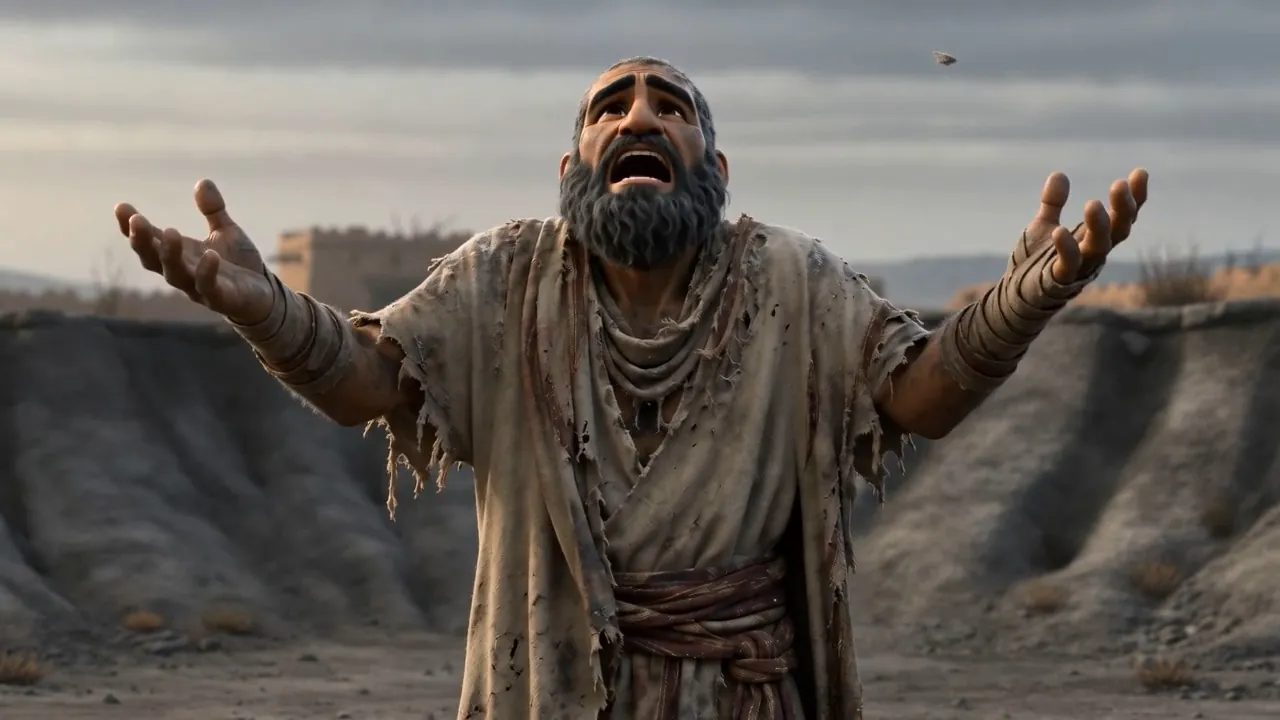
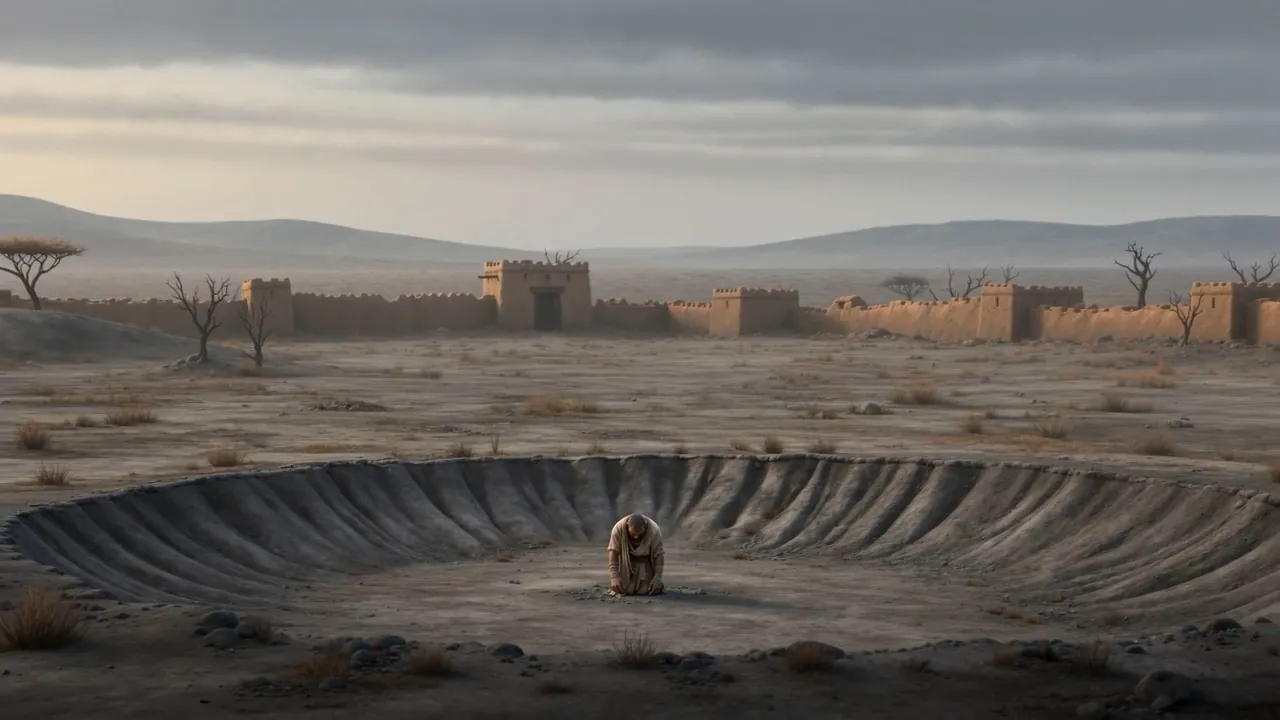
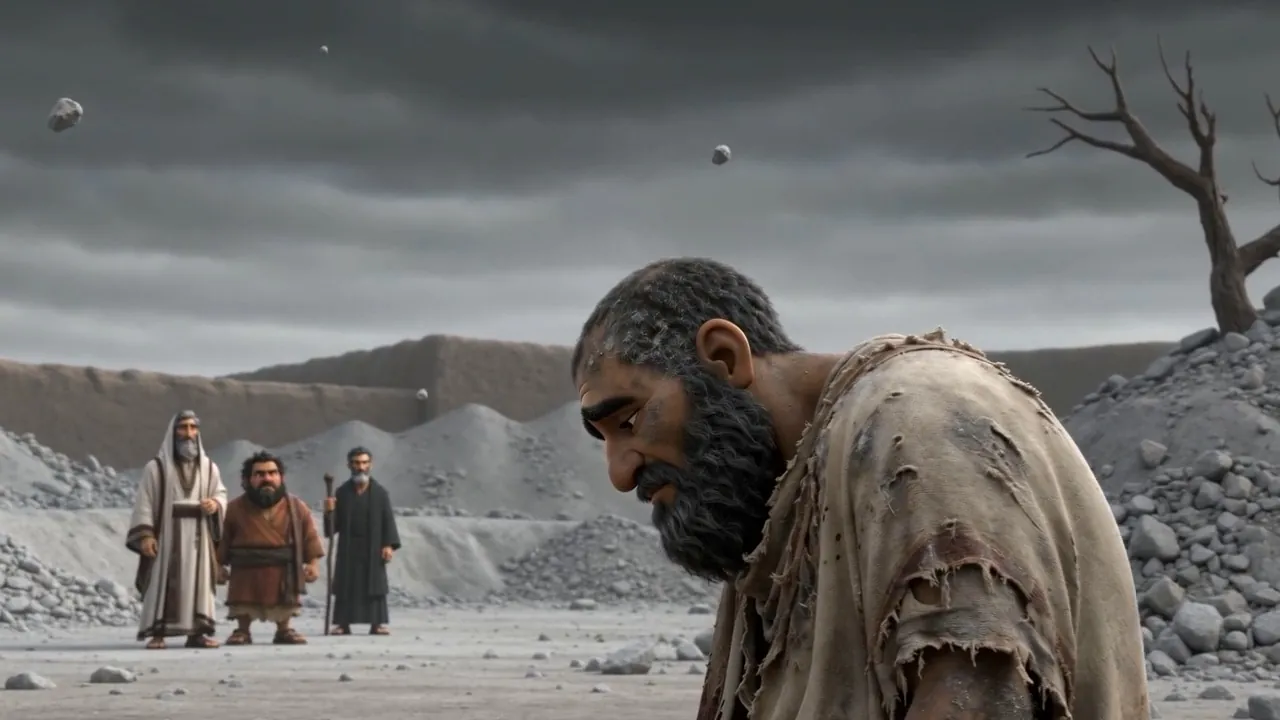
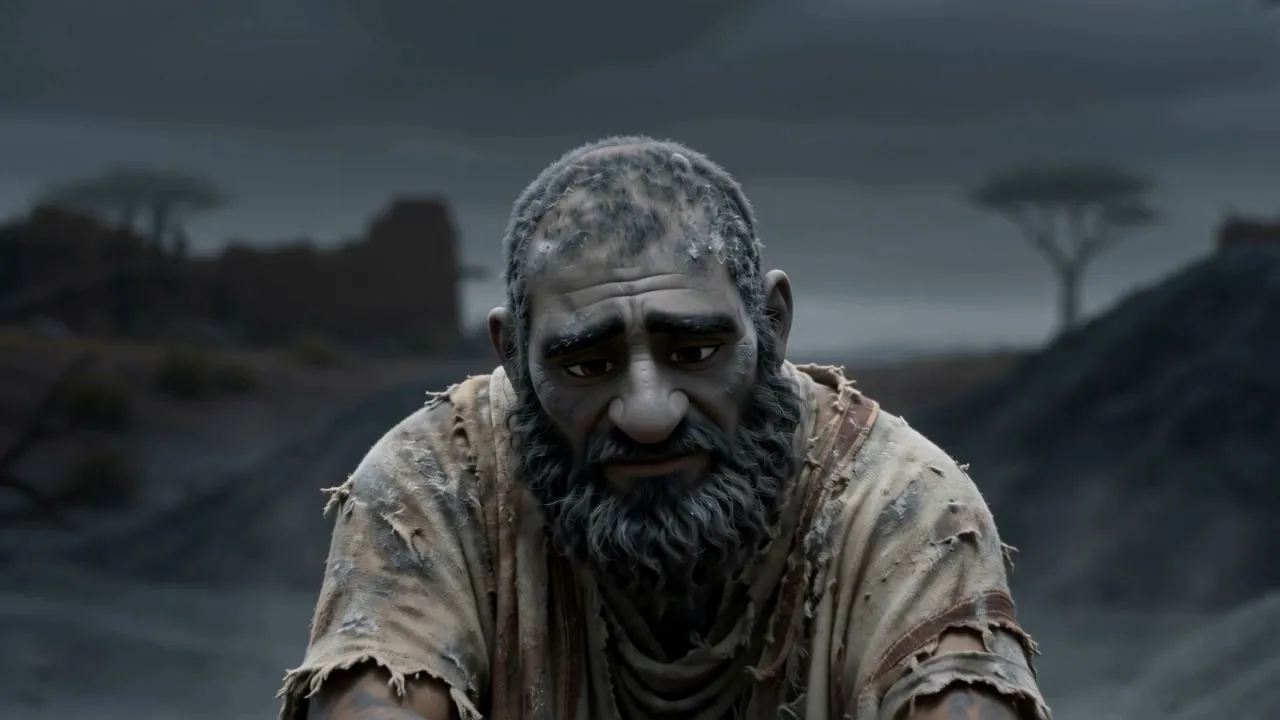

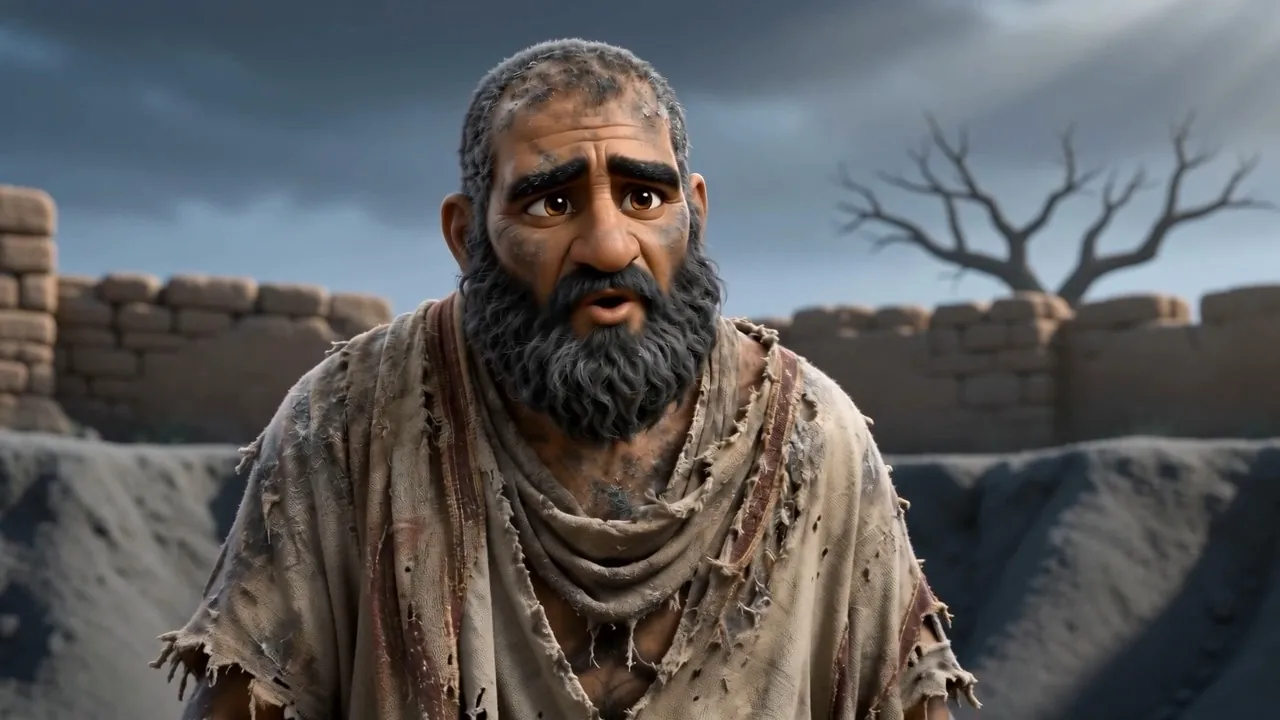
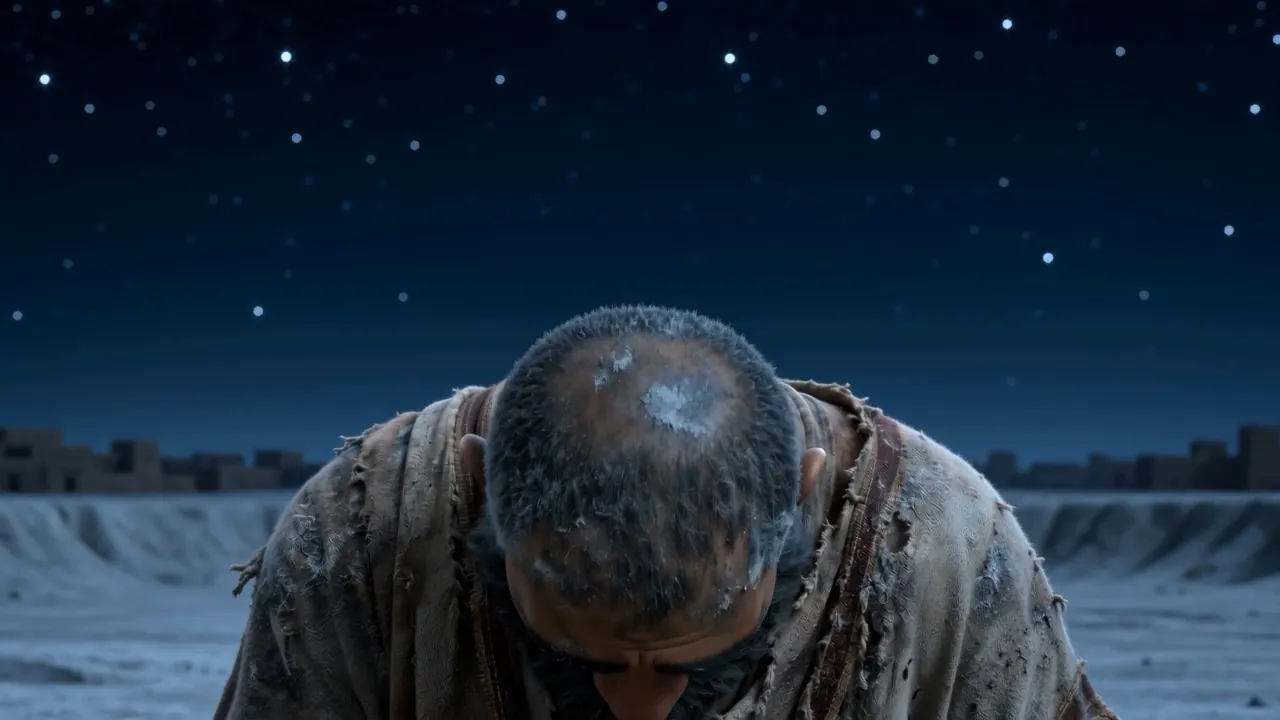
Seven days of silence end, and the first thing out of his mouth is not a prayer. “Let the day perish in which I was born, and the night which said, ‘There is a boy conceived.’” He does not curse God — he never does — but he wishes himself unmade, and he shouts it at an empty sky for a long time. Job 3 : 1–3
Let the day perish in which I was born.
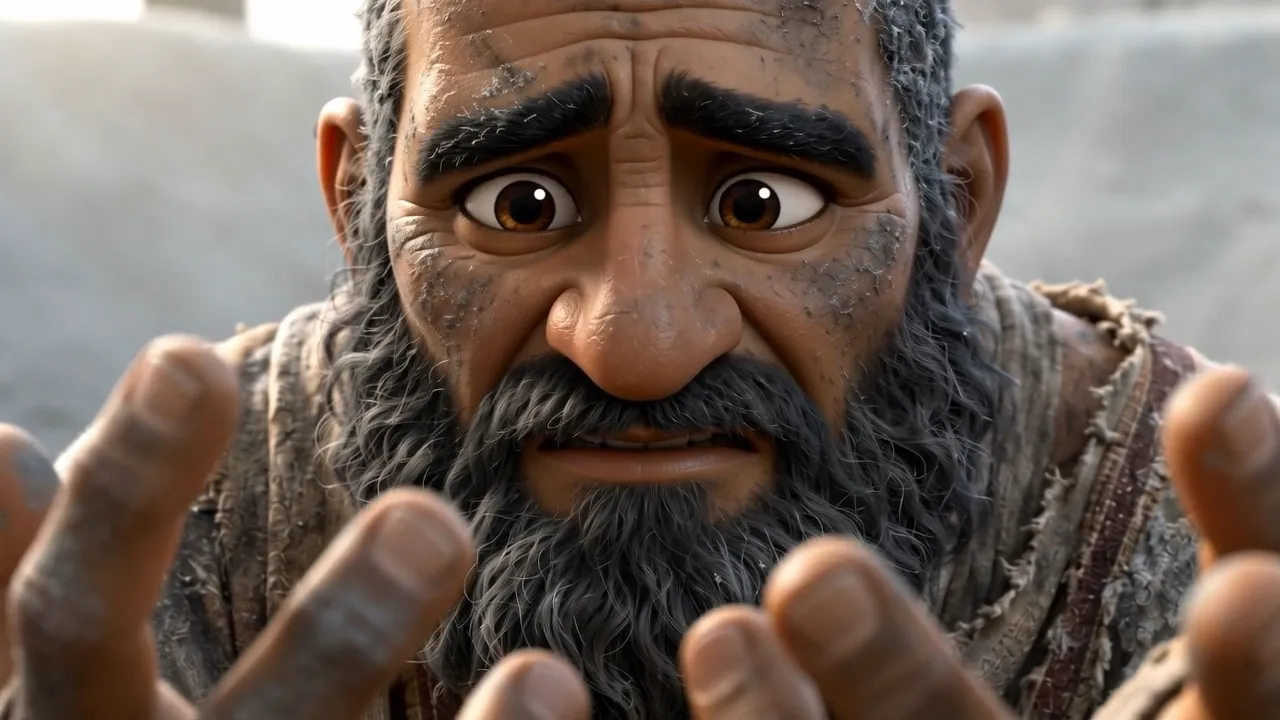

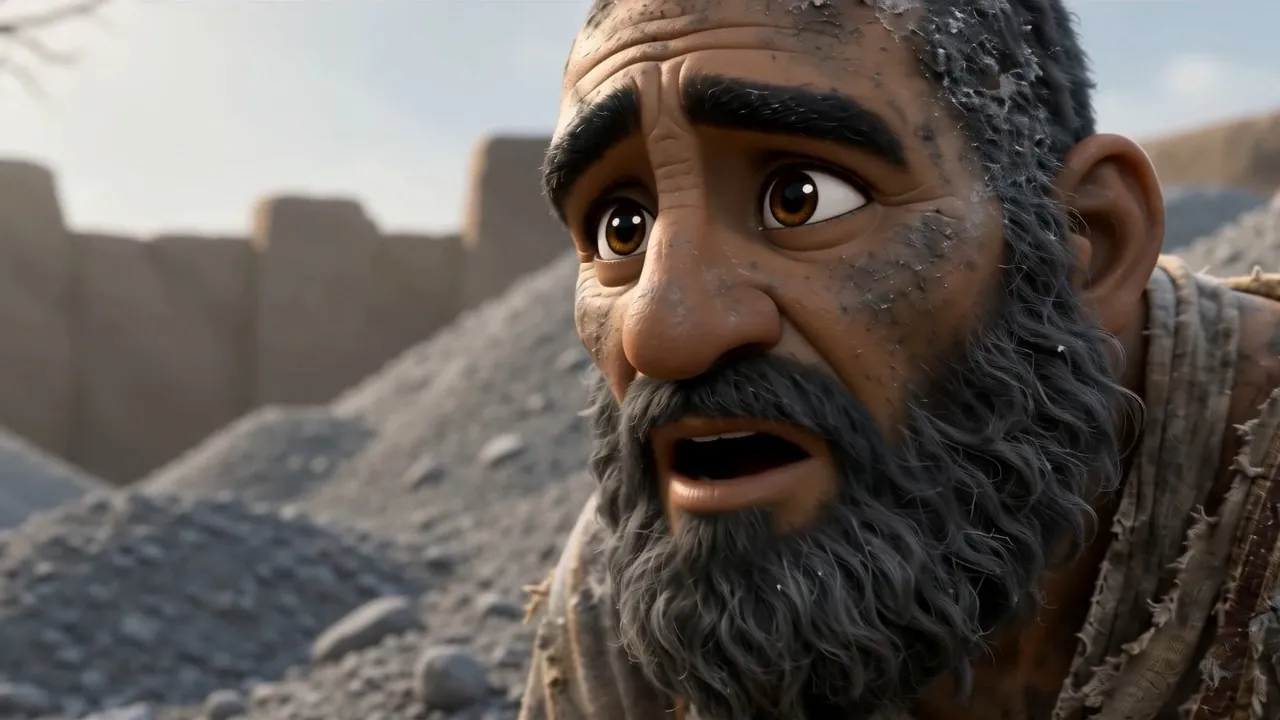
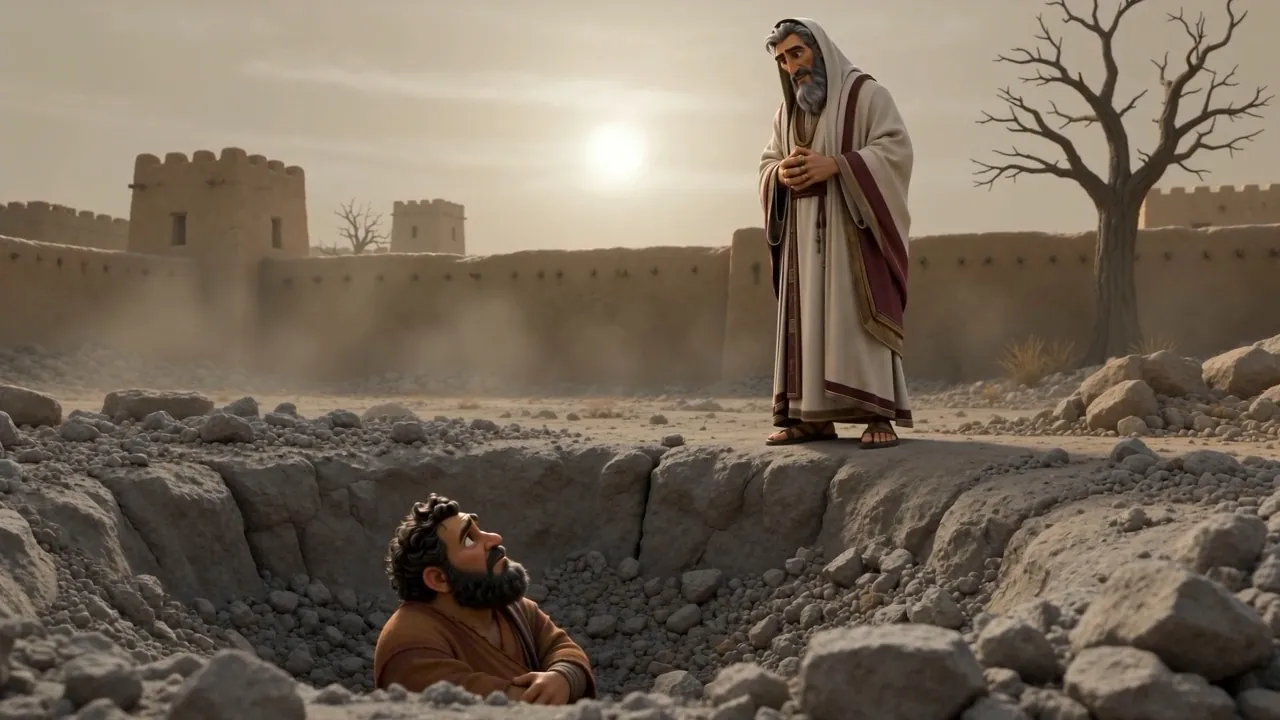
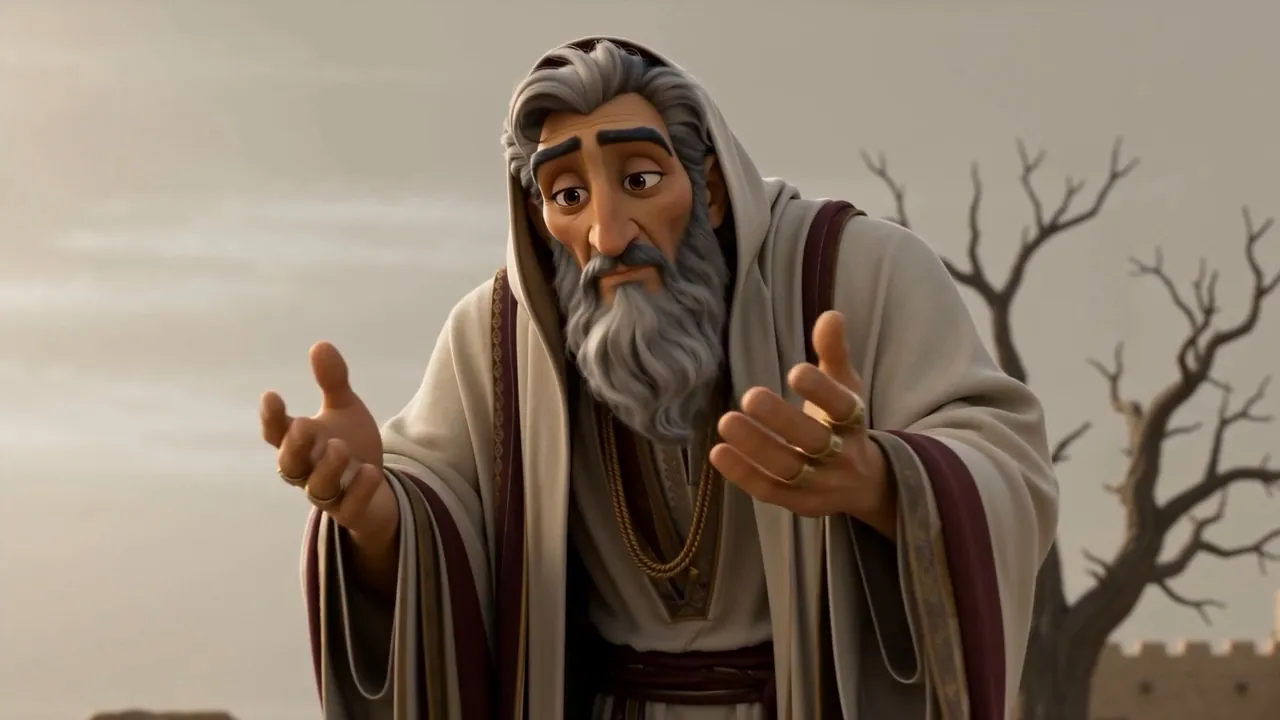
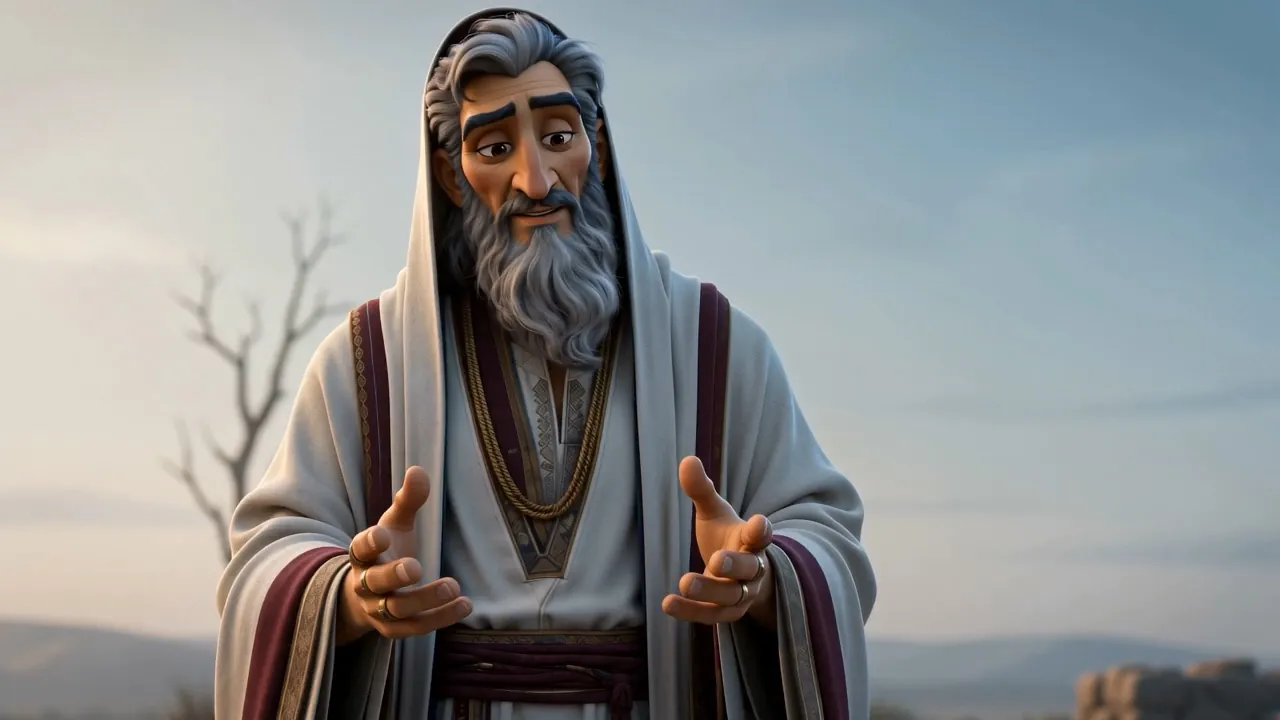
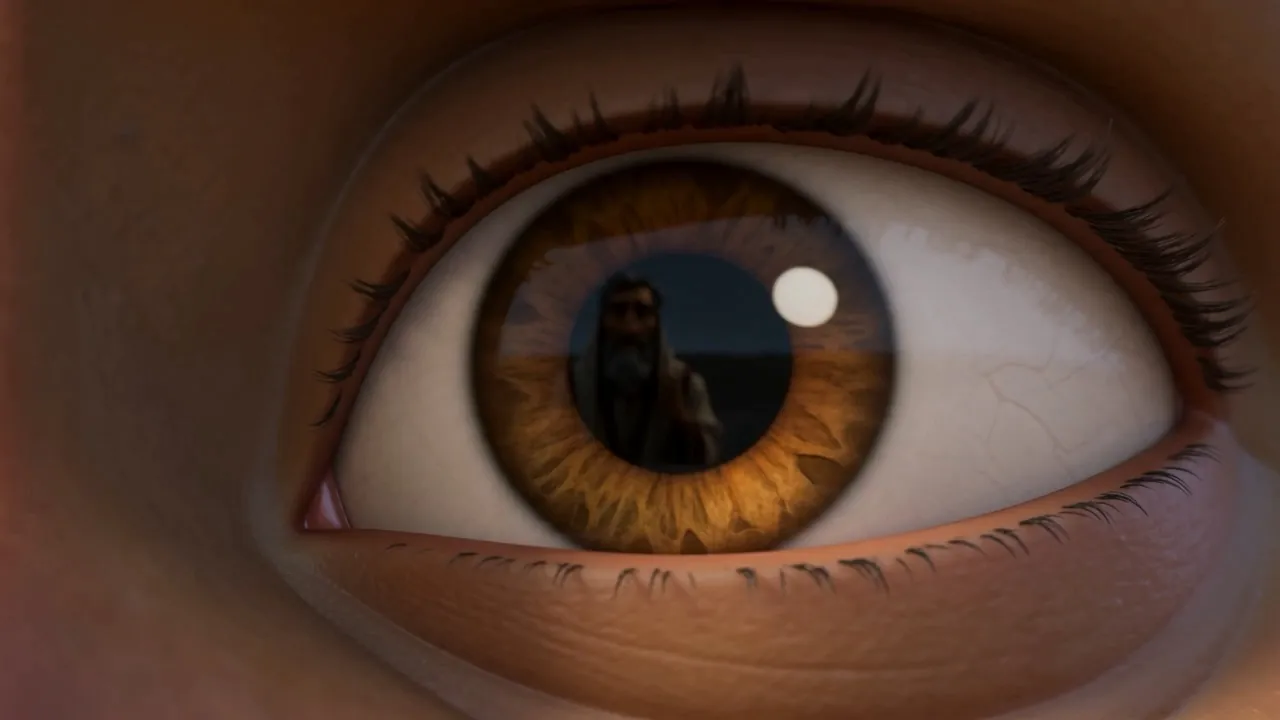
Eliphaz is gentle, and reasonable, and completely wrong. “Remember, now, whoever perished, being innocent? Or where were the upright cut off?” His whole argument is a syllogism: God is just, suffering is punishment, therefore you did something. It is airtight, it is sincere, and the reader has just watched the throne room and knows it is exactly backwards. Job 4 : 7
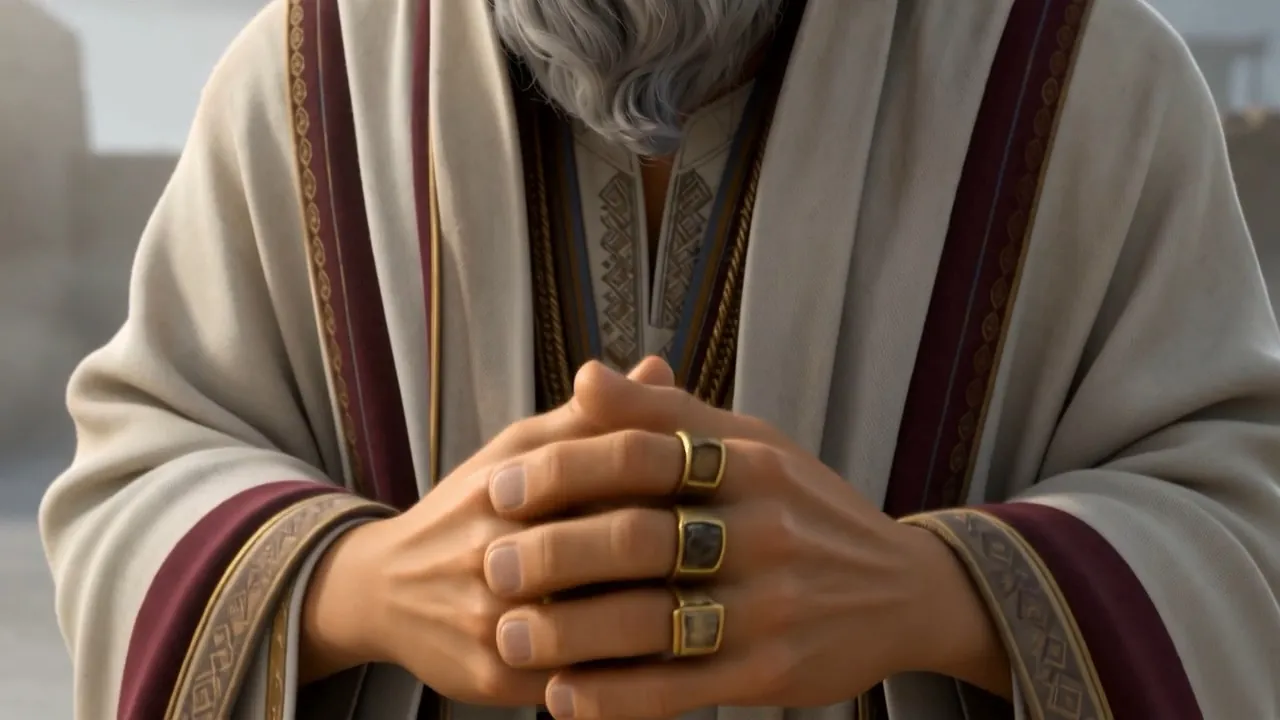

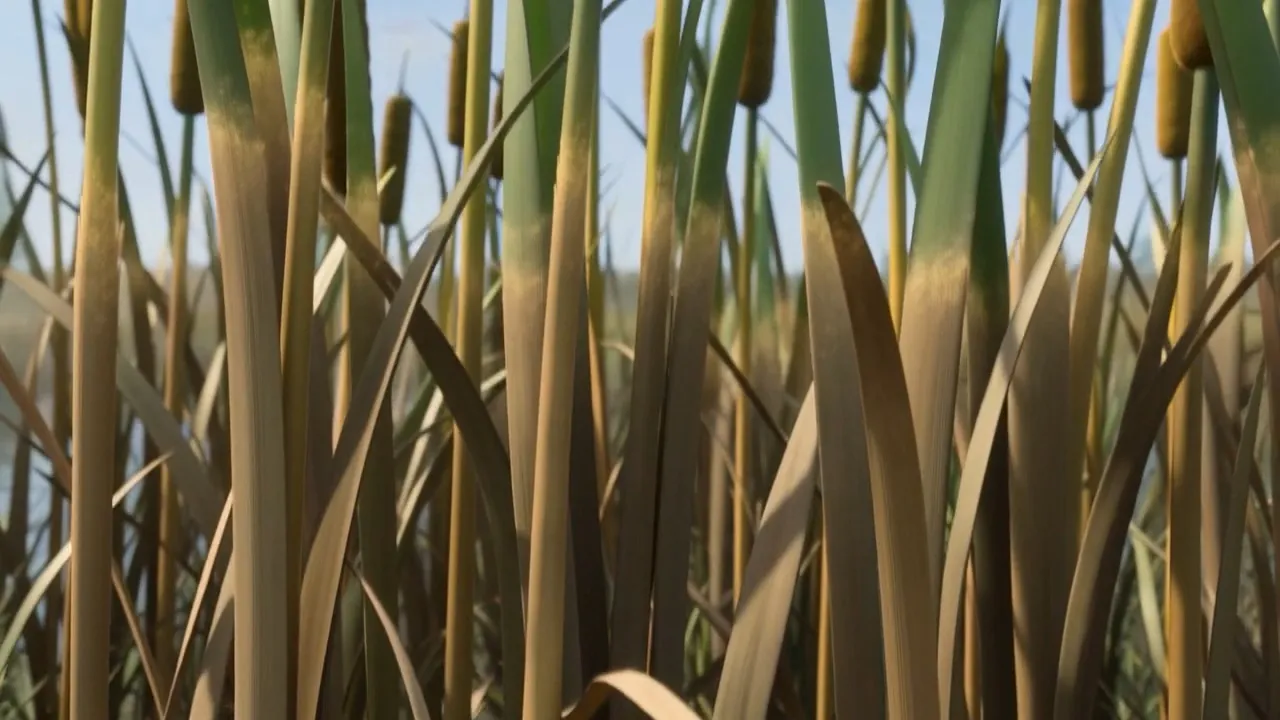
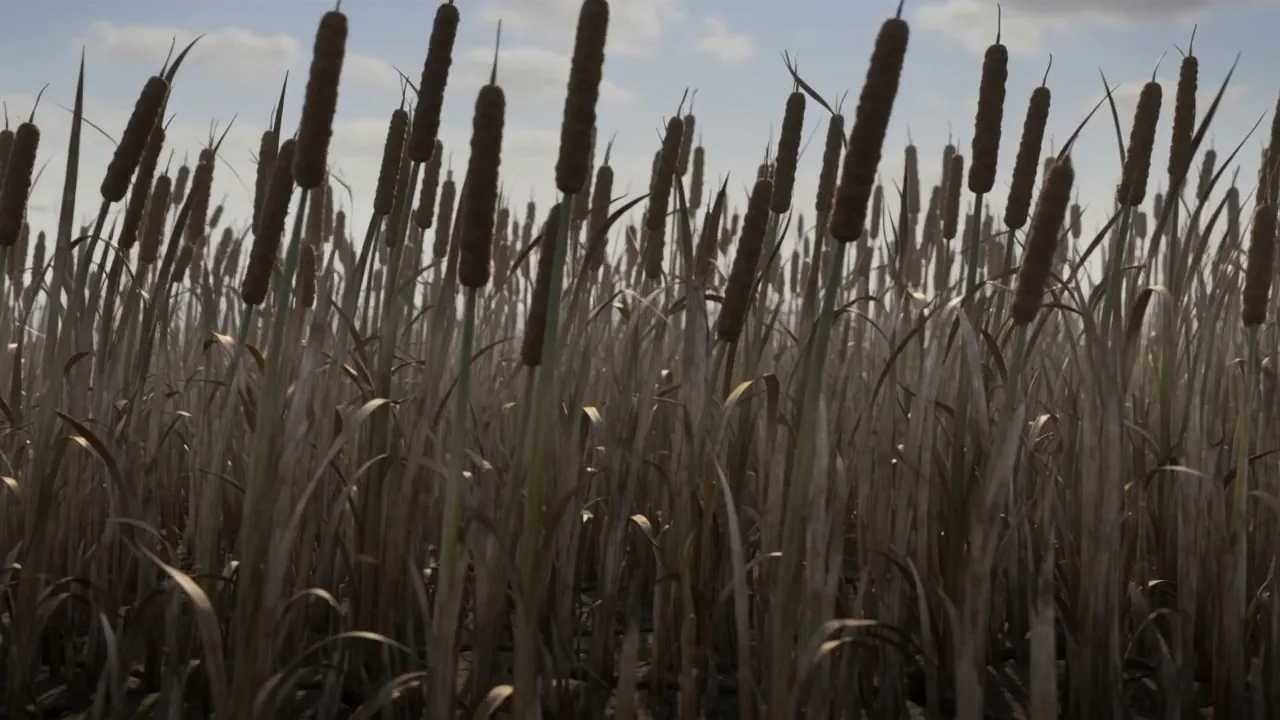
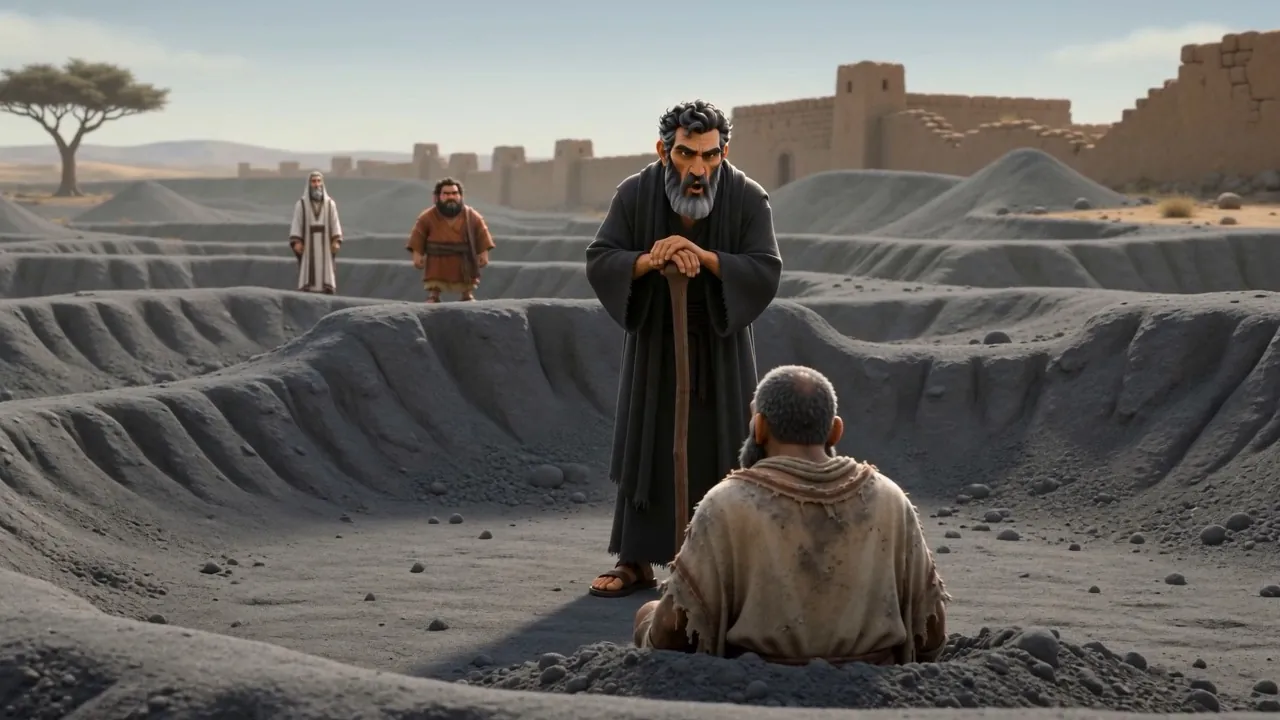
Bildad brings a picture with him. “Can the papyrus grow up without mire? Can the rushes grow without water? While it is yet in its greenness, not cut down, it withers before any other reed.” Cut the plant off from its water and it dies first, however green it looks. He is describing Job to his face, and you watch the reeds drying out while he says it. Job 8 : 11–13
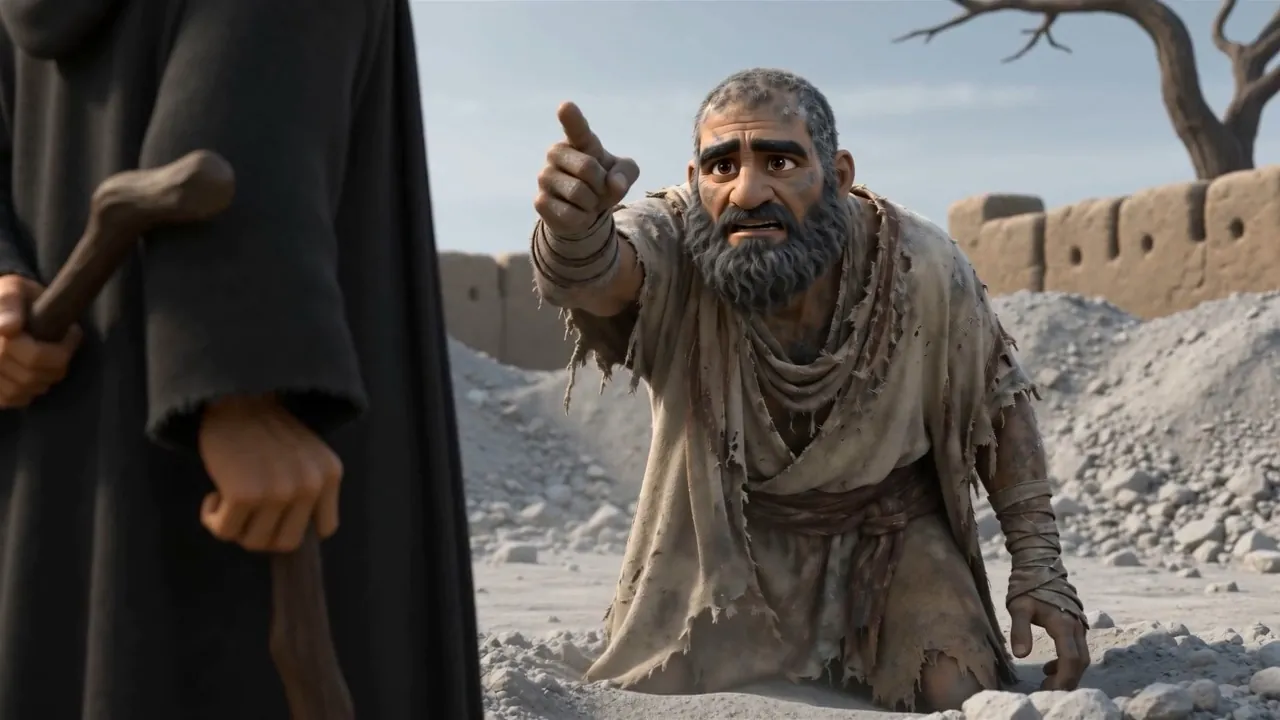
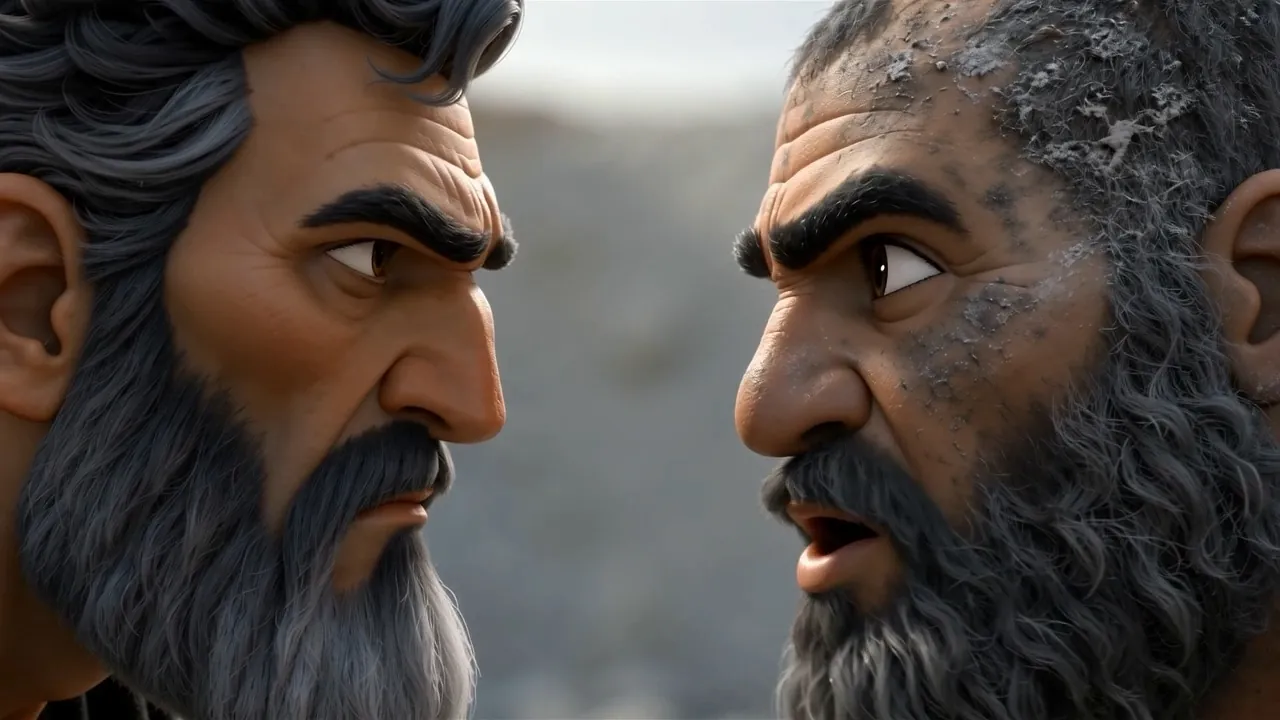
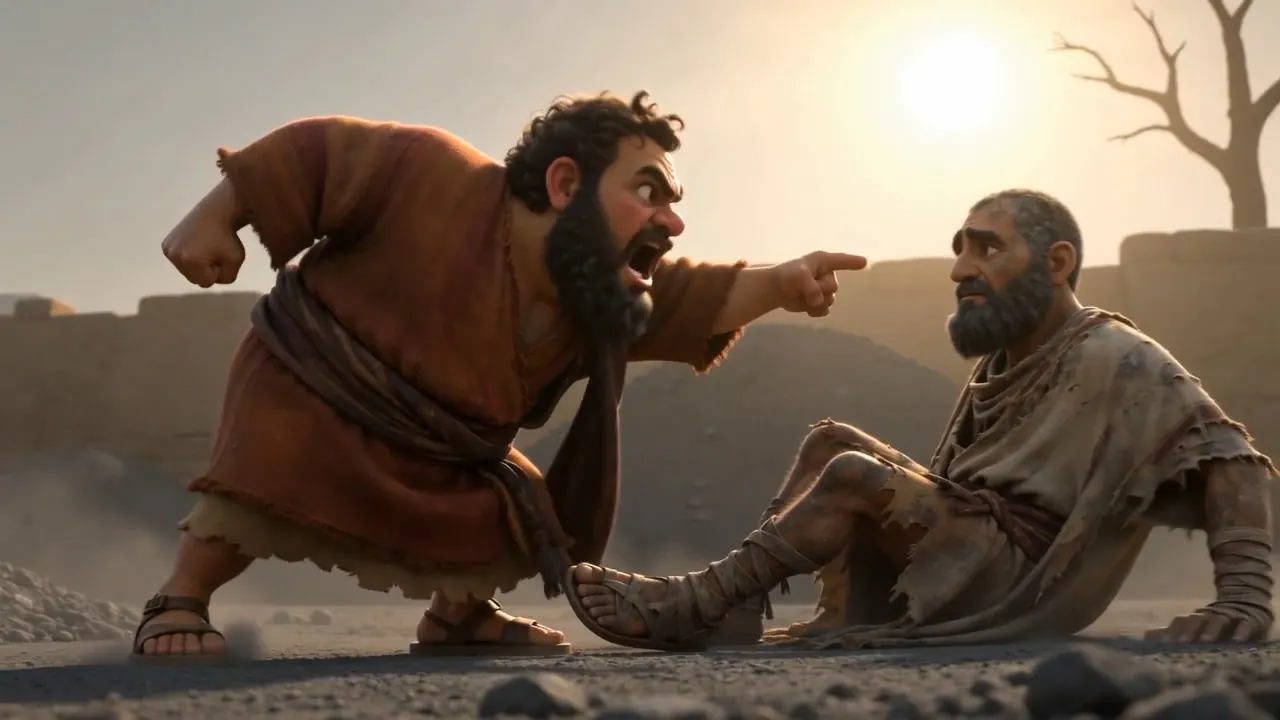
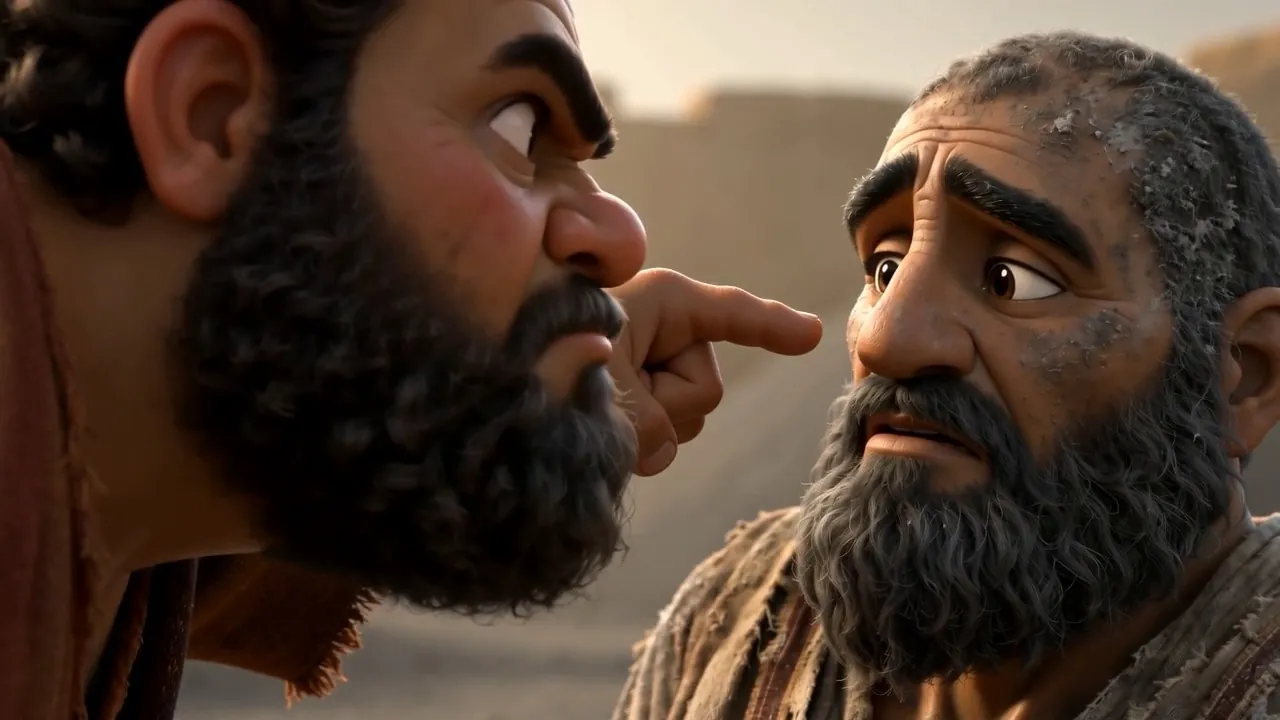


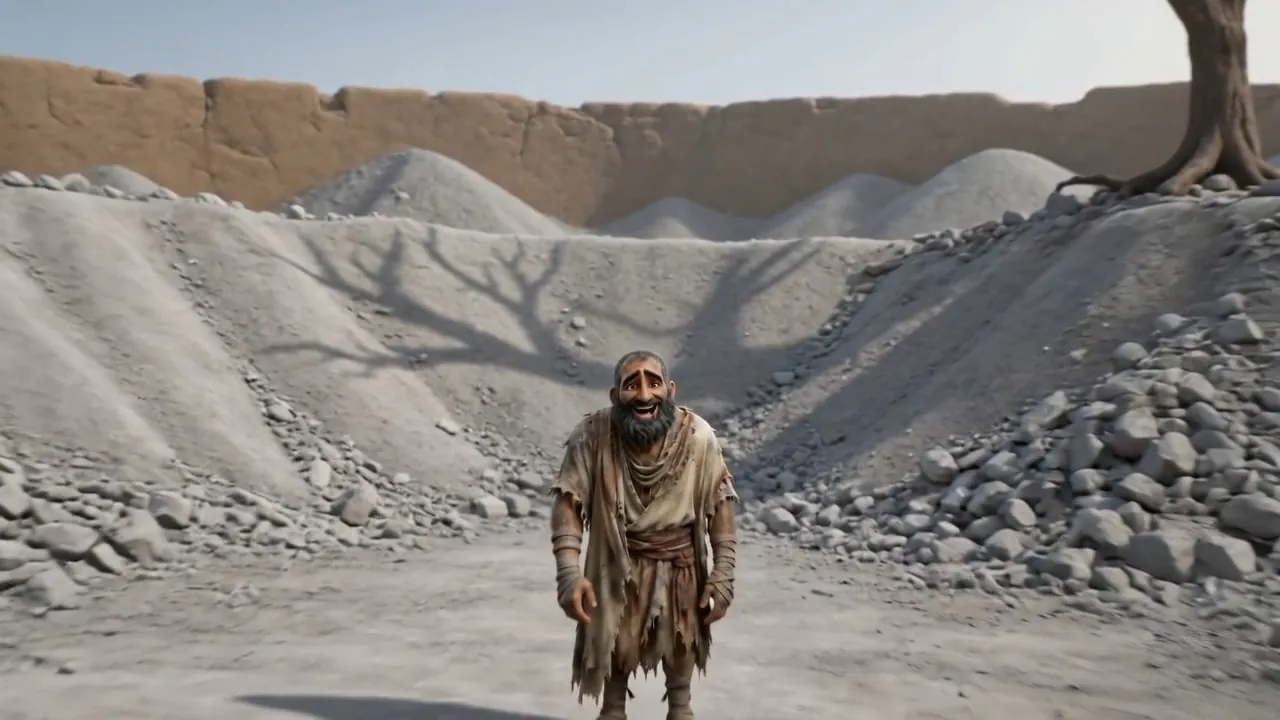
Zophar is the youngest and the angriest, and he says the quiet part out loud: “Know therefore that God exacts of you less than your iniquity deserves.” You are getting off lightly. Three friends, three temperaments — kind, stern and cruel — and the same argument underneath all of them. Job 11 : 6
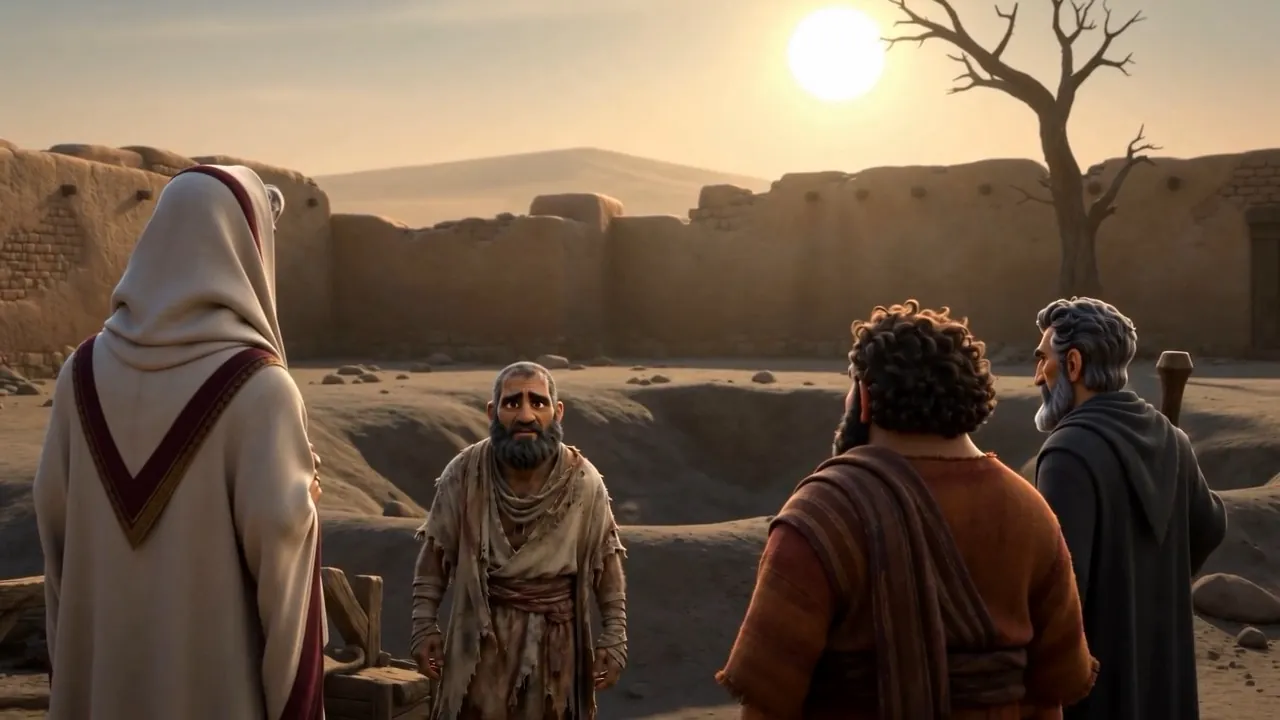
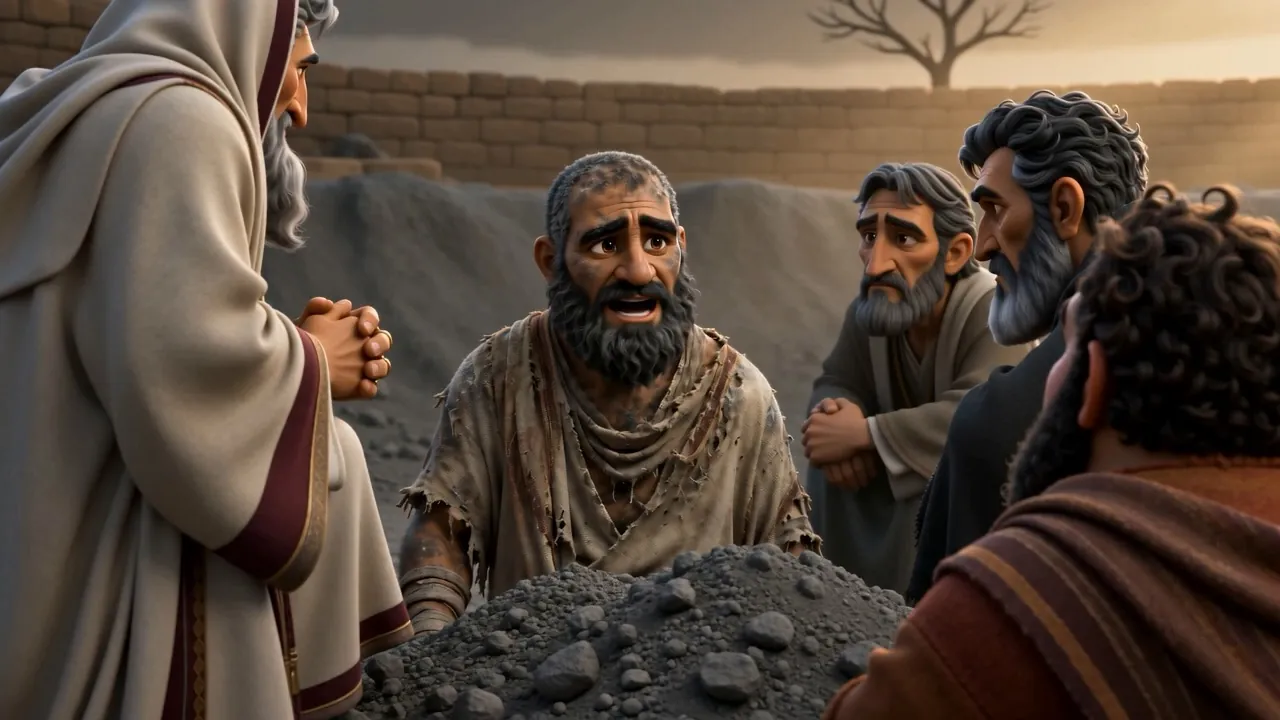
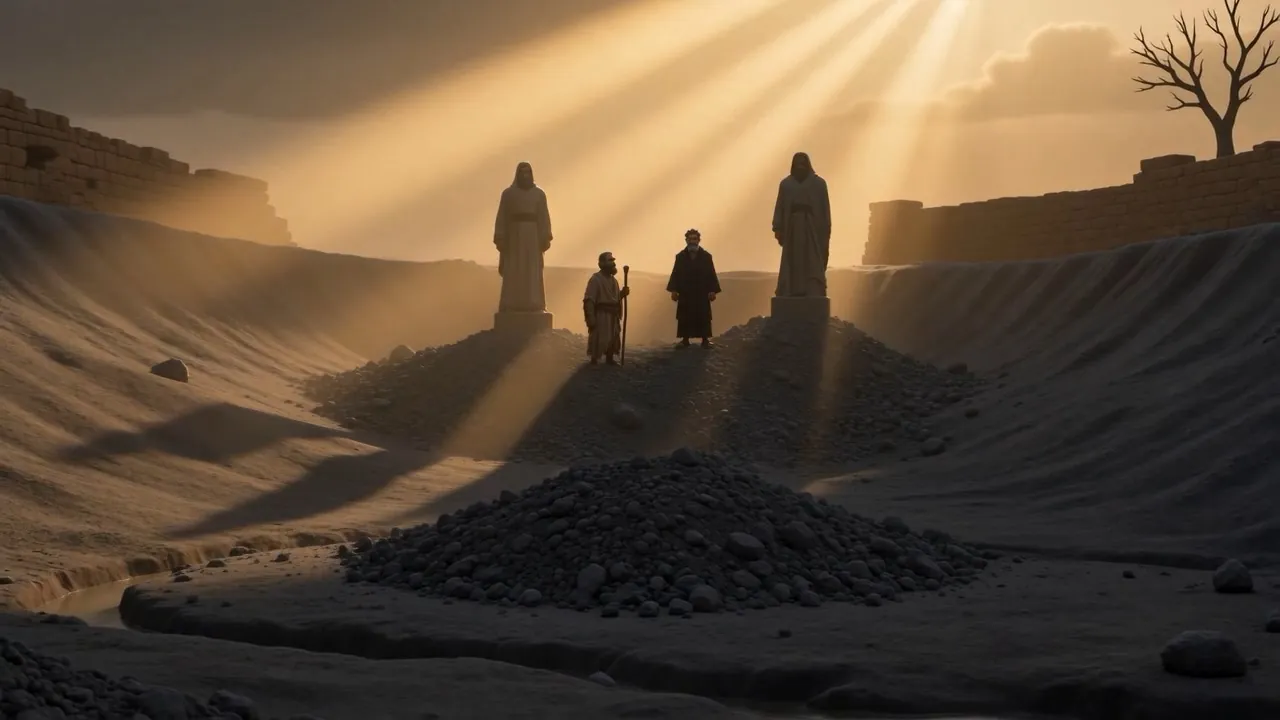
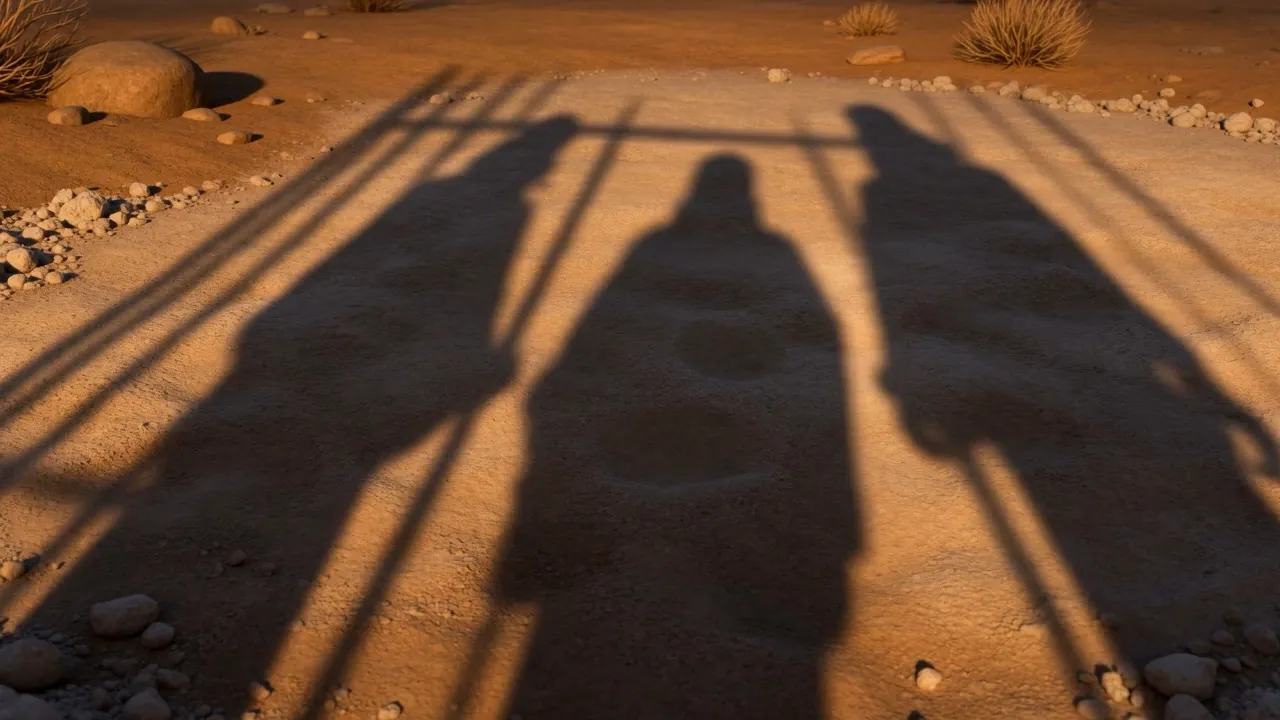
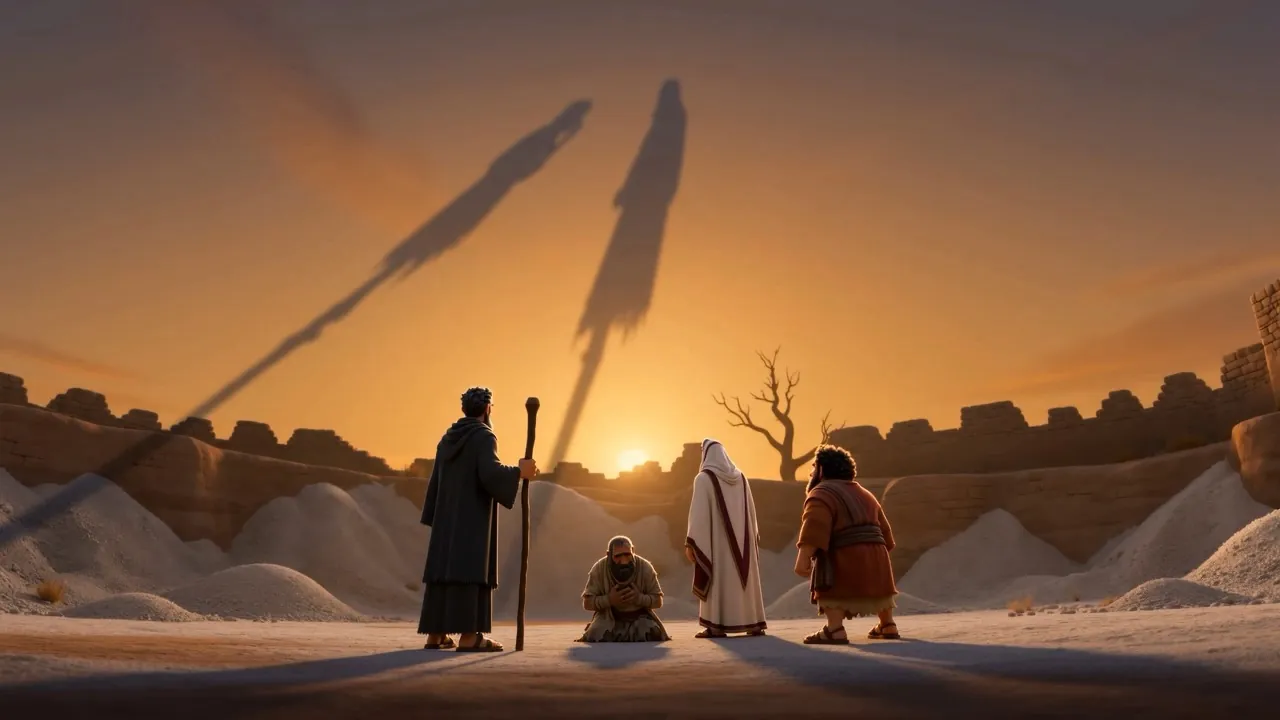
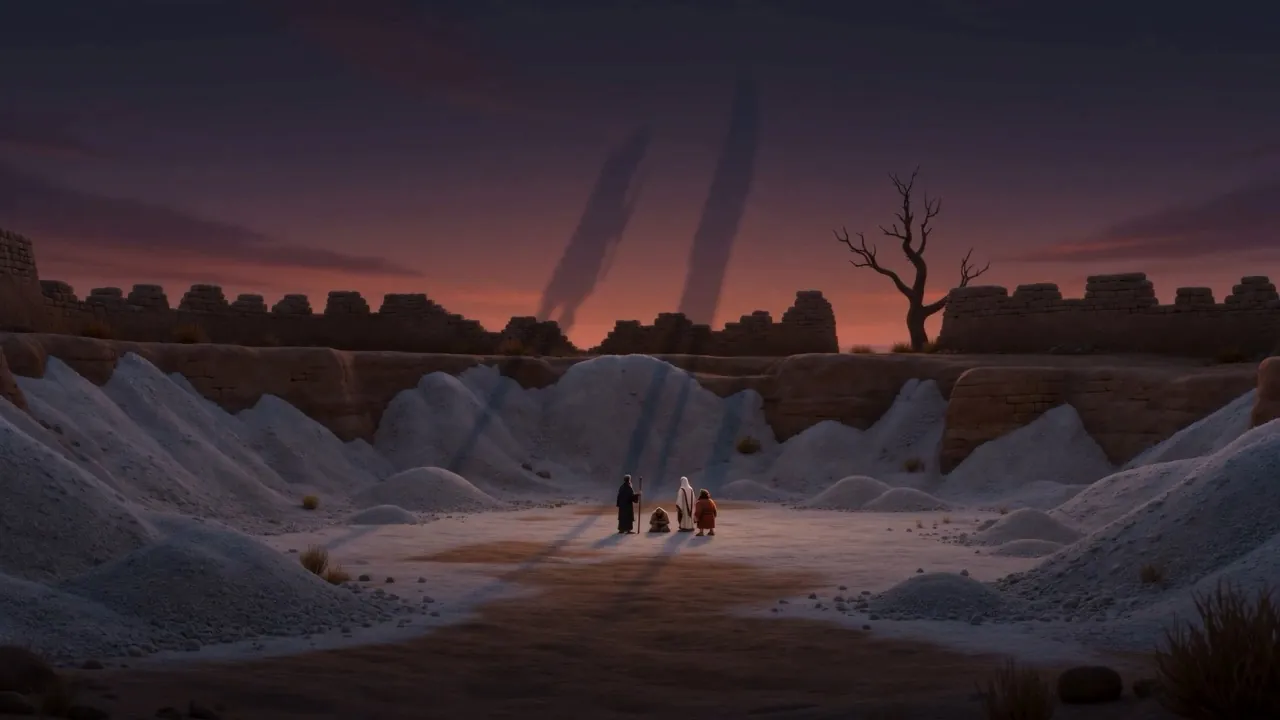
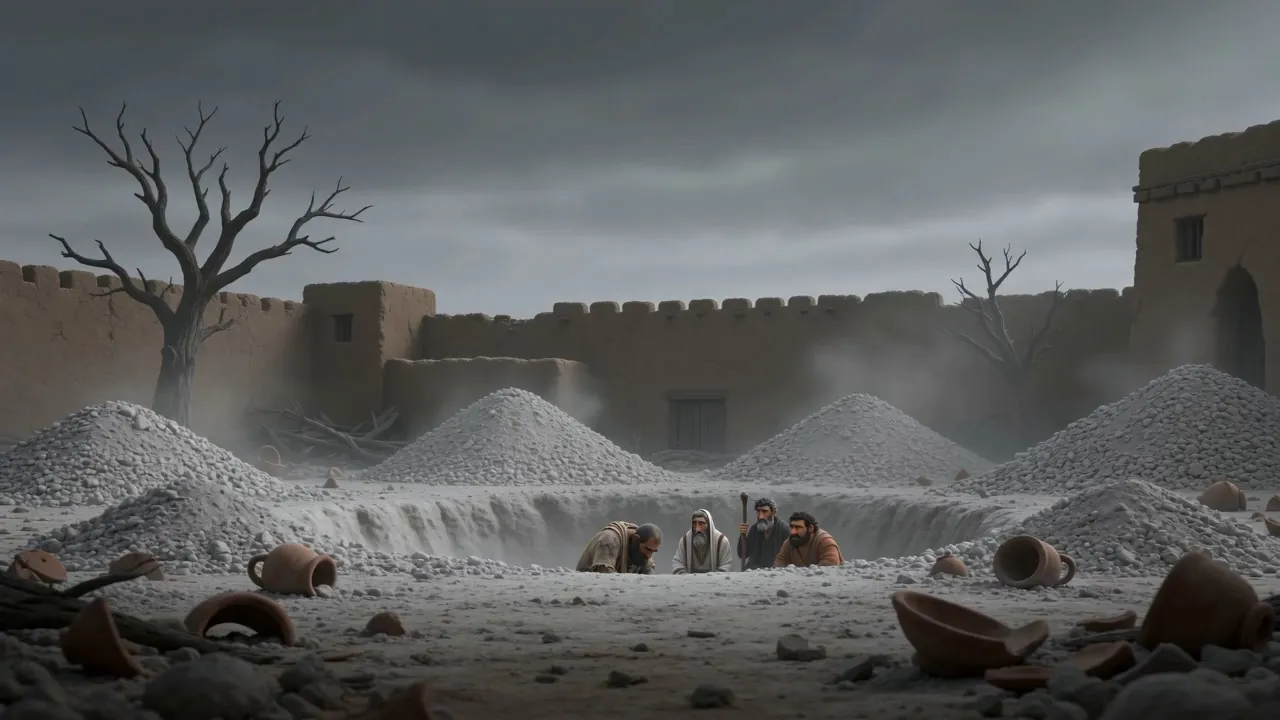
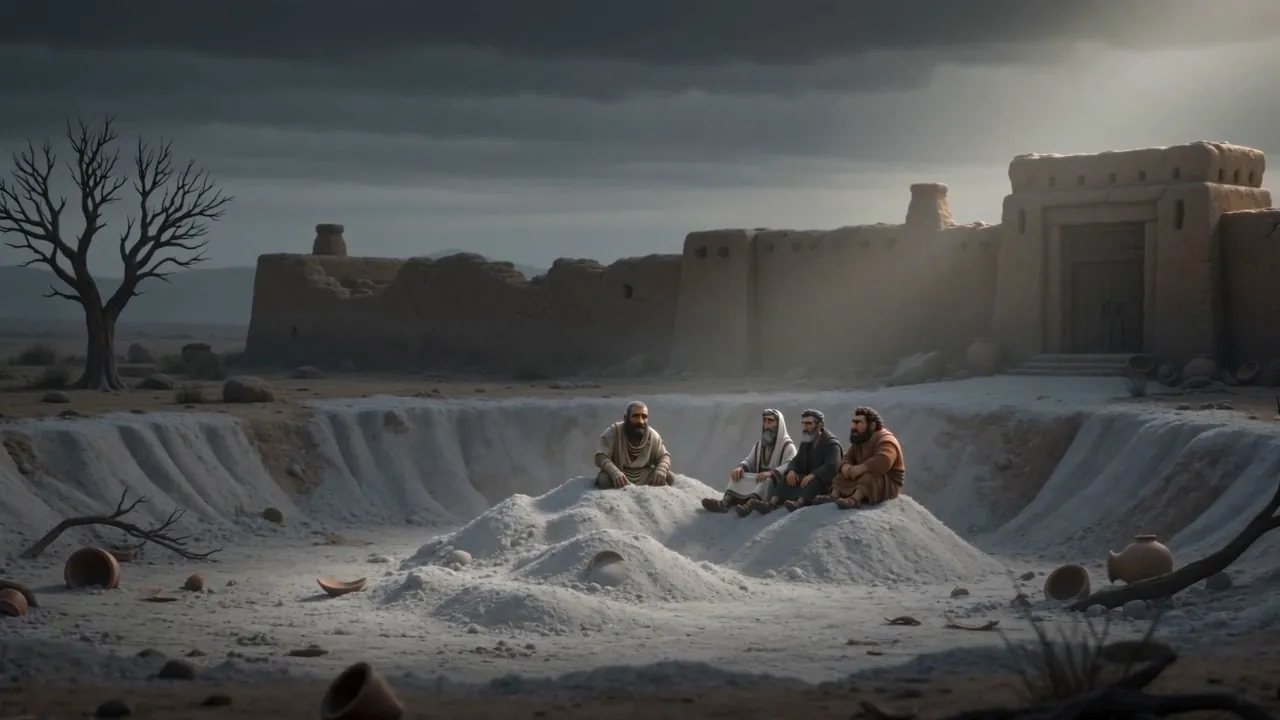
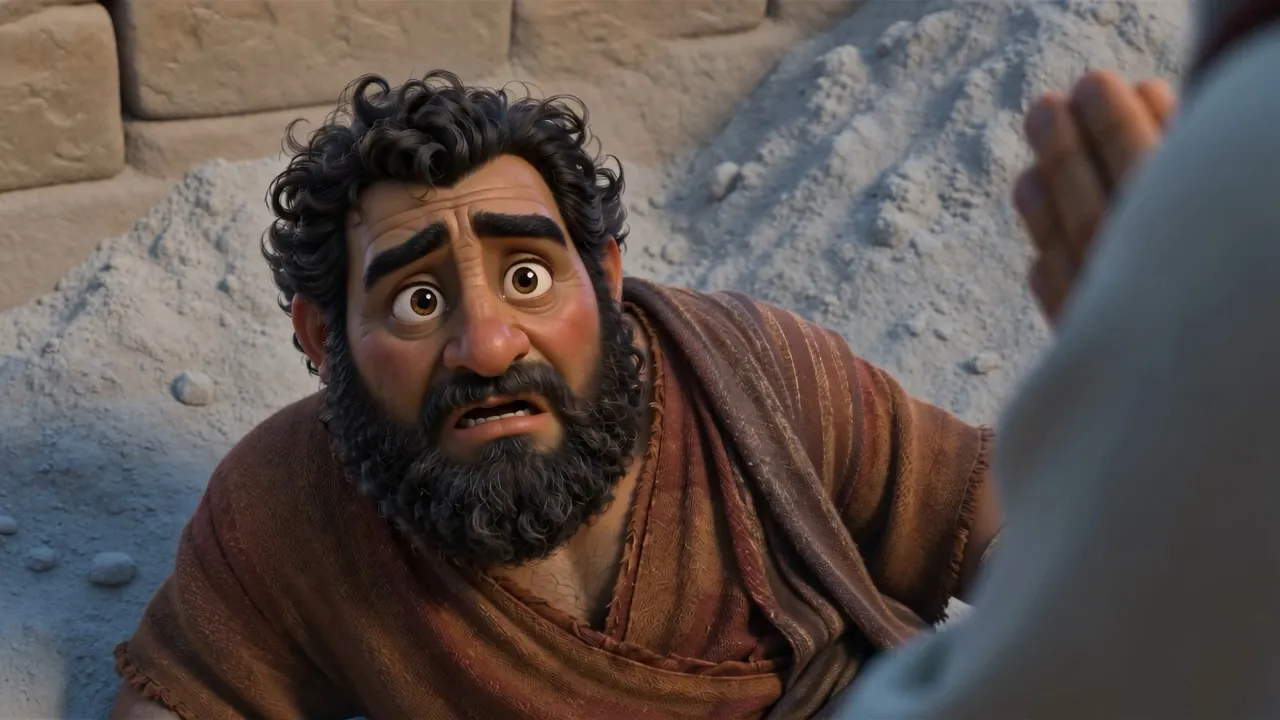
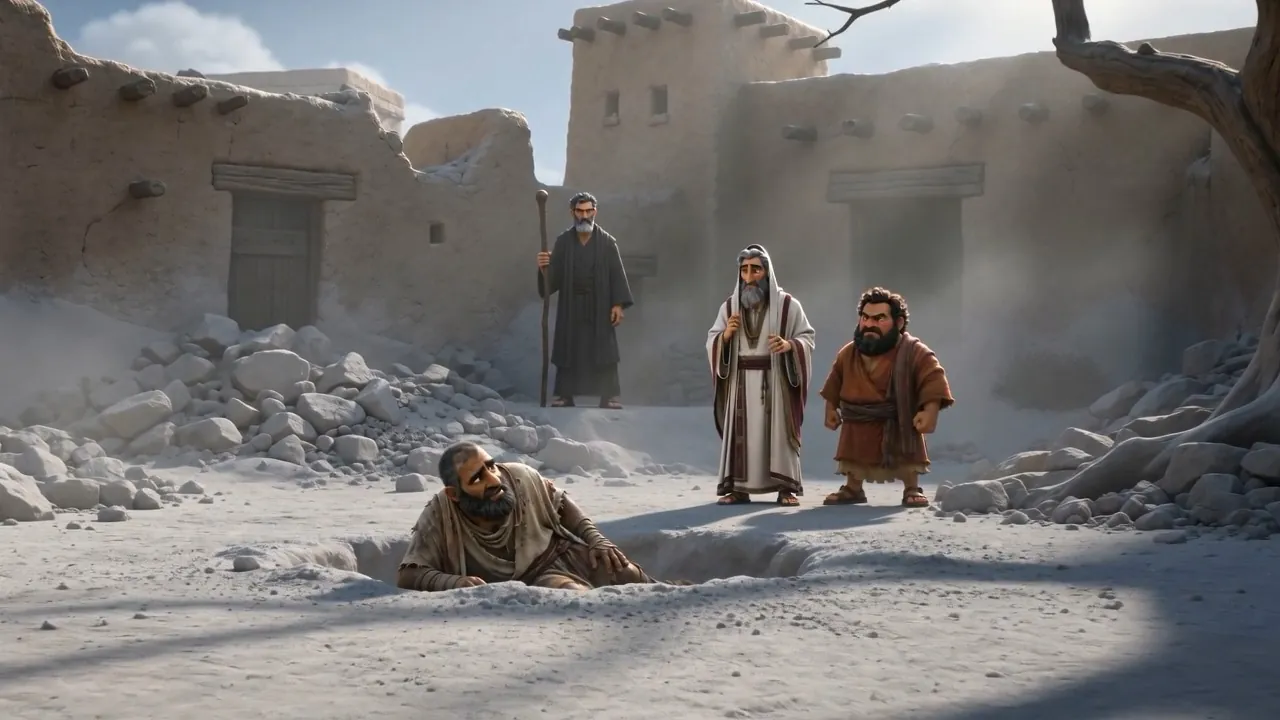
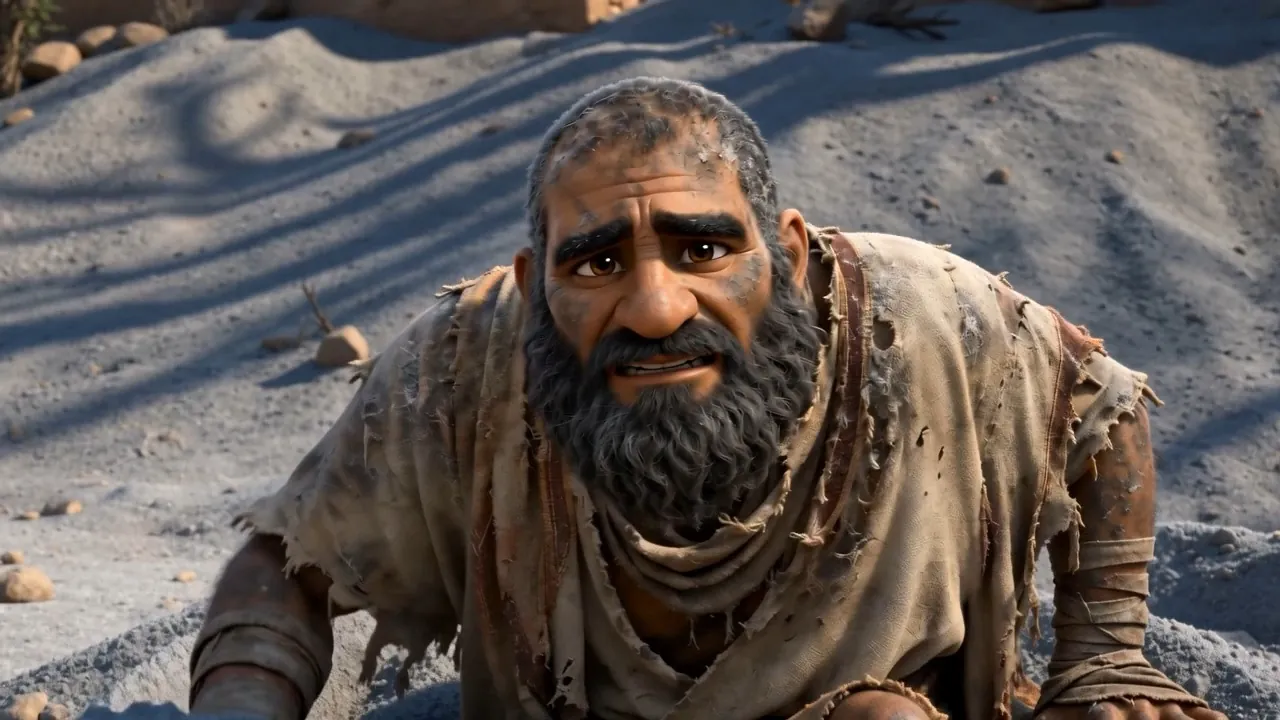
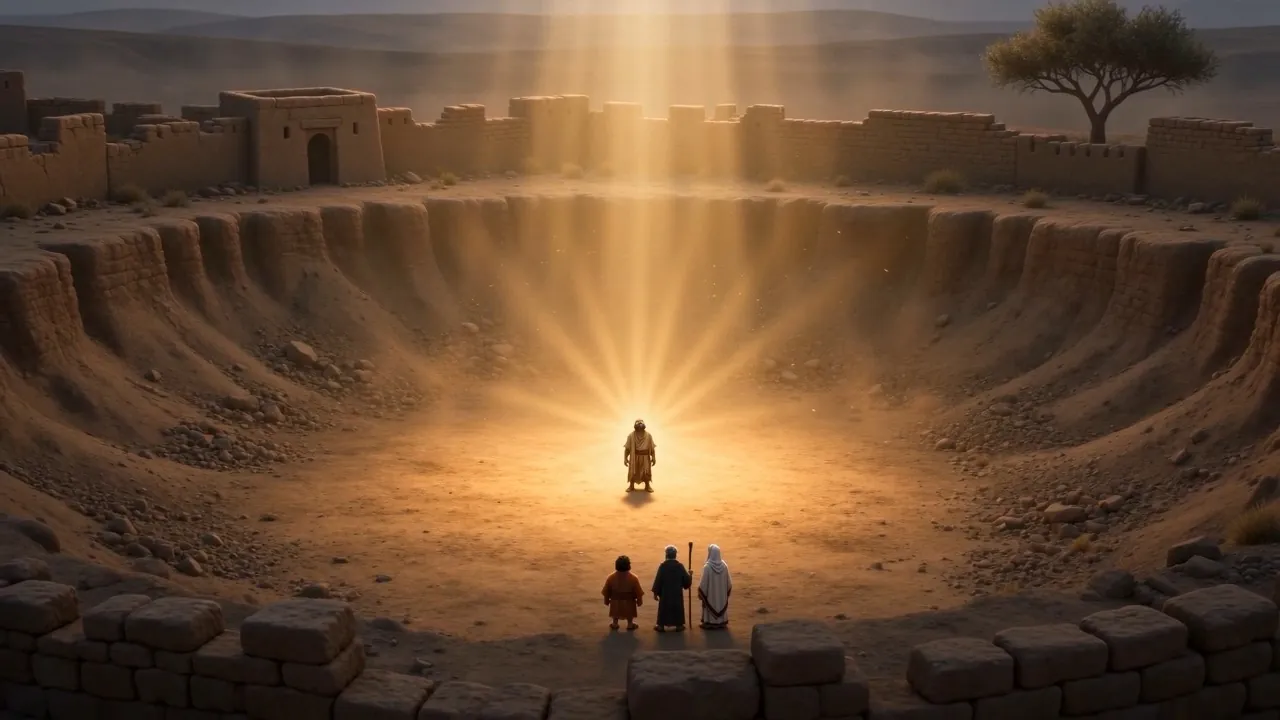
Not once are they on the same level. The friends stand; Job sits. They are on the rim; he is in the hole. And at the end of every round their shadows run down the slope and lie across him. “Miserable comforters are you all.” Job 16 : 2
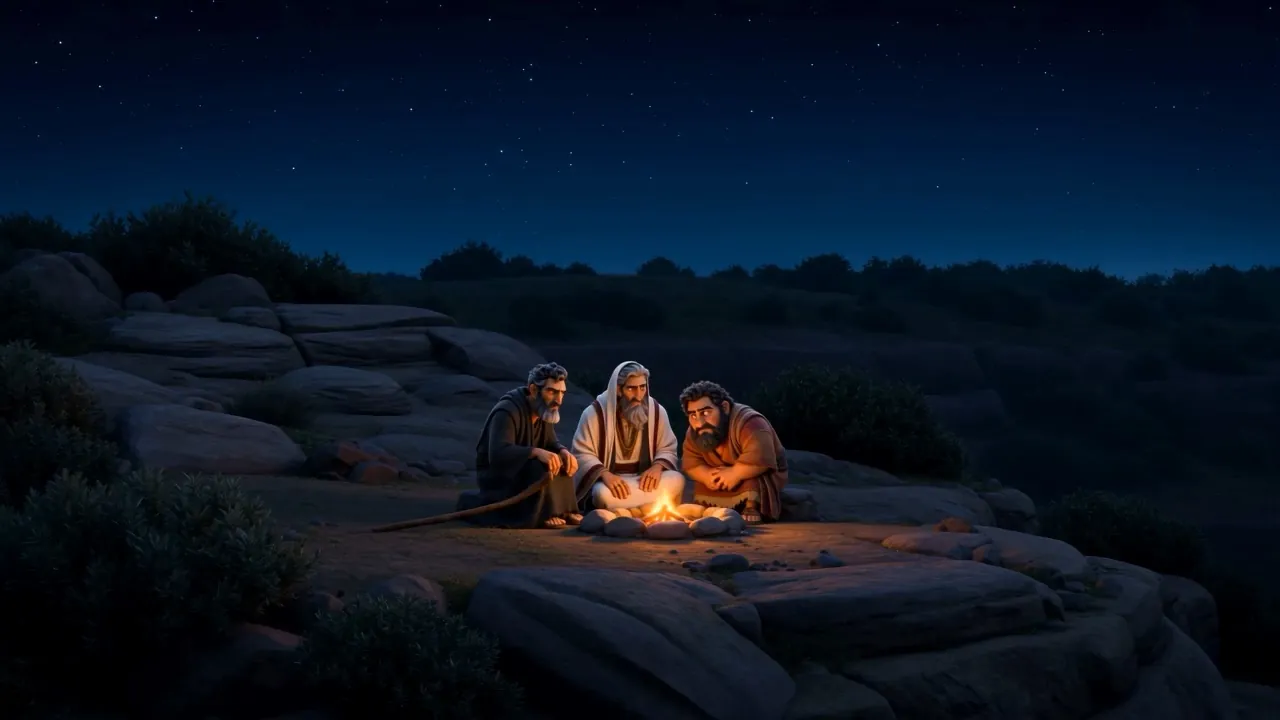
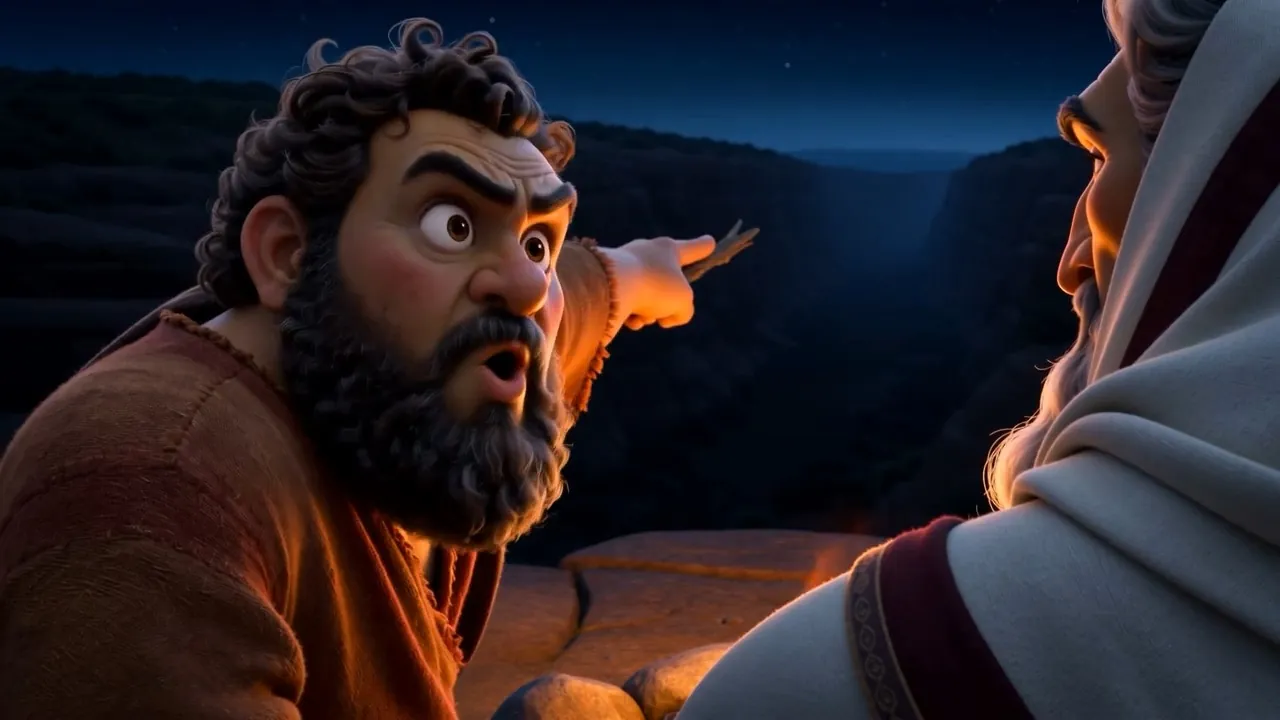
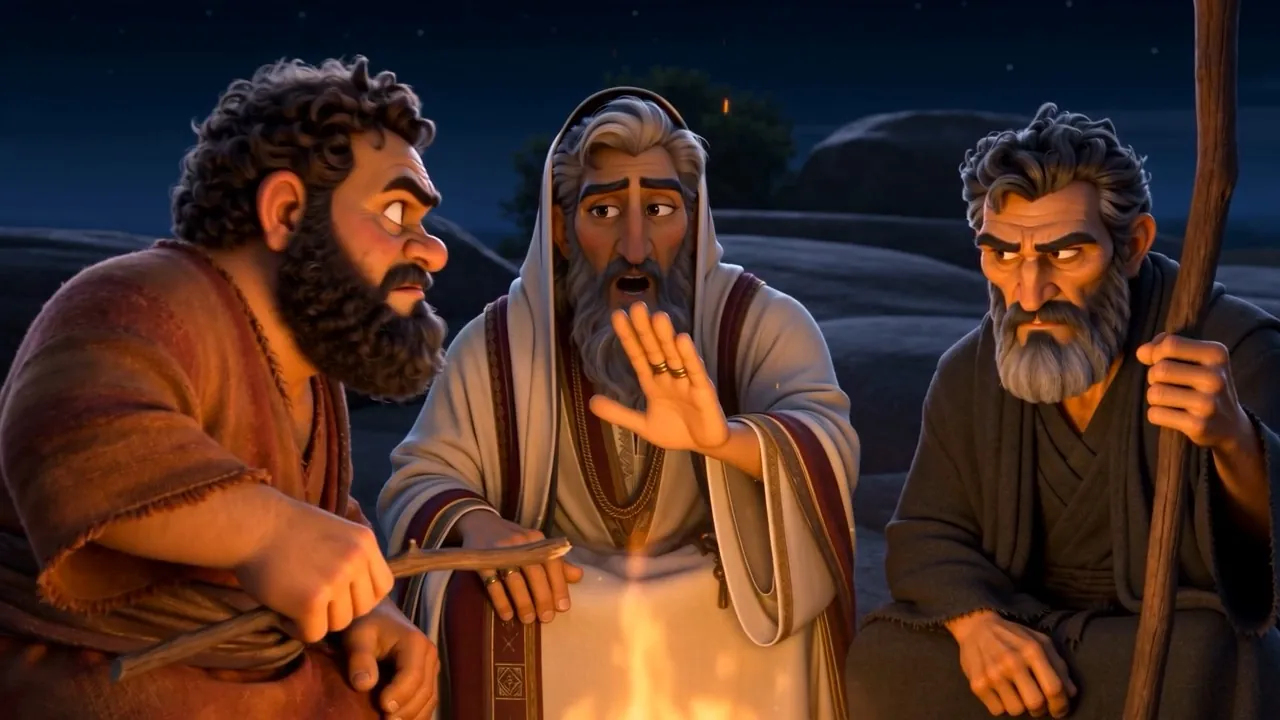
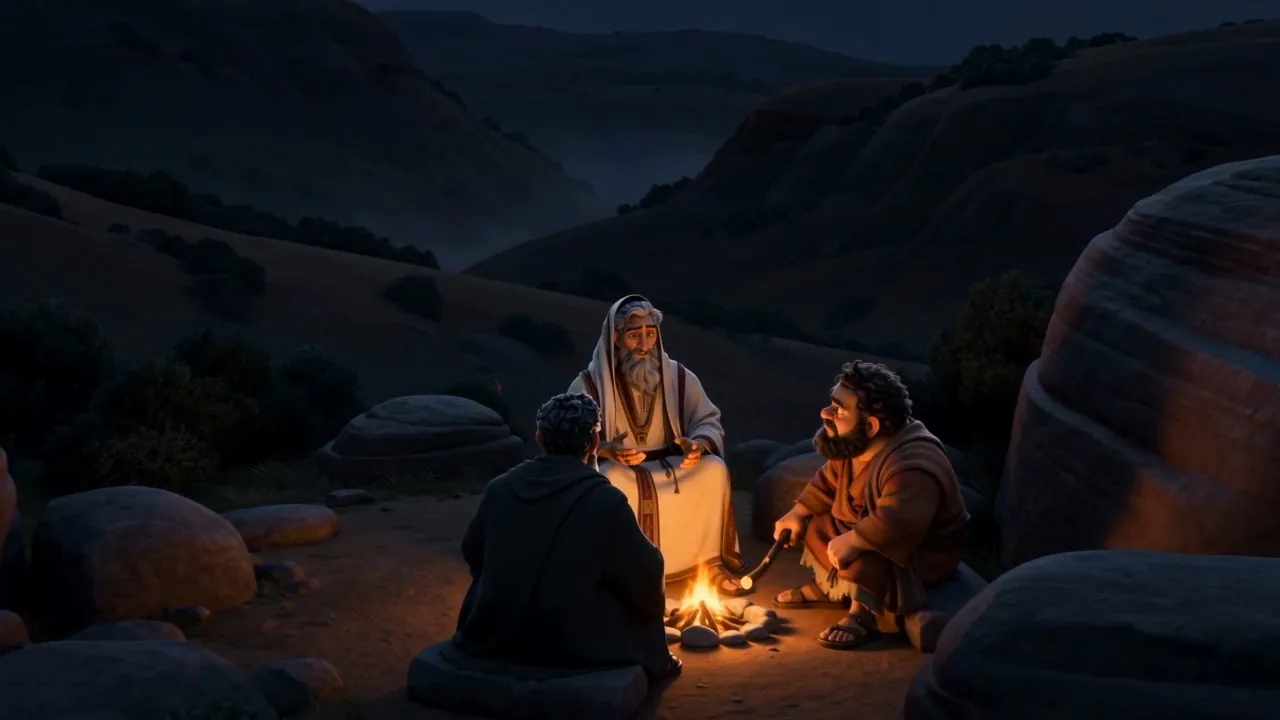
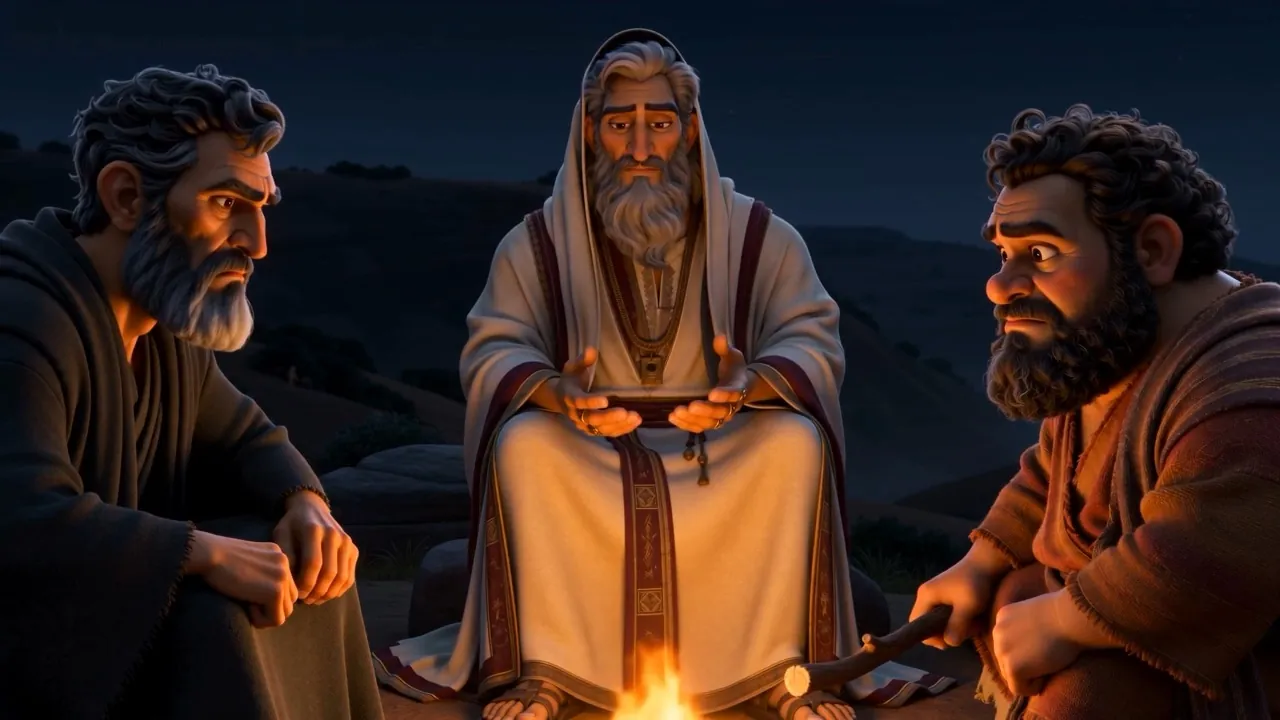
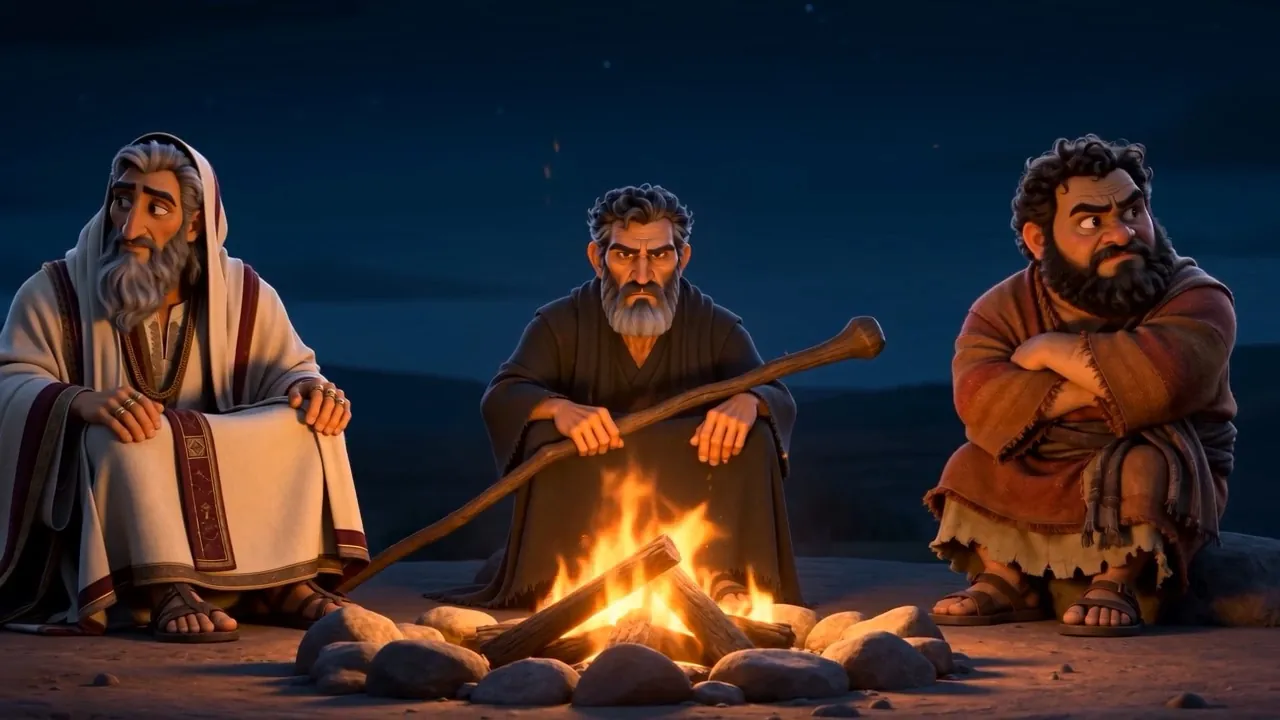
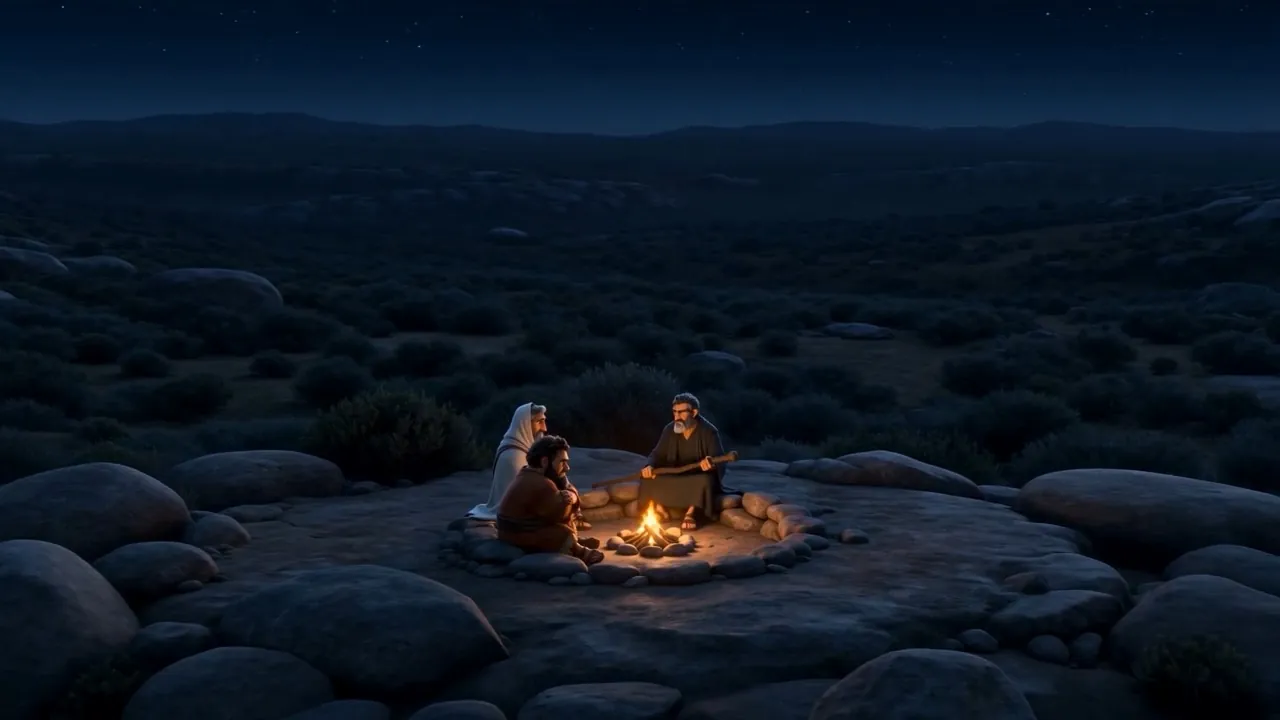
There is a scene here the book does not have, and it earns its place: the three of them at their own fire at night, out of earshot, working out what to say next. It turns the speeches from three separate mistakes into something more uncomfortable — a position being maintained. Job 22 : 1
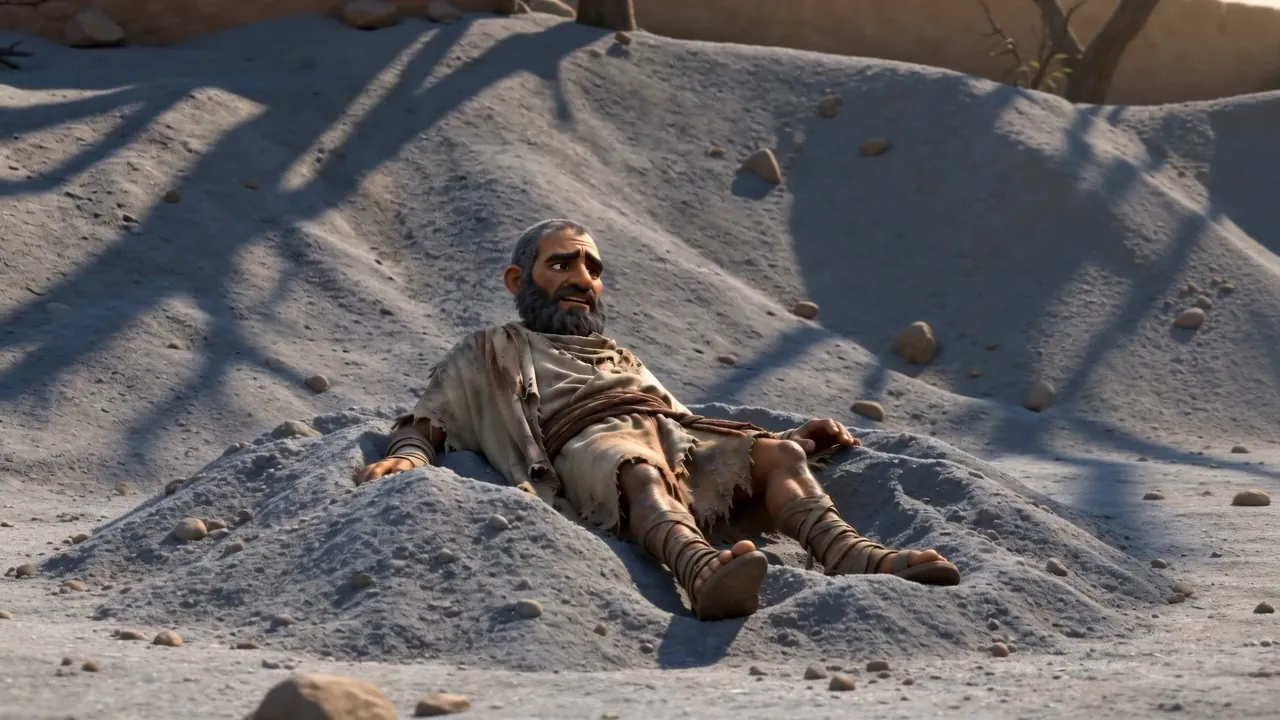
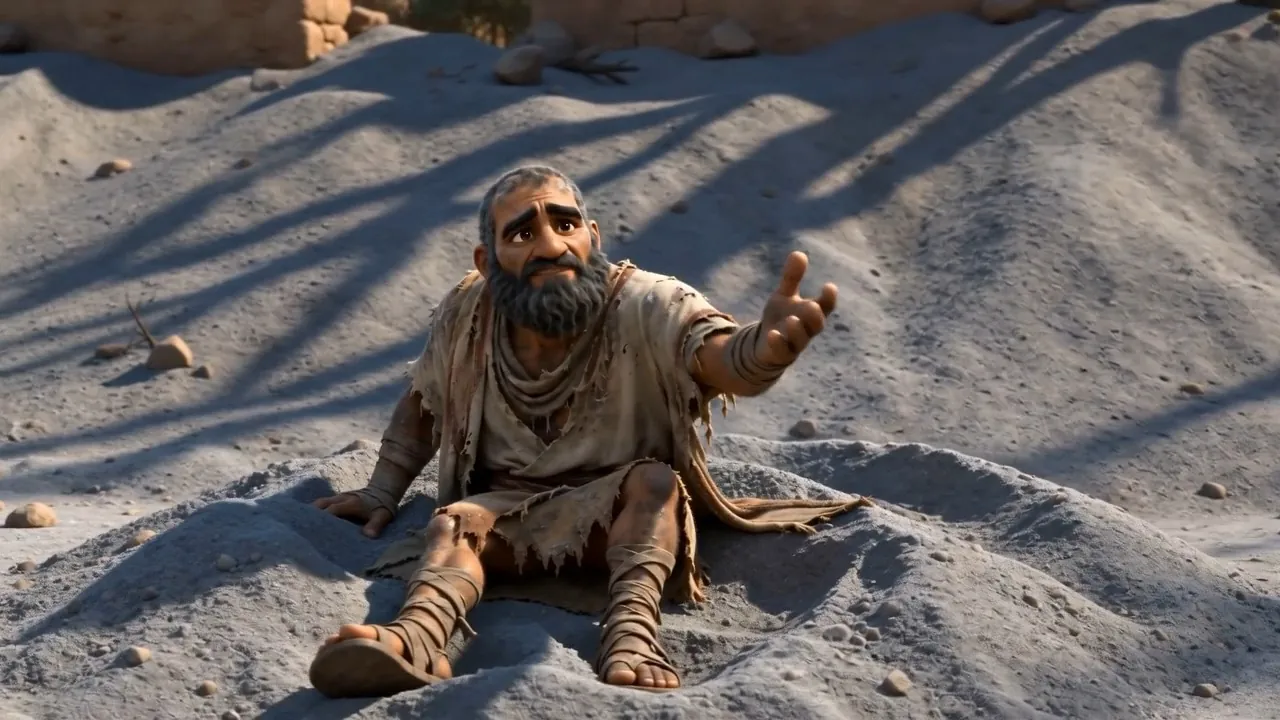

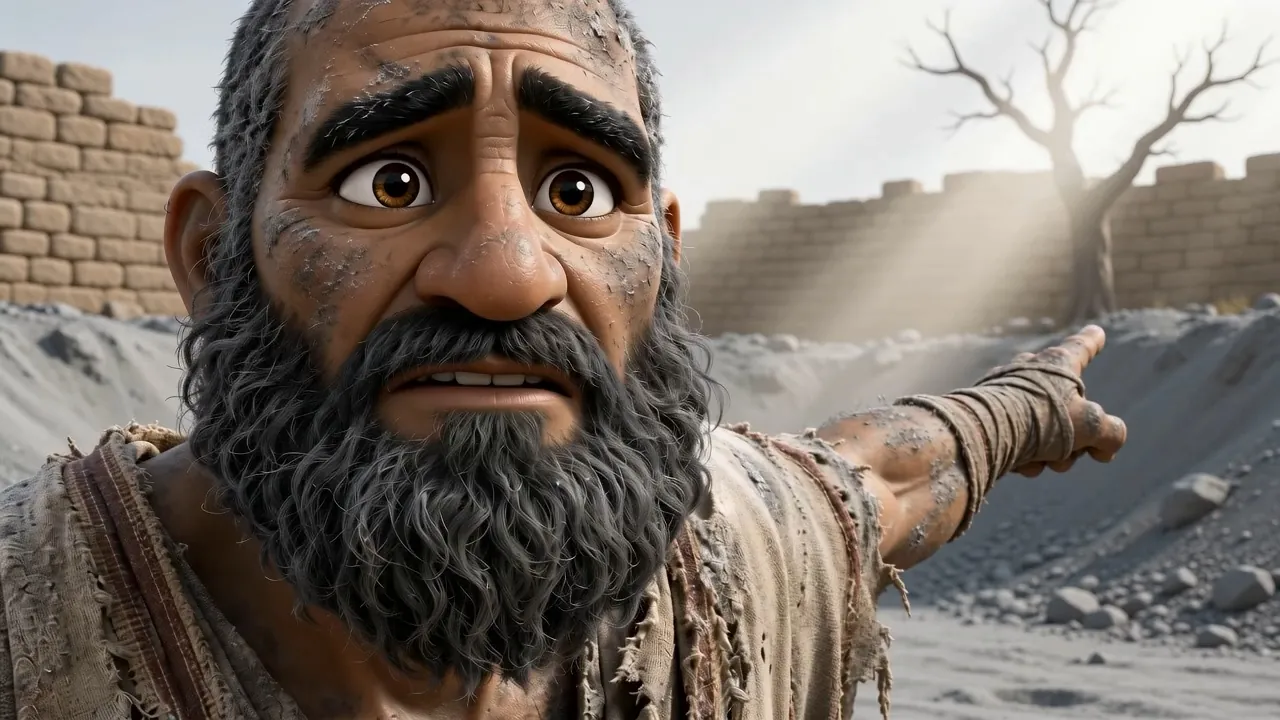
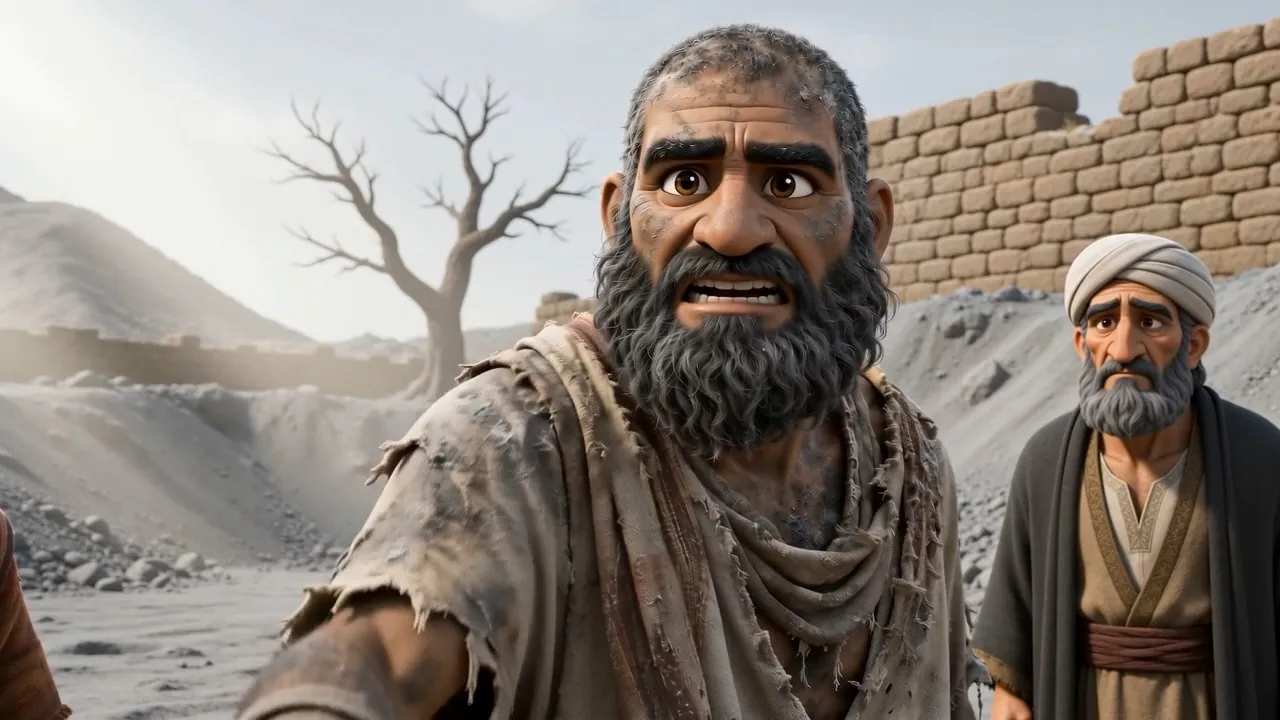
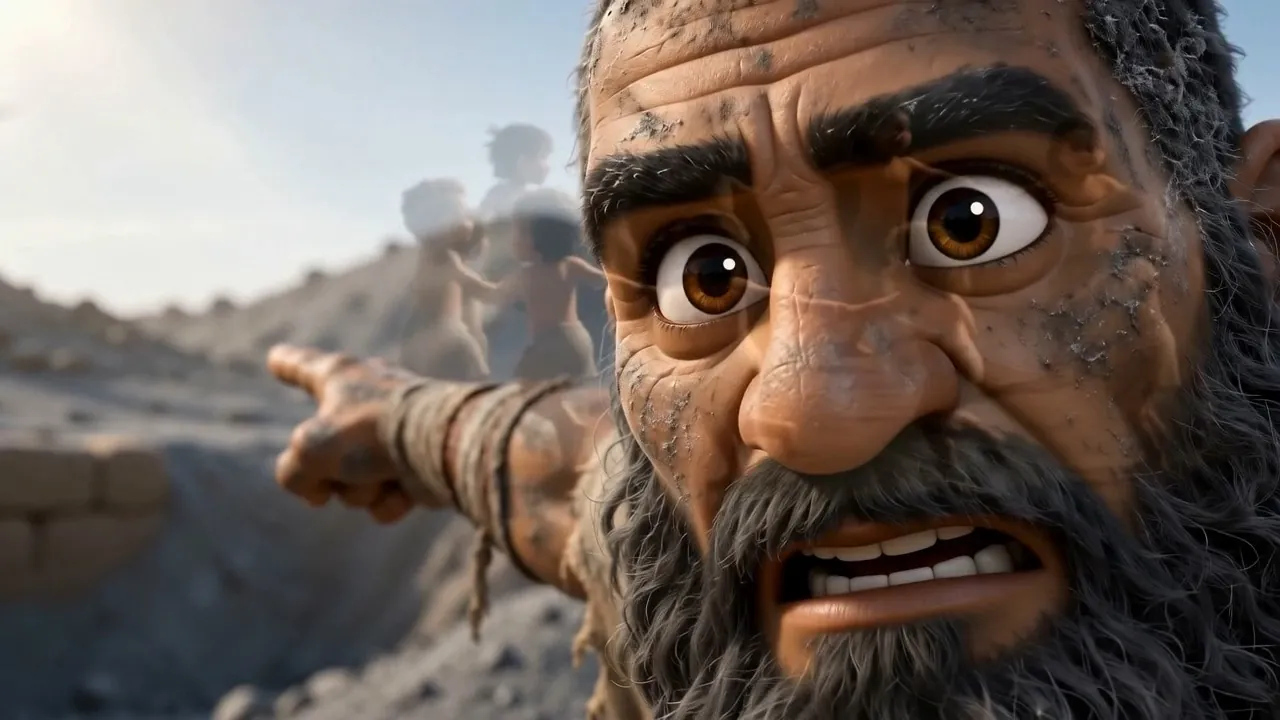
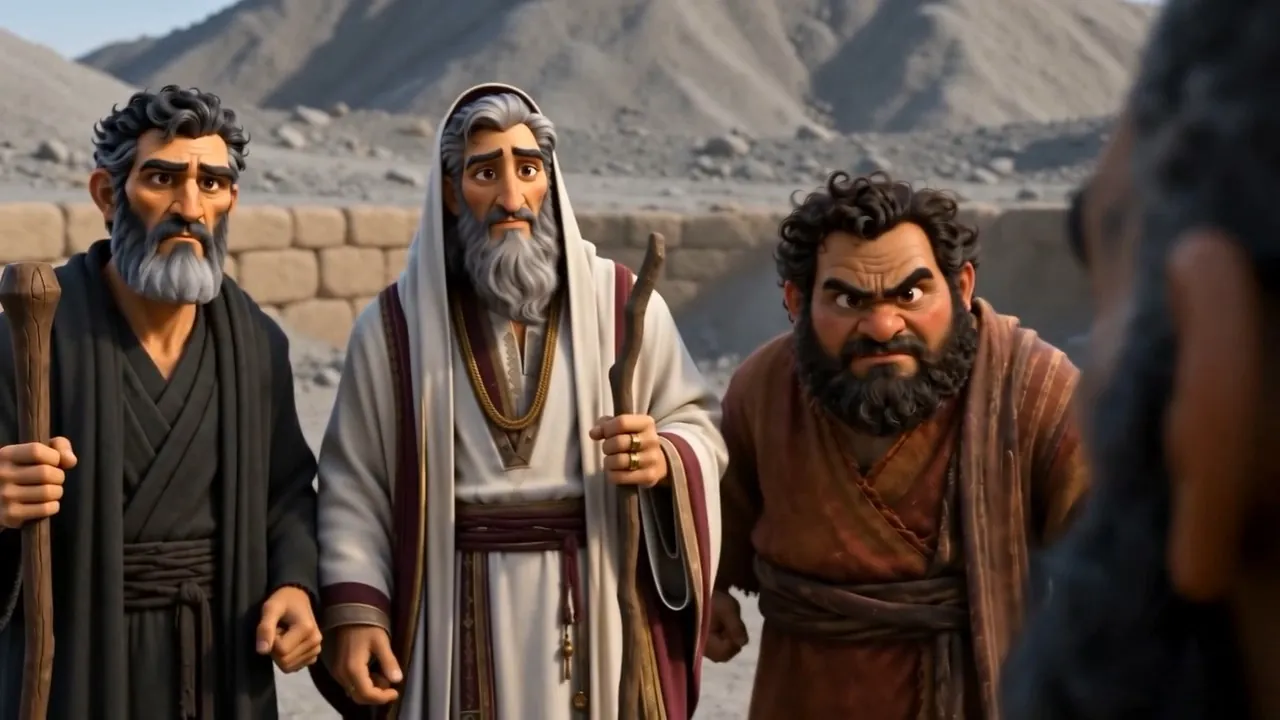
And then Job turns their argument inside out with one observation anybody can check: “Why do the wicked live, become old, yes, and grow mighty in power? Their houses are safe from fear… they spend their days in prosperity.” If suffering proves guilt, then comfort proves innocence — and everyone in that circle knows men who are comfortable and guilty. Job 21 : 7–13
Why do the wicked live, become old, and grow mighty?
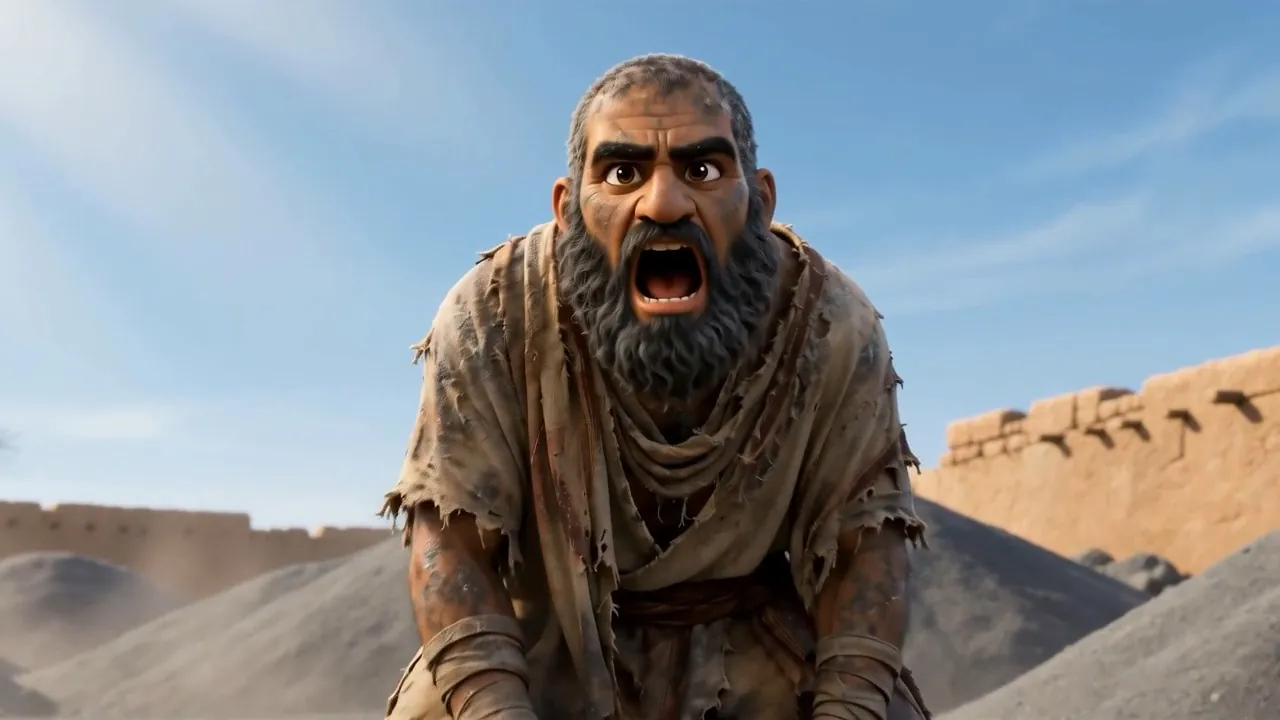
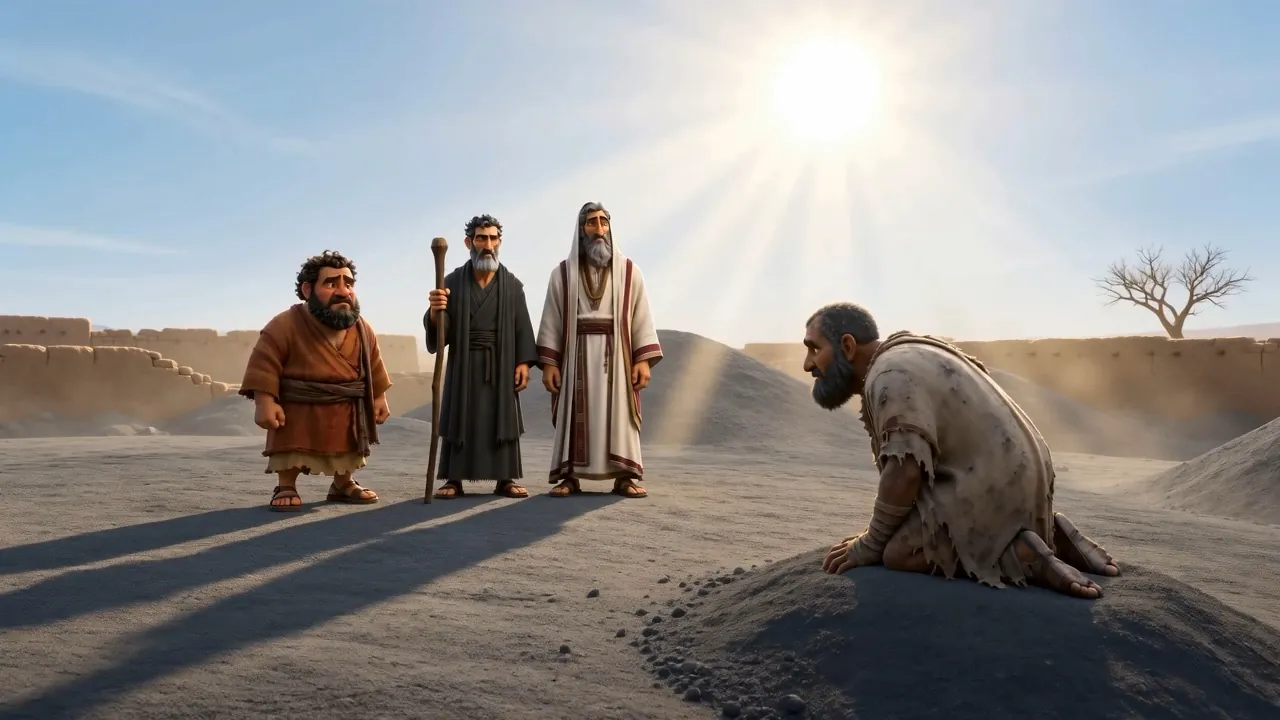
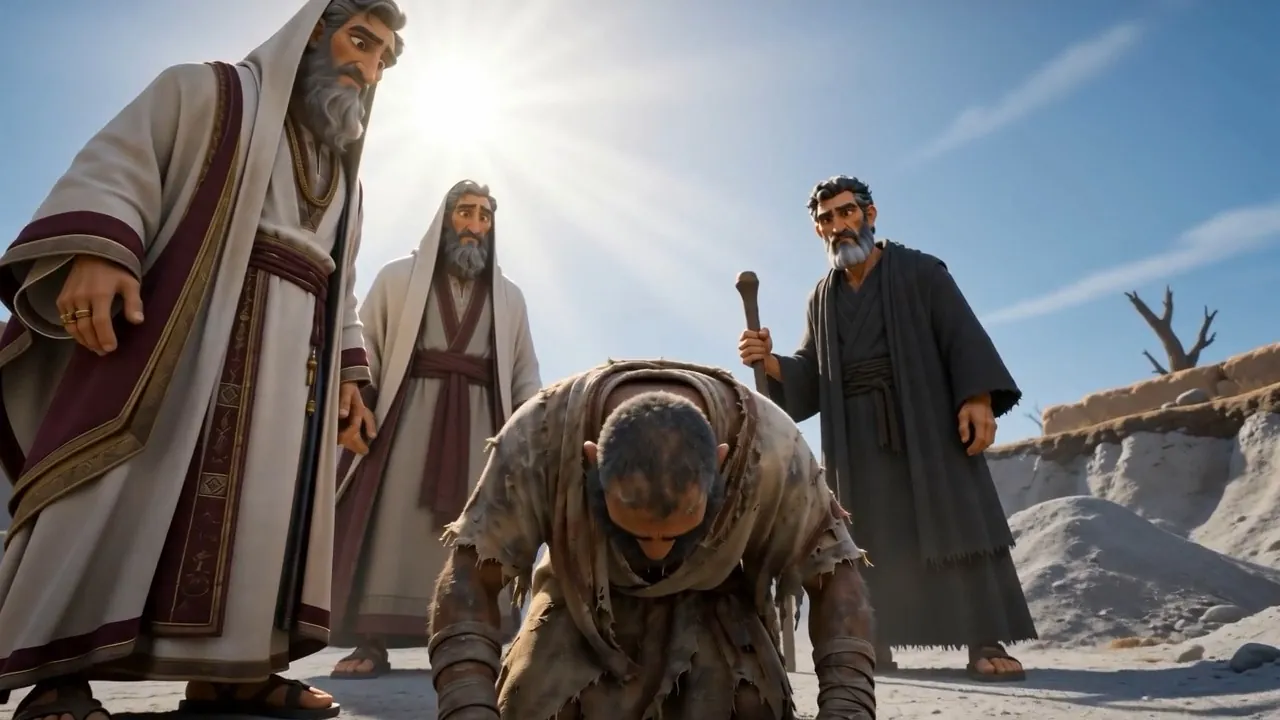
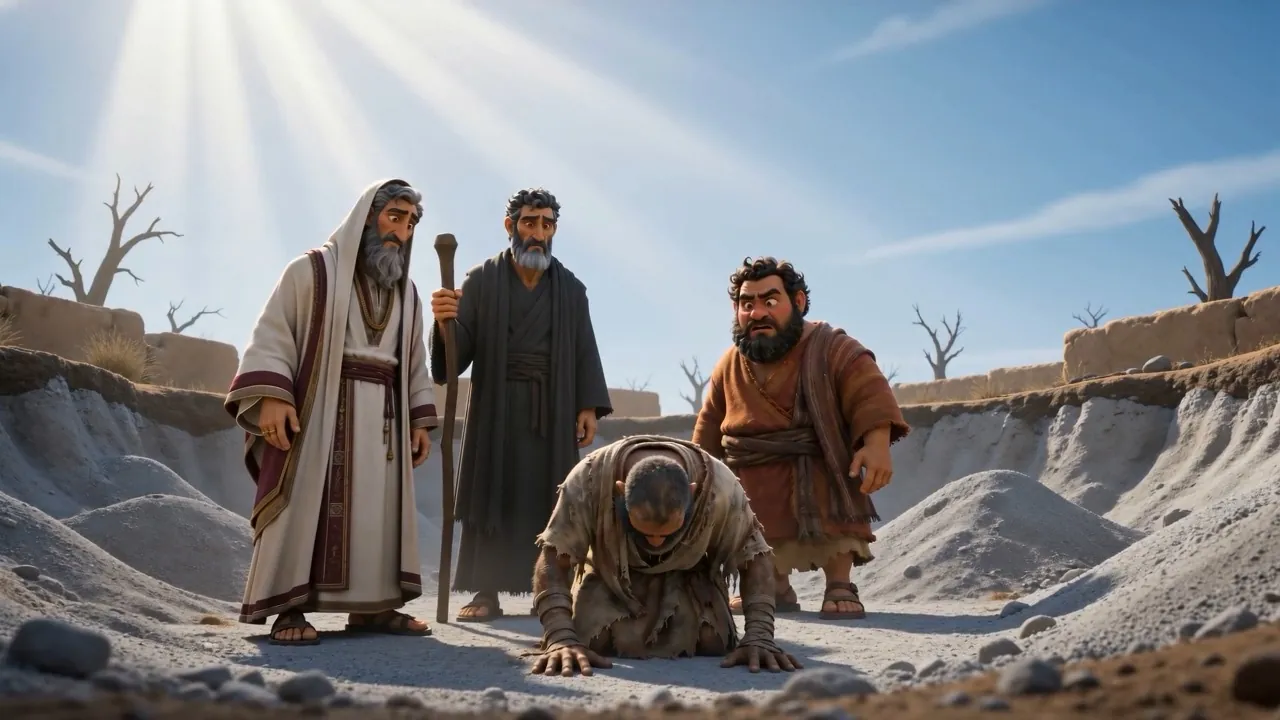
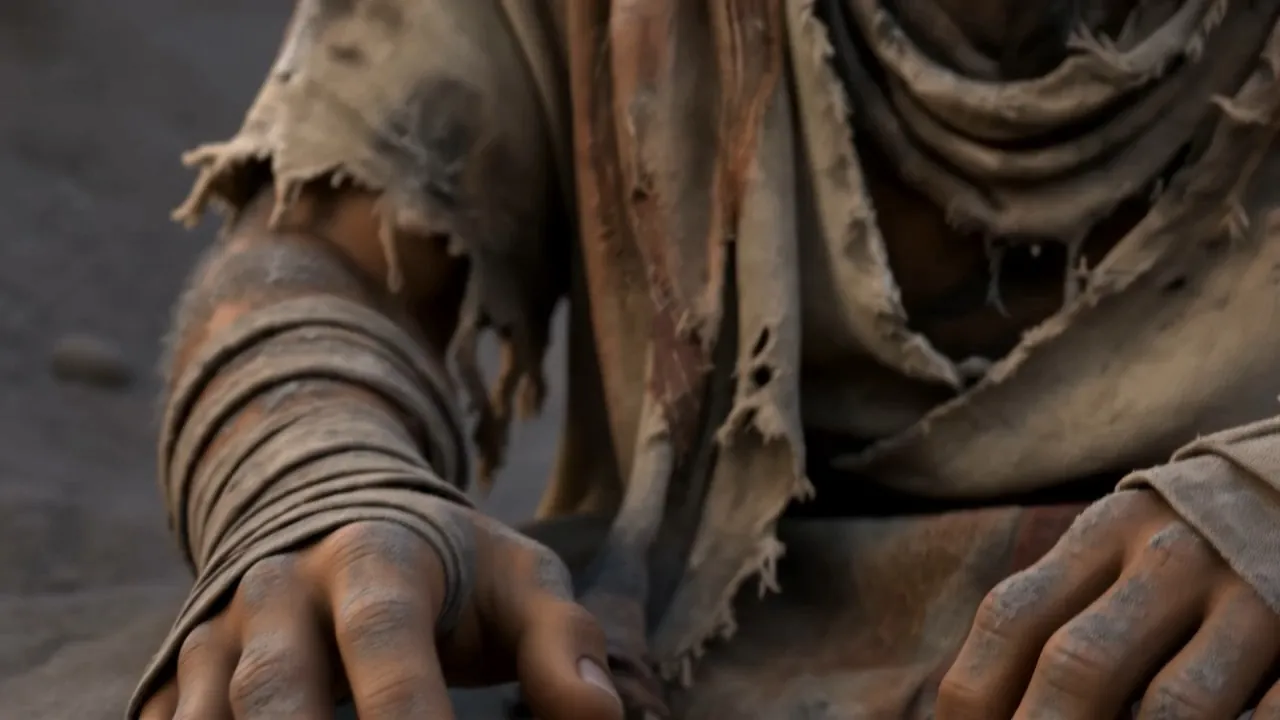

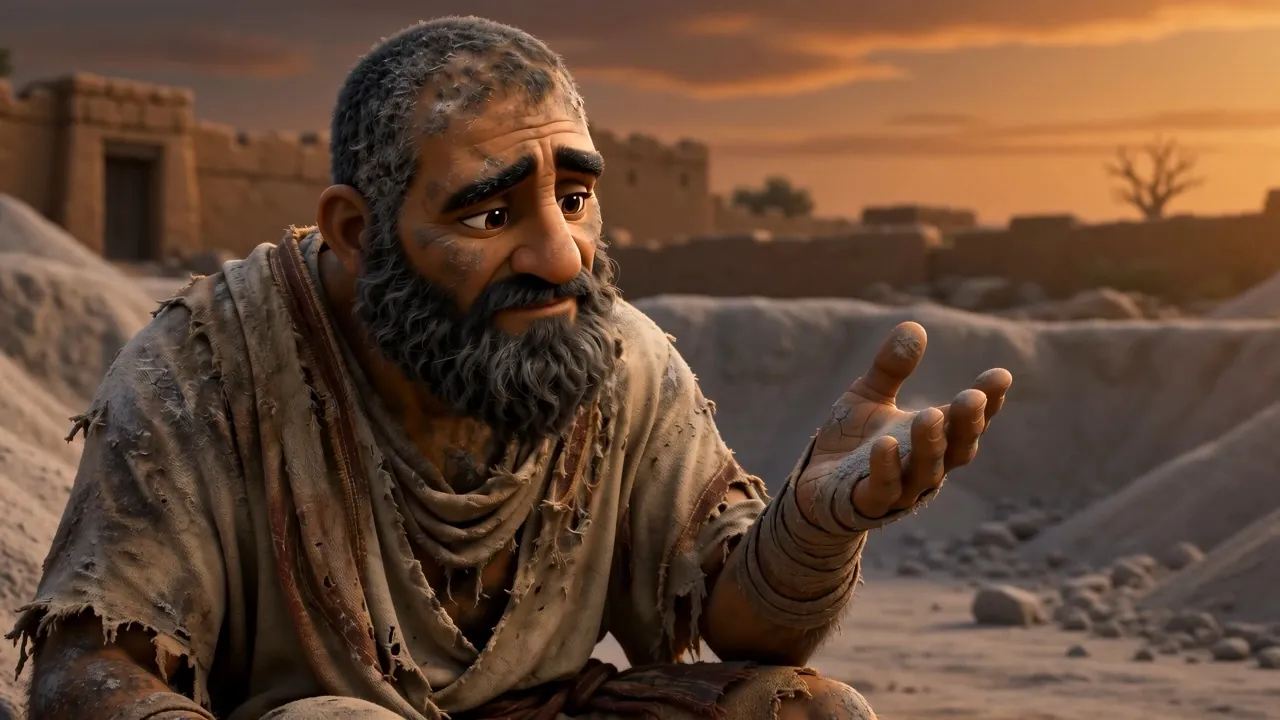

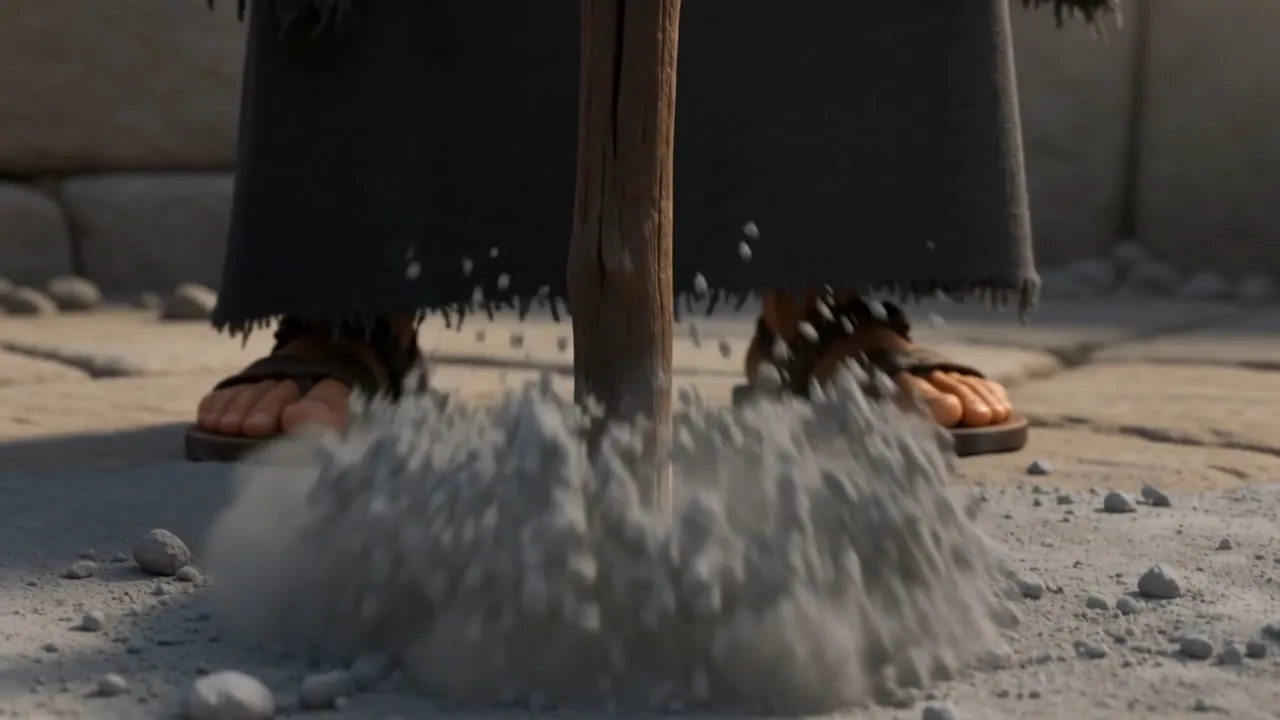
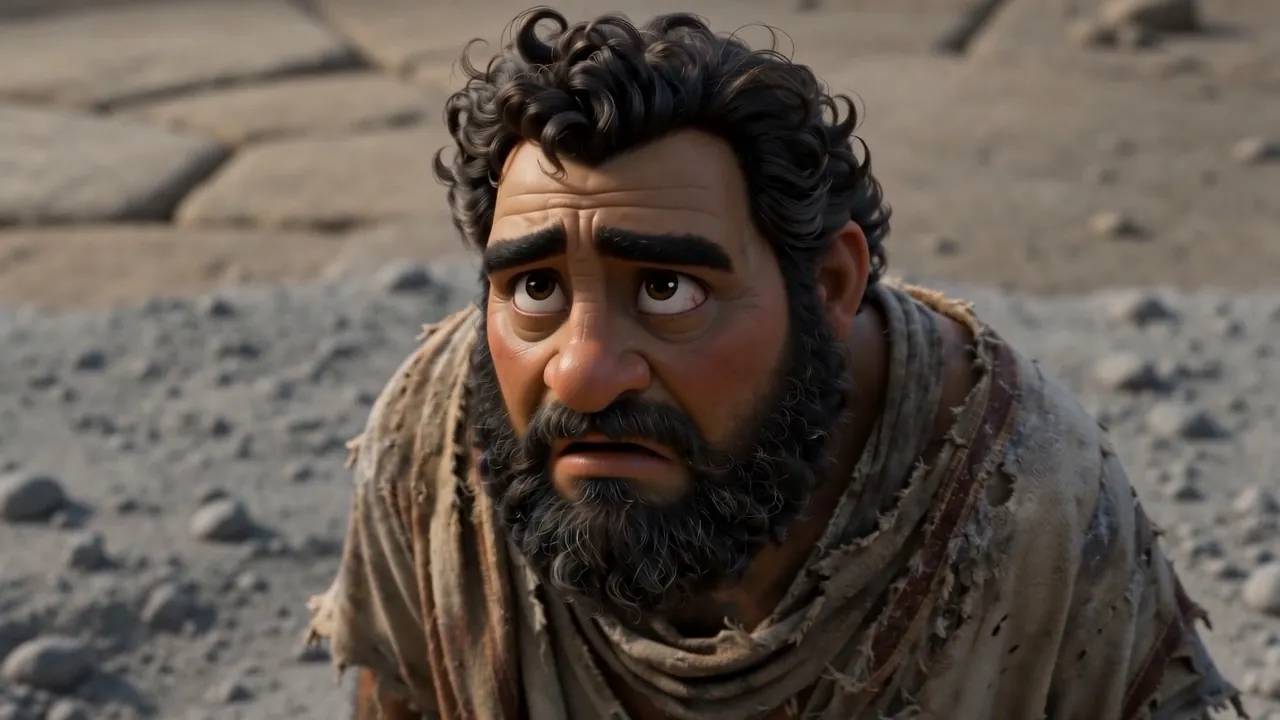
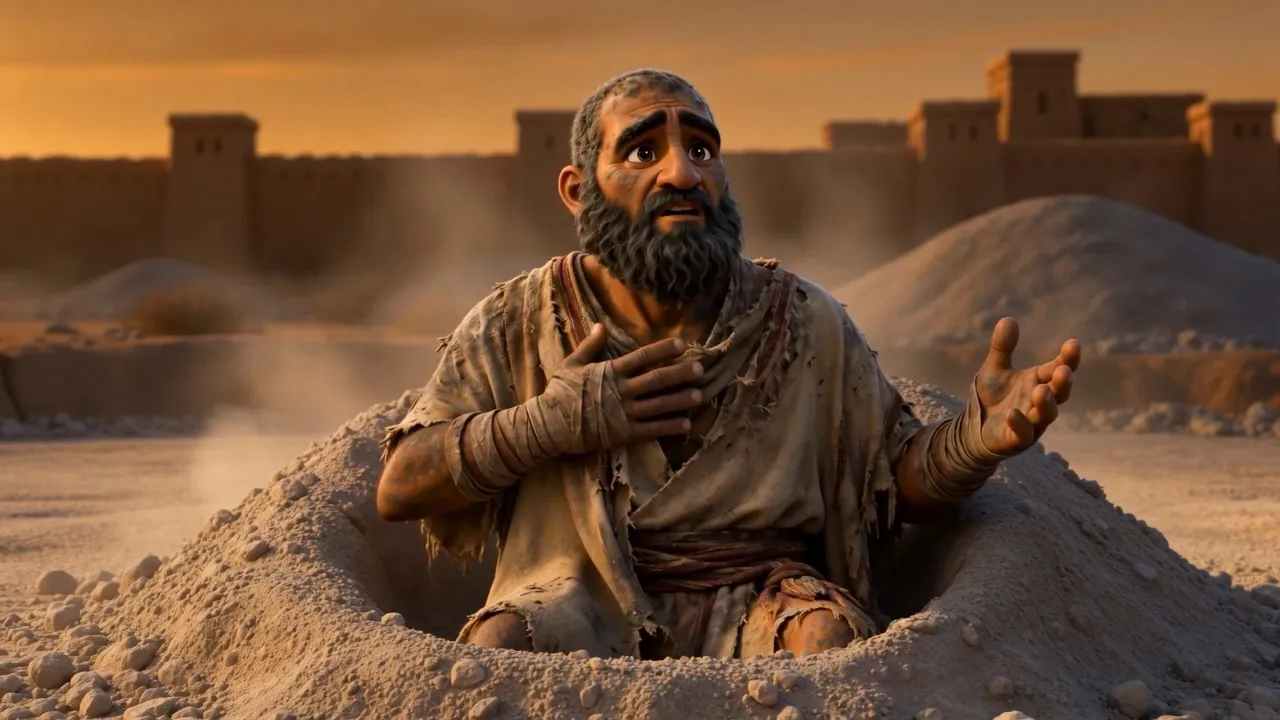
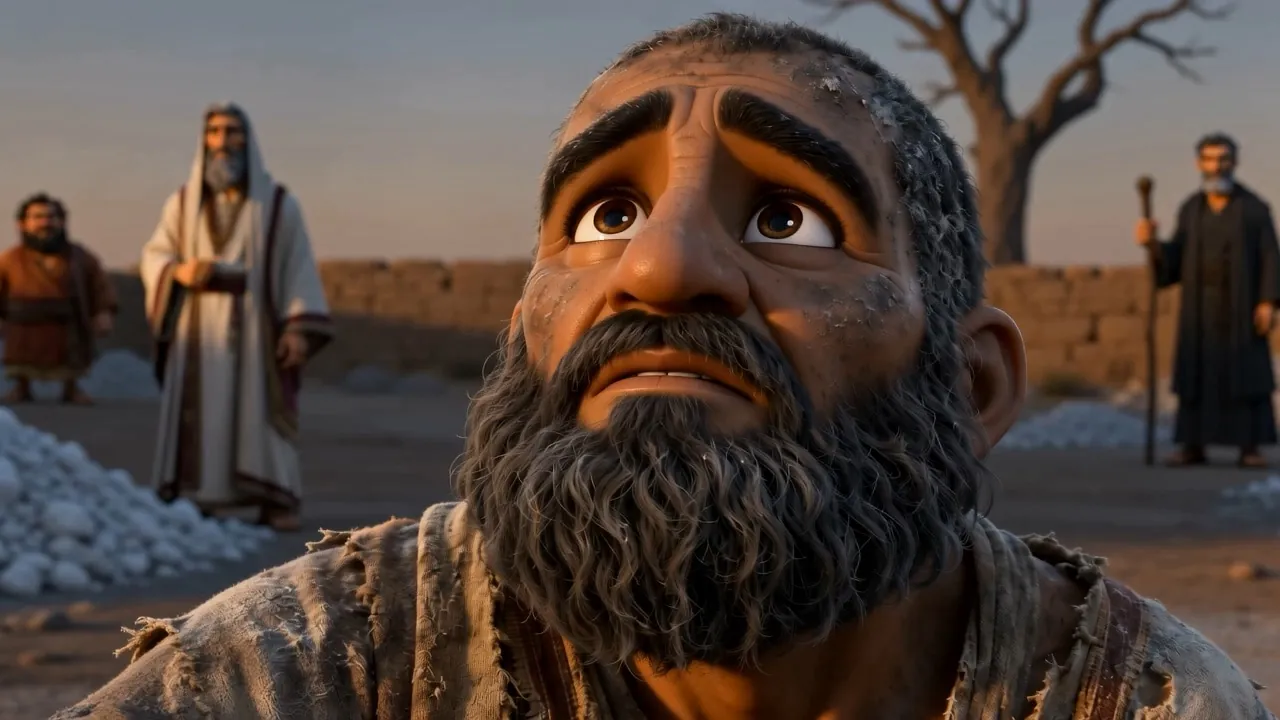
“He has cast me into the mire. I have become like dust and ashes.” The composition says the rest: one man on his hands and knees, three men standing over him with the sun behind them, and a handful of grey dust going out of an open hand into the wind. Job 30 : 19
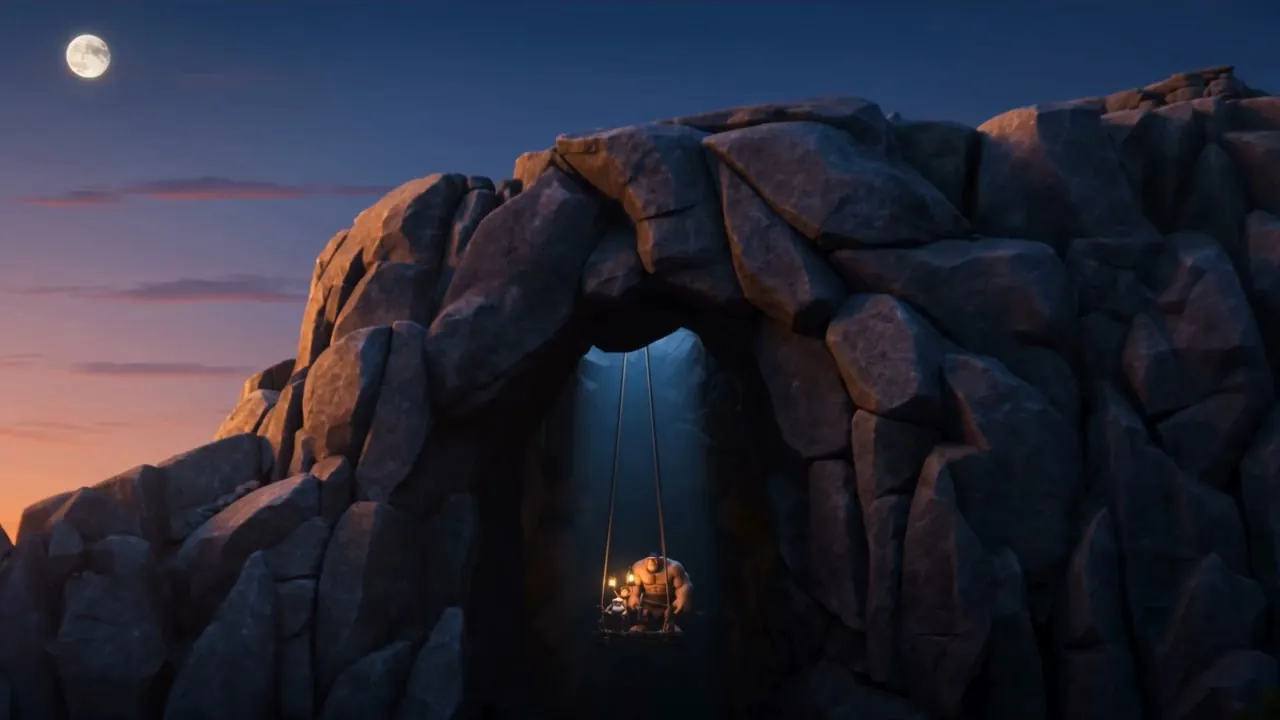
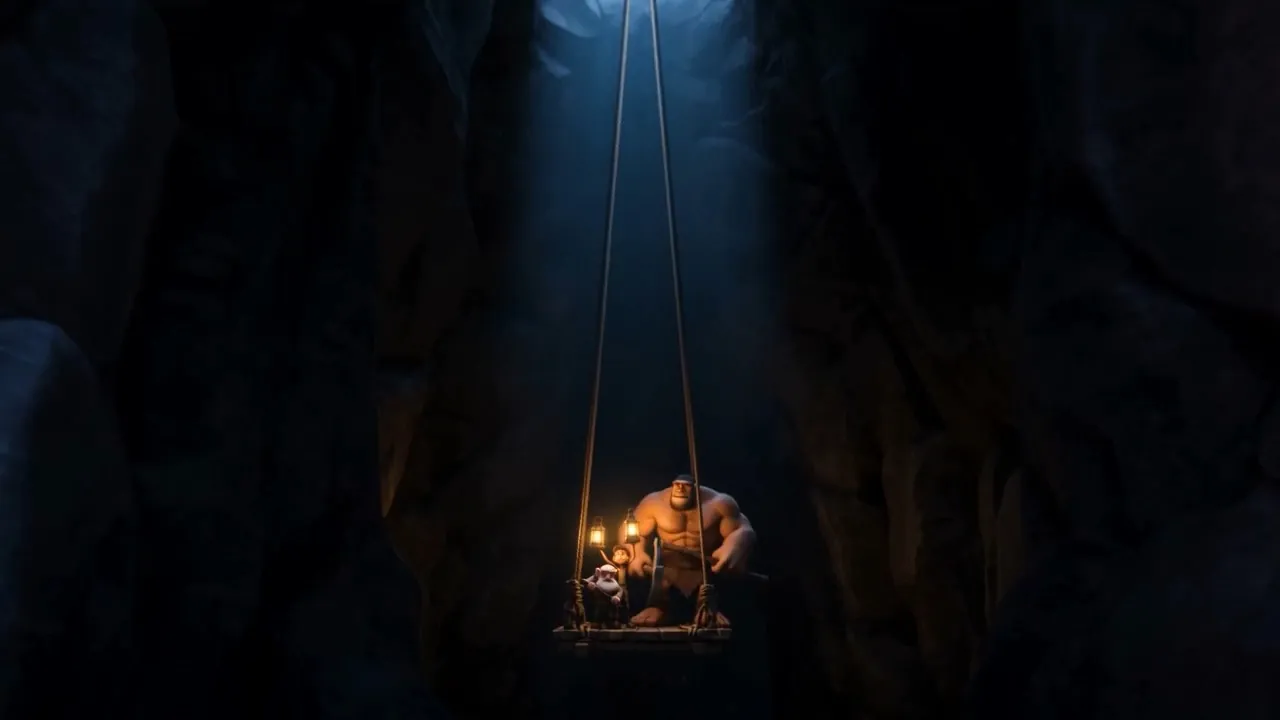

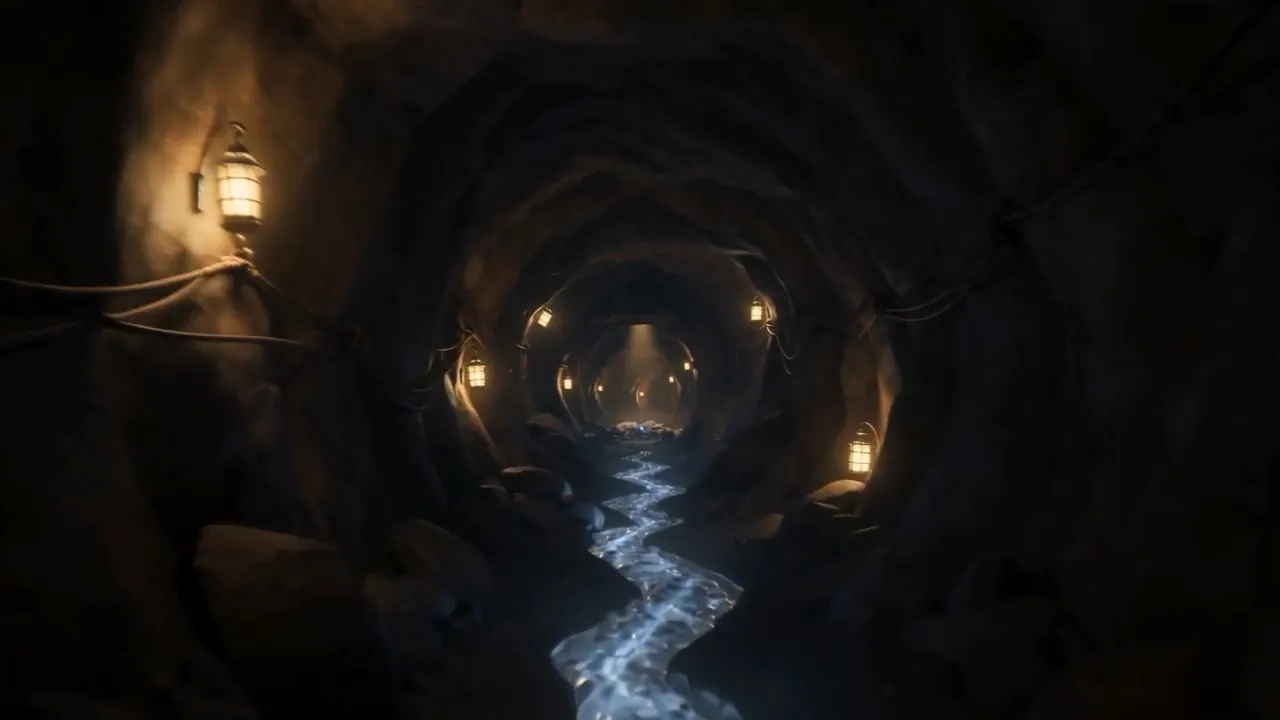
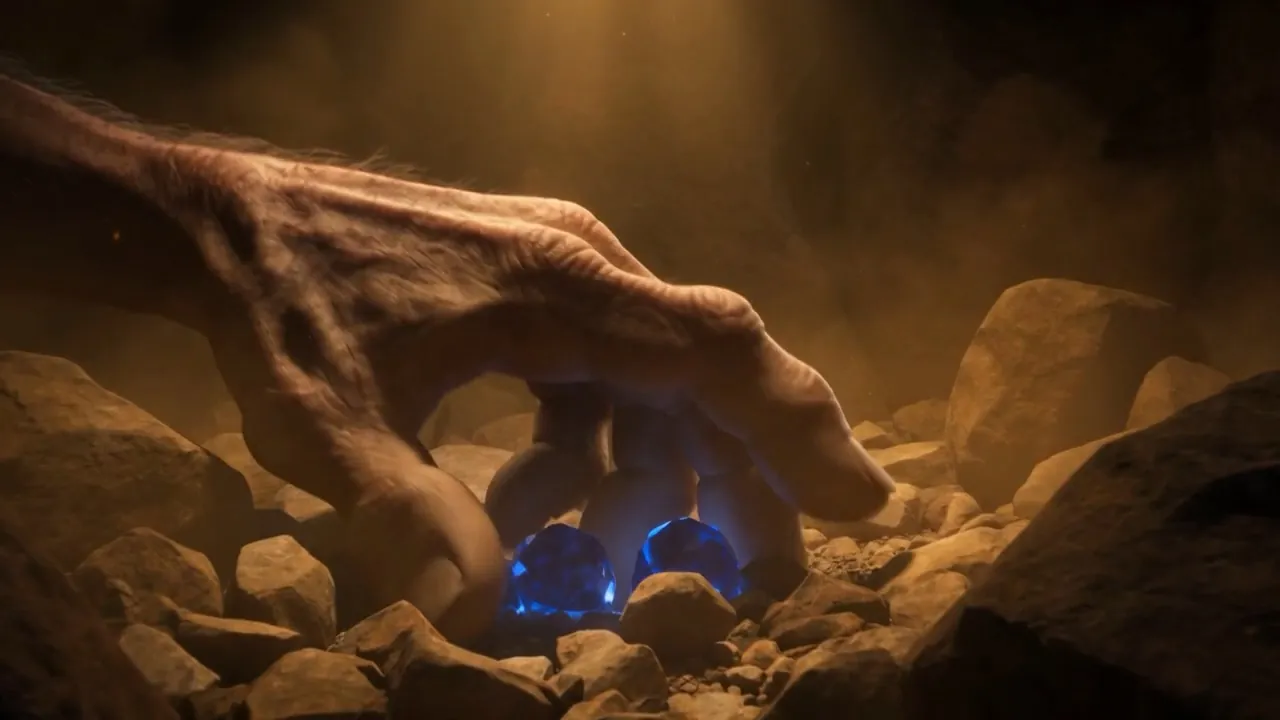



Then the book stops the argument dead and inserts a poem. “Surely there is a mine for silver, and a place for gold which they refine… He sets an end to darkness, and searches out to the farthest bound the stones of obscurity.” Men will tunnel into a mountain for sapphire. “But where shall wisdom be found? And where is the place of understanding? Man doesn't know its price.” Job 28 : 1–13
But where shall wisdom be found?
Interlude · Your turn
Men will tunnel into a mountain for sapphire. Search the dark.
Find five stones down where the lamps run out.
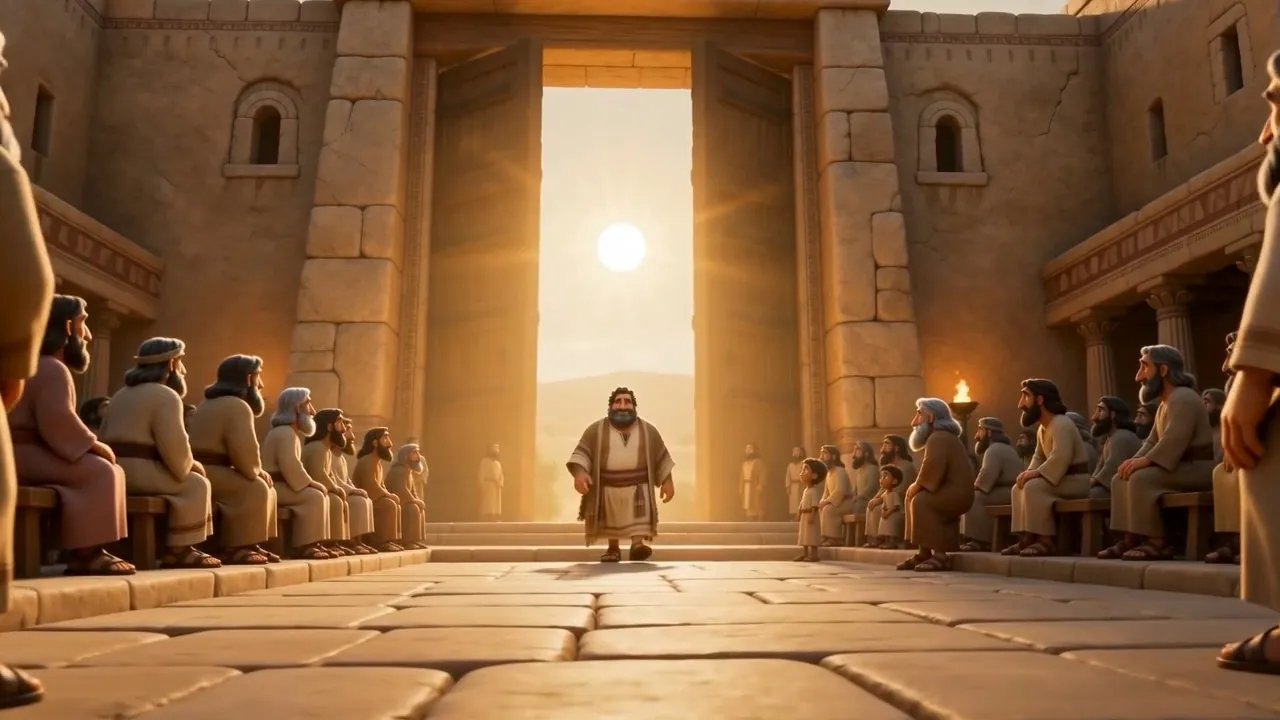
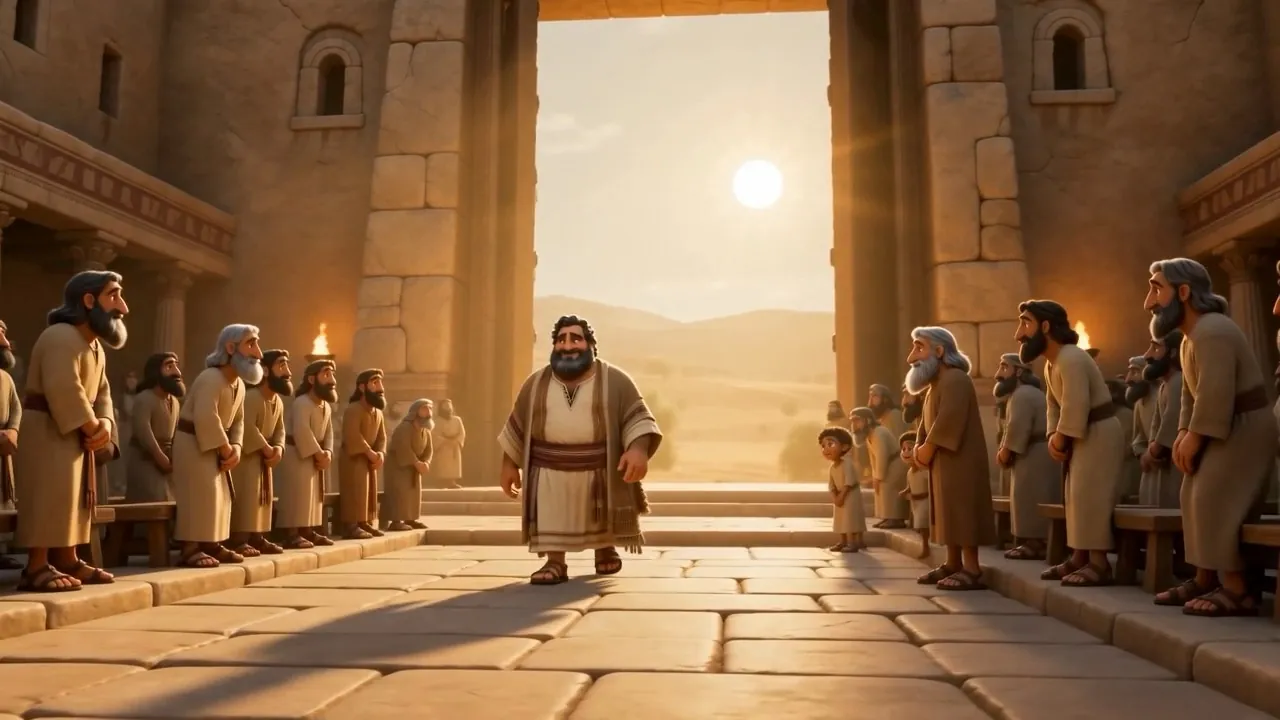

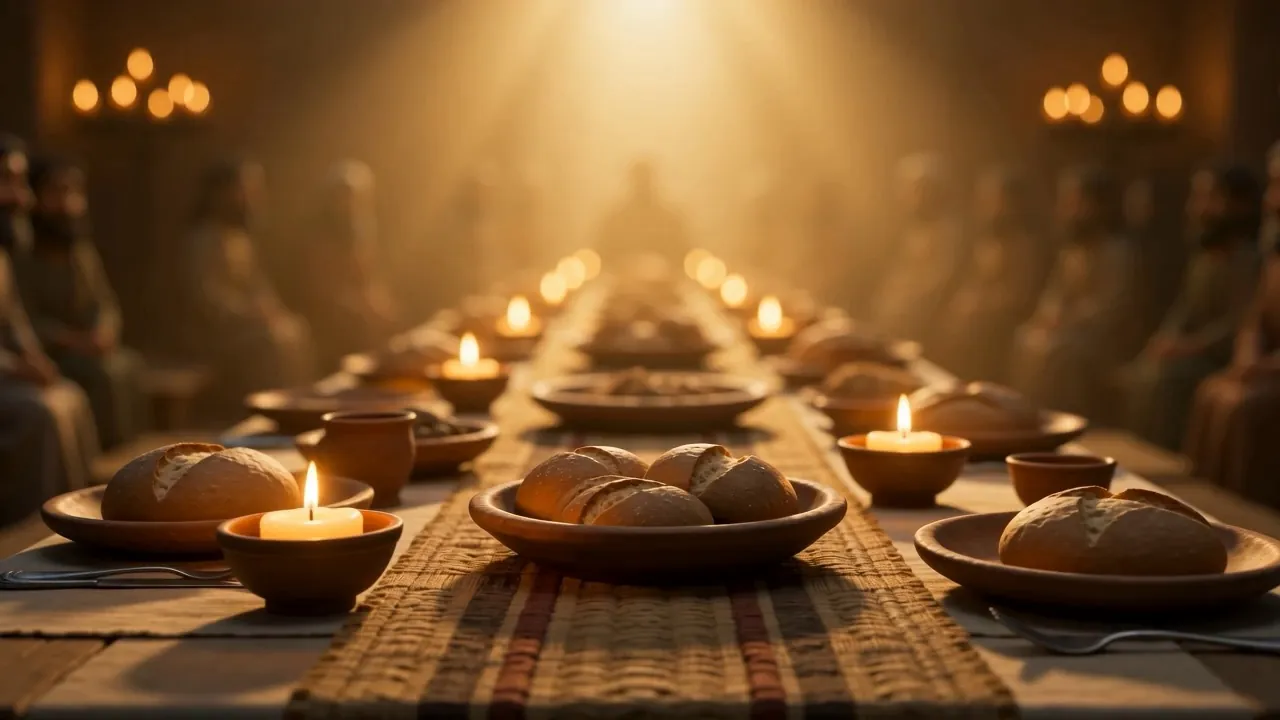

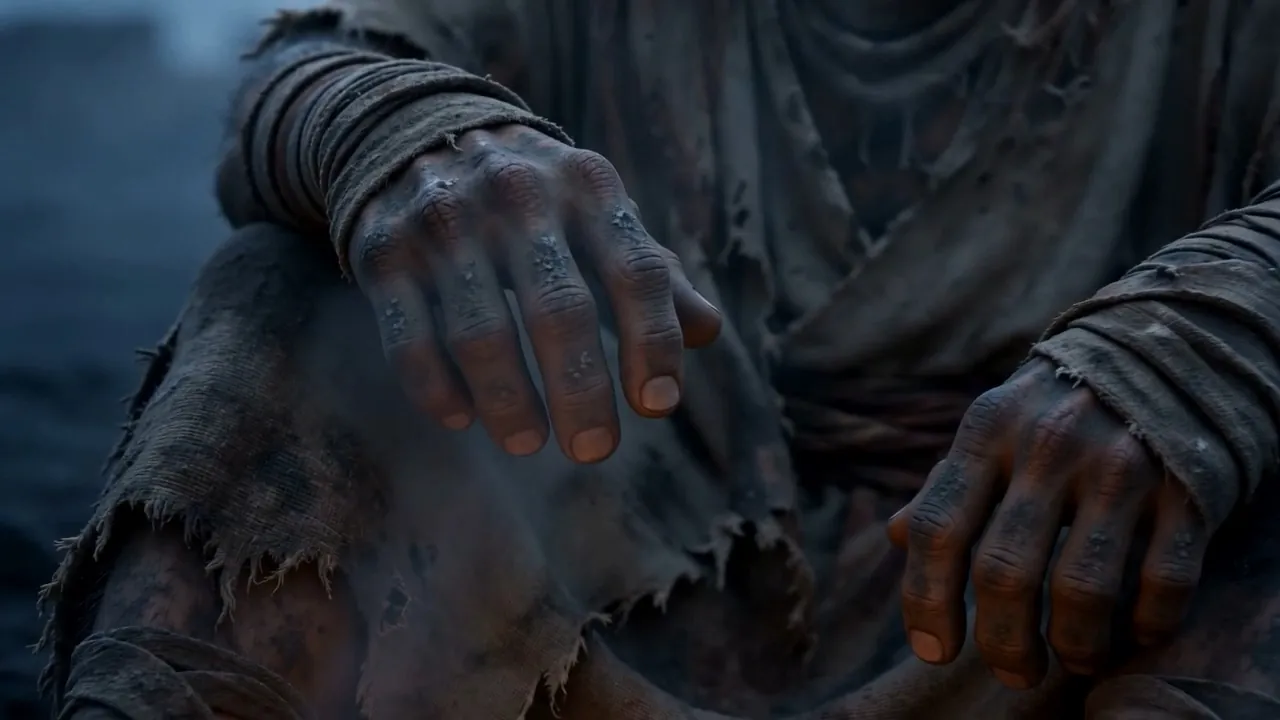
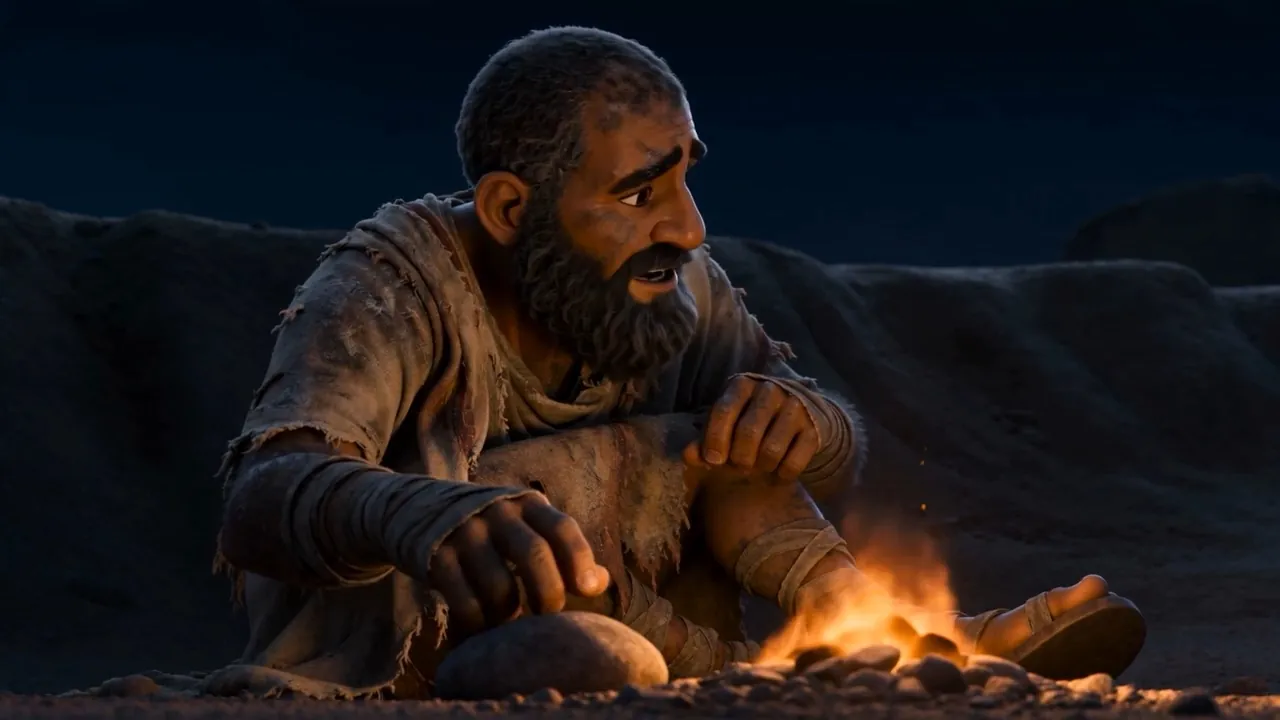
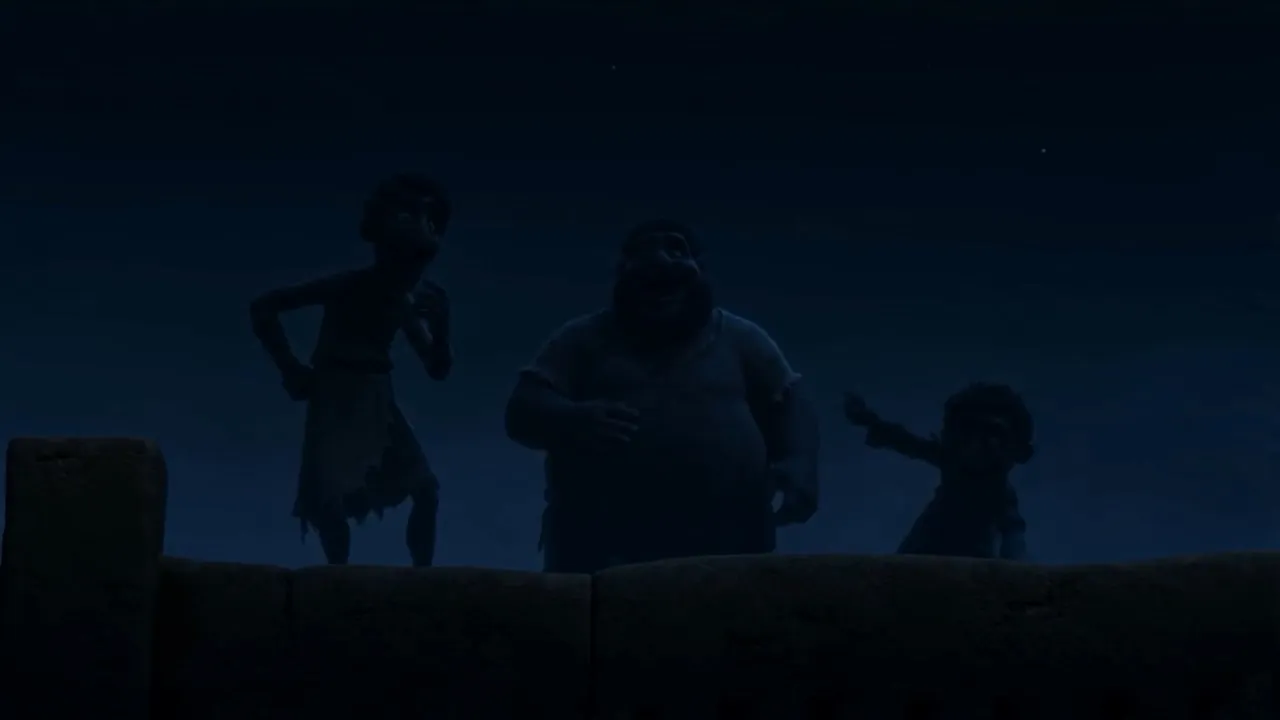
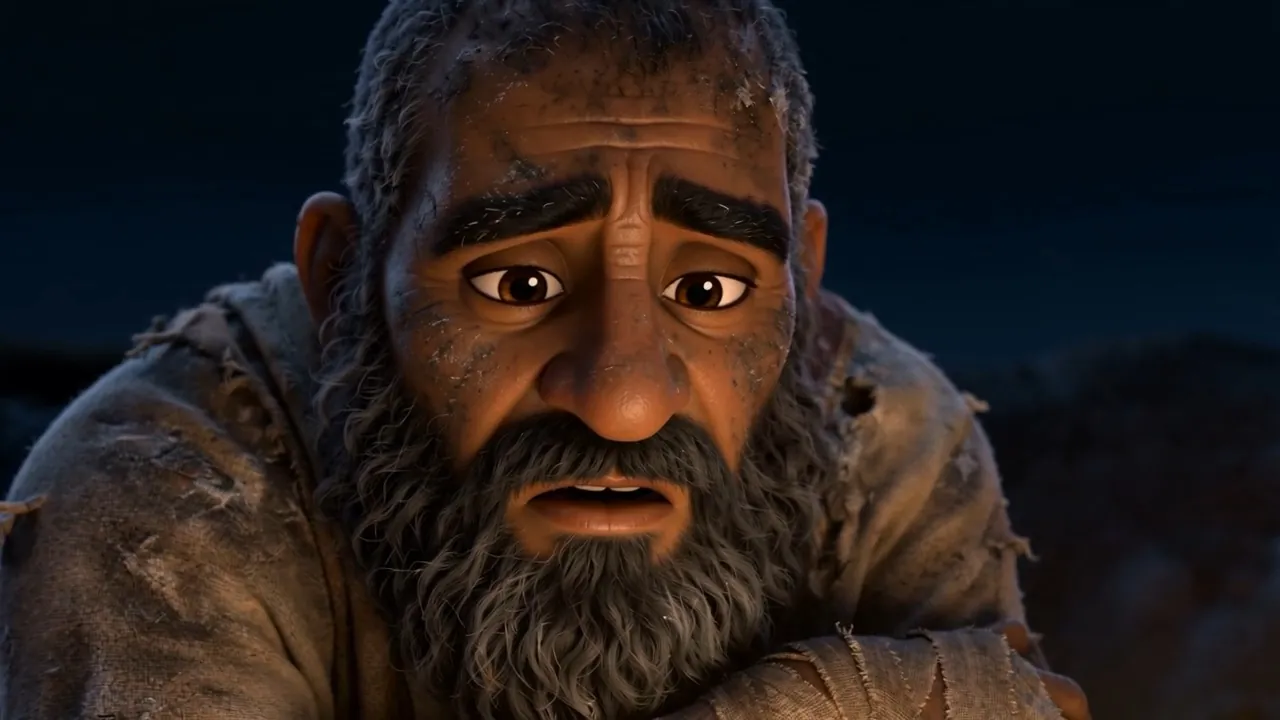
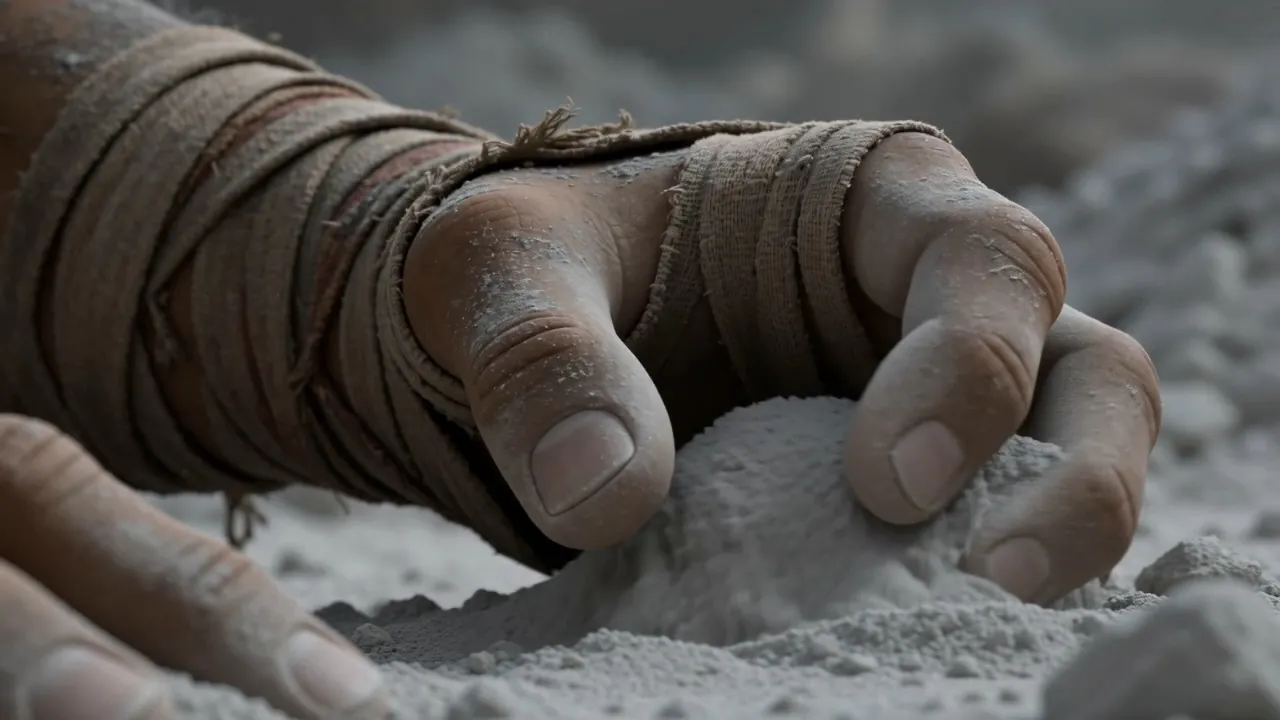
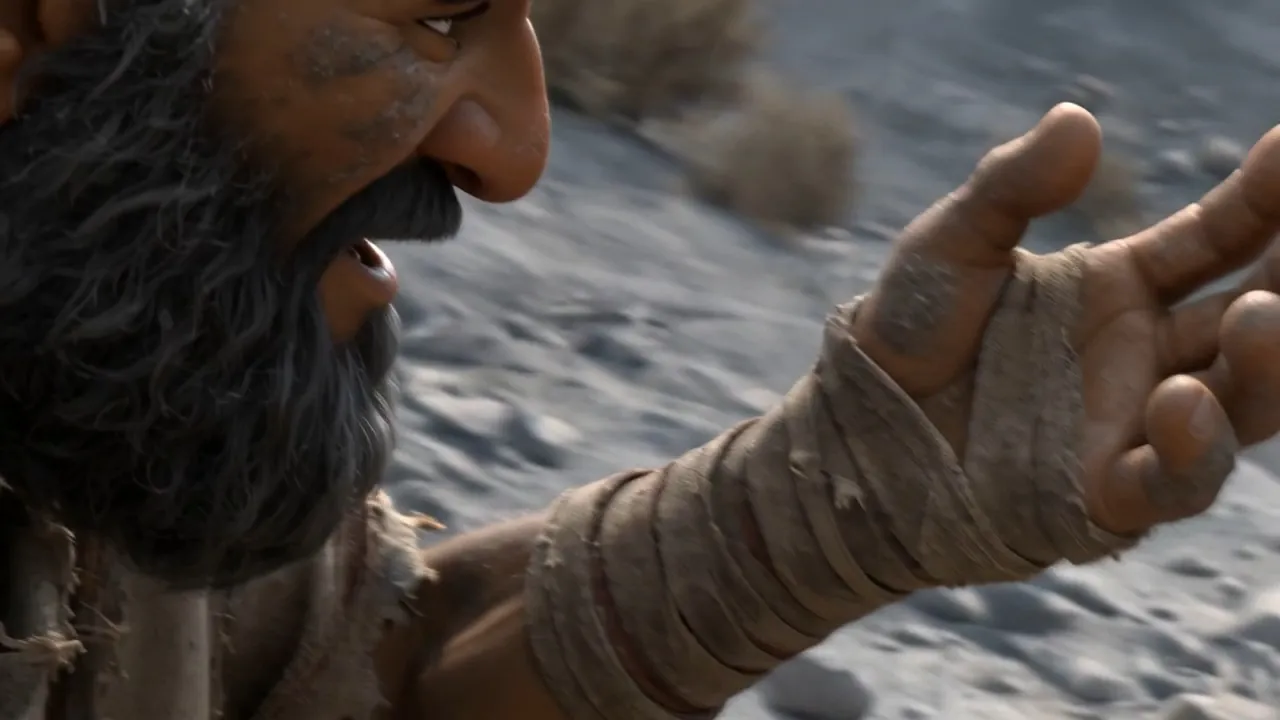
“Oh that I were as in the months of old, as in the days when God watched over me… when I went out to the gate to the city, when I prepared my seat in the street, the young men saw me and hid themselves.” The memory cuts against the present without a word — a warm table and a hand held, then a bandaged hand alone on cold ash. “But now those who are younger than I have me in derision.” Job 29 : 2–8 · 30 : 1
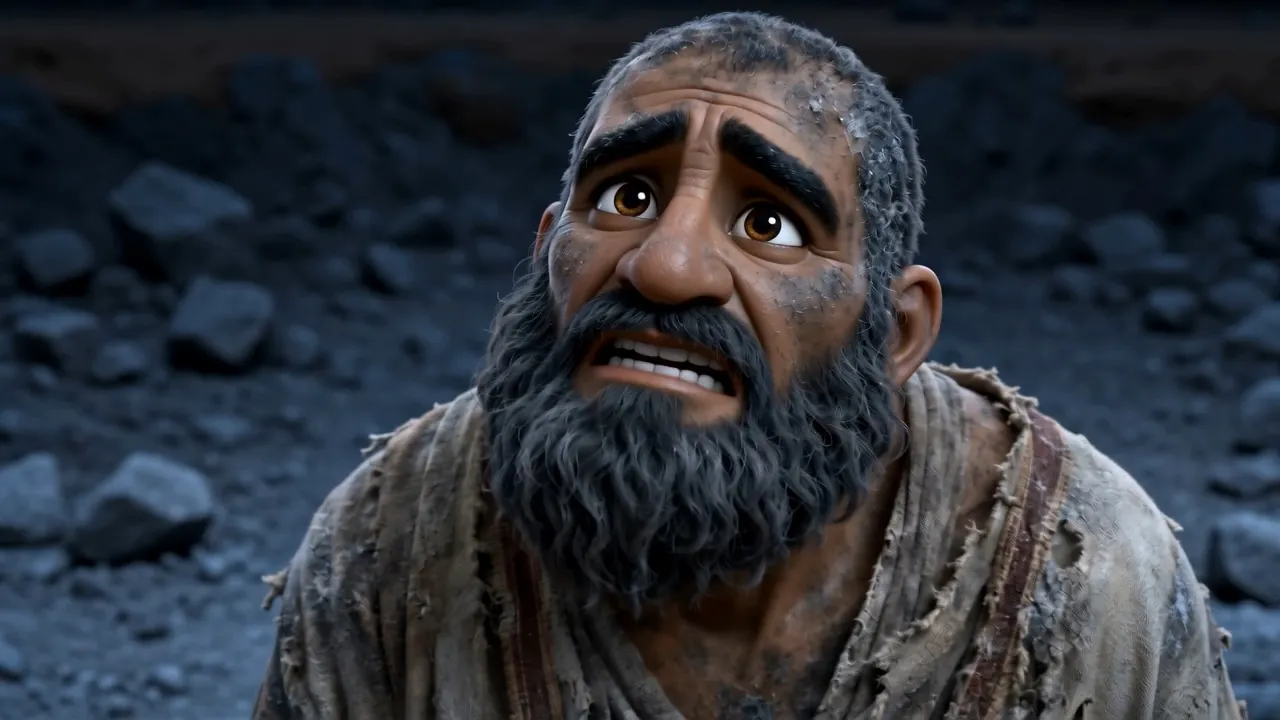

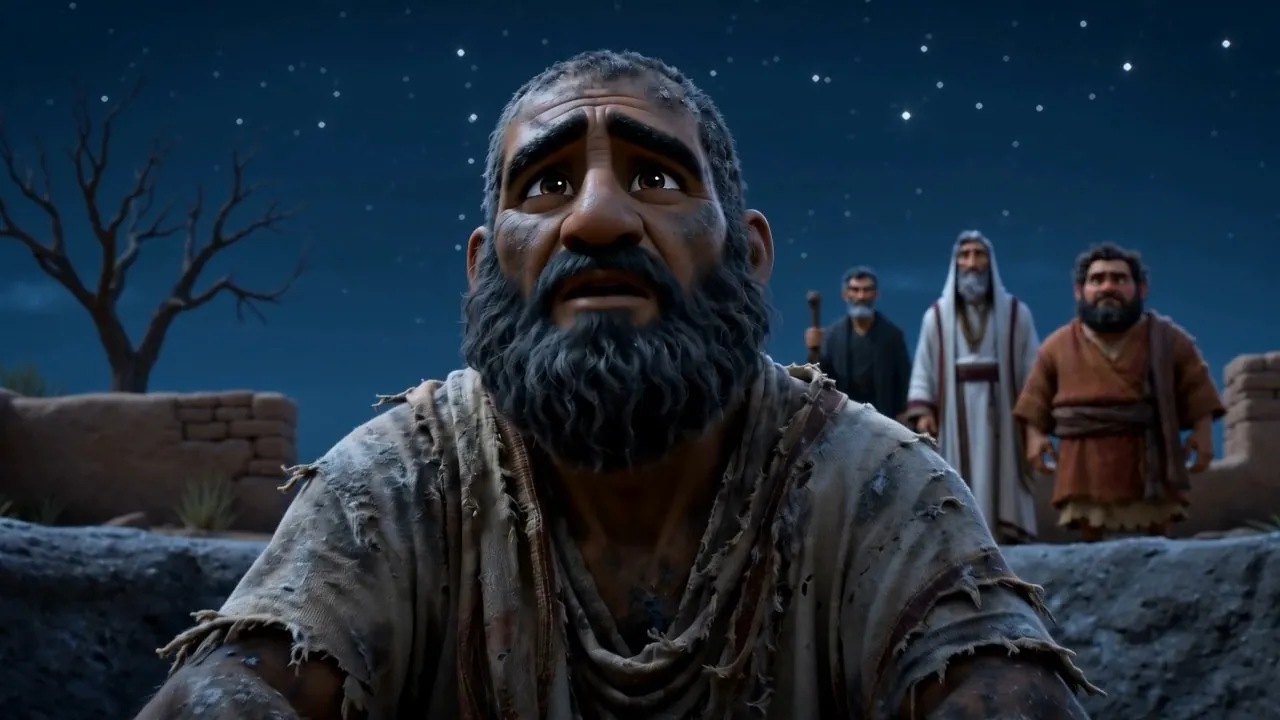

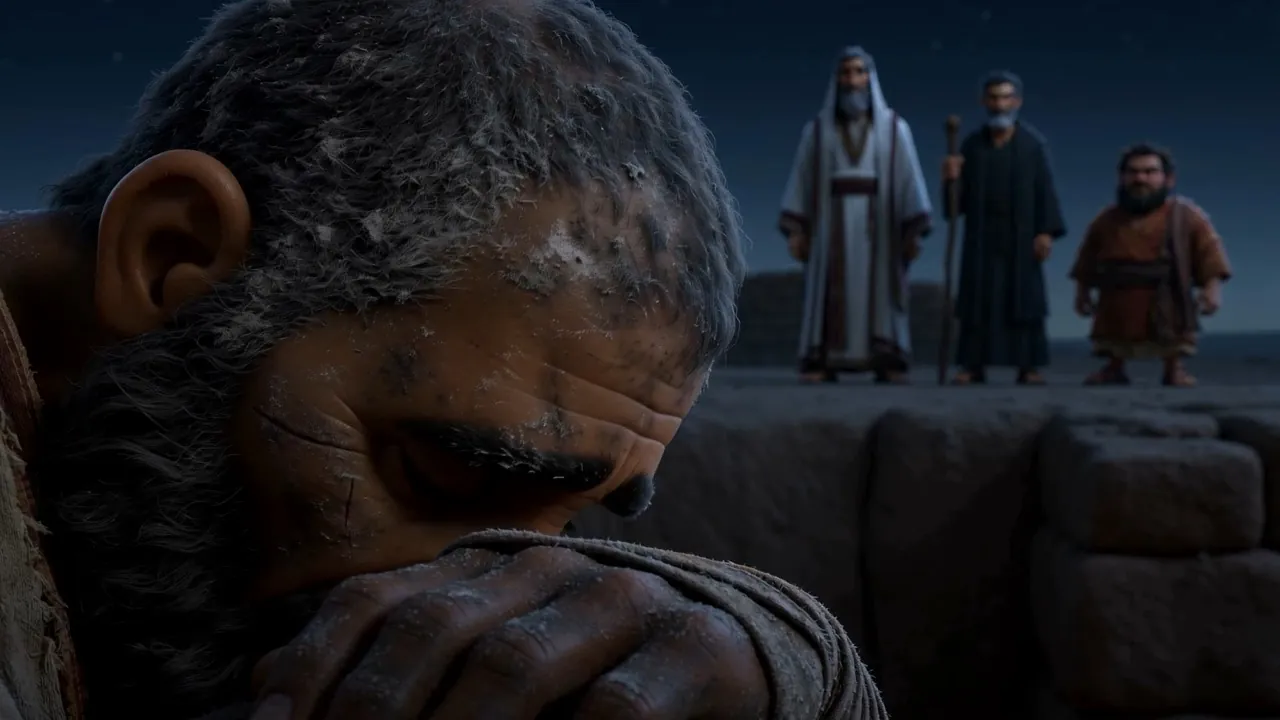
He ends with an oath of innocence so detailed it is almost a legal document — if I have withheld from the poor, if I have rejoiced at my enemy's ruin, if my land cries out against me, then let thistles grow instead of wheat. And then he demands a hearing: “Oh that I had one to hear me! Let the Almighty answer me.” The words of Job are ended. Job 31 : 35–40
Let the Almighty answer me.
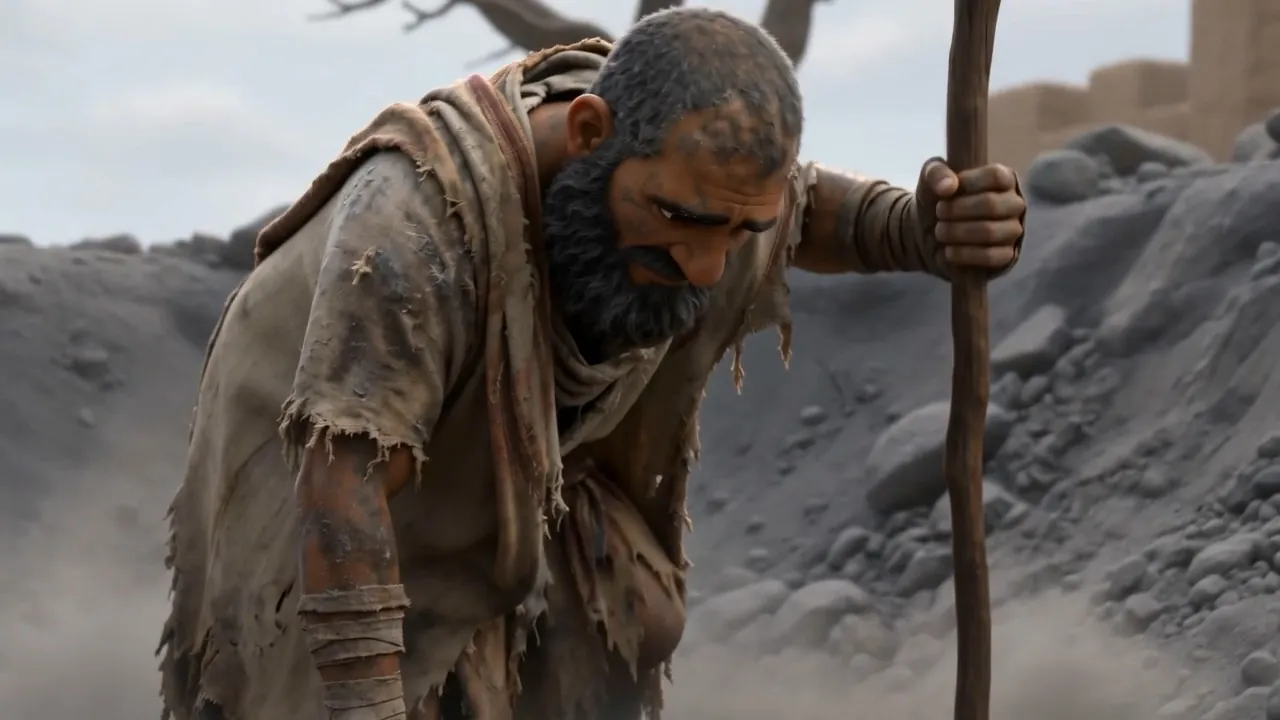
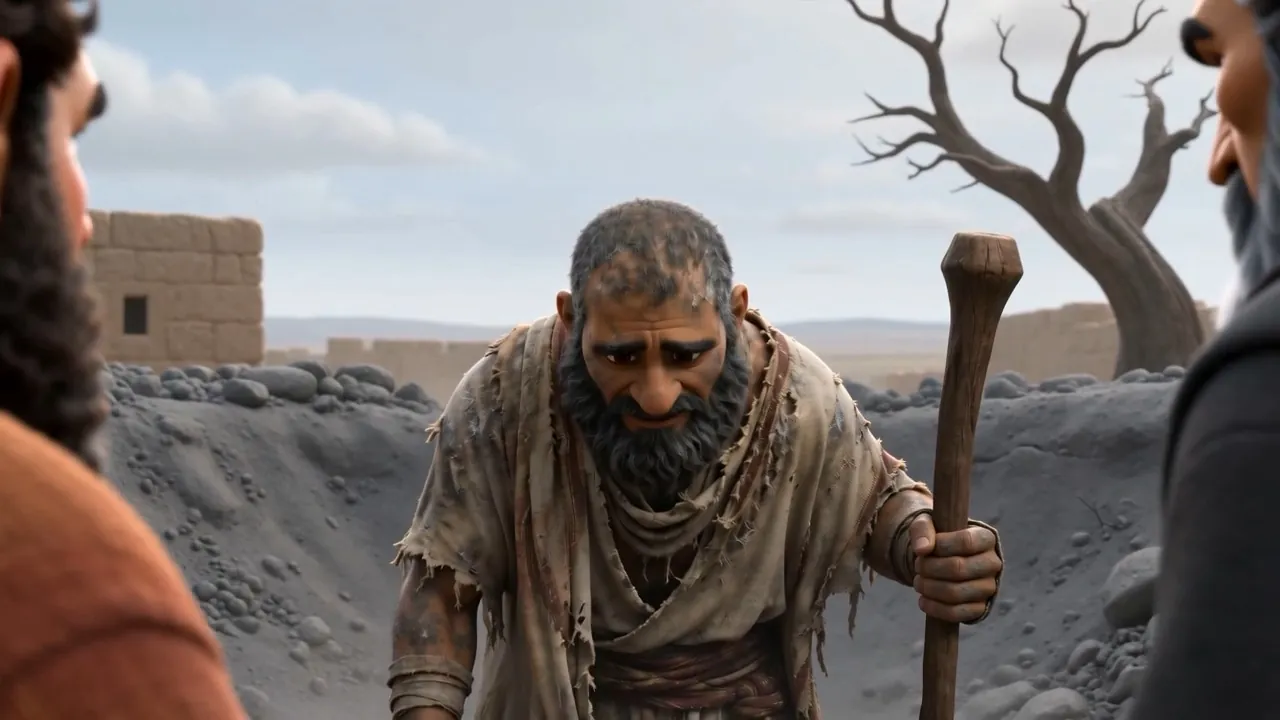
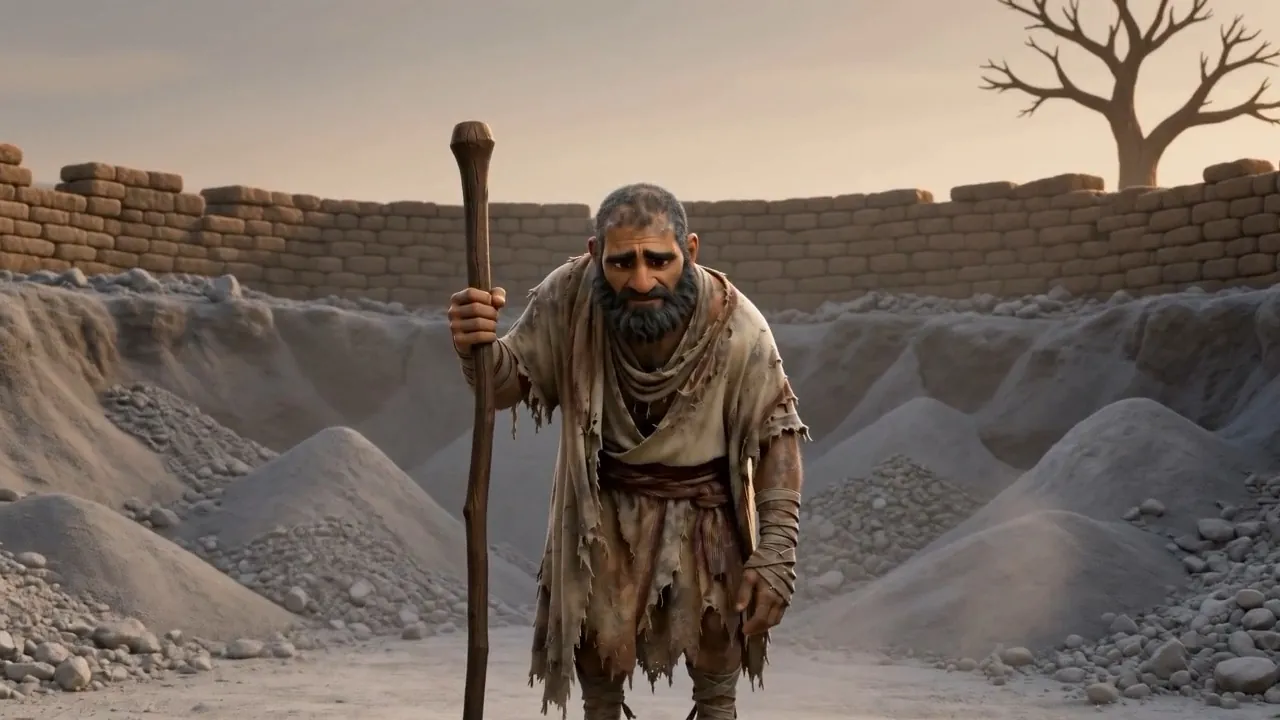
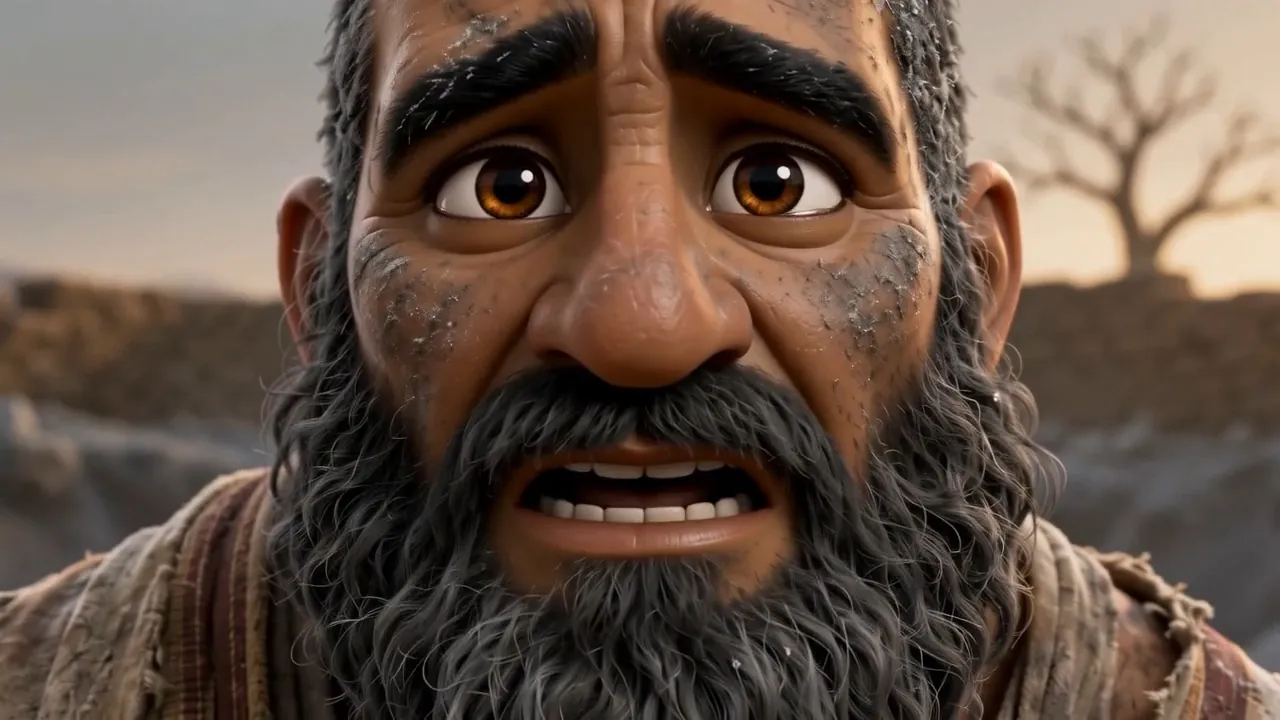
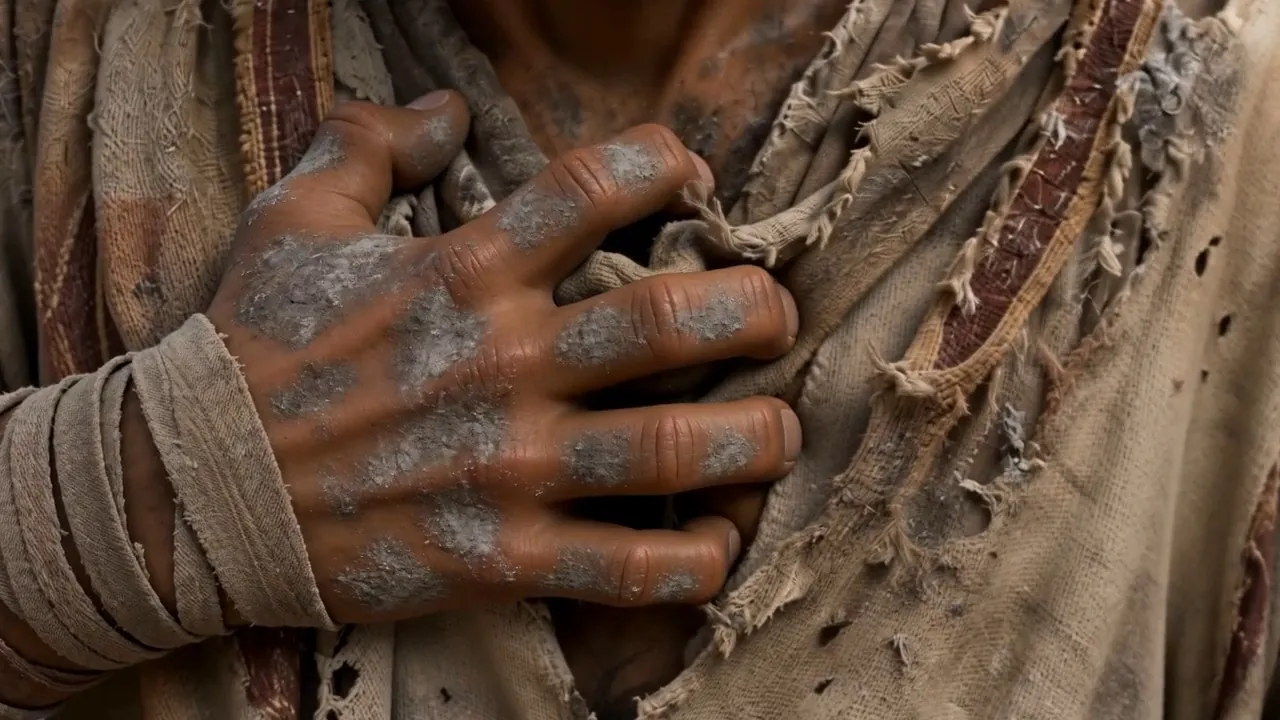

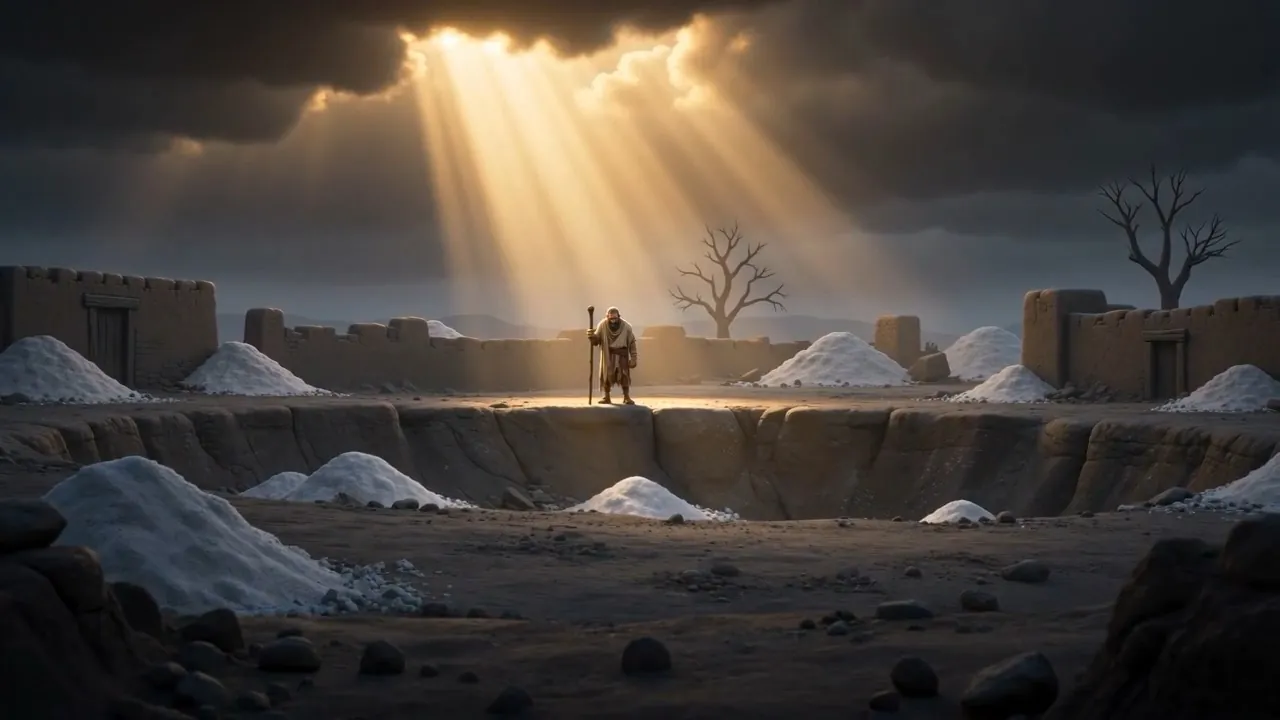
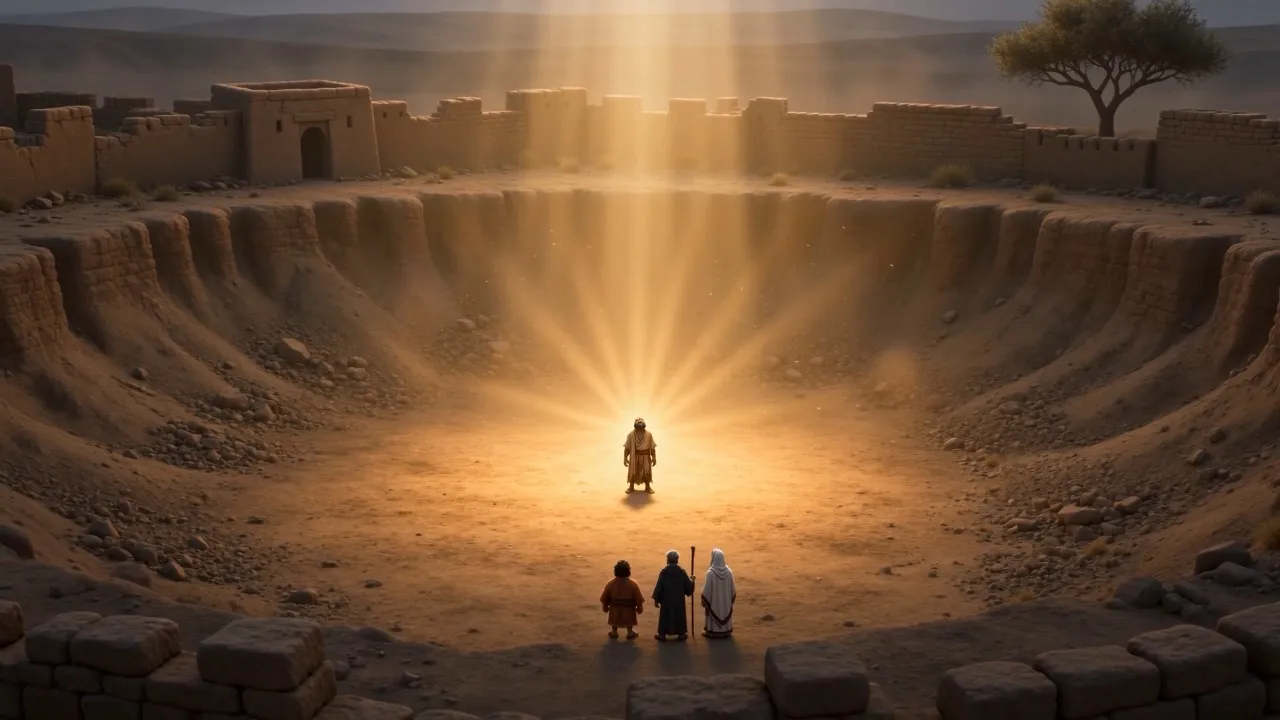

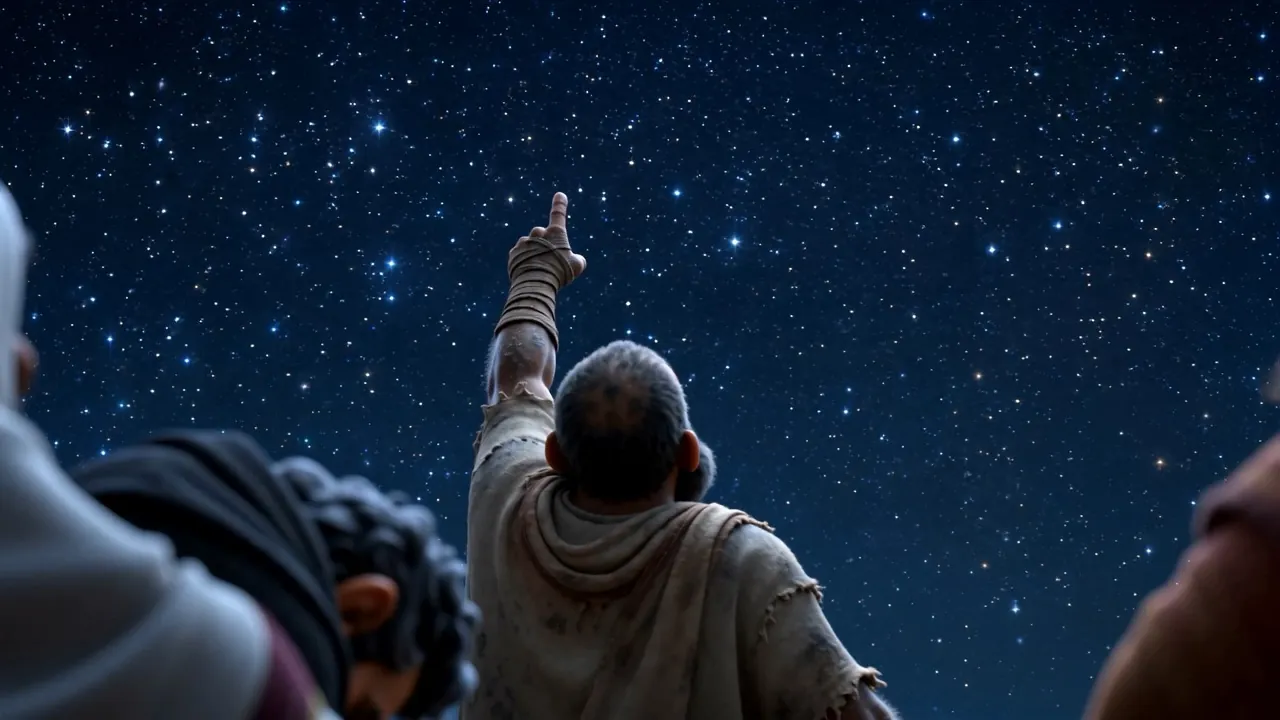
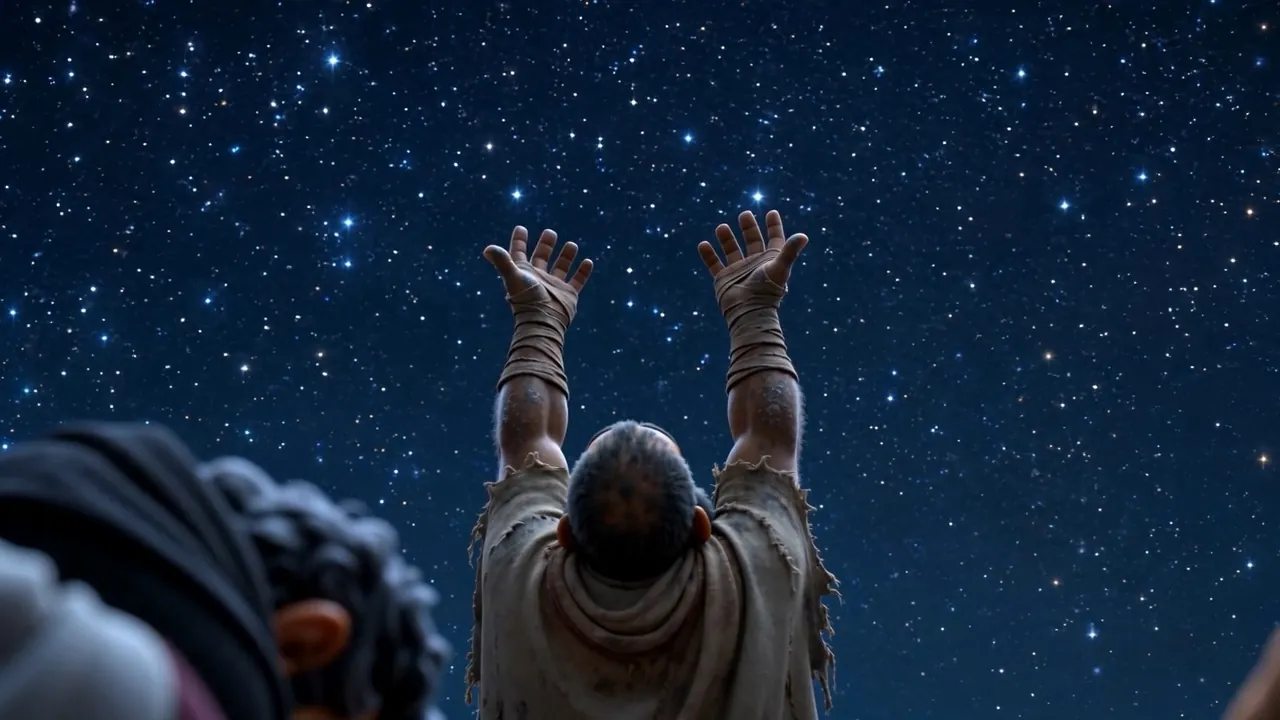
And then, out of the middle of the worst argument in the Bible, with nothing resolved and no answer given, Job says this: “But as for me, I know that my Redeemer lives, and at last he will stand upon the earth. After my skin is destroyed, then in my flesh shall I see God, whom I, even I, shall see on my side. My eyes shall see, and not as a stranger.” He has been given nothing. He says it anyway. Job 19 : 25–27
In my flesh I shall see God.
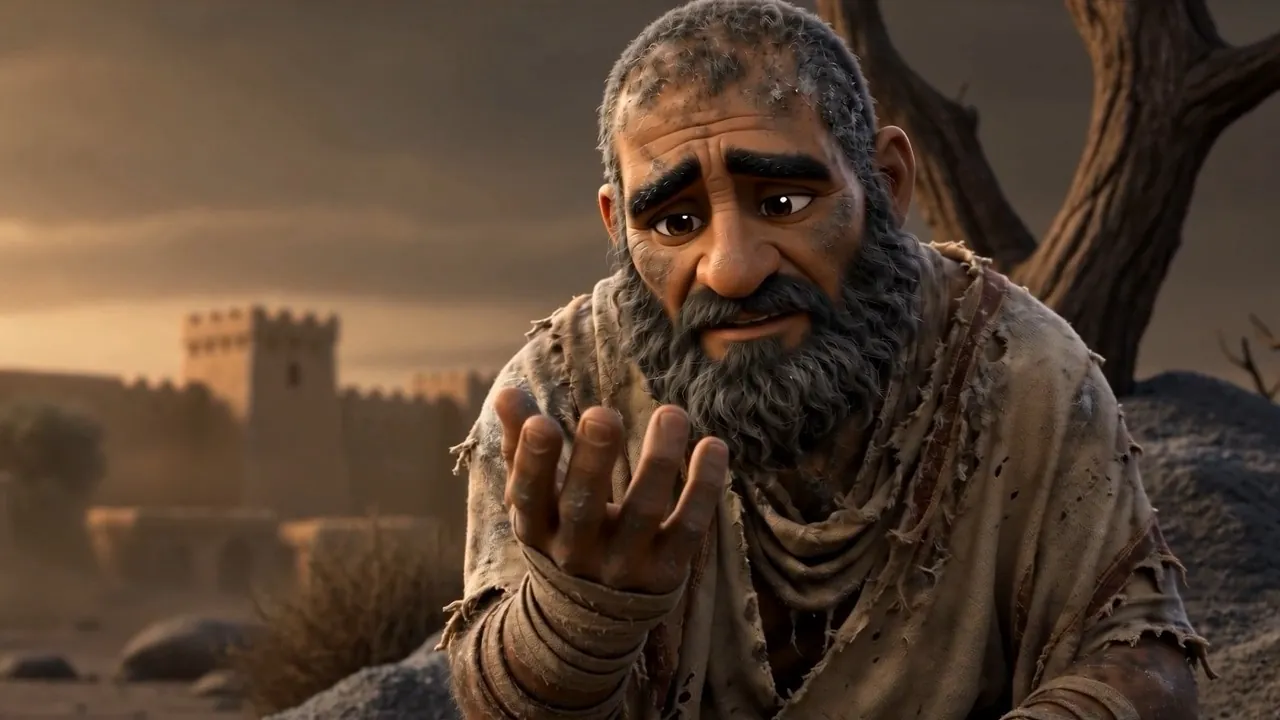
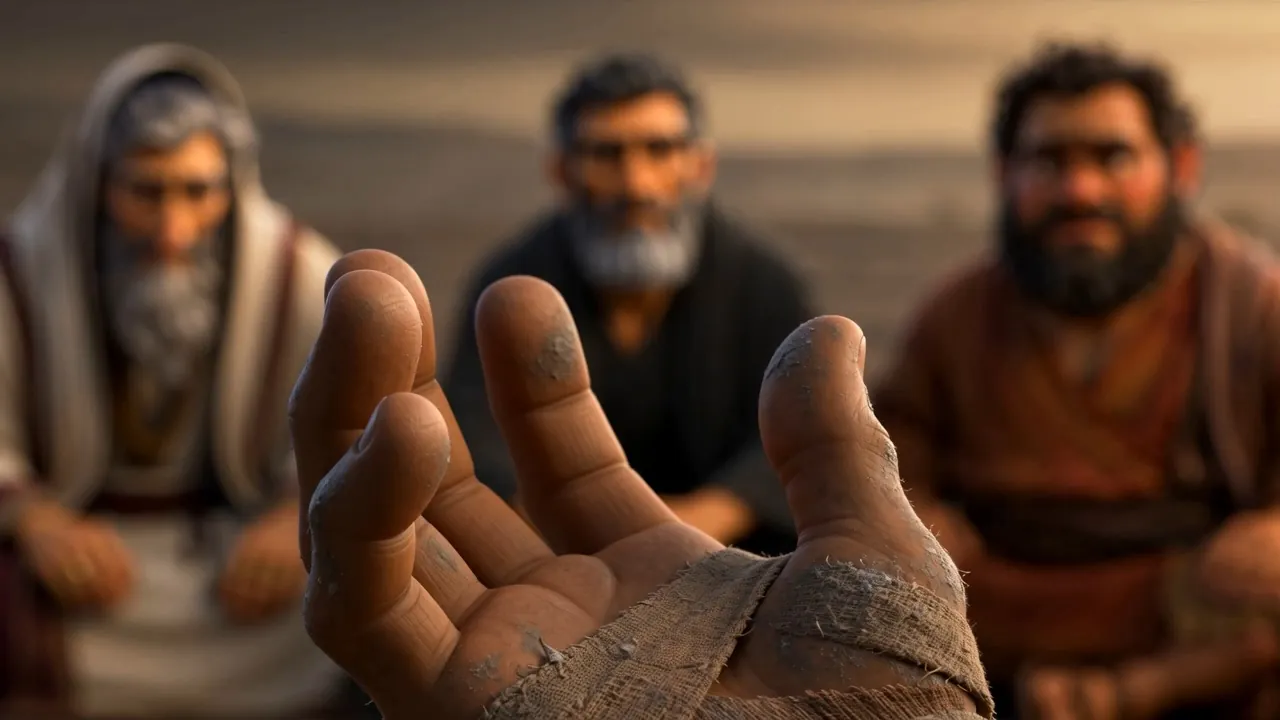
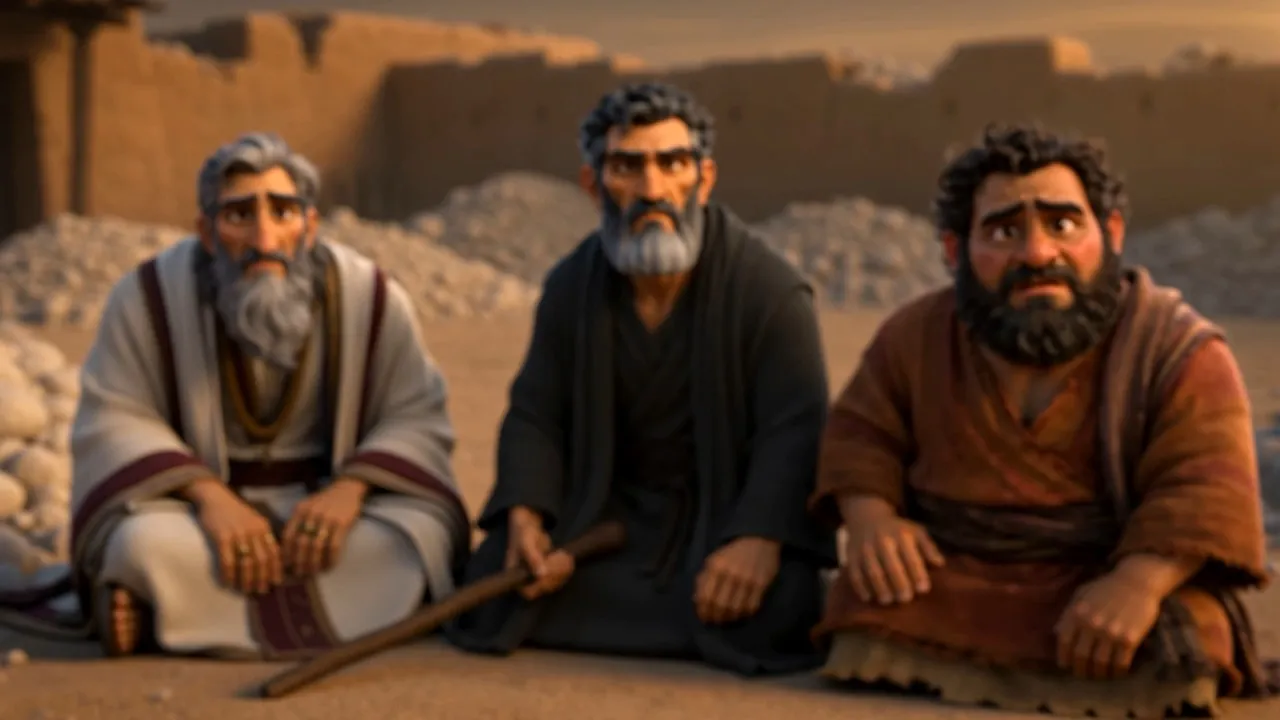
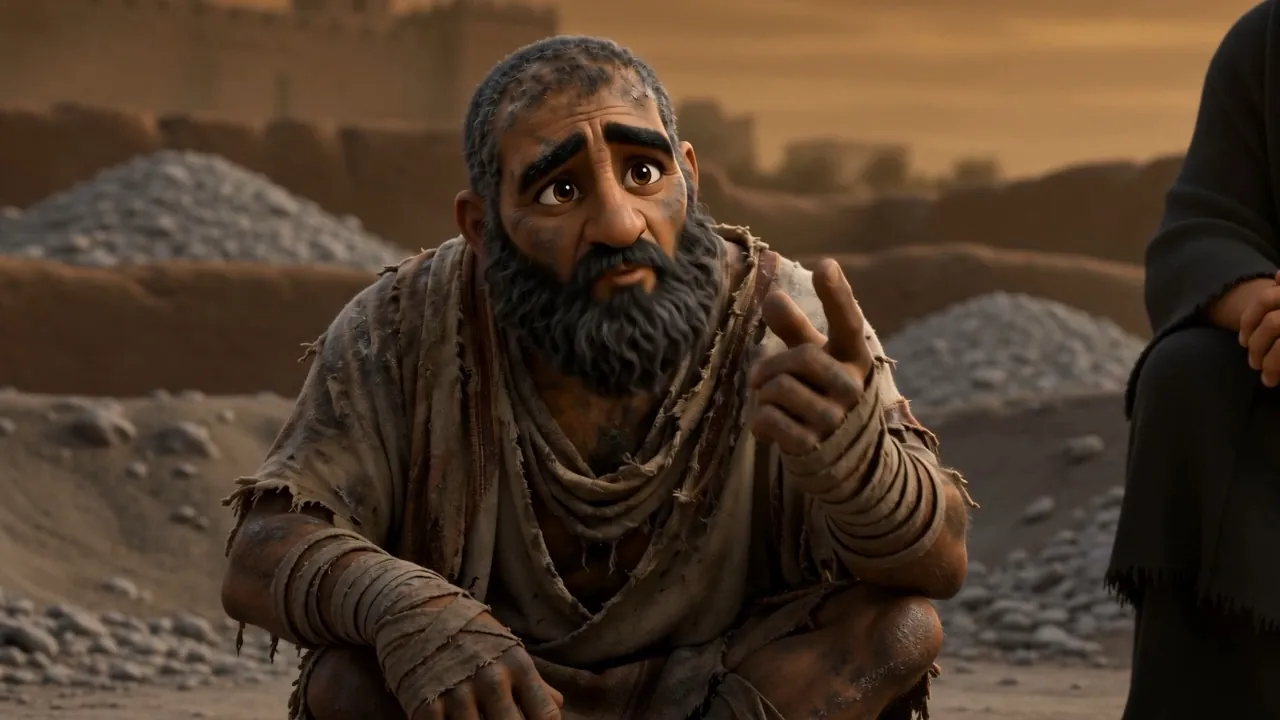
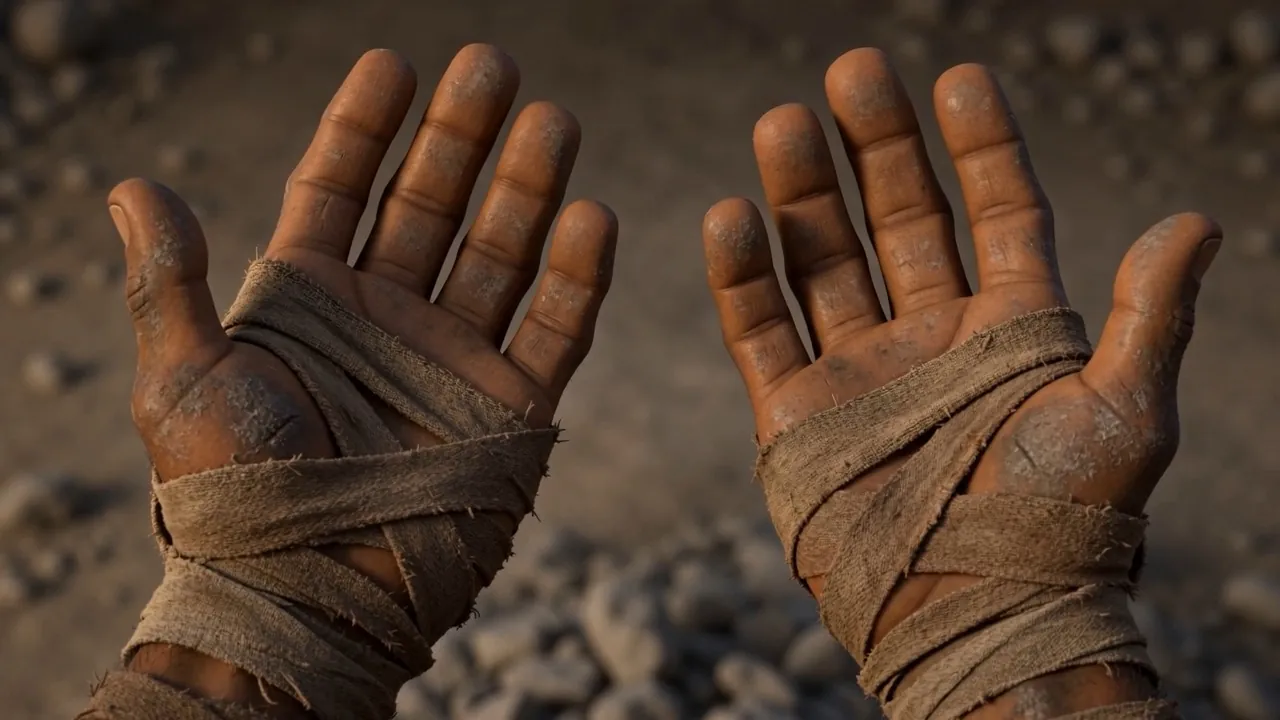
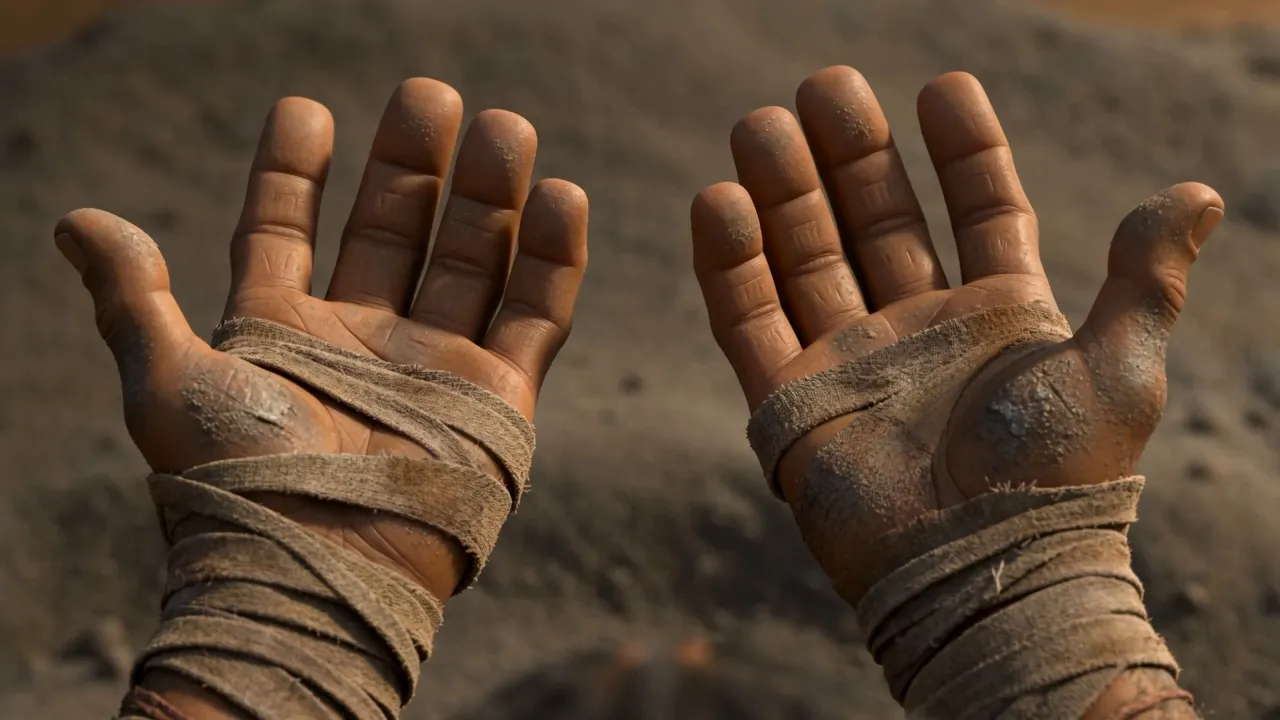
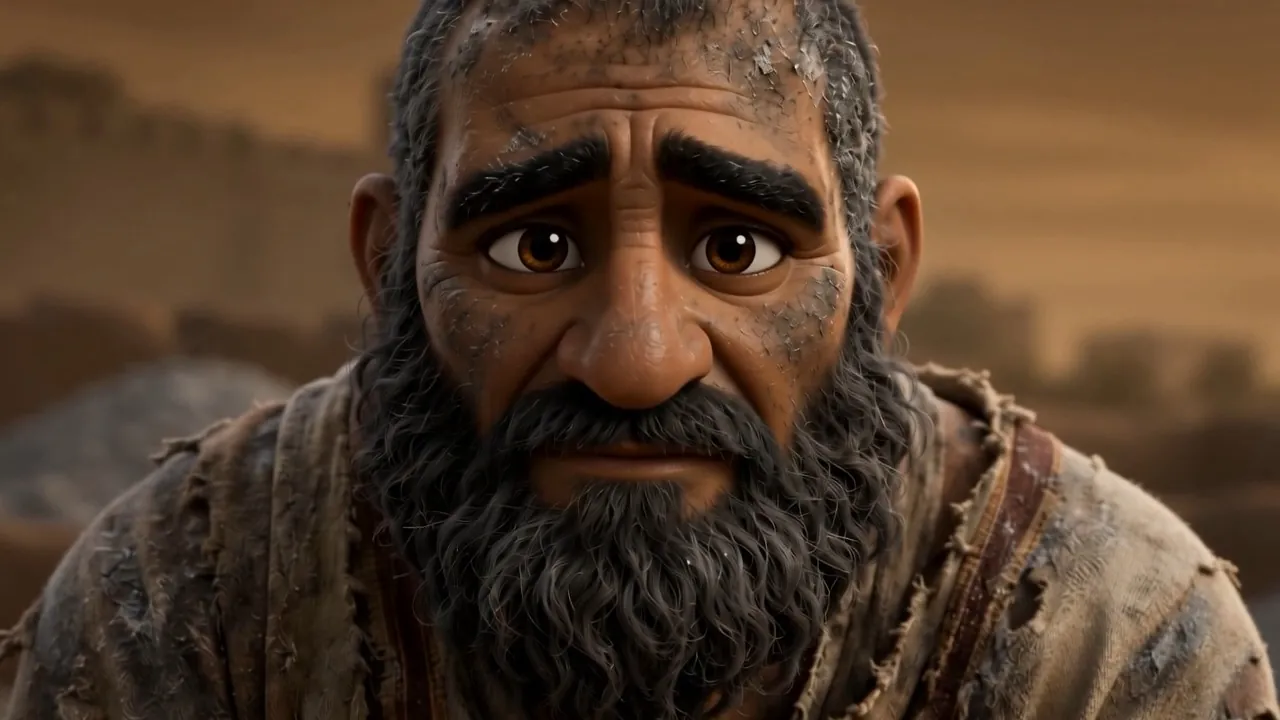
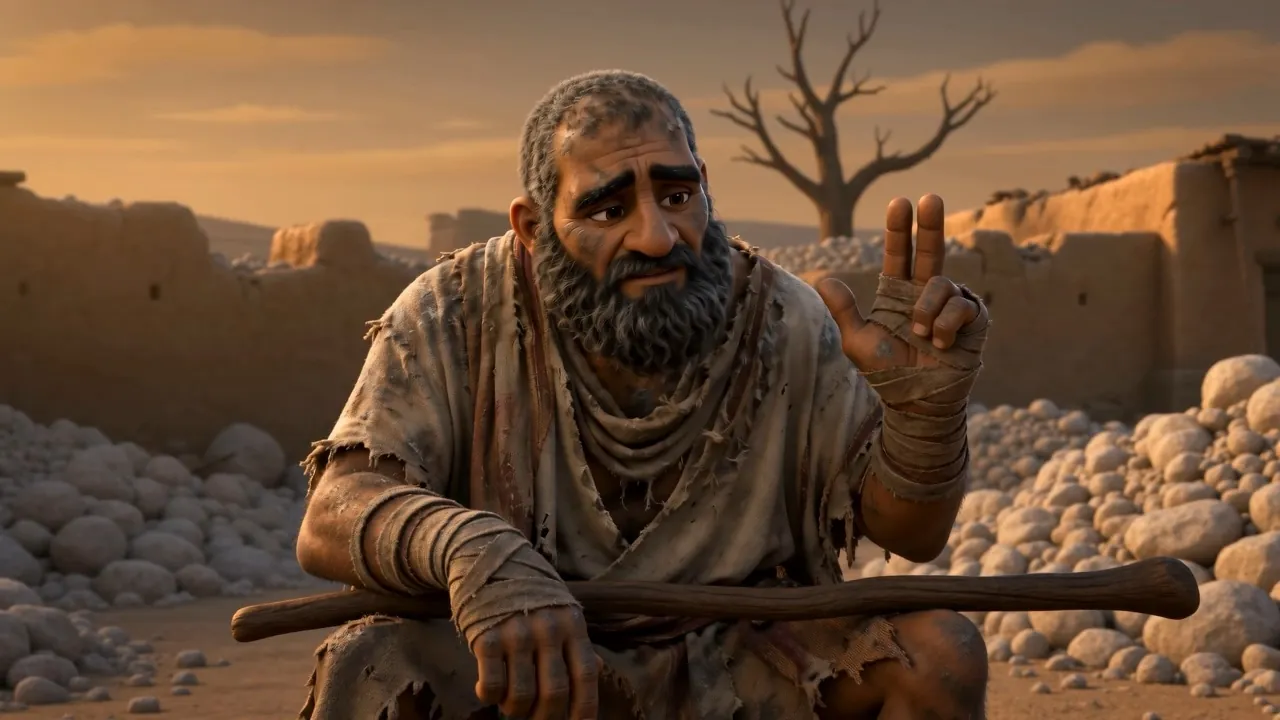
“Have pity on me, have pity on me, you my friends; for the hand of God has touched me.” Not answer me. Not agree with me. Pity me. It is the smallest thing he asks for in forty chapters, and it is the one thing the three of them never manage. Job 19 : 21
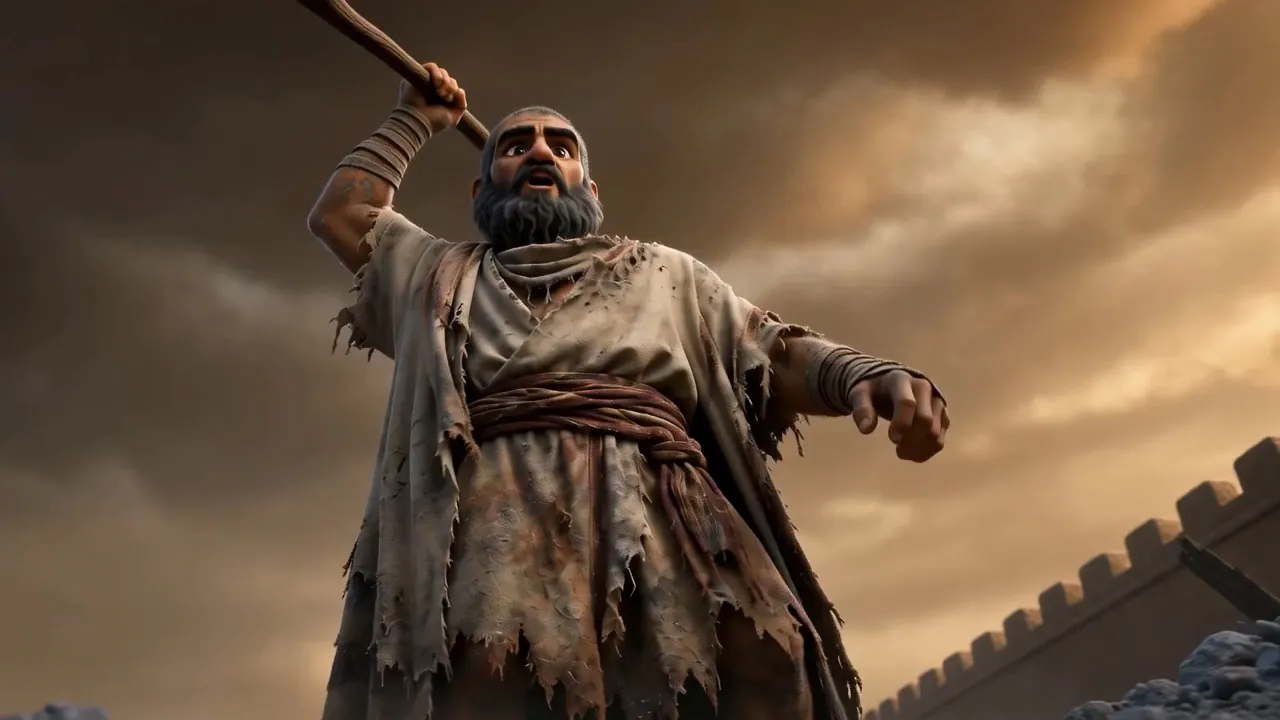



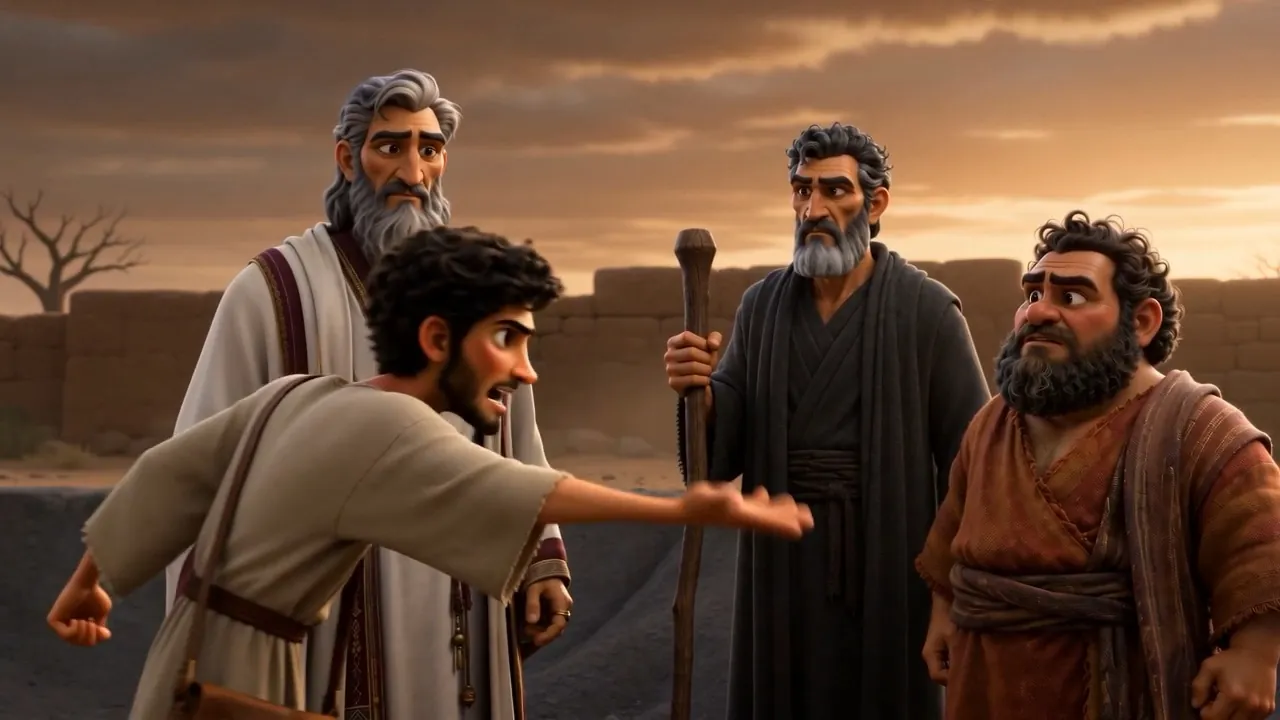



Then a fourth voice, who has been standing there the whole time. Elihu is young and he is angry at everybody — at the three for condemning Job without answering him, and at Job for justifying himself rather than God. He talks for six chapters. God never mentions him afterwards, for good or ill. But he does one thing the others never do: he crouches down to Job's level to speak to him. Job 32 : 1–5
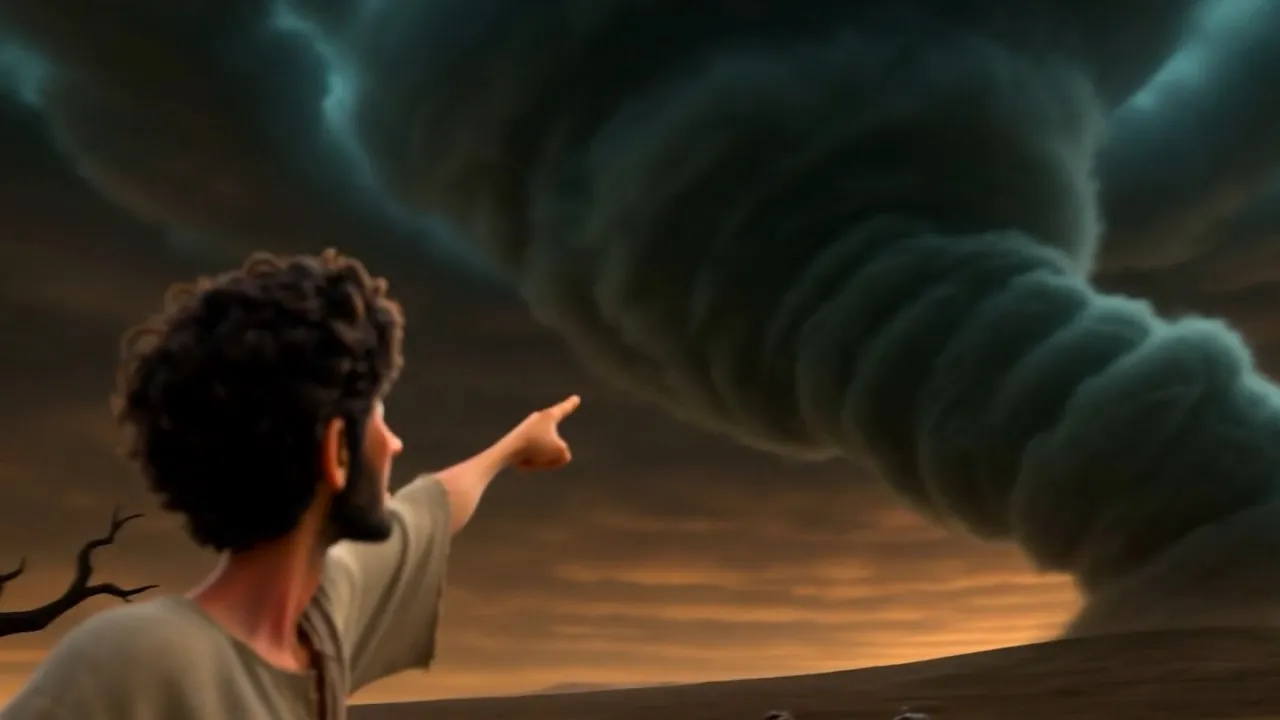
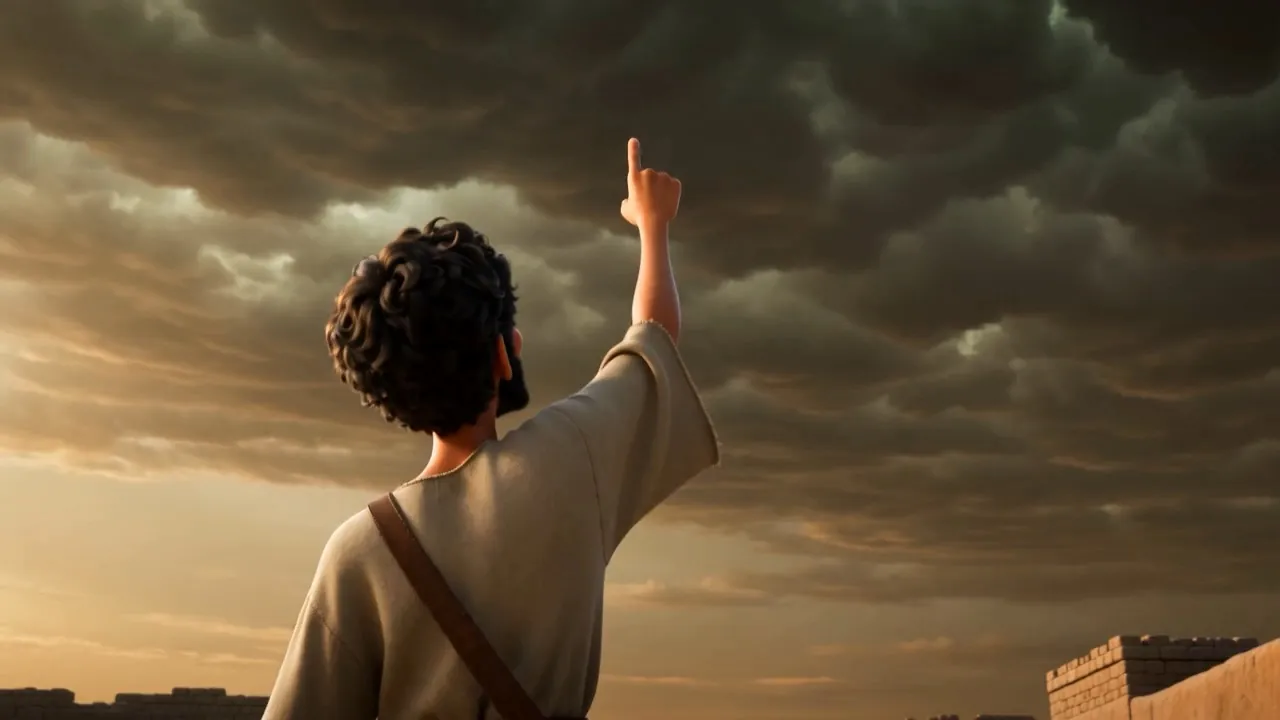

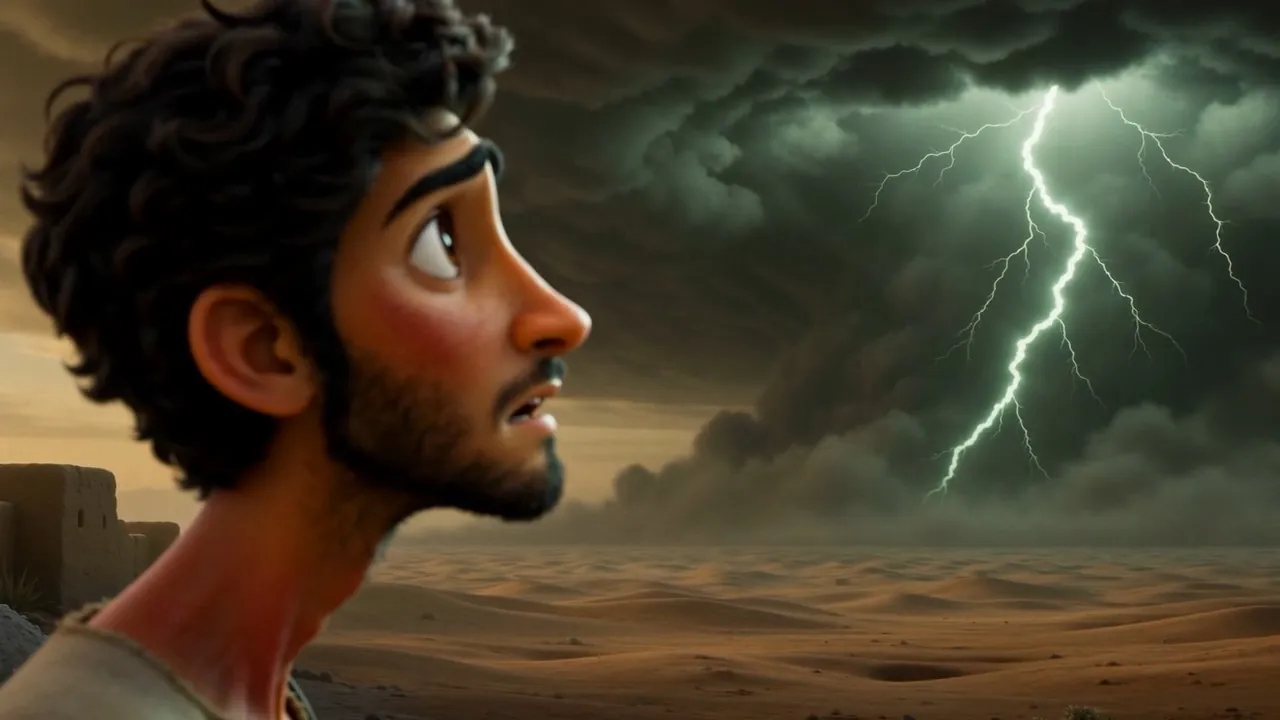
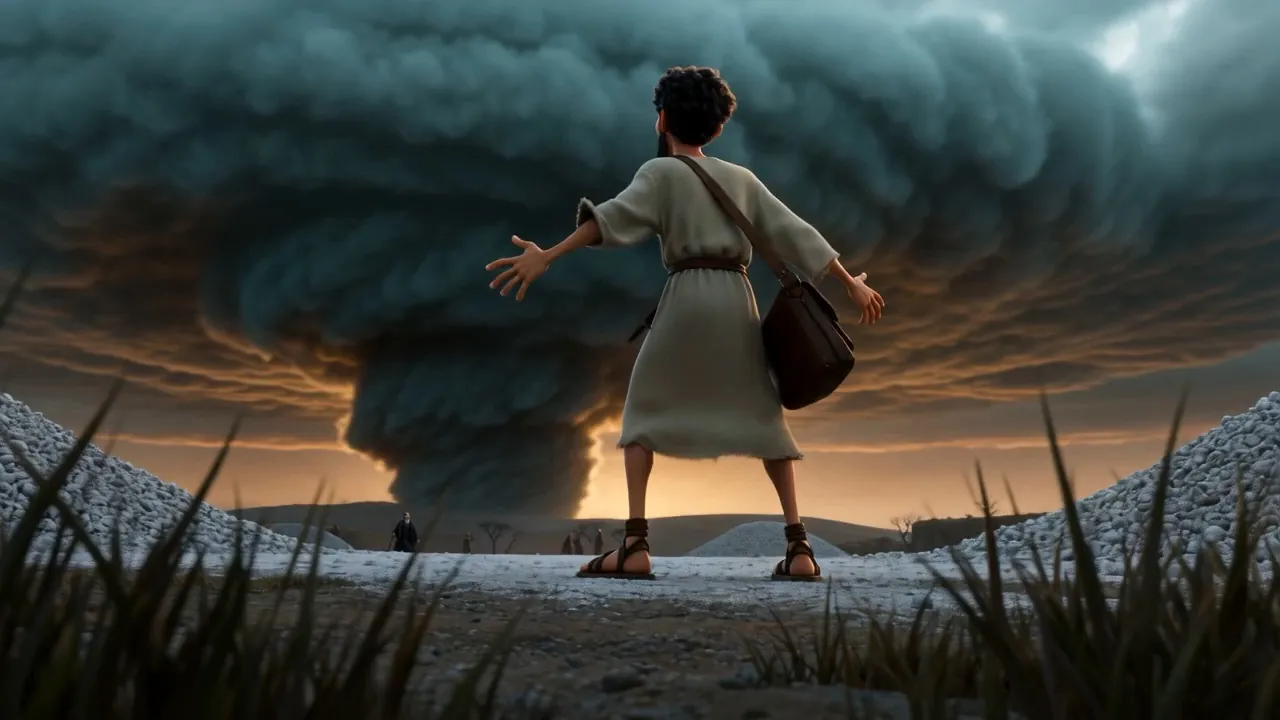
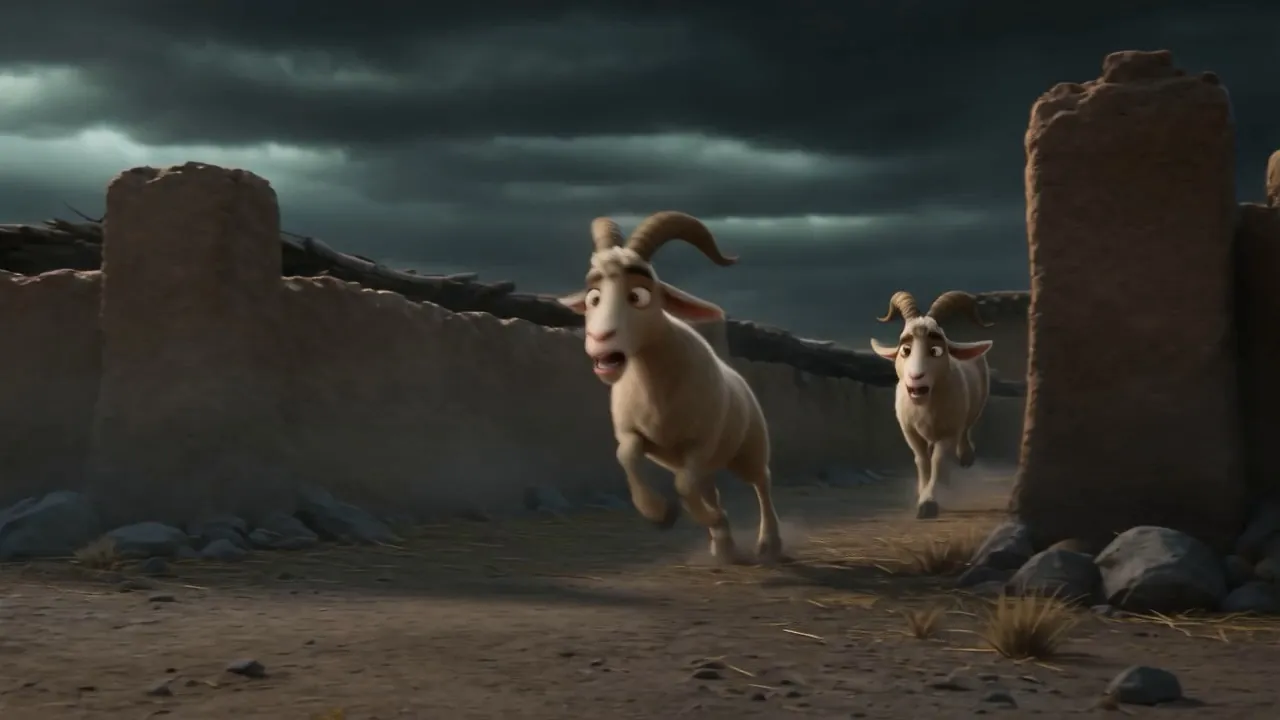
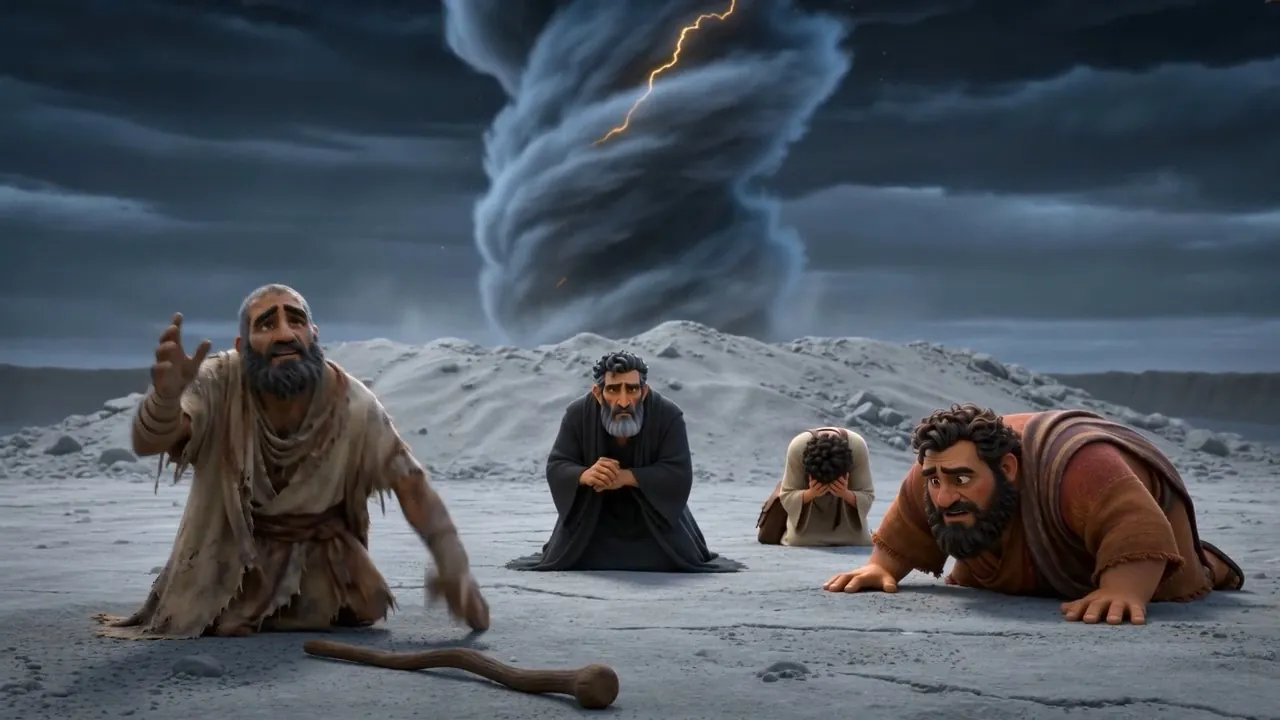


And while the youngest man is still talking, the weather changes. This has been held back since the very first shot of the last episode — a spiral in the sky over a grey ruin — and here it finally arrives: a column of cloud with lightning inside it, coming down onto the ash plain, with four men flat on their faces underneath it. Then Yahweh answered Job out of the whirlwind. Job 38 : 1
Out of the whirlwind.
After the story
The friends are not villains. That is the problem.
Everything Eliphaz, Bildad and Zophar say is orthodox, most of it is quotable, and some of it turns up almost word for word elsewhere in the Bible. Their theology is tidy: God is just, so suffering must be earned. They travelled from three countries to sit in the ash with him. And at the end of the book God tells them they have not spoken of him what is right, as his servant Job has — the man who spent thirty chapters shouting. Being correct about God and wrong about a person turns out to be its own kind of failure.
Voices of the argument · hover or tap to turn
Job
"But as for me, I know that my Redeemer lives. In the end, he will stand upon the earth."
— Job 19:25
Eliphaz
"Remember, now, whoever perished, being innocent? Or where were the upright cut off?"
— Job 4:7
The Whirlwind
"Then Yahweh answered Job out of the whirlwind."
— Job 38:1The argument
How closely were you watching?
1. What is the friends' basic argument?
"Remember, now, whoever perished, being innocent?" It is tidy, sincere, and — as the reader already knows from the throne room — exactly backwards (Job 4:7).
2. How does Job answer it?
"Why do the wicked live, become old, yes, and grow mighty in power?" If suffering proved guilt, comfort would prove innocence (Job 21:7).
3. What does the poem in Job 28 conclude about wisdom?
"But where shall wisdom be found?… Man doesn't know its price." You see the mine, and then the question (Job 28:12–13).
4. When does Job say "I know that my Redeemer lives"?
He has been given no answer and no hope. "After my skin is destroyed, then in my flesh shall I see God" (Job 19:25–27).
What this story teaches
You can be right about God and wrong about a person.
The friends' theology is orthodox and their application of it is cruel. God's verdict at the end is not that their doctrine was sloppy — it is that they did not speak of him what was right, and Job did.
"Have pity on me, have pity on me, you my friends; for the hand of God has touched me." Job 19:21Job's own evidence is the strongest argument.
"Why do the wicked live, become old, and grow mighty in power?" If suffering proved guilt, comfort would prove innocence — and everyone in that circle knew men who were comfortable and guilty.
"Why do the wicked live, become old, yes, and grow mighty in power?" Job 21:7Faith is not the absence of anger.
Job shouts at the sky for thirty chapters and says "I know that my Redeemer lives" in the middle of it. The book does not treat those as contradictory.
"Let the day perish in which I was born." Job 3:3Read the scripture itself. Job 3 · 19 · 28 — World English Bible
Job 3
1After this Job opened his mouth, and cursed the day of his birth.
2Job answered:
3“Let the day perish in which I was born, the night which said, ‘There is a boy conceived.’
4Let that day be darkness. Don’t let God from above seek for it, neither let the light shine on it.
5Let darkness and the shadow of death claim it for their own. Let a cloud dwell on it. Let all that makes black the day terrify it.
6As for that night, let thick darkness seize on it. Let it not rejoice among the days of the year. Let it not come into the number of the months.
7Behold, let that night be barren. Let no joyful voice come therein.
8Let them curse it who curse the day, who are ready to rouse up leviathan.
9Let the stars of its twilight be dark. Let it look for light, but have none, neither let it see the eyelids of the morning,
10because it didn’t shut up the doors of my mother’s womb, nor did it hide trouble from my eyes.
11“Why didn’t I die from the womb? Why didn’t I give up the spirit when my mother bore me?
12Why did the knees receive me? Or why the breast, that I should nurse?
13For now should I have lain down and been quiet. I should have slept, then I would have been at rest,
14with kings and counselors of the earth, who built up waste places for themselves;
15or with princes who had gold, who filled their houses with silver:
16or as a hidden untimely birth I had not been, as infants who never saw light.
17There the wicked cease from troubling. There the weary are at rest.
18There the prisoners are at ease together. They don’t hear the voice of the taskmaster.
19The small and the great are there. The servant is free from his master.
20“Why is light given to him who is in misery, life to the bitter in soul,
21Who long for death, but it doesn’t come; and dig for it more than for hidden treasures,
22who rejoice exceedingly, and are glad, when they can find the grave?
23Why is light given to a man whose way is hidden, whom God has hedged in?
24For my sighing comes before I eat. My groanings are poured out like water.
25For the thing which I fear comes on me, That which I am afraid of comes to me.
26I am not at ease, neither am I quiet, neither have I rest; but trouble comes.”
Job 19
1Then Job answered,
2“How long will you torment me, and crush me with words?
3You have reproached me ten times. You aren’t ashamed that you attack me.
4If it is true that I have erred, my error remains with myself.
5If indeed you will magnify yourselves against me, and plead against me my reproach;
6know now that God has subverted me, and has surrounded me with his net.
7“Behold, I cry out of wrong, but I am not heard. I cry for help, but there is no justice.
8He has walled up my way so that I can’t pass, and has set darkness in my paths.
9He has stripped me of my glory, and taken the crown from my head.
10He has broken me down on every side, and I am gone. My hope he has plucked up like a tree.
11He has also kindled his wrath against me. He counts me among his adversaries.
12His troops come on together, build a siege ramp against me, and encamp around my tent.
13“He has put my brothers far from me. My acquaintances are wholly estranged from me.
14My relatives have gone away. My familiar friends have forgotten me.
15Those who dwell in my house and my maids consider me a stranger. I am an alien in their sight.
16I call to my servant, and he gives me no answer. I beg him with my mouth.
17My breath is offensive to my wife. I am loathsome to the children of my own mother.
18Even young children despise me. If I arise, they speak against me.
19All my familiar friends abhor me. They whom I loved have turned against me.
20My bones stick to my skin and to my flesh. I have escaped by the skin of my teeth.
21“Have pity on me, have pity on me, you my friends; for the hand of God has touched me.
22Why do you persecute me as God, and are not satisfied with my flesh?
23“Oh that my words were now written! Oh that they were inscribed in a book!
24That with an iron pen and lead they were engraved in the rock forever!
25But as for me, I know that my Redeemer lives. In the end, he will stand upon the earth.
26After my skin is destroyed, then in my flesh shall I see God,
27Whom I, even I, shall see on my side. My eyes shall see, and not as a stranger. “My heart is consumed within me.
28If you say, ‘How we will persecute him!’ because the root of the matter is found in me,
29be afraid of the sword, for wrath brings the punishments of the sword, that you may know there is a judgment.”
Job 28
1“Surely there is a mine for silver, and a place for gold which they refine.
2Iron is taken out of the earth, and copper is smelted out of the ore.
3Man sets an end to darkness, and searches out, to the furthest bound, the stones of obscurity and of thick darkness.
4He breaks open a shaft away from where people live. They are forgotten by the foot. They hang far from men, they swing back and forth.
5As for the earth, out of it comes bread; Underneath it is turned up as it were by fire.
6Sapphires come from its rocks. It has dust of gold.
7That path no bird of prey knows, neither has the falcon’s eye seen it.
8The proud animals have not trodden it, nor has the fierce lion passed by there.
9He puts his hand on the flinty rock, and he overturns the mountains by the roots.
10He cuts out channels among the rocks. His eye sees every precious thing.
11He binds the streams that they don’t trickle. The thing that is hidden he brings out to light.
12“But where shall wisdom be found? Where is the place of understanding?
13Man doesn’t know its price; Neither is it found in the land of the living.
14The deep says, ‘It isn’t in me.’ The sea says, ‘It isn’t with me.’
15It can’t be gotten for gold, neither shall silver be weighed for its price.
16It can’t be valued with the gold of Ophir, with the precious onyx, or the sapphire.
17Gold and glass can’t equal it, neither shall it be exchanged for jewels of fine gold.
18No mention shall be made of coral or of crystal. Yes, the price of wisdom is above rubies.
19The topaz of Ethiopia shall not equal it, Neither shall it be valued with pure gold.
20Where then does wisdom come from? Where is the place of understanding?
21Seeing it is hidden from the eyes of all living, and kept close from the birds of the sky.
22Destruction and Death say, ‘We have heard a rumor of it with our ears.’
23“God understands its way, and he knows its place.
24For he looks to the ends of the earth, and sees under the whole sky.
25He establishes the force of the wind. Yes, he measures out the waters by measure.
26When he made a decree for the rain, and a way for the lightning of the thunder;
27then he saw it, and declared it. He established it, yes, and searched it out.
28To man he said, ‘Behold, the fear of the Lord, that is wisdom. To depart from evil is understanding.’”
World English Bible (WEB) — a public-domain modern English translation. Read it freely, share it freely.
The Book of Job — animated film in production
These scenes are real frames from the film.
Help us finish it — and every story like it — free for the world.