The Book of Job · Part One
NakedI came.
A wager nobody on earth is told about, four messengers on the same afternoon, and three friends who get exactly one thing right — they sit down in the ash and say nothing for a week. Every scene below is a real frame from our animated film.
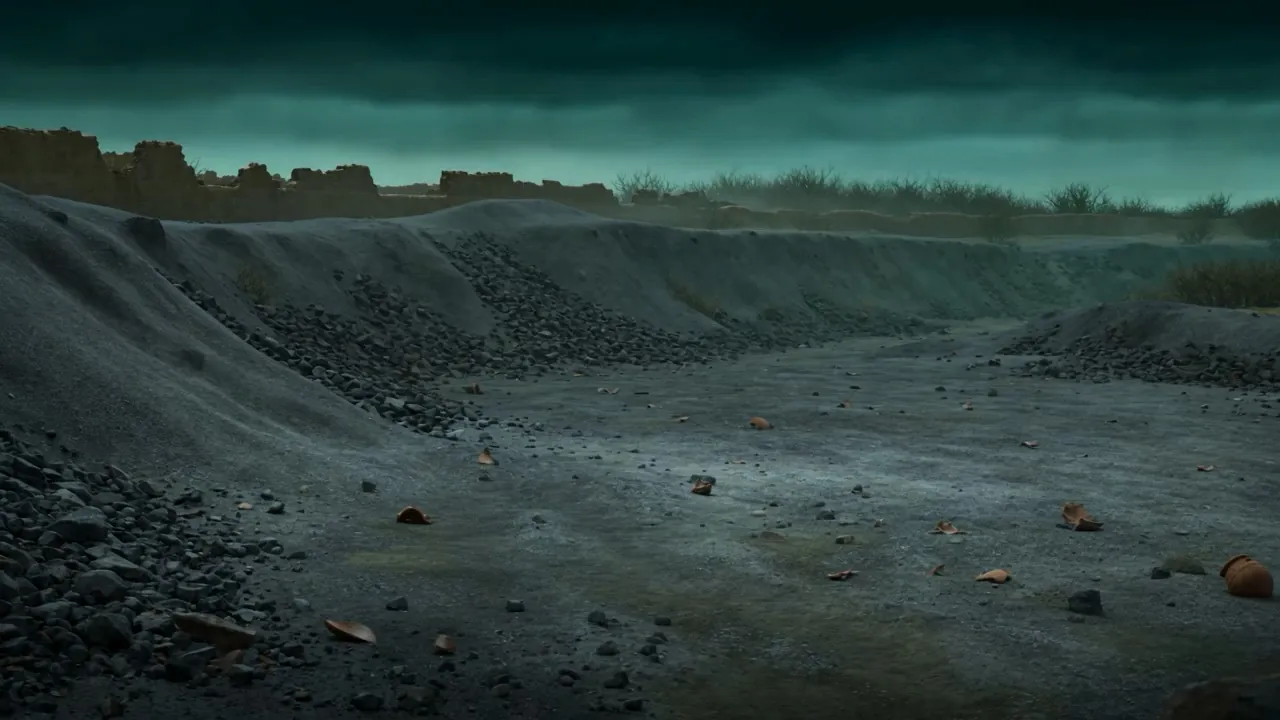
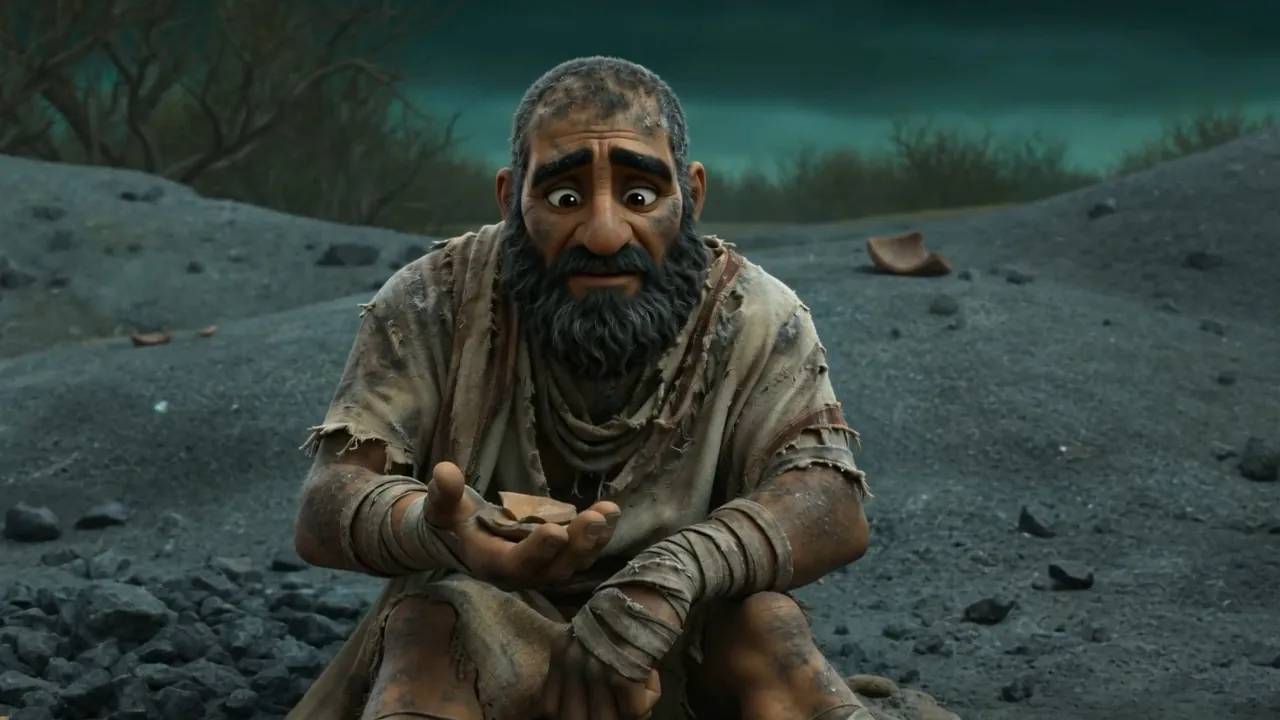
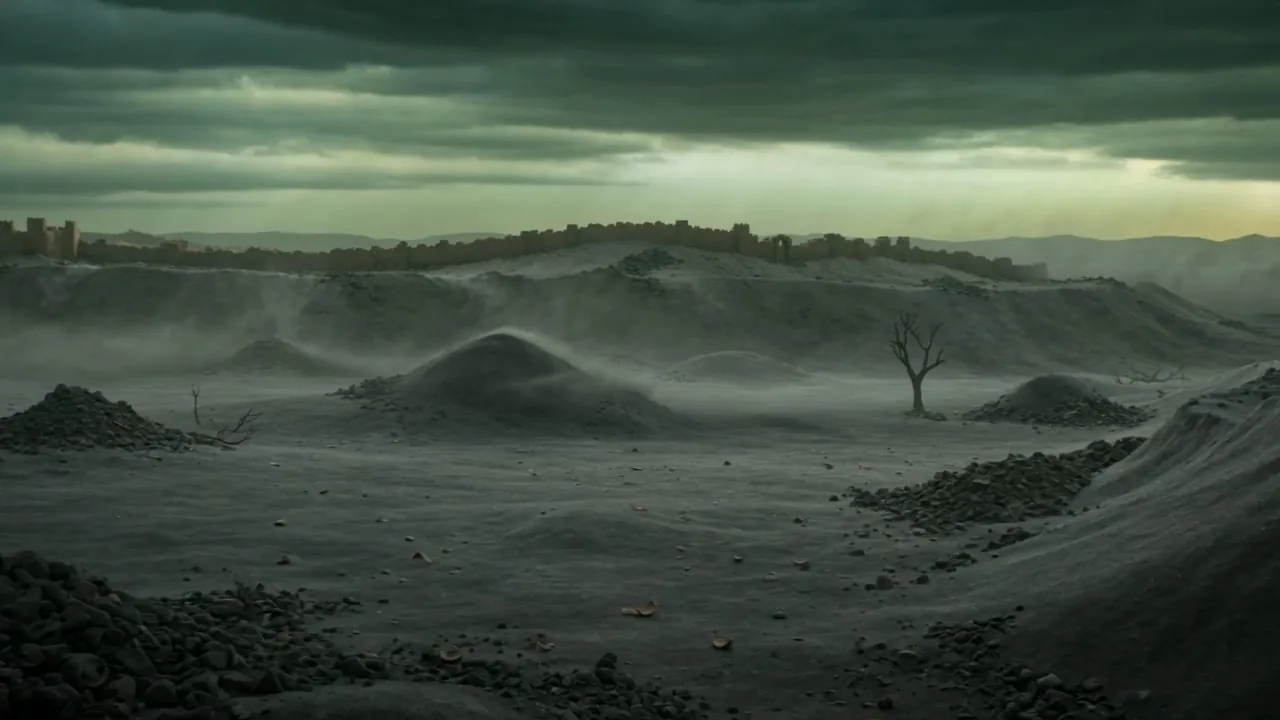


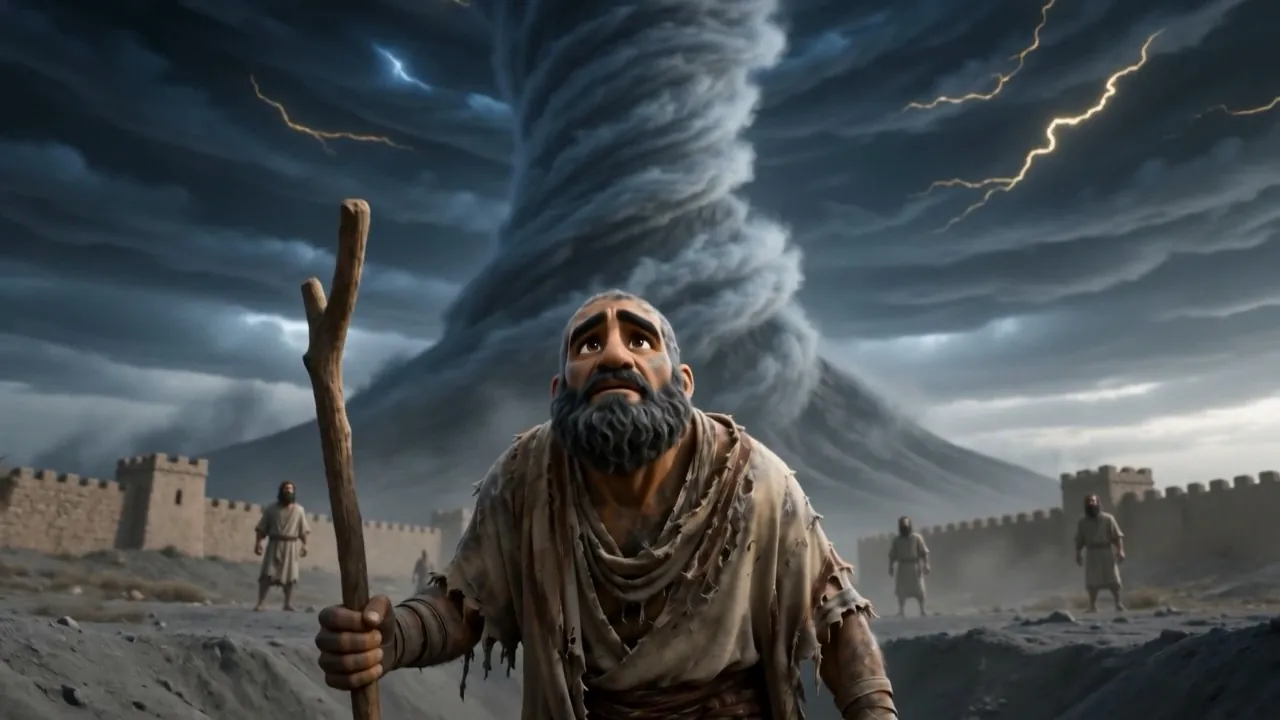


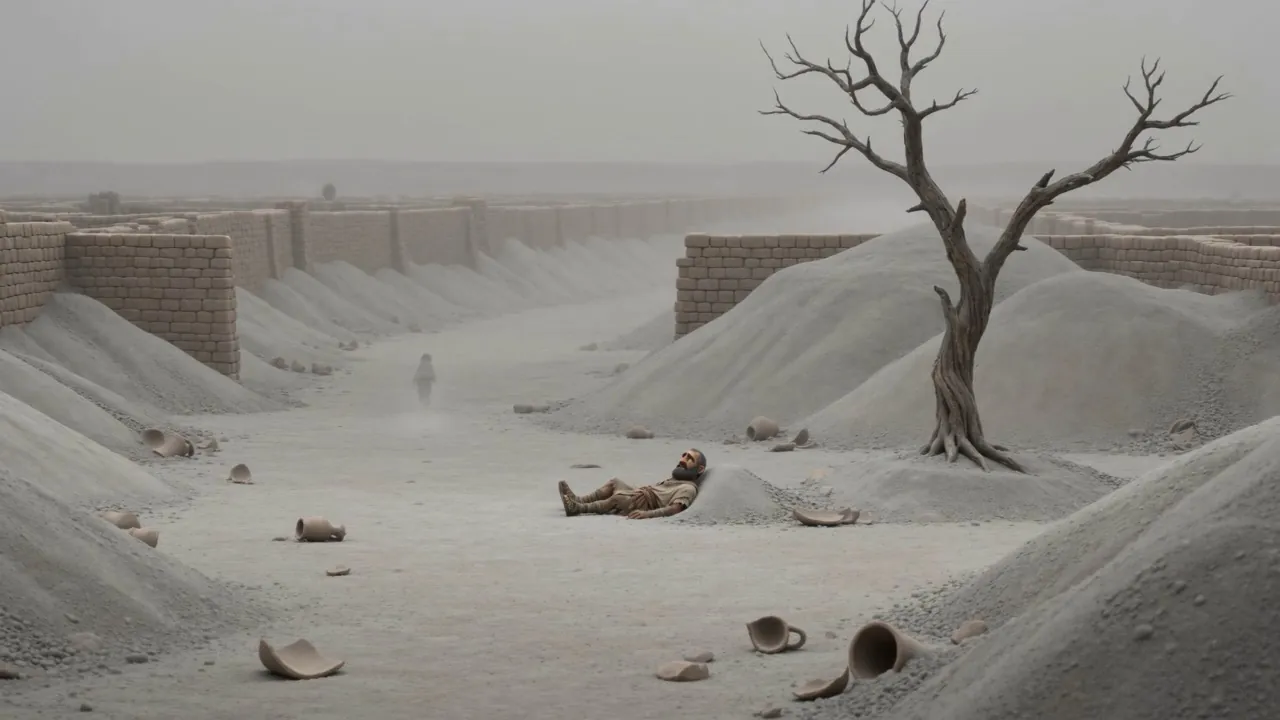
It starts at the end. A grey ruin of a country, four men who have not spoken in a week, and a storm coming that is going to do the talking. Then it goes white, and takes you back — because you cannot understand the man on the ash heap until you have met the one who used to live here. Job 1 : 1
There was a man in the land of Uz.
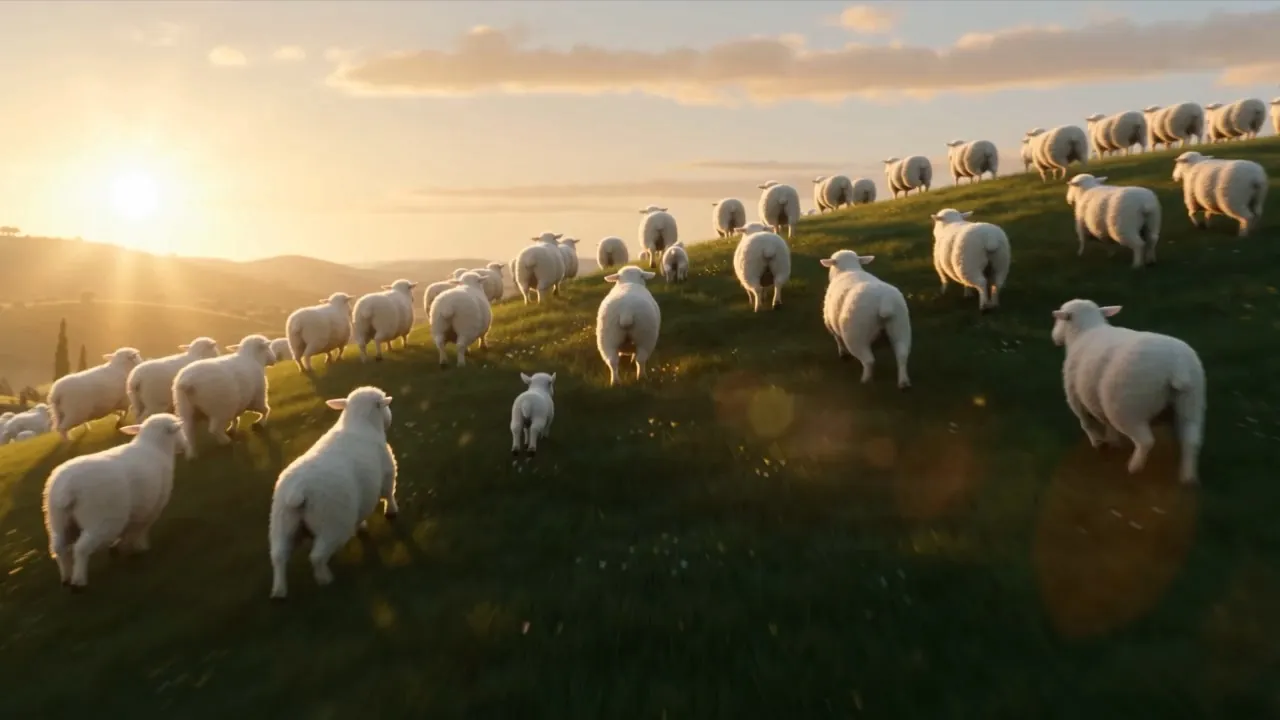
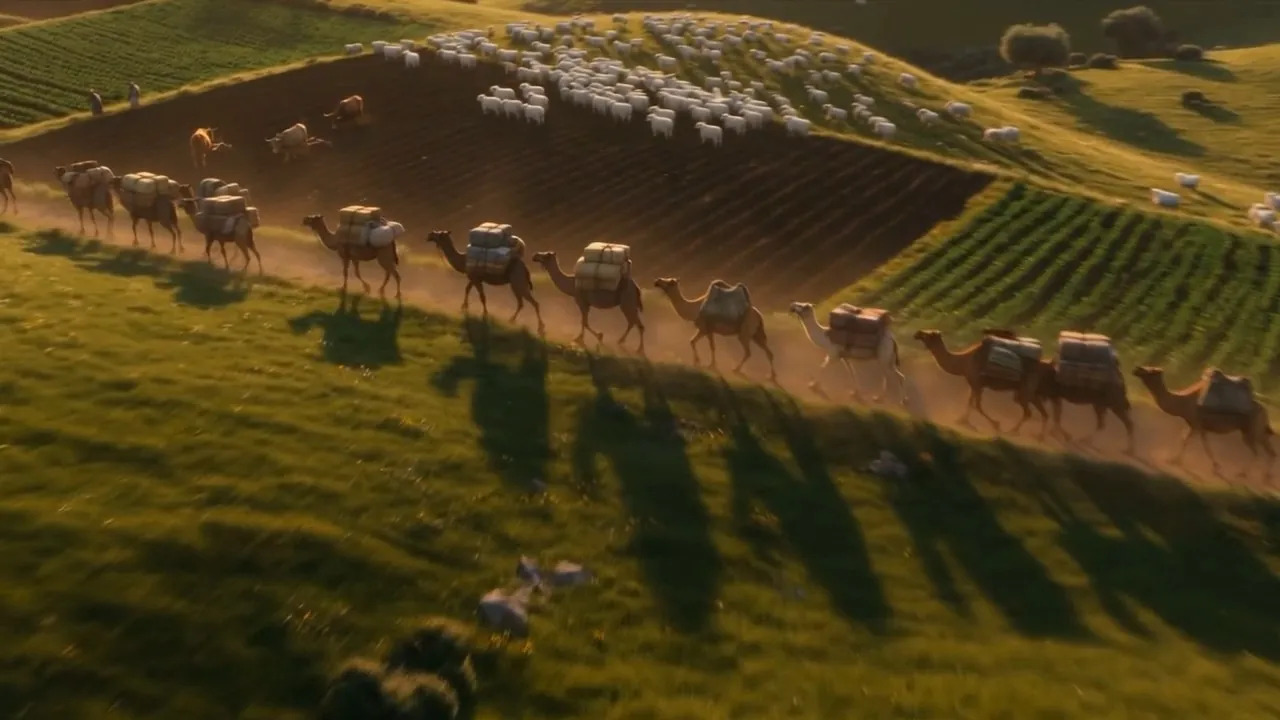
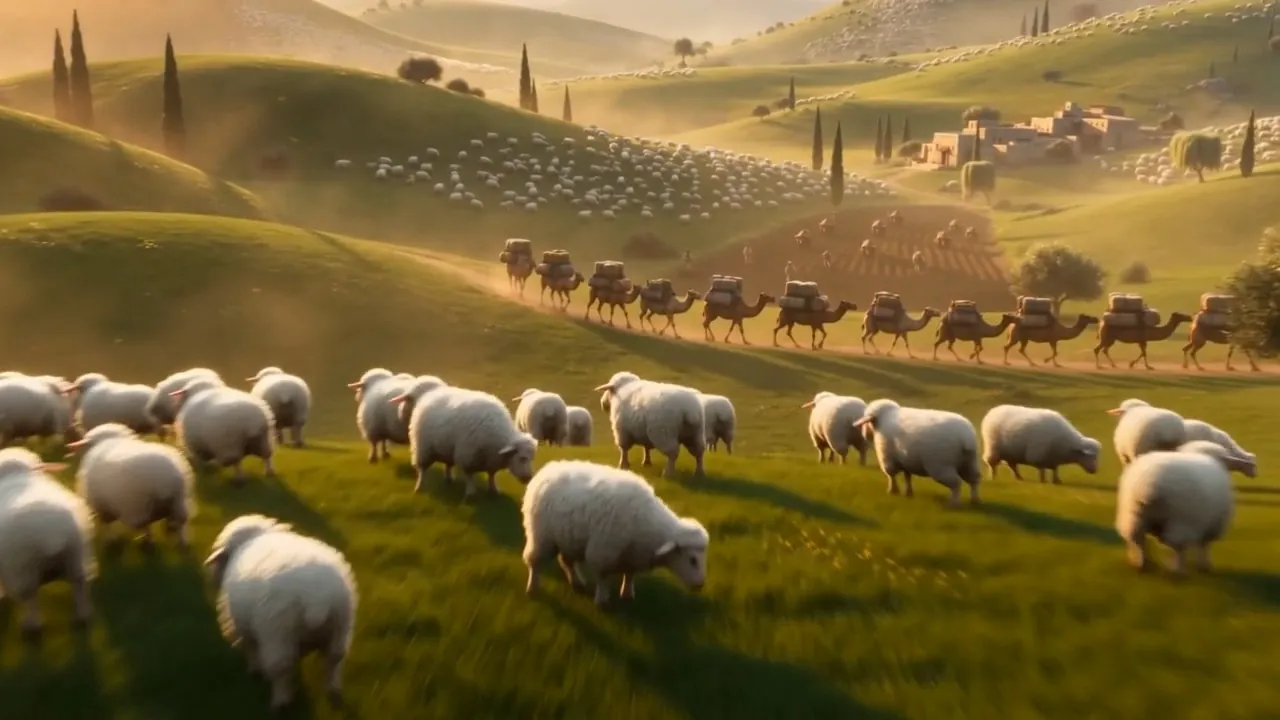



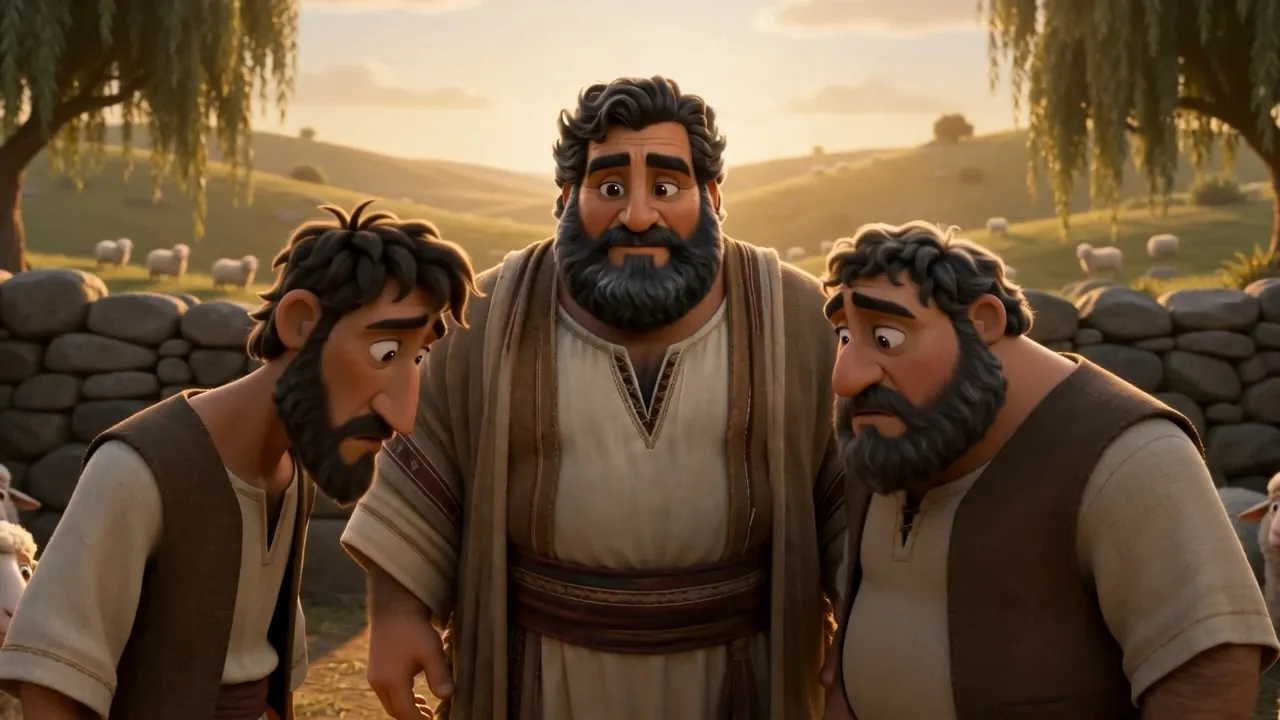
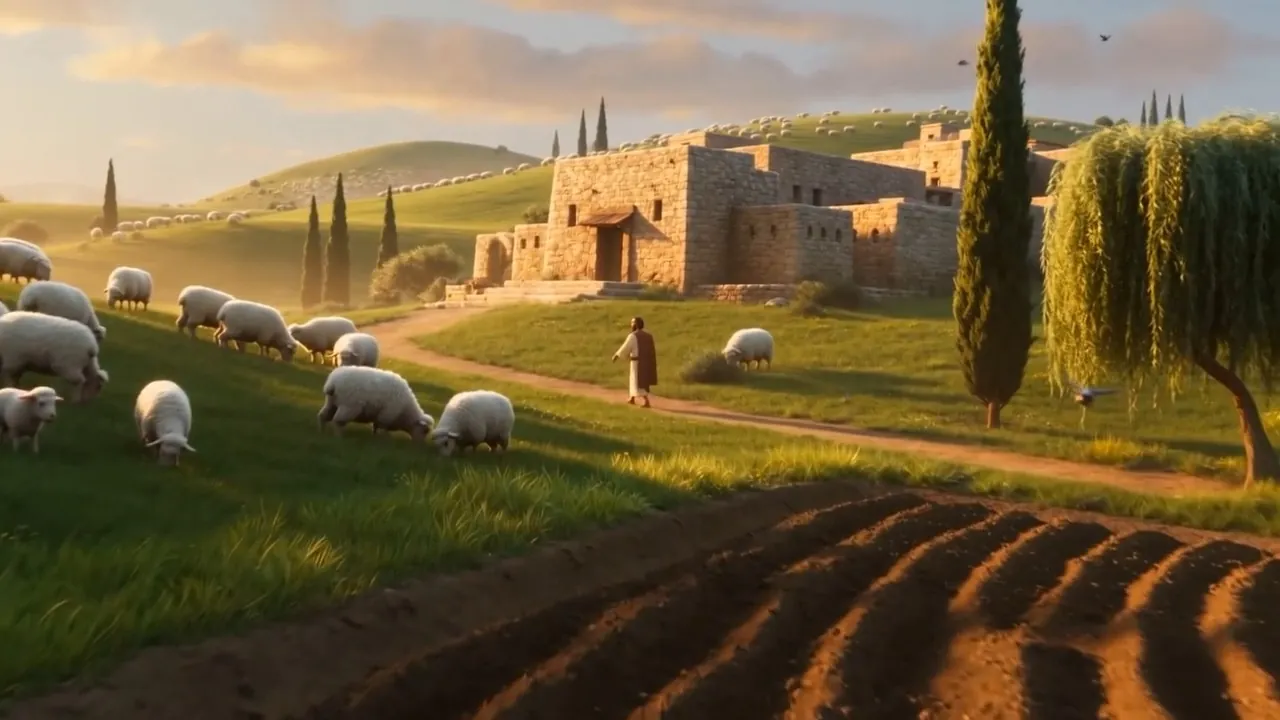
That man was blameless and upright, and one who feared God, and turned away from evil. Seven sons, three daughters, seven thousand sheep, three thousand camels — so that this man was the greatest of all the children of the east. All of that takes about ninety seconds, and most of them stay on his face. Job 1 : 1–3


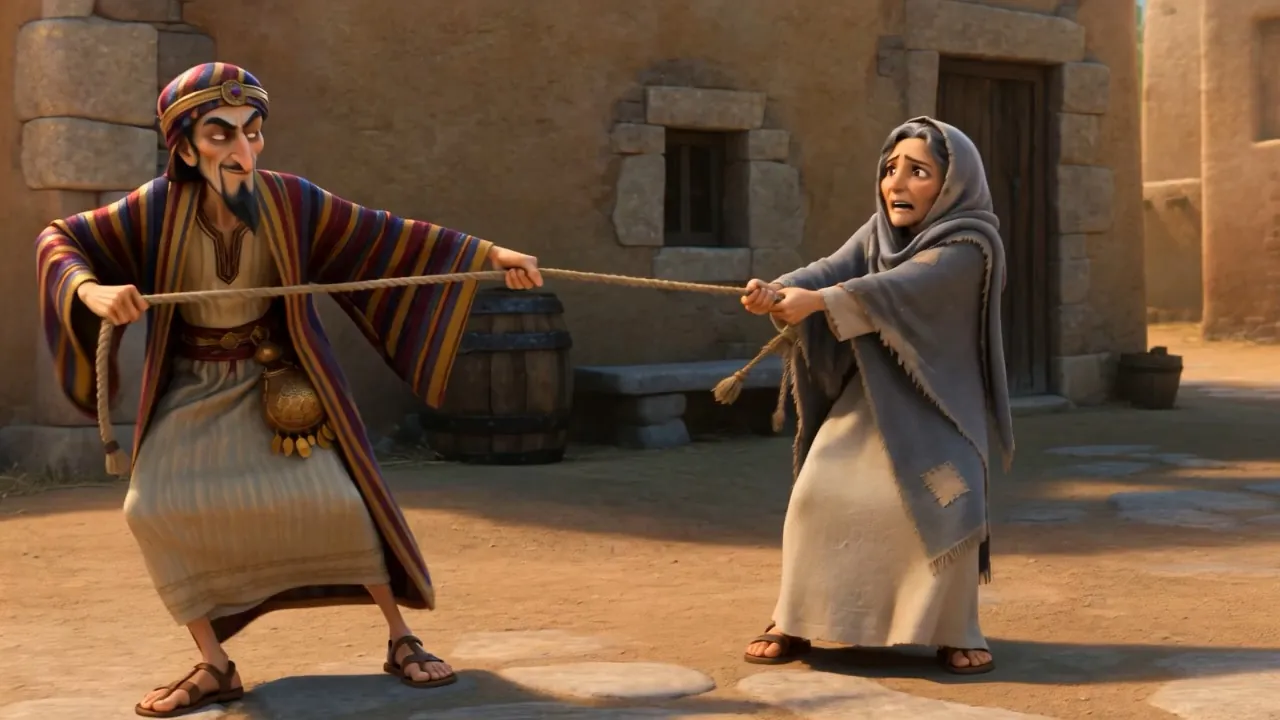
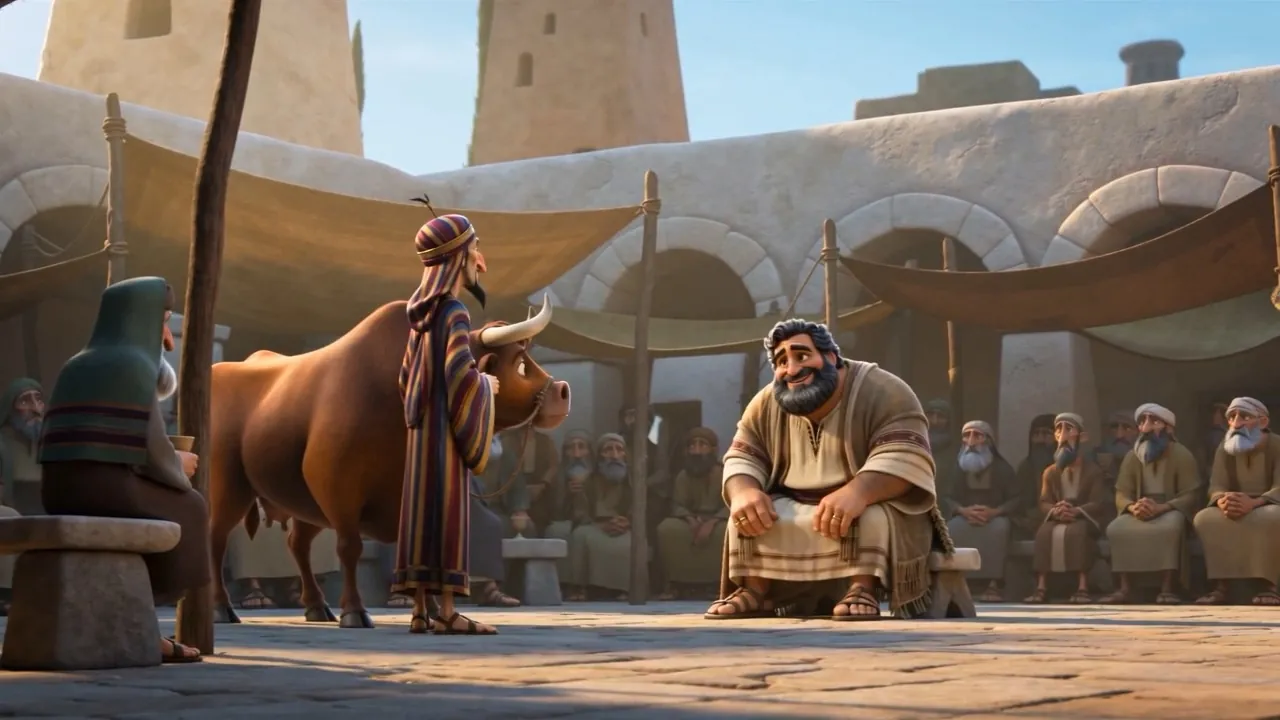

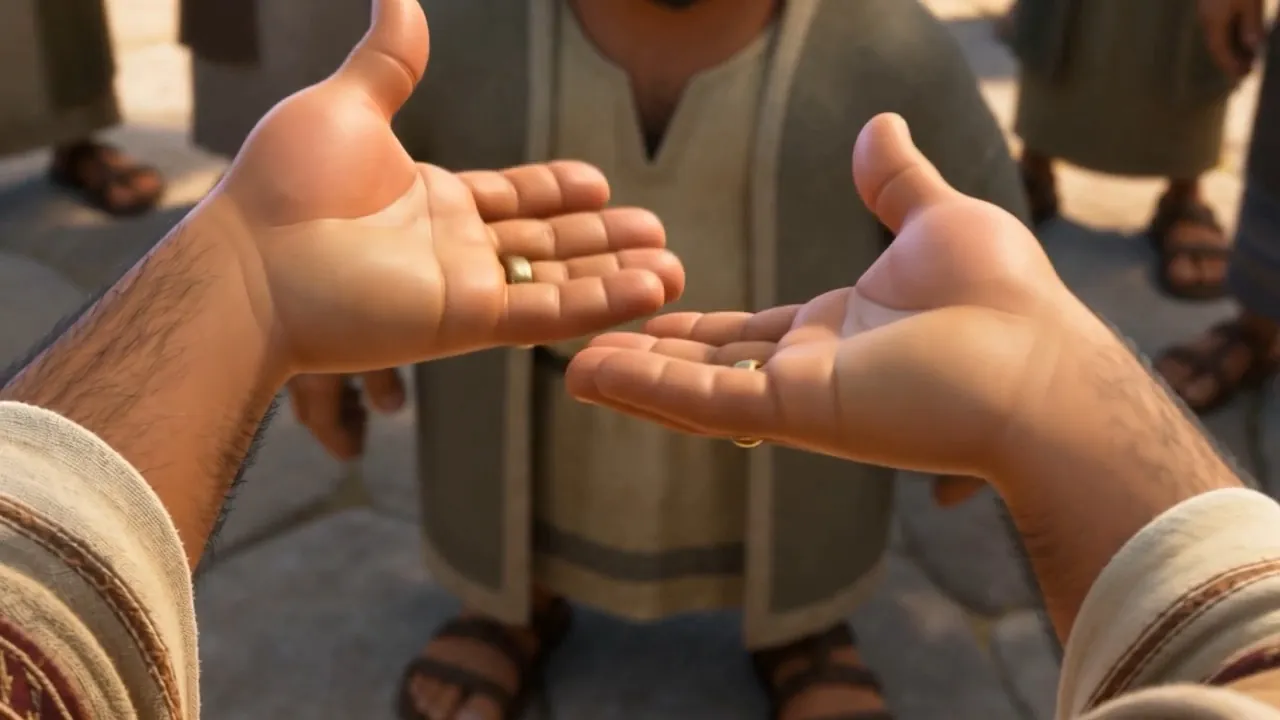
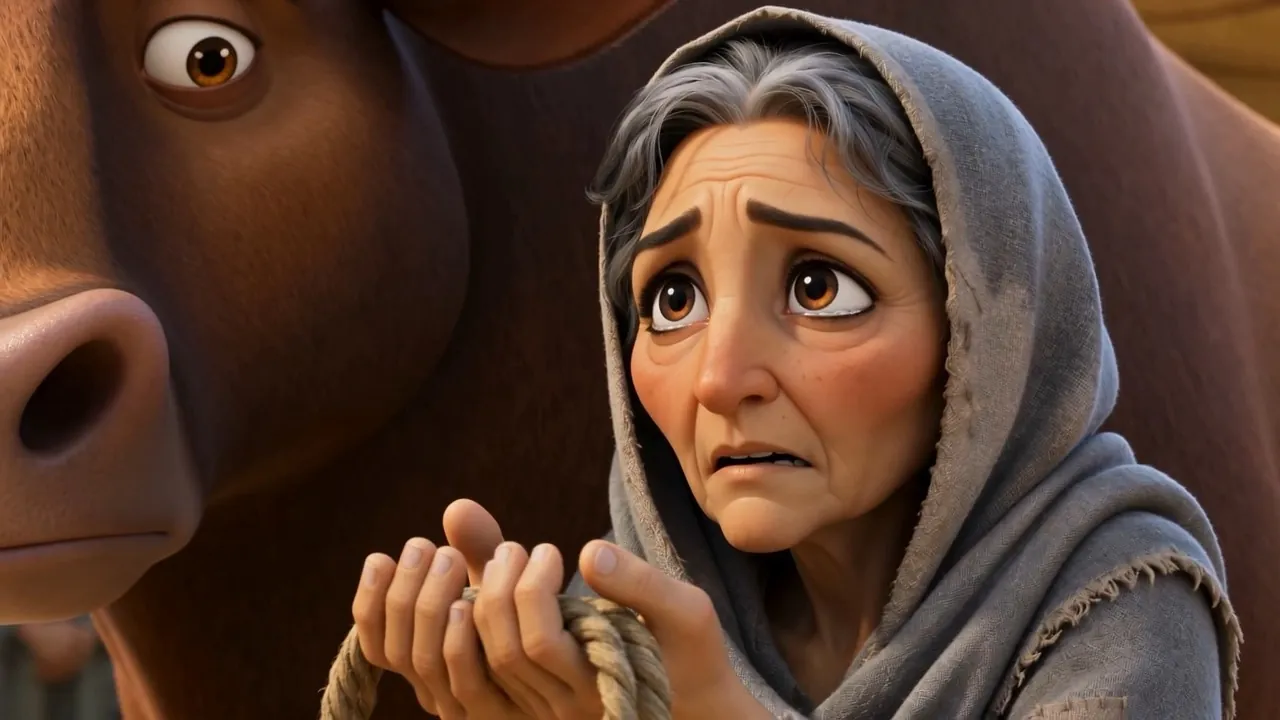

Nobody explains his reputation; you watch it happen — a specific case at the gate, a widow and a merchant and one ox between them. This is Job 29 played as an event: I delivered the poor who cried, and the fatherless also, who had no one to help him… I broke the jaws of the unrighteous, and plucked the prey out of his teeth. Job 29 : 12–17
I delivered the poor who cried.

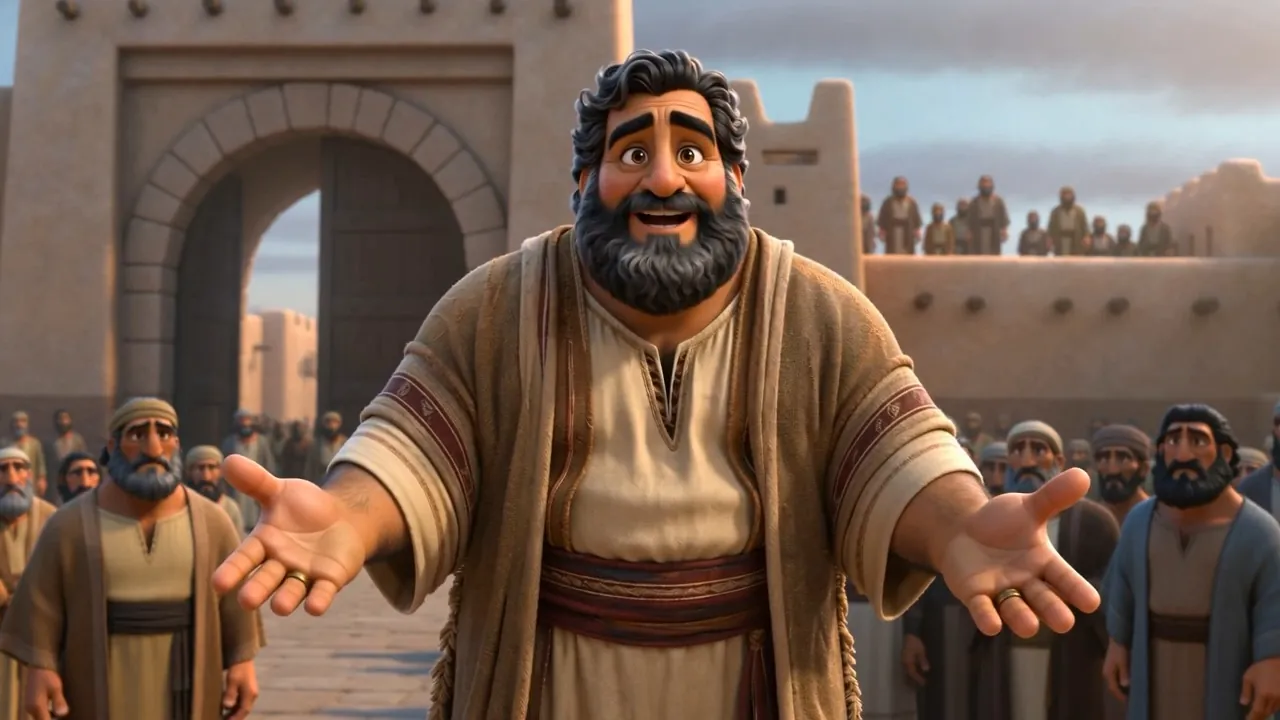
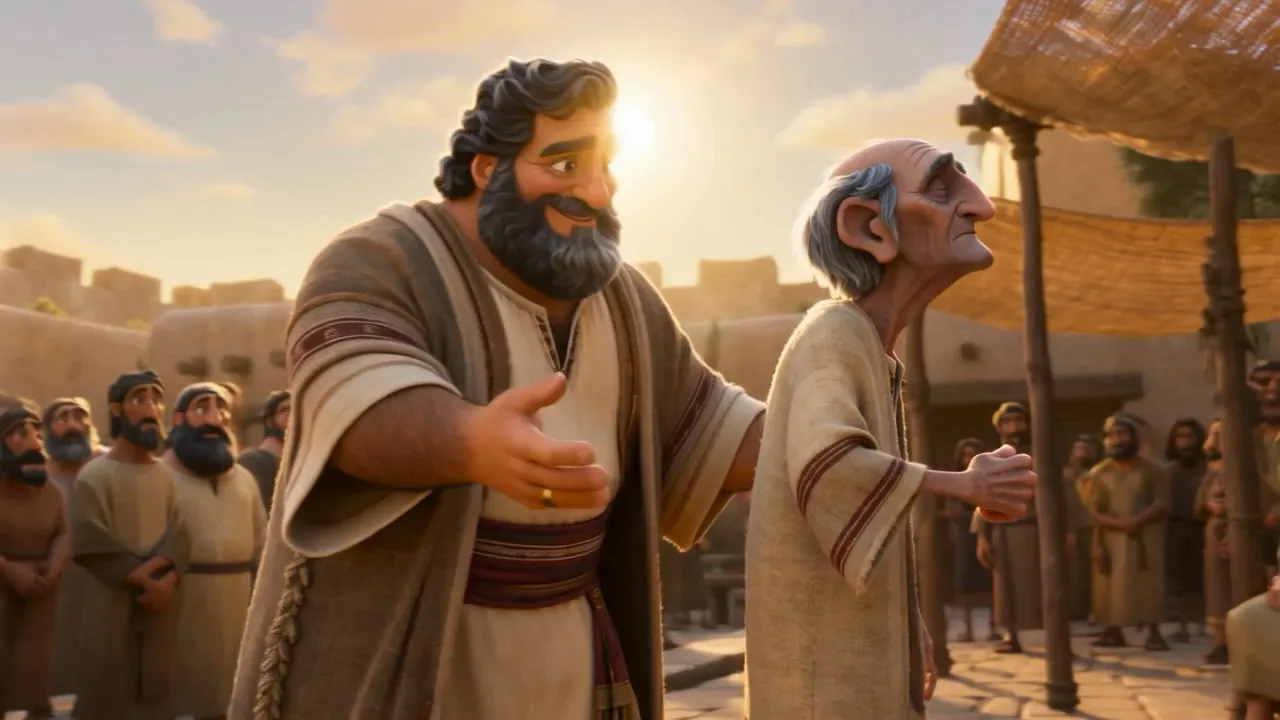
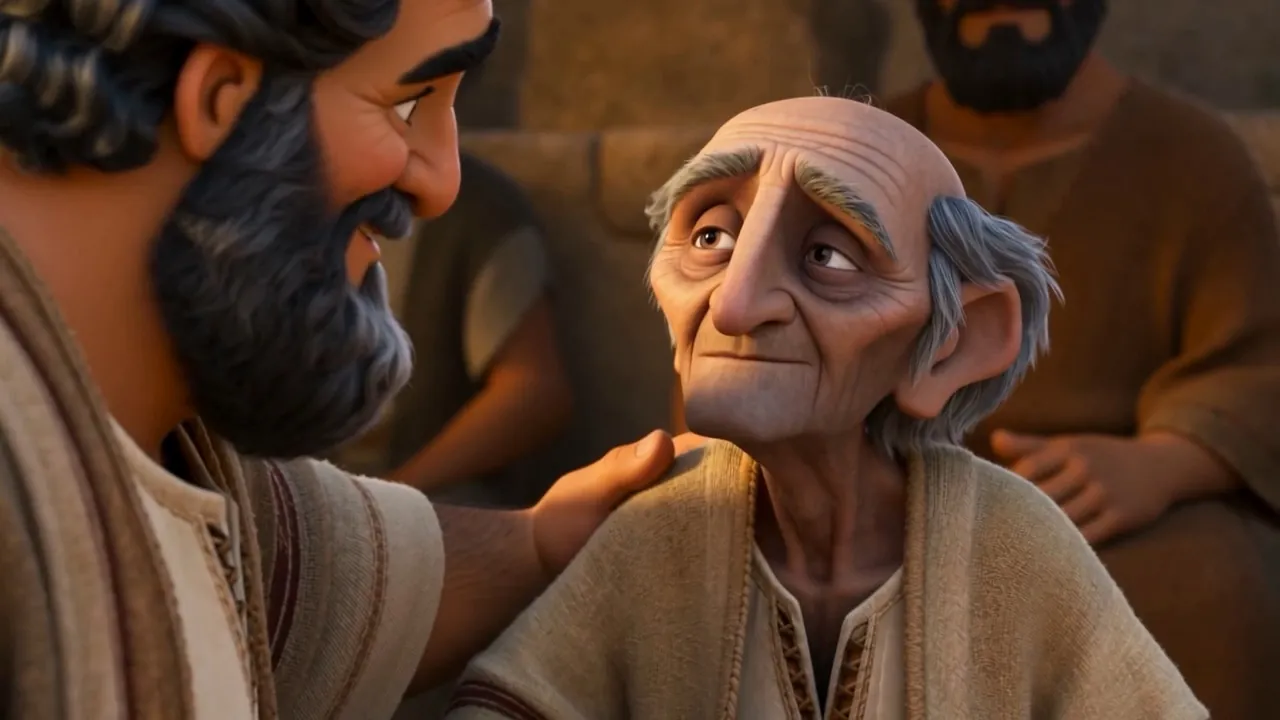
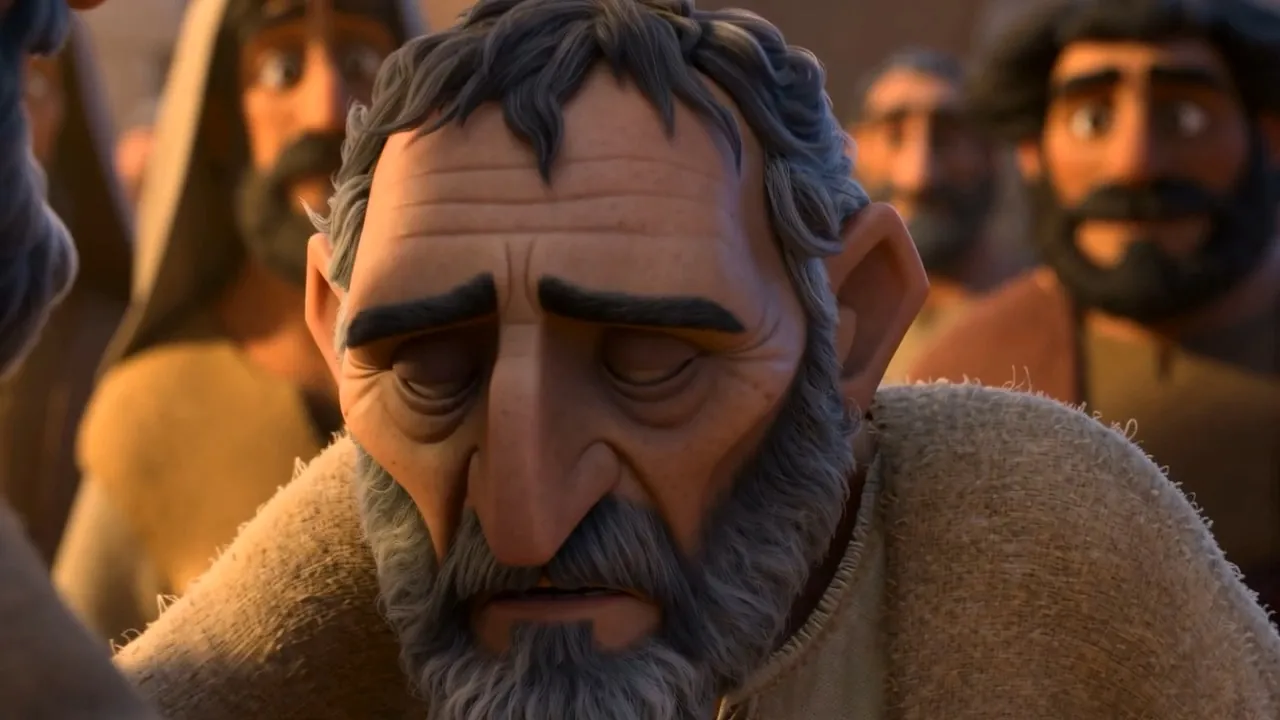
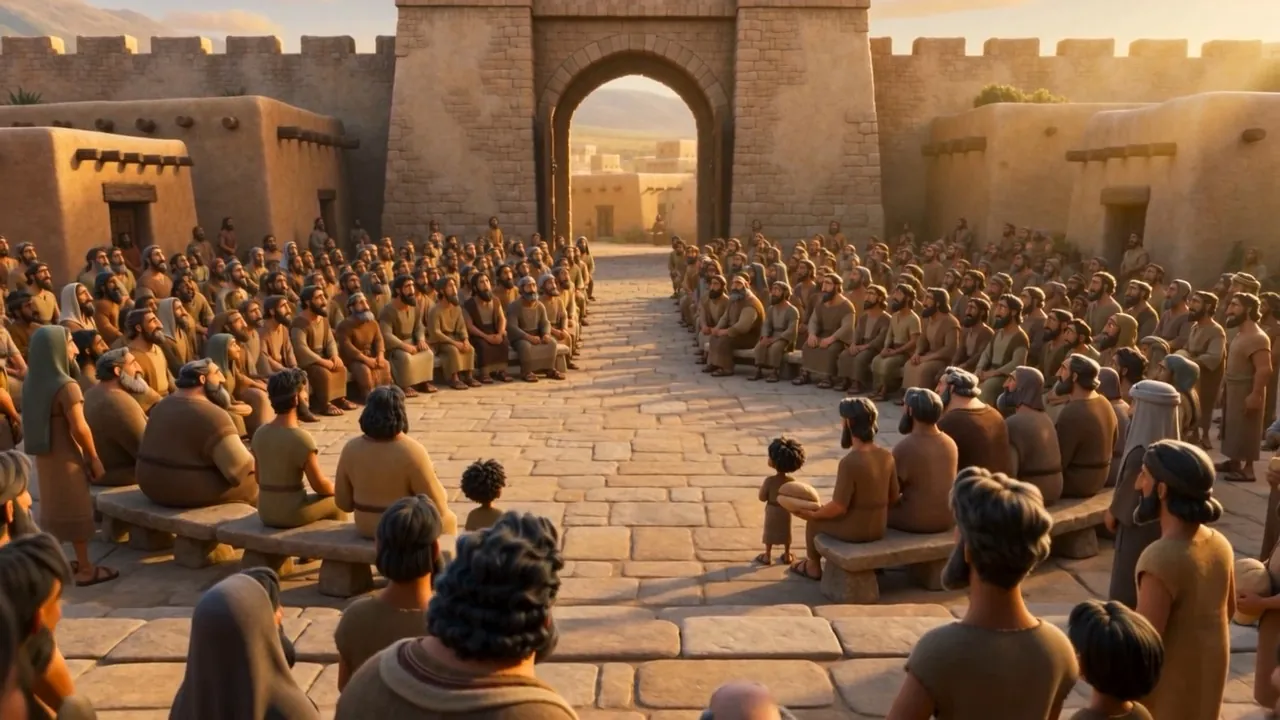
I was eyes to the blind, and feet to the lame. I was a father to the needy. The cause of him who I didn't know, I searched out. Two small things — bread left on a step, an elbow taken — stand in for thirty years. Job 29 : 15–16
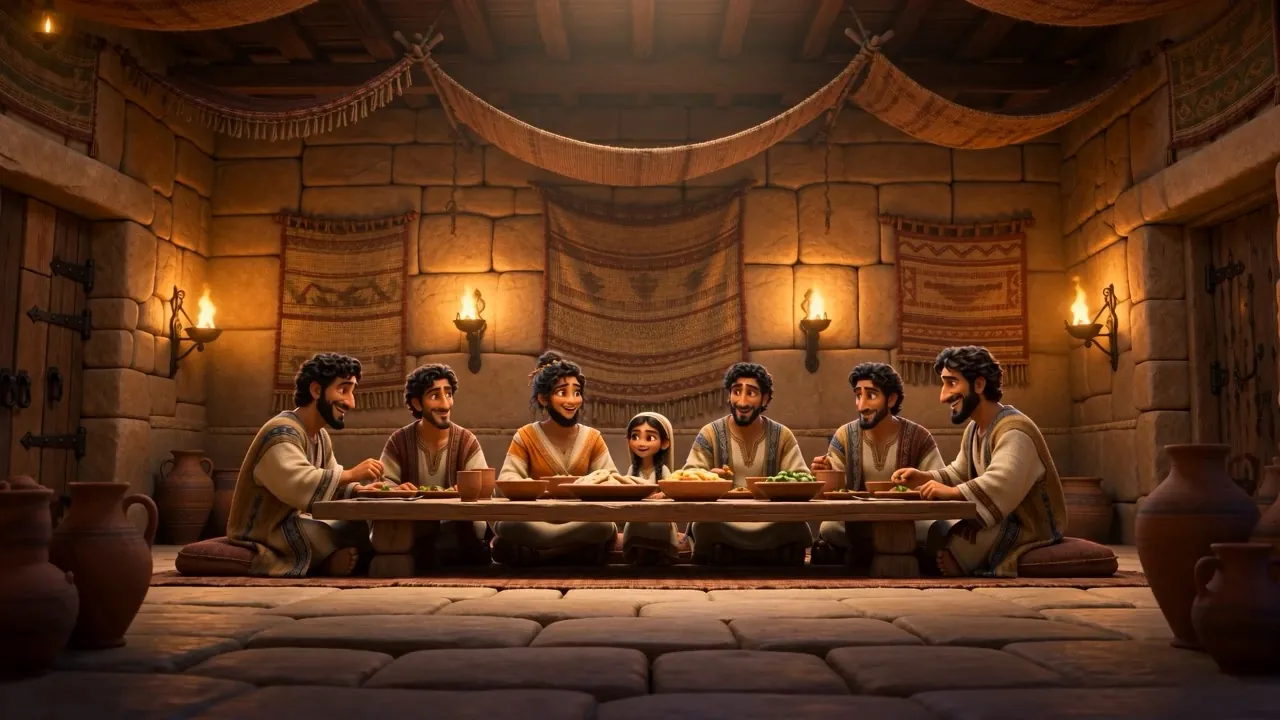
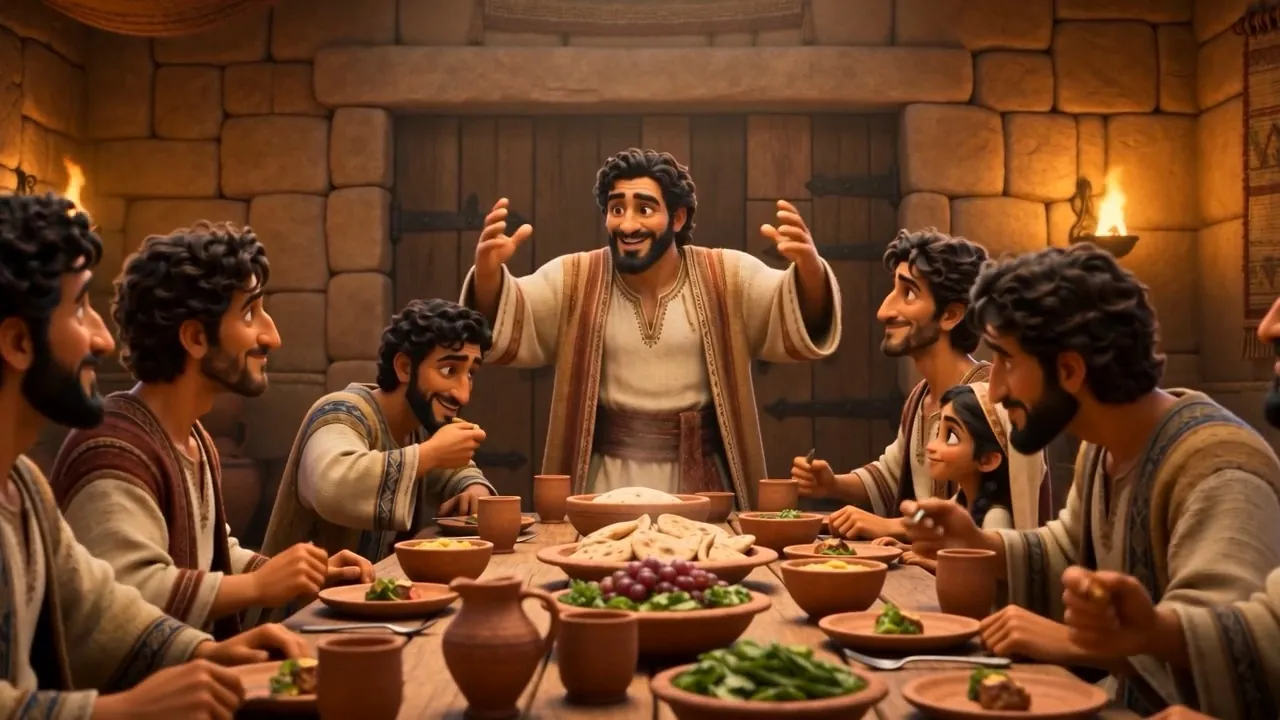



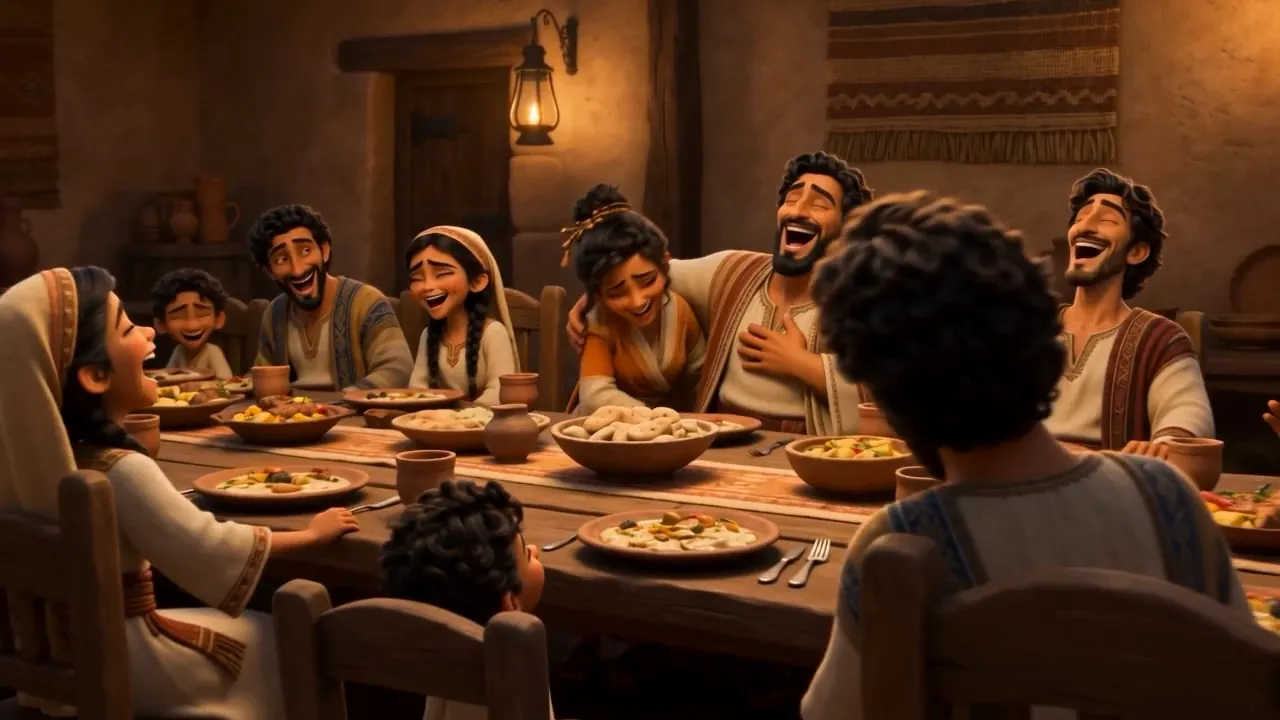

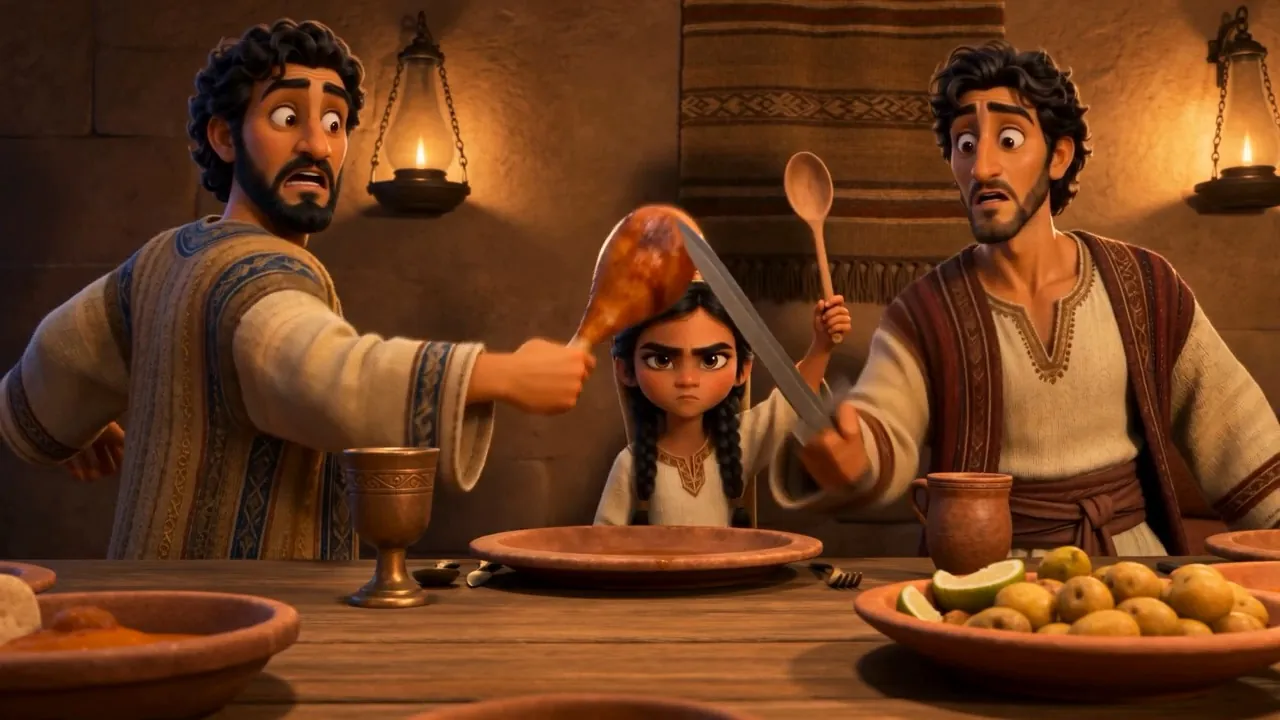
His sons went and held a feast in the house of each one on his birthday; and they sent and called for their three sisters to eat and to drink with them. Ten adult children who actually like each other, and who keep inviting their sisters. It lingers here on purpose. Job 1 : 4

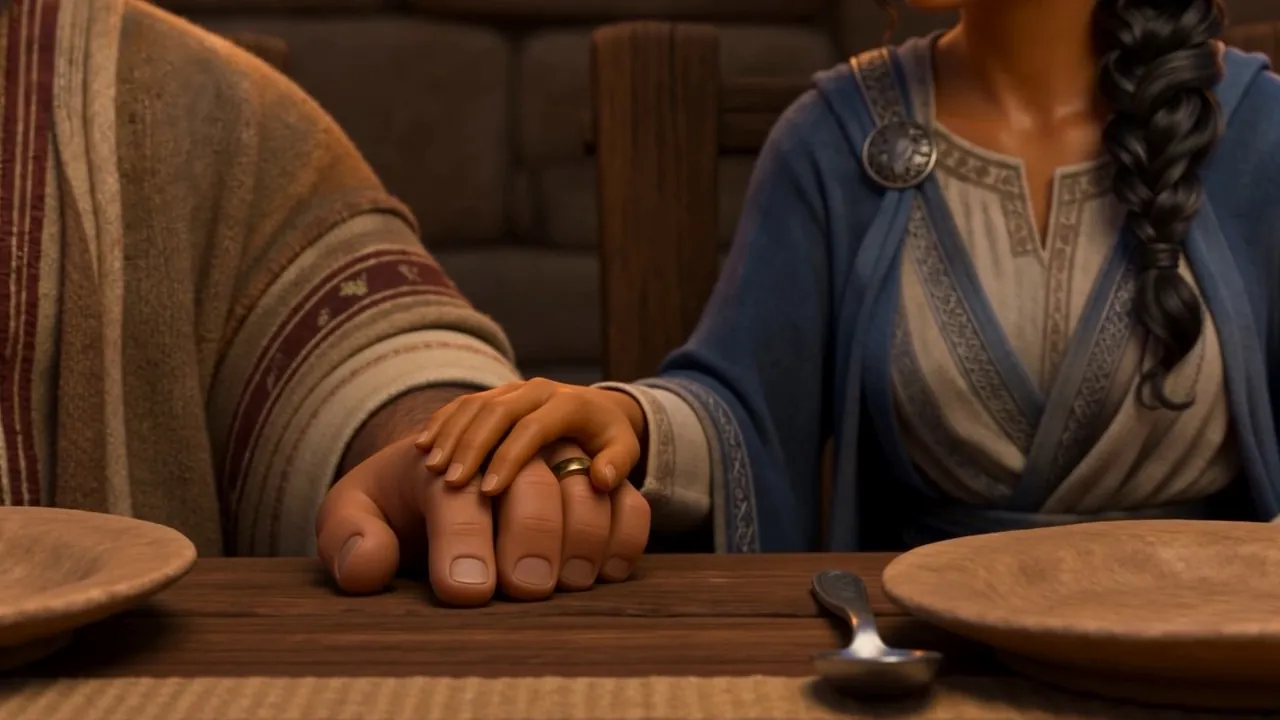


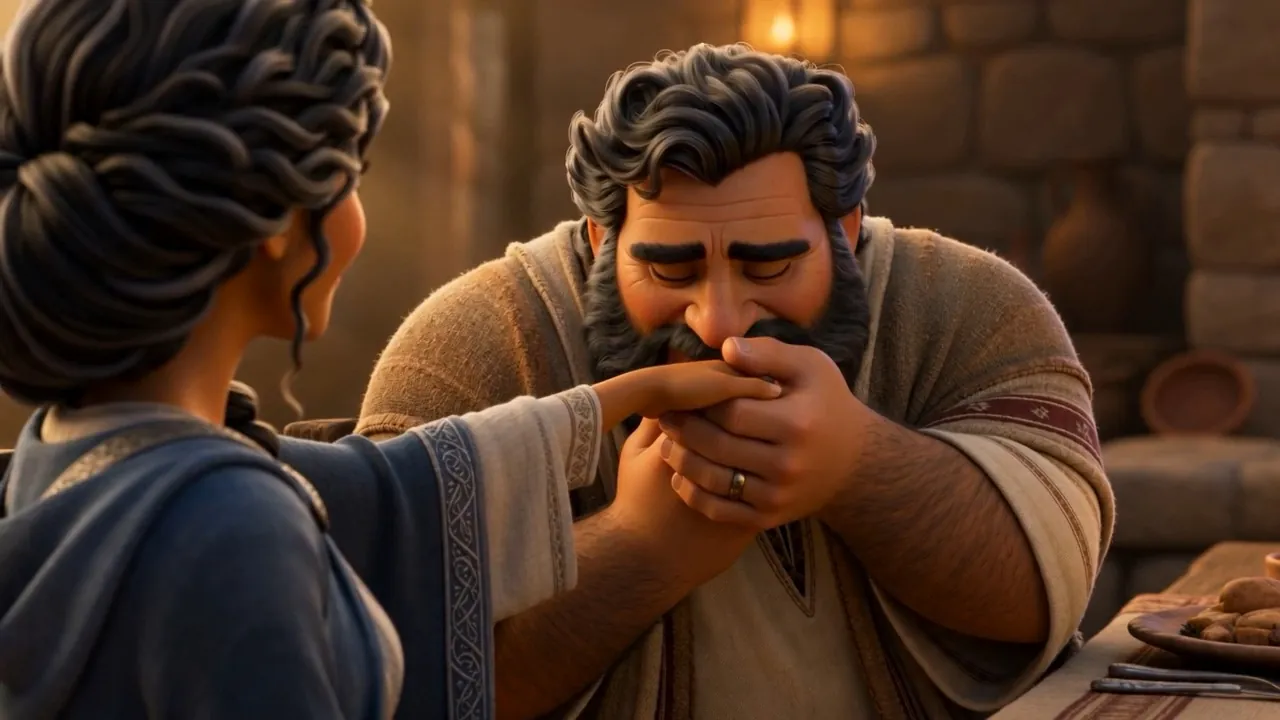
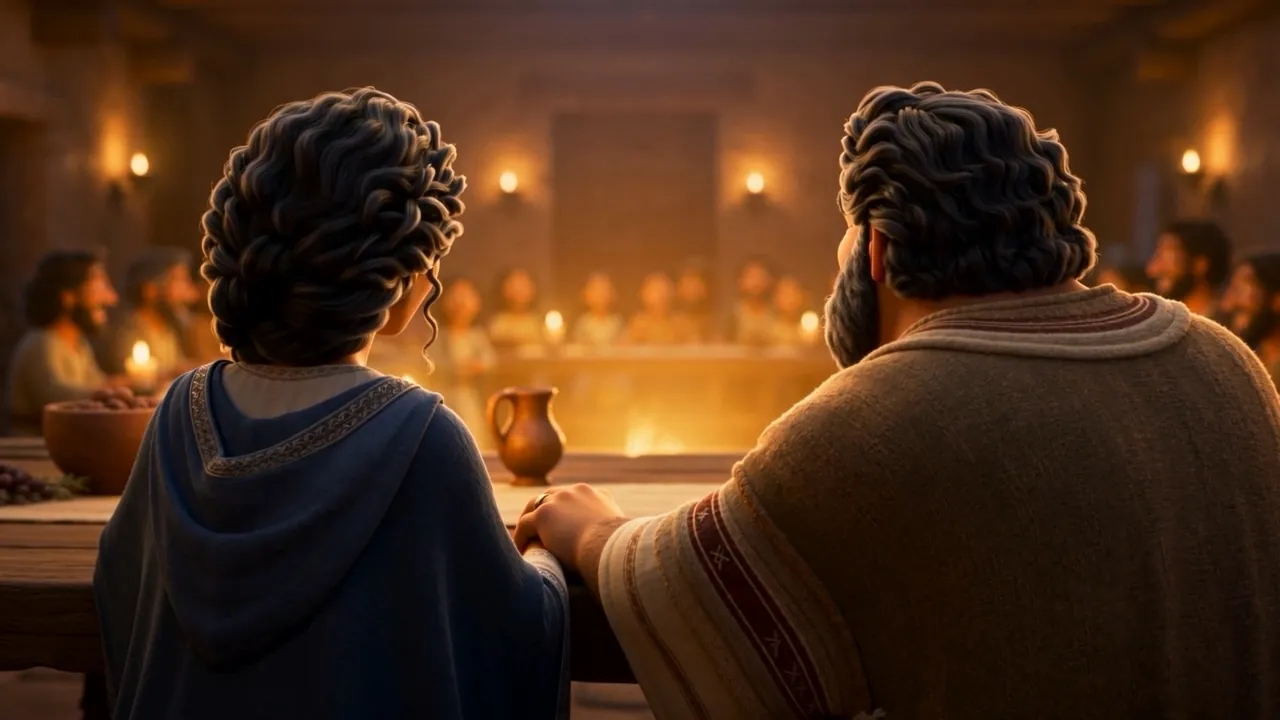
She has no name in the book and four words of dialogue, all of them terrible, and almost every retelling makes her the villain of the story. Something better happens first: you meet her at this table, holding his hand — so that when she says the terrible thing you already know what it costs her. Job 2 : 9
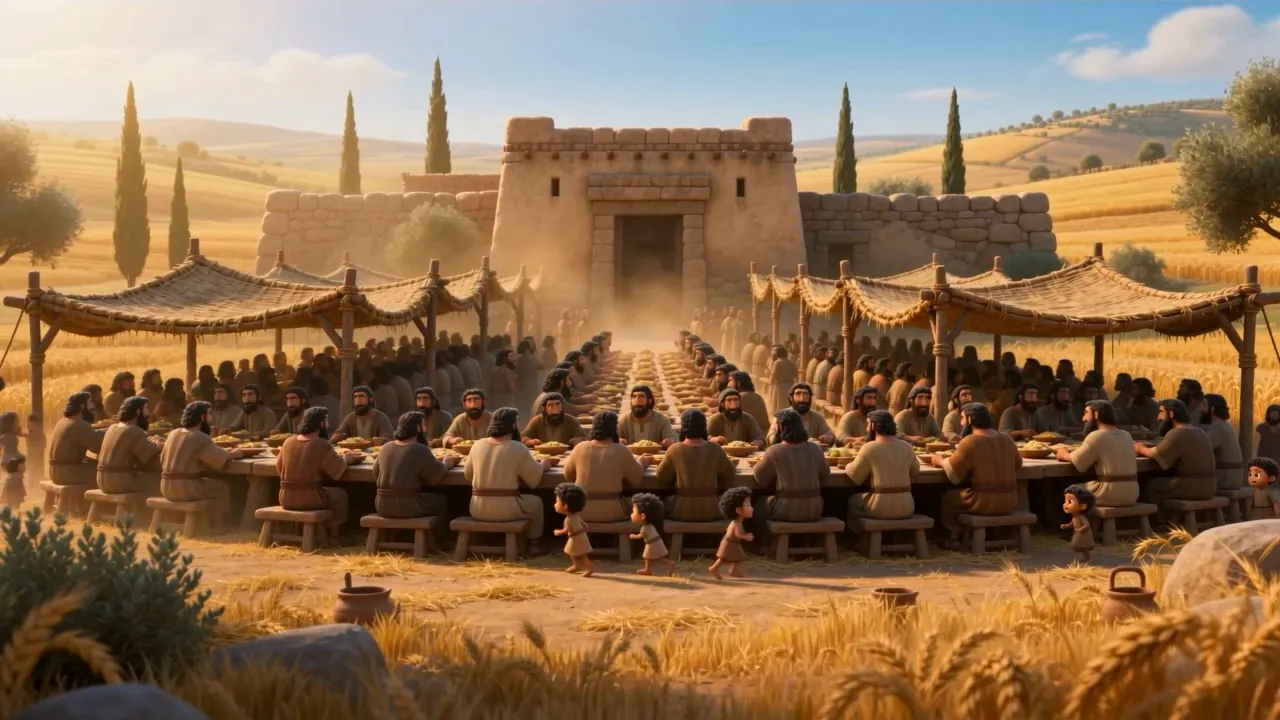
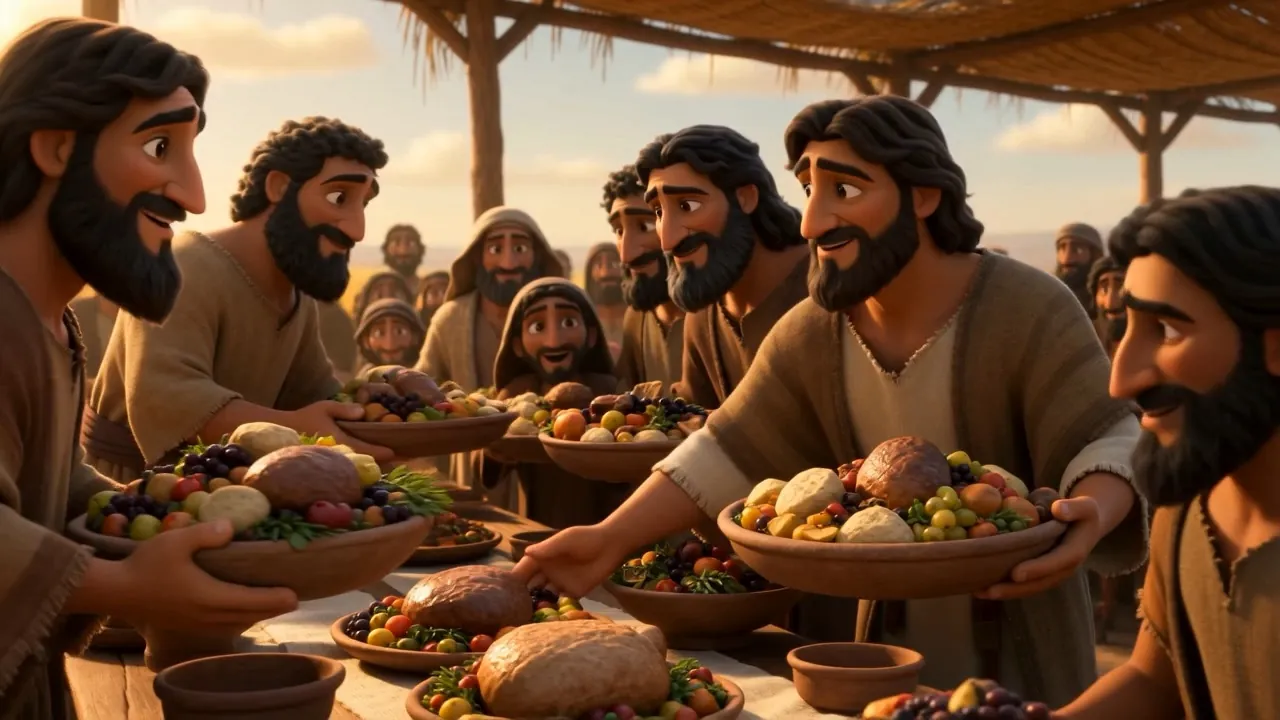
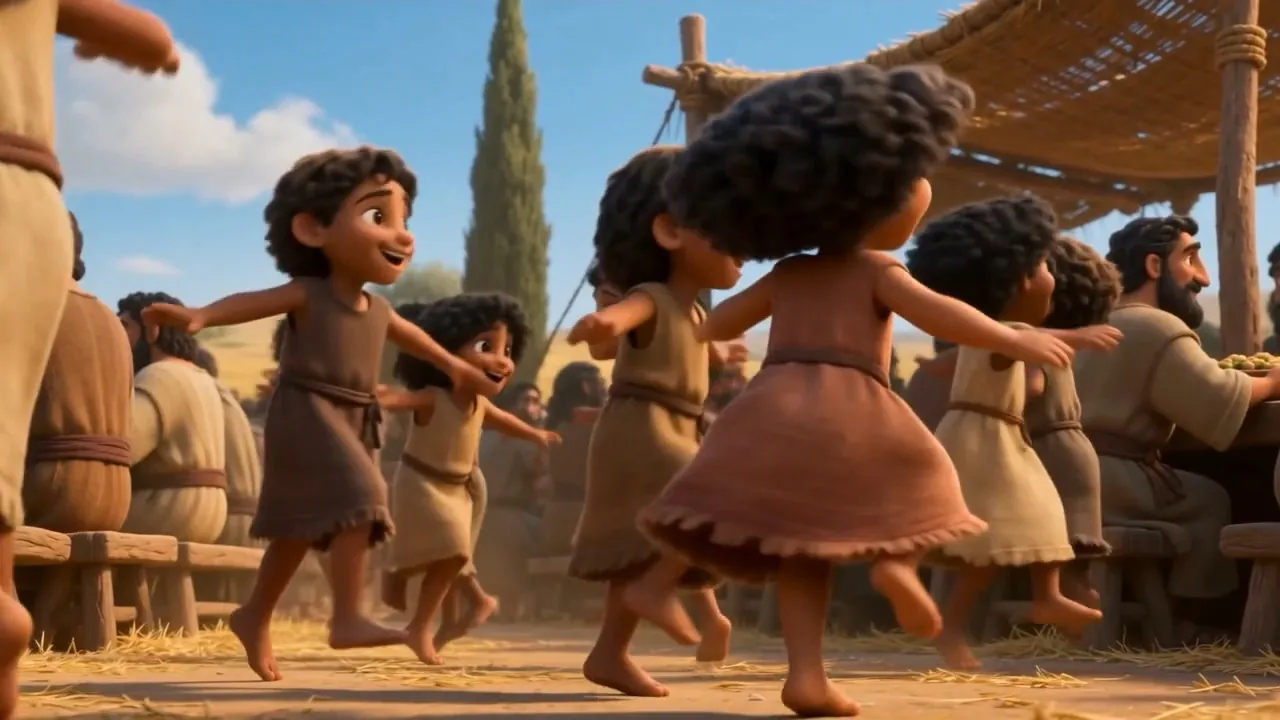
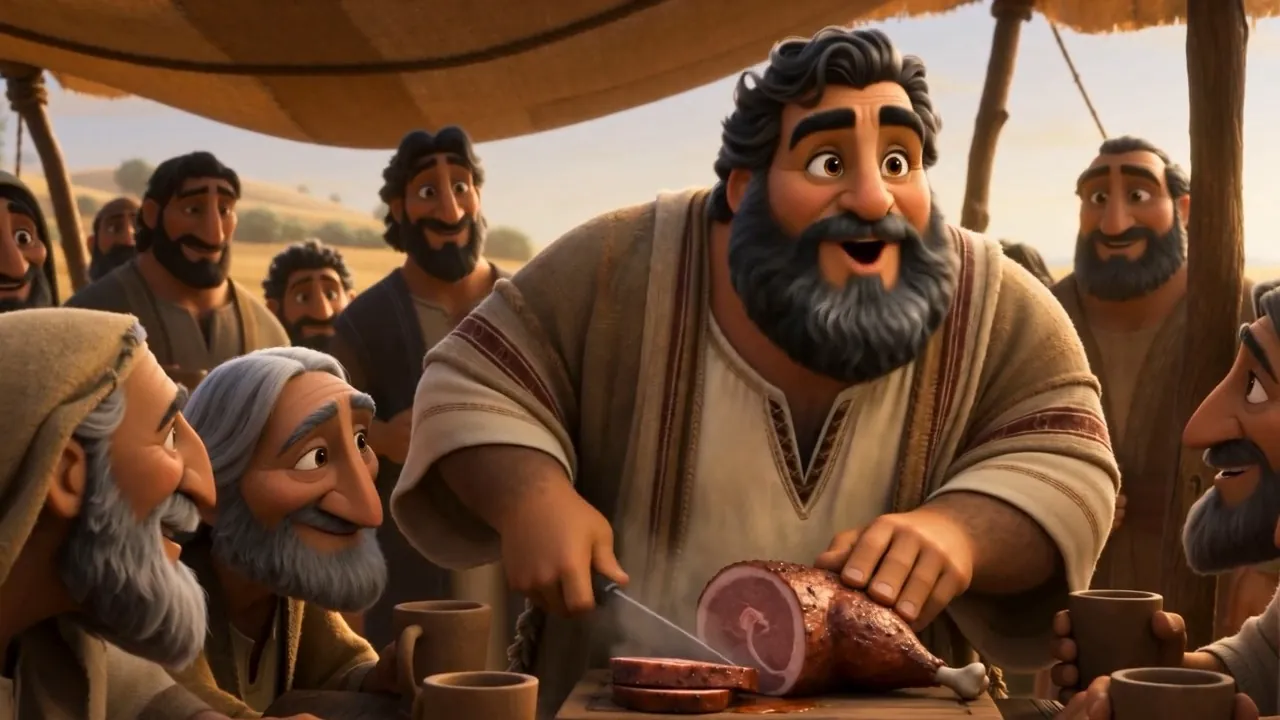
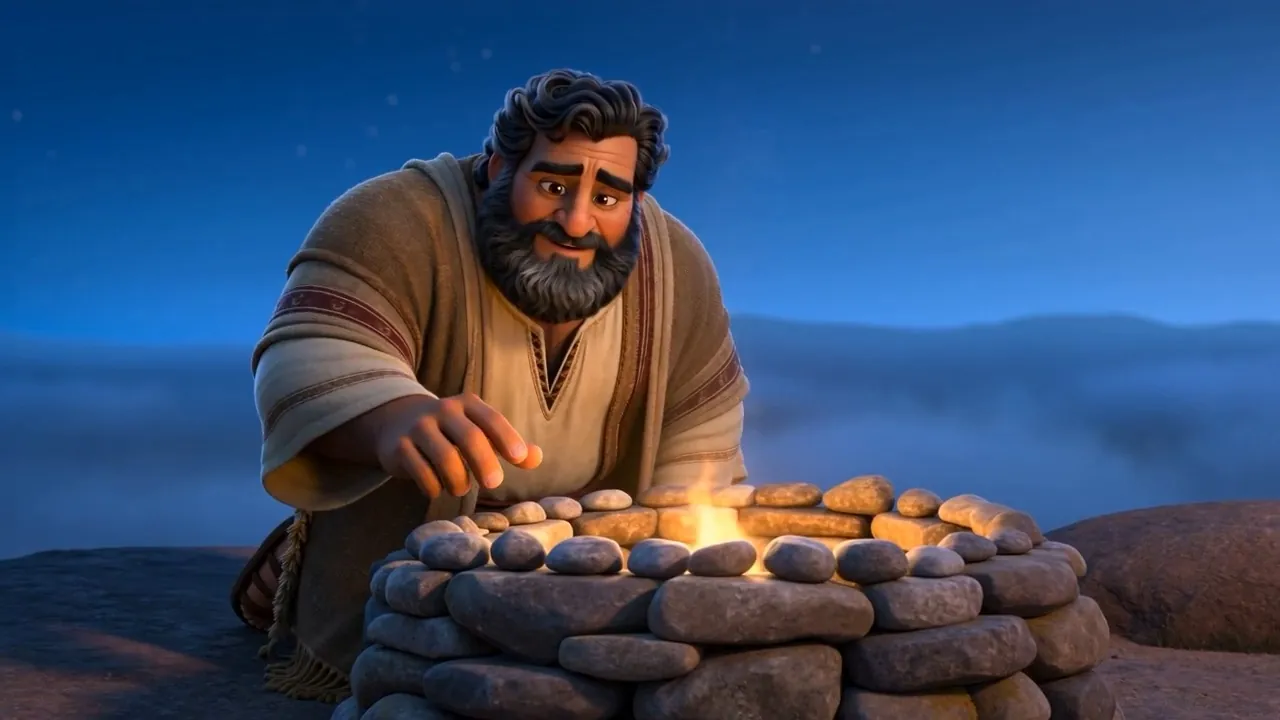




When the days of their feasting had run their course, Job sent and sanctified them, and rose up early in the morning, and offered burnt offerings according to the number of them all; for Job said, “It may be that my sons have sinned, and renounced God in their hearts.” Job did so continually. Not once. Every time. Before dawn, on his own, for children who had done nothing wrong. Job 1 : 5

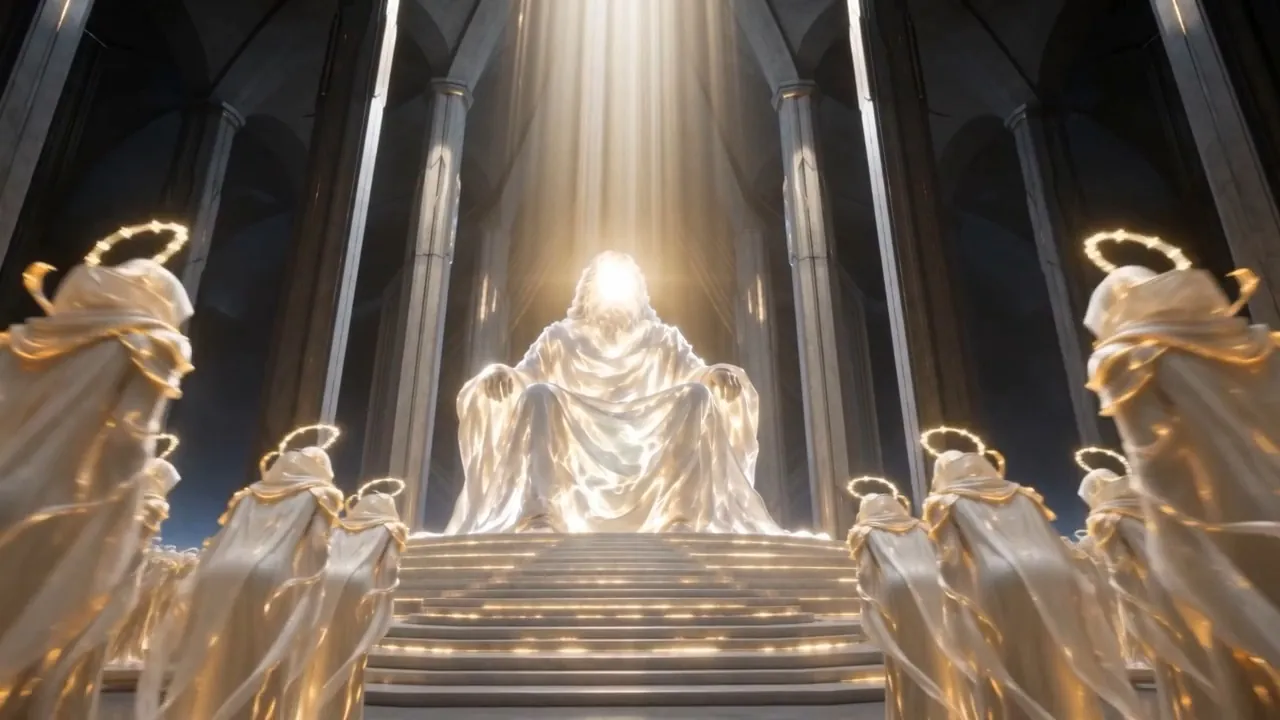




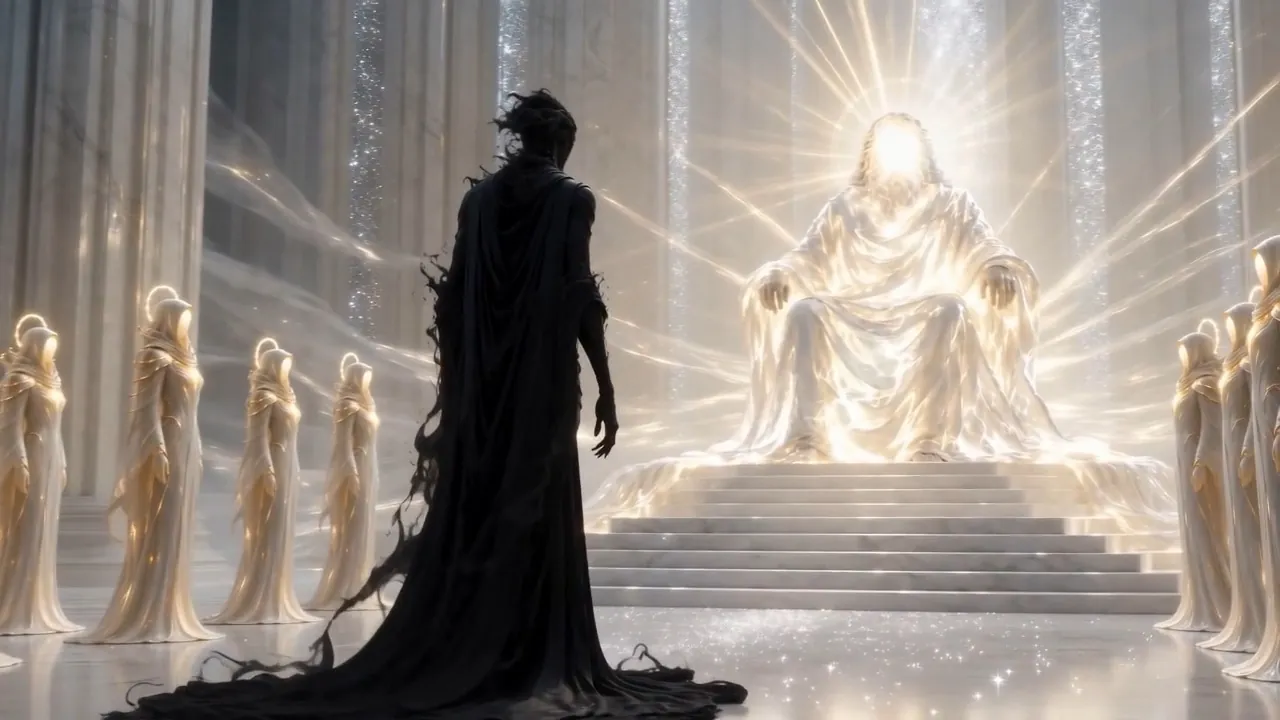

Now on the day when God's sons came to present themselves before Yahweh, Satan also came among them. The heavenly court is drawn as light with no faces in it, and the accuser as a black liquid shape — nobody gets horns, nobody gets a pitchfork. And God asks him a question with a strange edge to it: “Have you considered my servant Job?” Job 1 : 6–8





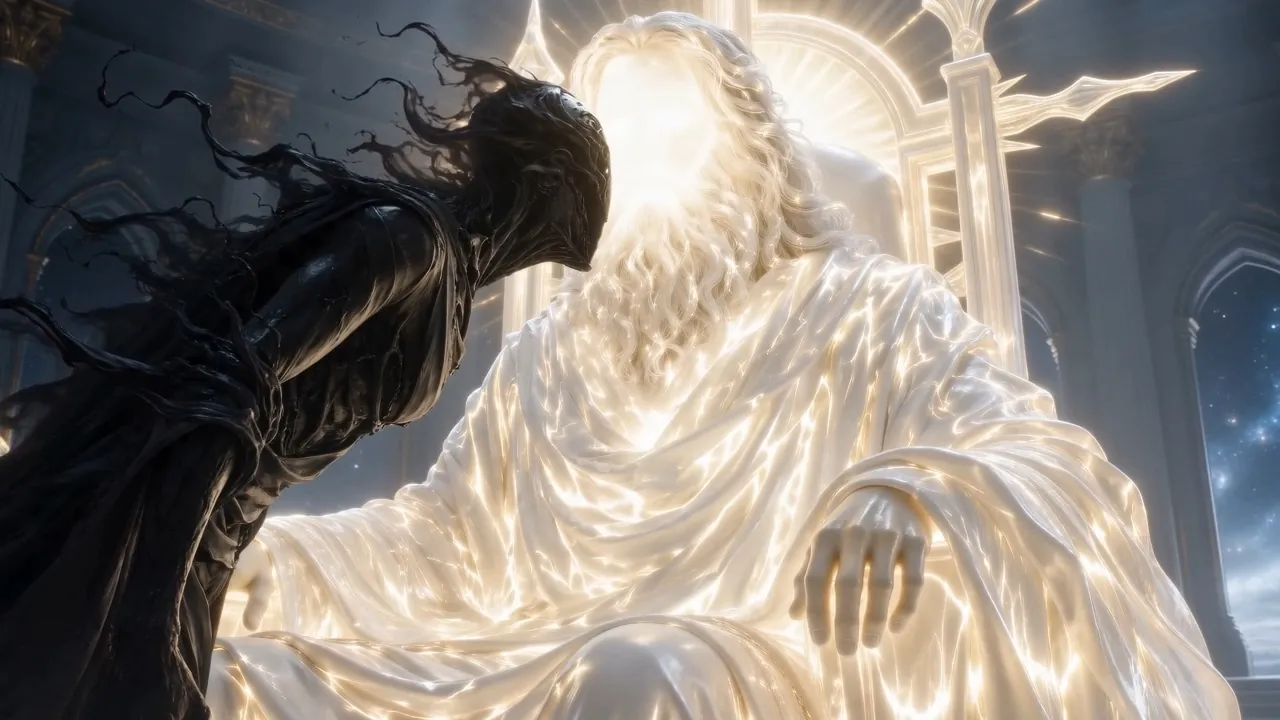


The accusation is not against Job. It is against God — that nobody actually loves him, they only love what he pays. “Does Job fear God for nothing? Haven't you made a hedge around him, and around his house, and around all that he has, on every side?… But stretch out your hand now, and touch all that he has, and he will renounce you to your face.” And the hedge comes down. Job 1 : 9–12
Have you not made a hedge around him?

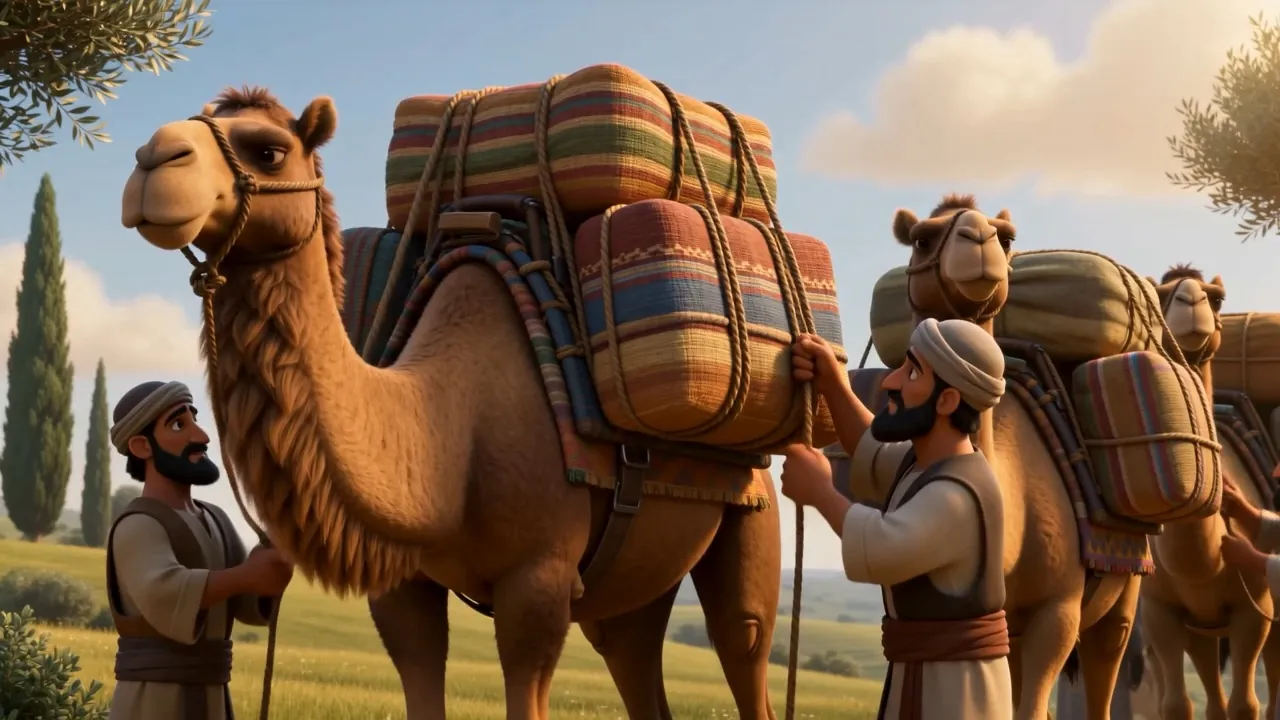




And then comes one completely ordinary morning. Nothing happens in it. The light is good, the animals are being loaded, a man is standing in his own gate with his eyes shut in the sun. It runs for a long time, and it is the last thing in this episode that is not terrible. Job 1 : 13
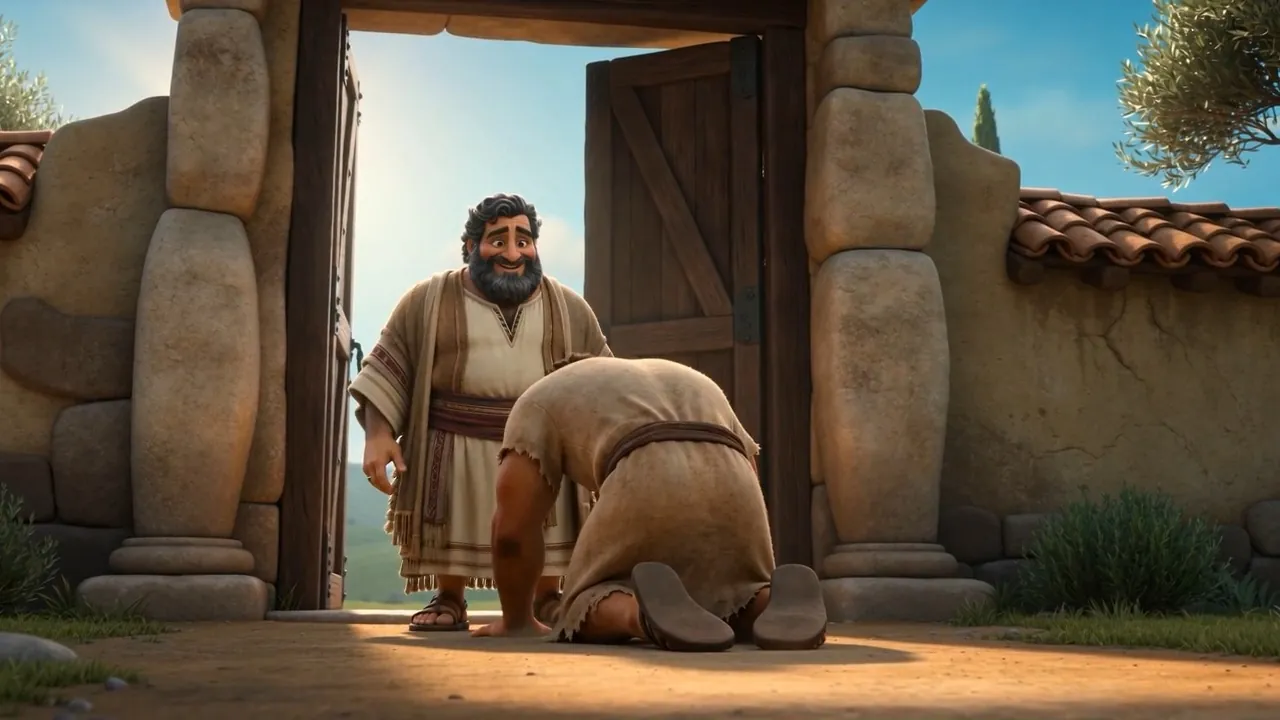



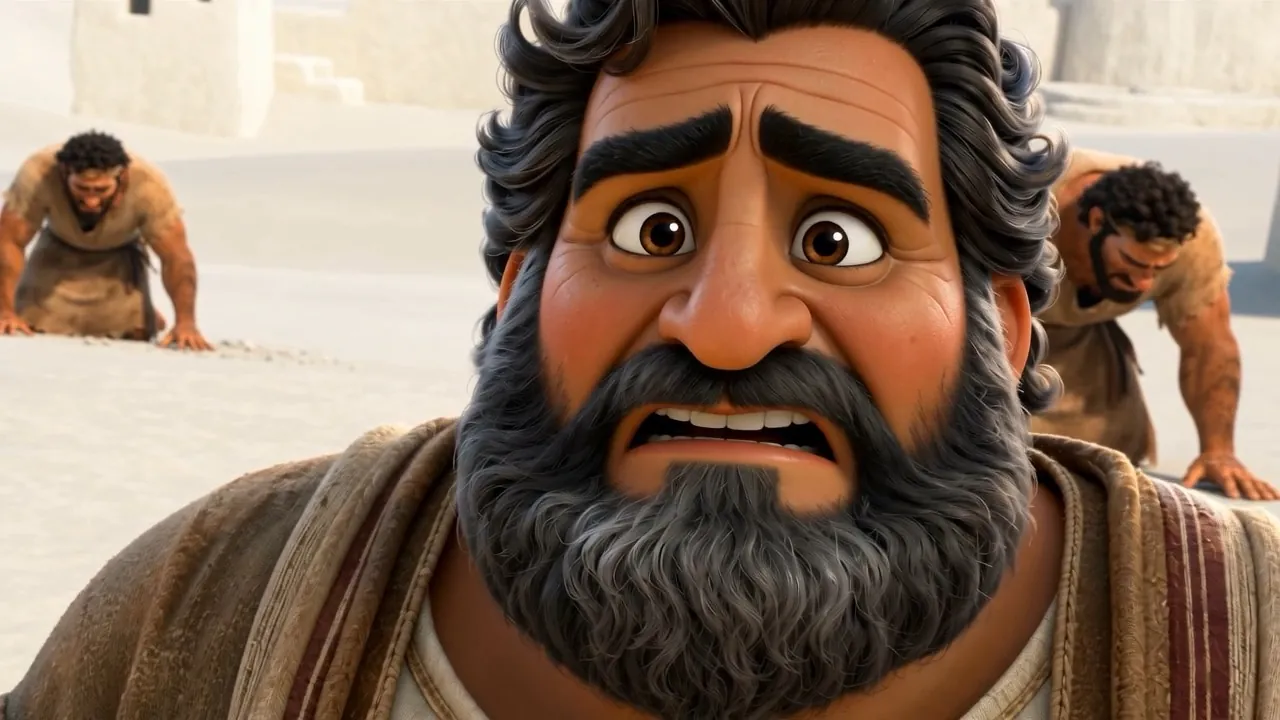
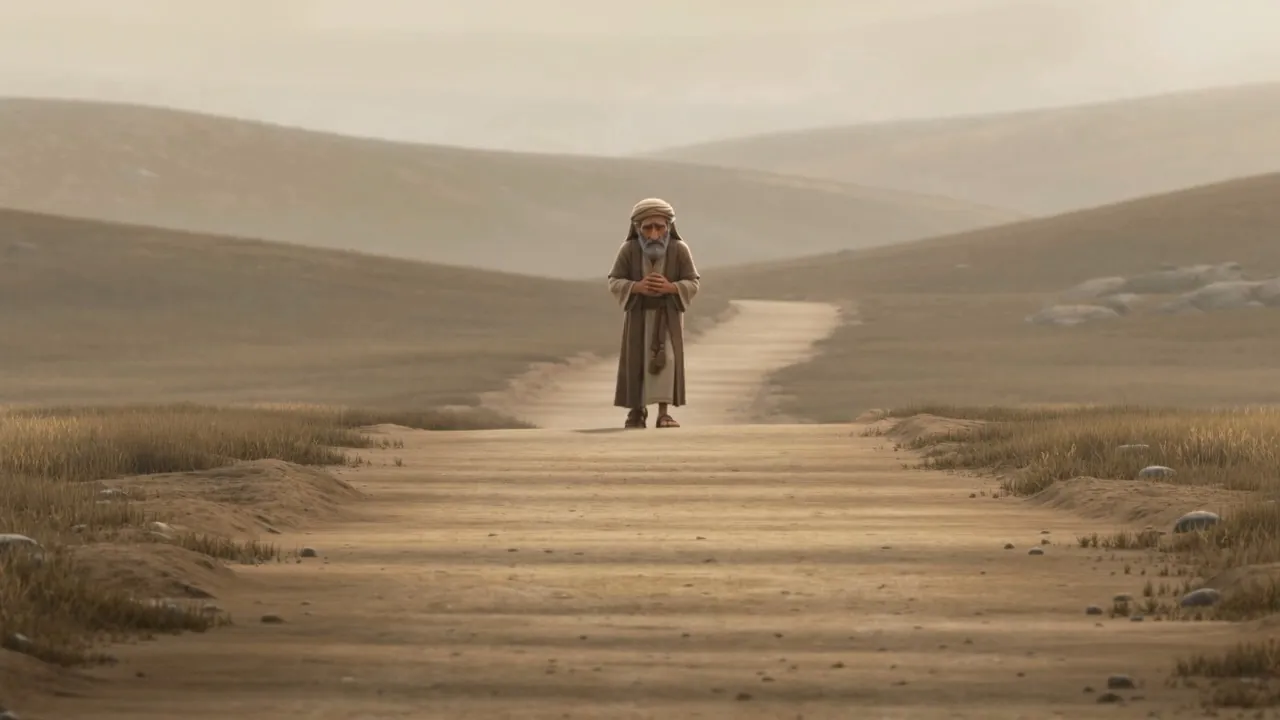

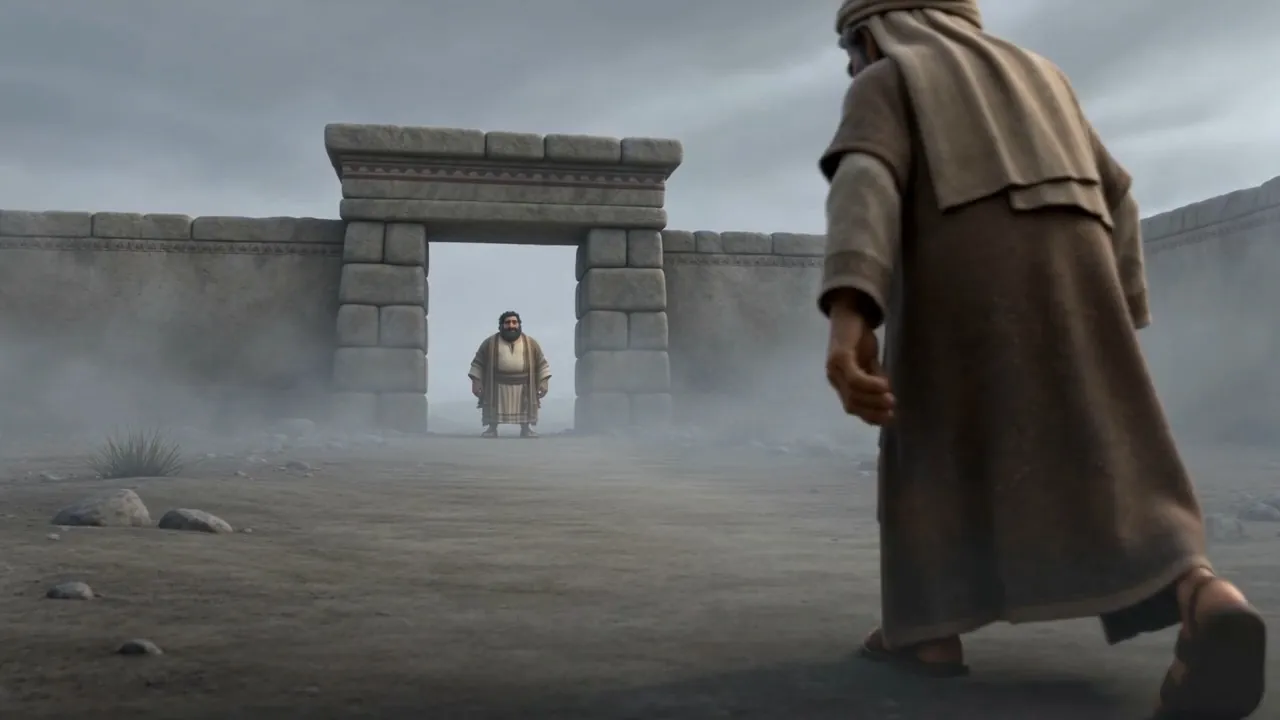
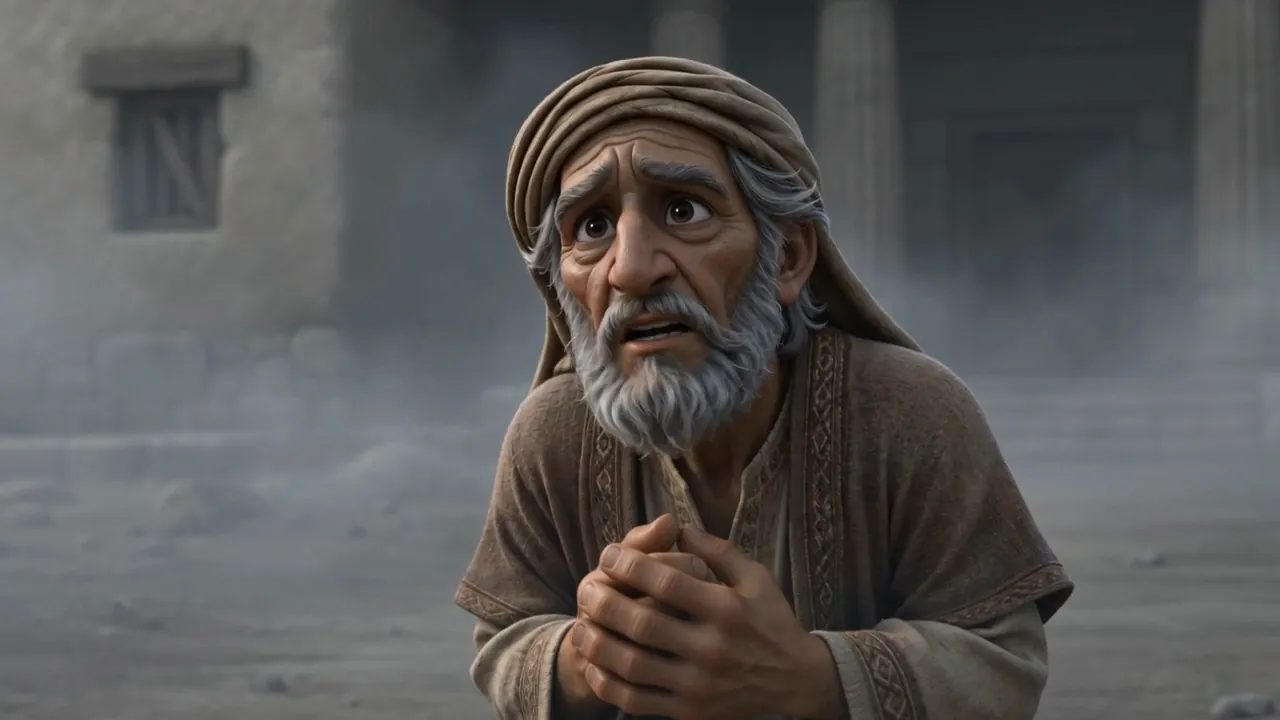

Four messengers — and with each one, the colour drains a little further out of the world. The green hills go grey, the sky goes flat, the sun goes out. The Sabeans took the oxen. Fire fell and burned the sheep. The Chaldeans took the camels. And then the fourth — your sons and your daughters were eating and drinking wine in their oldest brother's house, and behold, a great wind came… and it fell on the young men, and they are dead. Job 1 : 13–19
I alone have escaped to tell you.
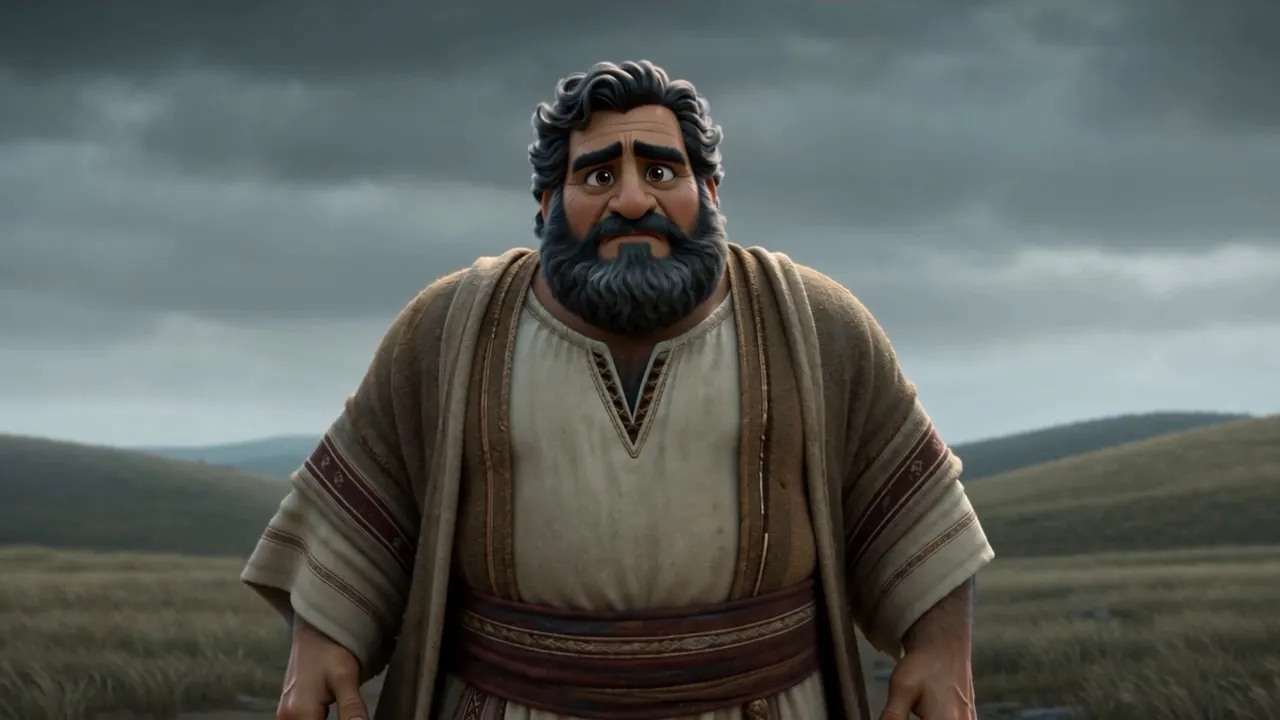
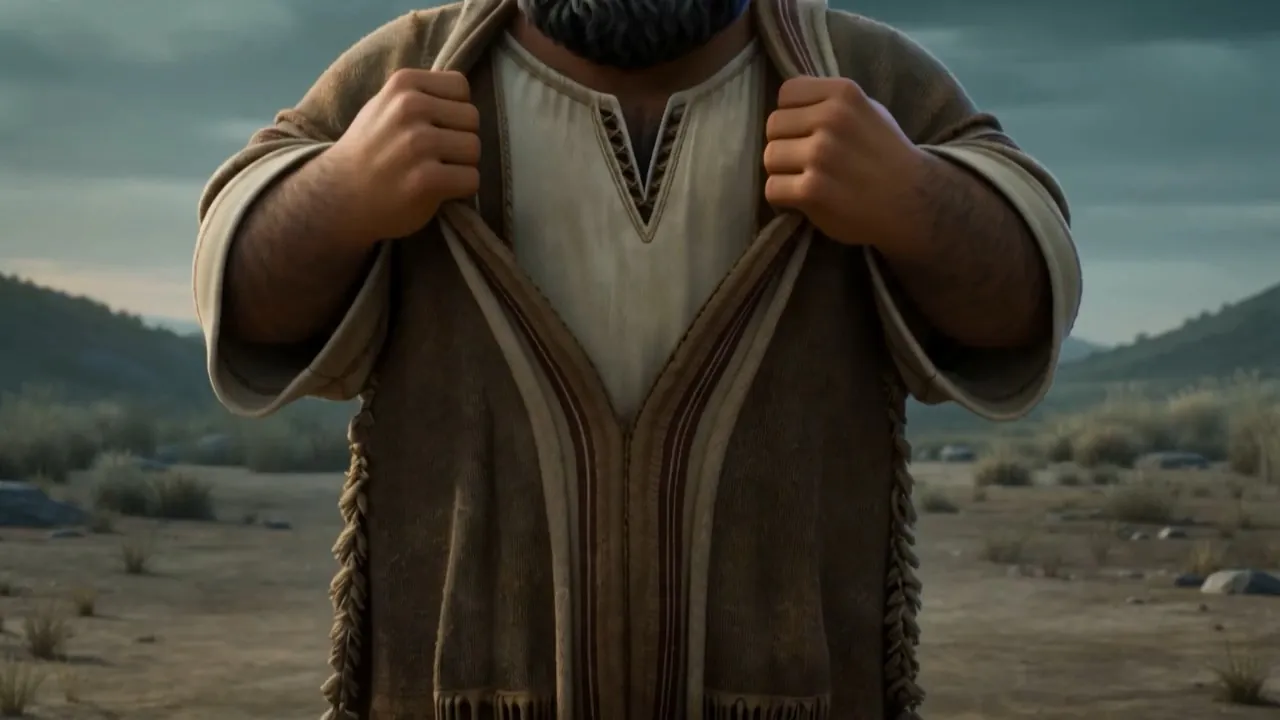
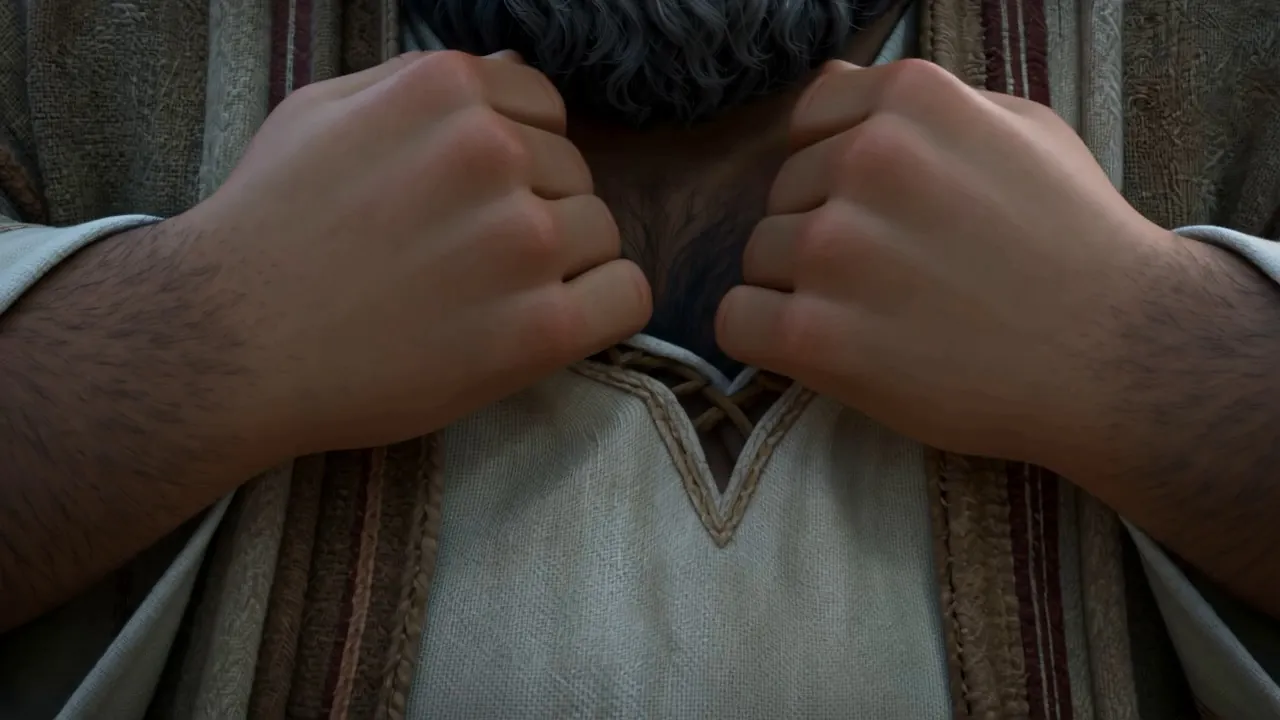

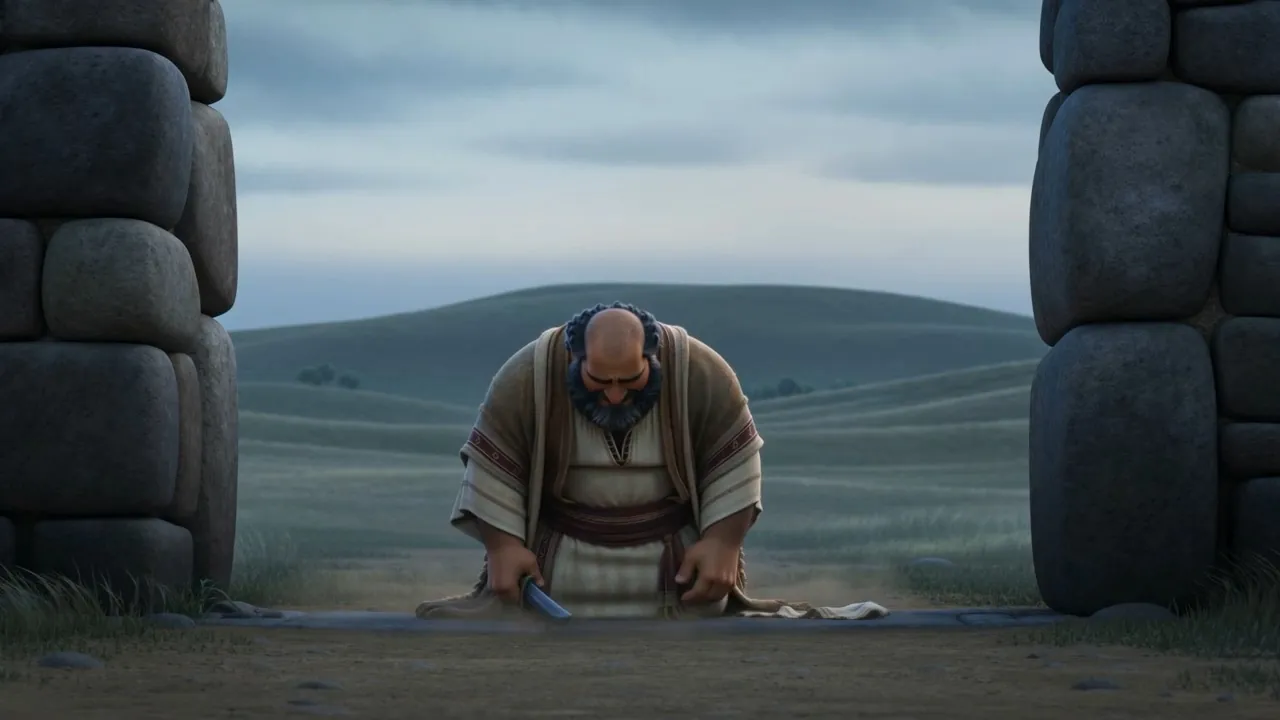
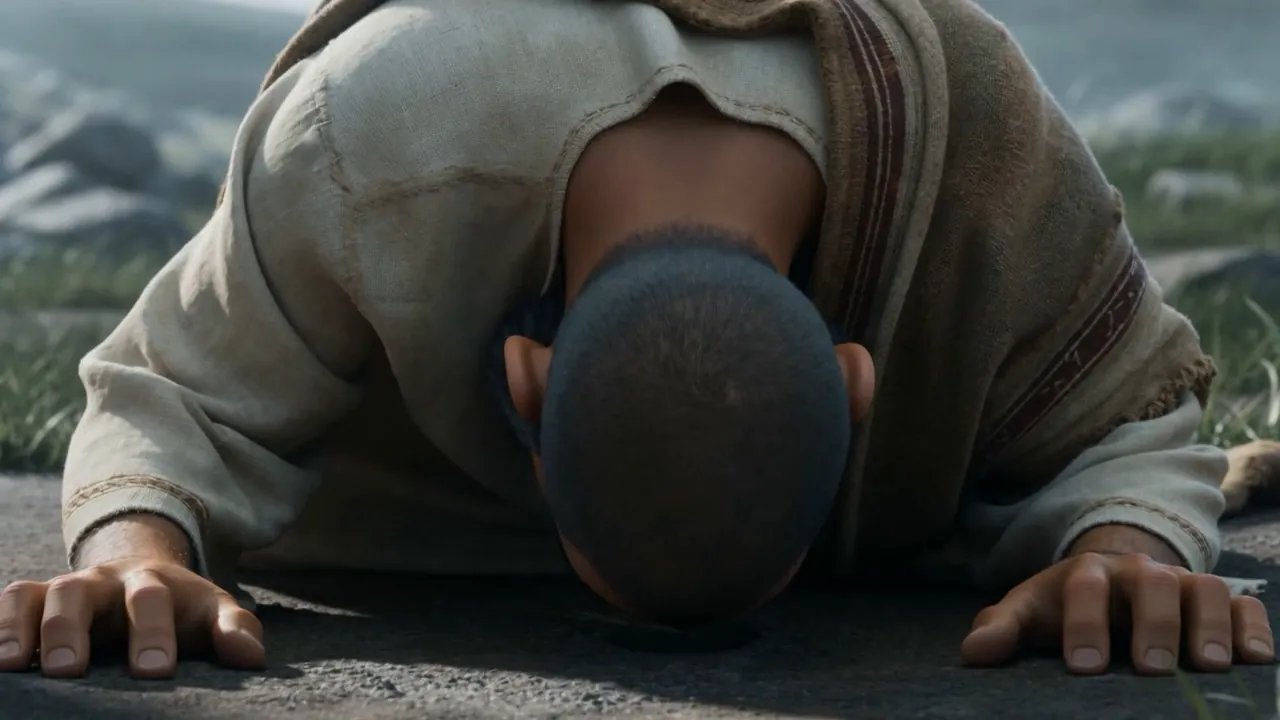
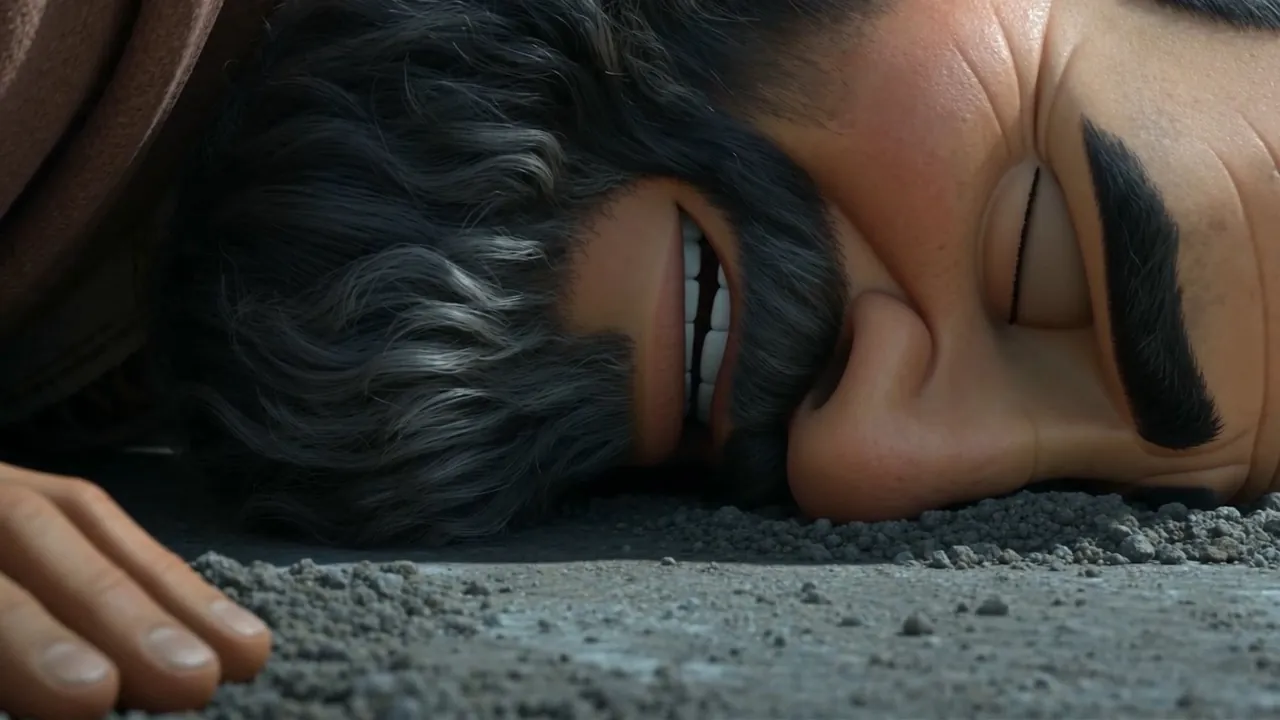
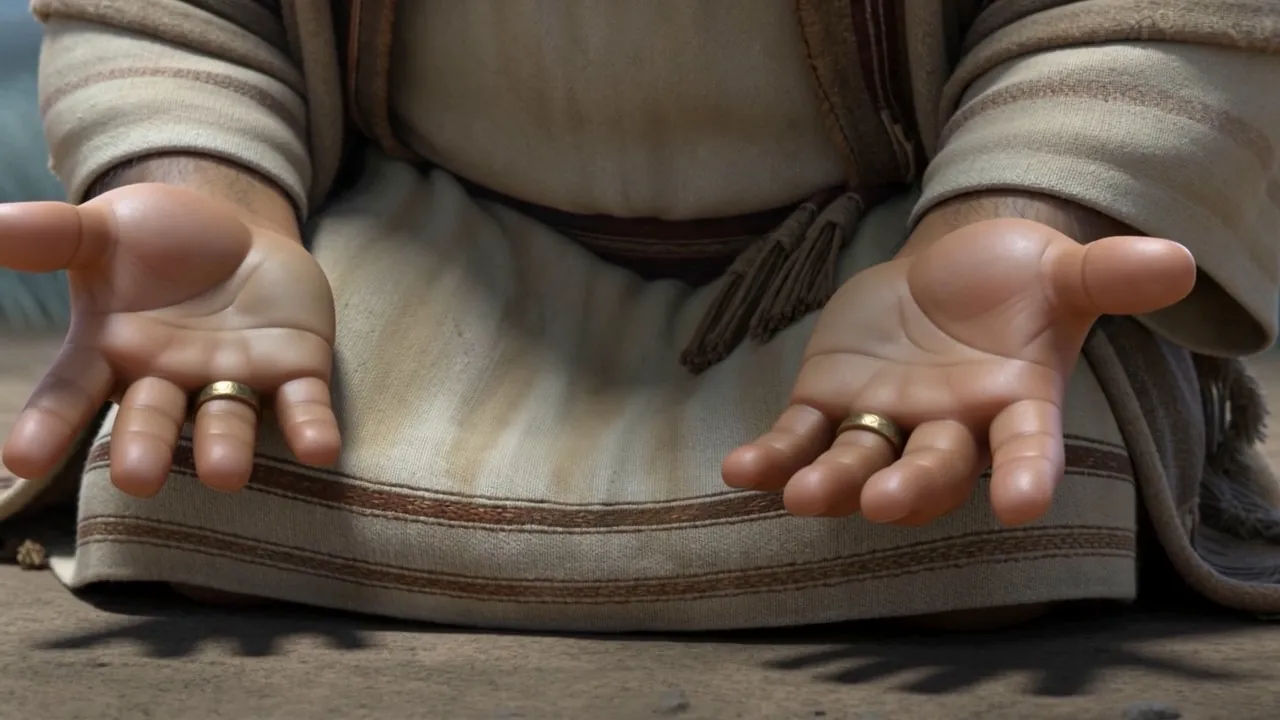
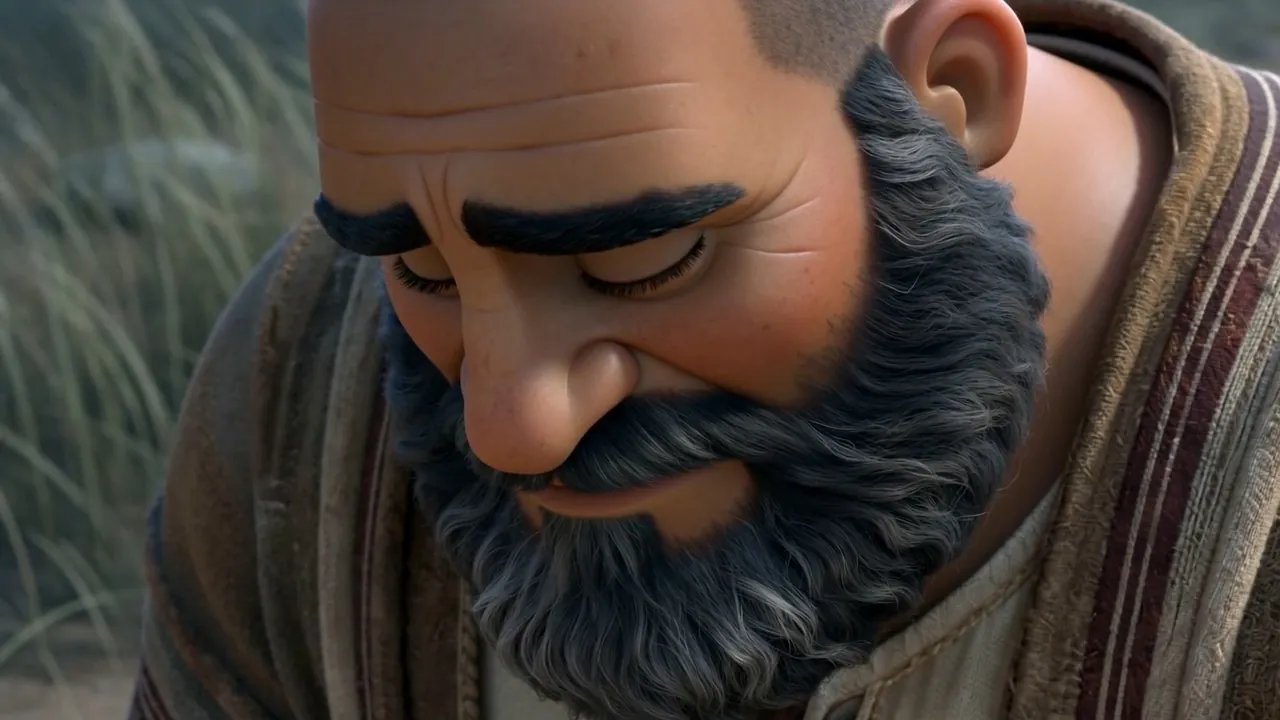
Then Job arose, and tore his robe, and shaved his head, and fell down on the ground, and worshipped. All three, in order, and all three are here. And then: “Naked I came out of my mother's womb, and naked shall I return there. Yahweh gave, and Yahweh has taken away. Blessed be Yahweh's name.” In all this, Job didn't sin, nor charge God with wrongdoing. Job 1 : 20–22
Blessed be the name of Yahweh.








“Skin for skin. Yes, all that a man has he will give for his life. But put out your hand now, and touch his bone and his flesh, and he will renounce you to your face.” The answer is the same as before, with one limit on it: “Behold, he is in your hand. Only spare his life.” Job 2 : 1–6
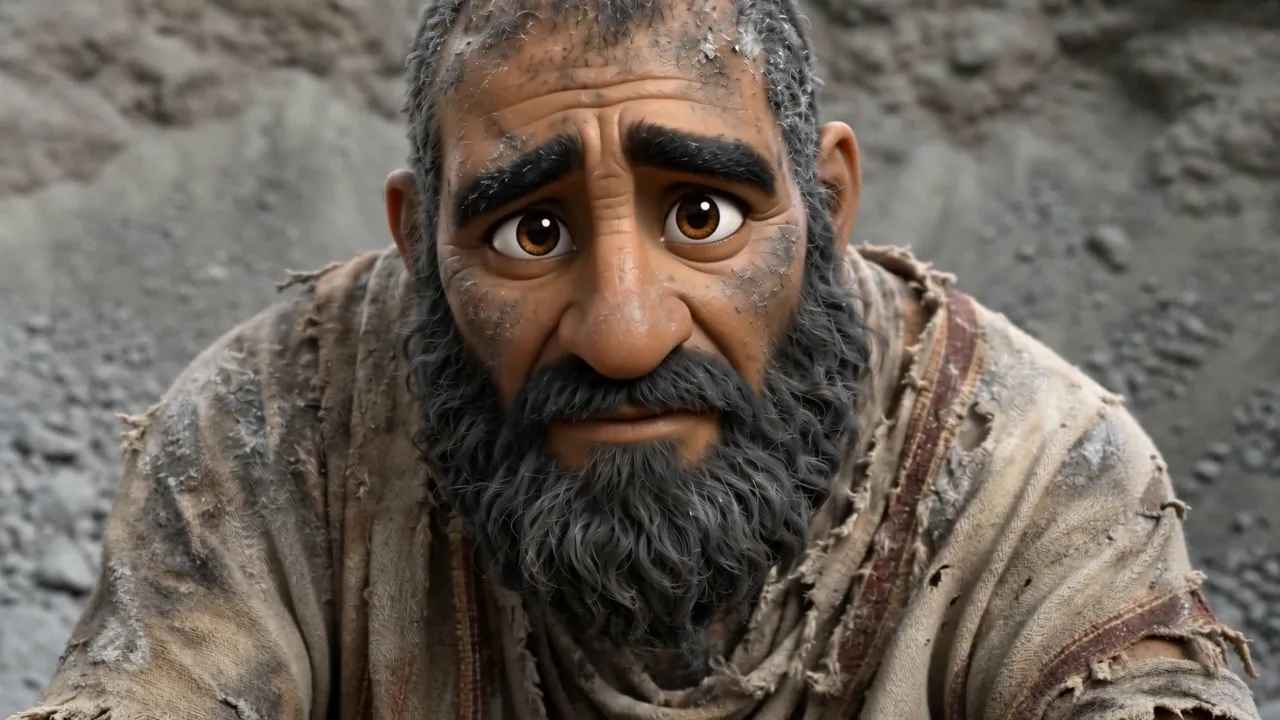
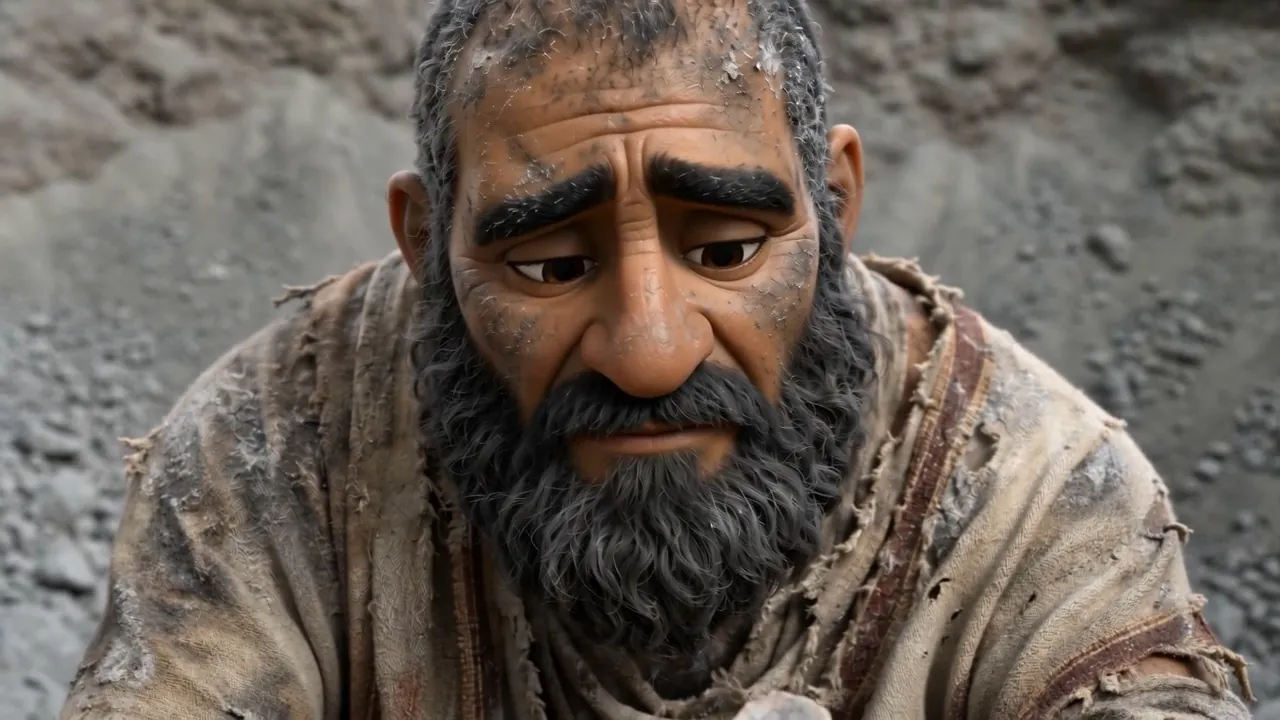
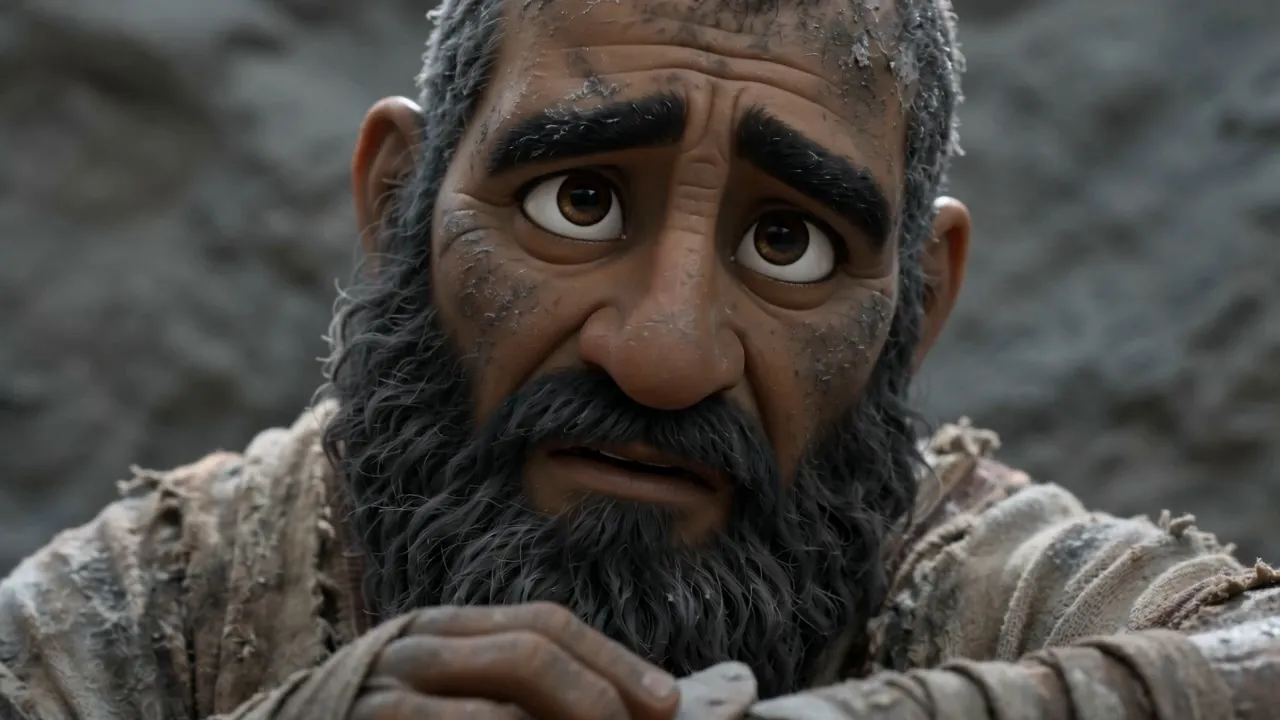
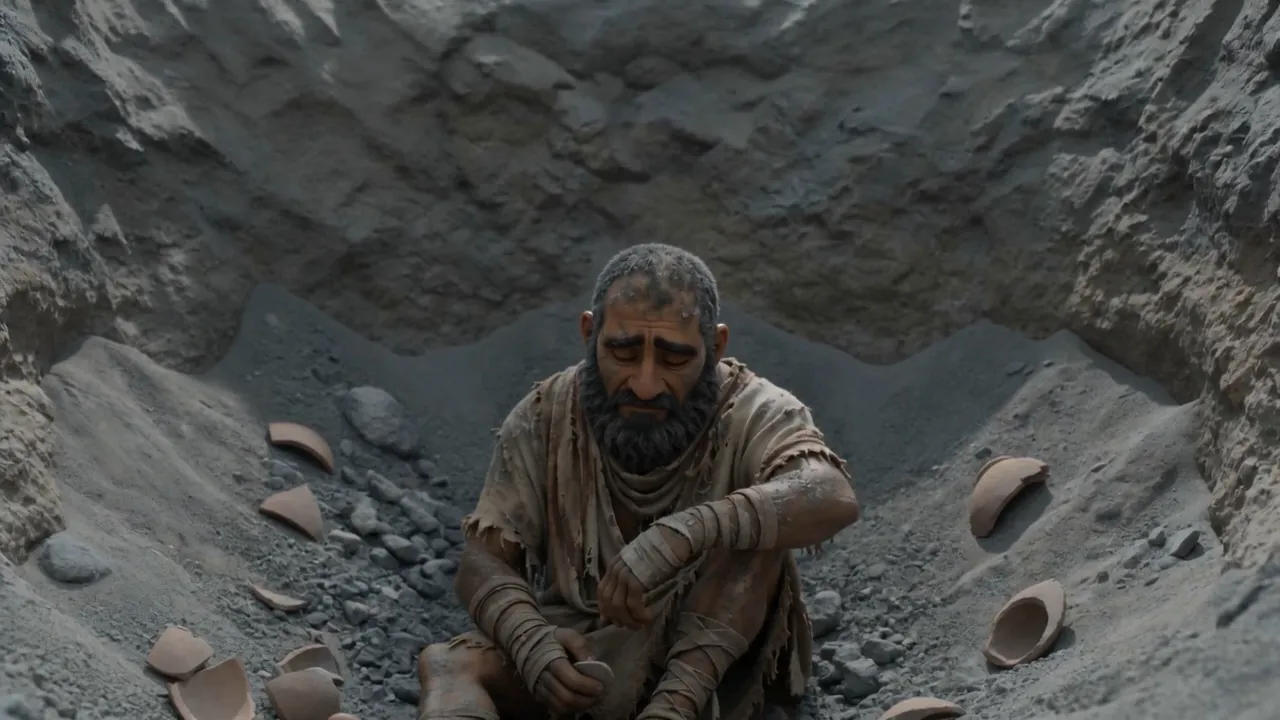
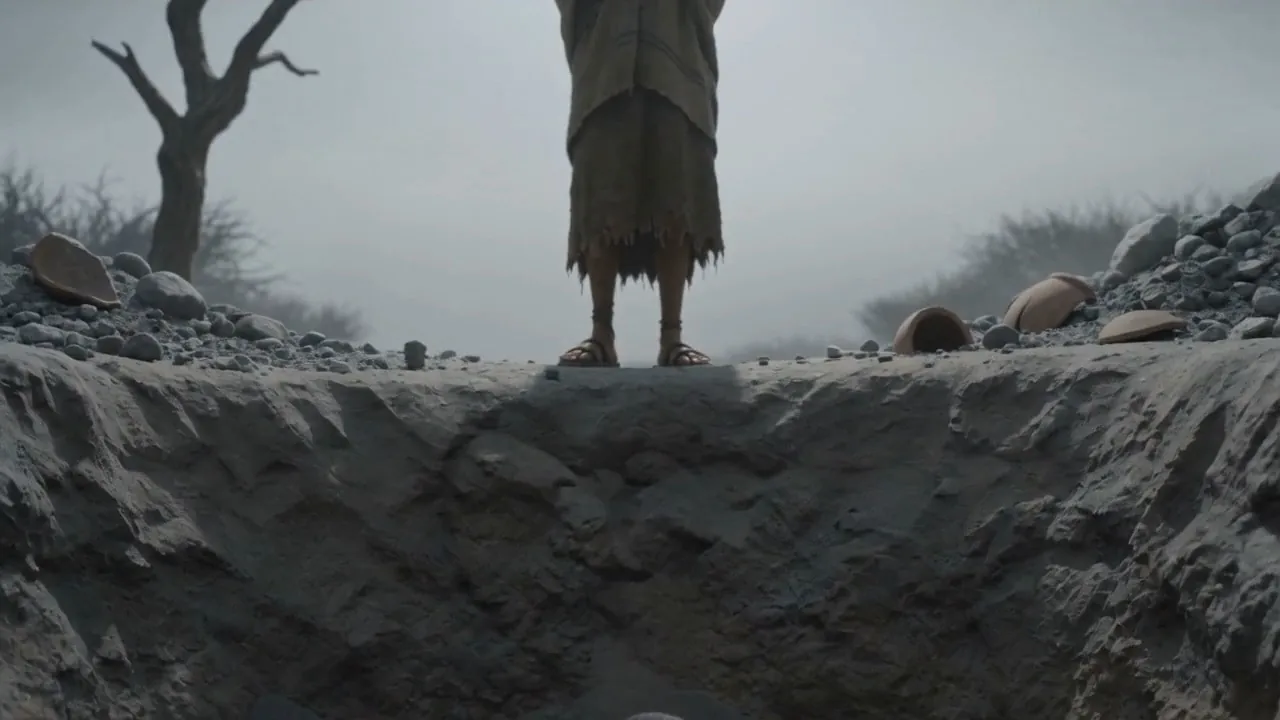
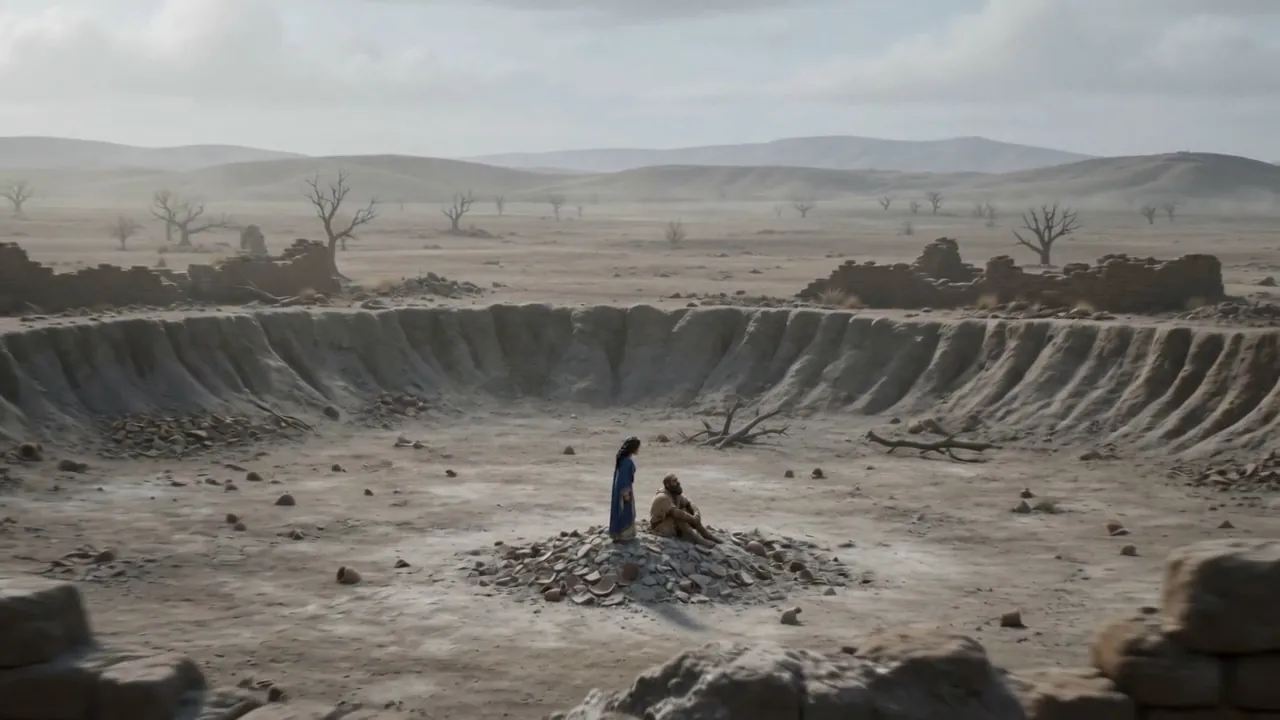
So Satan went out from the presence of Yahweh, and struck Job with painful sores from the sole of his foot to his head. He took for himself a potsherd to scrape himself with; and he sat among the ashes. One verse. It sits there for two minutes, and the only sound is a piece of broken pottery, scraping. Job 2 : 7–8
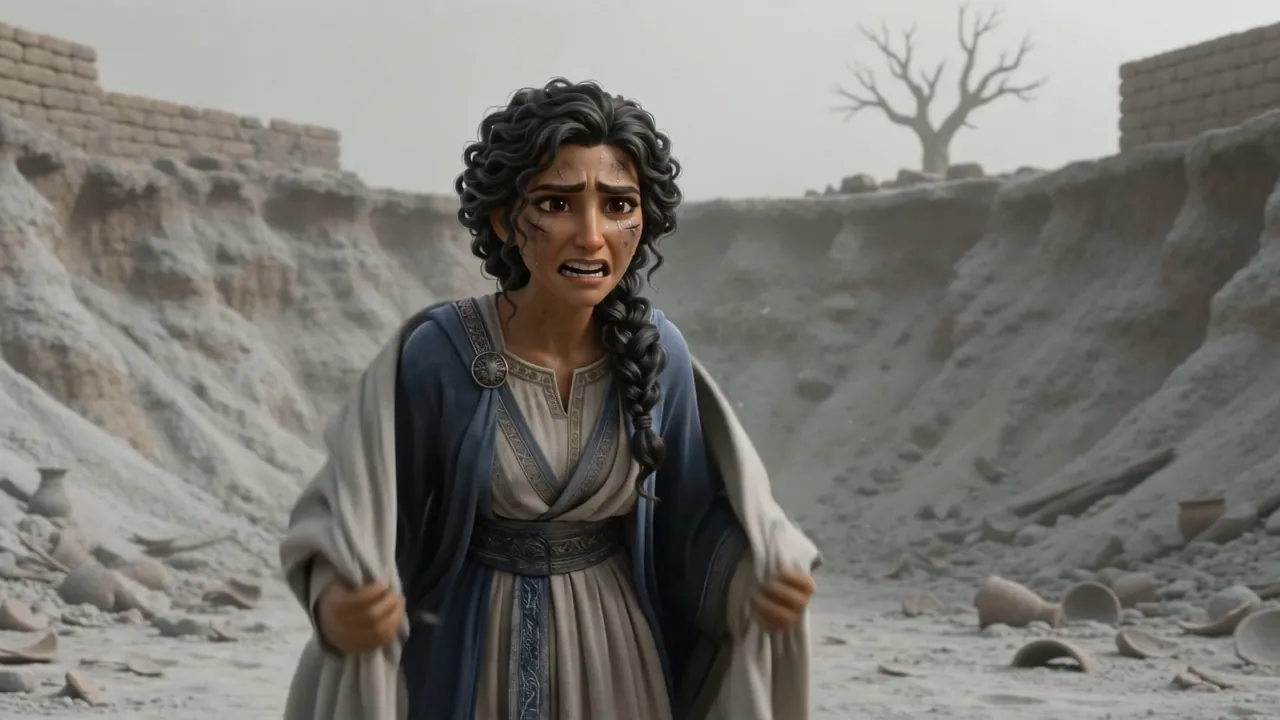

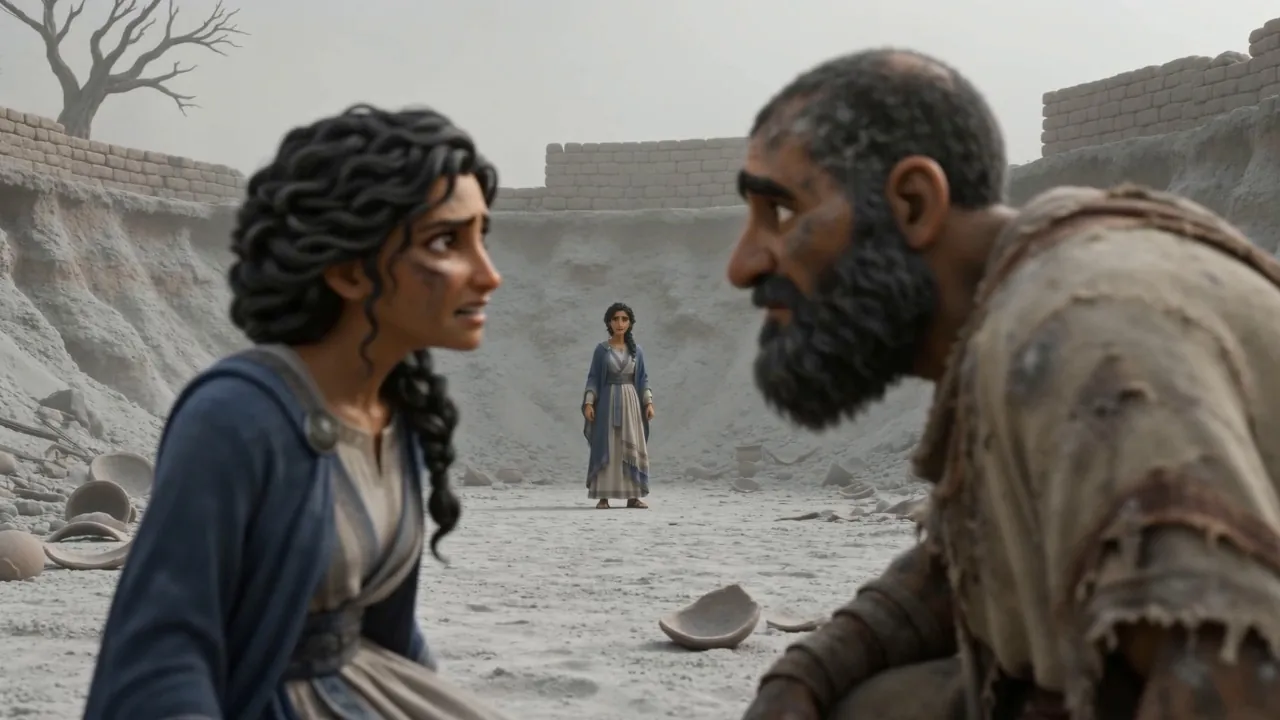
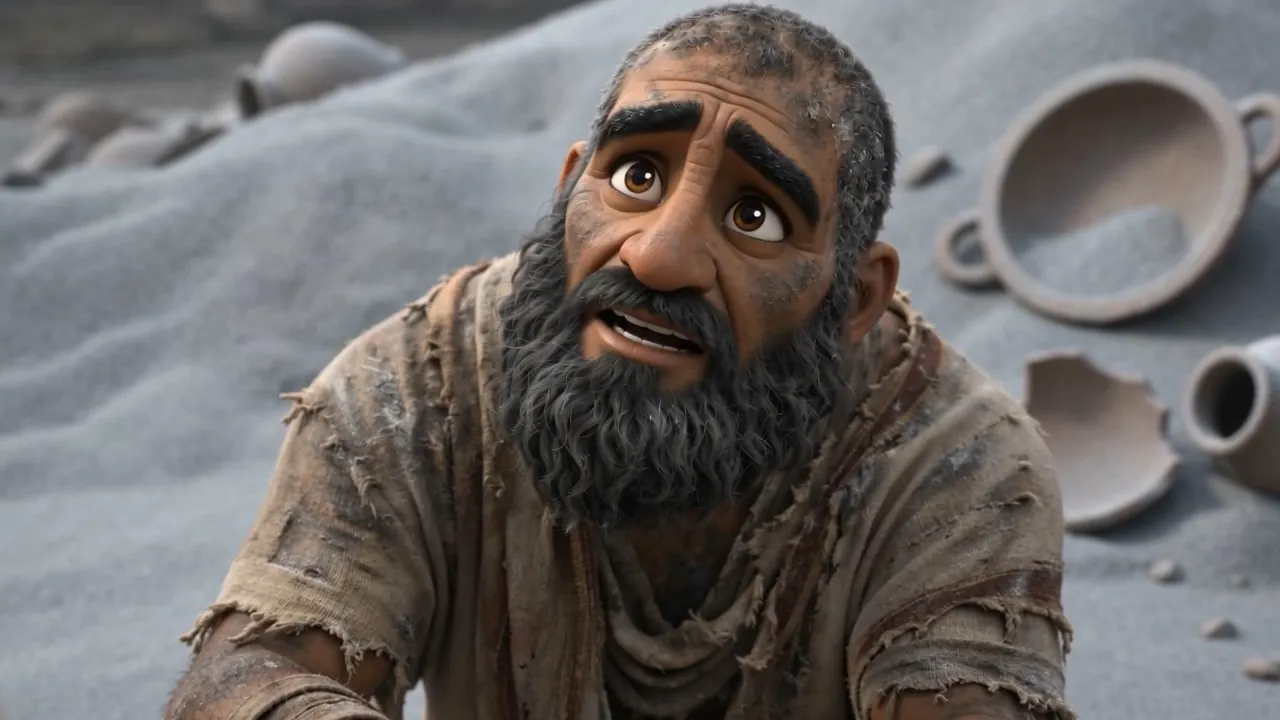
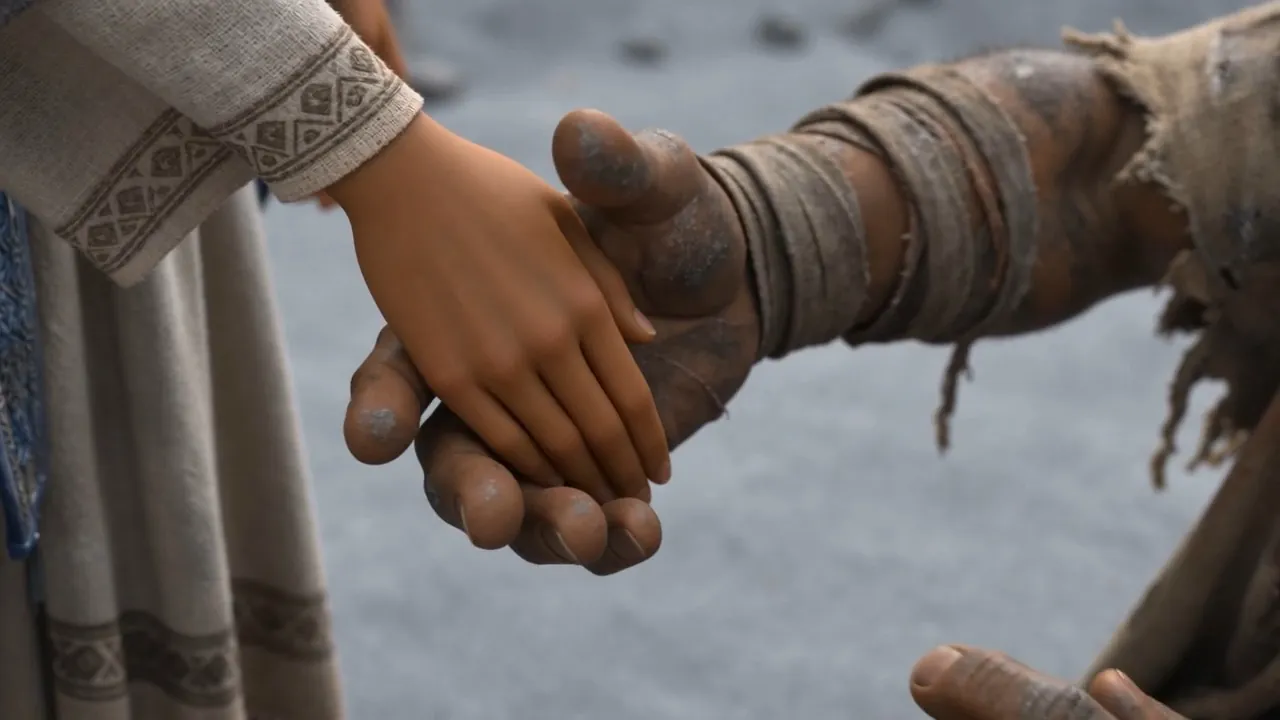
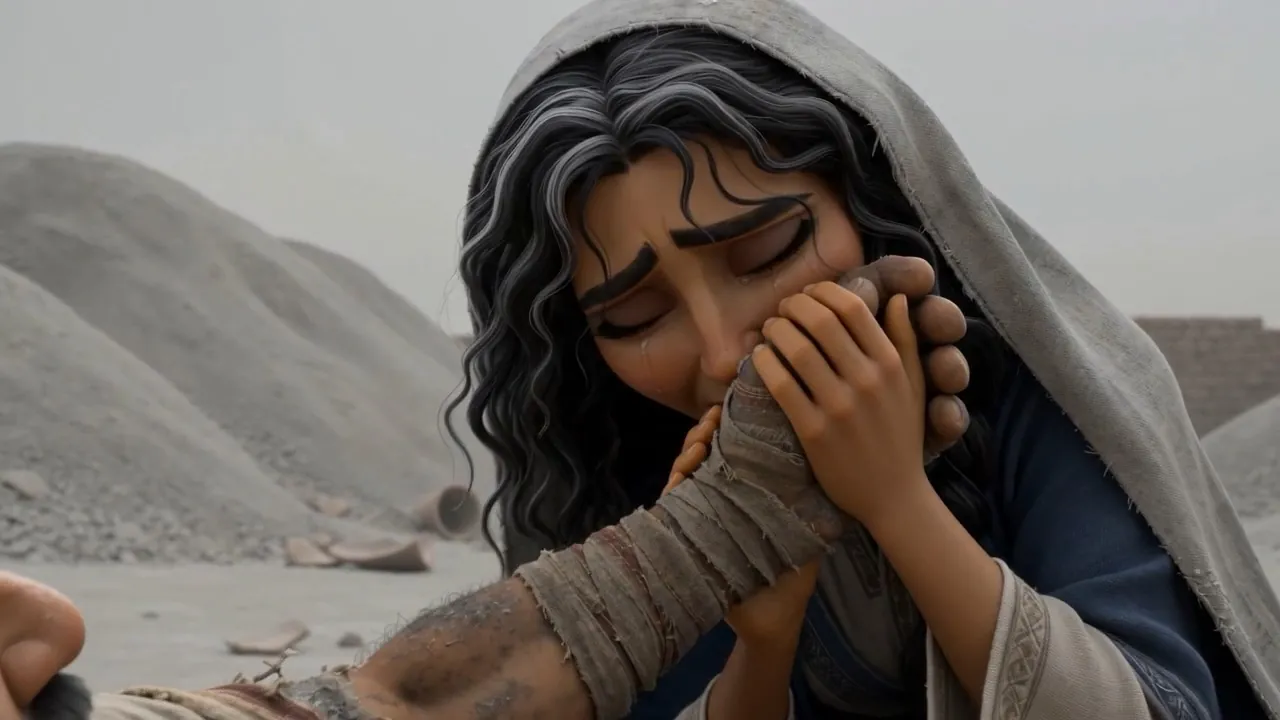

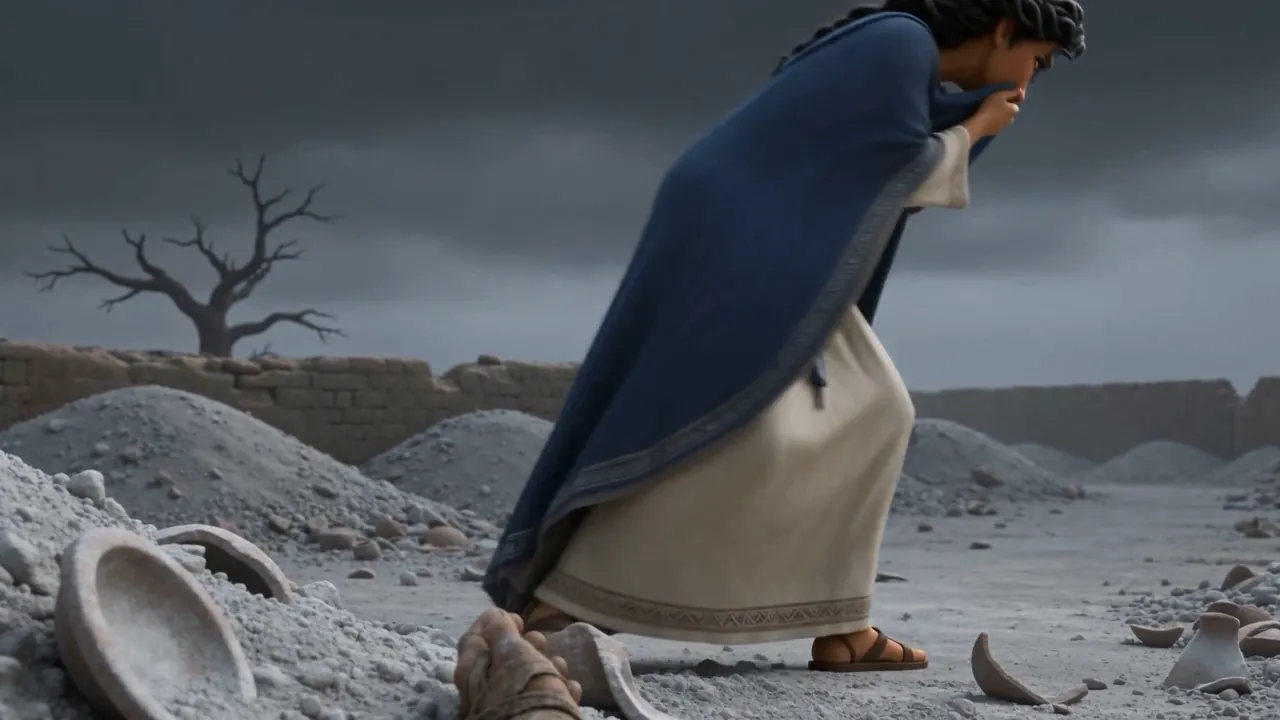
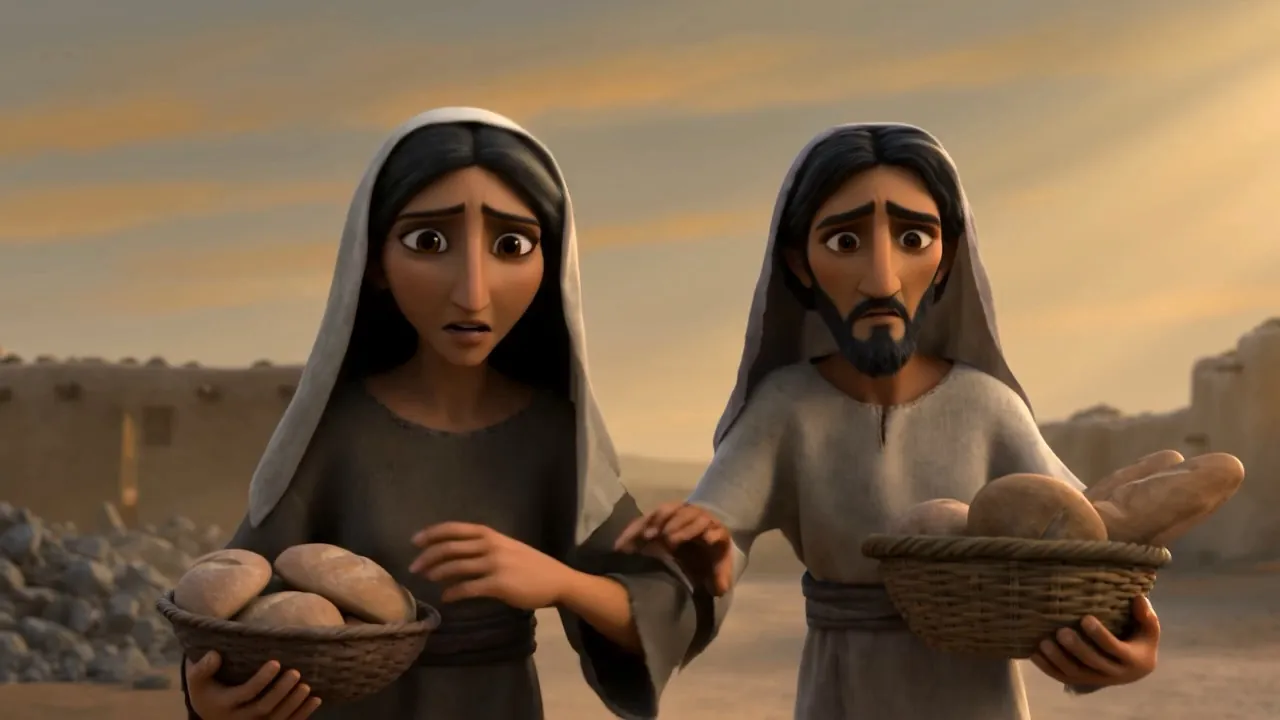
Then his wife said to him, “Do you still maintain your integrity? Renounce God, and die.” She has lost the same ten children, and she is watching him rot. His answer is not a rebuke so much as an argument he is having with himself: “Shall we receive good at the hand of God, and shall we not receive evil?” And then she gets the moment the text never gives her: she comes back, and takes his hand. Job 2 : 9–10
Shall we receive good — and not evil?
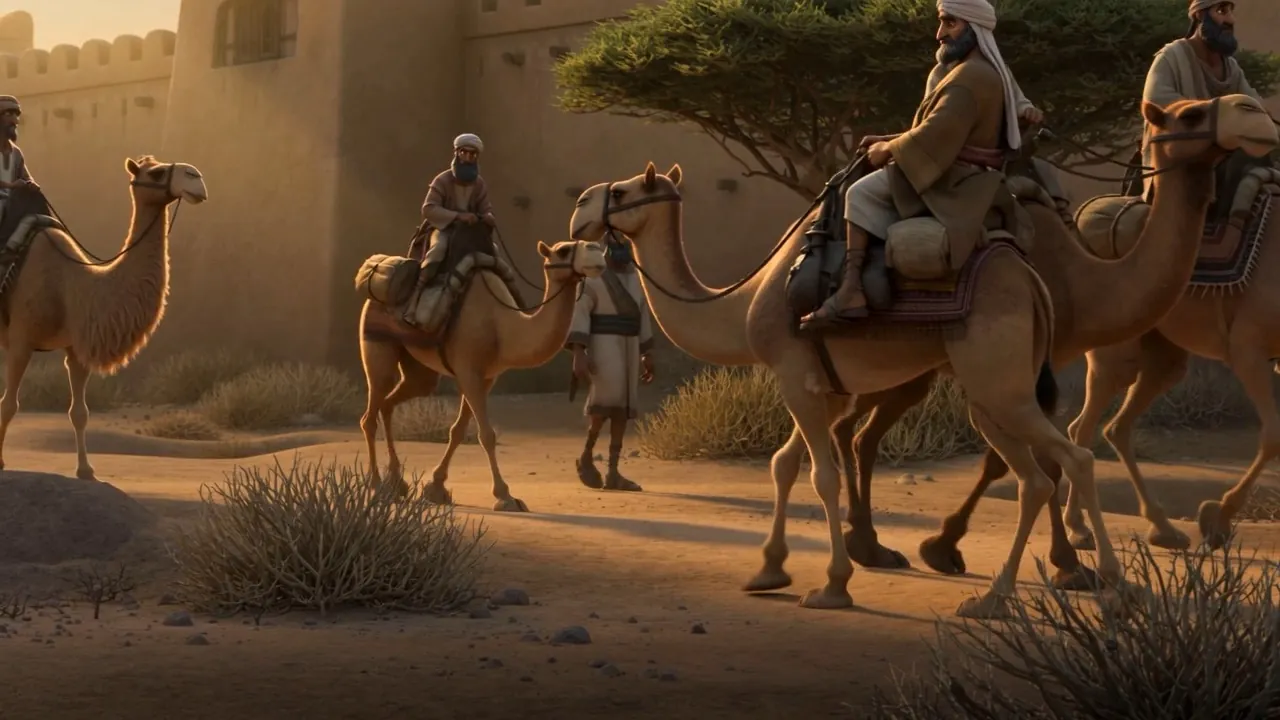
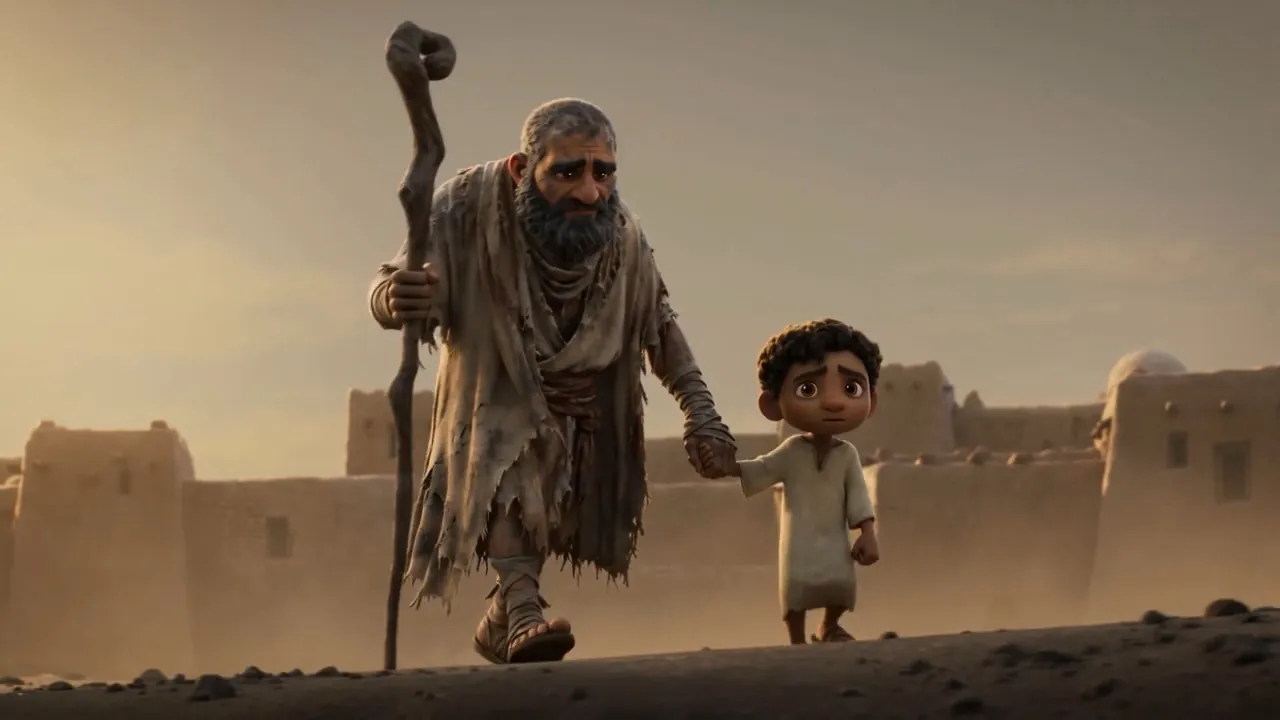
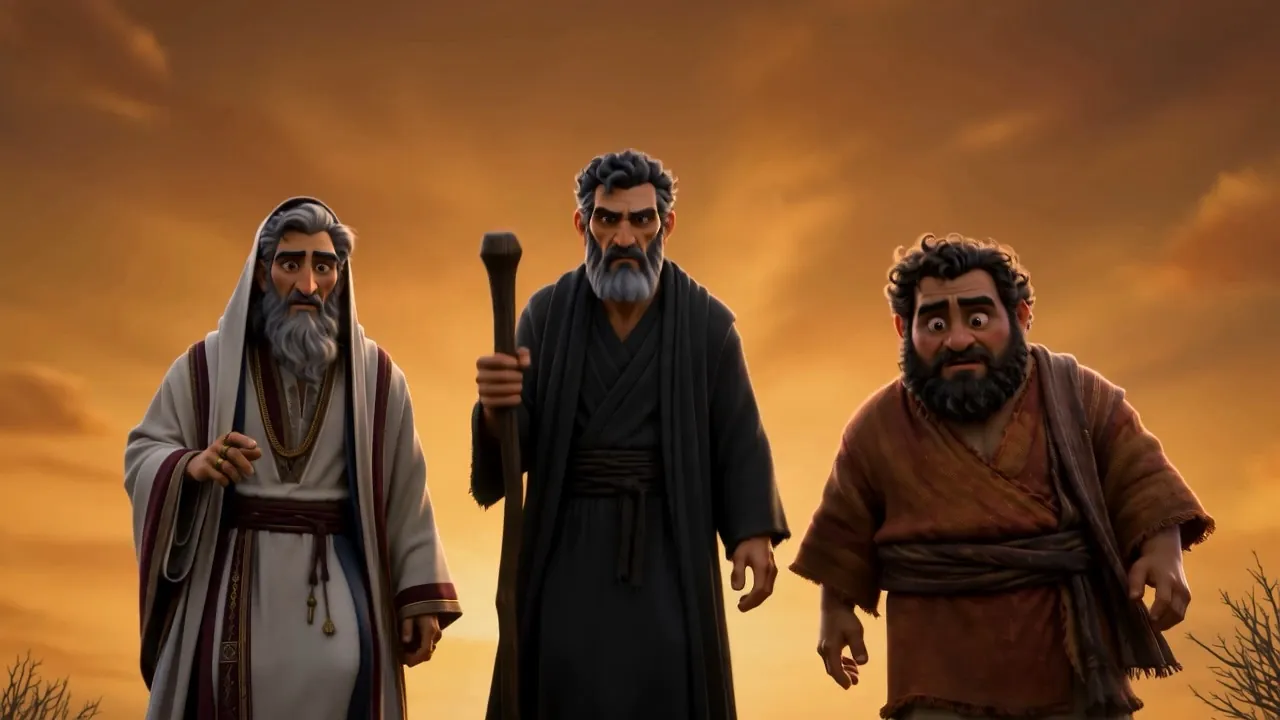


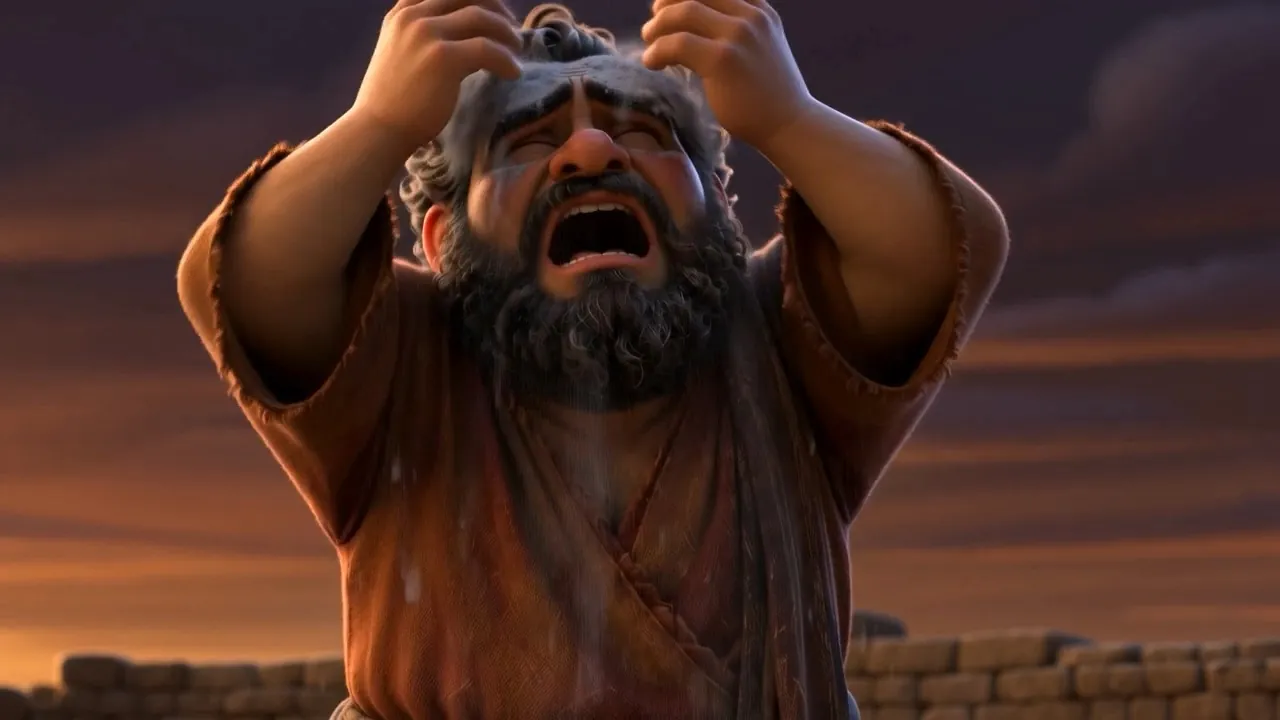
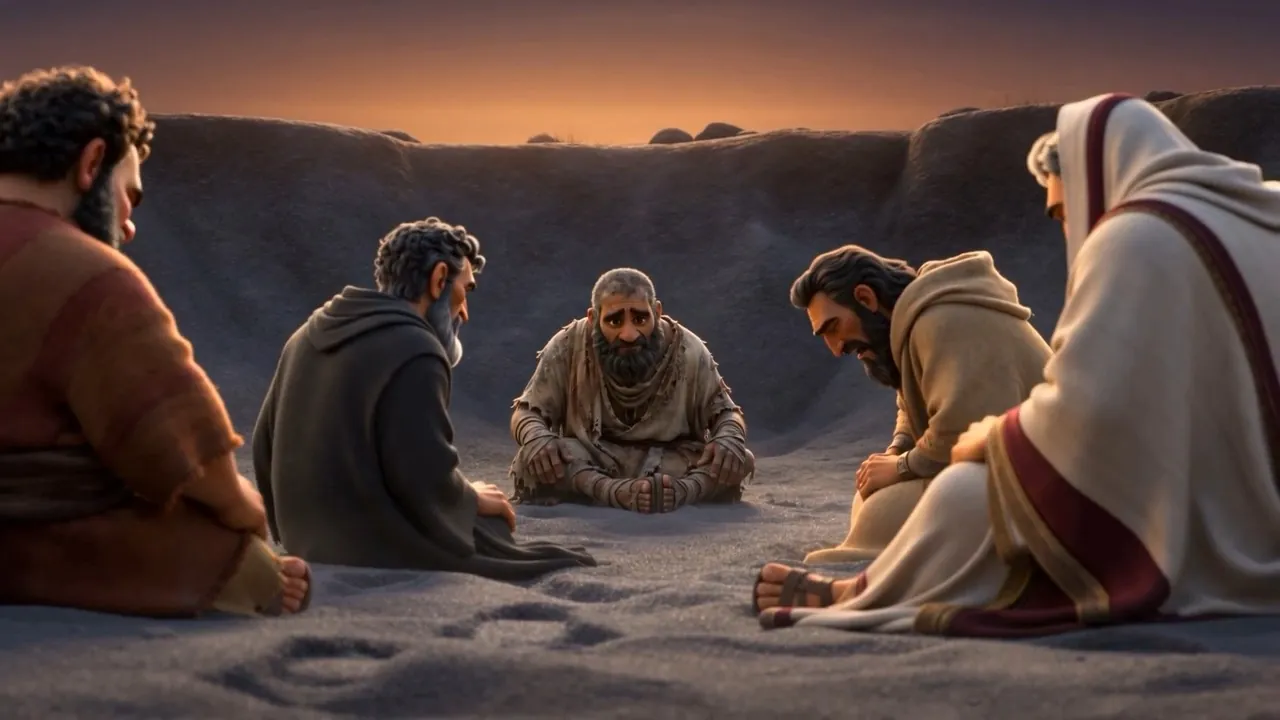
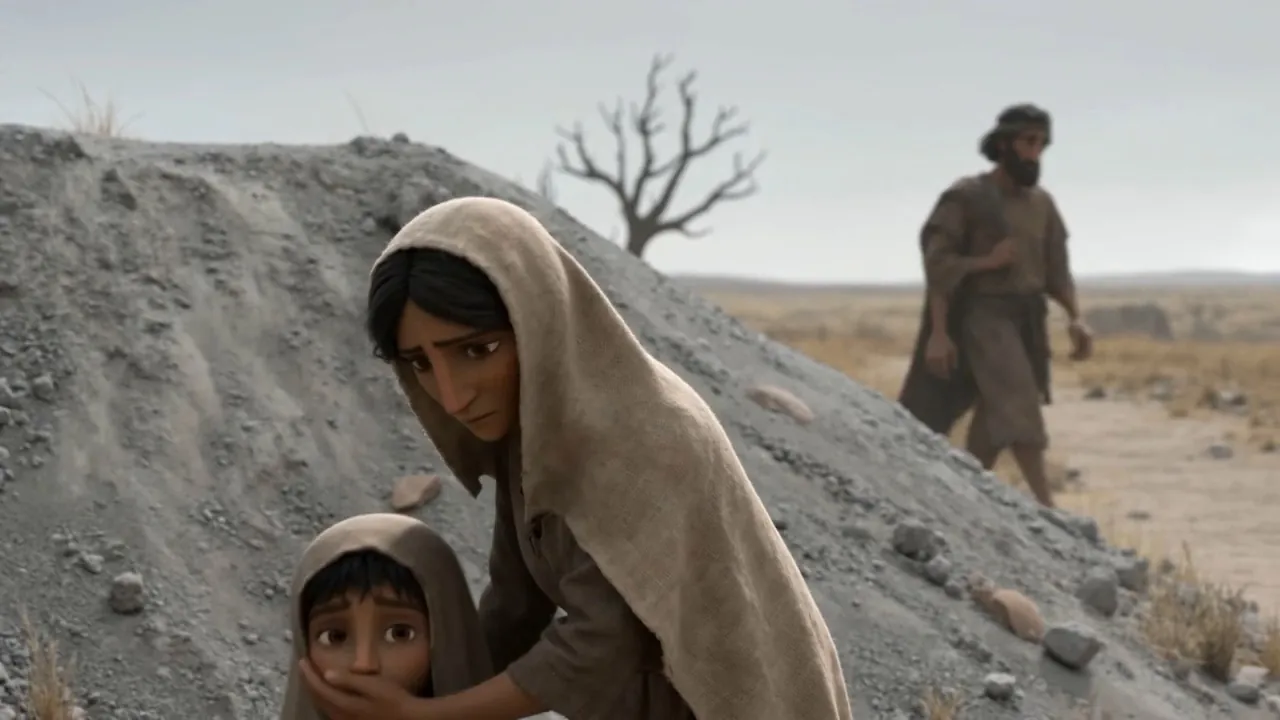
Three friends heard, and came from three different countries, and made an appointment together to come and comfort him. When they lifted up their eyes from afar, and didn't recognise him, they raised their voices and wept… and they sprinkled dust on their heads toward the sky. Everything they say later is wrong. What they do here is perfect. Job 2 : 11–12
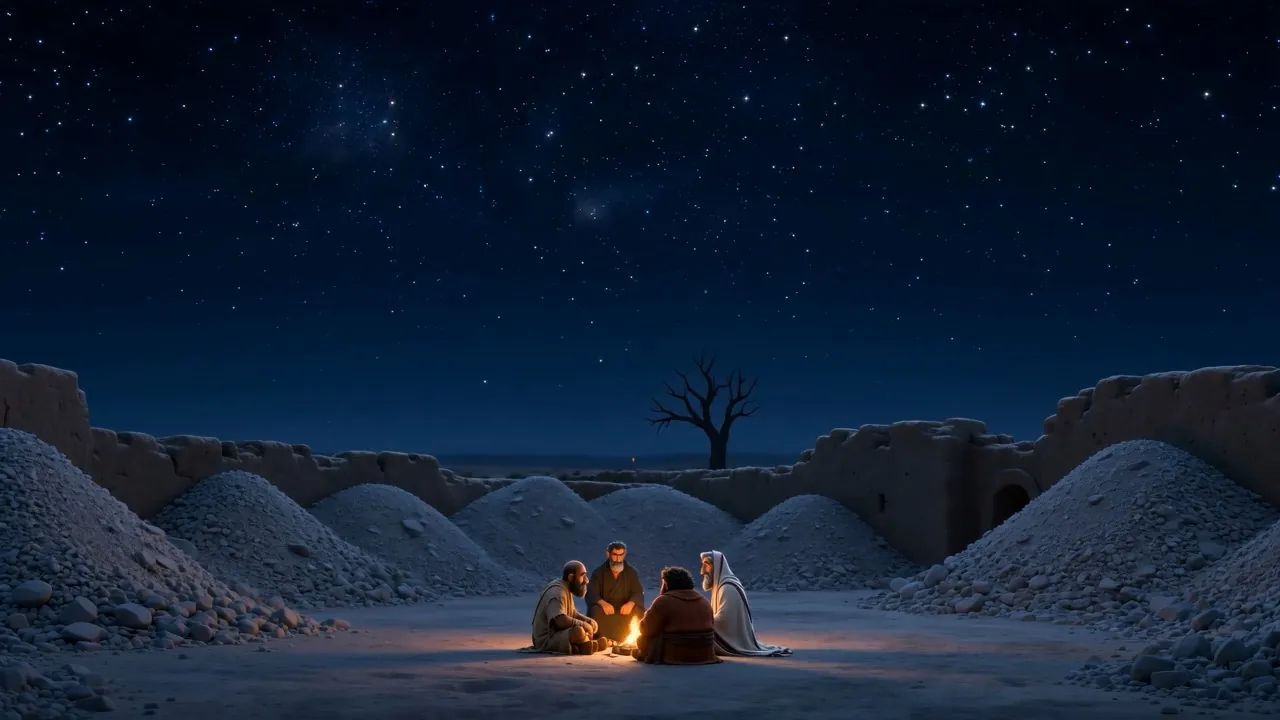
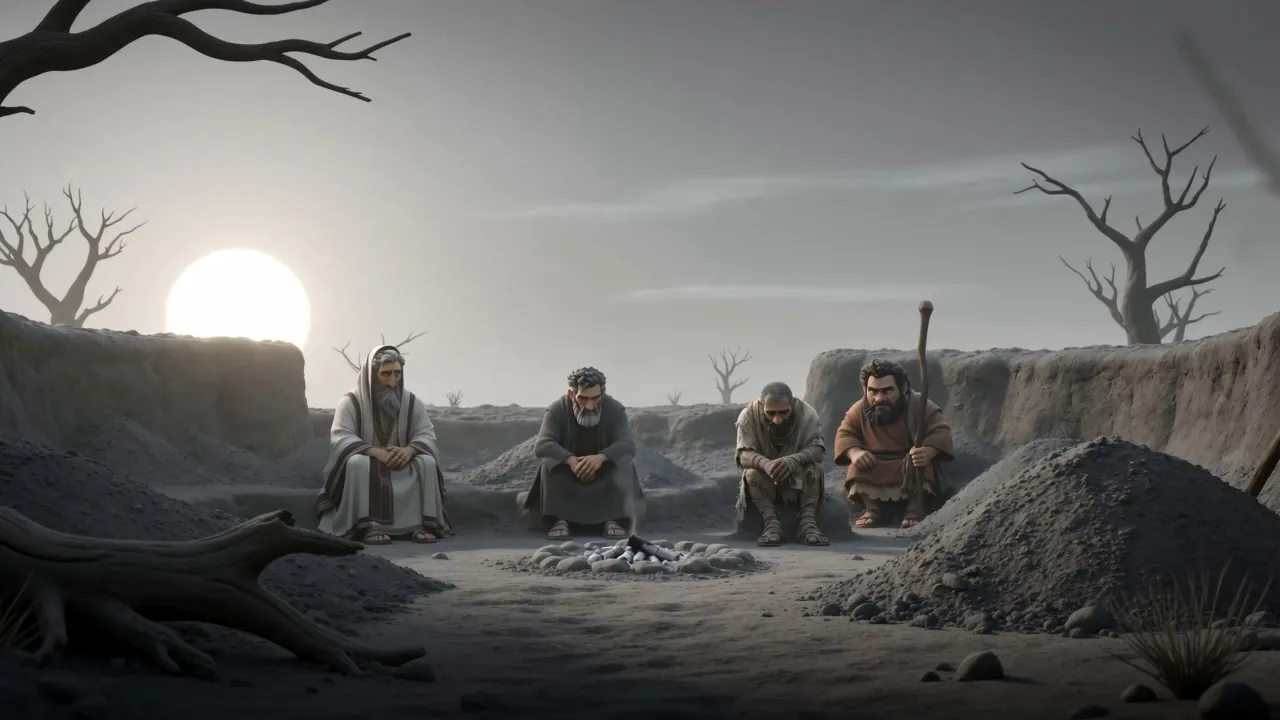
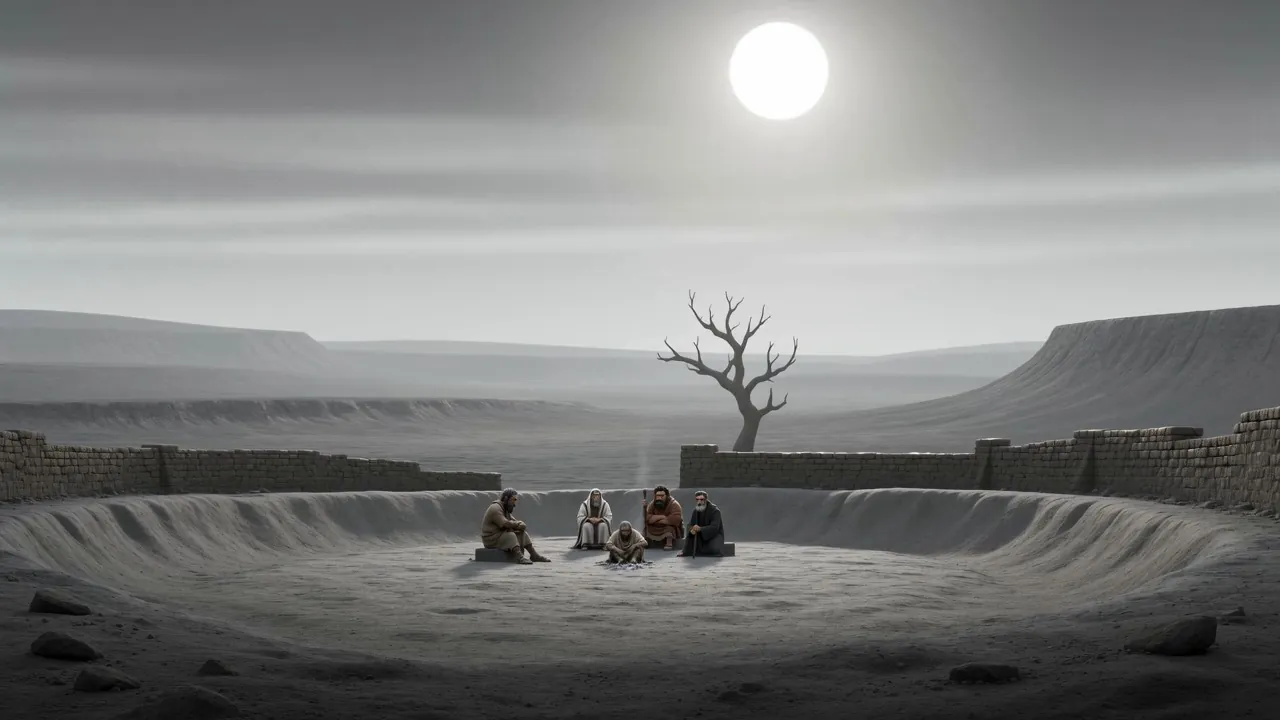
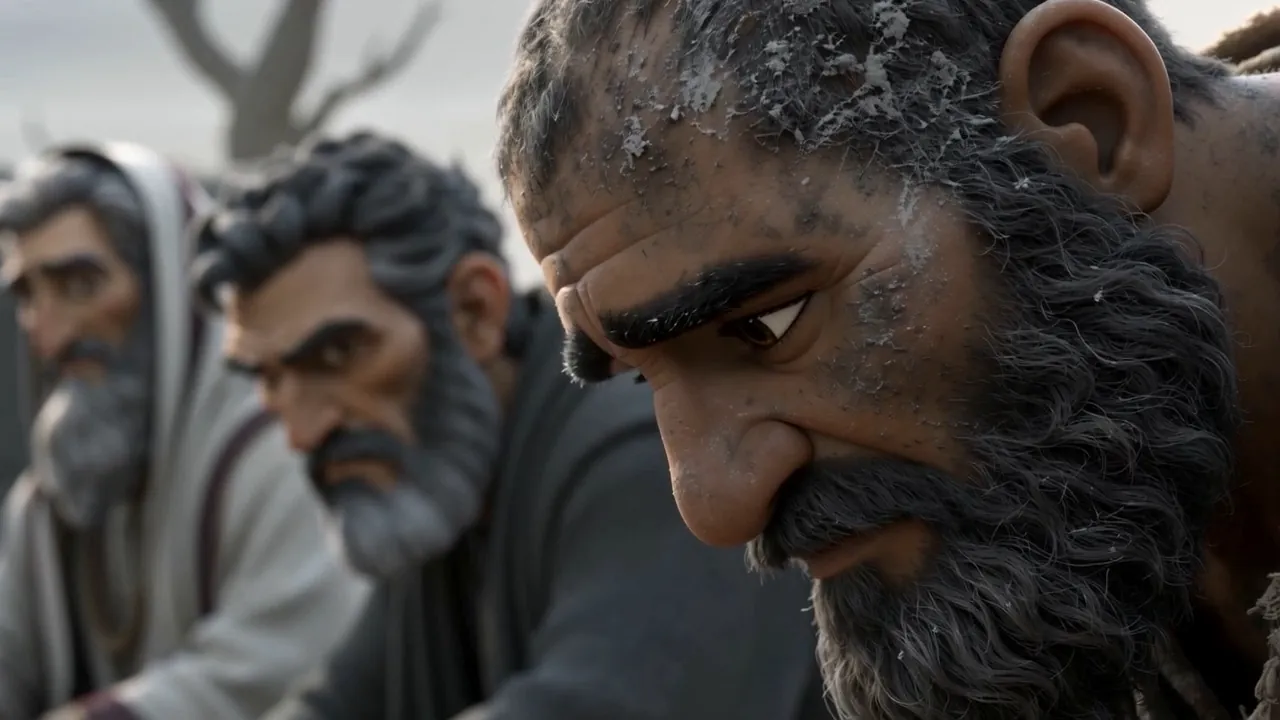
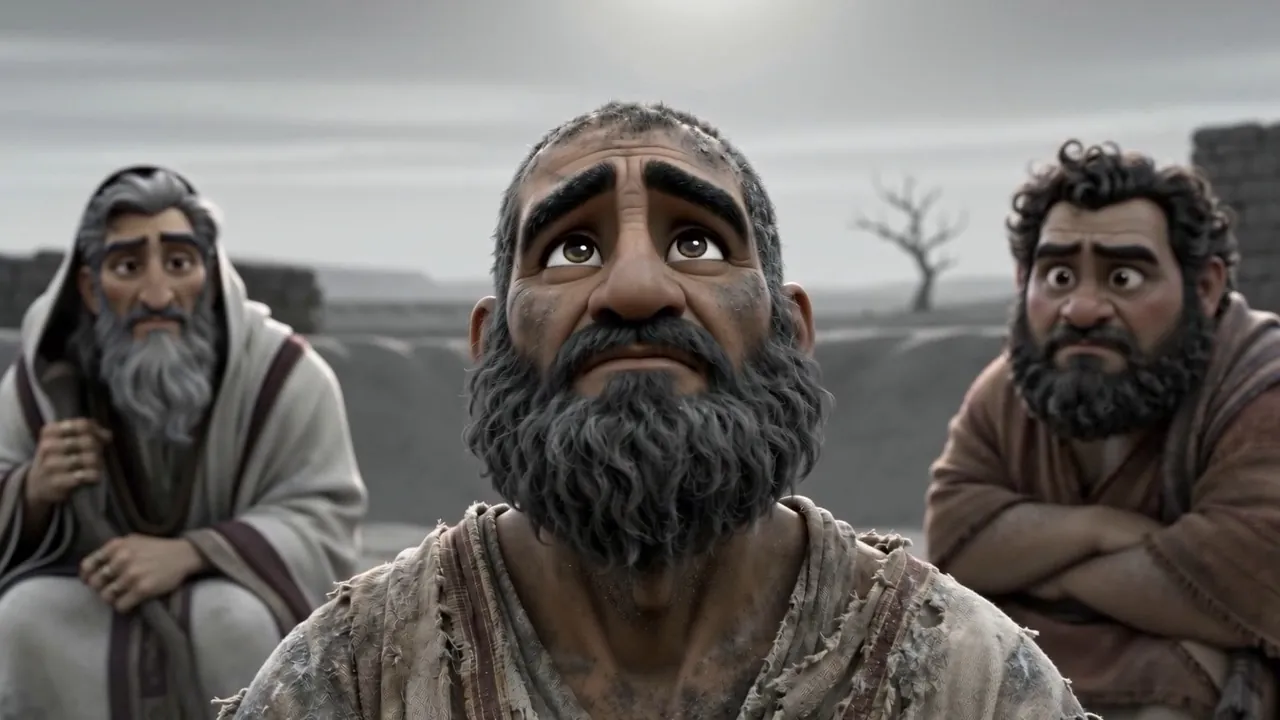


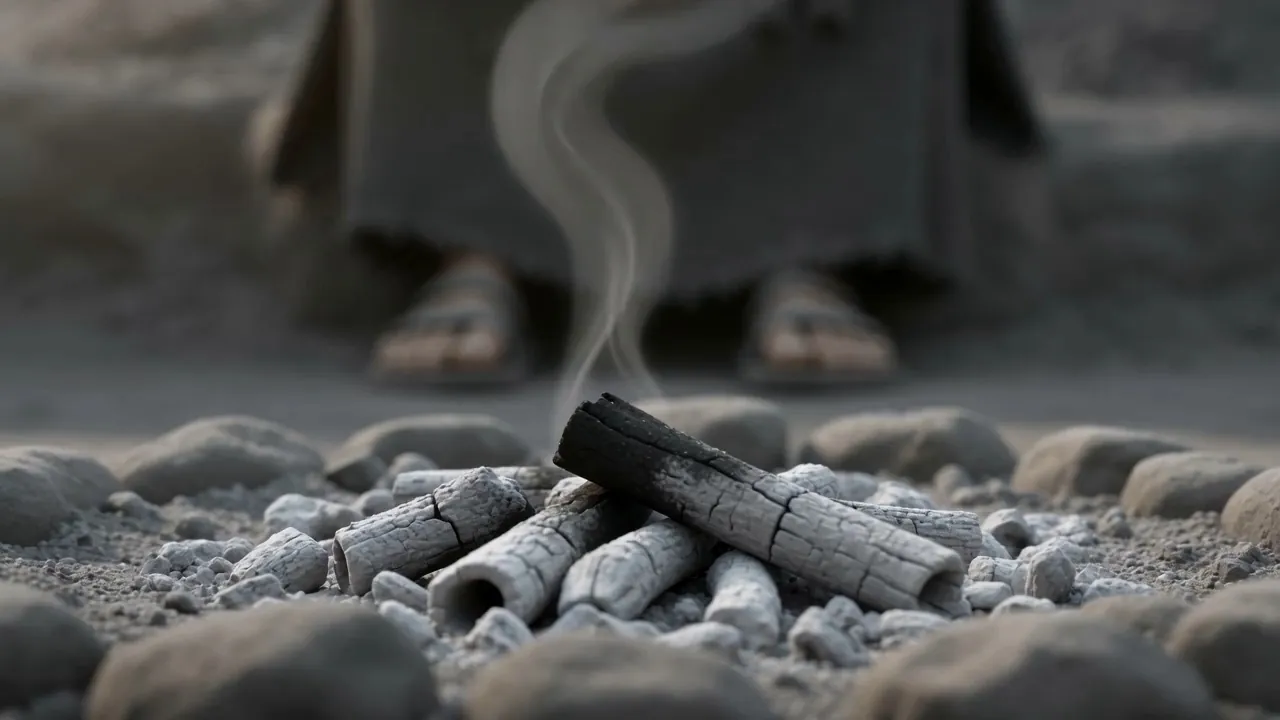
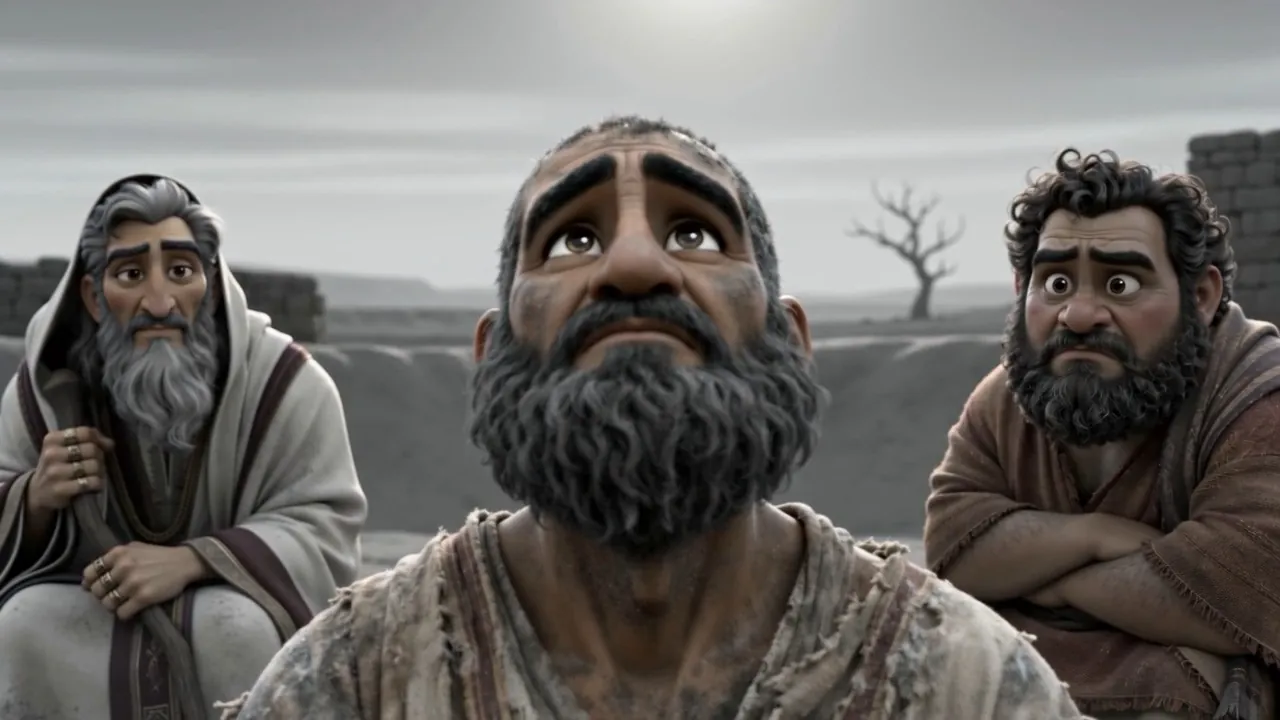
So they sat down with him on the ground seven days and seven nights, and no one spoke a word to him, for they saw that his grief was very great. A week. No advice, no explanations, no verses. It is the single best thing anybody does in the entire book — and the moment one of them finally opens his mouth, it all goes wrong. Job 2 : 13
No one spoke a word.
After the story
Job is never told any of this.
That is the thing to hold on to for the next forty chapters. You have just watched the conversation in the throne room. Job has not. He does not know there was a wager, he is never told about it afterwards, and when God finally speaks to him out of the storm, God does not explain it either. Everything Job says from here on — and he says some furious things — he says without the information you now have. The book is not asking whether Job can work out the answer. It is asking what he does when there isn't one.
Voices of the ash heap · hover or tap to turn
Job
"Yahweh gave, and Yahweh has taken away. Blessed be Yahweh's name."
— Job 1:21
The Accuser
"Does Job fear God for nothing? Haven't you made a hedge around him… on every side?"
— Job 1:9–10
His Wife
"Do you still maintain your integrity? Renounce God, and die."
— Job 2:9The Book of Job
How closely were you watching?
1. Why does the accuser say Job fears God?
"Does Job fear God for nothing?" The accusation is really against God — that nobody loves him, they only love what he pays (Job 1:9–11).
2. What does Job do when he hears his children are dead?
"Yahweh gave, and Yahweh has taken away. Blessed be Yahweh's name." In all this Job didn't sin, nor charge God with wrongdoing (Job 1:20–22).
3. What is Job's answer to his wife?
He calls her words foolish, but the answer is really an argument he is having with himself (Job 2:10).
4. What did the three friends do first?
"No one spoke a word to him, for they saw that his grief was very great." It is the one thing they get right (Job 2:13).
What this story teaches
Suffering is not always a verdict.
Job's friends assume that if he is in the ash, he earned it. The reader has just been shown the throne room and knows it is exactly backwards: he is there because he was blameless.
"Have you considered my servant, Job? For there is no one like him in the earth…" Job 1:8His wife is not the villain.
She buried the same ten children and is watching her husband rot. "Curse God and die" is not spite; it is a woman who cannot bear to watch any more. She gets the moment the text never gives her — she comes back and takes his hand.
"Shall we receive good at the hand of God, and shall we not receive evil?" Job 2:10The best thing they did was say nothing.
Three men travelled from three countries, tore their clothes, and sat on the ground for a week without offering a single explanation. Everything that goes wrong afterwards starts the moment one of them speaks.
"No one spoke a word to him, for they saw that his grief was very great." Job 2:13Read the scripture itself. Job 1 – 2 · World English Bible
Job 1
1There was a man in the land of Uz, whose name was Job. That man was blameless and upright, and one who feared God, and turned away from evil.
2There were born to him seven sons and three daughters.
3His possessions also were seven thousand sheep, three thousand camels, five hundred yoke of oxen, five hundred female donkeys, and a very great household; so that this man was the greatest of all the children of the east.
4His sons went and held a feast in the house of each one on his birthday; and they sent and called for their three sisters to eat and to drink with them.
5It was so, when the days of their feasting had run their course, that Job sent and sanctified them, and rose up early in the morning, and offered burnt offerings according to the number of them all. For Job said, “It may be that my sons have sinned, and renounced God in their hearts.” Job did so continually.
6Now on the day when God’s sons came to present themselves before Yahweh, Satan also came among them.
7Yahweh said to Satan, “Where have you come from?” Then Satan answered Yahweh, and said, “From going back and forth in the earth, and from walking up and down in it.”
8Yahweh said to Satan, “Have you considered my servant, Job? For there is no one like him in the earth, a blameless and an upright man, one who fears God, and turns away from evil.”
9Then Satan answered Yahweh, and said, “Does Job fear God for nothing?
10Haven’t you made a hedge around him, and around his house, and around all that he has, on every side? You have blessed the work of his hands, and his substance is increased in the land.
11But stretch out your hand now, and touch all that he has, and he will renounce you to your face.”
12Yahweh said to Satan, “Behold, all that he has is in your power. Only on himself don’t stretch out your hand.” So Satan went out from the presence of Yahweh.
13It fell on a day when his sons and his daughters were eating and drinking wine in their oldest brother’s house,
14that there came a messenger to Job, and said, “The oxen were plowing, and the donkeys feeding beside them,
15and the Sabeans attacked, and took them away. Yes, they have killed the servants with the edge of the sword, and I alone have escaped to tell you.”
16While he was still speaking, there also came another, and said, “The fire of God has fallen from the sky, and has burned up the sheep and the servants, and consumed them, and I alone have escaped to tell you.”
17While he was still speaking, there came also another, and said, “The Chaldeans made three bands, and swept down on the camels, and have taken them away, yes, and killed the servants with the edge of the sword; and I alone have escaped to tell you.”
18While he was still speaking, there came also another, and said, “Your sons and your daughters were eating and drinking wine in their oldest brother’s house,
19and behold, there came a great wind from the wilderness, and struck the four corners of the house, and it fell on the young men, and they are dead. I alone have escaped to tell you.”
20Then Job arose, and tore his robe, and shaved his head, and fell down on the ground, and worshiped.
21He said, “Naked I came out of my mother’s womb, and naked shall I return there. Yahweh gave, and Yahweh has taken away. Blessed be Yahweh’s name.”
22In all this, Job did not sin, nor charge God with wrongdoing.
Job 2
1Again, on the day when the God’s sons came to present themselves before Yahweh, Satan came also among them to present himself before Yahweh.
2Yahweh said to Satan, “Where have you come from?” Satan answered Yahweh, and said, “From going back and forth in the earth, and from walking up and down in it.”
3Yahweh said to Satan, “Have you considered my servant Job? For there is no one like him in the earth, a blameless and an upright man, one who fears God, and turns away from evil. He still maintains his integrity, although you incited me against him, to ruin him without cause.”
4Satan answered Yahweh, and said, “Skin for skin. Yes, all that a man has he will give for his life.
5But stretch out your hand now, and touch his bone and his flesh, and he will renounce you to your face.”
6Yahweh said to Satan, “Behold, he is in your hand. Only spare his life.”
7So Satan went out from the presence of Yahweh, and struck Job with painful sores from the sole of his foot to his head.
8He took for himself a potsherd to scrape himself with, and he sat among the ashes.
9Then his wife said to him, “Do you still maintain your integrity? Renounce God, and die.”
10But he said to her, “You speak as one of the foolish women would speak. What? Shall we receive good at the hand of God, and shall we not receive evil?” In all this Job didn’t sin with his lips.
11Now when Job’s three friends heard of all this evil that had come on him, they each came from his own place: Eliphaz the Temanite, Bildad the Shuhite, and Zophar the Naamathite; and they made an appointment together to come to sympathize with him and to comfort him.
12When they lifted up their eyes from a distance, and didn’t recognize him, they raised their voices, and wept; and they each tore his robe, and sprinkled dust on their heads toward the sky.
13So they sat down with him on the ground seven days and seven nights, and no one spoke a word to him, for they saw that his grief was very great.
World English Bible (WEB) — a public-domain modern English translation. Read it freely, share it freely.
The Book of Job — animated film in production
These scenes are real frames from the film.
Help us finish it — and every story like it — free for the world.