The Book of Exodus · The Confrontation
He did what he was told.It made everything worse.
Between the burning bush and the first plague there is a stretch nobody puts on a poster: the elders believe, the brothers walk into Pharaoh's court, and the immediate result is that the same people are beaten harder. Moses takes it straight back to God and complains — and the complaint was kept. Every scene below is a real frame from our animated film.
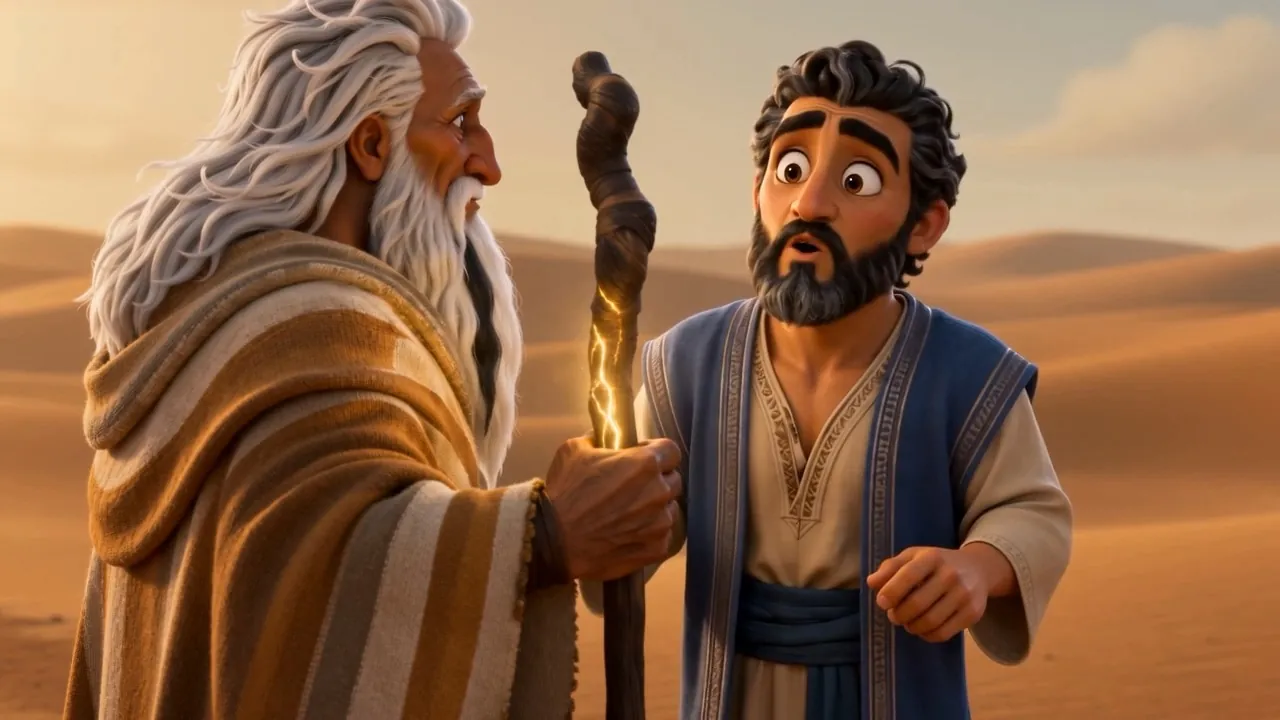
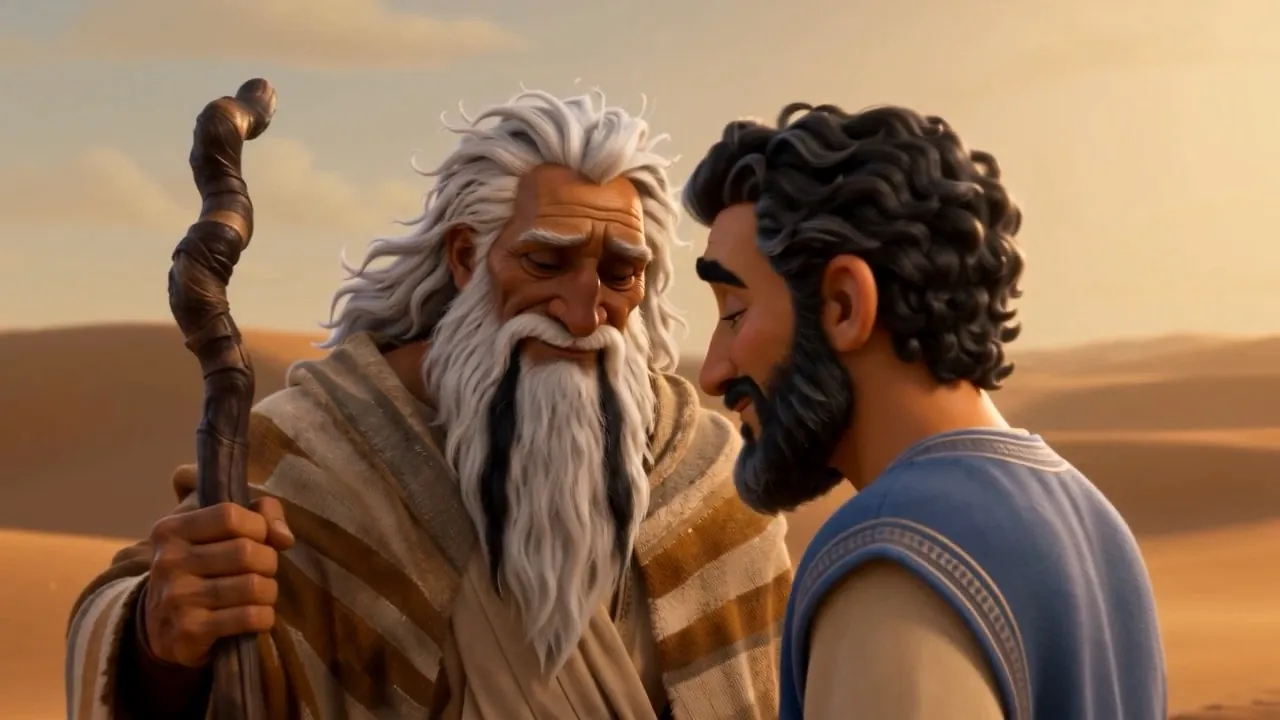
Two men meet in open desert. One is eighty years old, has been a fugitive for forty of those years, and is carrying a shepherd's staff and a story nobody is going to believe. The other is his older brother, who was told where to go and simply went. There is no argument about any of it. Aaron listens to the whole impossible thing and says yes. Exodus 4 : 27–28
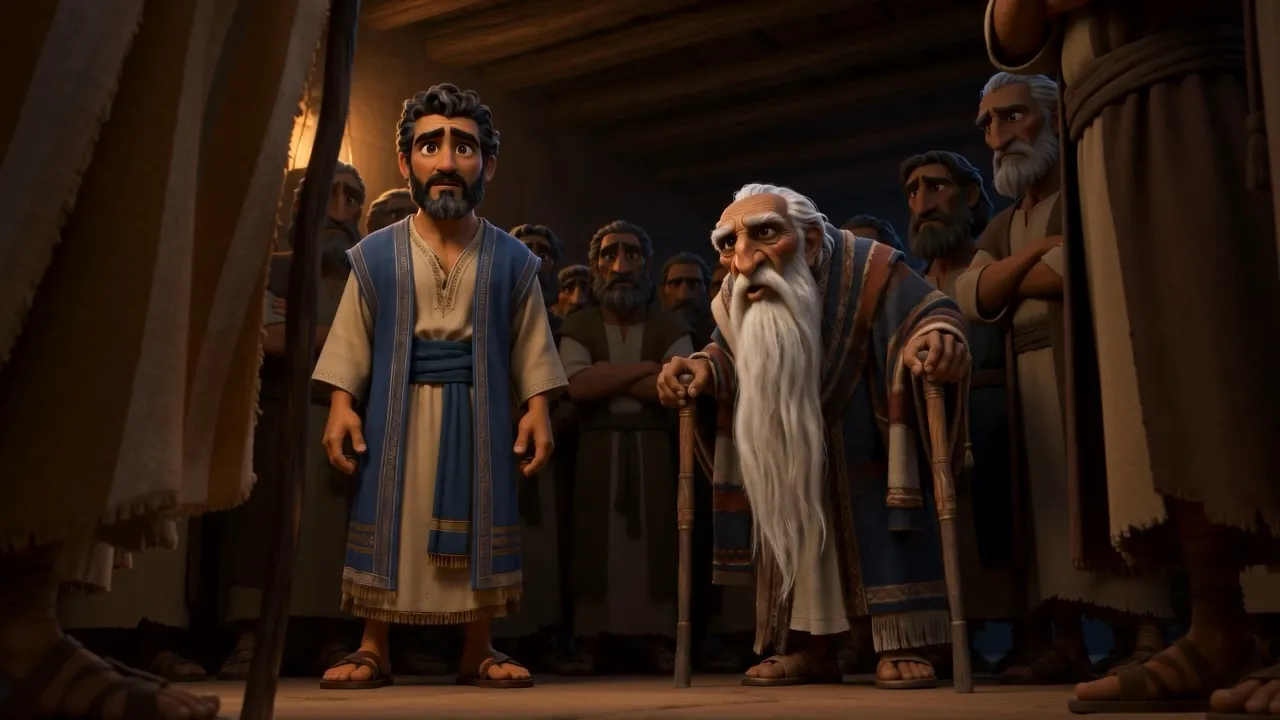
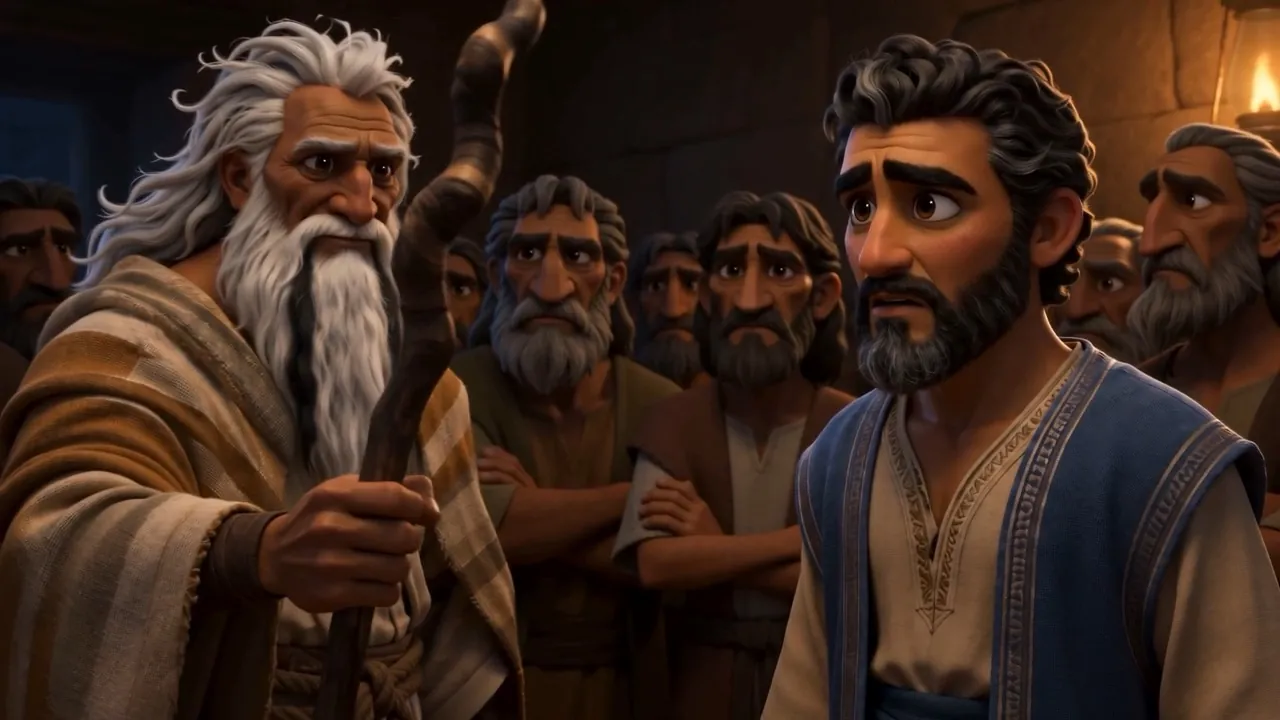
Then a low room somewhere in Goshen with every elder in Israel in it, and the two brothers standing in front of them. These are careful men. They have watched four hundred years of nothing happen. They have almost certainly heard somebody promise deliverance before, and they are looking at Moses the way you look at a stranger who has just told you your life is about to change. Exodus 4 : 29
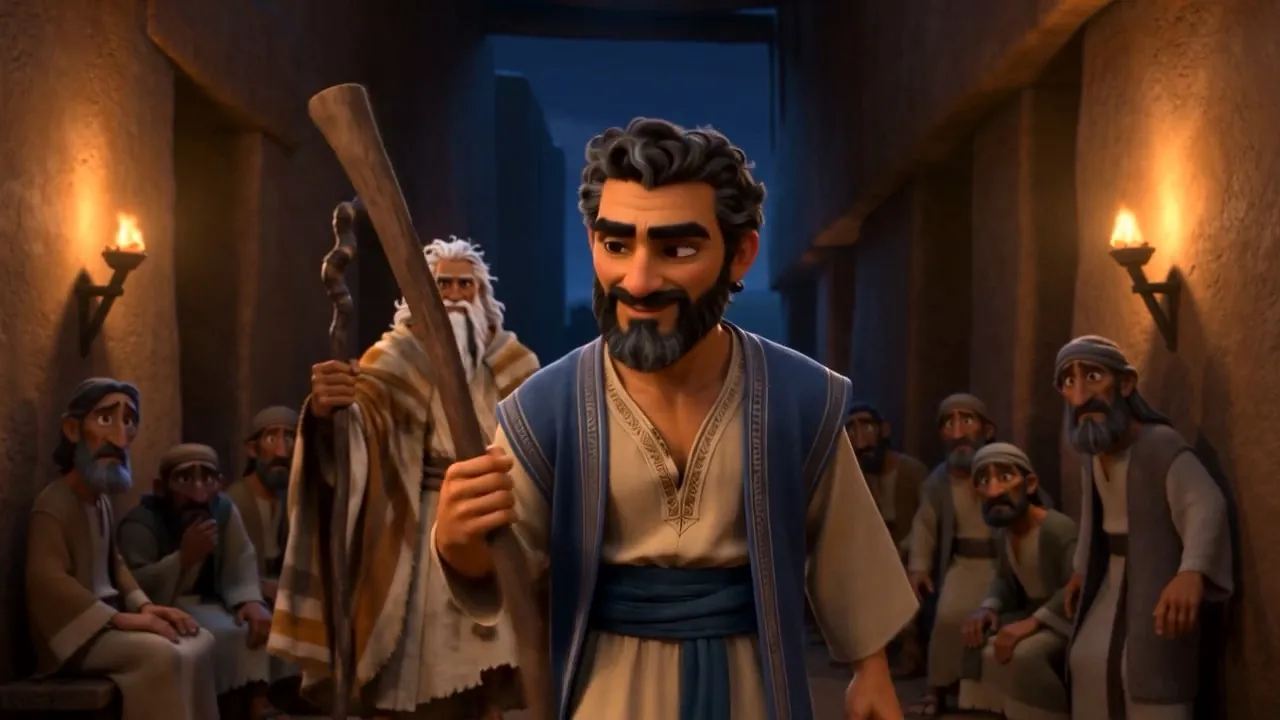
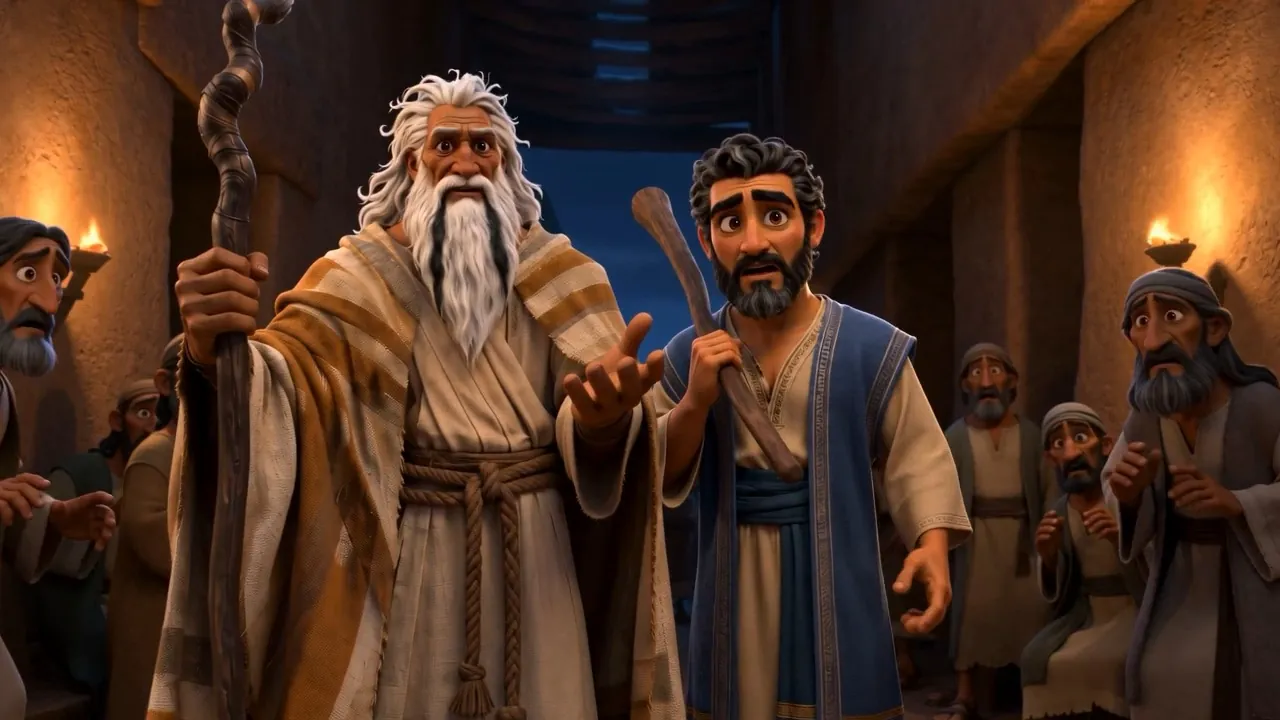
And it is Aaron who speaks, because Moses asked for that at the bush and was given it. So the man who argued that he was no good with words stands slightly behind his brother and lets him talk, holding the staff. It is not a heroic image and it is not meant to be. God worked with the objection instead of overruling it. Exodus 4 : 30
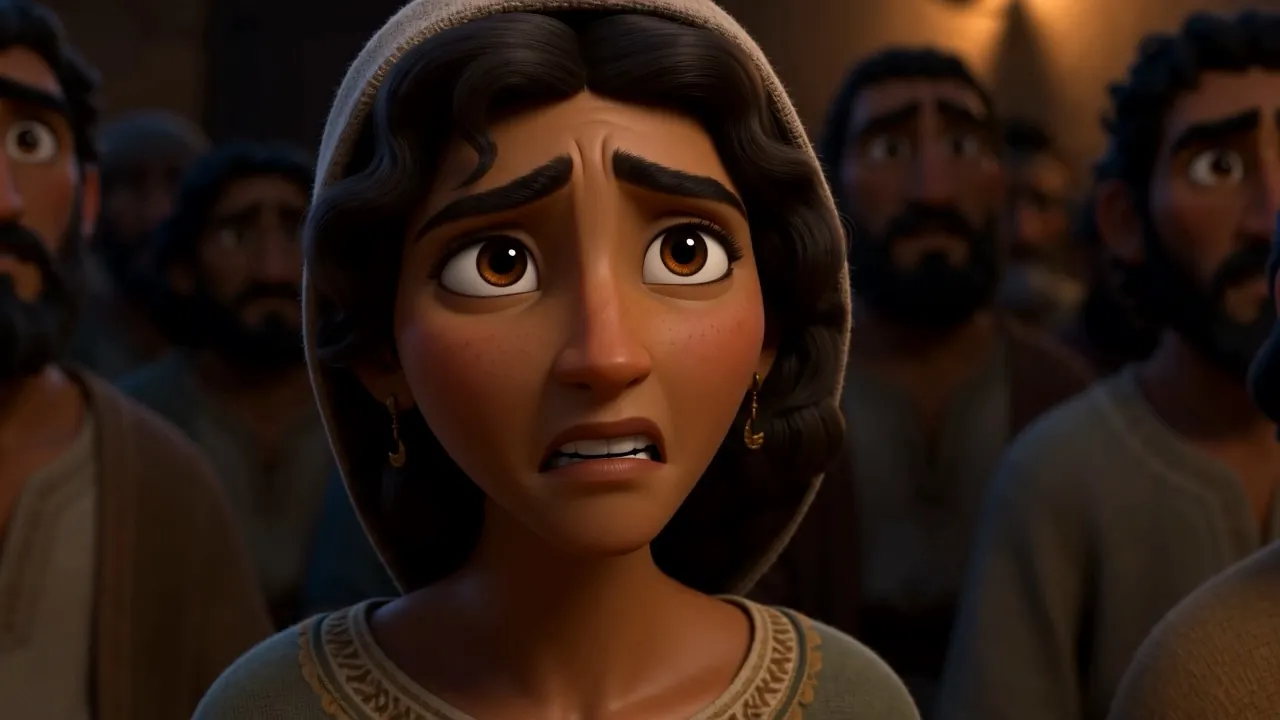
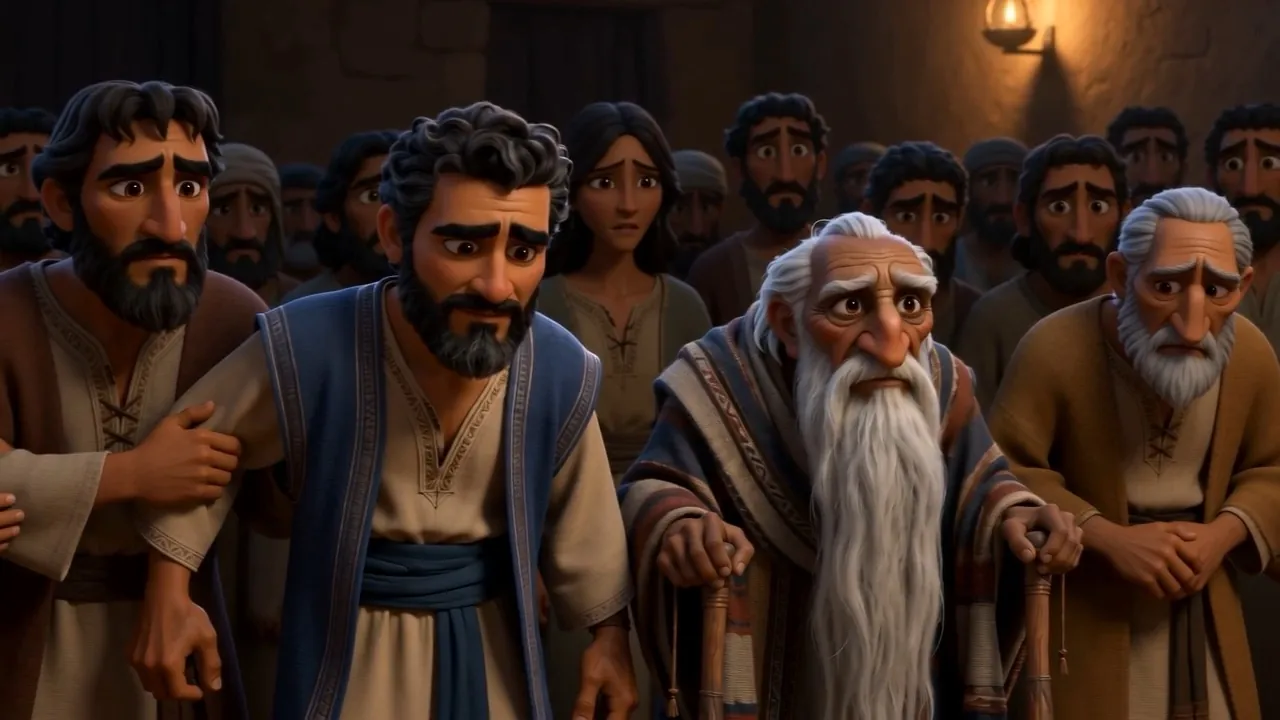
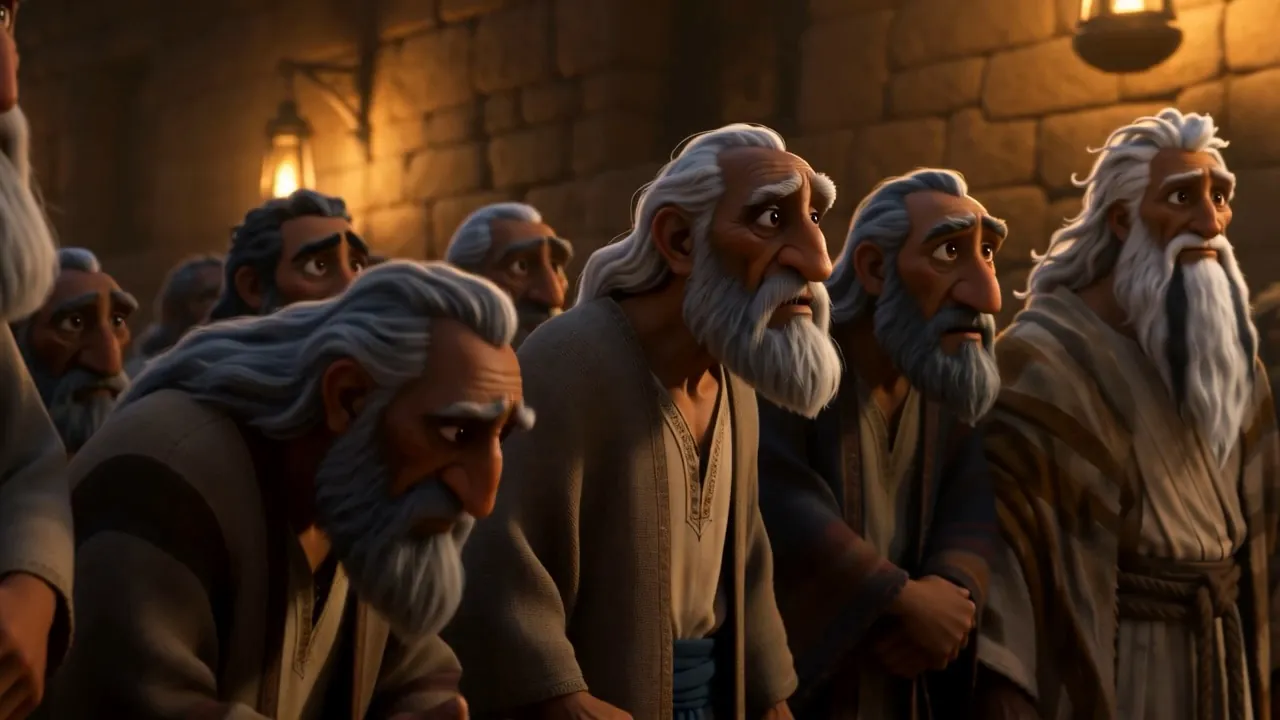
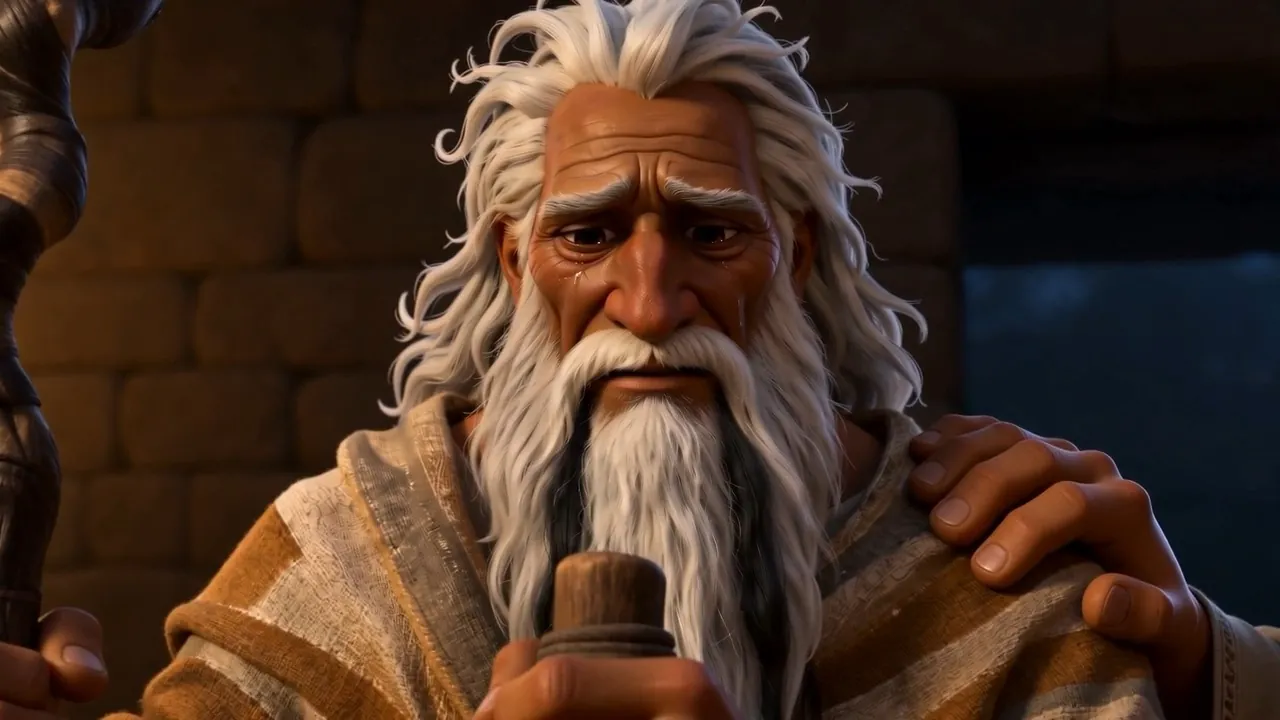
What happens next is done almost entirely in faces. A woman near the back hardly dares, and you can see the hope arrive and frighten her. It goes round the room slowly. And then the old men bow their heads — and they bowed their heads and worshiped — and somebody rests a hand on Moses' shoulder, and the man who spent forty years believing he had ruined his life cannot quite hold his face together. Exodus 4 : 31
The people believed… and they bowed their heads and worshiped.
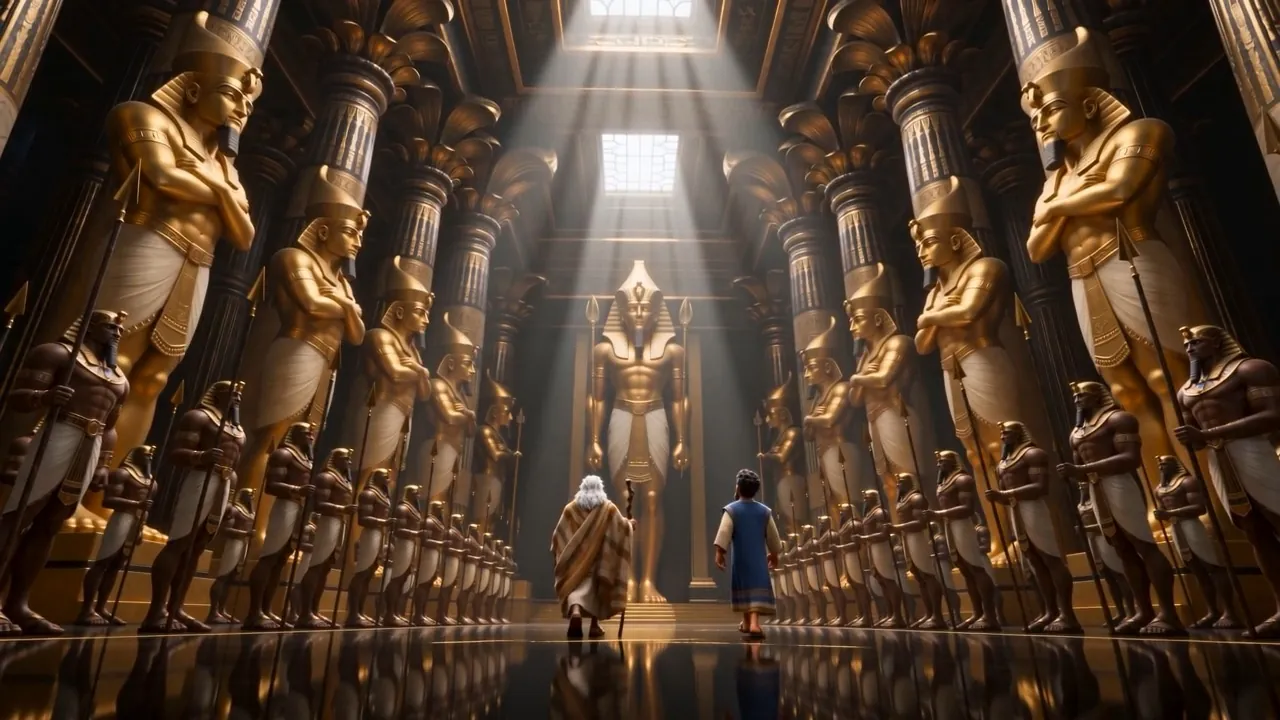
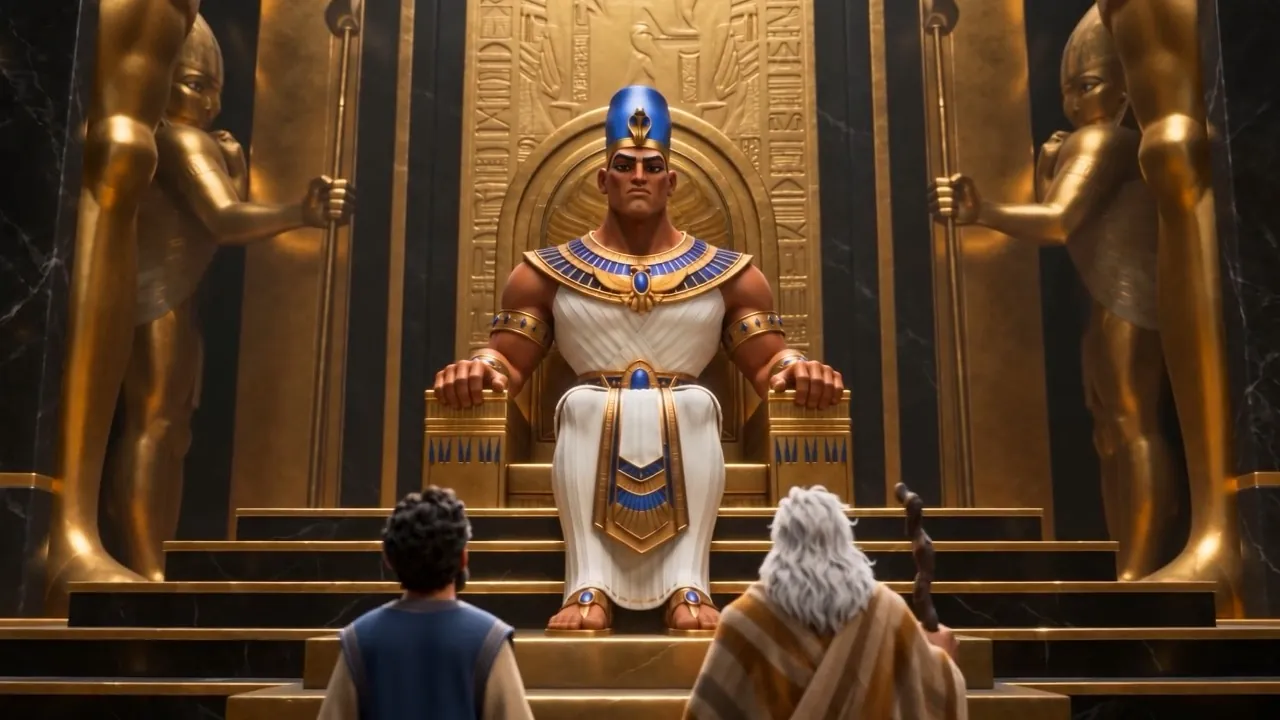
And then the walk into Pharaoh's court, which is one long unbroken shot and needs no dialogue at all. Ranks of gold colossi down both sides, a shaft of light from a window a hundred feet up, and two elderly shepherds in undyed wool crossing the floor of it. The room was designed to make a human being feel like nothing. From this angle it is working perfectly. Exodus 5 : 1
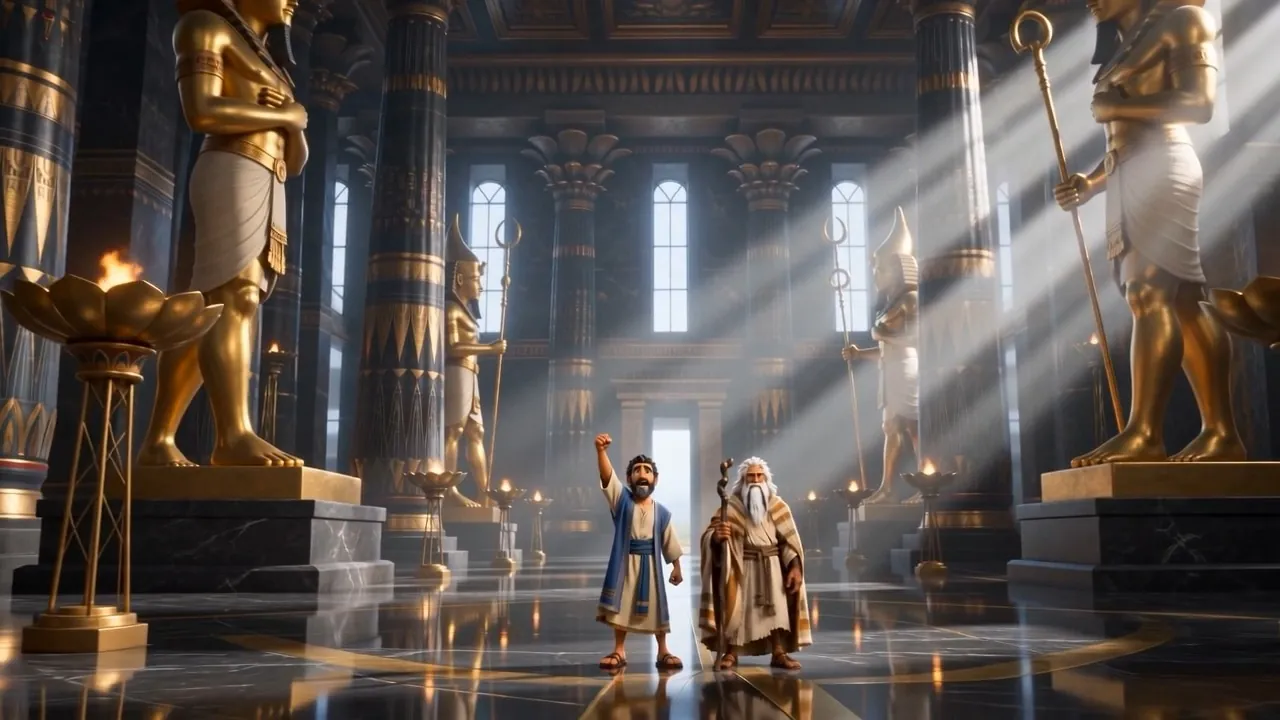
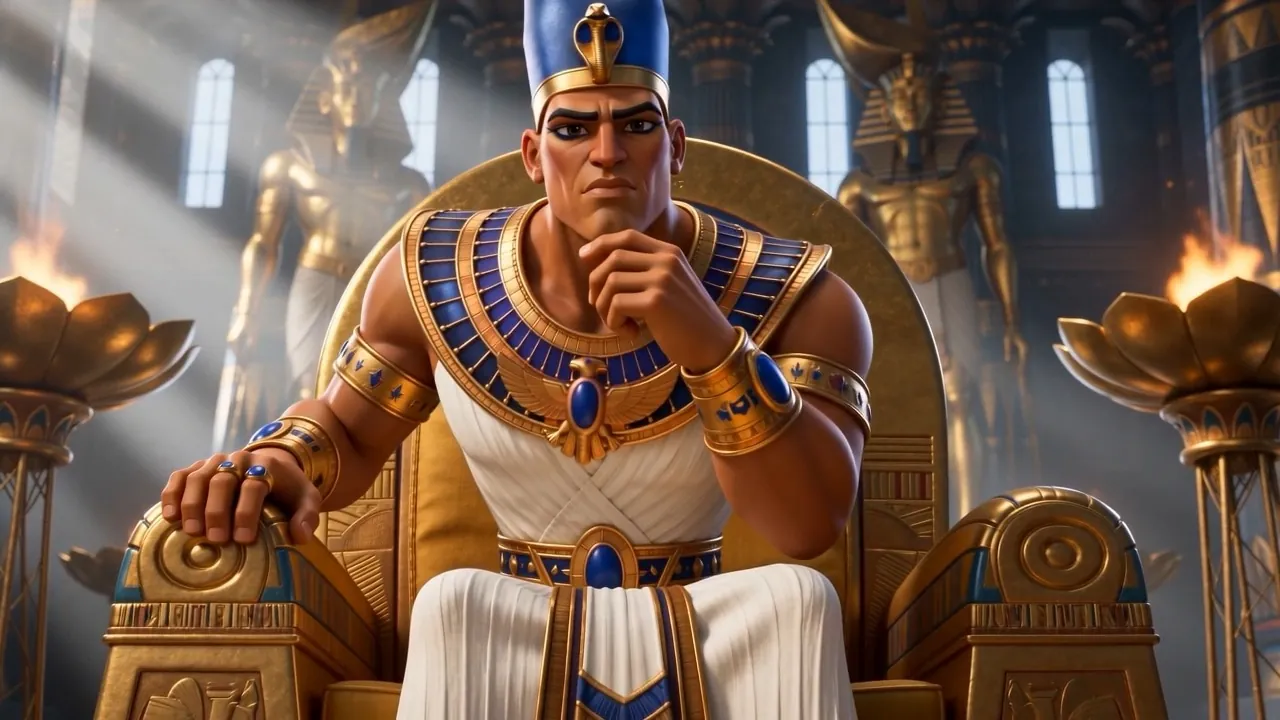
Aaron says it with his fist up, and it is the sentence the entire book turns on: let my people go. And Pharaoh, who is a god as far as this room is concerned, does not sit up, does not take his chin off his hand, and asks the question that will take ten plagues to answer: who is Yahweh, that I should obey his voice? I don't know Yahweh. Exodus 5 : 1–2
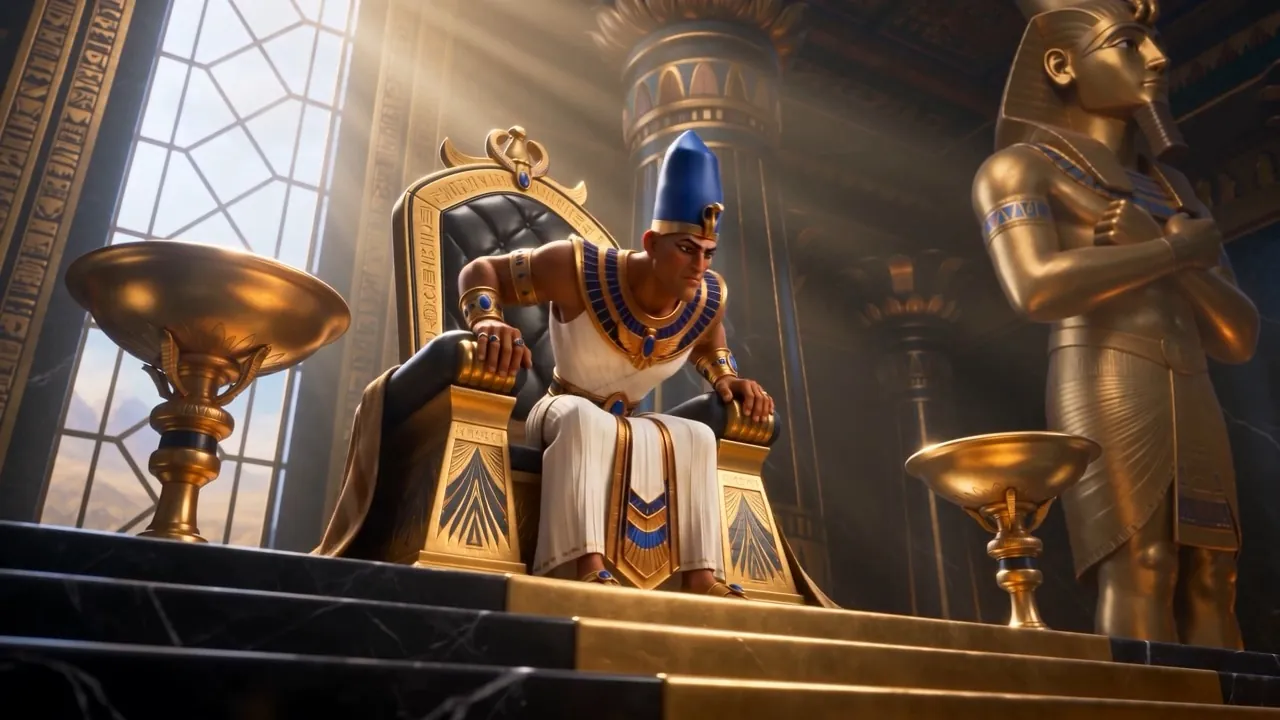
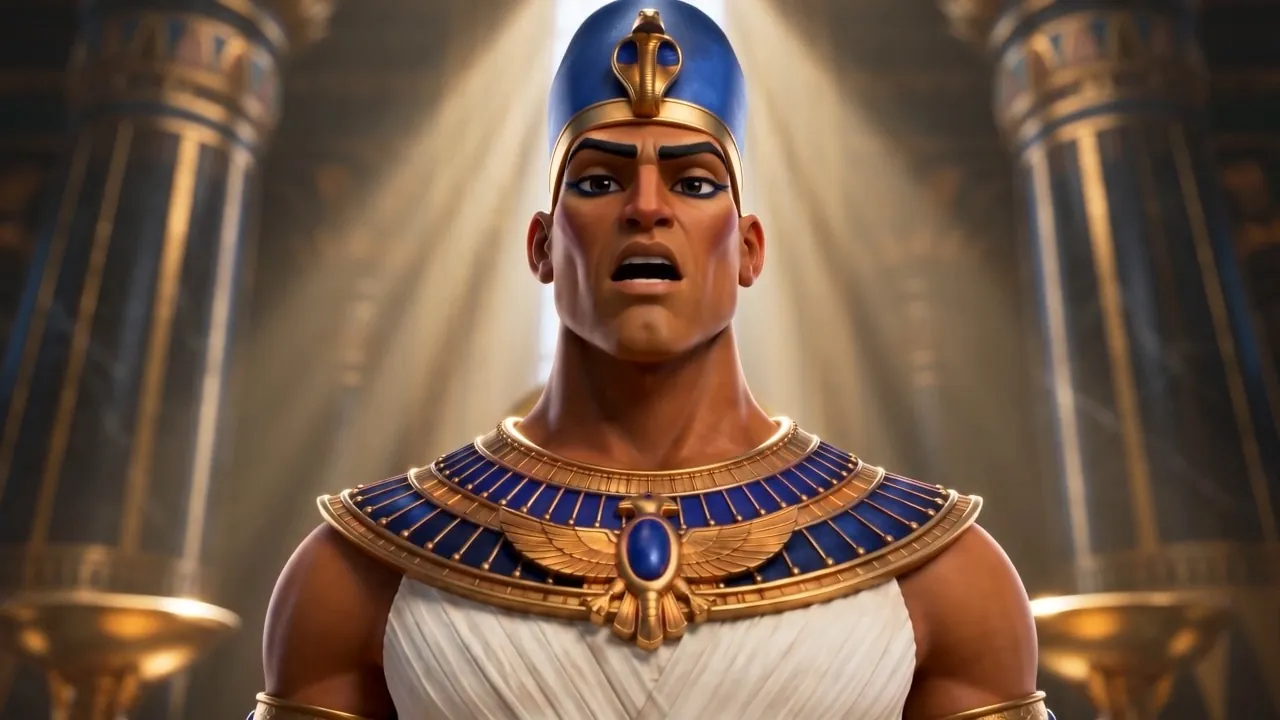
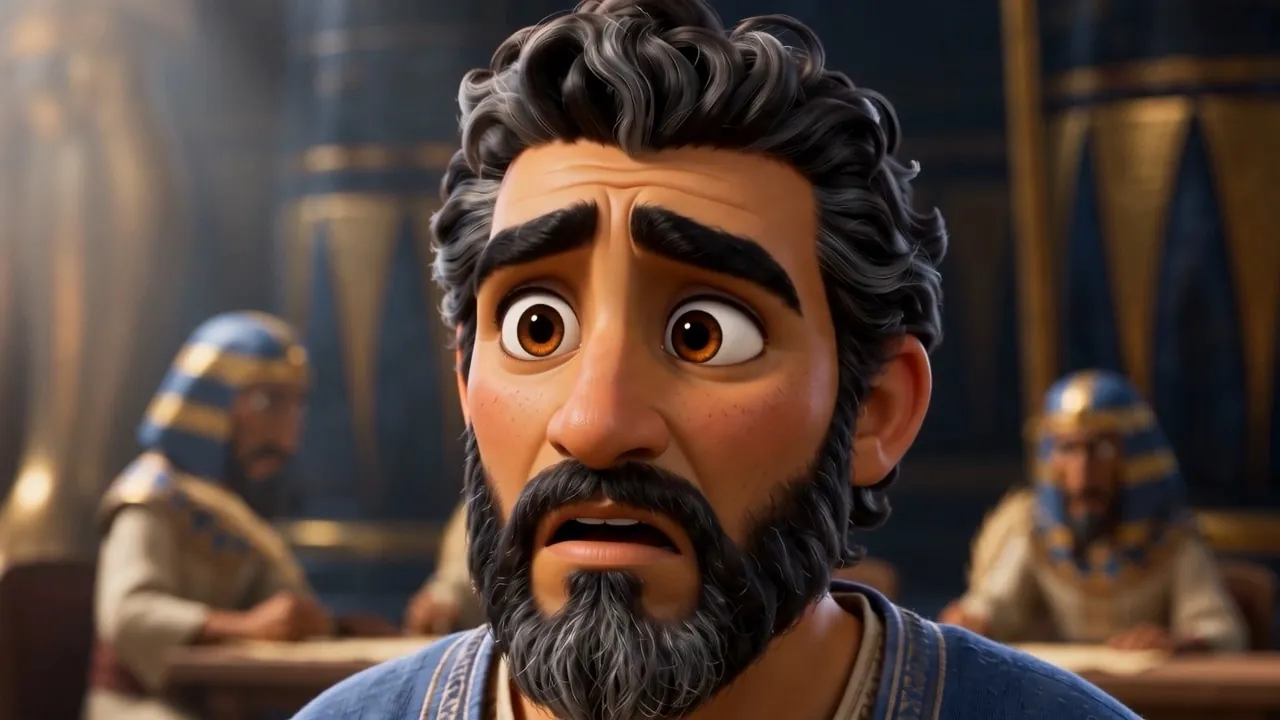
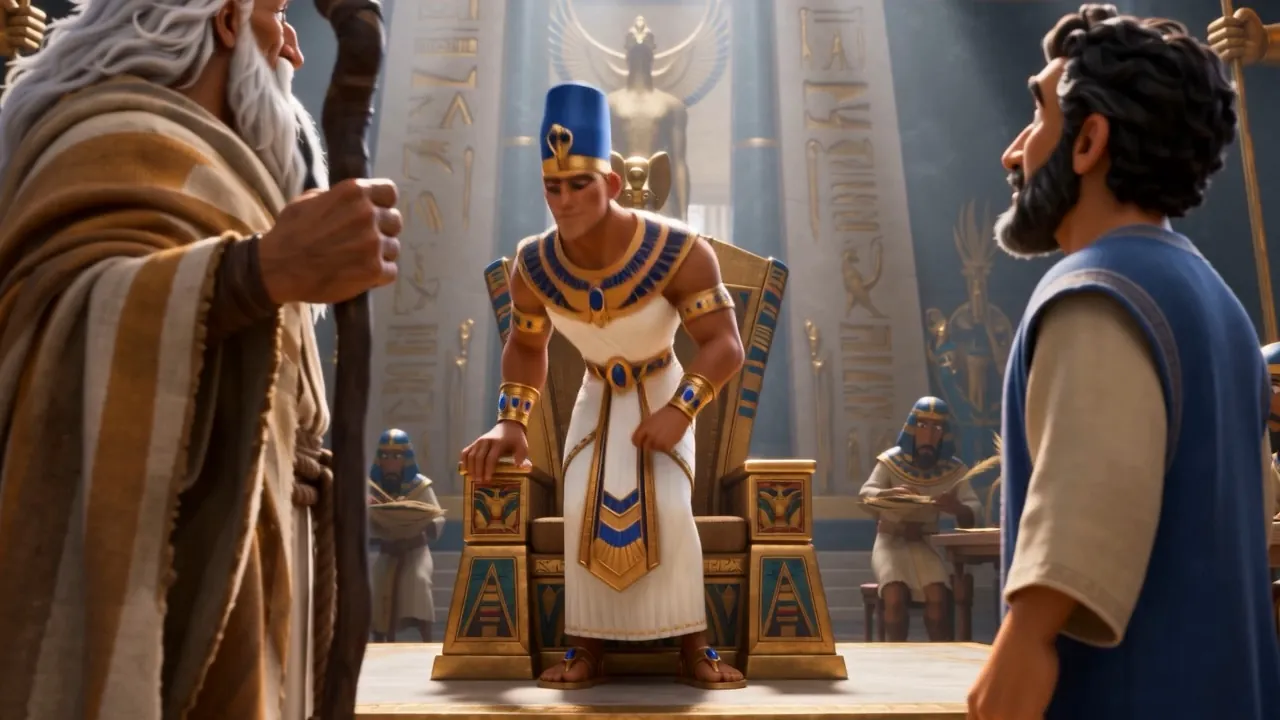
Then he gets up, and comes down — all the way down the gold steps to floor level, which is the one thing a god is never supposed to do — and tells them the people are idle, and that is why they have time for ideas about worship. Aaron holds his ground and does not move an inch. He has also, quite visibly, stopped breathing. Exodus 5 : 3–5
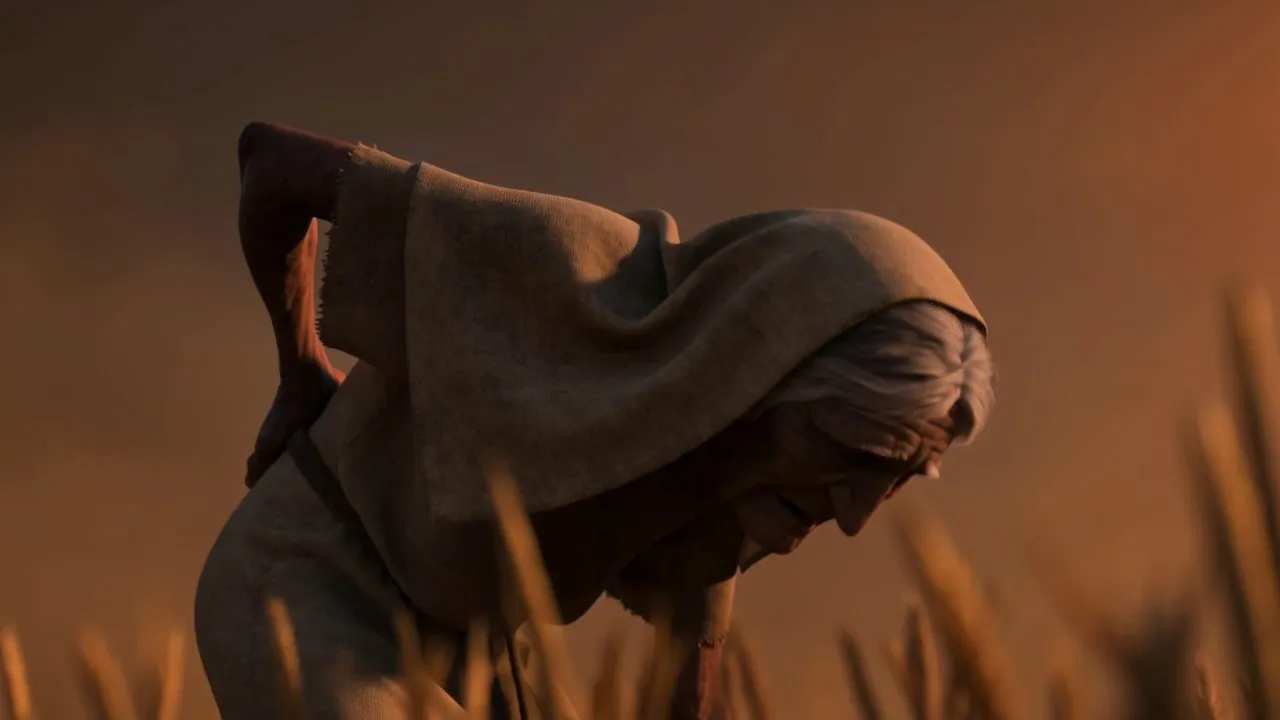
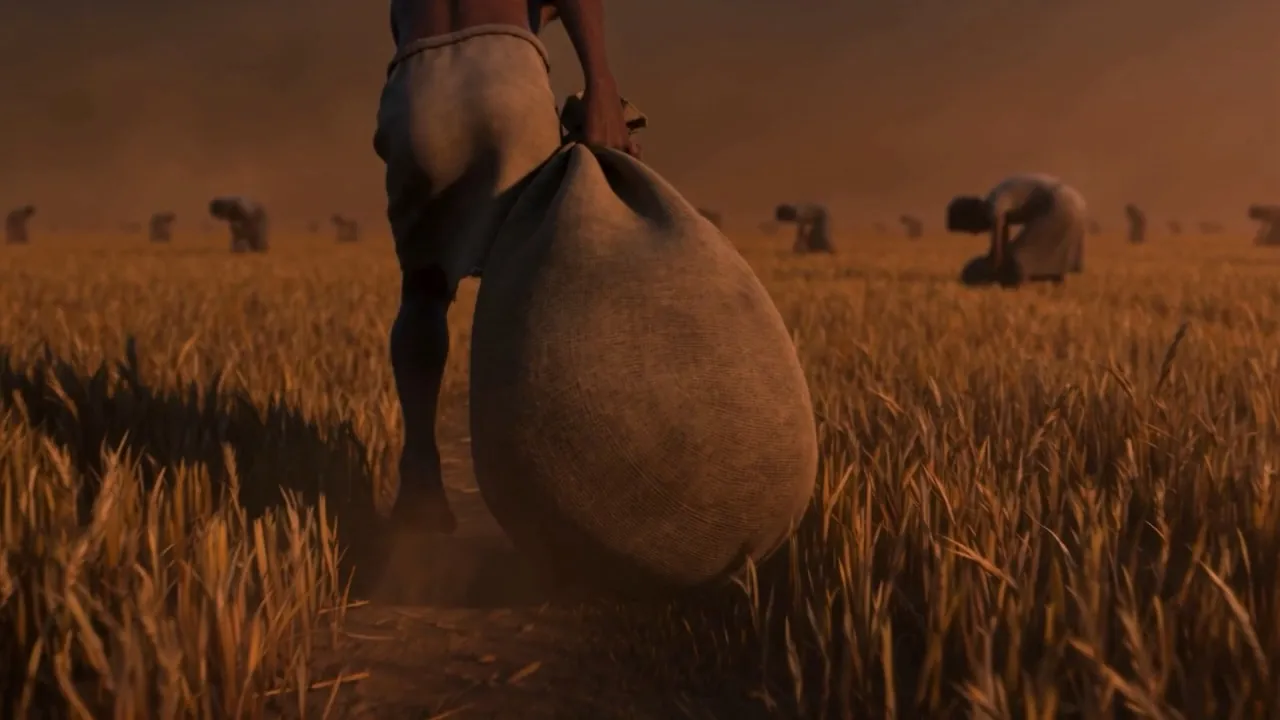
And his answer is not a punishment anyone gets to see delivered. It is an administrative adjustment: the same number of bricks every day, and from now on go and find your own straw. Two shots, no dialogue, nobody cruel in the frame — just an old woman bent double in a field of stubble, and somebody dragging a sack. It is the quietest and most brutal thing in the book. Exodus 5 : 6–14
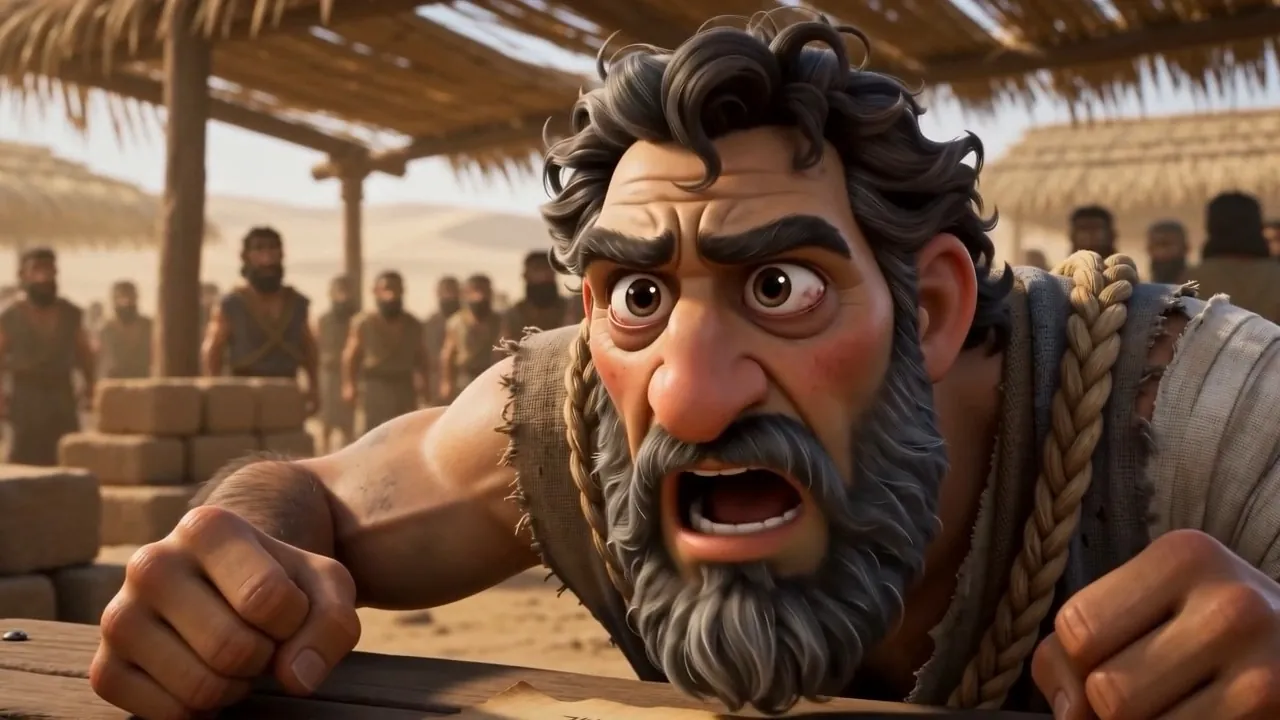
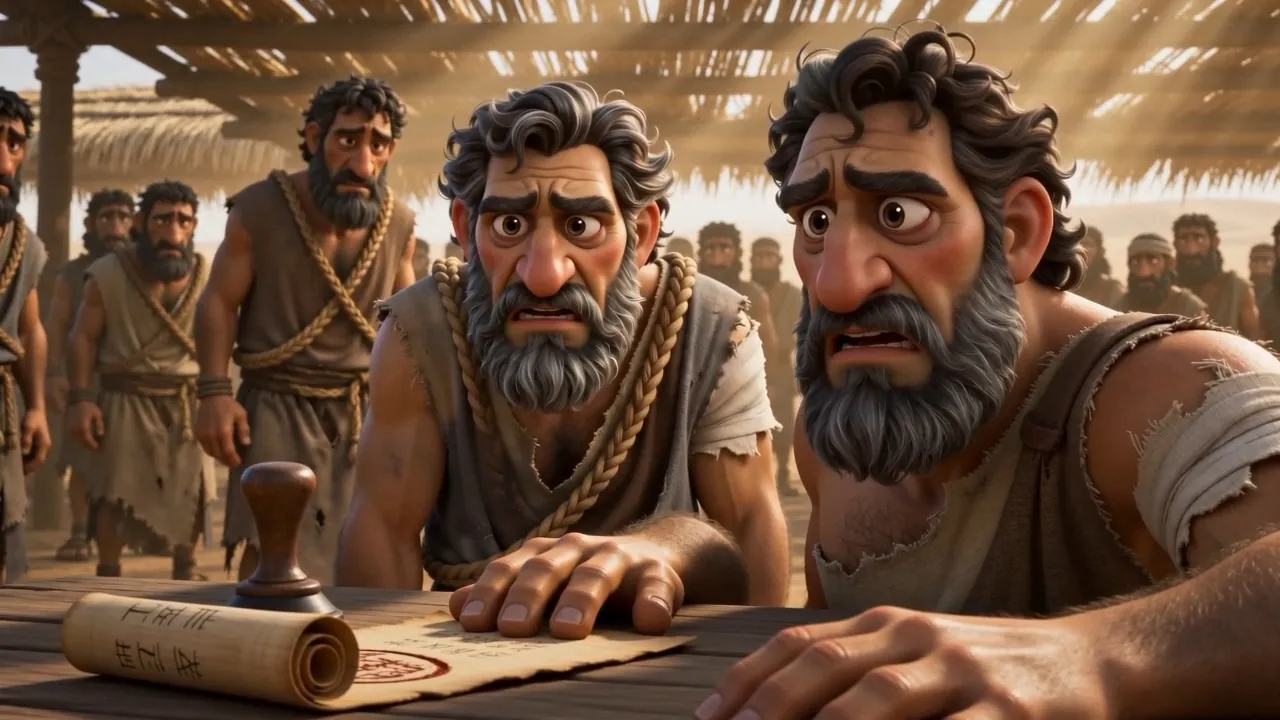
Their own foremen — Israelites, put in charge of Israelites, and beaten when the count comes up short — go and plead their case in person. It does not work. They come back to the brickfields with the decision stamped on a scroll, and one of them brings his fist down on the table, because there is nothing else left to do with it. Exodus 5 : 15–19
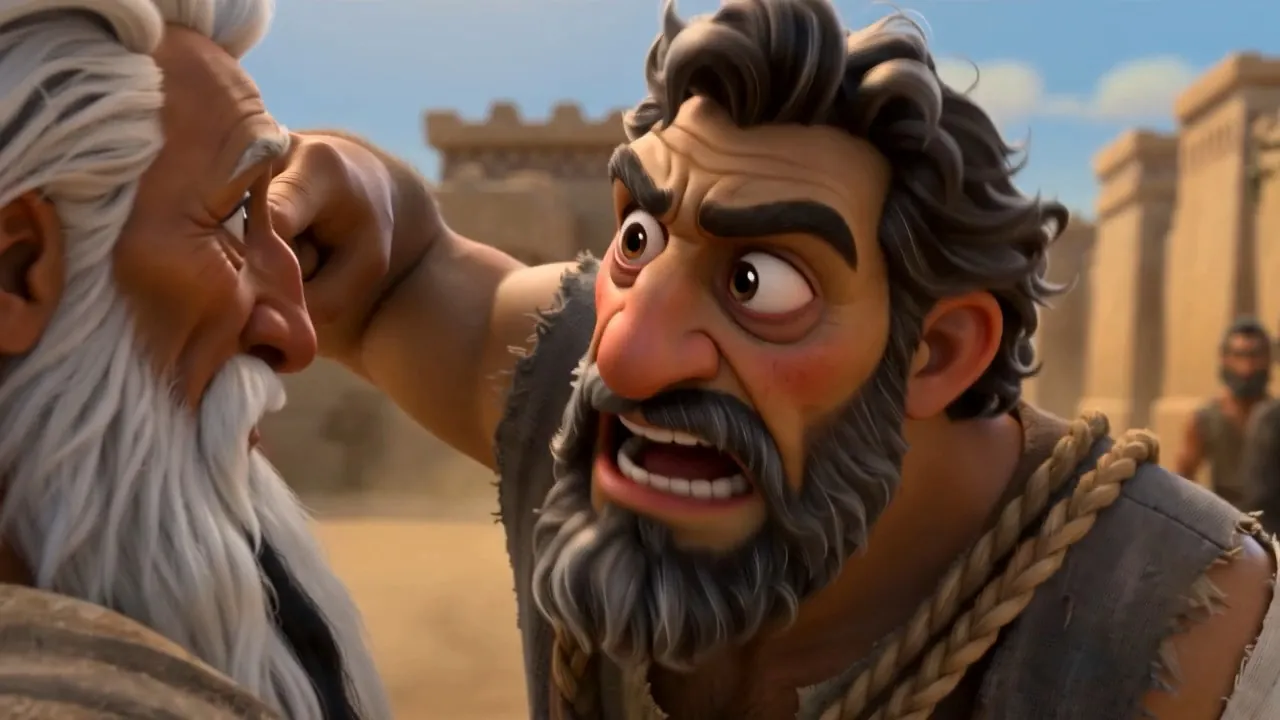
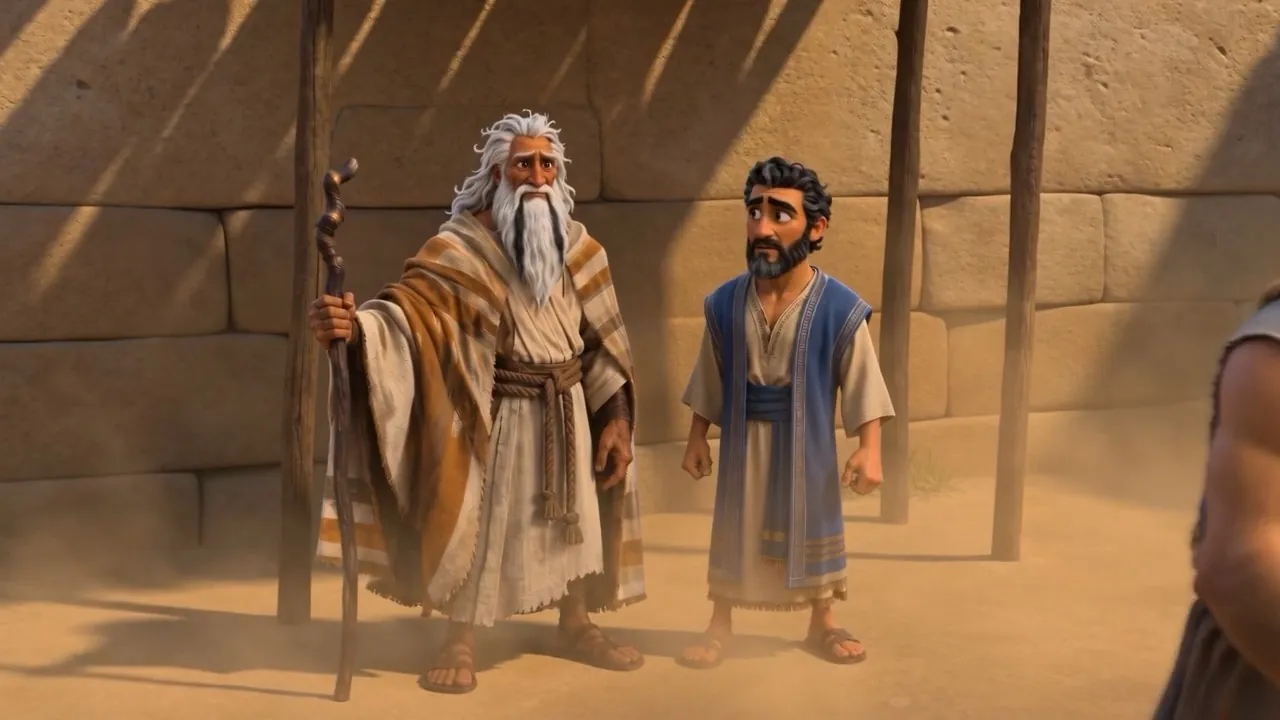
So they find the two men waiting outside and let them have it: may Yahweh look at you and judge, because you have made us a stench to Pharaoh — you have put a sword in his hand to kill us. And they are not wrong. Things really are worse. Afterwards Moses and Aaron stand alone against a mud wall in the dust, and neither of them has anything to say. Exodus 5 : 20–21
Interlude · Your turn
You obeyed — and everything got worse. What do you do with that?
The people you came to help are blaming you. Choose what Moses does next.
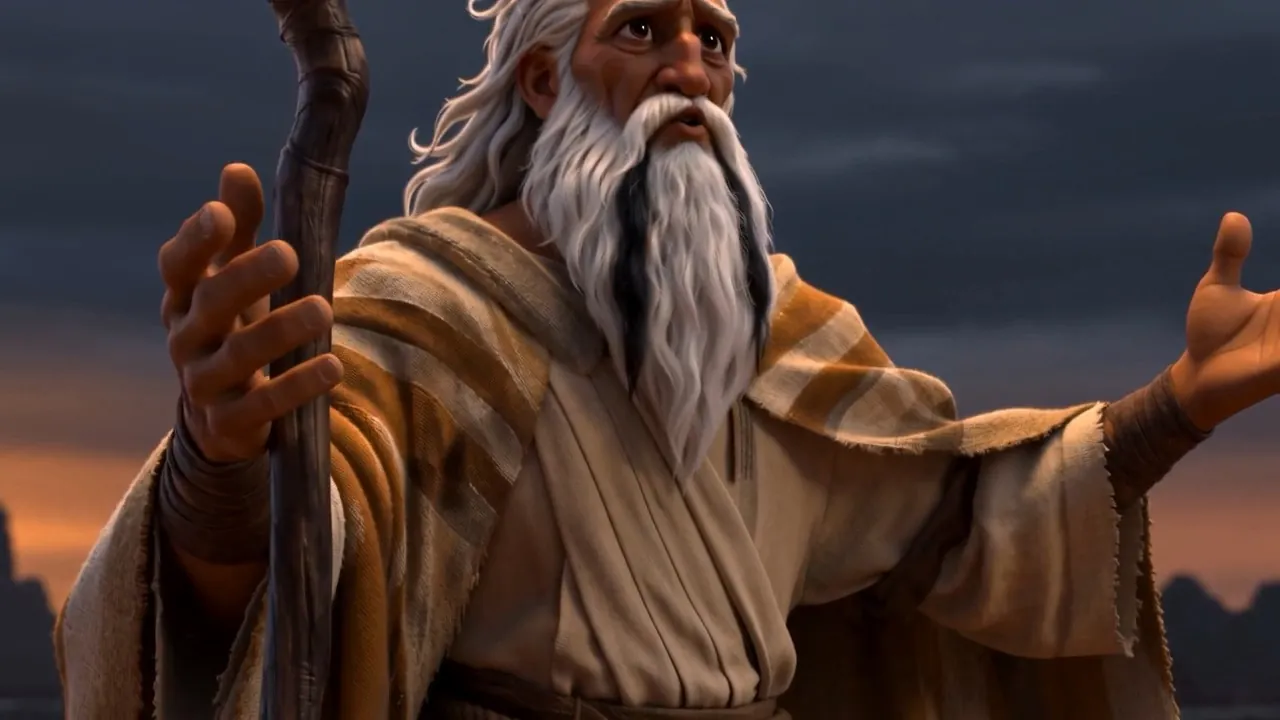
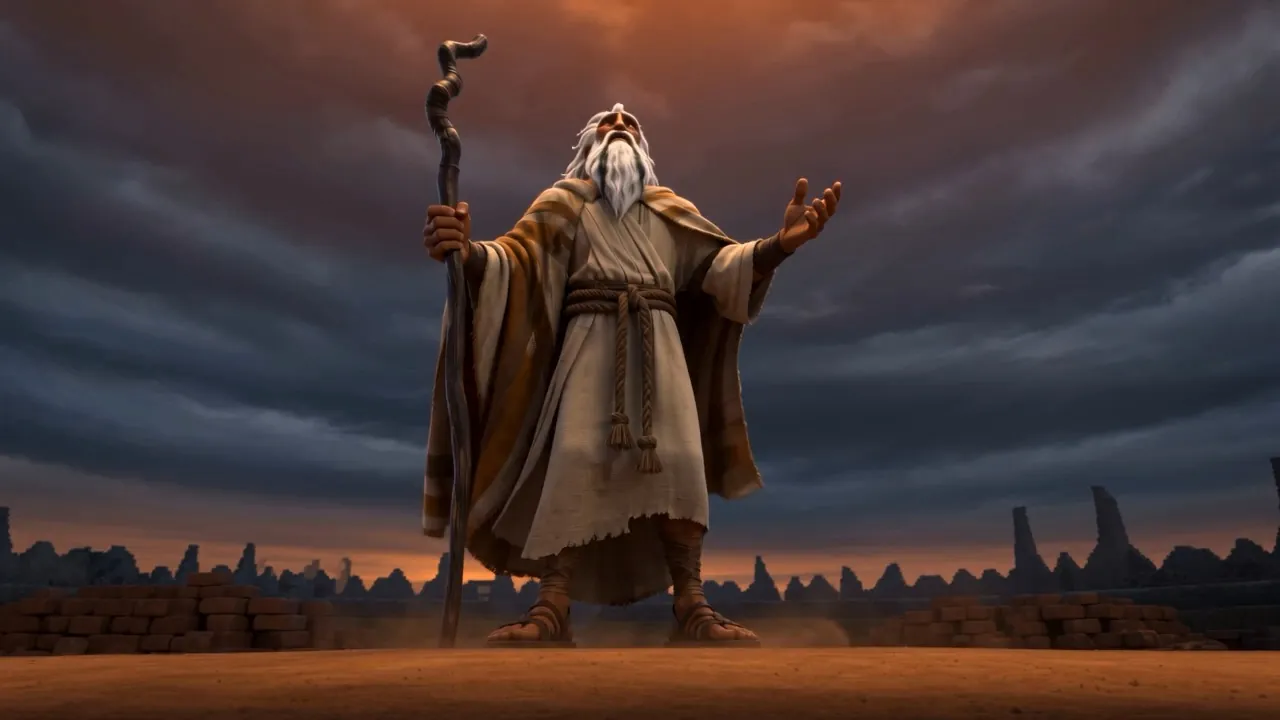
And Moses does not go quiet about it. He takes it straight upstairs, out under an enormous bruised sky with the brickfields going black around him, and complains: Lord, why have you brought trouble on this people? Why did you ever send me? Since I came, he has done evil to this people, and you have not rescued them at all. It is in the Bible. Nobody edited it out. Exodus 5 : 22–23


And he gets an answer, which is not an apology and not a rebuke either. Now you will see what I will do to Pharaoh. Then the promise underneath the whole thing, in seven verbs: I will bring you out, I will free you, I will redeem you, I will take you as my own. He turns and walks back down the ruined field towards the city, into the light, on his own. Exodus 6 : 1–8
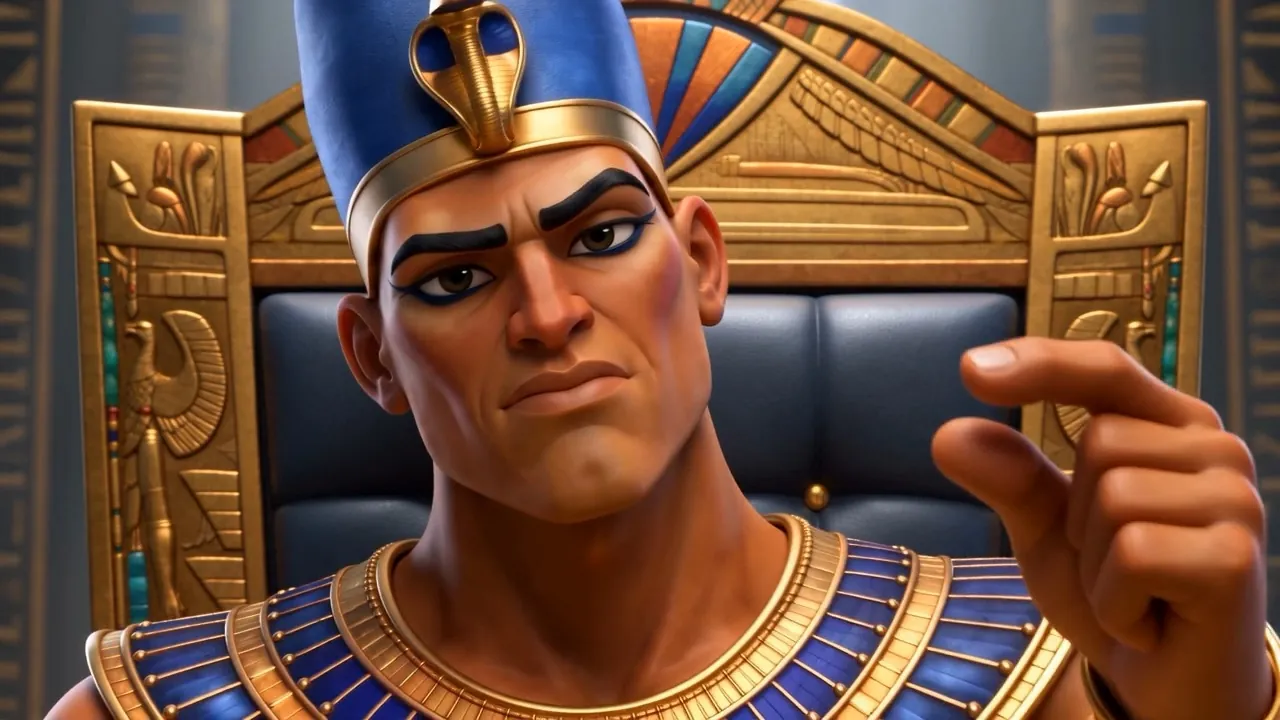
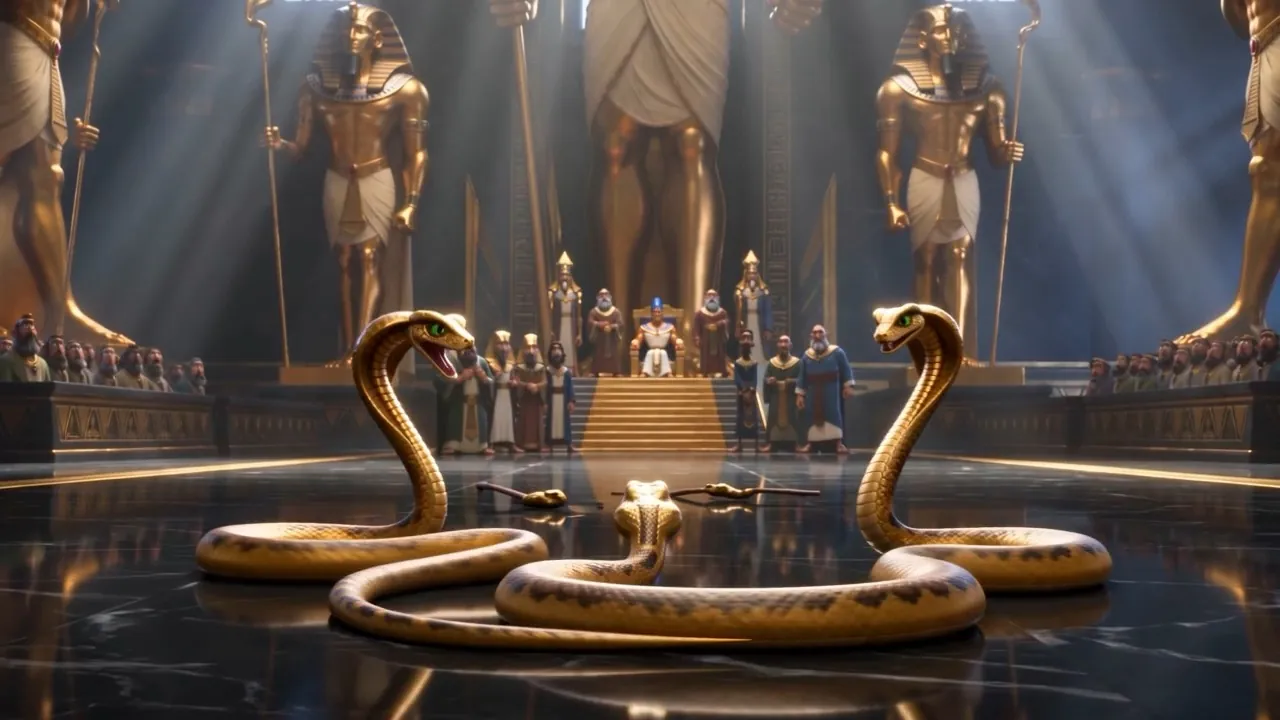

They go back, and Pharaoh wants a trick. Aaron's staff hits the marble and becomes a serpent — and then the court magicians throw theirs down and do exactly the same, which is the point of the scene. This is not a contest nobody else can enter. And then Aaron's swallows theirs, and there is one snake on the floor of the throne room with a bulge in it. Exodus 7 : 8–12
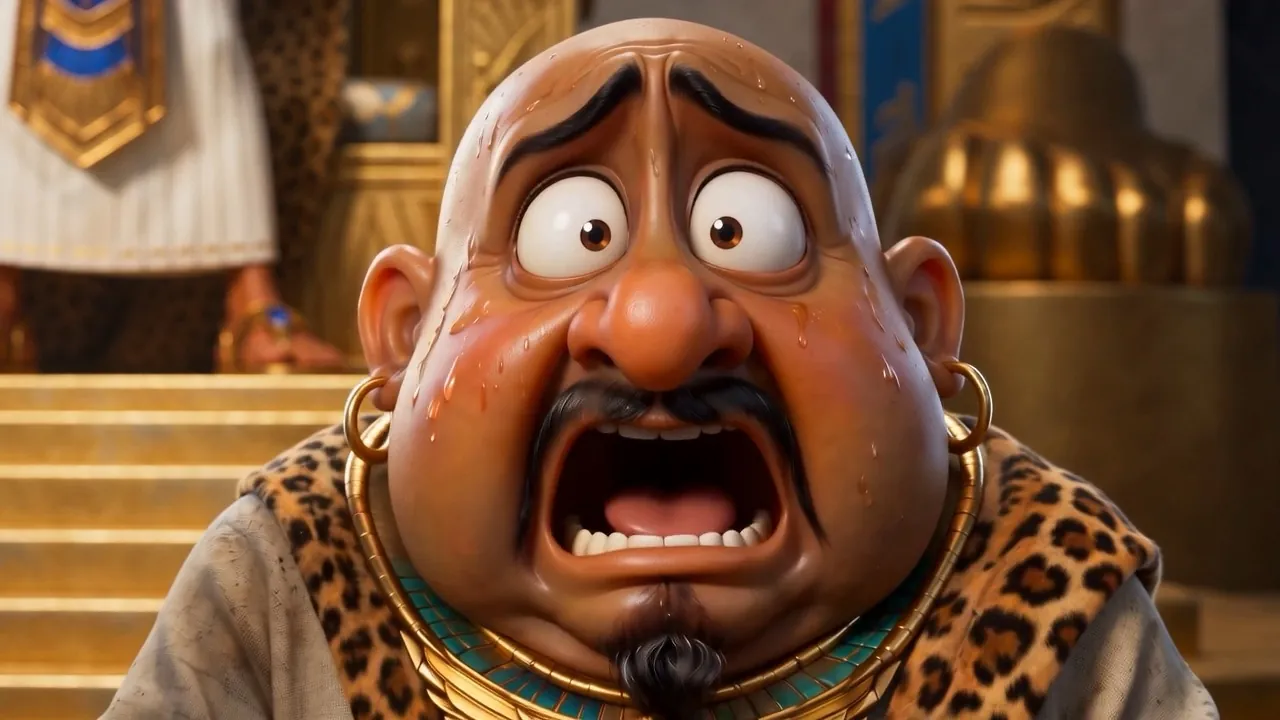
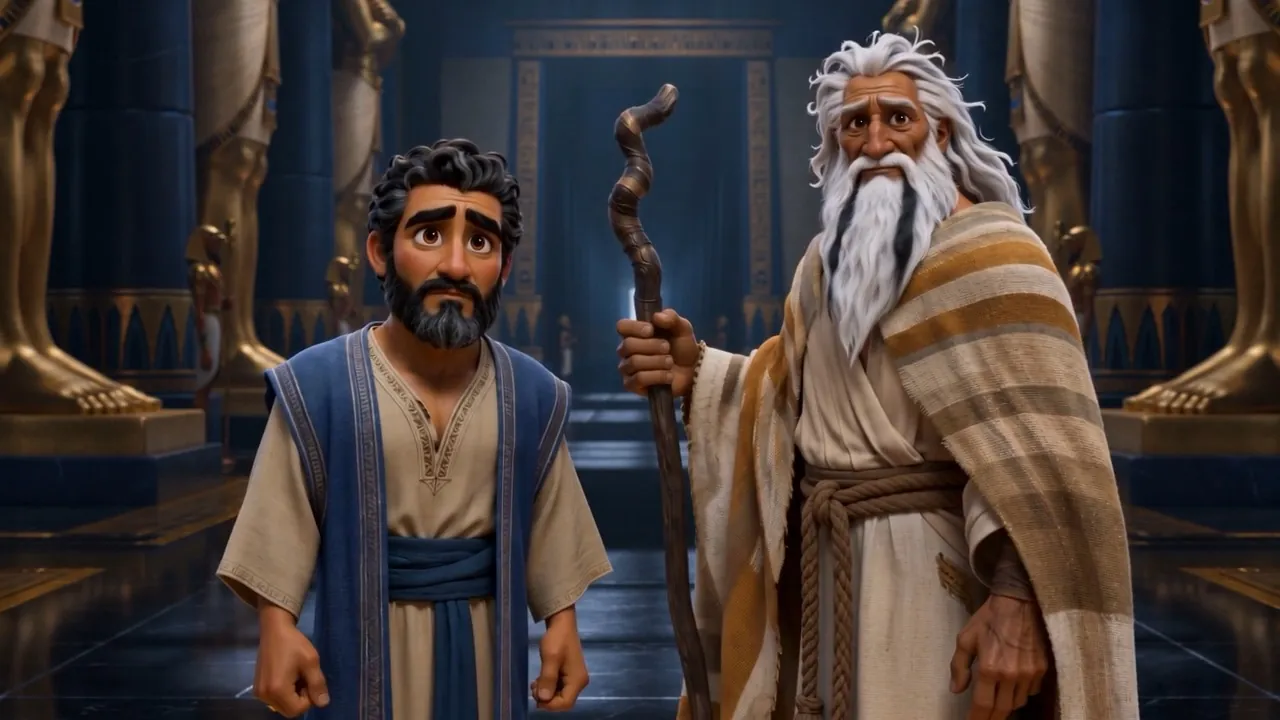
The magicians take this extremely badly, and there is a shot of one of them screaming that is genuinely funny. Pharaoh does not react at all. He hardened his heart and didn't listen to them. And the two brothers turn and walk out of the golden hall having achieved, so far, precisely nothing — except that everyone in the room now knows their god's name. Exodus 7 : 13
After the story
The prayer that got left in. “Why did you ever send me?”
It would have been so easy to trim. A prophet, freshly commissioned, does precisely what he is told and the only measurable outcome is that his people are given the same brick quota with none of the materials — and their own foremen come out and tell him to his face that he has made things worse, and they are right. What Moses does with that is not pious. He goes out under a black sky and says: why have you brought trouble on this people? Why did you ever send me? You have not rescued them at all. Nobody softened it, nobody cut it, and it sits in scripture as permanent permission to say the same thing. The answer, when it comes, is not an apology — it is seven verbs in a row, all of them future tense.
Voices of the court · hover or tap to turn
Moses
"Lord, why have you brought trouble on this people? Why is it that you have sent me?"
— Exodus 5:22
Pharaoh
"Who is Yahweh, that I should listen to his voice to let Israel go? I don't know Yahweh…"
— Exodus 5:2
Aaron
"This is what Yahweh, the God of Israel, says, 'Let my people go…'"
— Exodus 5:1The Book of Exodus
How closely were you watching?
1. Who does the speaking in front of the elders and Pharaoh?
Exodus 4:30. Moses asked for this at the bush; he stands behind his brother, holding the staff.
2. How do the elders and the people respond at first?
Exodus 4:31. The hardest scene to act, and it plays out almost entirely in faces.
3. What is Pharaoh's response to “let my people go”?
Exodus 5:2 — and answering that question takes the rest of the book.
4. What changes for the Israelite workers afterwards?
Exodus 5:6–14. Not a spectacle — an administrative adjustment, and the cruellest thing in the book.
What this story teaches
Obedience is not a guarantee of results.
Moses does exactly what he was sent to do and the immediate outcome is heavier work and a beating for the foremen. The story does not treat that as a sign he got it wrong.
"Moses and Aaron did so. As Yahweh commanded them, so they did." Exodus 7:6God worked with the objection.
Moses said at the bush that he was no good with words. So Aaron speaks and Moses stands behind him holding the staff — the weakness was not overruled, it was staffed around.
"I have made you as God to Pharaoh; and Aaron your brother shall be your prophet." Exodus 7:1Complaint is allowed.
“Why did you ever send me?” is not rebuked. The answer is a promise in seven verbs. There is room in this relationship for the question.
"You have not rescued your people at all." Exodus 5:23Read the scripture itself. Exodus 5 and 7 · World English Bible
Exodus 5
1Afterward Moses and Aaron came, and said to Pharaoh, “This is what Yahweh, the God of Israel, says, ‘Let my people go, that they may hold a feast to me in the wilderness.’”
2Pharaoh said, “Who is Yahweh, that I should listen to his voice to let Israel go? I don’t know Yahweh, and moreover I will not let Israel go.”
3They said, “The God of the Hebrews has met with us. Please let us go three days’ journey into the wilderness, and sacrifice to Yahweh, our God, lest he fall on us with pestilence, or with the sword.”
4The king of Egypt said to them, “Why do you, Moses and Aaron, take the people from their work? Get back to your burdens!”
5Pharaoh said, “Behold, the people of the land are now many, and you make them rest from their burdens.”
6The same day Pharaoh commanded the taskmasters of the people, and their officers, saying,
7“You shall no longer give the people straw to make brick, as before. Let them go and gather straw for themselves.
8The number of the bricks, which they made before, you require from them. You shall not diminish anything of it, for they are idle; therefore they cry, saying, ‘Let us go and sacrifice to our God.’
9Let heavier work be laid on the men, that they may labor in it; and don’t let them pay any attention to lying words.”
10The taskmasters of the people went out, and their officers, and they spoke to the people, saying, “This is what Pharaoh says: ‘I will not give you straw.
11Go yourselves, get straw where you can find it, for nothing of your work shall be diminished.’”
12So the people were scattered abroad throughout all the land of Egypt to gather stubble for straw.
13The taskmasters were urgent saying, “Fulfill your work quota daily, as when there was straw!”
14The officers of the children of Israel, whom Pharaoh’s taskmasters had set over them, were beaten, and demanded, “Why haven’t you fulfilled your quota both yesterday and today, in making brick as before?”
15Then the officers of the children of Israel came and cried to Pharaoh, saying, “Why do you deal this way with your servants?
16No straw is given to your servants, and they tell us, ‘Make brick!’ and behold, your servants are beaten; but the fault is in your own people.”
17But he said, “You are idle! You are idle! Therefore you say, ‘Let us go and sacrifice to Yahweh.’
18Go therefore now, and work, for no straw shall be given to you, yet you shall deliver the same number of bricks!”
19The officers of the children of Israel saw that they were in trouble, when it was said, “You shall not diminish anything from your daily quota of bricks!”
20They met Moses and Aaron, who stood in the way, as they came out from Pharaoh:
21and they said to them, “May Yahweh look at you, and judge, because you have made us a stench to be abhorred in the eyes of Pharaoh, and in the eyes of his servants, to put a sword in their hand to kill us.”
22Moses returned to Yahweh, and said, “Lord, why have you brought trouble on this people? Why is it that you have sent me?
23For since I came to Pharaoh to speak in your name, he has brought trouble on this people; and you have not rescued your people at all.”
Exodus 7
1Yahweh said to Moses, “Behold, I have made you as God to Pharaoh; and Aaron your brother shall be your prophet.
2You shall speak all that I command you; and Aaron your brother shall speak to Pharaoh, that he let the children of Israel go out of his land.
3I will harden Pharaoh’s heart, and multiply my signs and my wonders in the land of Egypt.
4But Pharaoh will not listen to you, and I will lay my hand on Egypt, and bring out my armies, my people the children of Israel, out of the land of Egypt by great judgments.
5The Egyptians shall know that I am Yahweh, when I stretch out my hand on Egypt, and bring out the children of Israel from among them.”
6Moses and Aaron did so. As Yahweh commanded them, so they did.
7Moses was eighty years old, and Aaron eighty-three years old, when they spoke to Pharaoh.
8Yahweh spoke to Moses and to Aaron, saying,
9“When Pharaoh speaks to you, saying, ‘Perform a miracle!’ then you shall tell Aaron, ‘Take your rod, and cast it down before Pharaoh, that it become a serpent.’”
10Moses and Aaron went in to Pharaoh, and they did so, as Yahweh had commanded: and Aaron cast down his rod before Pharaoh and before his servants, and it became a serpent.
11Then Pharaoh also called for the wise men and the sorcerers. They also, the magicians of Egypt, did the same thing with their enchantments.
12For they each cast down their rods, and they became serpents: but Aaron’s rod swallowed up their rods.
13Pharaoh’s heart was hardened, and he didn’t listen to them; as Yahweh had spoken.
14Yahweh said to Moses, “Pharaoh’s heart is stubborn. He refuses to let the people go.
15Go to Pharaoh in the morning. Behold, he goes out to the water; and you shall stand by the river’s bank to meet him; and the rod which was turned to a serpent you shall take in your hand.
16You shall tell him, ‘Yahweh, the God of the Hebrews, has sent me to you, saying, “Let my people go, that they may serve me in the wilderness:” and behold, until now you haven’t listened.
17Yahweh says, “In this you shall know that I am Yahweh. Behold, I will strike with the rod that is in my hand on the waters which are in the river, and they shall be turned to blood.
18The fish that are in the river shall die, and the river shall become foul; and the Egyptians shall loathe to drink water from the river.”’”
19Yahweh said to Moses, “Tell Aaron, ‘Take your rod, and stretch out your hand over the waters of Egypt, over their rivers, over their streams, and over their pools, and over all their ponds of water, that they may become blood; and there shall be blood throughout all the land of Egypt, both in vessels of wood and in vessels of stone.’”
20Moses and Aaron did so, as Yahweh commanded; and he lifted up the rod, and struck the waters that were in the river, in the sight of Pharaoh, and in the sight of his servants; and all the waters that were in the river were turned to blood.
21The fish that were in the river died; and the river became foul, and the Egyptians couldn’t drink water from the river; and the blood was throughout all the land of Egypt.
22The magicians of Egypt did the same thing with their enchantments; and Pharaoh’s heart was hardened, and he didn’t listen to them; as Yahweh had spoken.
23Pharaoh turned and went into his house, and he didn’t even take this to heart.
24All the Egyptians dug around the river for water to drink; for they couldn’t drink the river water.
25Seven days were fulfilled, after Yahweh had struck the river.
World English Bible (WEB) — a public-domain modern English translation. Read it freely, share it freely.
The Book of Exodus — animated film in production
These scenes are real frames from the film.
Help us finish it — and every story like it — free for the world.