The Book of Enoch · Noah, the Taking & the Flood
He was walking,and then he wasn't.
The end of the book: the strange luminous child nobody could explain, the four generations it took to get an answer, the morning Enoch stopped being on the hill — and the flood he had dreamed about as a boy, arriving centuries later exactly as he said. Every scene below is a real frame from our animated film.

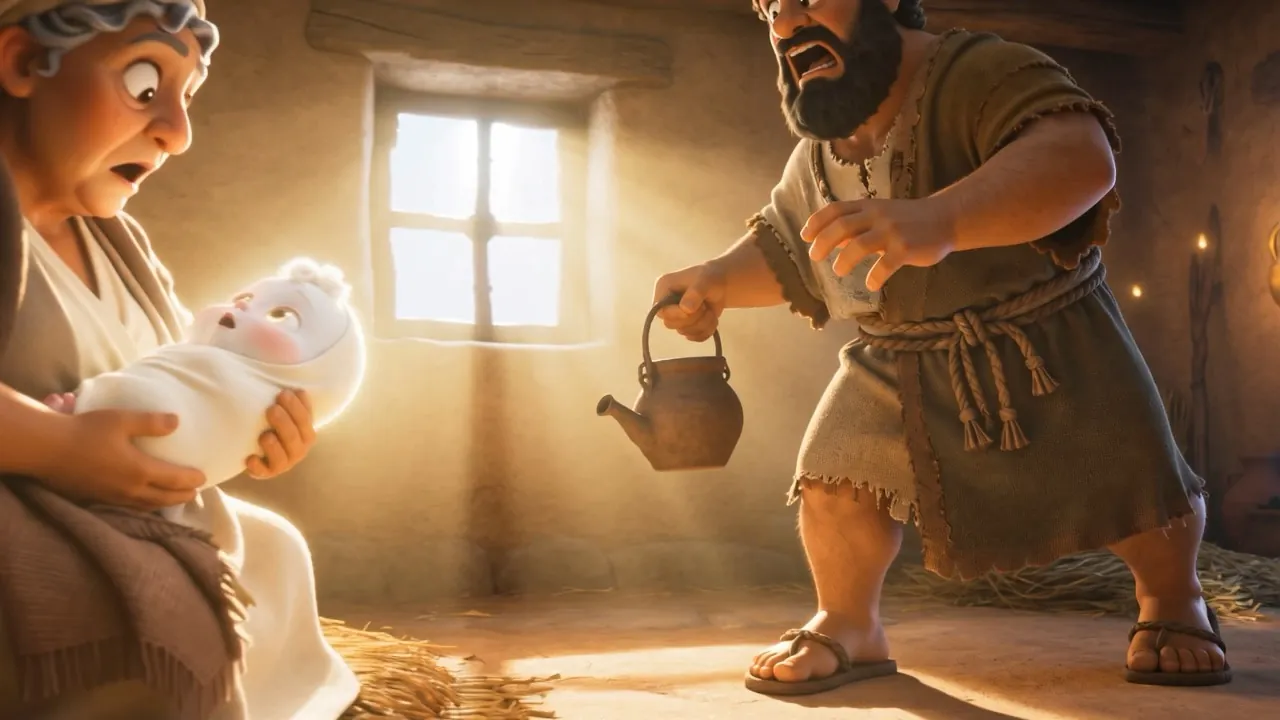
A baby is born in a house near the end of Enoch's line, and something is wrong with him. His skin is white as snow, his hair is white as wool, and when he opens his eyes the whole room gets brighter. His father Lamech takes one look, drops what he is carrying, and backs away from his own son. It is a fair reaction. Nobody has ever seen a child like this. Genesis 5 : 28–29
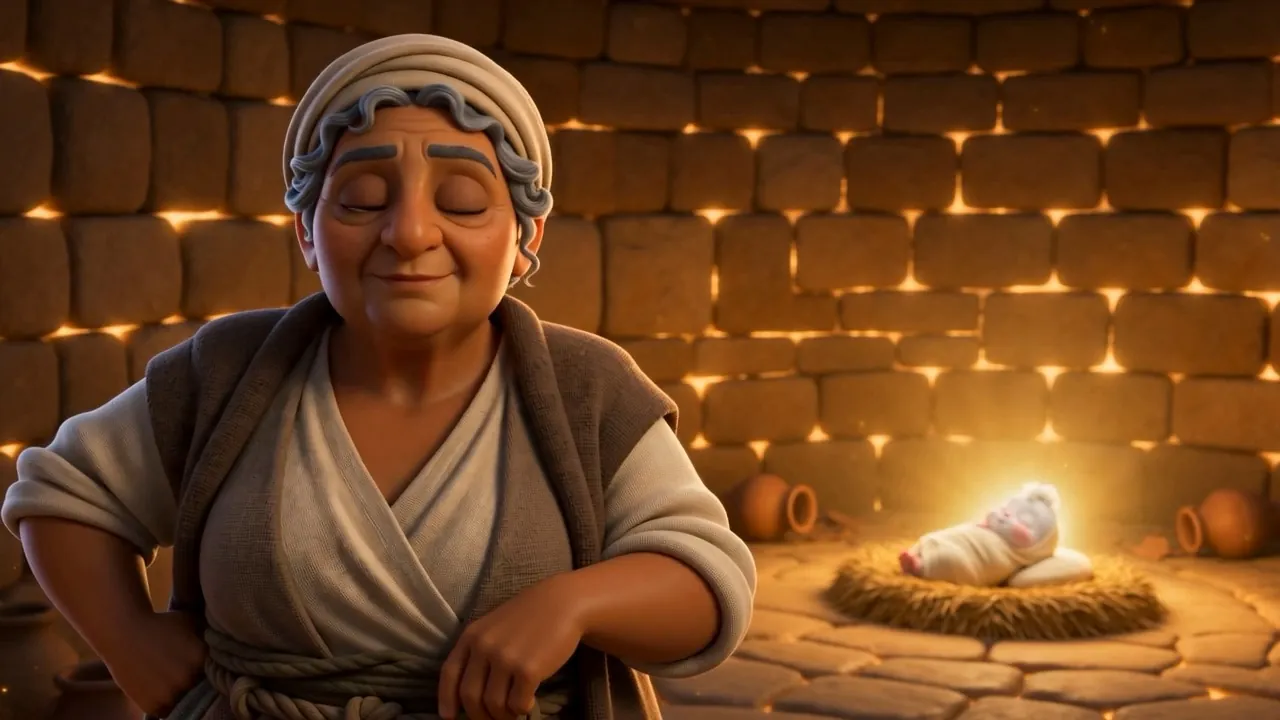
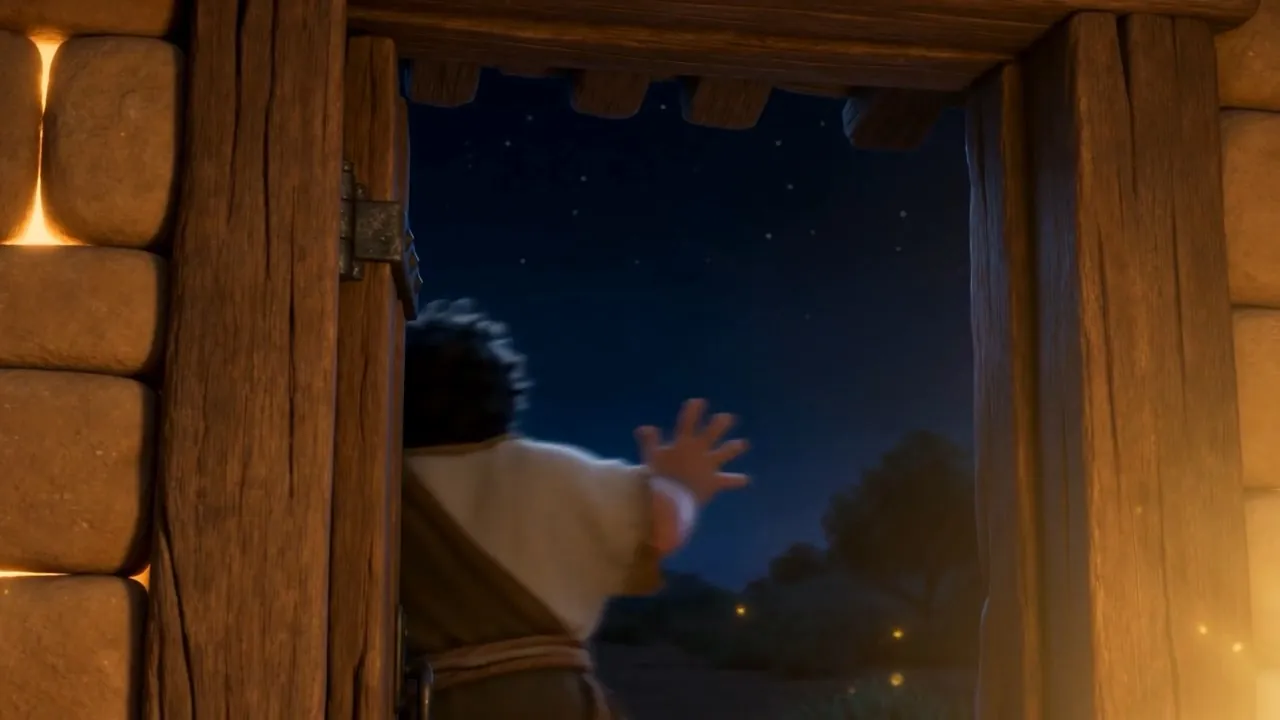
The midwife will not go near the crib, and stands against the far wall with her eyes shut while the child lights the stones behind her. And Lamech does not stay in the room. He goes out of the door into the night at a dead run, because the only explanation he can think of is the one everybody in that generation is frightened of, and he needs somebody older to tell him he is wrong. Genesis 6 : 1–4
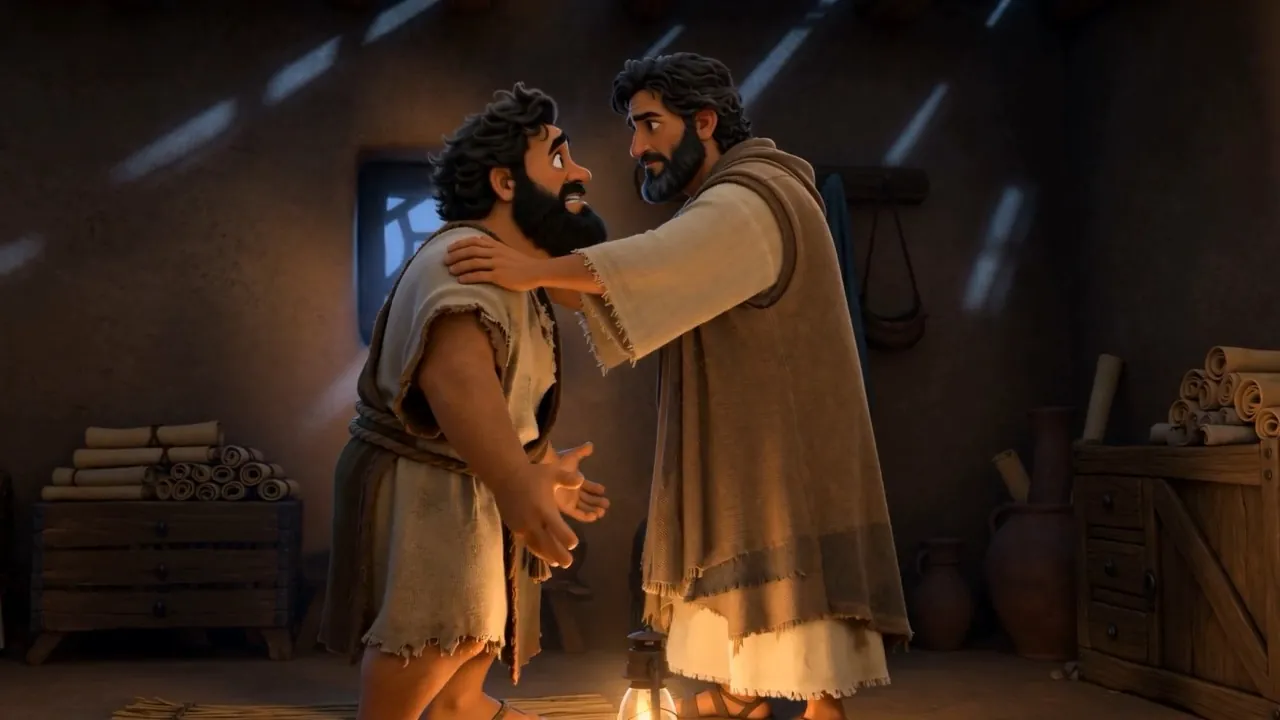
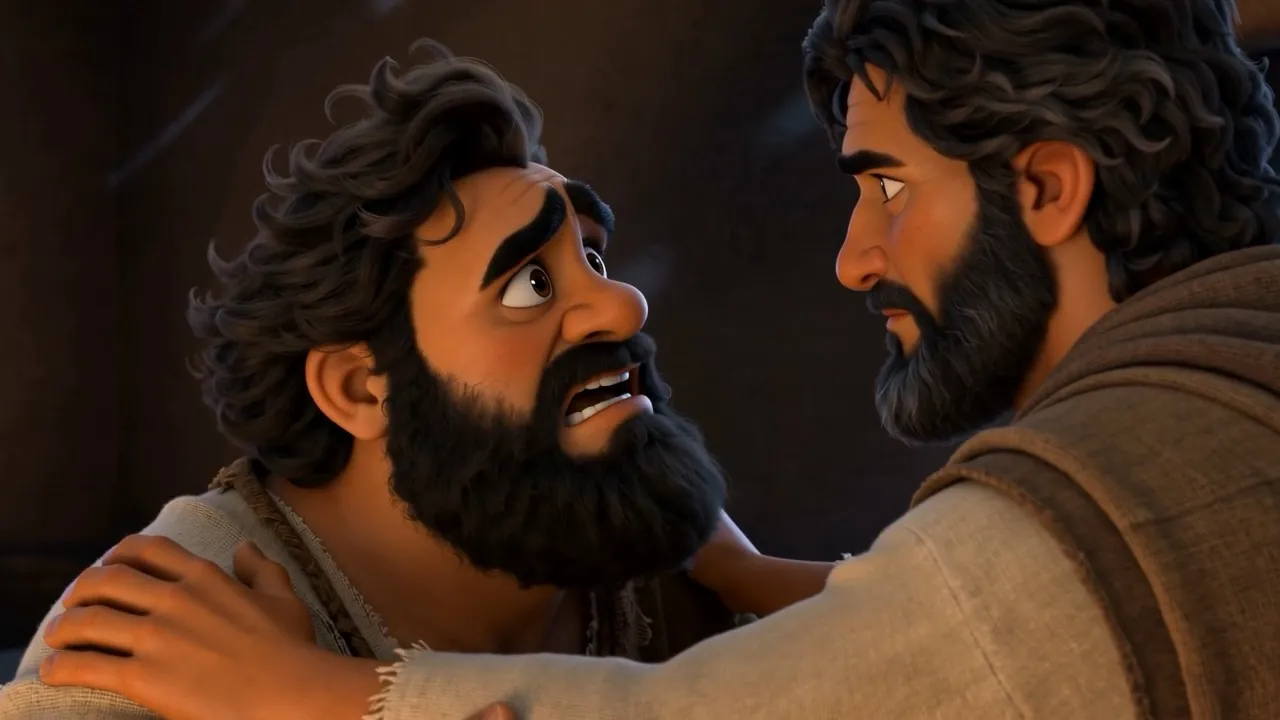
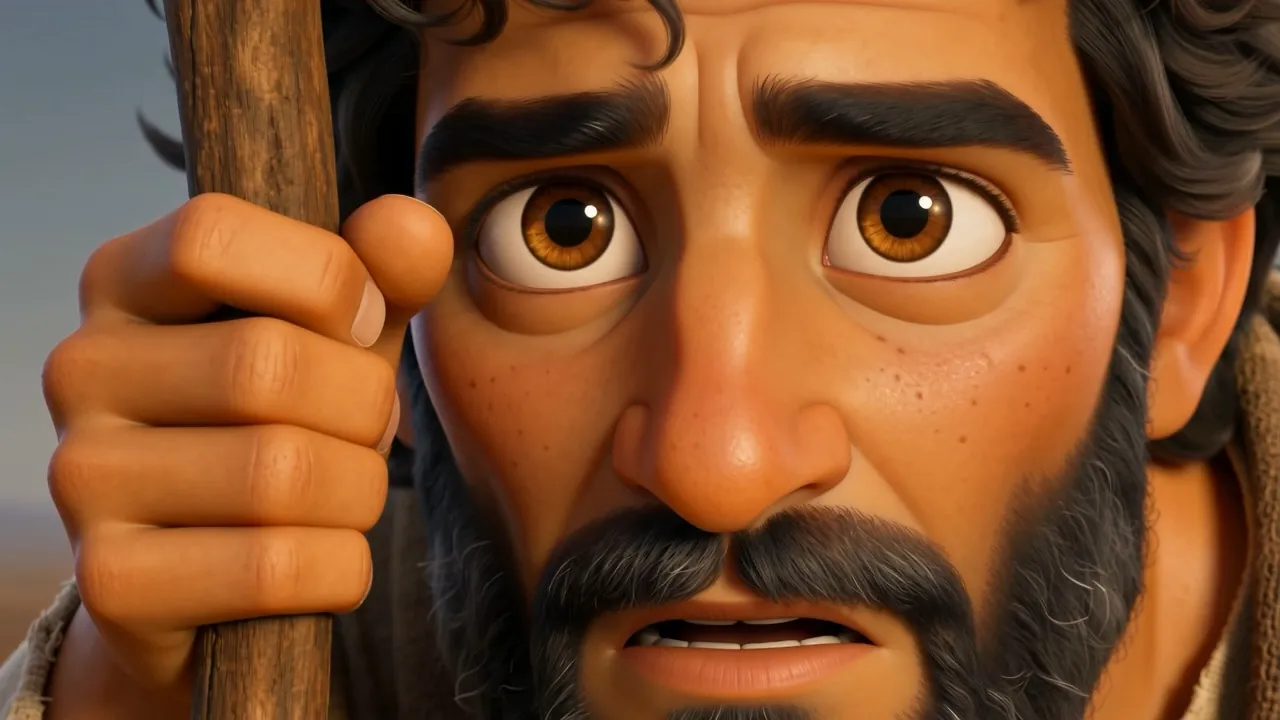
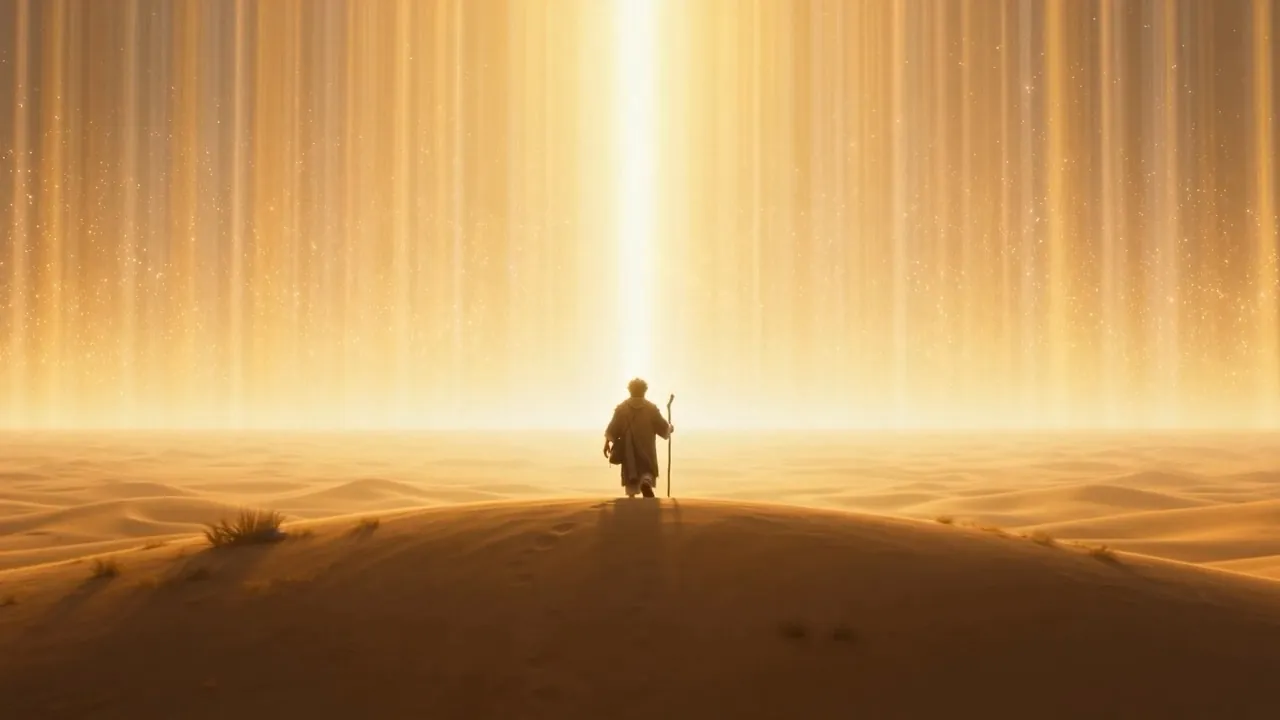
So the question goes up the family, one generation at a time. Lamech takes it to Methuselah, who cannot answer it either — and Methuselah, who is not young, picks up a staff and walks to the ends of the earth to ask his own father. There is a shot of him alone on a dune in front of a curtain of light a mile high, and he keeps walking into it. Genesis 5 : 21–25
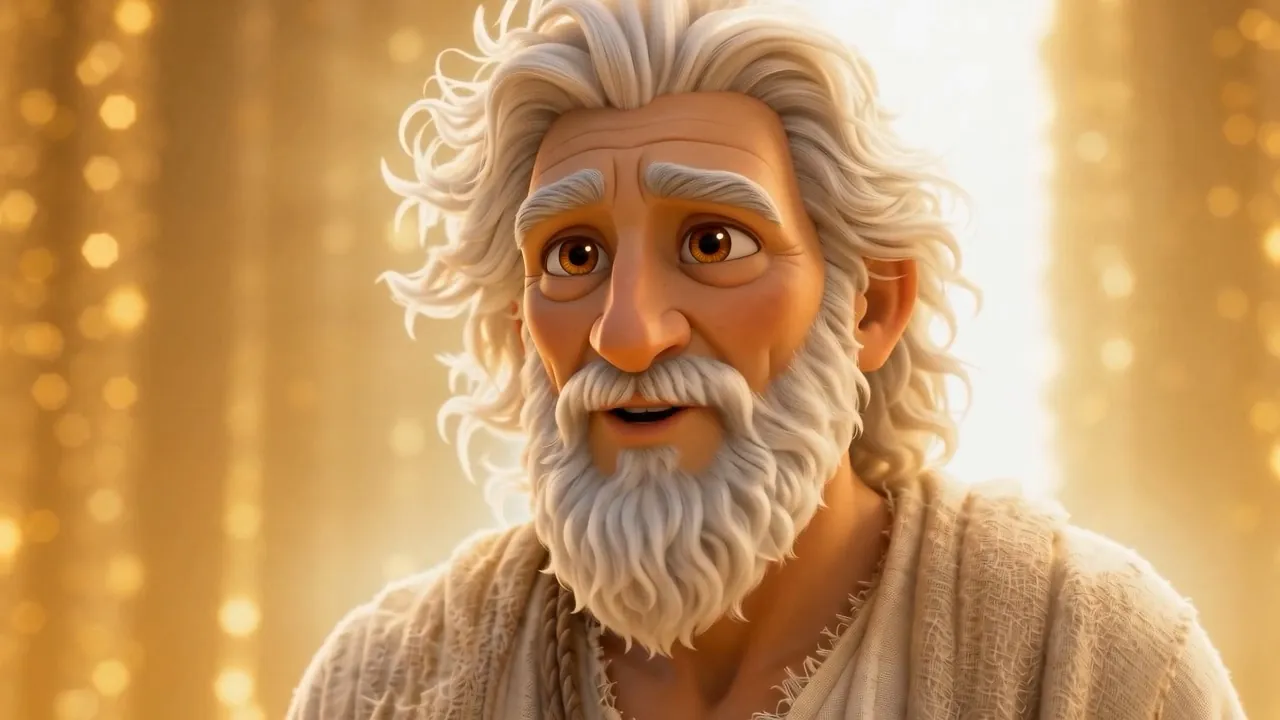
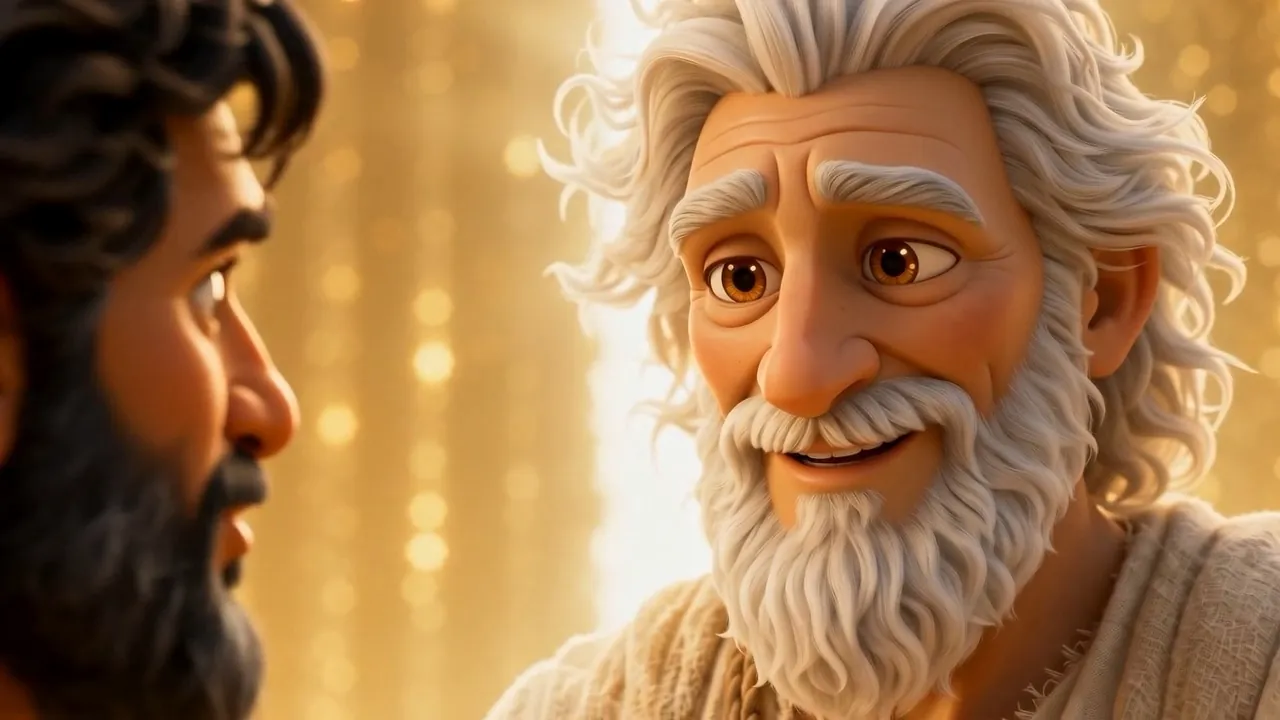
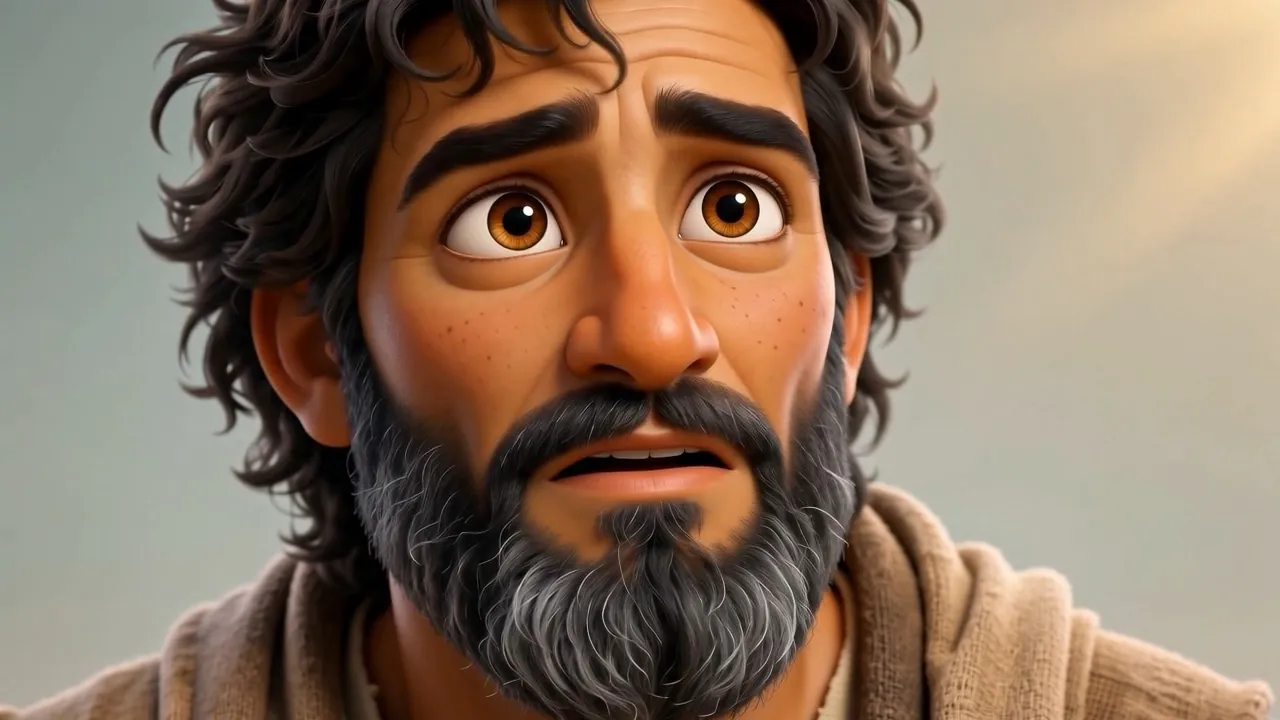
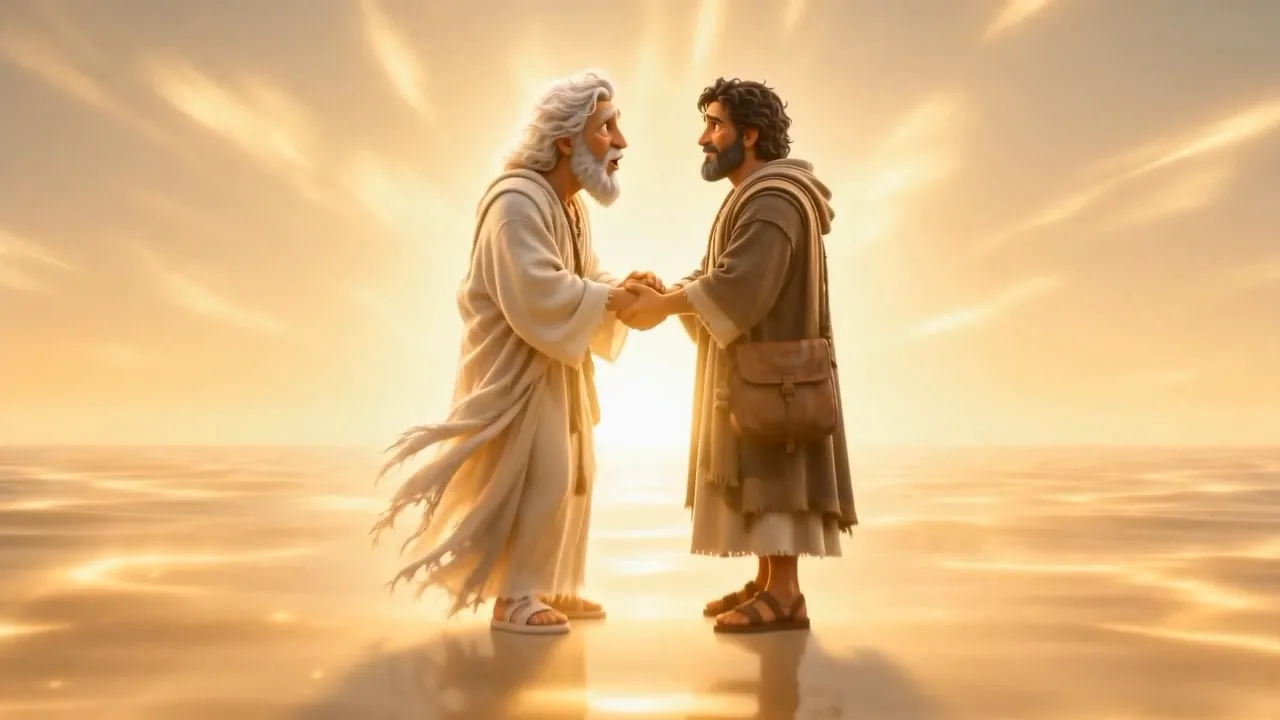
And Enoch is there, and the first thing he does is grin at his son. Then he gives him the answer: the child is not what you are afraid of. He is your own, and there is a flood coming that will take everything, and this boy is what is going to be left. Call him Noah. Then the two of them hold each other's hands on a floor of light and say goodbye properly, which not everybody gets to do. Genesis 6 : 8–9
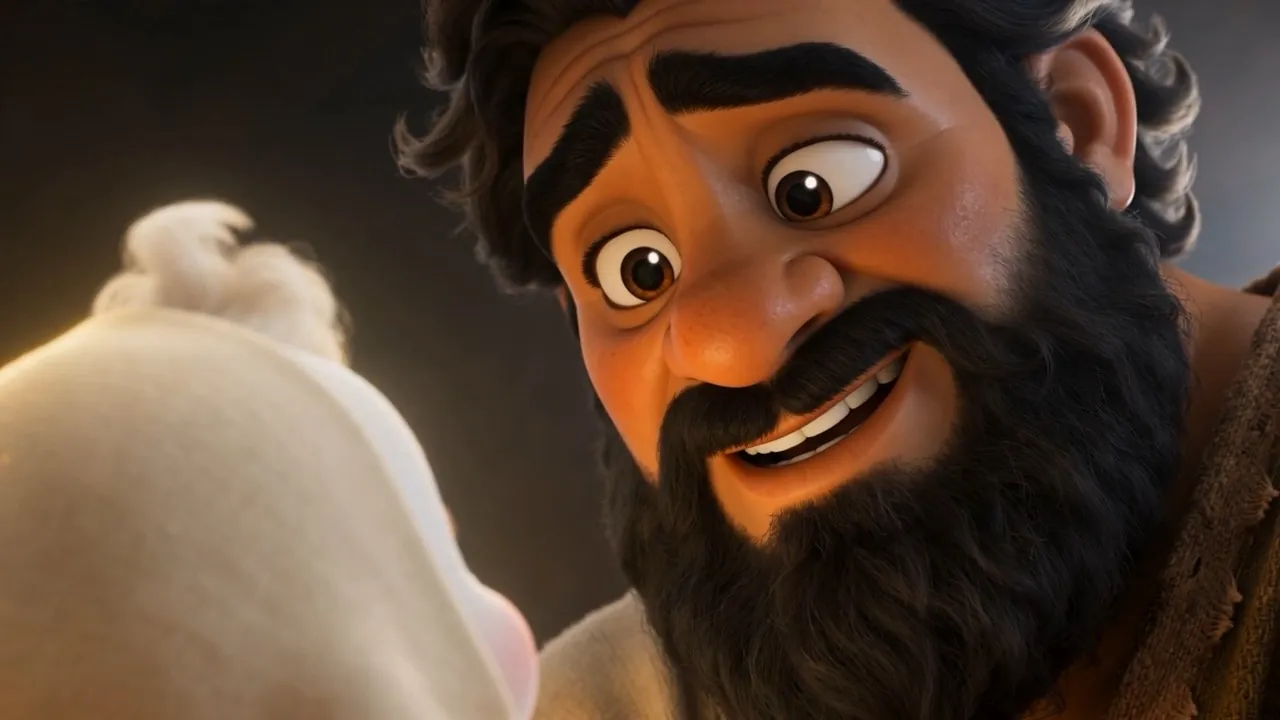
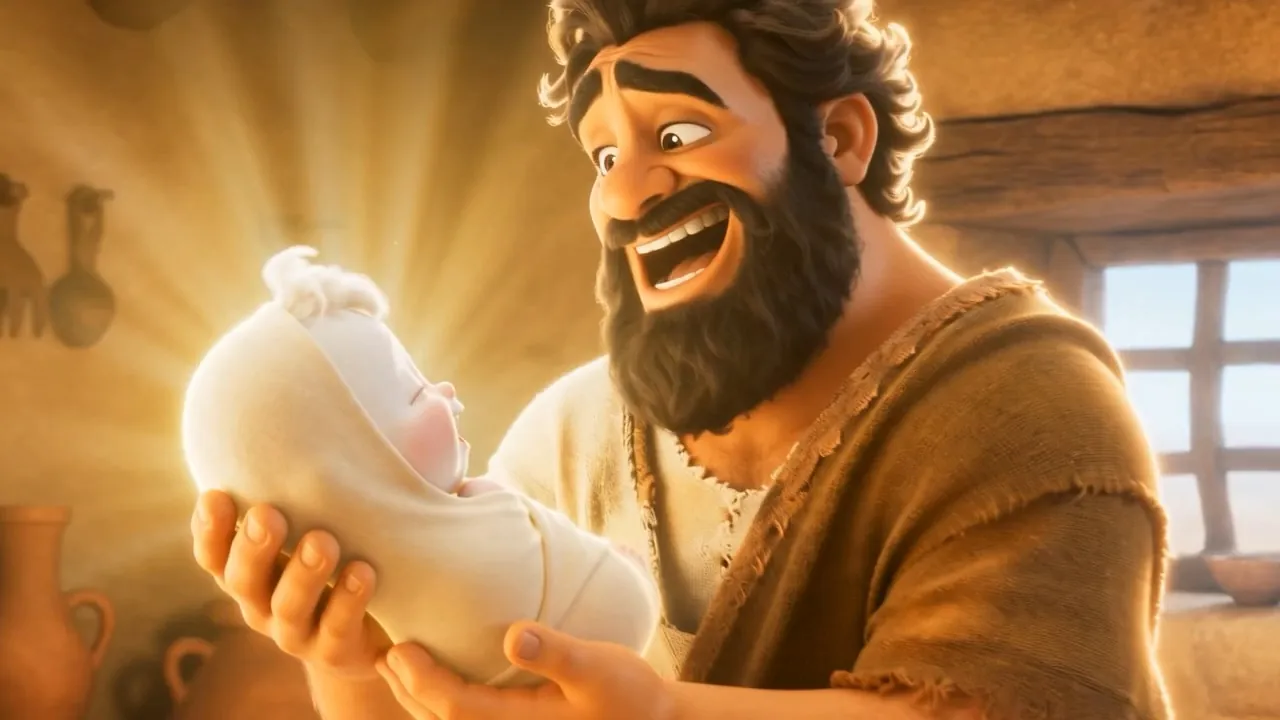
The answer comes back down the generations, and Lamech goes and picks his son up. And the shot of it is worth the whole sequence: a big bearded man holding a glowing baby at arm's length and laughing at him, in the same room he ran out of a week ago. Nothing about the child has changed. The only thing that changed is that somebody explained him. Genesis 5 : 29
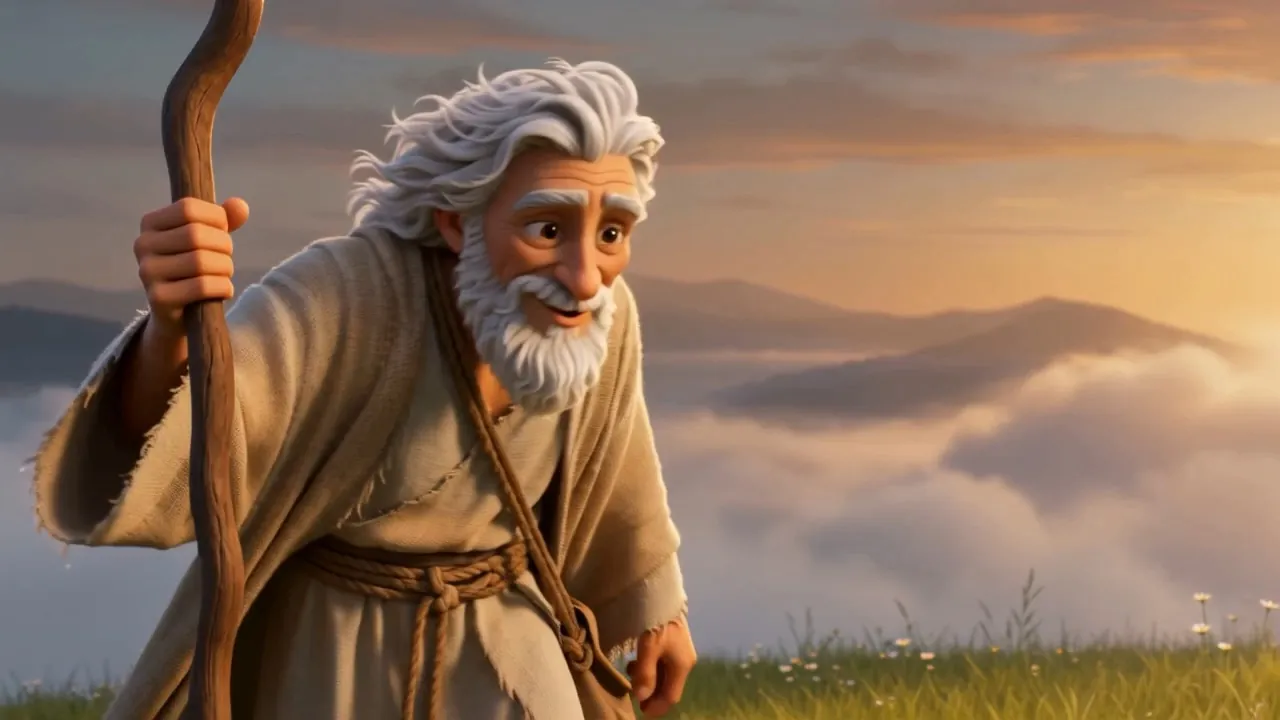
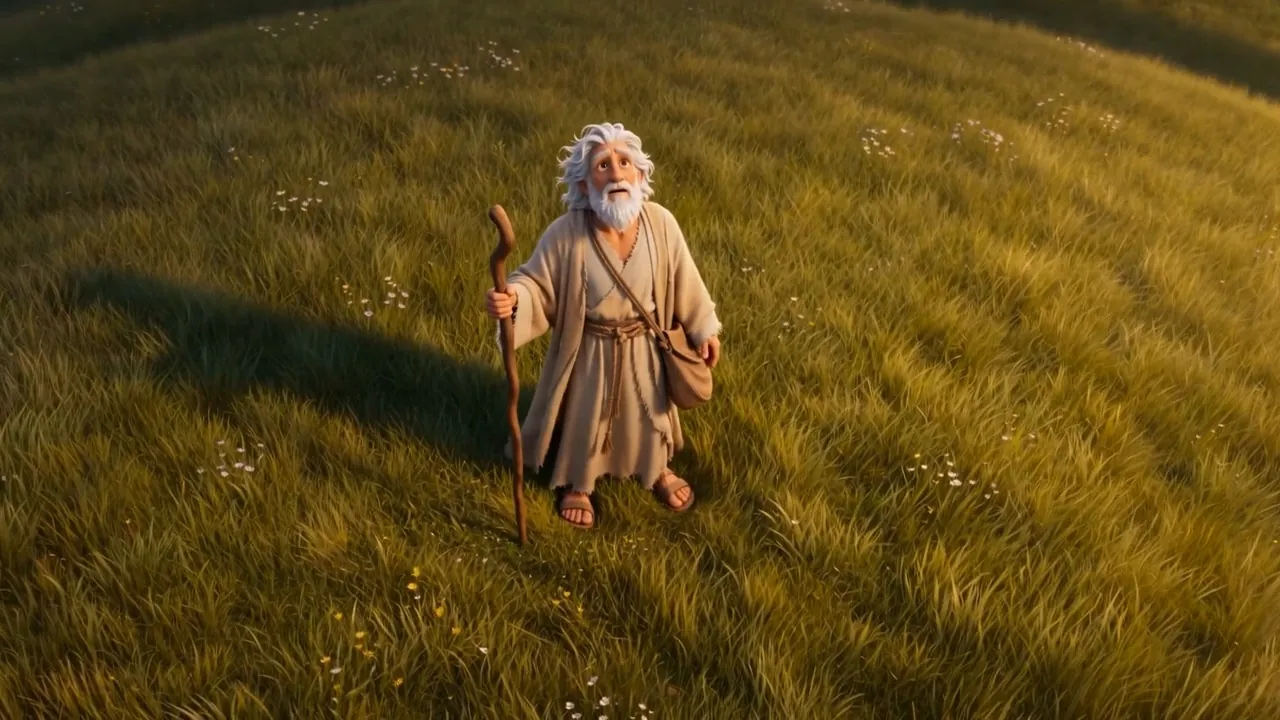
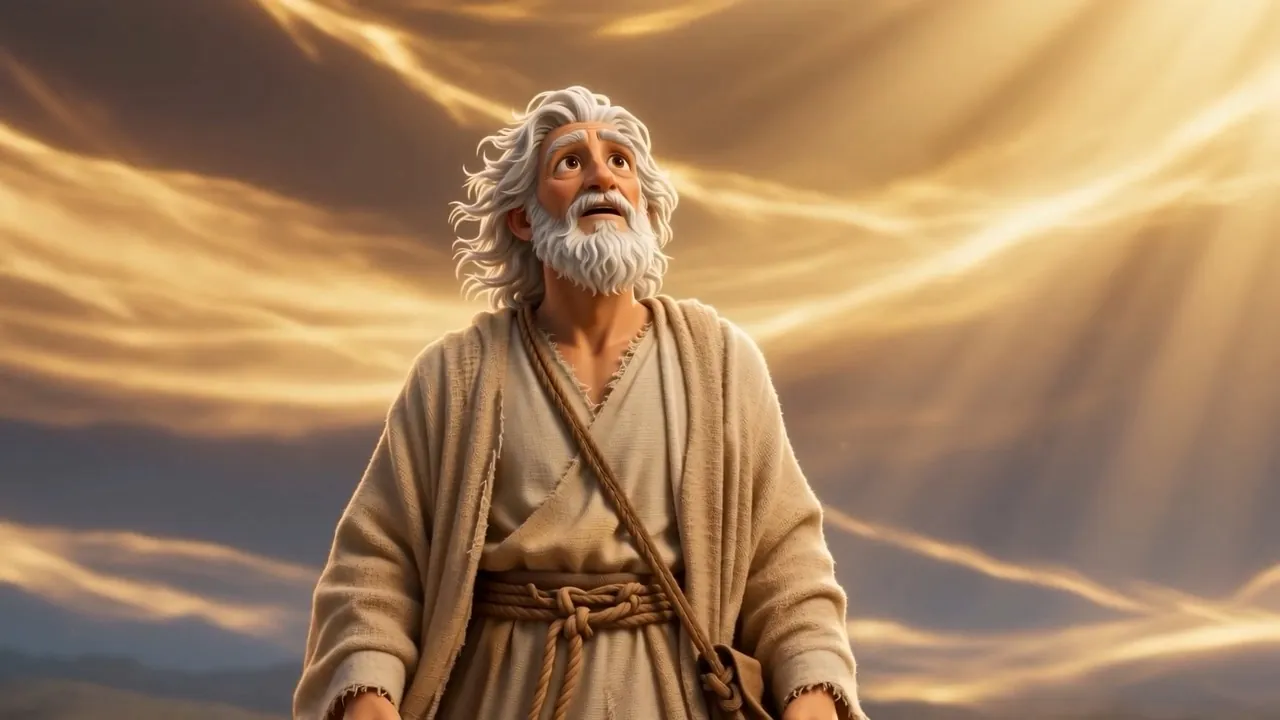
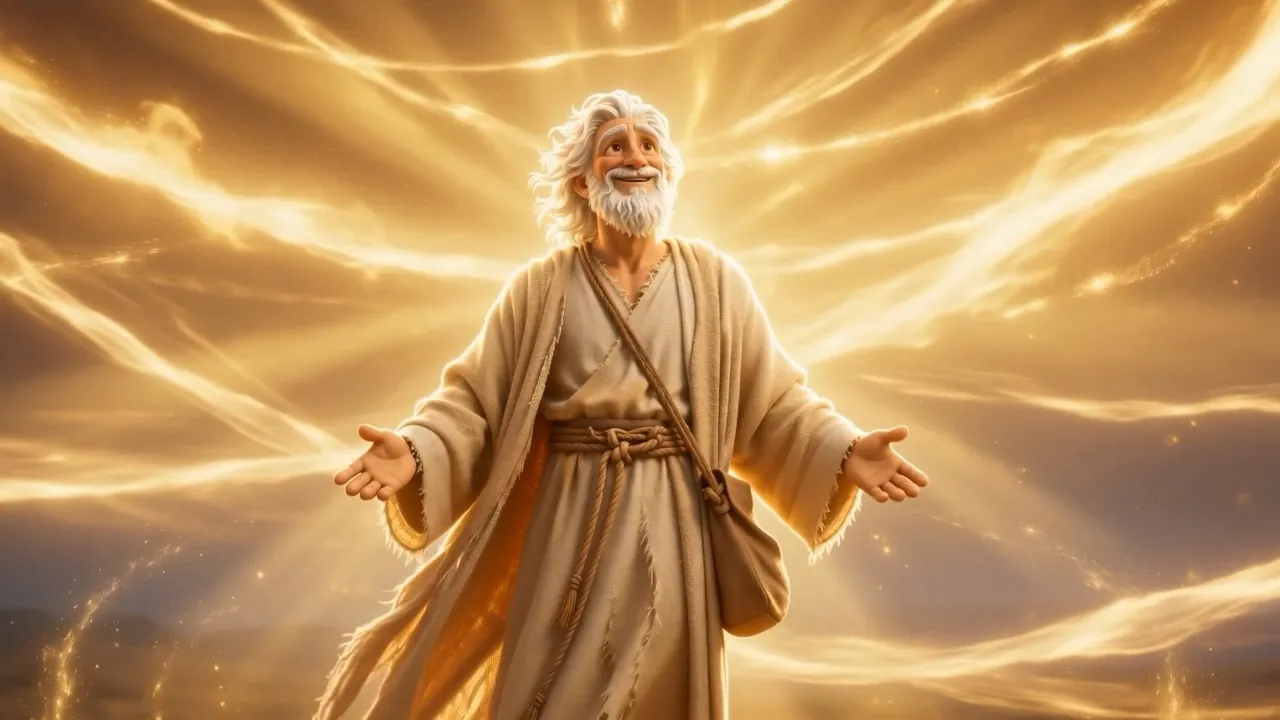
And then the morning it happens, which starts like every other morning. He is out walking on a green hill above the cloud with his staff, and he is talking — you can see him mid-sentence. Then the light overhead starts to move, and he stops, and looks up, and opens both arms. Whatever is coming, he clearly recognises it. He is not frightened for a single frame. Genesis 5 : 24
Enoch walked with God, and he was not, for God took him.
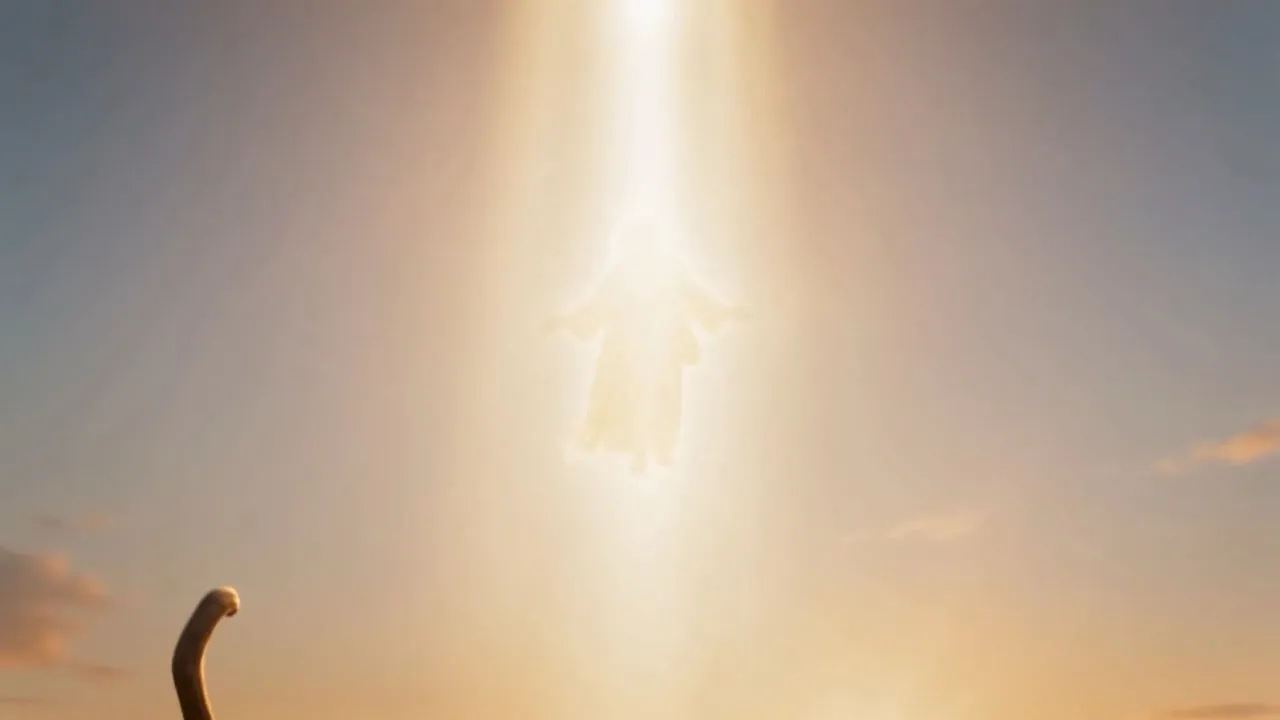
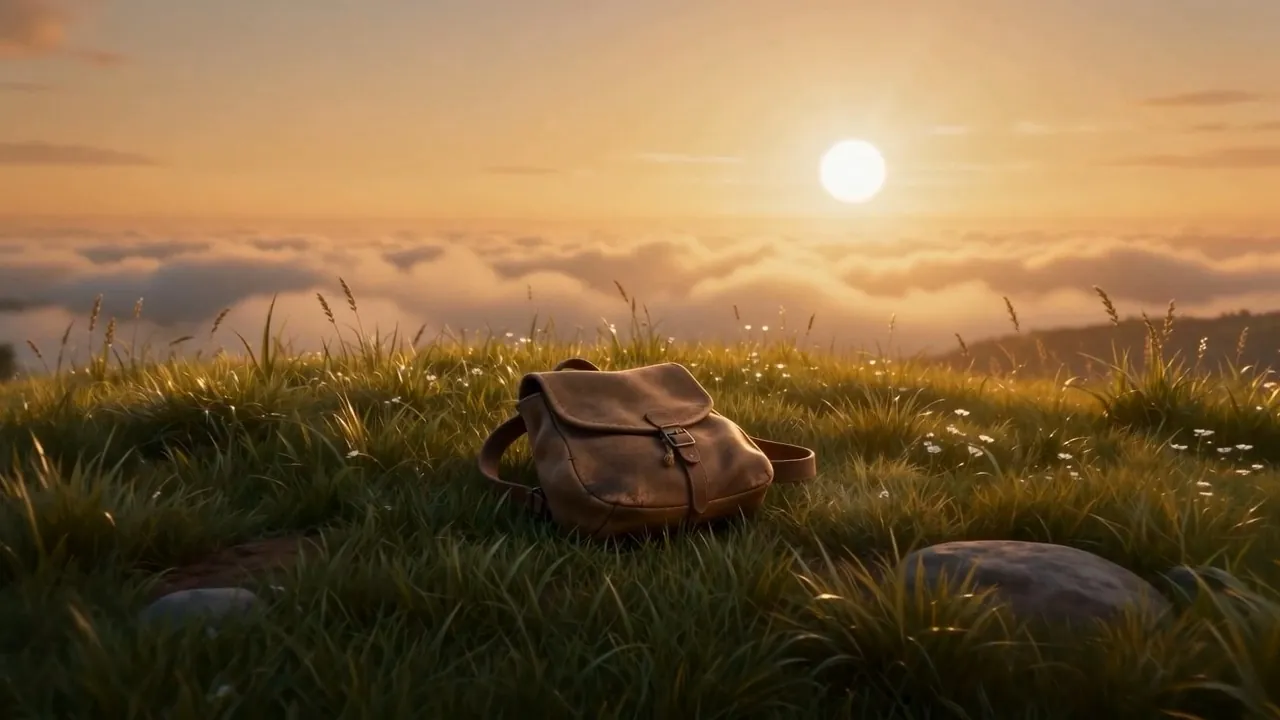
And here is how it is shown, which is the reason this scene works. He goes up in a column of light — and at the very bottom of the frame his staff is still standing upright in the grass where he was leaning on it a second ago. Then a single wide shot of an empty hilltop at sunrise, with his satchel lying in the grass. That is all. He did not die. He was walking, and then he wasn't there. Hebrews 11 : 5
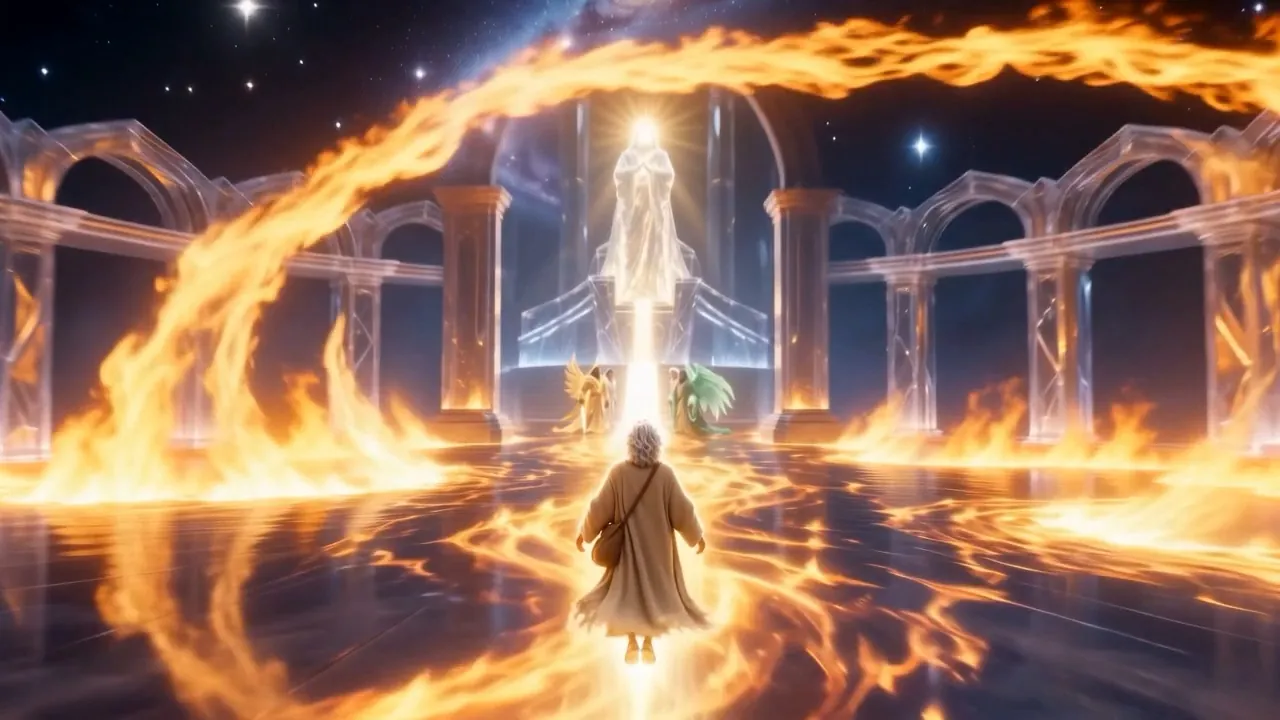
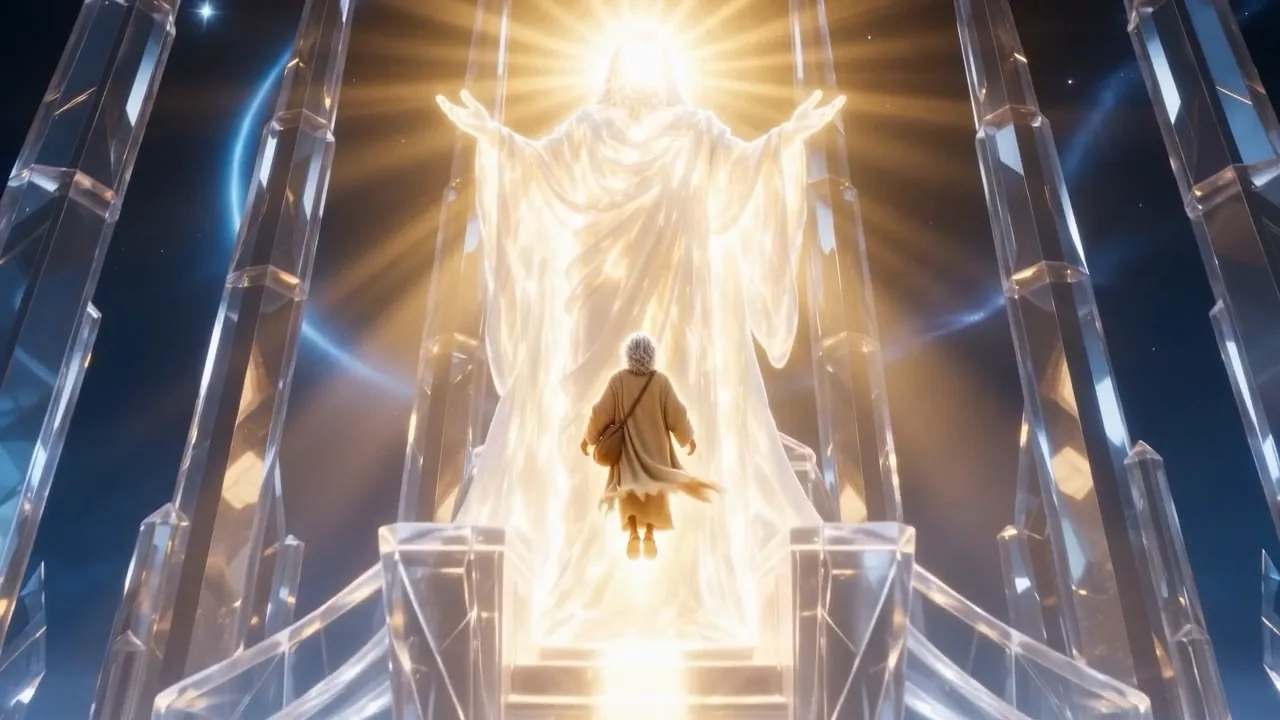
And we are allowed to see where he arrives, which is the same crystal hall with the rivers of fire he came to years ago and could not look at. He walks the length of it. And the difference is the whole point: the first time, he fell on his face and had to be lifted onto his feet. This time he walks straight up to it, and is met with both arms open. Hebrews 11 : 5–6
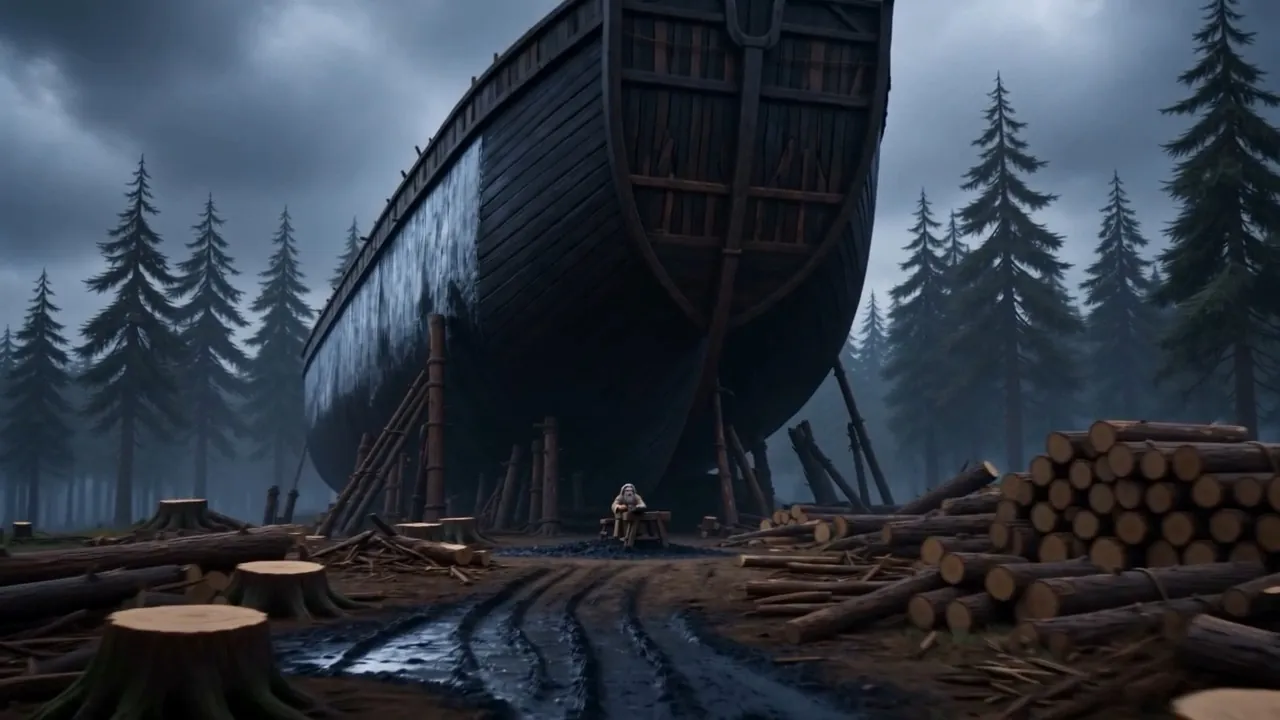
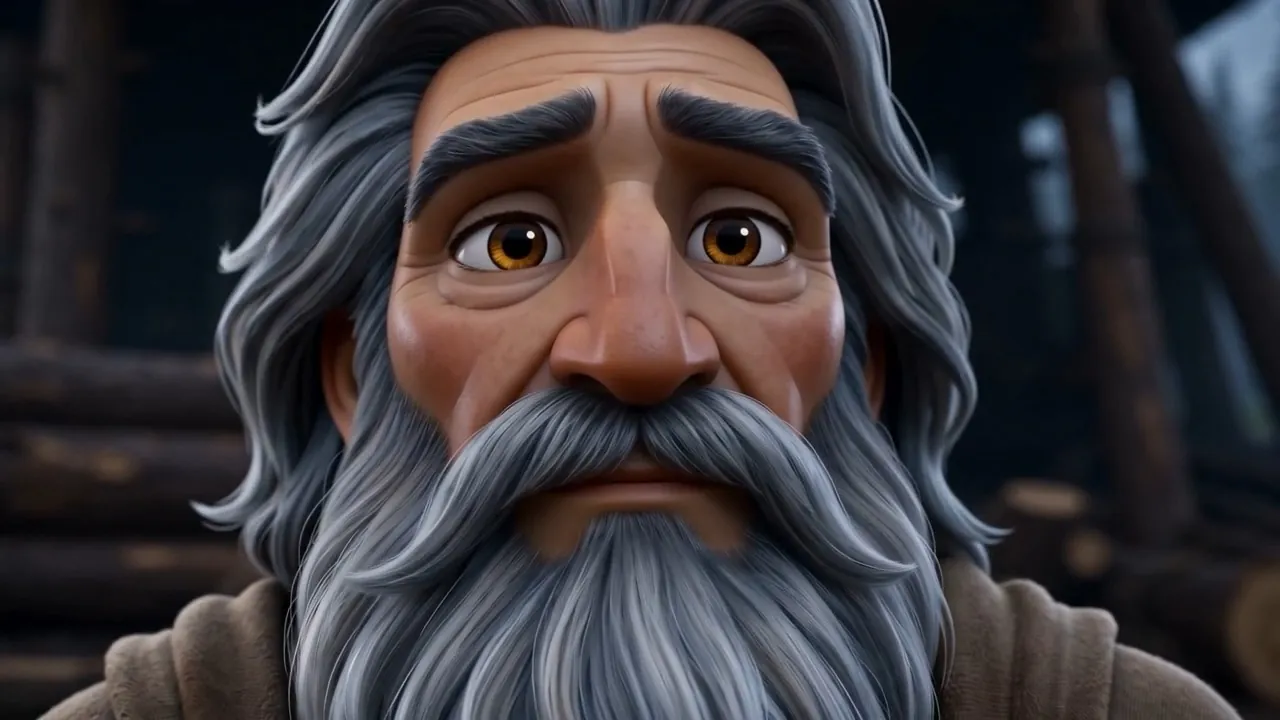
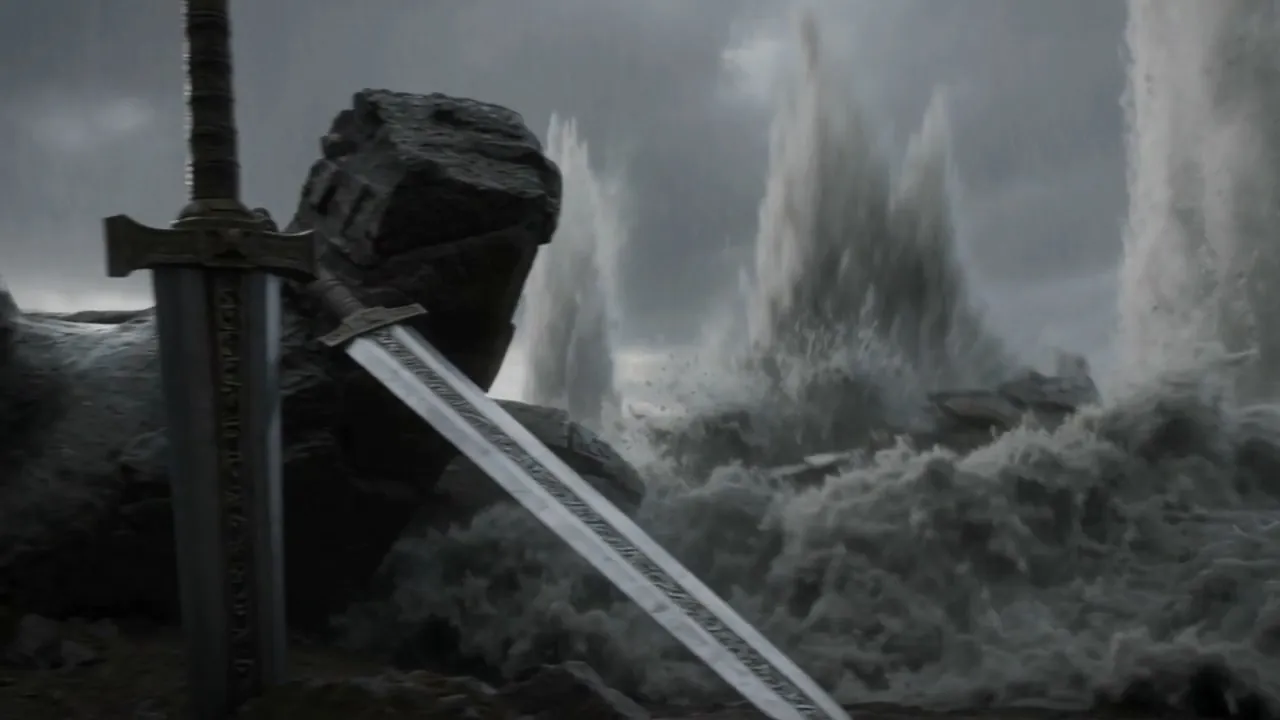
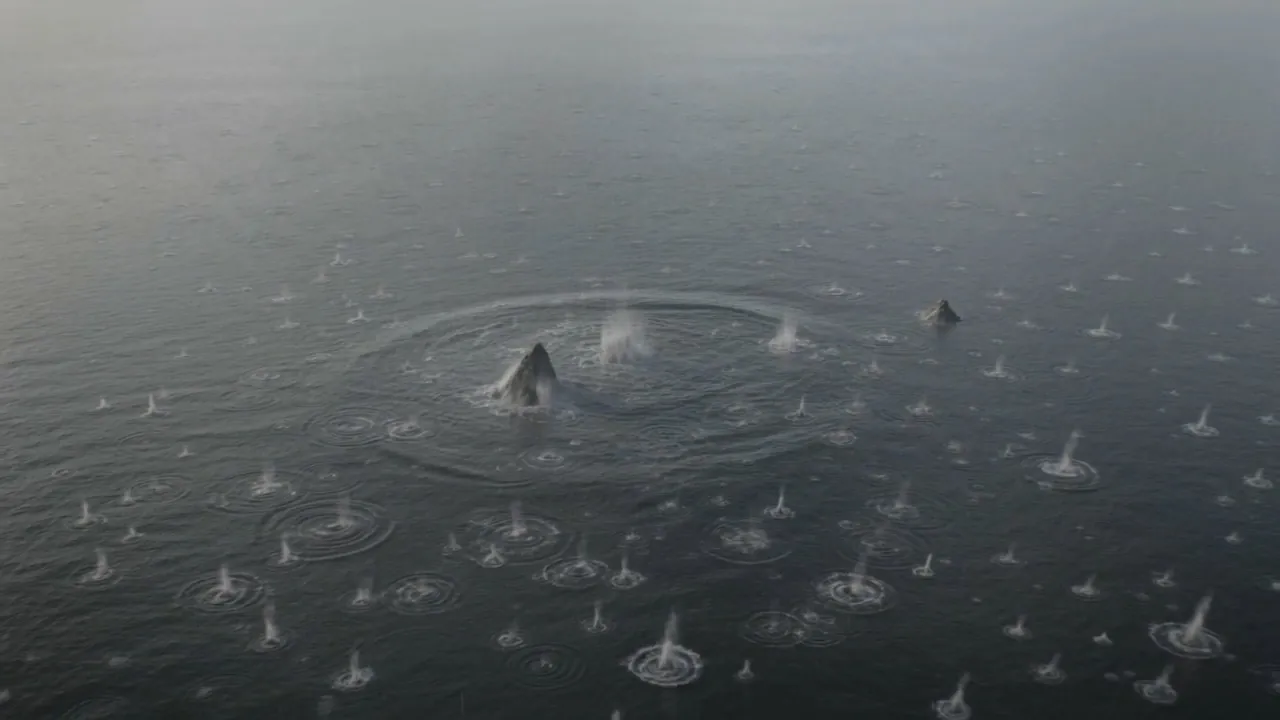
And the thing he was warned about arrives, long after he is gone. Noah — the luminous baby, now grey and tired — builds it in a clearing of felled pine. And the flood is shown in two images: a sword somebody abandoned in a rock, with grey water breaking over the ruins behind it, and then a flat sea with three peaks left in it and rain coming down. Nobody drowns on screen. Genesis 7 : 17–20
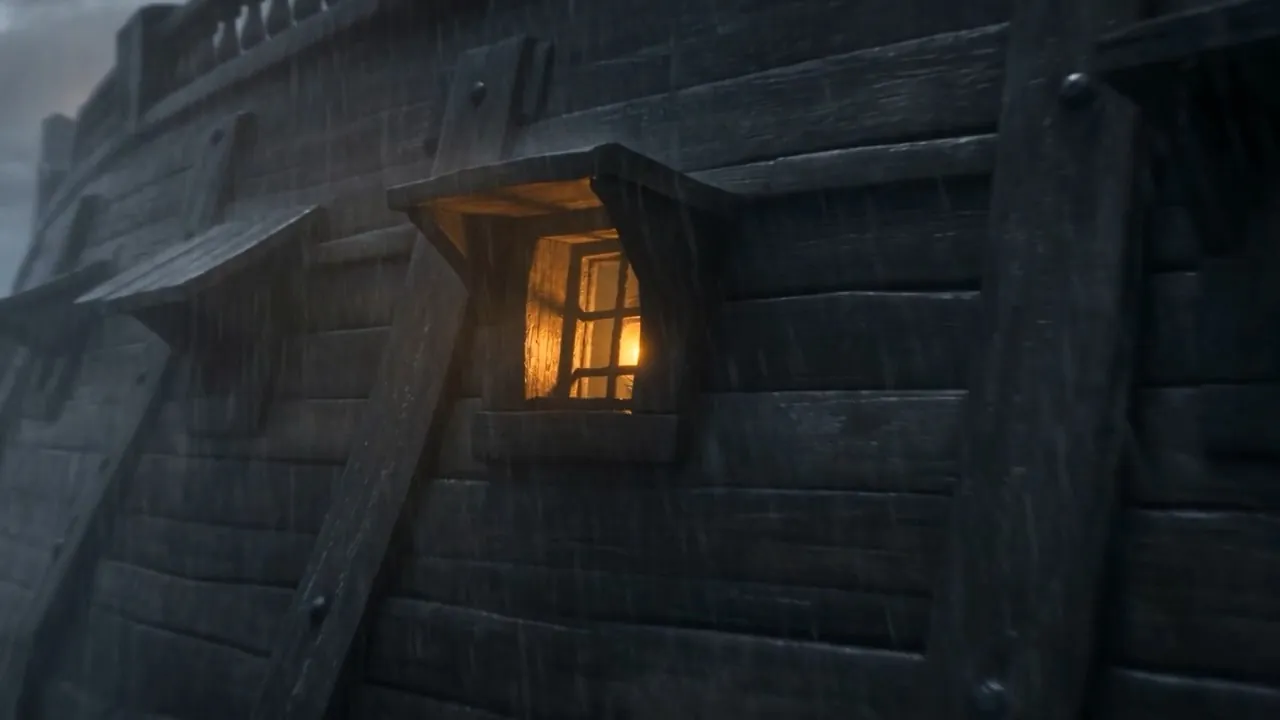
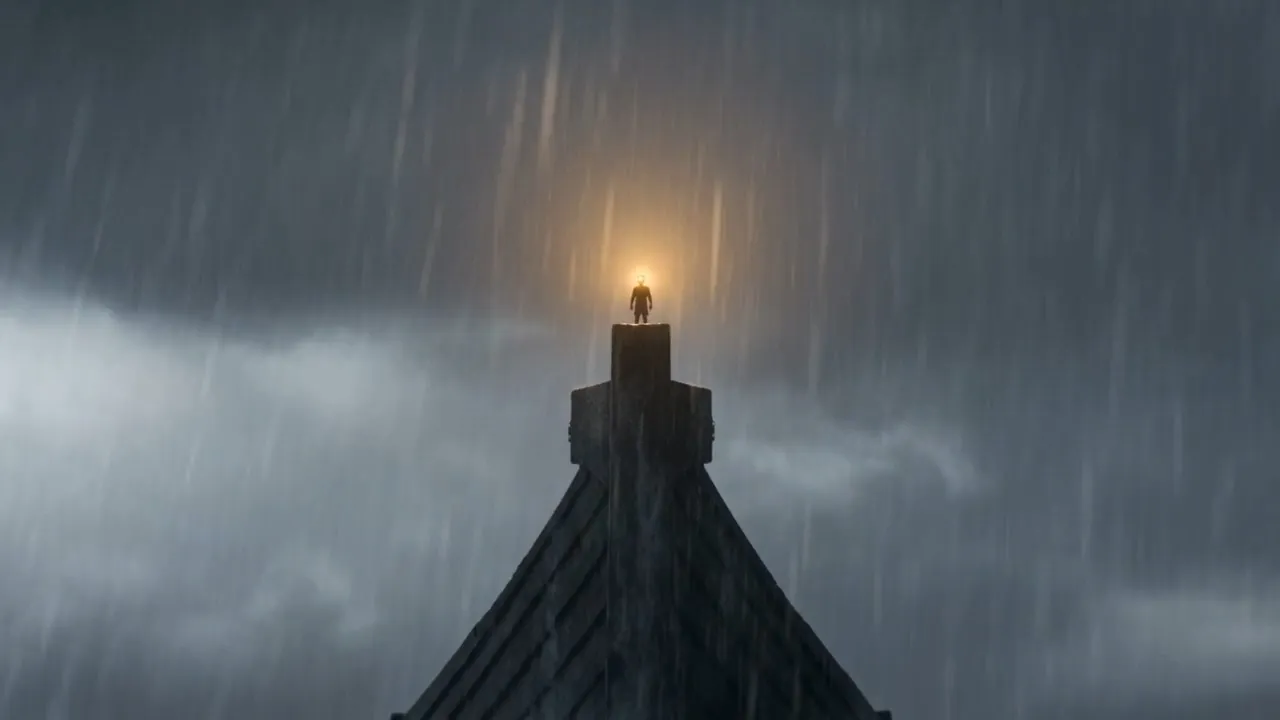
What is left is one lit window on a black hull in the rain. And then a shot that should be on the poster: the ridge of the ark's roof from a long way off, an ocean of grey in every direction, and a single figure standing on top of it holding a lamp — the only light anywhere on the surface of the earth, and someone is out in the weather holding it up. Genesis 7 : 23
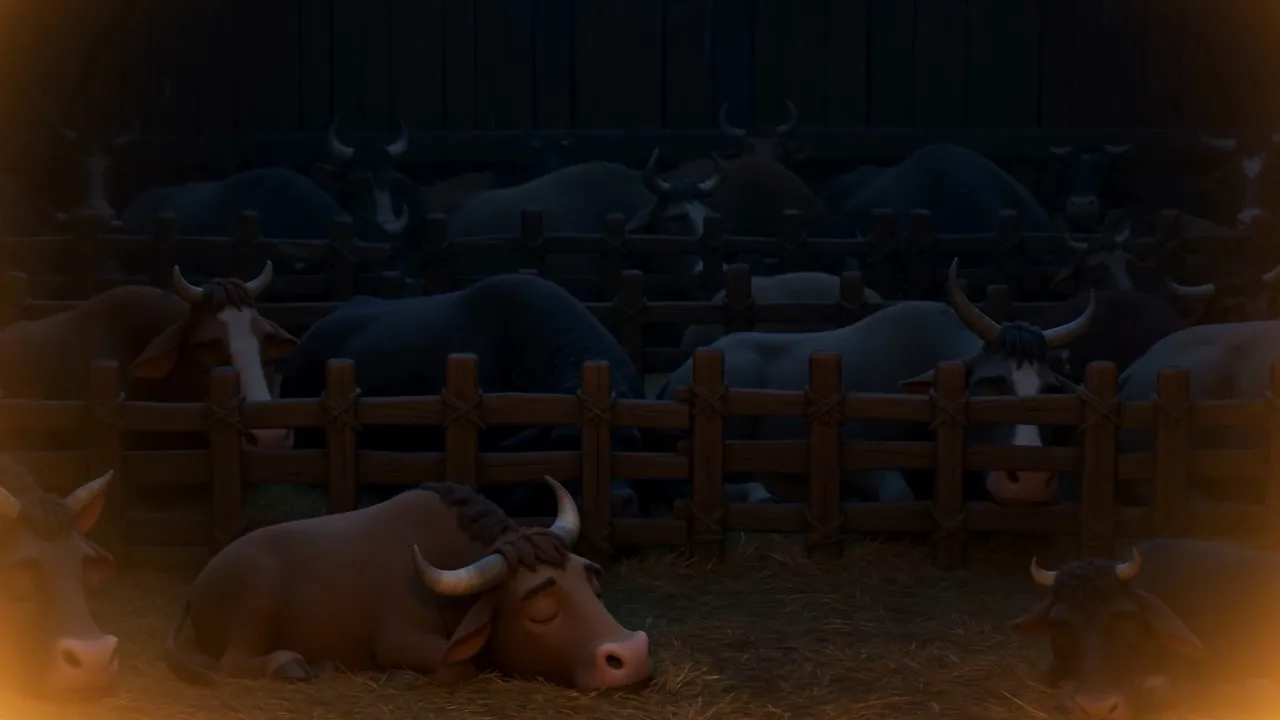
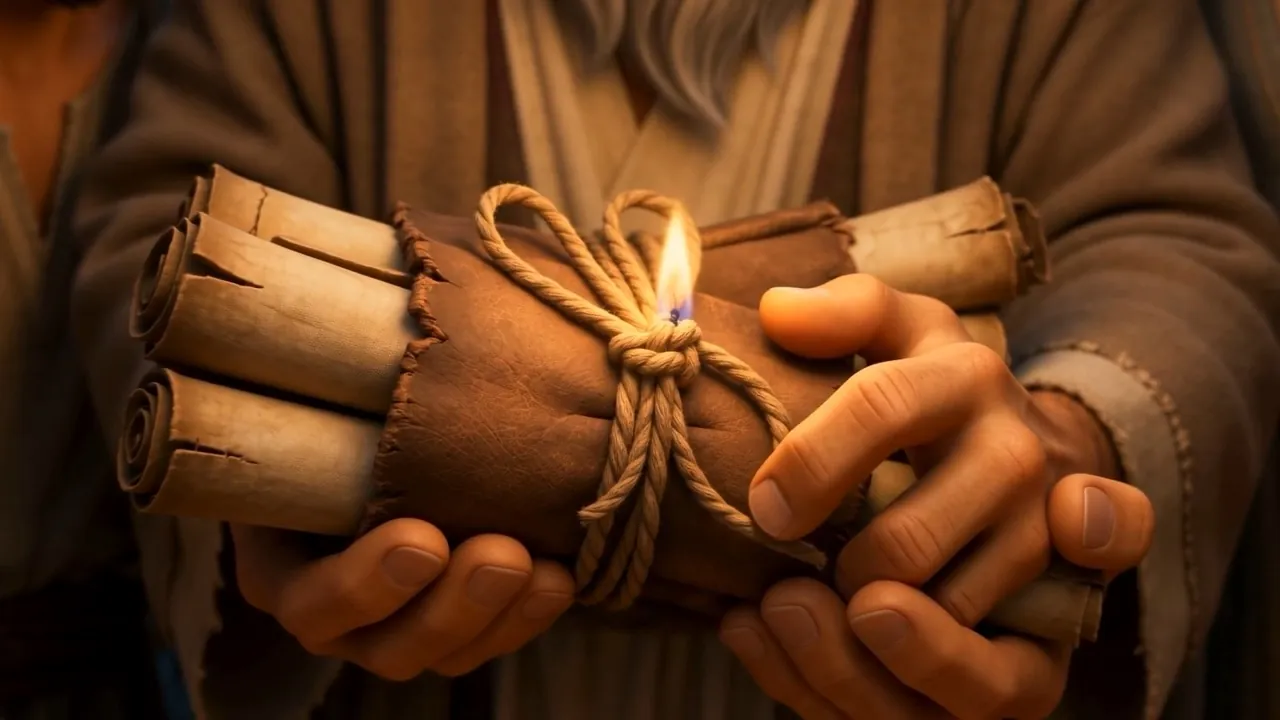
Below deck it is warm and close and full of sleeping animals, and there is one shot down there that explains why any of this was ever written down. A pair of hands holding a bundle of scrolls tied with a cord. That is Enoch's chest, four generations later, going onto the boat — and it is the book's own answer to the question of how a word from before the flood got to the other side of it. Jude 1 : 14
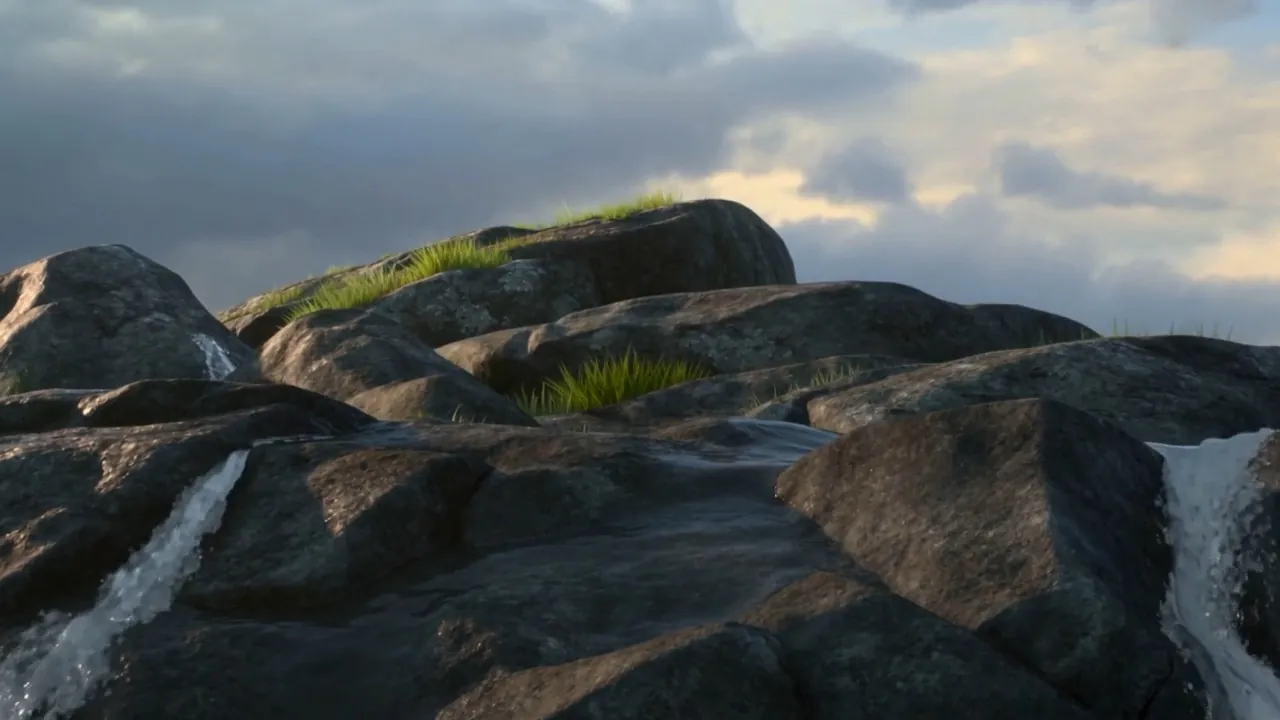

Then wet stone breaking the surface with water pouring off it, and grass already in the cracks. And over new valleys with snow still on the mountains behind them, the sign — put there specifically so that nobody has to be afraid of the sky again. The remnant the boy prayed for on that hillside, generations before he was old enough to marry, turns out to have been left. Genesis 9 : 12–16
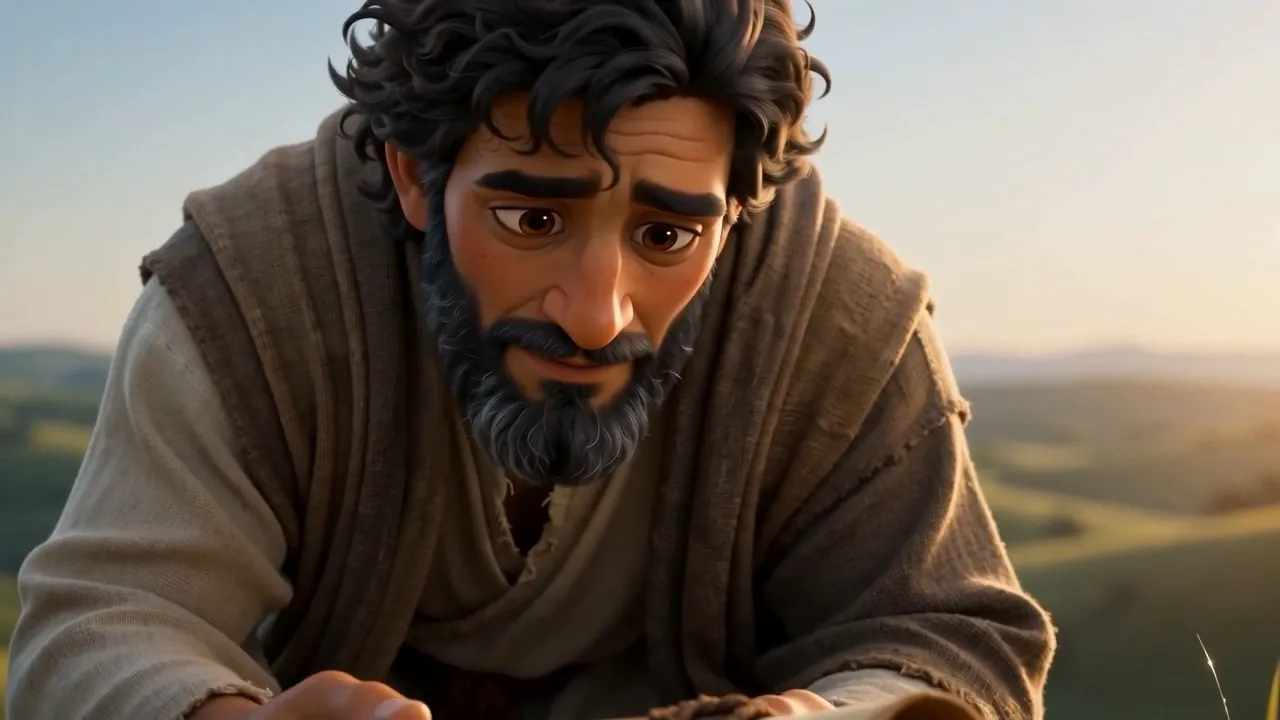
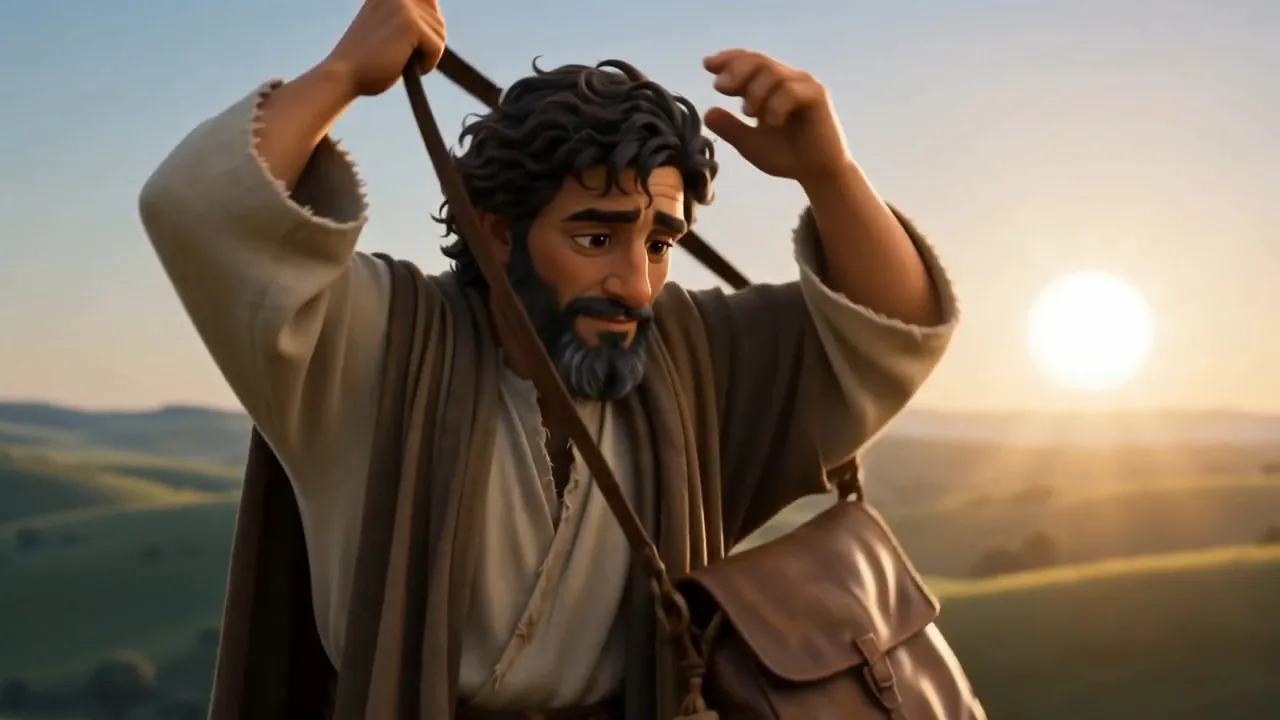
But the shot the whole book has been walking towards is a small one, and it comes back to that hilltop. Methuselah crouches down in the grass where his father was standing, picks up the satchel, and puts the strap over his own head. Then he stands there in the sunrise wearing it. The most famous disappearance in scripture ends with somebody quietly taking on the luggage. Genesis 5 : 24
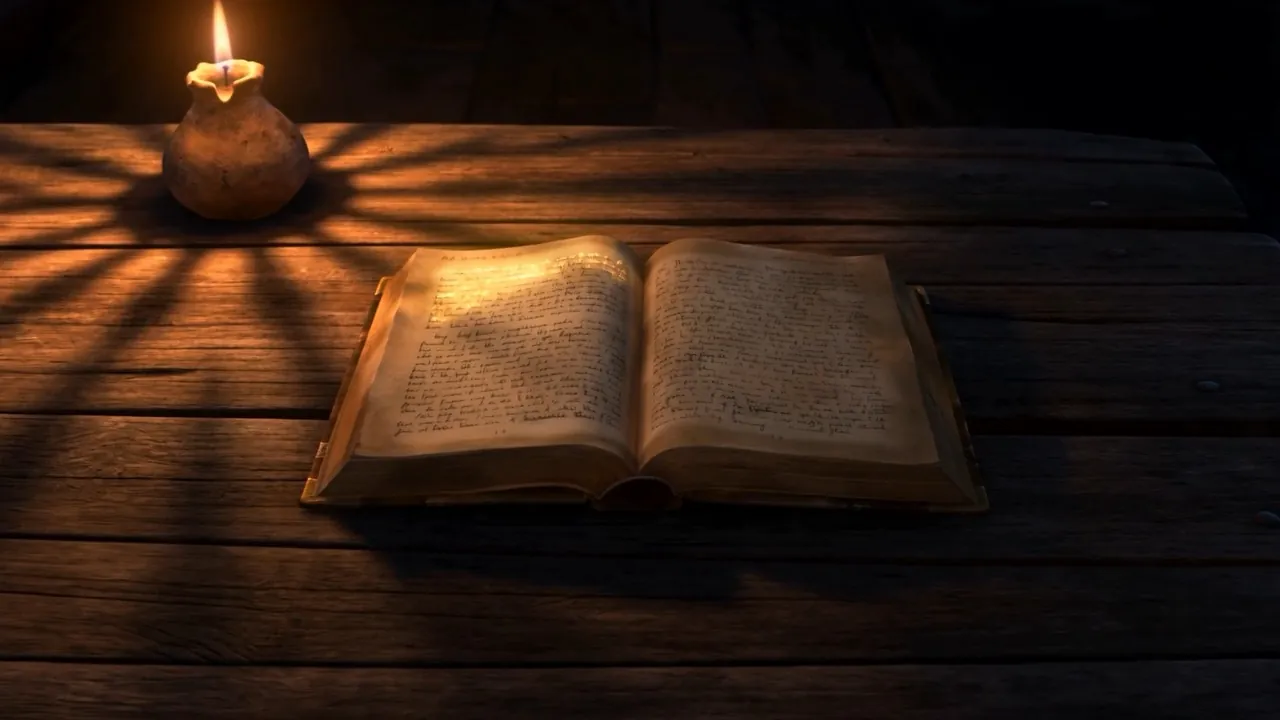
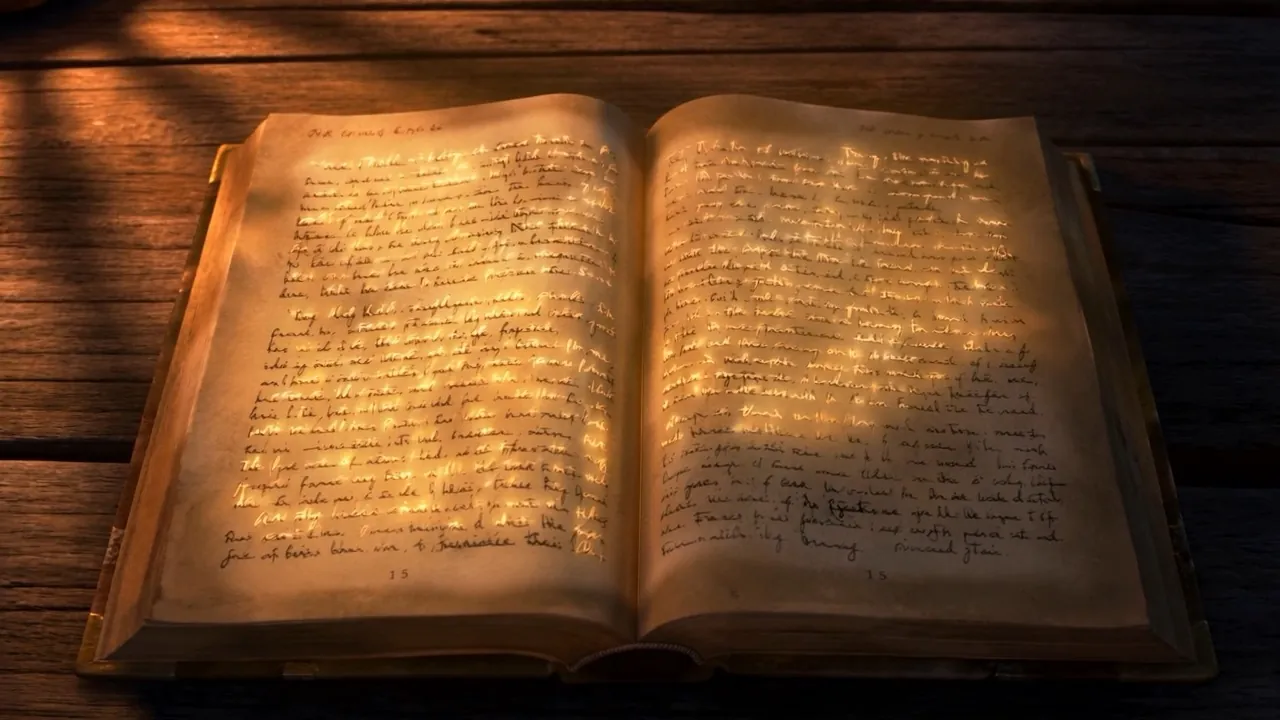
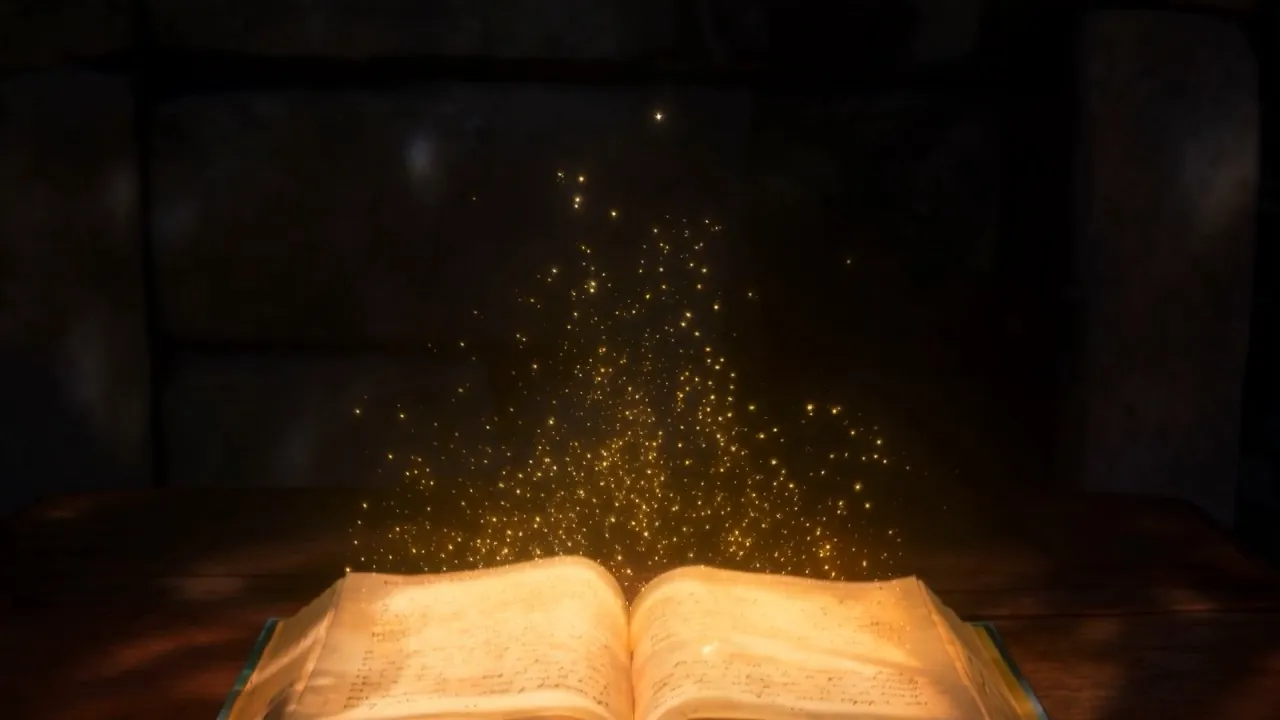

And the last thing is a table somewhere, much later, with an oil lamp on it and the book open — handwriting from before the flood, still legible. He said it was not for his own generation but for one far off. Then the words lift off the page in gold and go up, and out, until they are a spiral of stars. Which is roughly where he got them. Jude 1 : 14–15
After the story
No chariot. Just a staff, still standing in the grass.
Genesis gives Enoch's disappearance five words and no details, which leaves everyone who illustrates it reaching for horses and fire. This does the opposite. He is out for a walk, mid-sentence, on a green hill above the cloud. The light changes and he opens his arms — and as he goes up, the shot holds long enough for you to notice that his staff is still standing upright in the grass where he was leaning on it. Then one wide frame of an empty hilltop at sunrise with his bag lying in it, and that is the whole event. And the very last thing the book does with it is not a vision at all: his son comes back up the hill, crouches down, and puts his father's bag over his own shoulder. Somebody has to carry it now.
Voices before the flood · hover or tap to turn
Enoch
"Enoch walked with God, and he was not found, for God took him."
— Genesis 5:24
Lamech
"This one will comfort us in our work and in the toil of our hands."
— Genesis 5:29
The Rainbow
"I set my rainbow in the cloud, and it will be a sign of a covenant between me and the earth."
— Genesis 9:13The Book of Enoch
How closely were you watching?
1. What is unusual about the newborn Noah?
1 Enoch 106. His father assumes the worst and runs out of the house.
2. How is the question about the child answered?
Up the family one generation at a time — father to father to father.
3. How does Enoch leave?
Genesis 5:24. That's Elijah you're thinking of, and it happens centuries later.
4. How do Enoch's writings survive the flood?
One shot below deck: two hands and a bundle of scrolls tied with cord.
What this story teaches
Fear of a child, cured by an explanation.
Nothing about Noah changes between his father running out of the house and his father laughing while holding him. The only thing that changed is that somebody older explained him.
"When he opened his eyes, he lighted up the whole house like the sun." 1 Enoch 106:2He did not die.
Genesis says he was not, for God took him — and nothing here dresses that up. A staff left standing, a bag in the grass, and a man who was simply no longer there.
"By faith, Enoch was taken away, so that he wouldn't see death." Hebrews 11:5Somebody has to carry it.
The book's last gesture is Methuselah putting his father's satchel over his own shoulder. The visions were only ever any use because the next person picked them up.
"About these also Enoch, the seventh from Adam, prophesied." Jude 1:14Read the scripture itself. Genesis 5 and 9 · World English Bible
Genesis 5
1This is the book of the generations of Adam. In the day that God created man, he made him in God’s likeness.
2He created them male and female, and blessed them. On the day they were created, he named them “Adam”.
3Adam lived one hundred thirty years, and became the father of a son in his own likeness, after his image, and named him Seth.
4The days of Adam after he became the father of Seth were eight hundred years, and he became the father of other sons and daughters.
5All the days that Adam lived were nine hundred thirty years, then he died.
6Seth lived one hundred five years, then became the father of Enosh.
7Seth lived after he became the father of Enosh eight hundred seven years, and became the father of other sons and daughters.
8All of the days of Seth were nine hundred twelve years, then he died.
9Enosh lived ninety years, and became the father of Kenan.
10Enosh lived after he became the father of Kenan, eight hundred fifteen years, and became the father of other sons and daughters.
11All of the days of Enosh were nine hundred five years, then he died.
12Kenan lived seventy years, then became the father of Mahalalel.
13Kenan lived after he became the father of Mahalalel eight hundred forty years, and became the father of other sons and daughters
14and all of the days of Kenan were nine hundred ten years, then he died.
15Mahalalel lived sixty-five years, then became the father of Jared.
16Mahalalel lived after he became the father of Jared eight hundred thirty years, and became the father of other sons and daughters.
17All of the days of Mahalalel were eight hundred ninety-five years, then he died.
18Jared lived one hundred sixty-two years, then became the father of Enoch.
19Jared lived after he became the father of Enoch eight hundred years, and became the father of other sons and daughters.
20All of the days of Jared were nine hundred sixty-two years, then he died.
21Enoch lived sixty-five years, then became the father of Methuselah.
22After Methuselah’s birth, Enoch walked with God for three hundred years, and became the father of more sons and daughters.
23All the days of Enoch were three hundred sixty-five years.
24Enoch walked with God, and he was not found, for God took him.
25Methuselah lived one hundred eighty-seven years, then became the father of Lamech.
26Methuselah lived after he became the father of Lamech seven hundred eighty-two years, and became the father of other sons and daughters.
27All the days of Methuselah were nine hundred sixty-nine years, then he died.
28Lamech lived one hundred eighty-two years, then became the father of a son.
29He named him Noah, saying, “This one will comfort us in our work and in the toil of our hands, caused by the ground which Yahweh has cursed.”
30Lamech lived after he became the father of Noah five hundred ninety-five years, and became the father of other sons and daughters.
31All the days of Lamech were seven hundred seventy-seven years, then he died.
32Noah was five hundred years old, then Noah became the father of Shem, Ham, and Japheth.
Genesis 9
1God blessed Noah and his sons, and said to them, “Be fruitful, multiply, and replenish the earth.
2The fear of you and the dread of you will be on every animal of the earth, and on every bird of the sky. Everything that moves along the ground, and all the fish of the sea, are delivered into your hand.
3Every moving thing that lives will be food for you. As I gave you the green herb, I have given everything to you.
4But flesh with its life, that is, its blood, you shall not eat.
5I will surely require your life’s blood. At the hand of every animal I will require it. At the hand of man, even at the hand of every man’s brother, I will require the life of man.
6Whoever sheds man’s blood, his blood will be shed by man, for God made man in his own image.
7Be fruitful and multiply. Increase abundantly in the earth, and multiply in it.”
8God spoke to Noah and to his sons with him, saying,
9“As for me, behold, I establish my covenant with you, and with your offspring after you,
10and with every living creature that is with you: the birds, the livestock, and every animal of the earth with you, of all that go out of the ship, even every animal of the earth.
11I will establish my covenant with you: All flesh will not be cut off any more by the waters of the flood. There will never again be a flood to destroy the earth.”
12God said, “This is the token of the covenant which I make between me and you and every living creature that is with you, for perpetual generations:
13I set my rainbow in the cloud, and it will be a sign of a covenant between me and the earth.
14When I bring a cloud over the earth, that the rainbow will be seen in the cloud,
15I will remember my covenant, which is between me and you and every living creature of all flesh, and the waters will no more become a flood to destroy all flesh.
16The rainbow will be in the cloud. I will look at it, that I may remember the everlasting covenant between God and every living creature of all flesh that is on the earth.”
17God said to Noah, “This is the token of the covenant which I have established between me and all flesh that is on the earth.”
18The sons of Noah who went out from the ship were Shem, Ham, and Japheth. Ham is the father of Canaan.
19These three were the sons of Noah, and from these, the whole earth was populated.
20Noah began to be a farmer, and planted a vineyard.
21He drank of the wine and got drunk. He was uncovered within his tent.
22Ham, the father of Canaan, saw the nakedness of his father, and told his two brothers outside.
23Shem and Japheth took a garment, and laid it on both their shoulders, went in backwards, and covered the nakedness of their father. Their faces were backwards, and they didn’t see their father’s nakedness.
24Noah awoke from his wine, and knew what his youngest son had done to him.
25He said, “Canaan is cursed. He will be a servant of servants to his brothers.”
26He said, “Blessed be Yahweh, the God of Shem. Let Canaan be his servant.
27May God enlarge Japheth. Let him dwell in the tents of Shem. Let Canaan be his servant.”
28Noah lived three hundred fifty years after the flood.
29All the days of Noah were nine hundred fifty years, and then he died.
World English Bible (WEB) — a public-domain modern English translation. Read it freely, share it freely.
The Book of Enoch — animated film 80% in production
These scenes are real frames from the film.
Help us finish it — and every story like it — free for the world.