The Book of Daniel · The Training
Ten timesbetter.
Four boys are marched from a burning Jerusalem to the greatest city on earth — and win everything by quietly refusing the king's table. Every scene below is a real frame from our animated film.
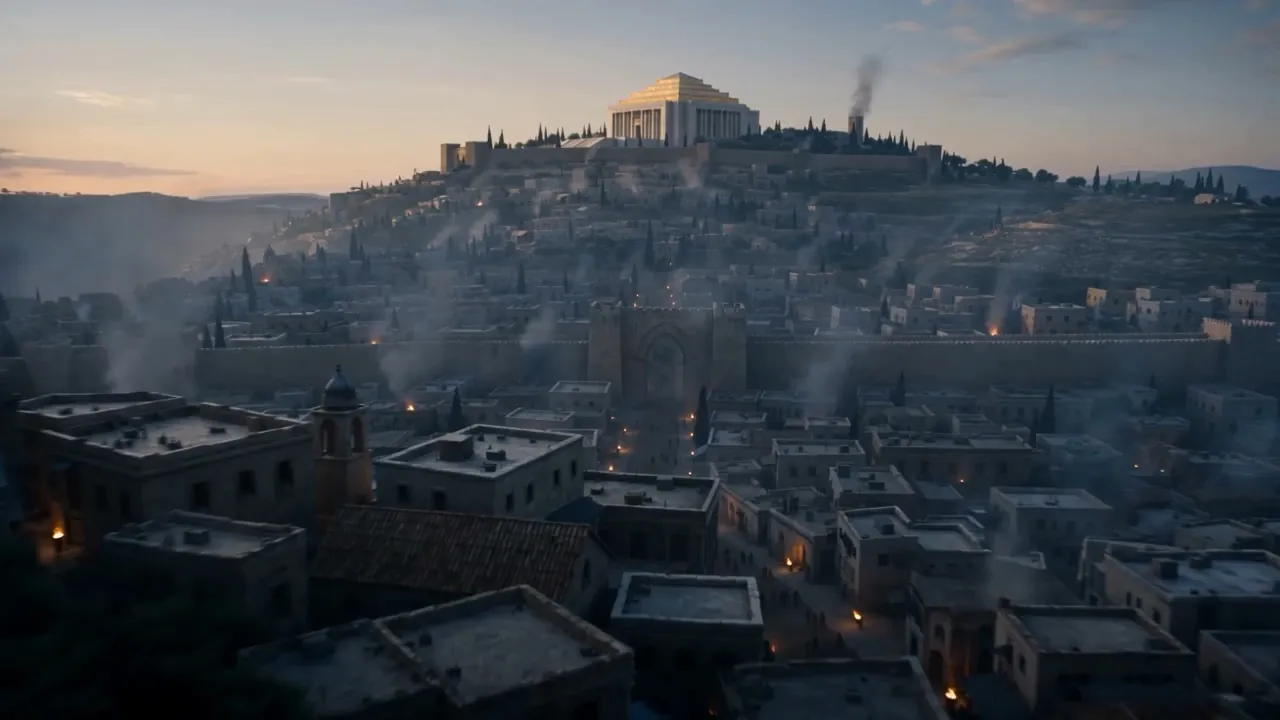
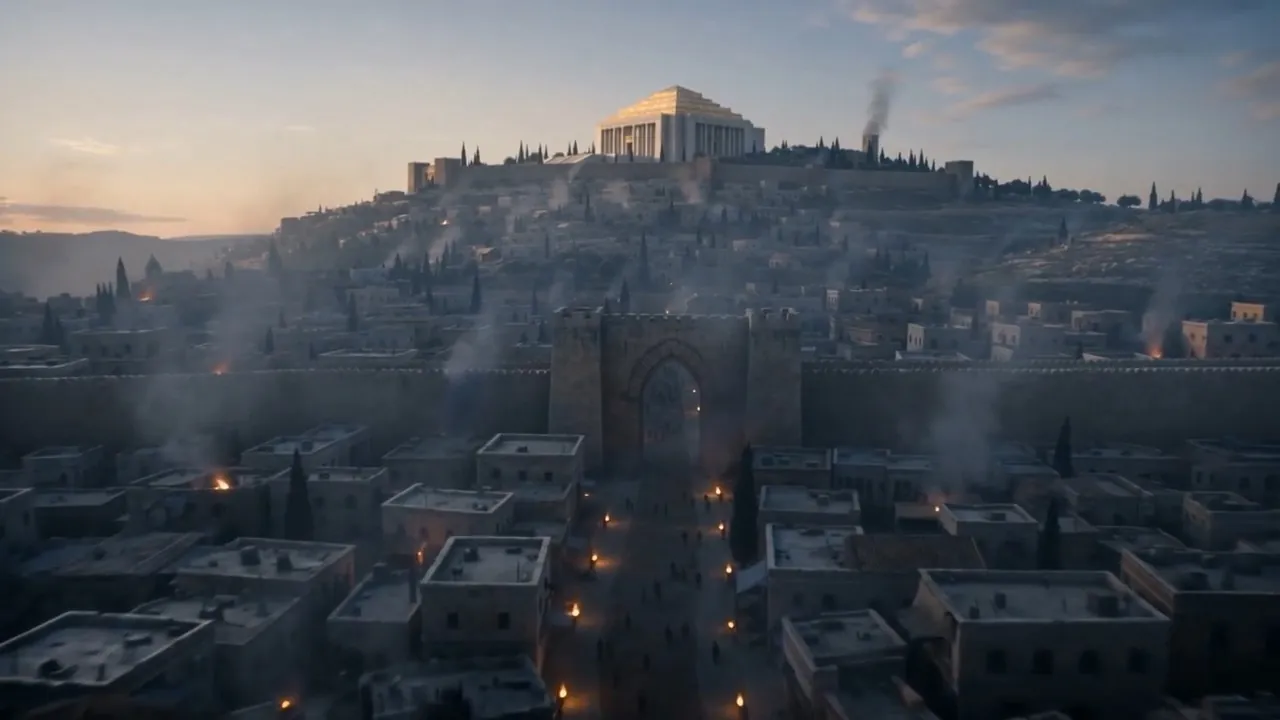
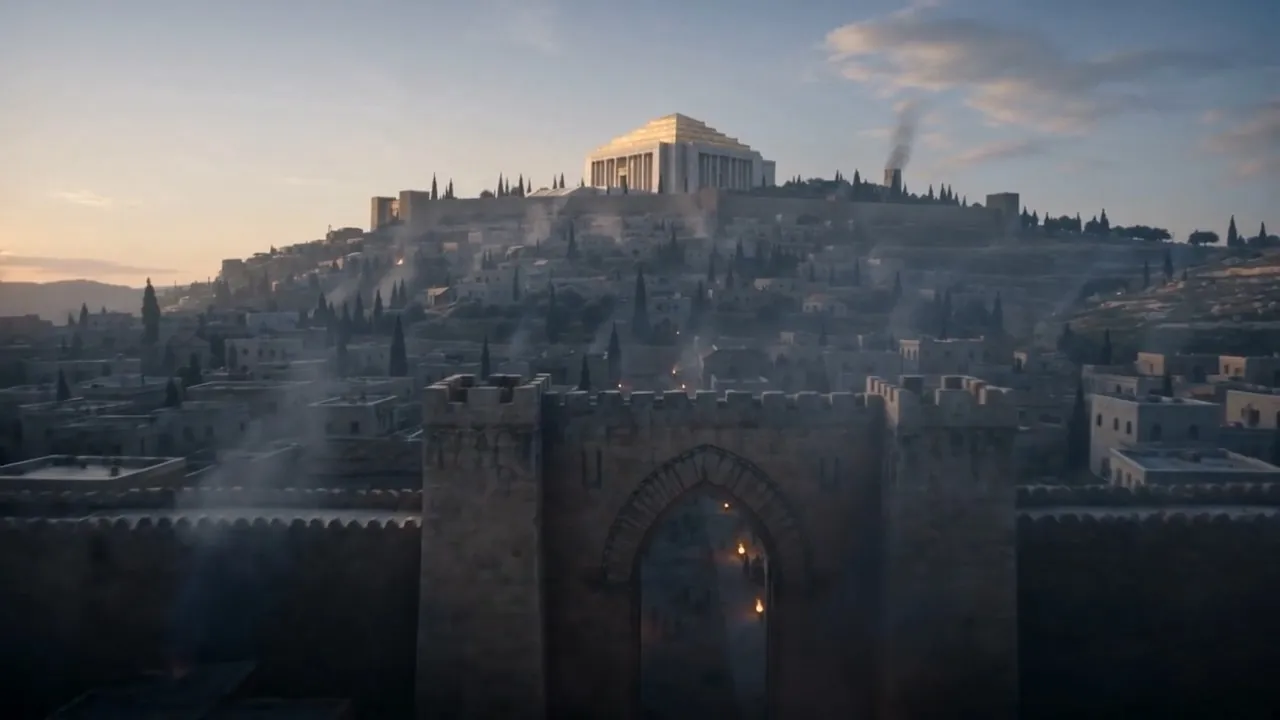
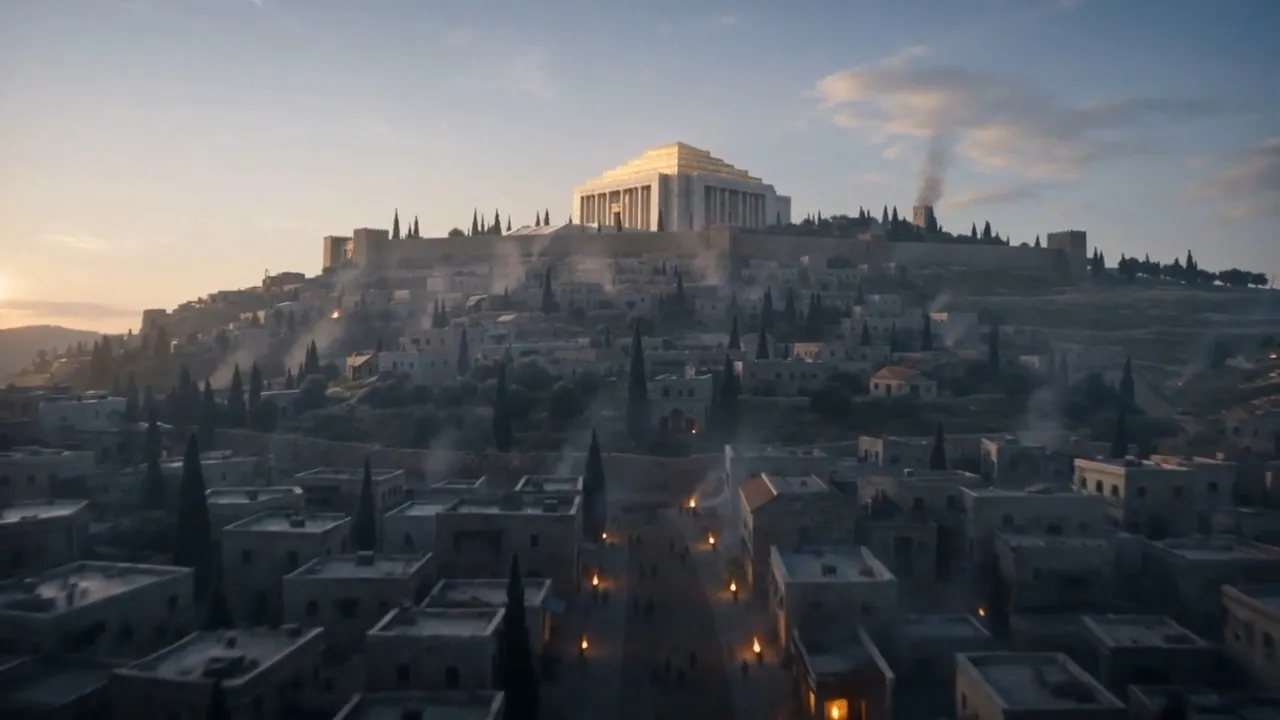
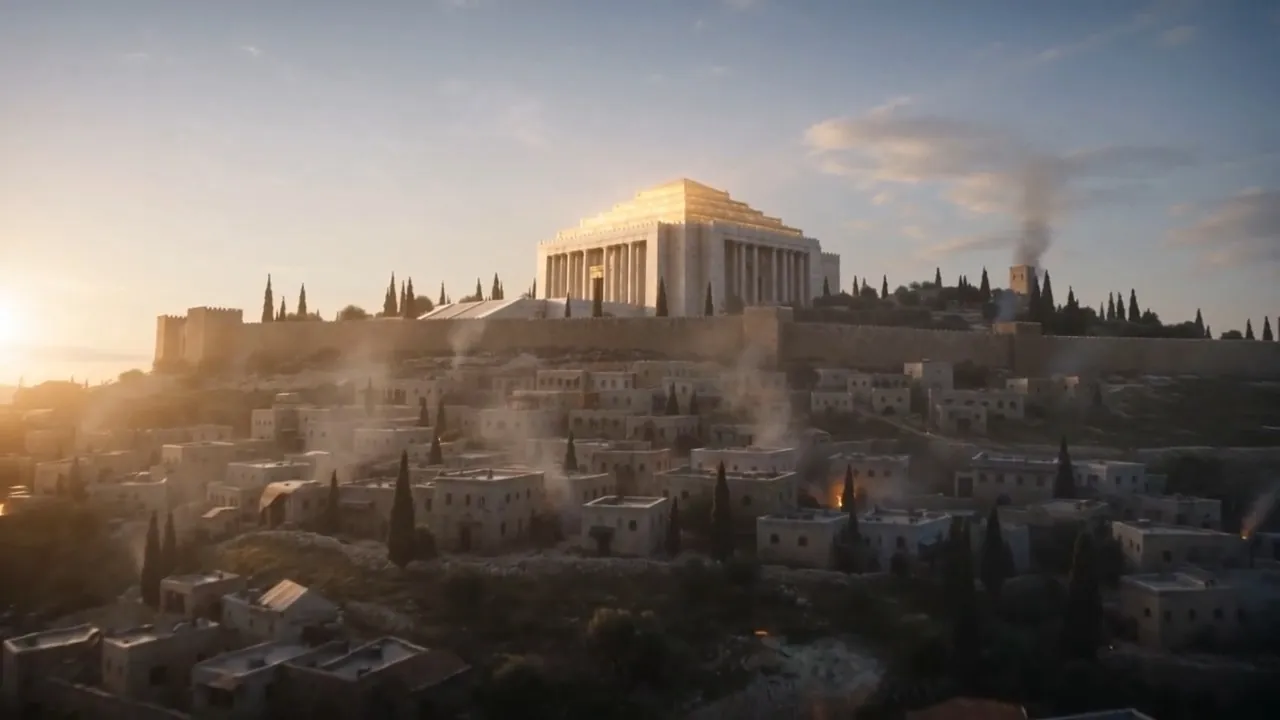
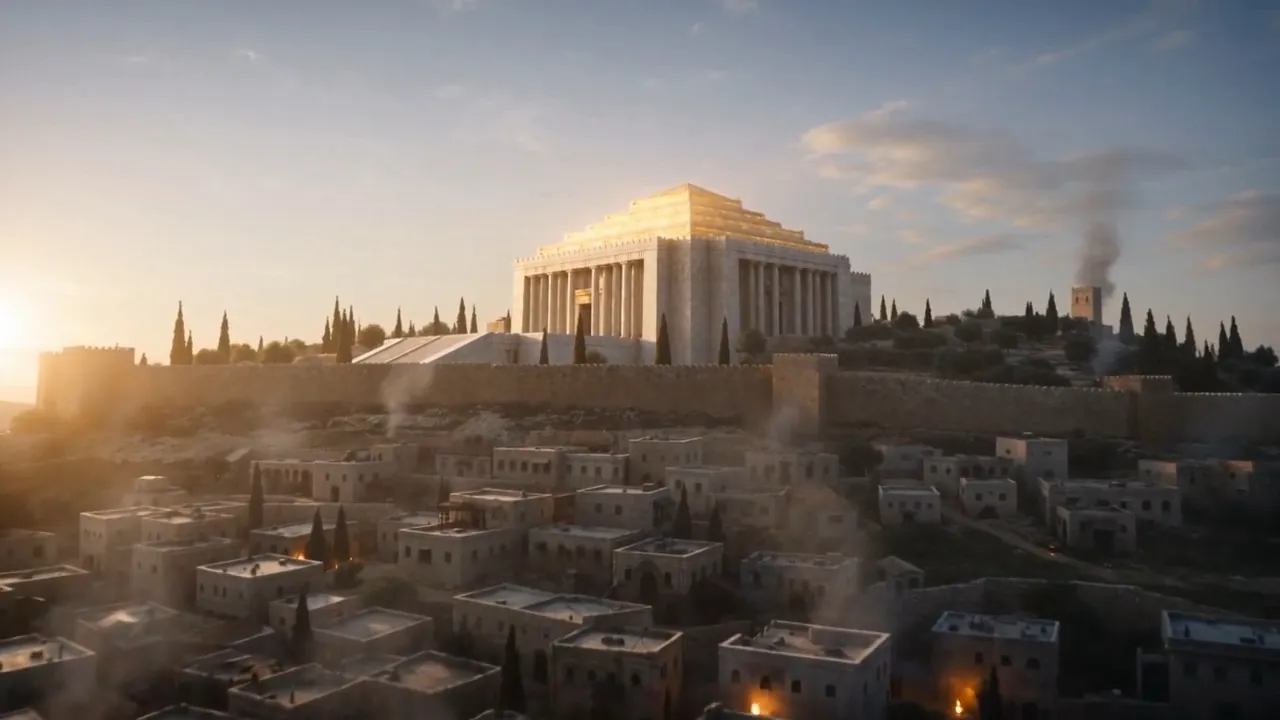
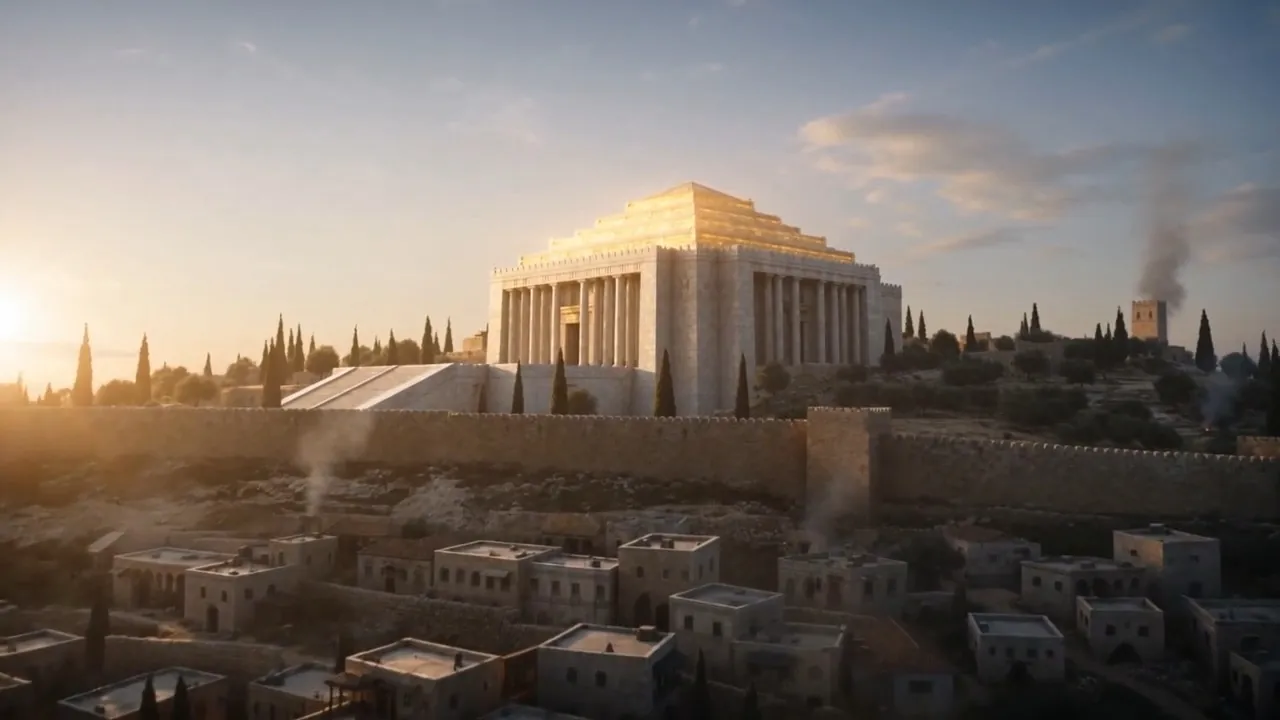
Nebuchadnezzar king of Babylon came to Jerusalem and besieged it — and Jerusalem lost. On the last morning the temple still caught the sun, the way it always had. But wagons were already loading its golden vessels for the long road east, and the boys of the best families of Judah were being lined up to walk behind them. Daniel 1 : 1–3
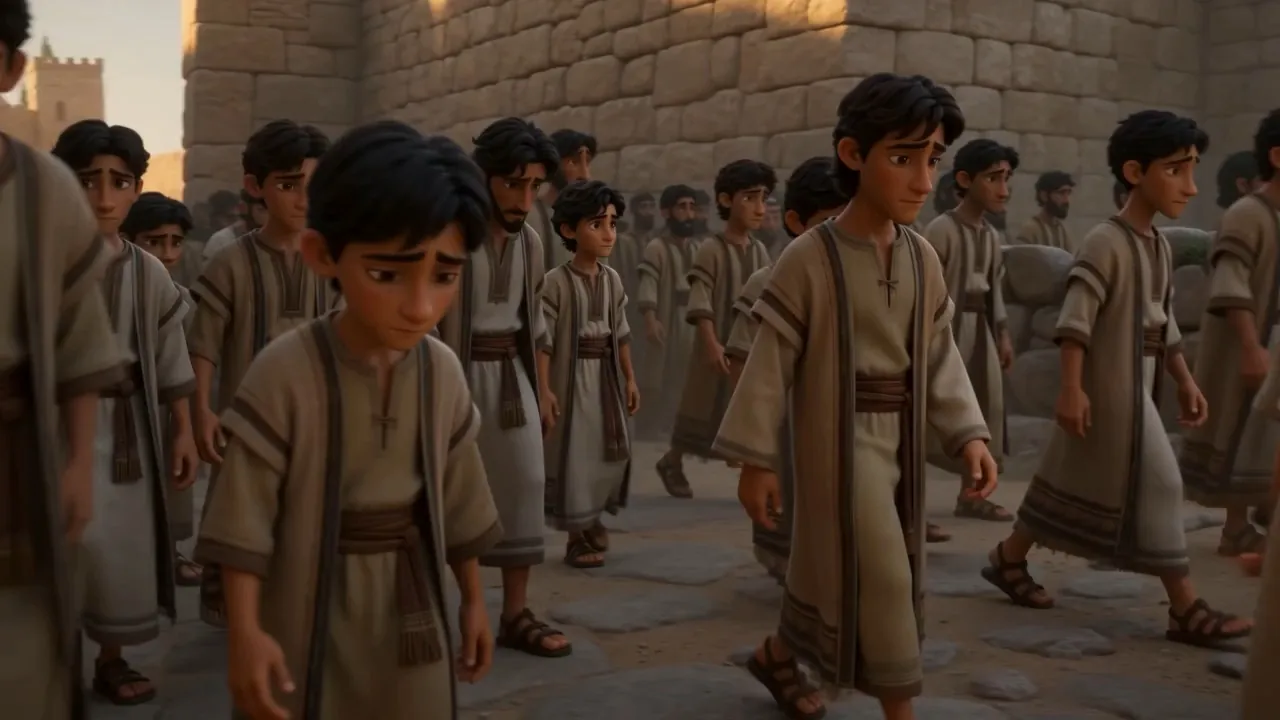
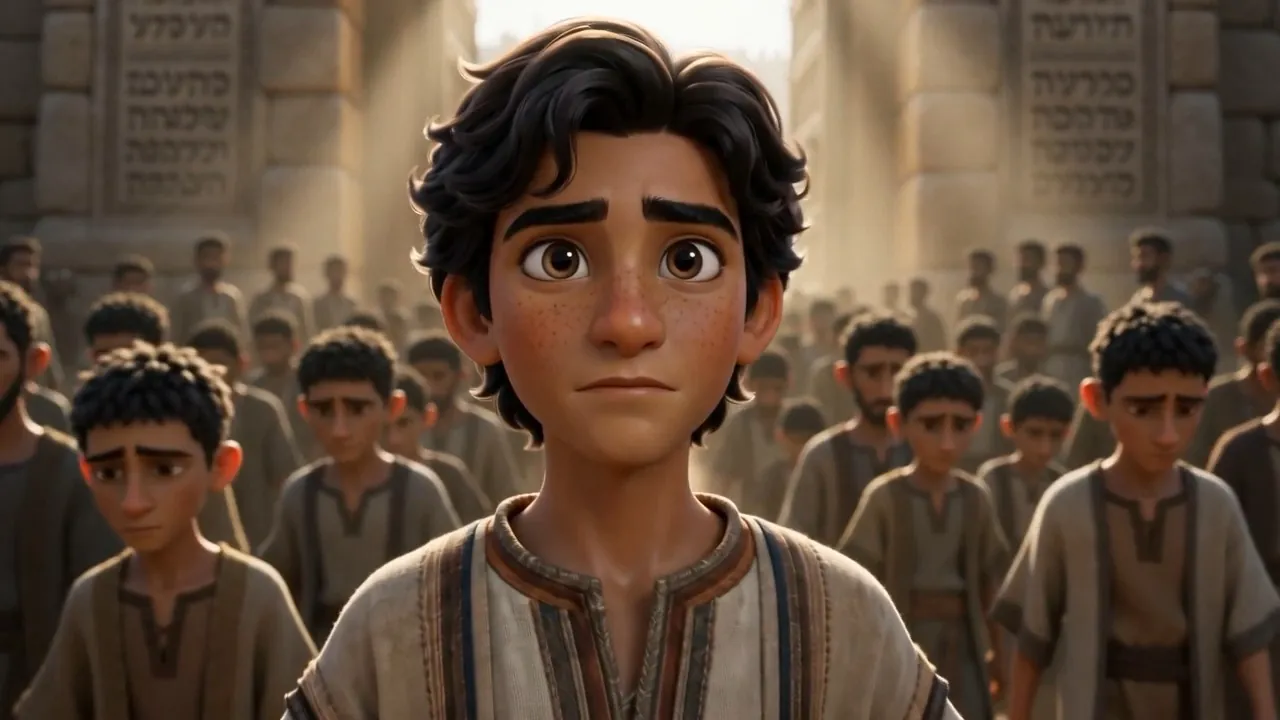

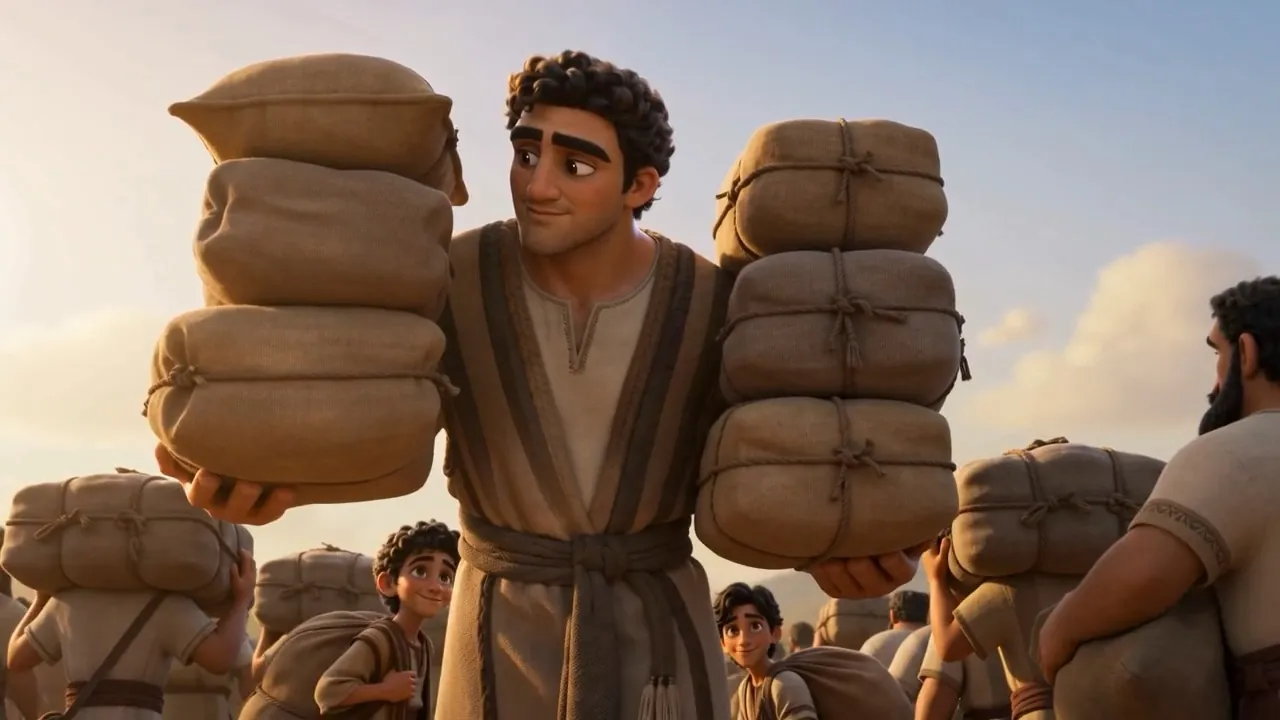


Among the captives walked four friends of the royal line of Judah. Daniel, Hananiah, Mishael, and Azariah — the watcher, the sharer, the shoulder, and the clown. Remember the names. Babylon is about to spend three years trying to erase them. Daniel 1 : 6
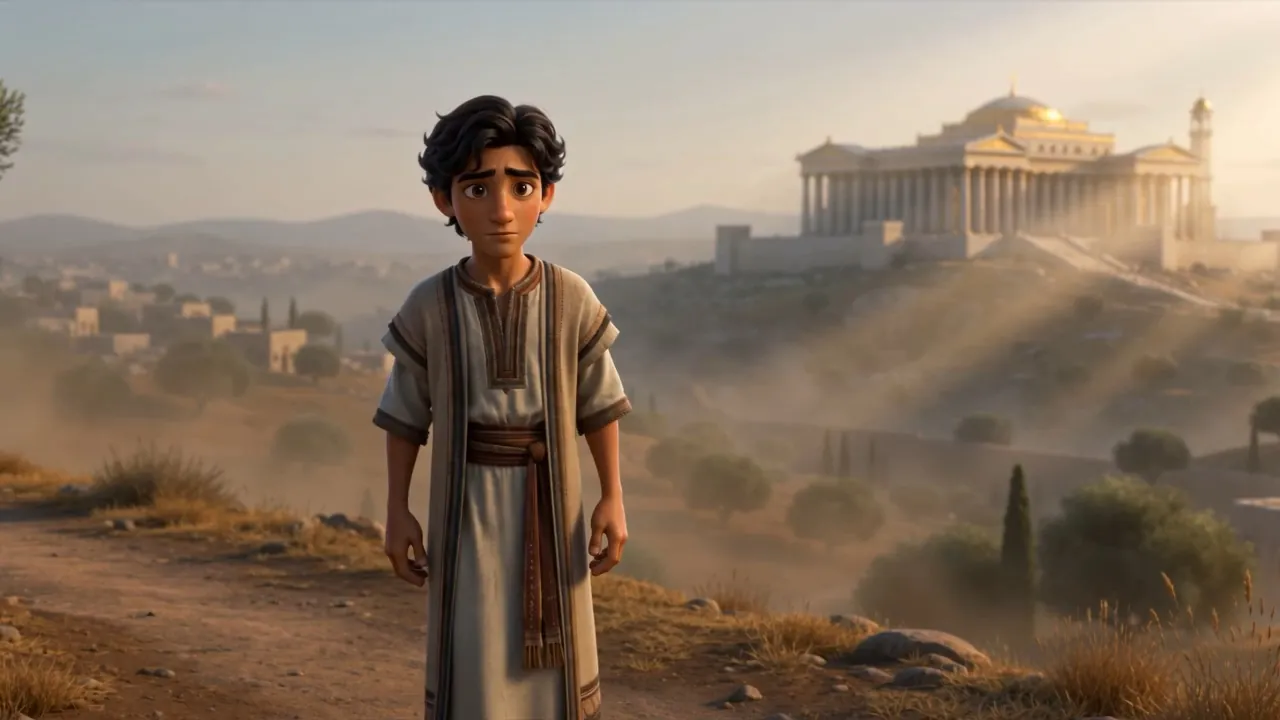

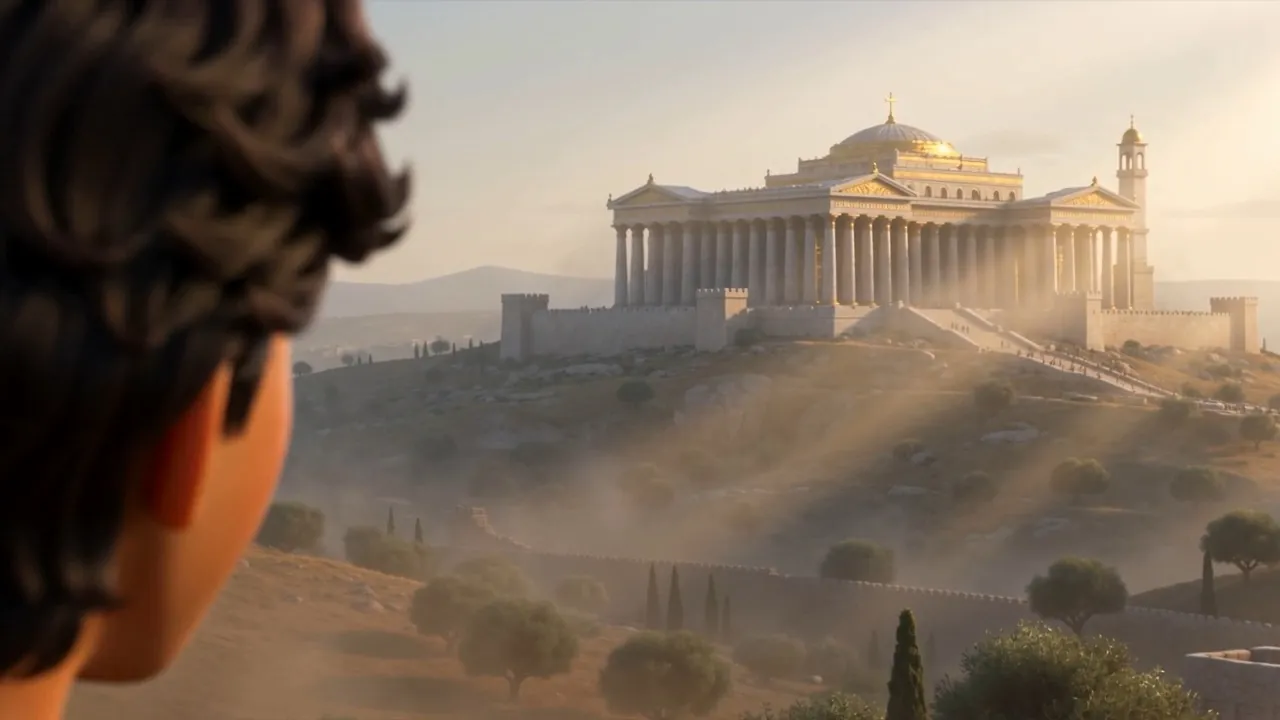







At the top of the last ridge, Daniel turned around. He looked at the temple until he was sure of it — then closed his eyes and pressed it somewhere safe. Whatever the road ahead took from him, it would not get that. Then he turned, found his friends, and walked. Daniel 1 : 3–4
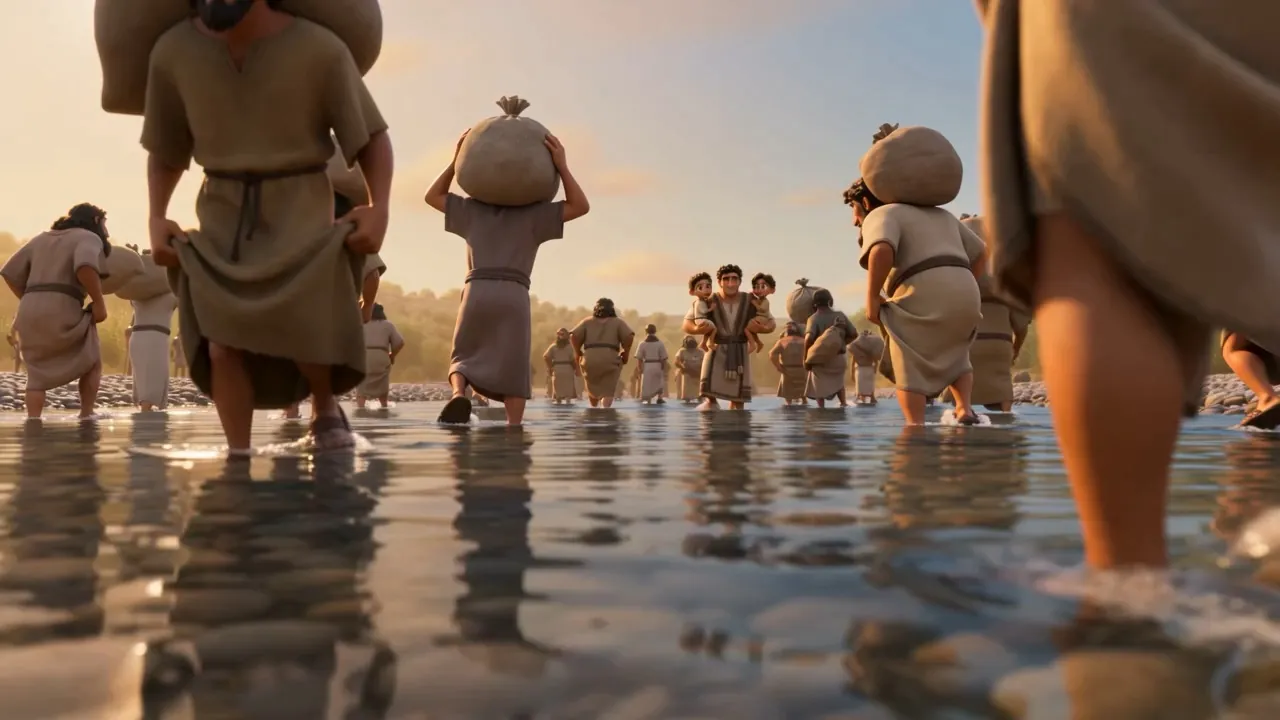
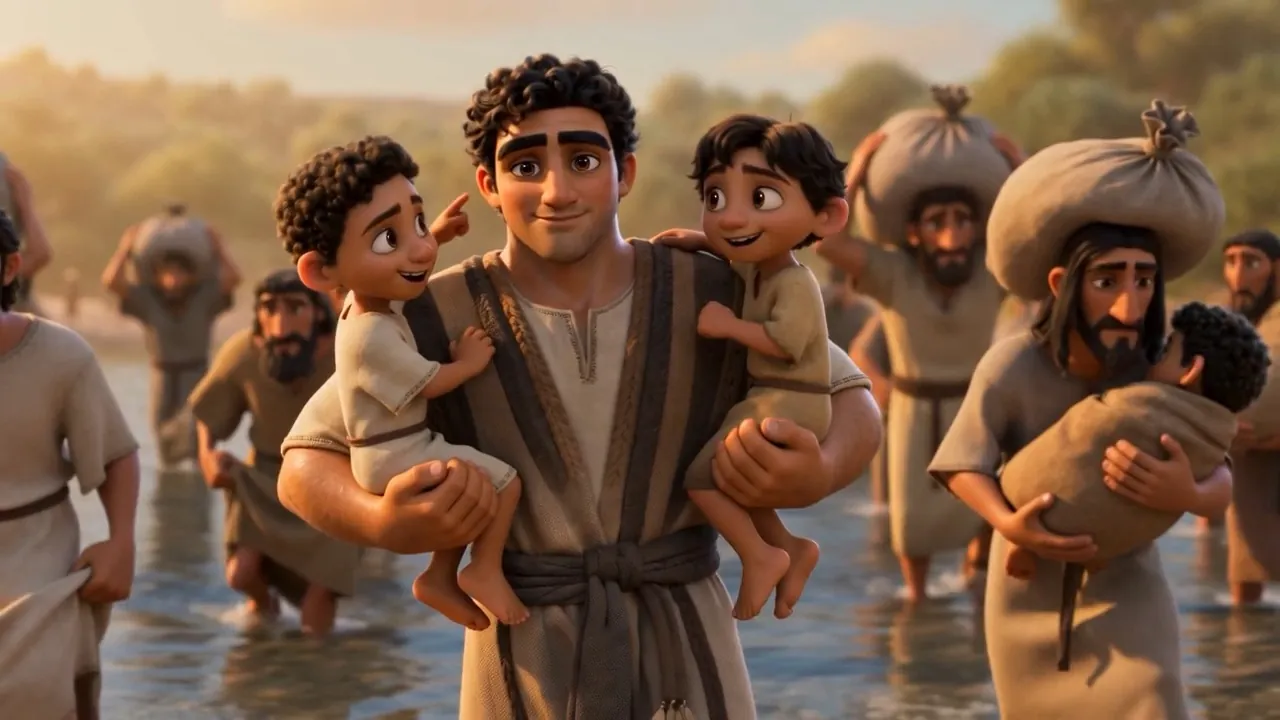
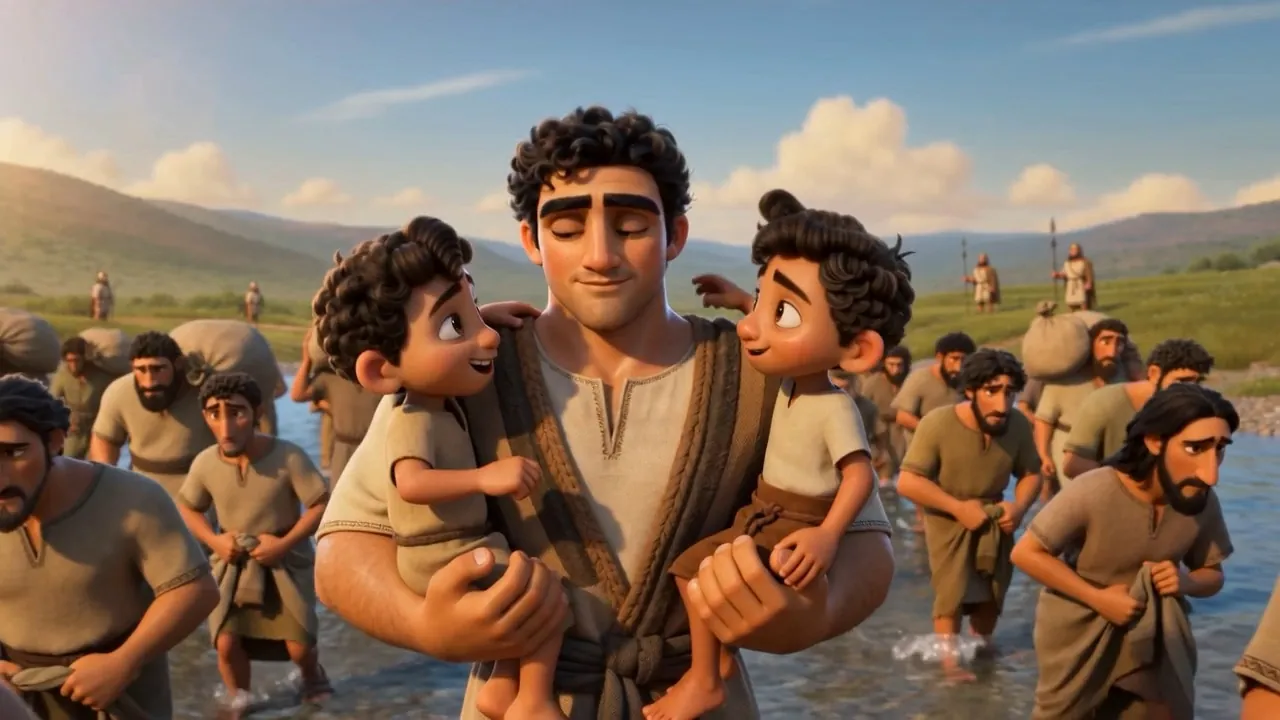
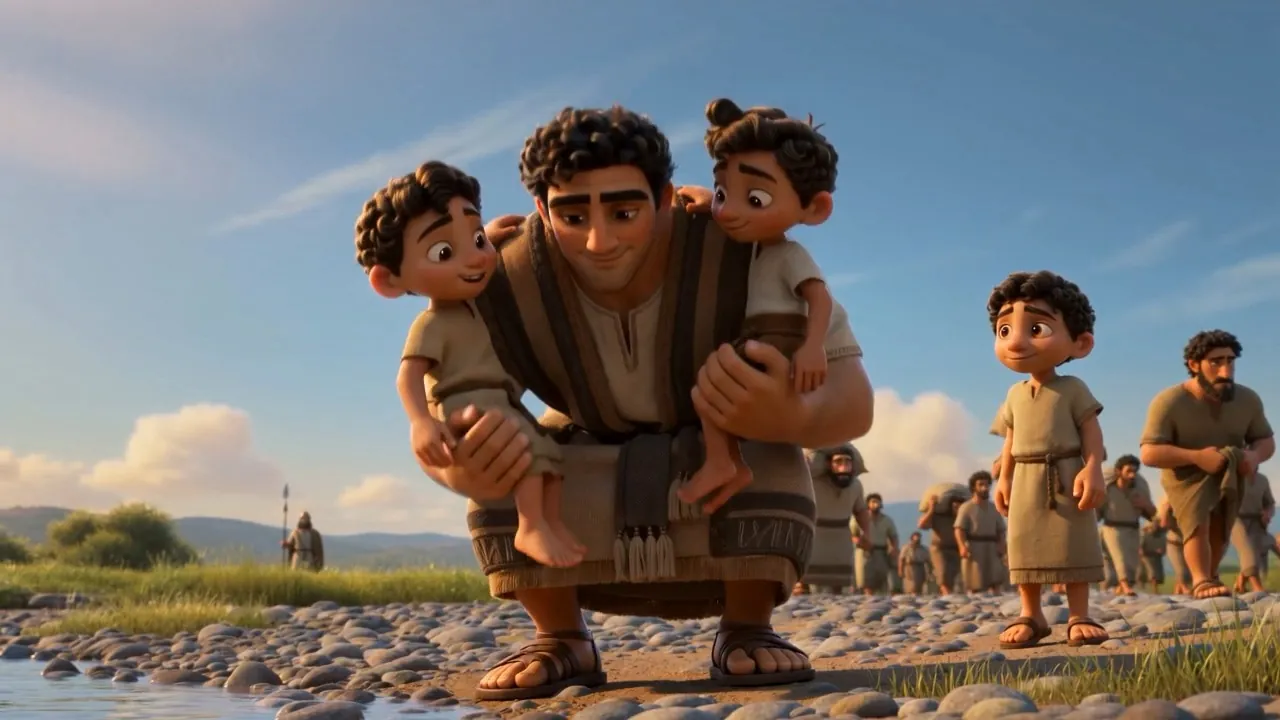
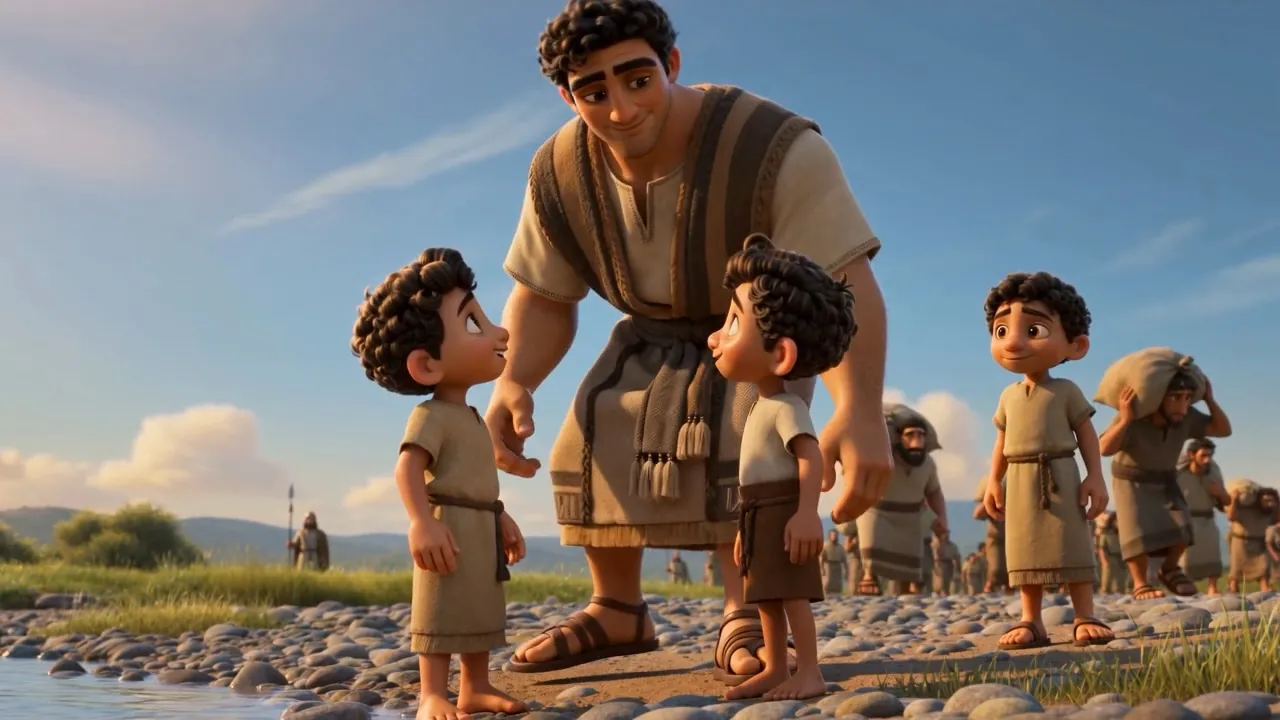
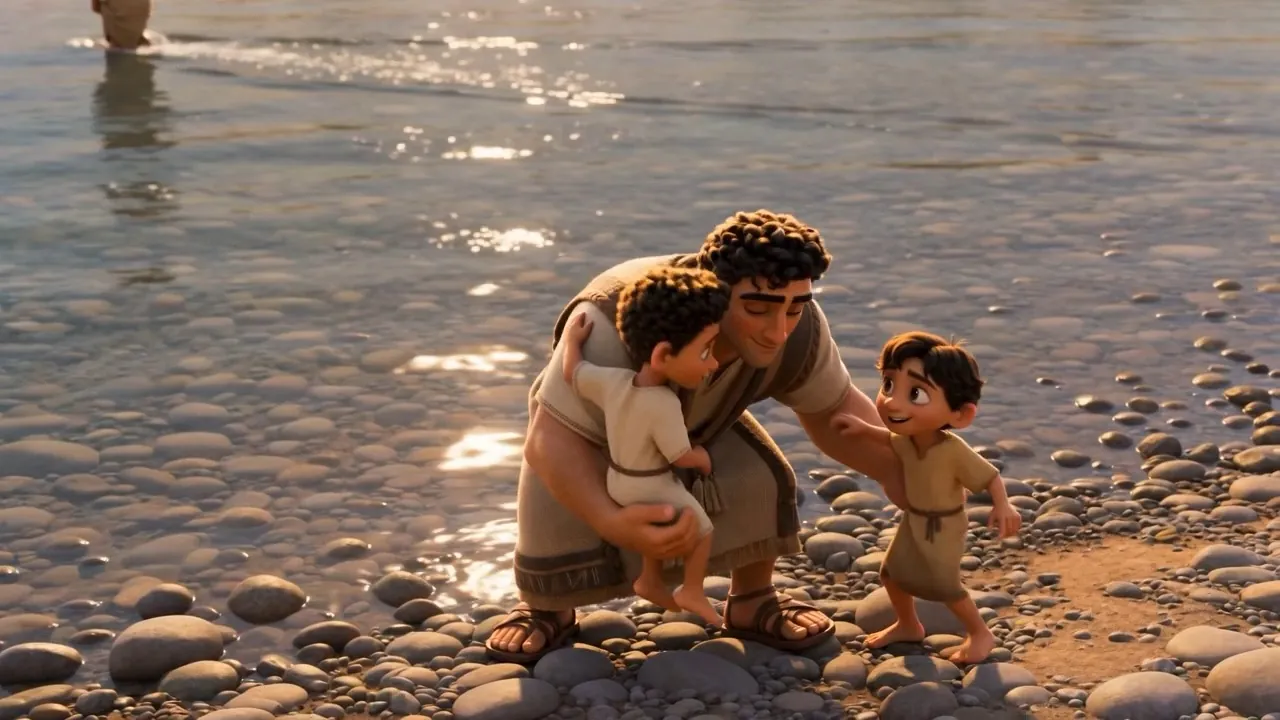
The road to Babylon is hundreds of miles long, and it does not care who is tired. At every river crossing the biggest of the four went back and forth, back and forth — a child on each arm, a grandmother steadied against the current. His name, Mishael, asks a question: “Who is like God?” On the road, he answered it with his back.
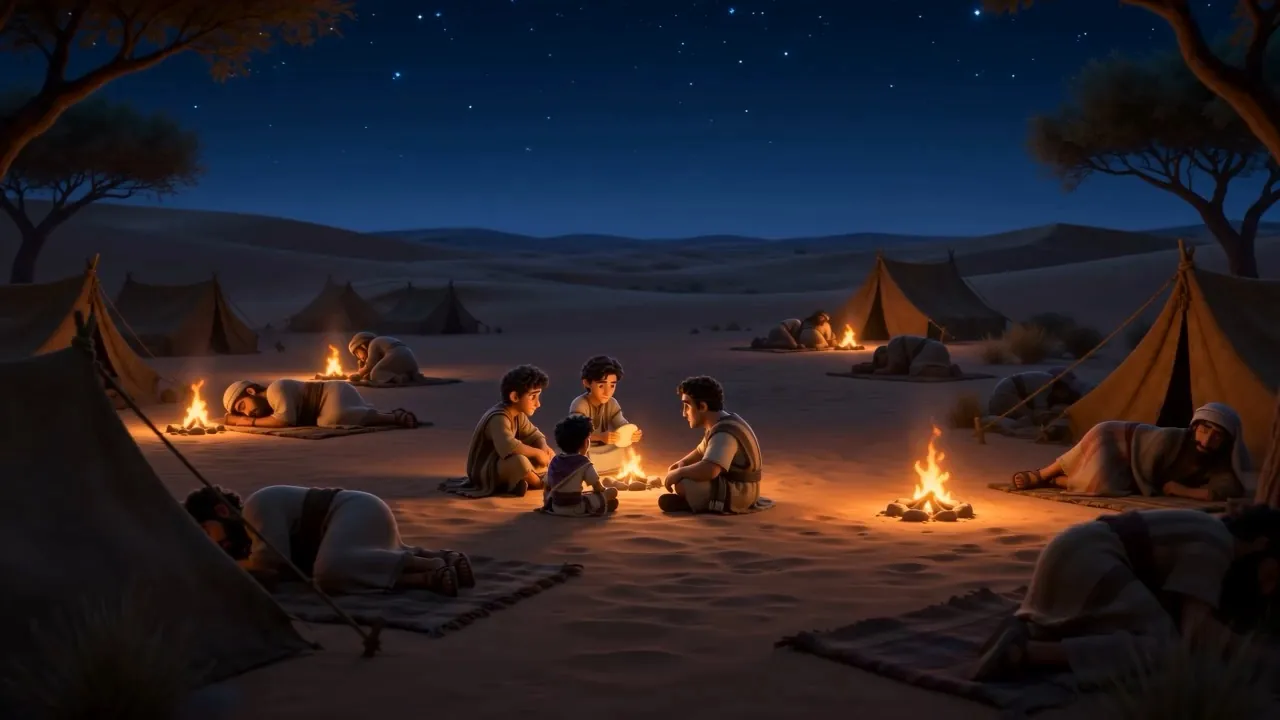
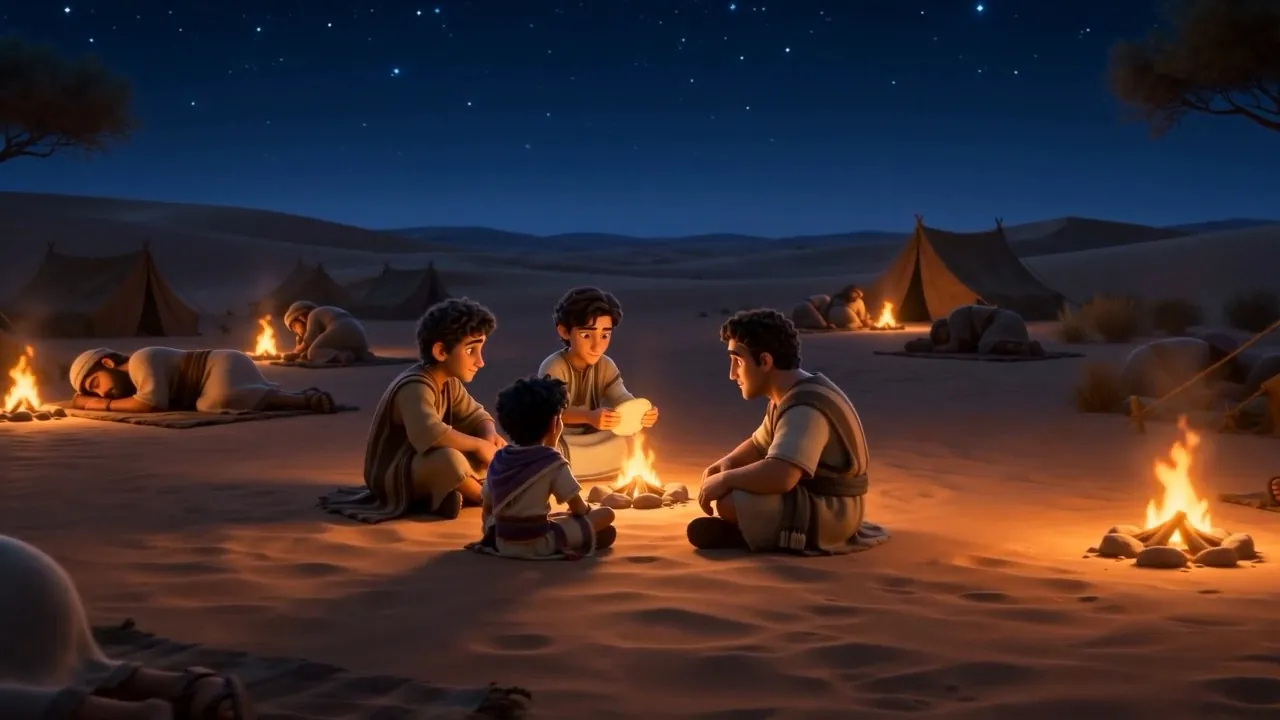
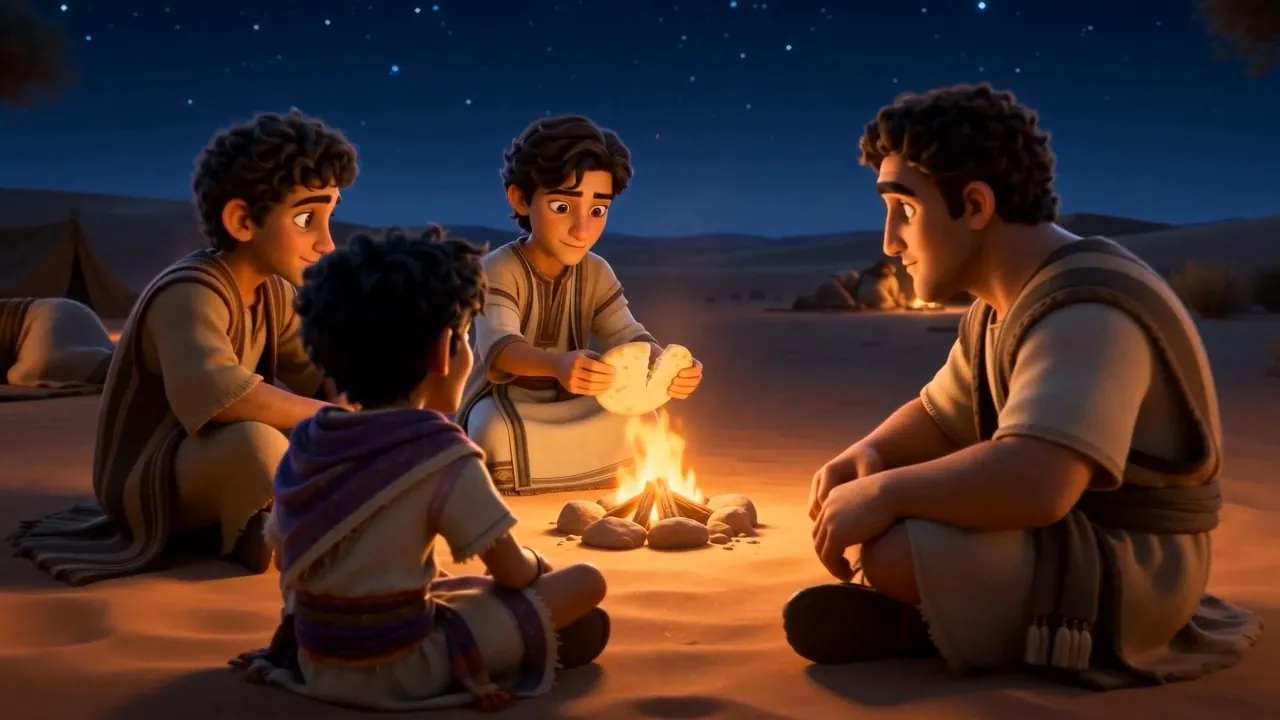



Supper was one loaf, broken four ways — and no one measured the pieces. Above the camp the same stars that had stood over Jerusalem stood over the road. Some things, the sky seemed to say, do not change when the address does.






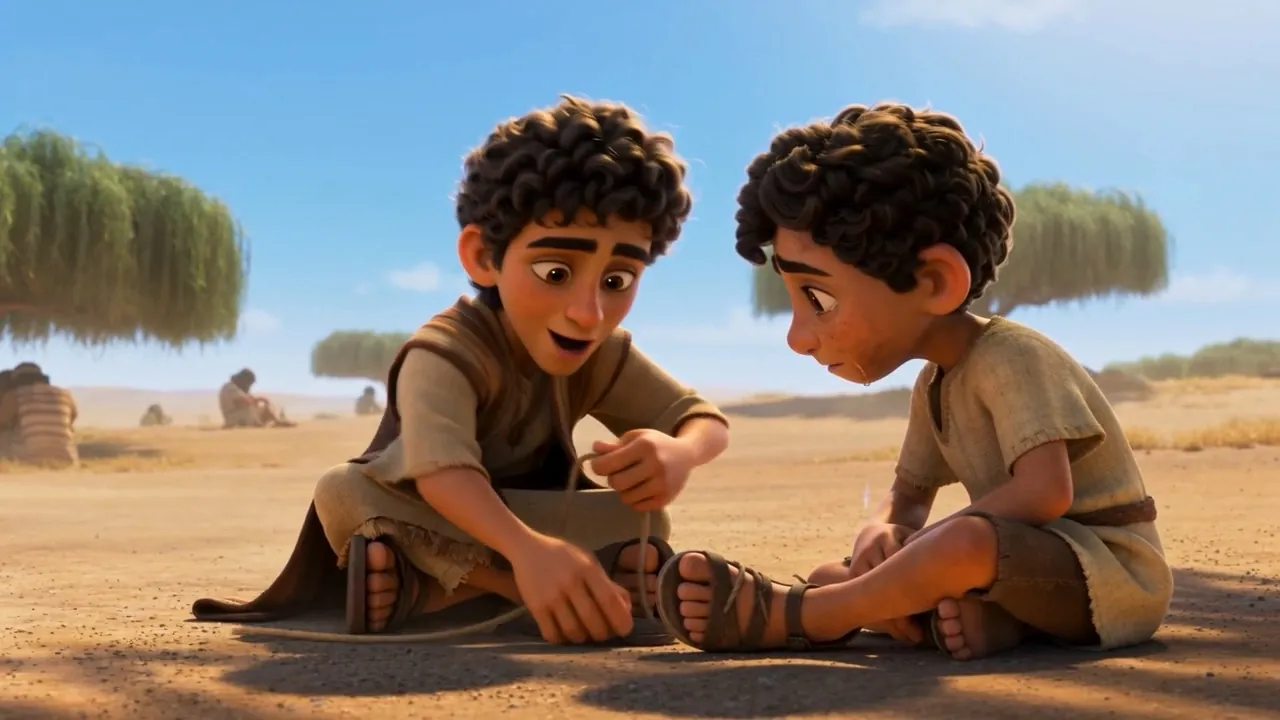

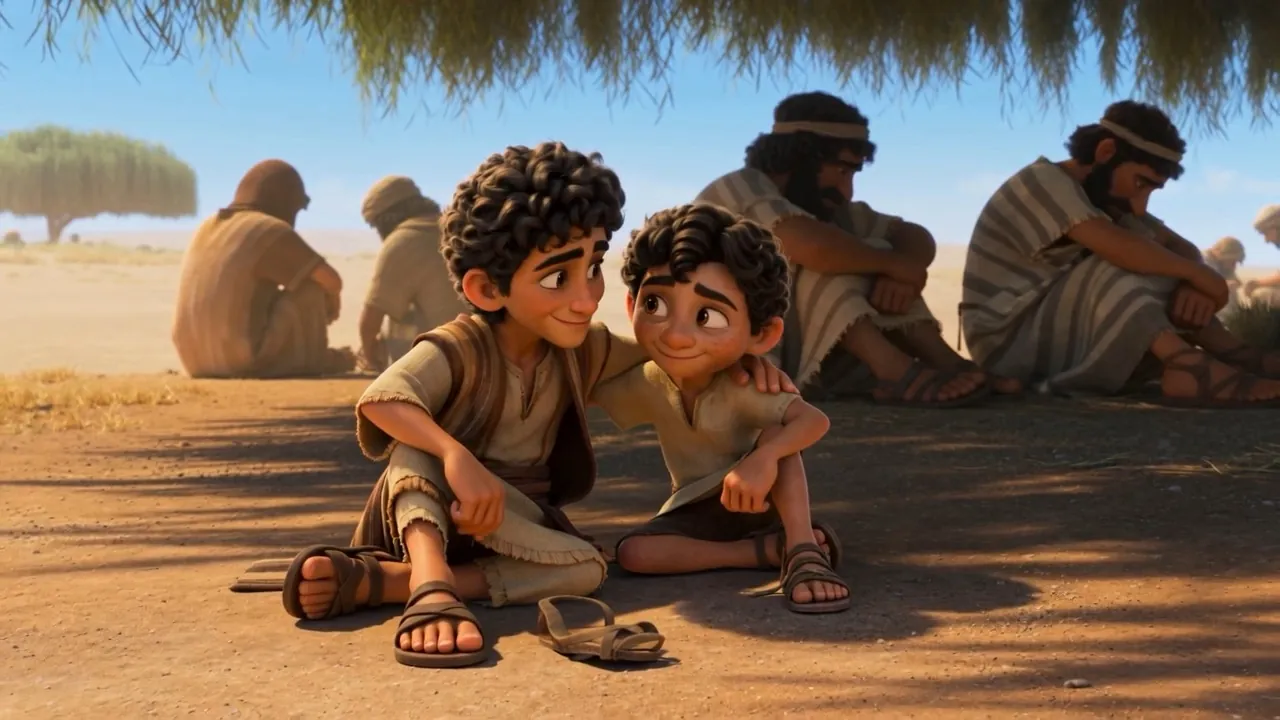
They were prisoners walking away from everything they knew — and some nights they laughed until the guards looked over. An impression of a Babylonian official. A palm flattening the performer's hair. A broken sandal mended with a length of cord. Grief was real. So was the decision to carry it together.
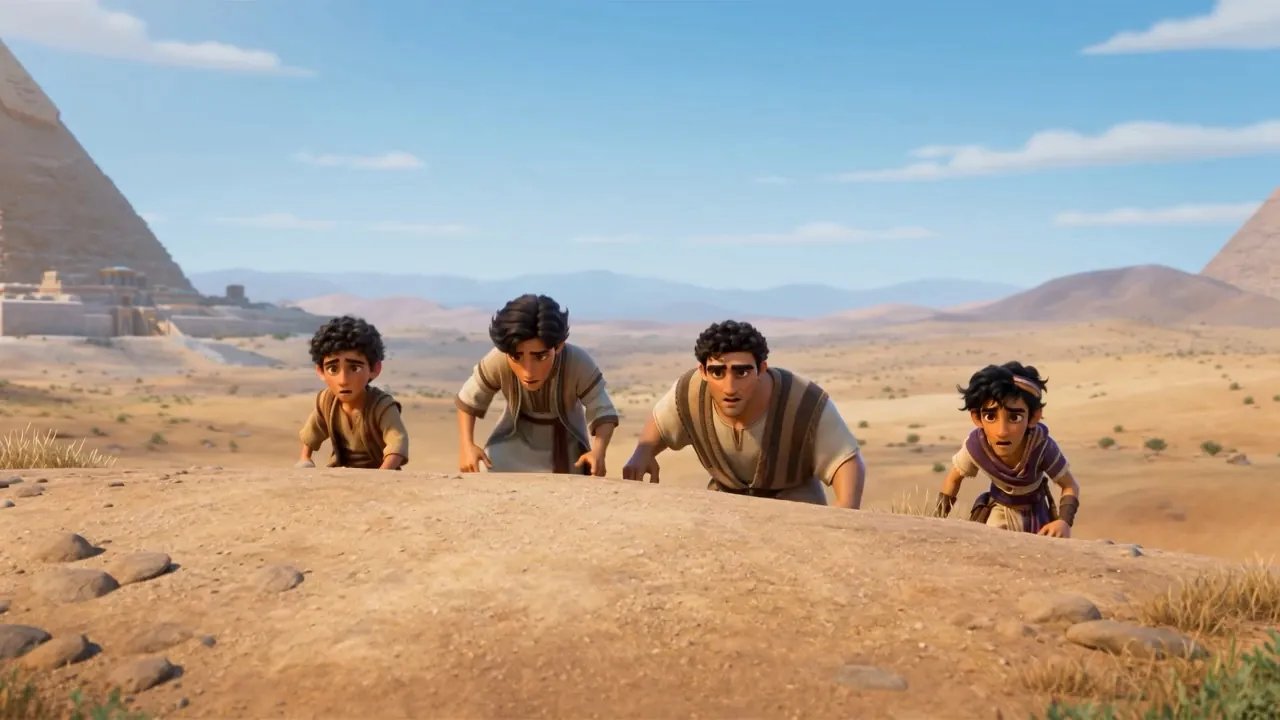
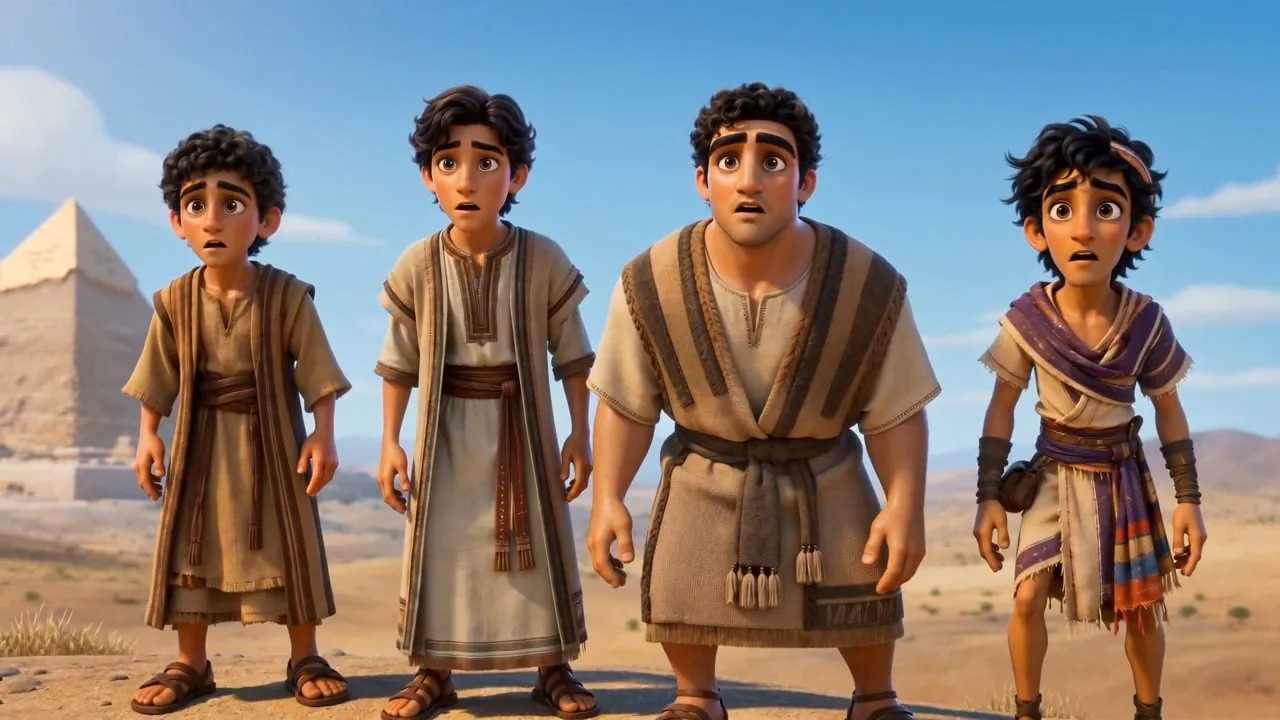
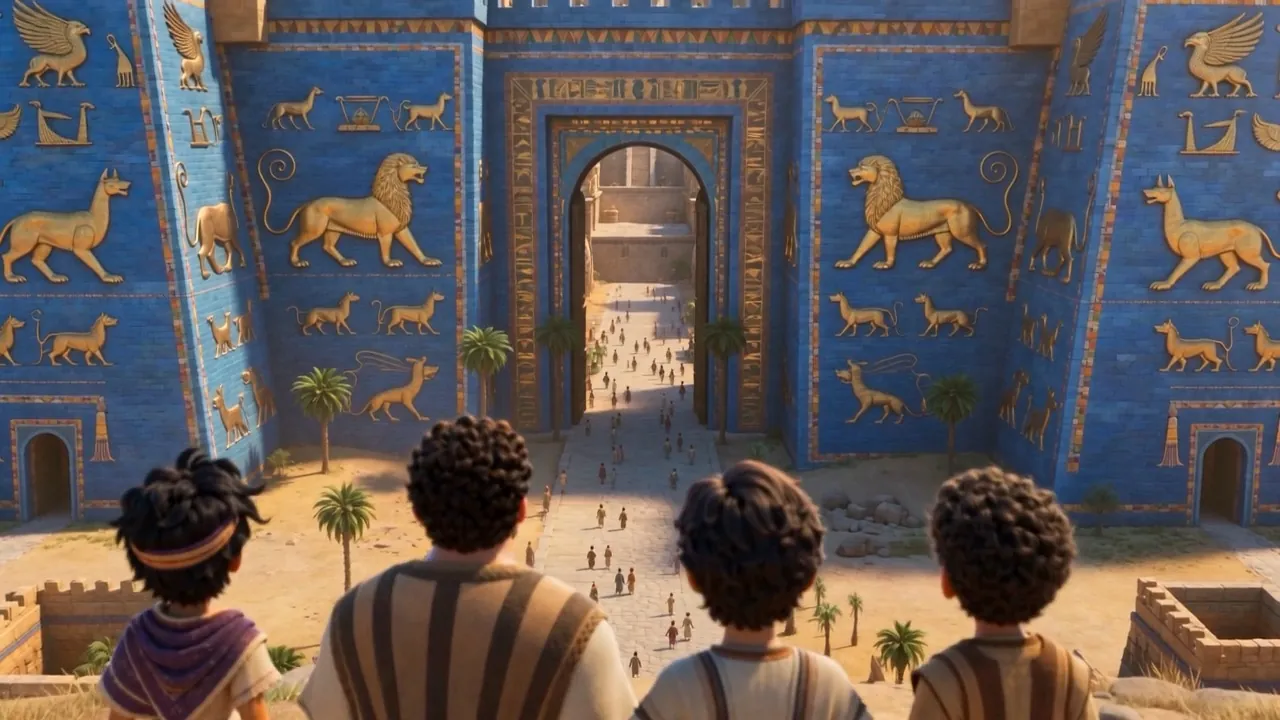




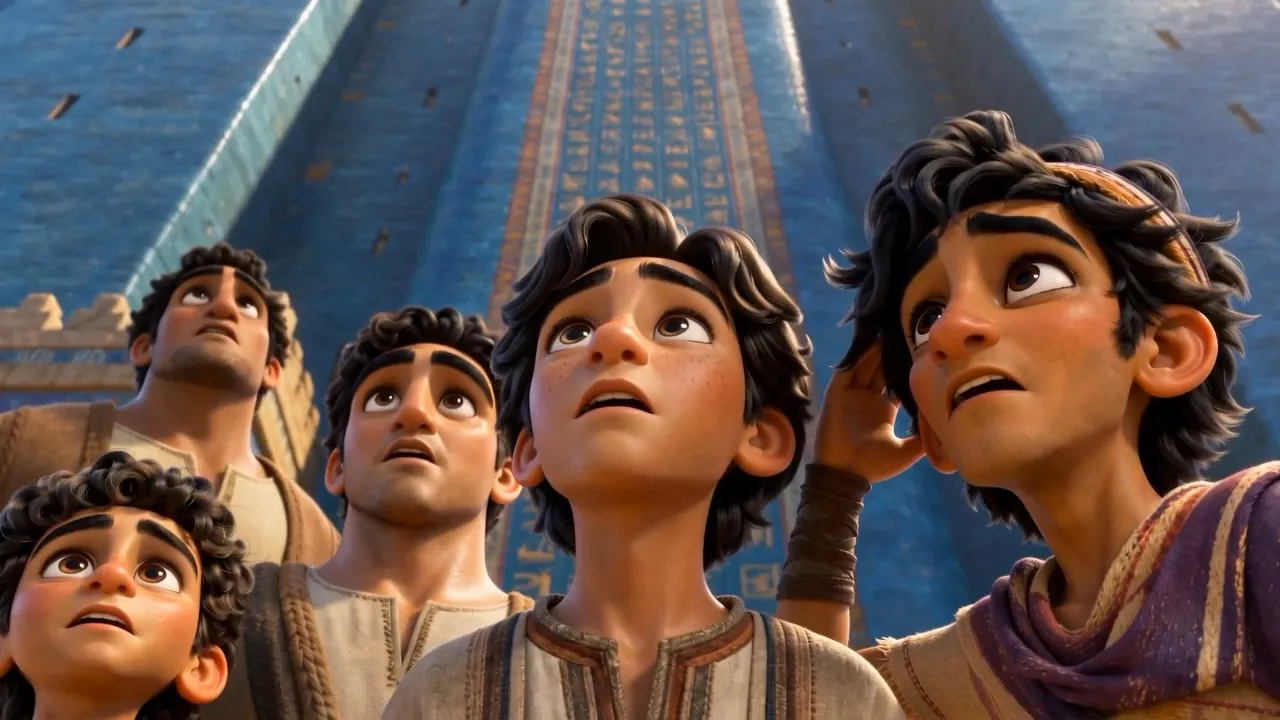
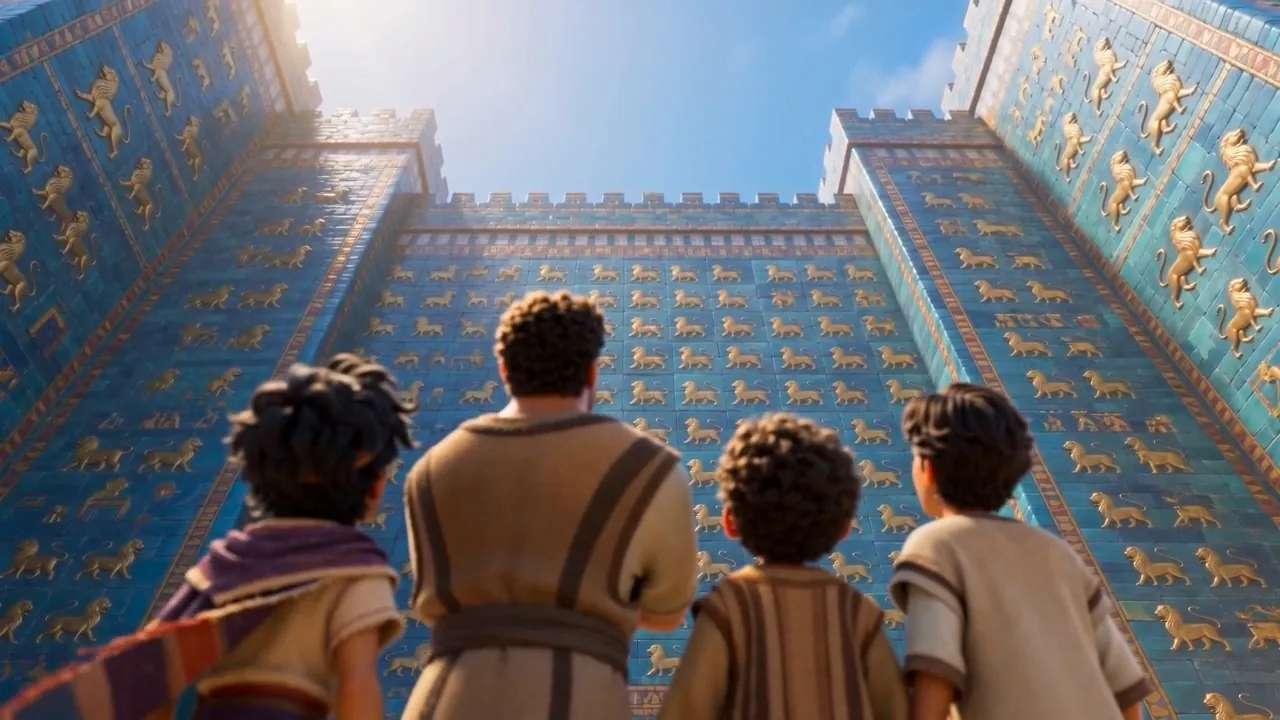
Then the road ran out of desert, and there it was. Walls like blue cliffs, glazed and burning in the sun, lions of gold pacing the tiles two hundred feet up. Babylon — the city that ate kingdoms. Four boys from a broken town stood at its feet and felt exactly as small as it wanted them to feel.

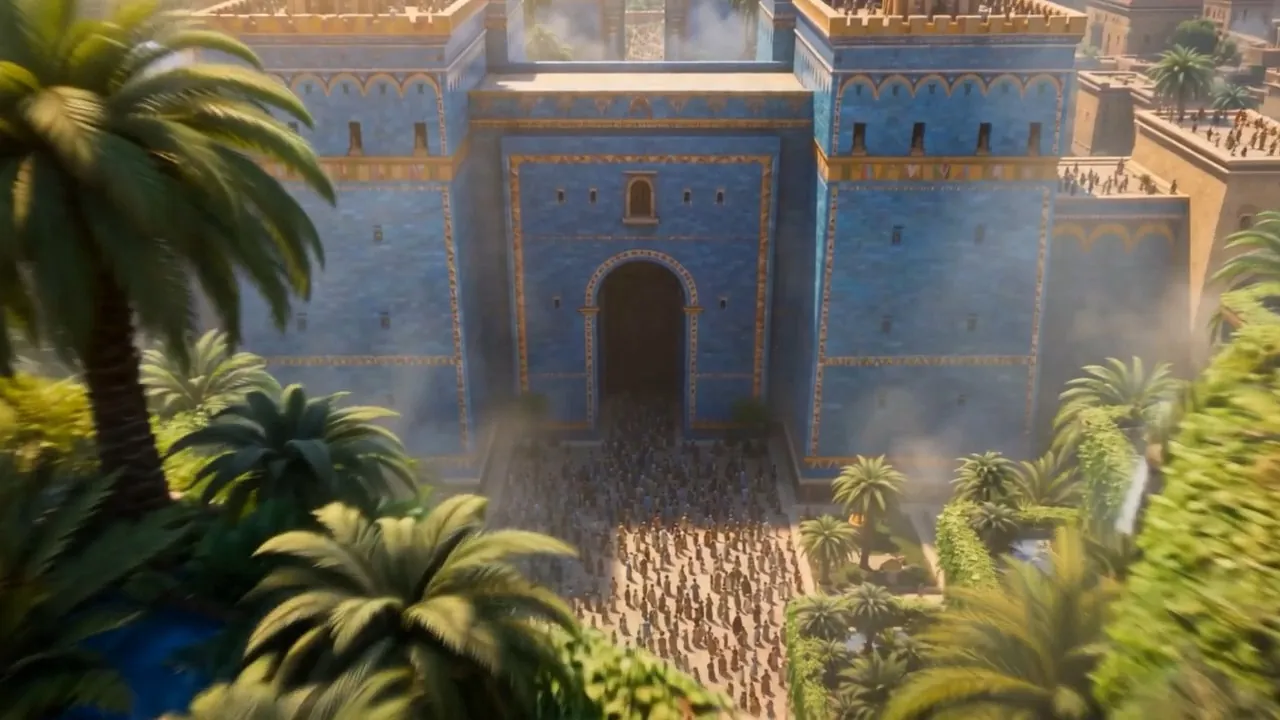

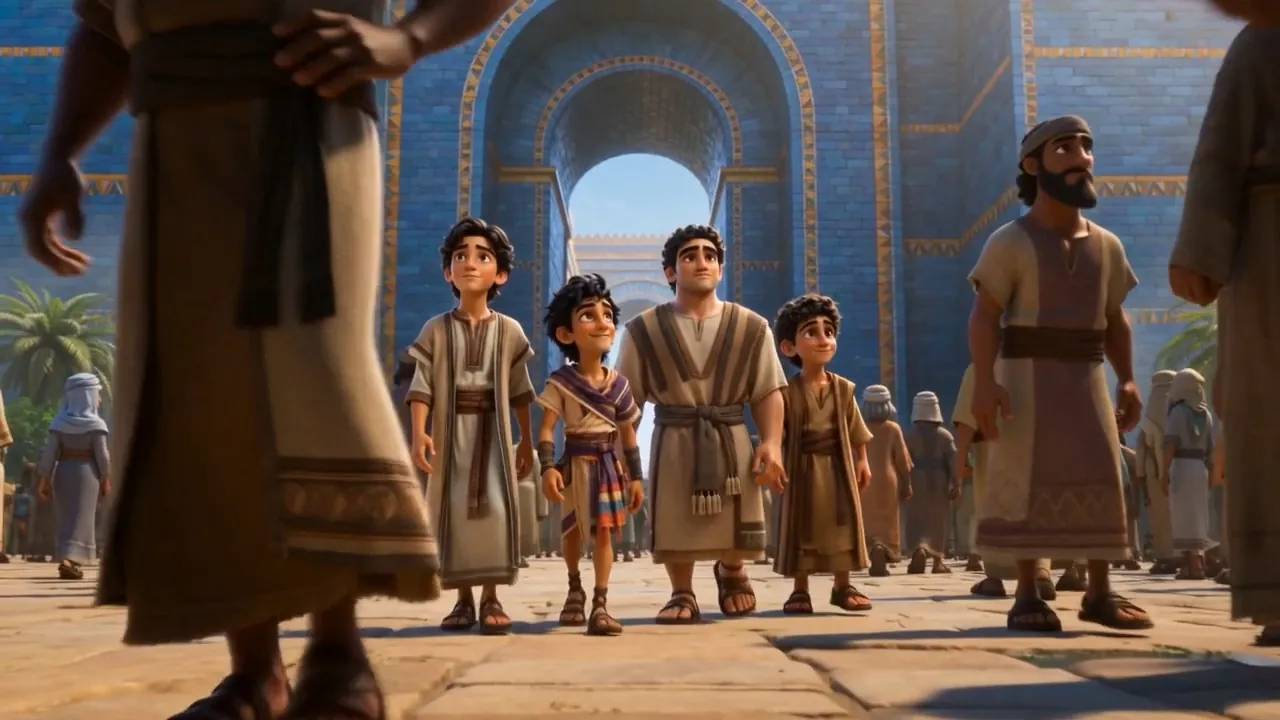
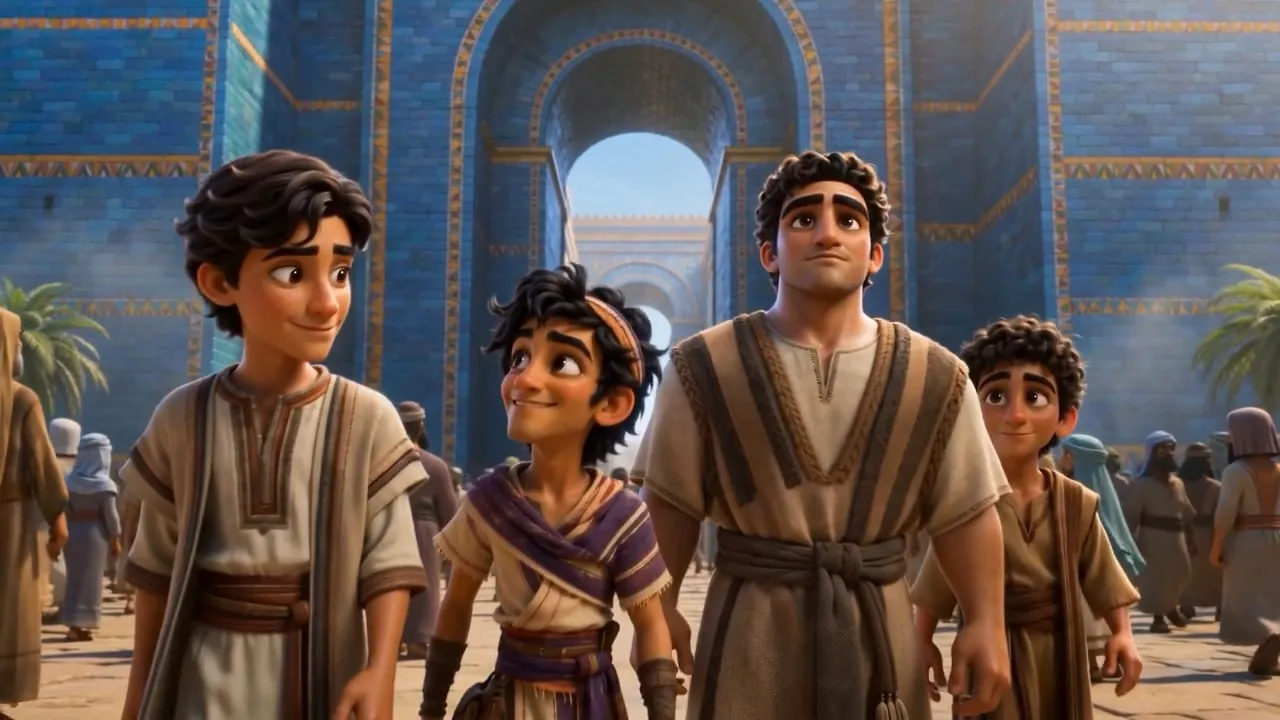
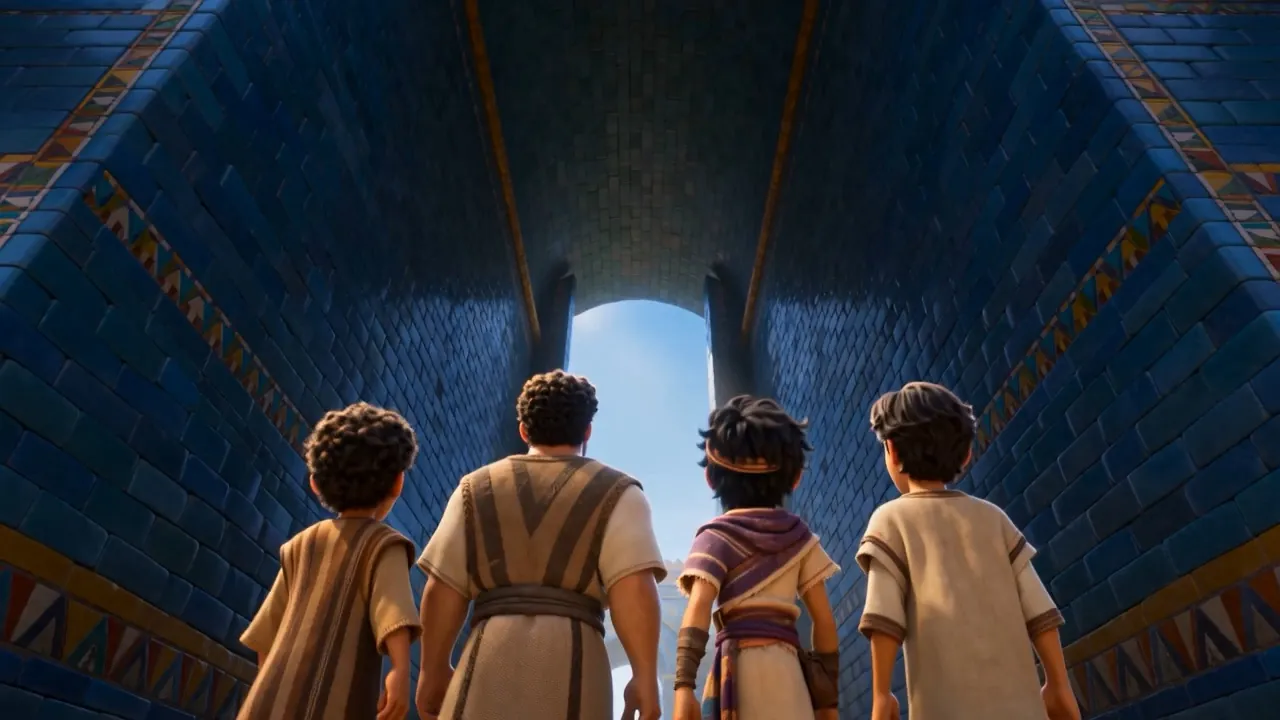

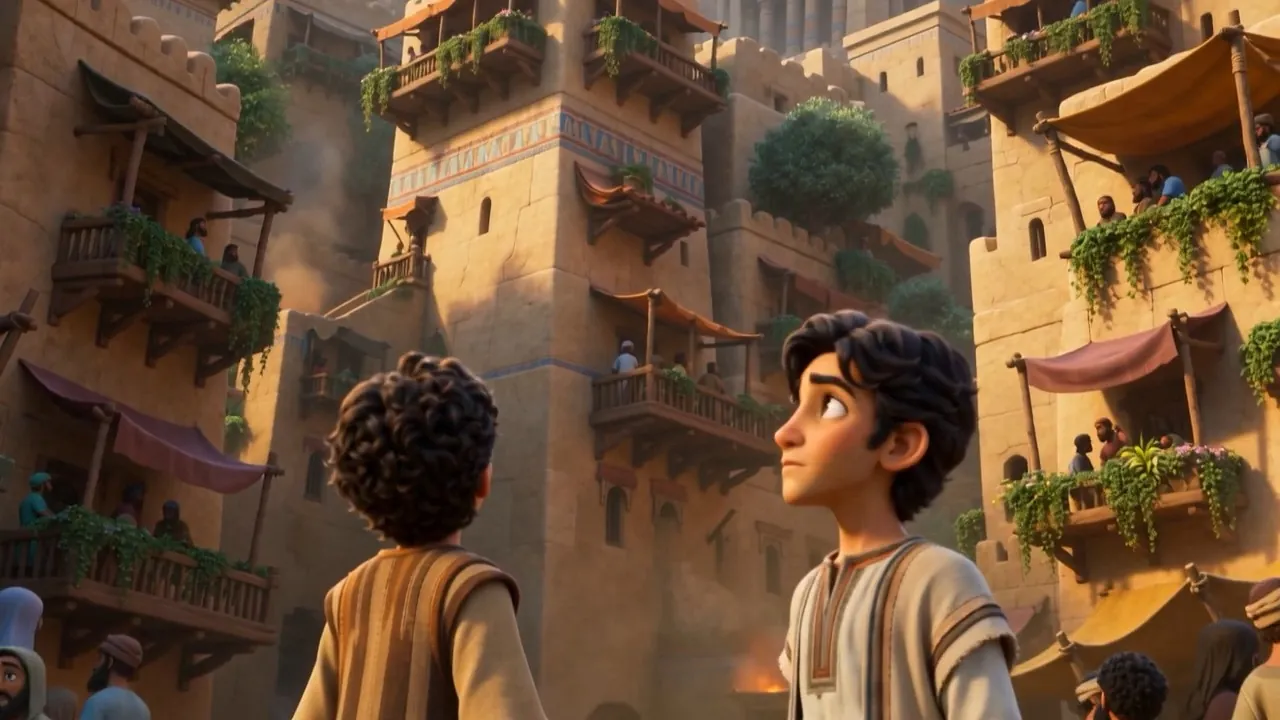

The gates opened like a slow dawn, and the city swallowed them. Streets deep as canyons. Gardens hanging off the roofs. More people in one market than in all of Jerusalem. It was the most beautiful thing any of them had ever seen — and it belonged to the king who had burned their home. Both things were true. That was the hard part.


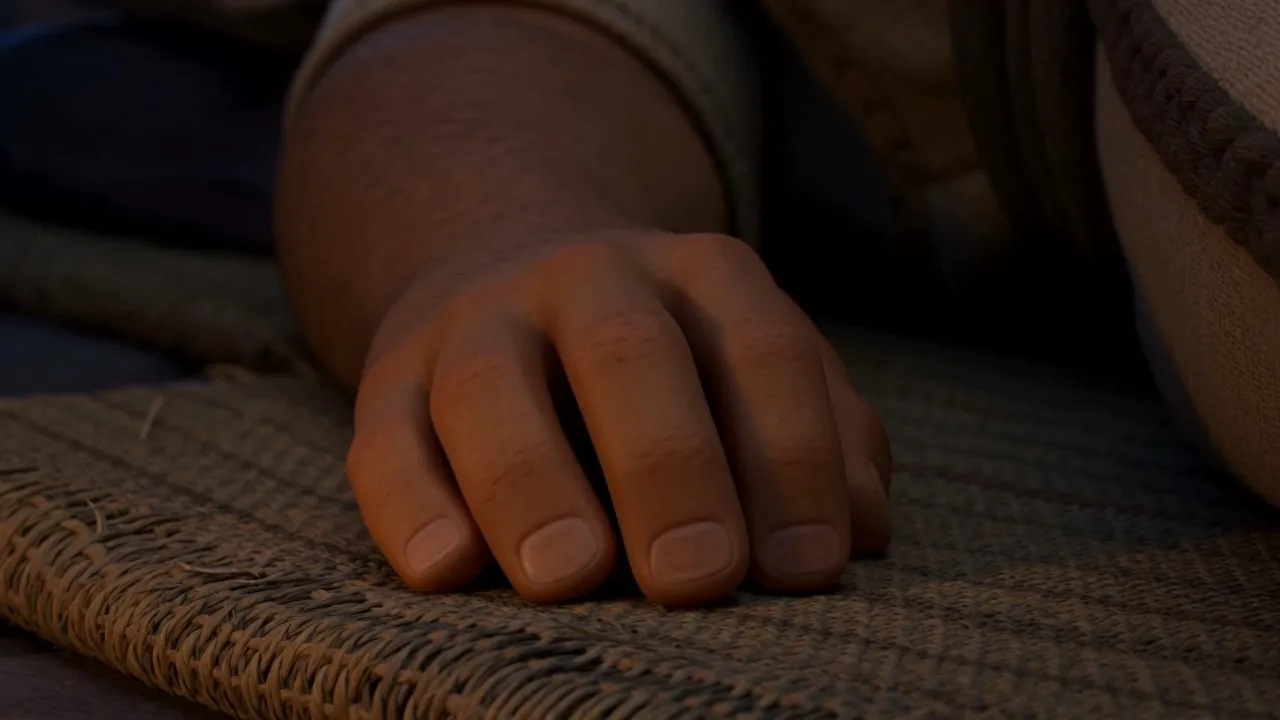

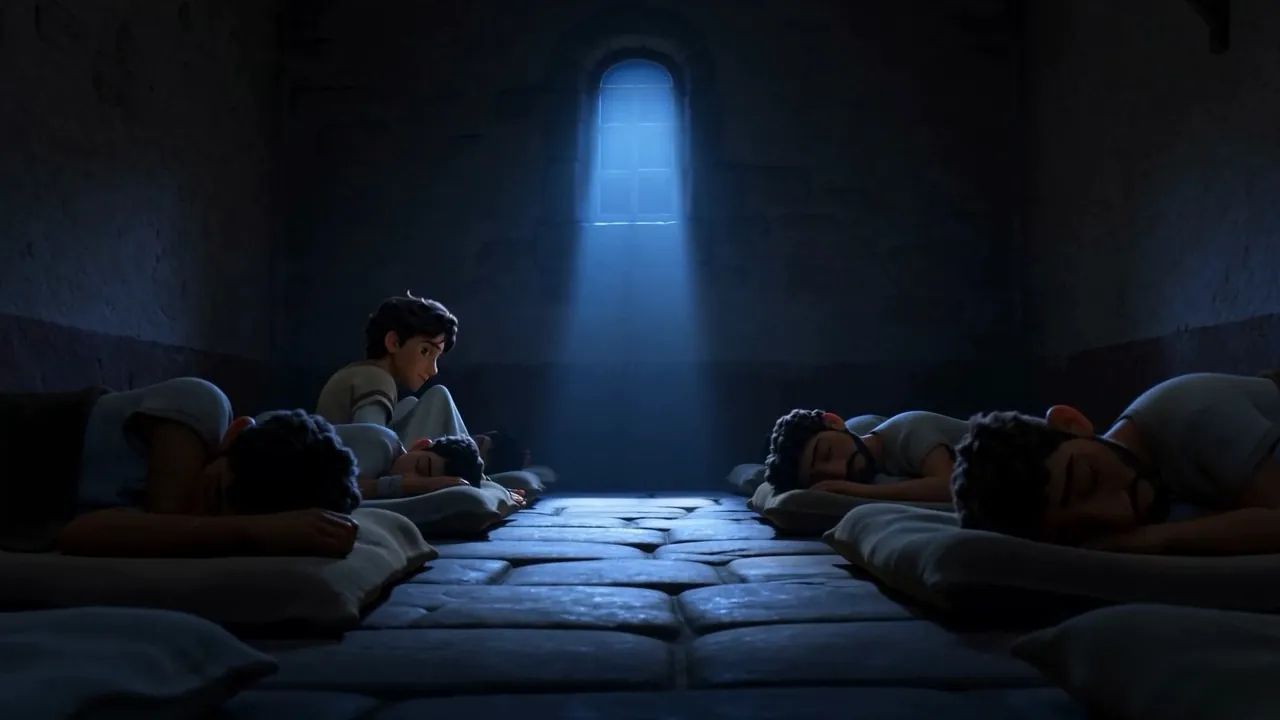

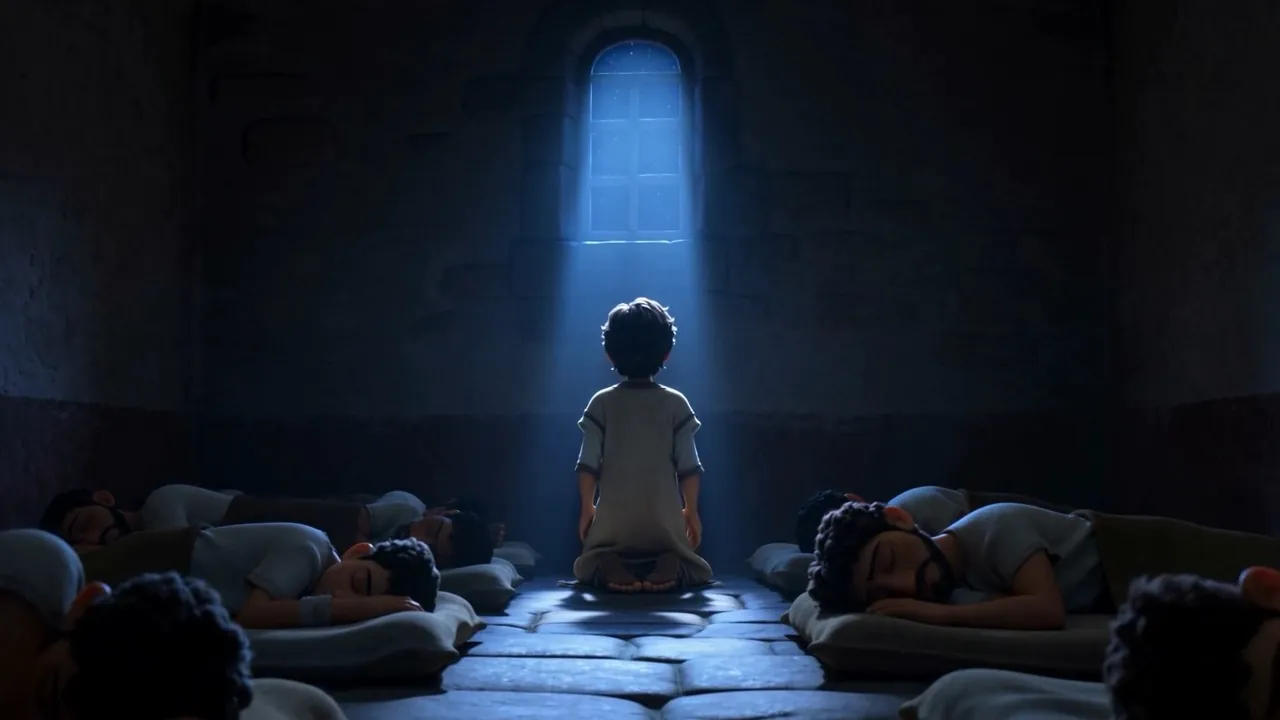
The dormitory held dozens of boys taken from a dozen cities, and at night it filled with the sound every exile knows — muffled crying into borrowed pillows. Daniel lay awake in it. Then he got up, quietly, and faced the window. West. Toward home. Toward the God who had not stayed behind in the temple.
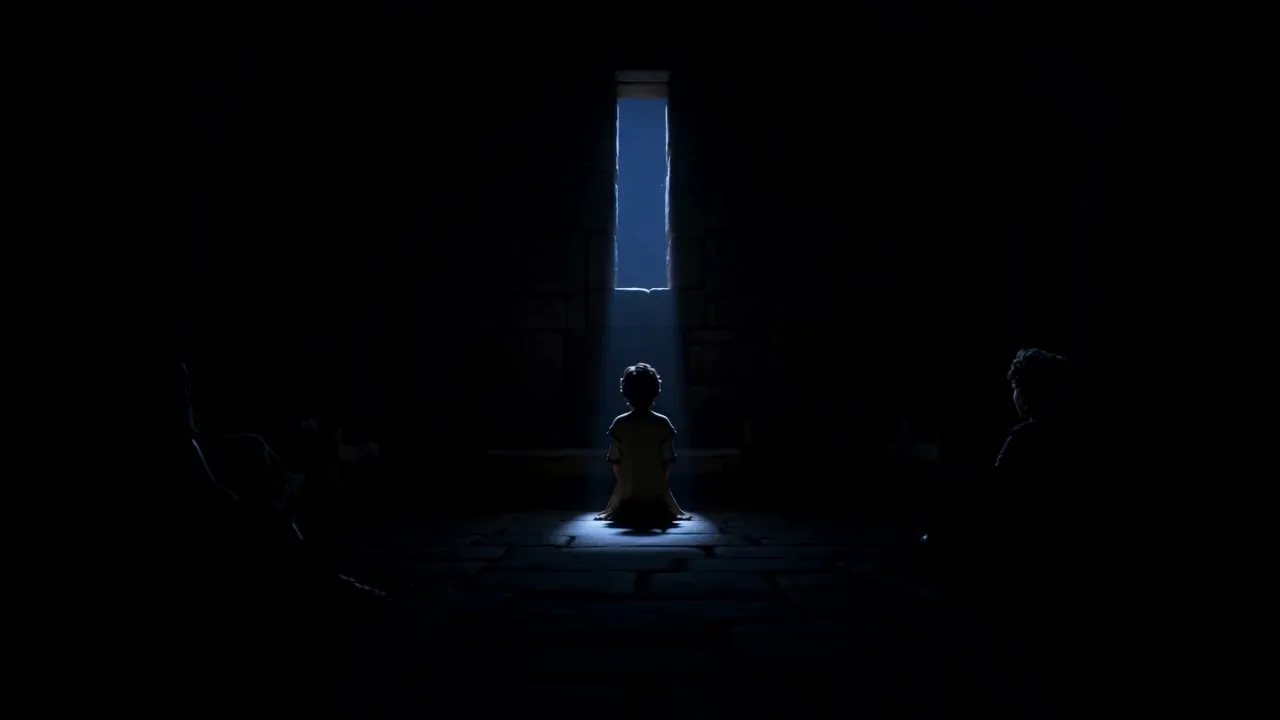

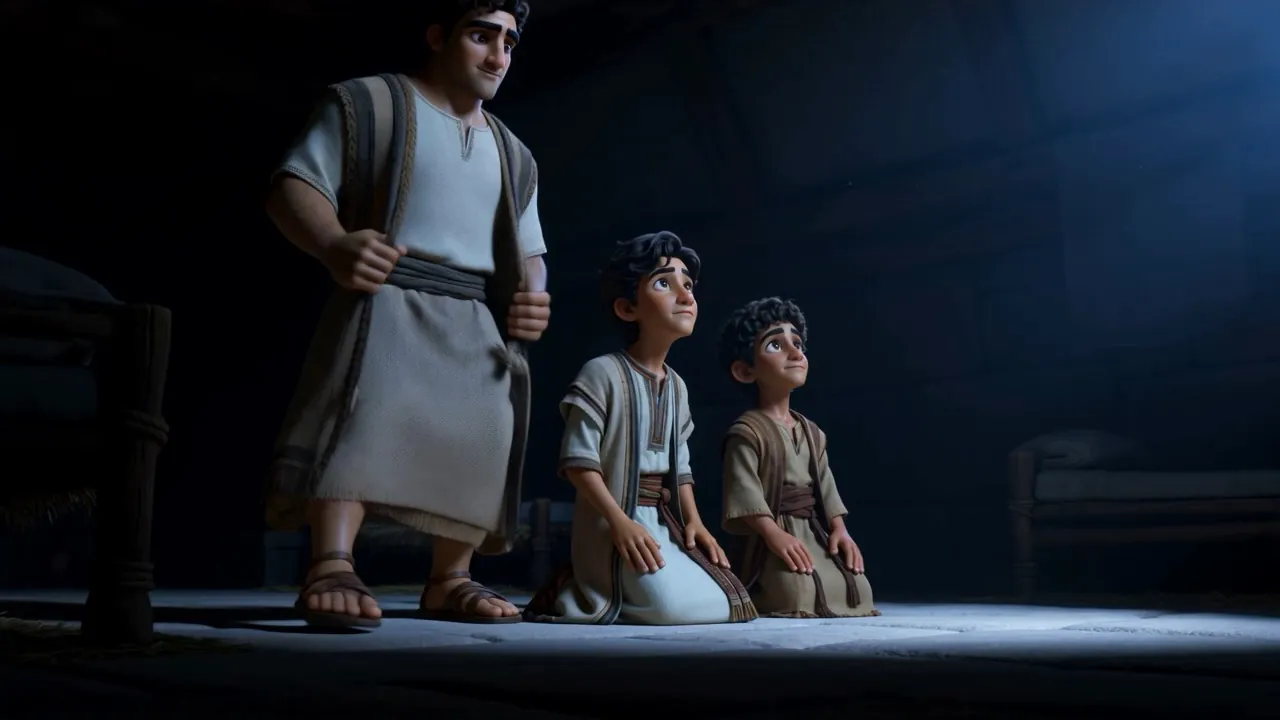

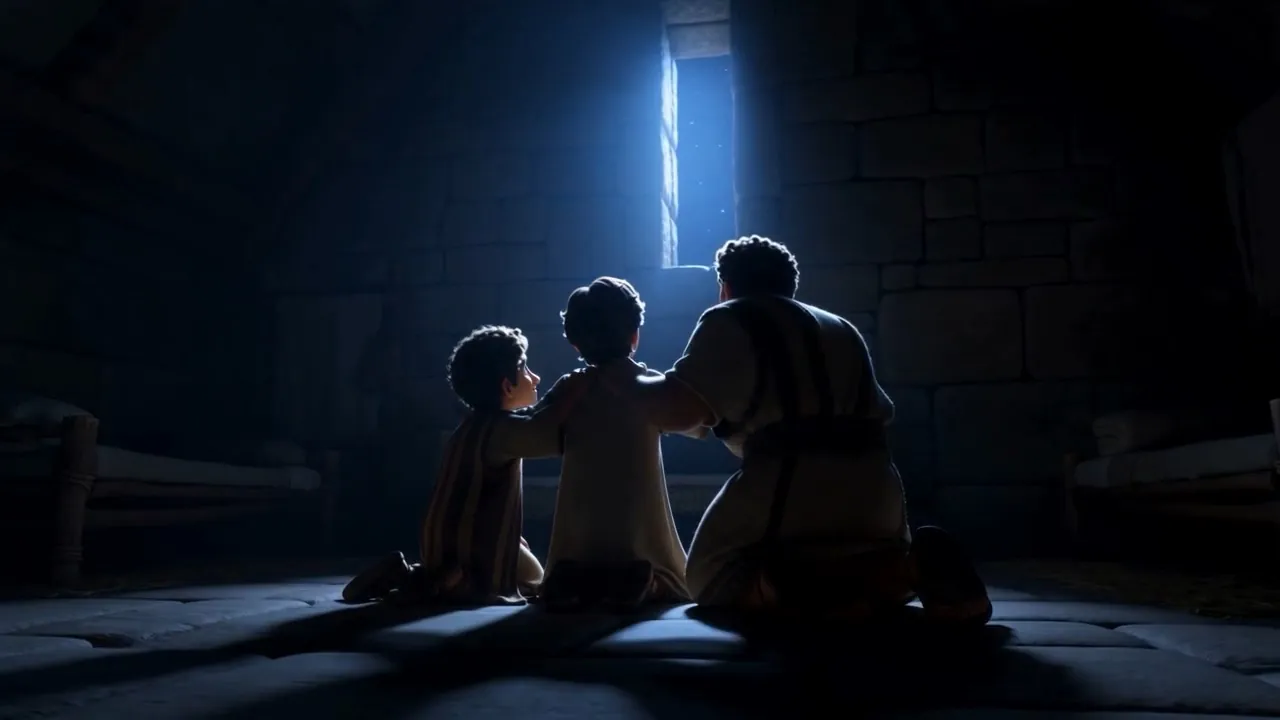
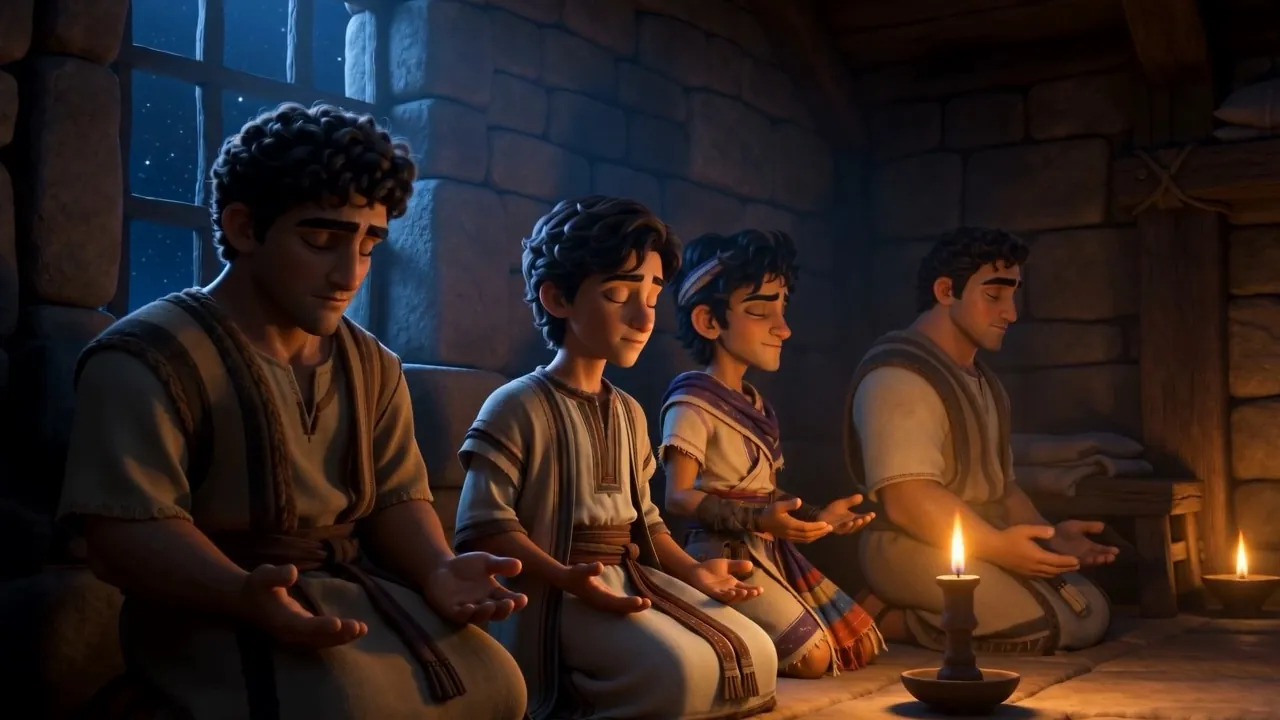

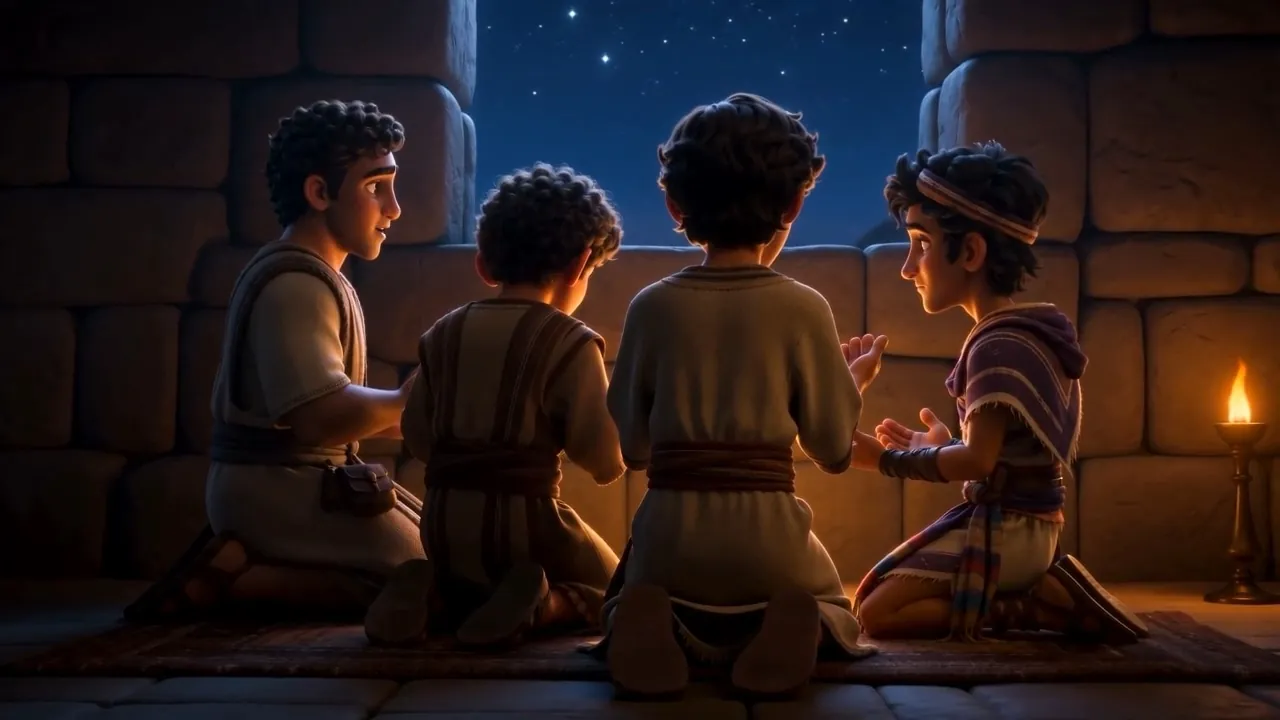
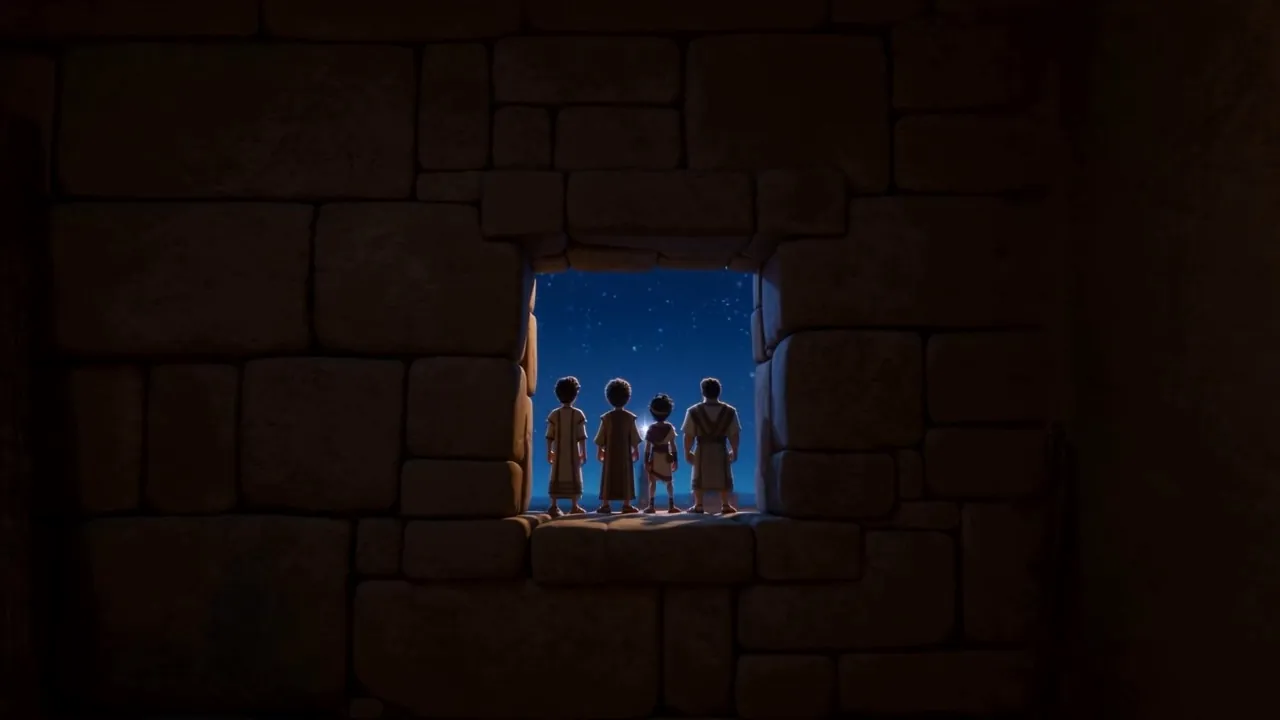

He didn't announce it. He just knelt. And one by one, without a word, the other three left their mats and knelt beside him — a fist-stack in the dark, a prayer in a language Babylon didn't teach. Even here, the prayer said. Even here You hear us. Somewhere in the room, the crying stopped to listen.
Even here. Even here.
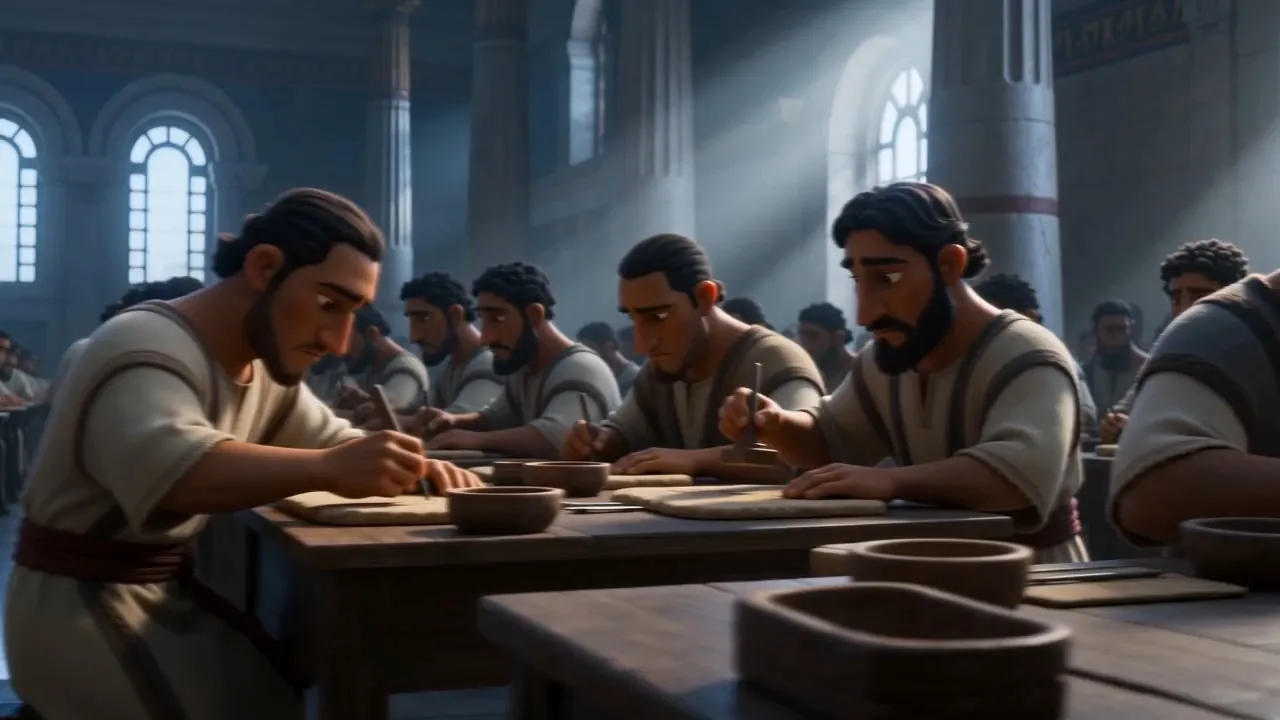
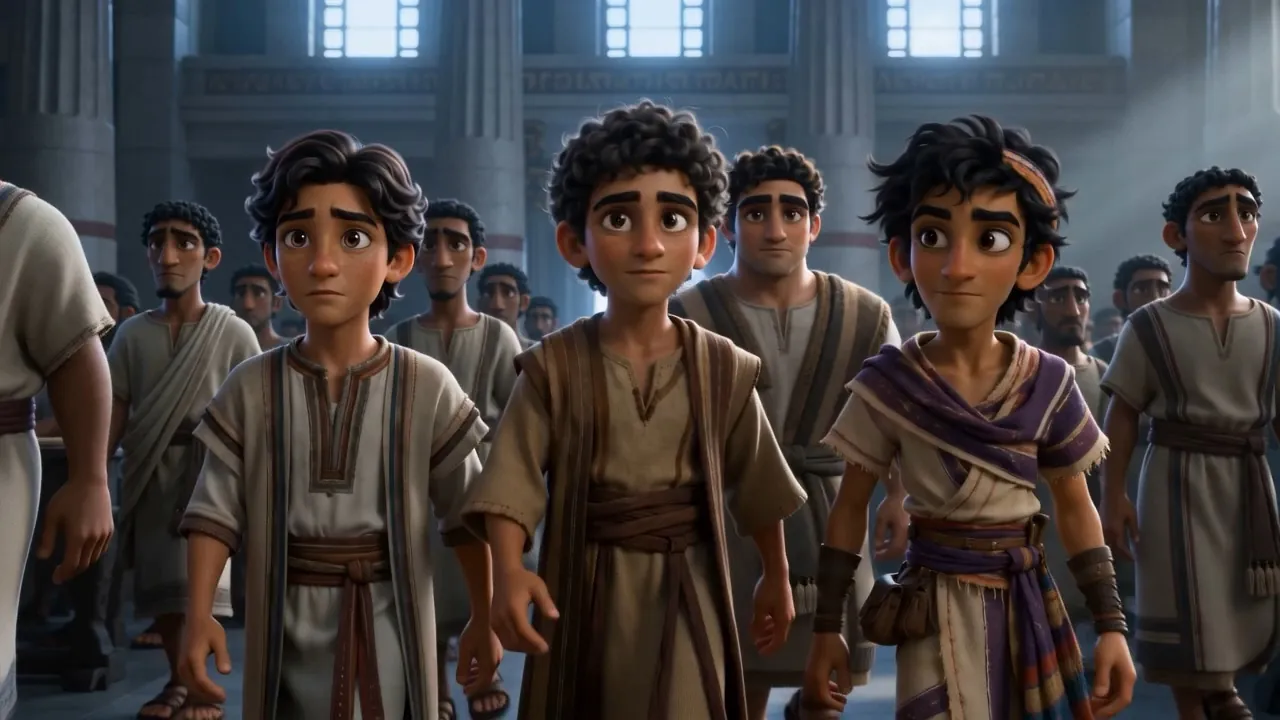
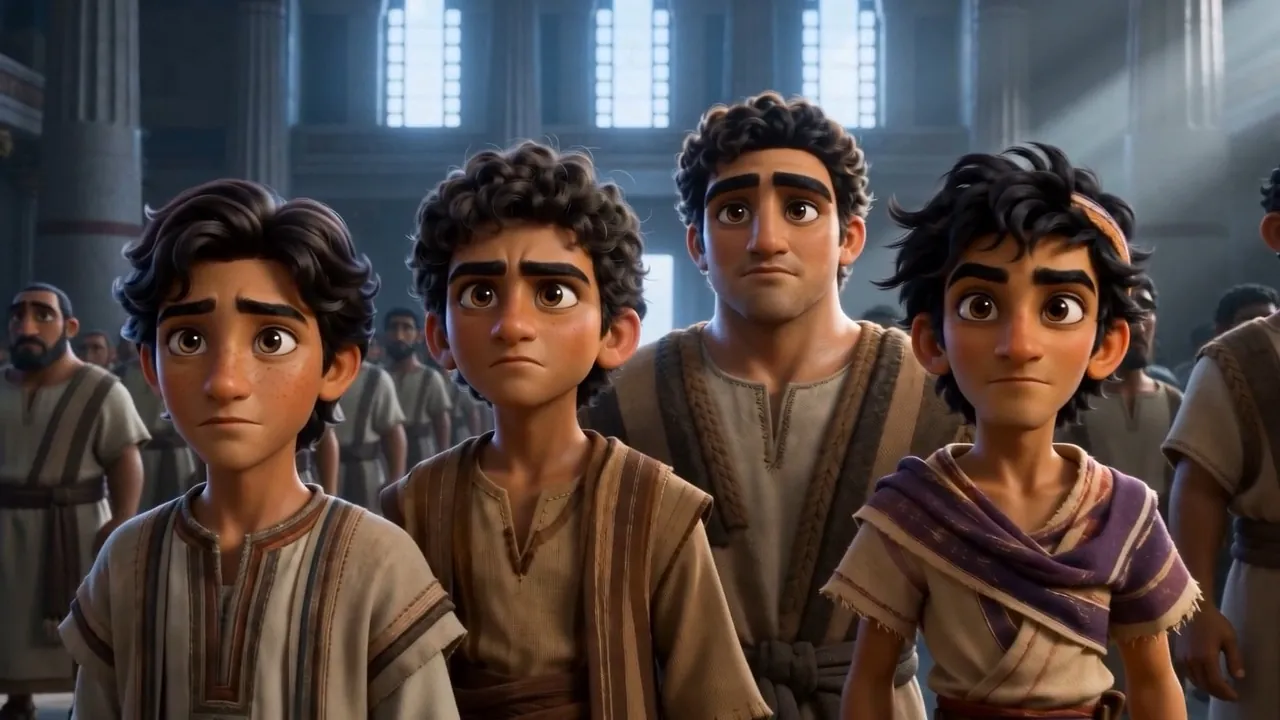
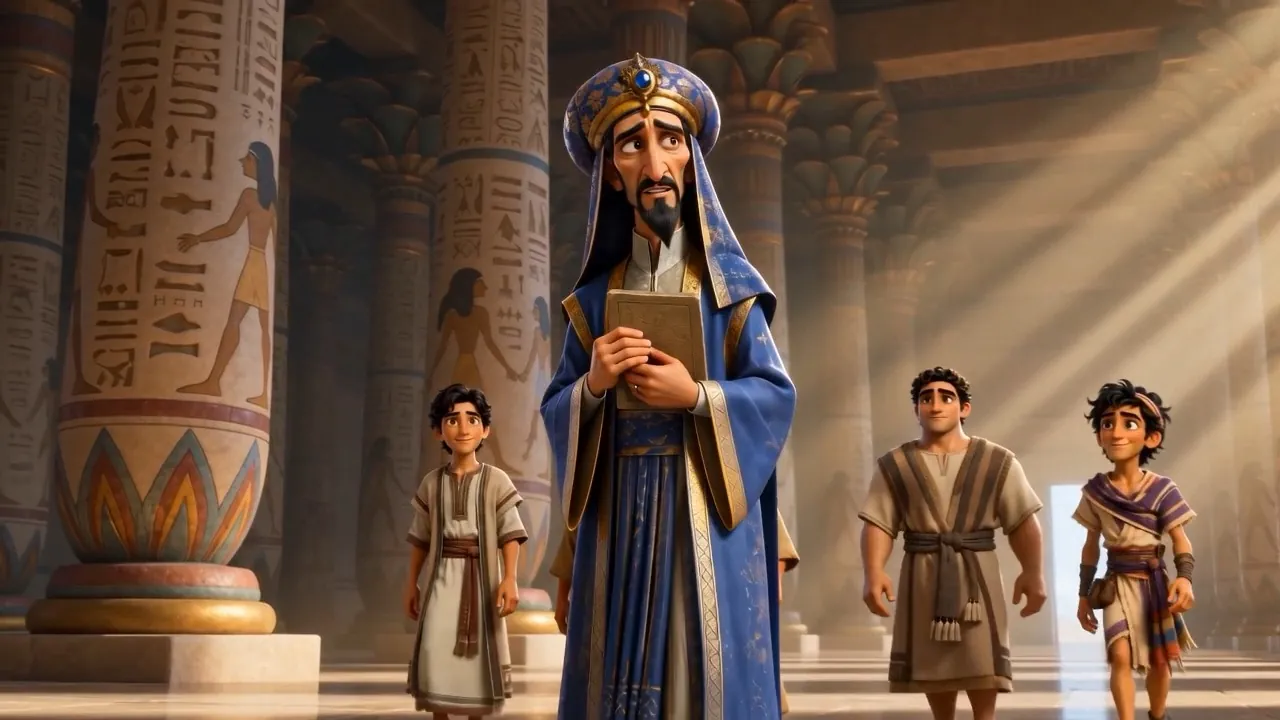

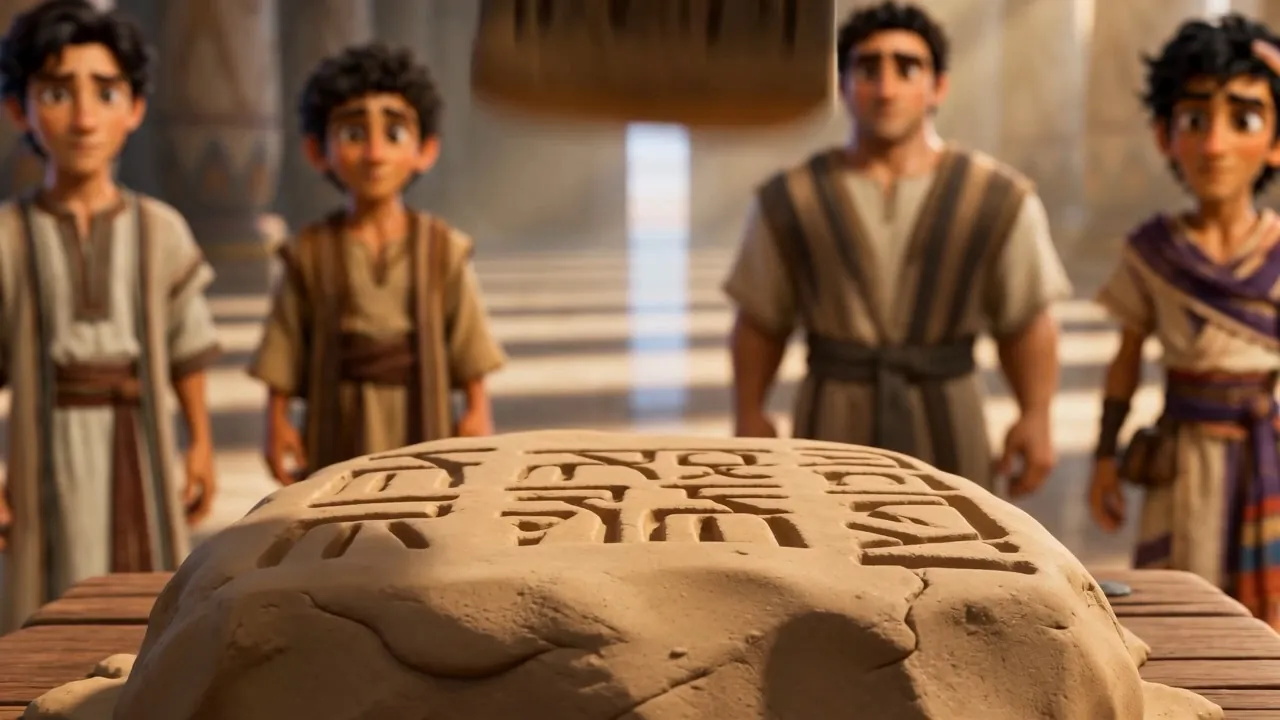
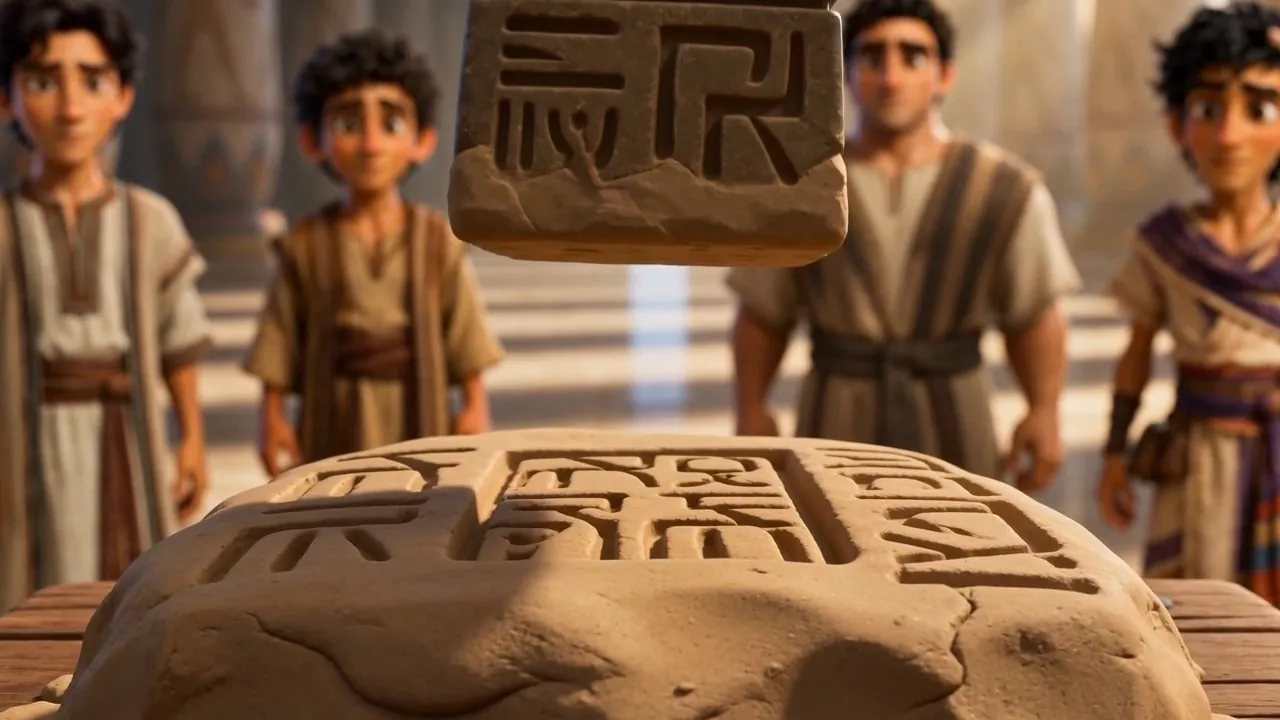
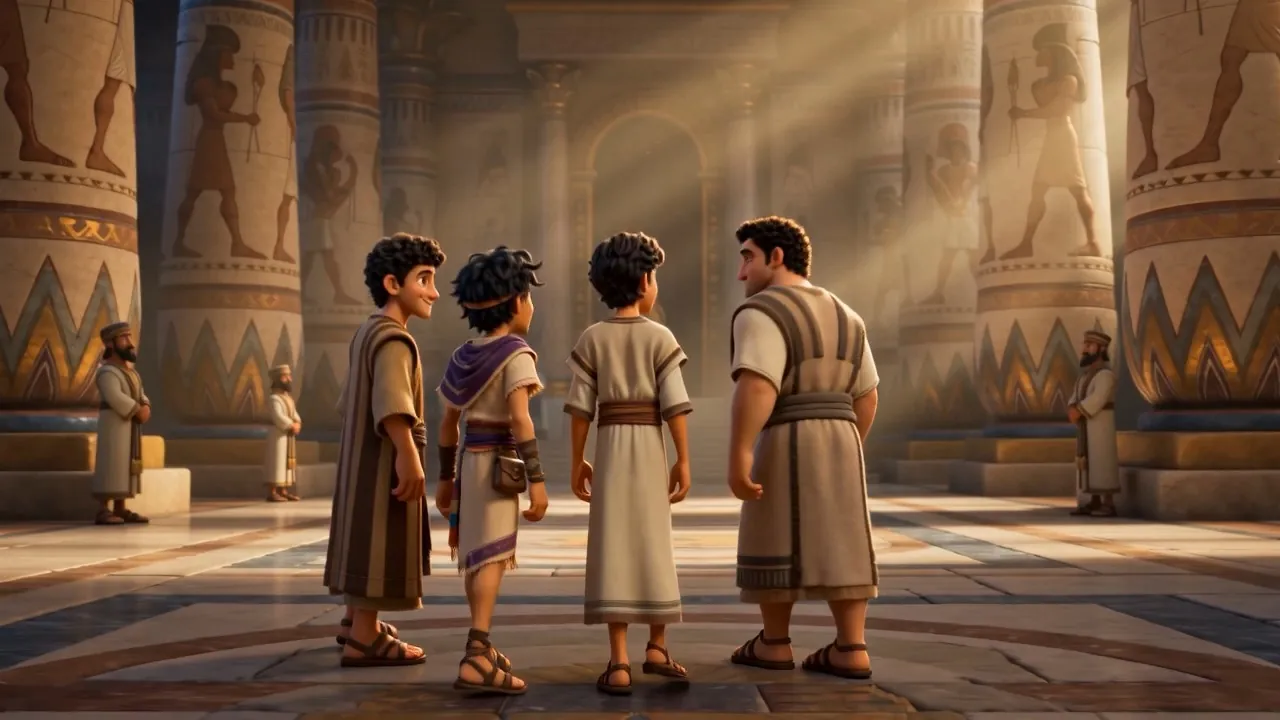
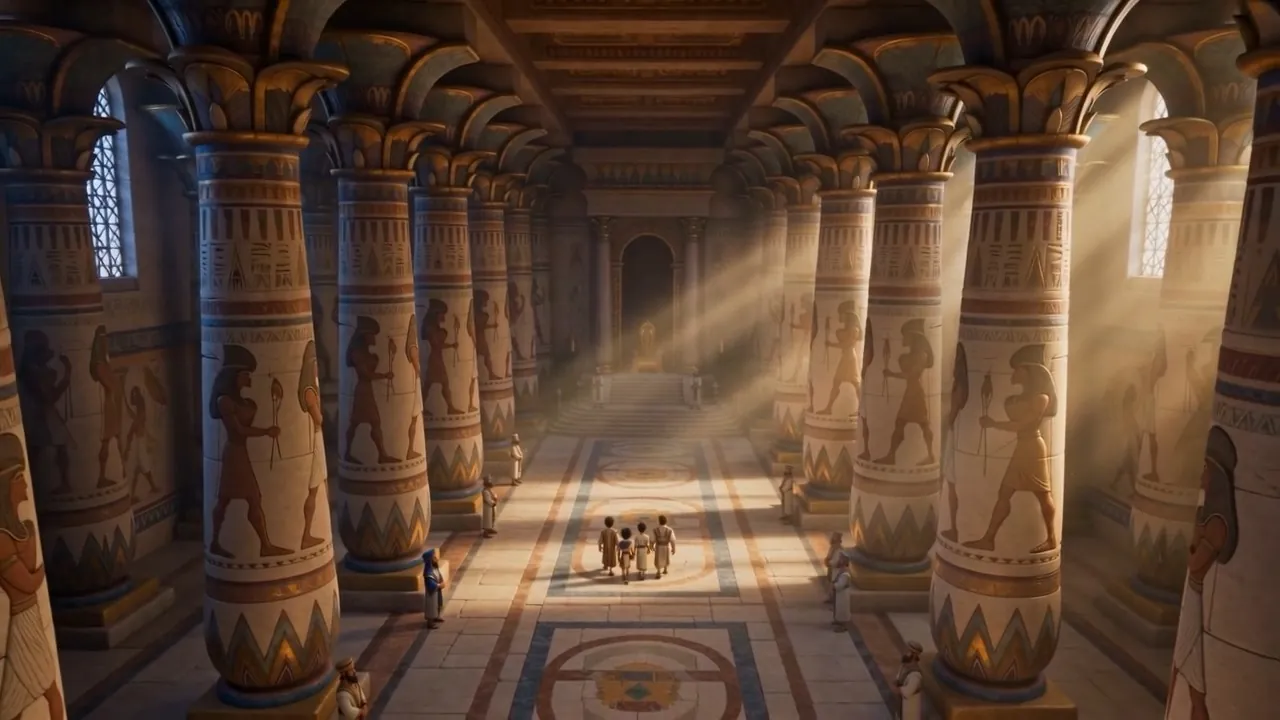
Babylon's program was three years long and very thorough. New language. New books. New food. And first of all, new names — pressed into clay while you watched. Daniel became Belteshazzar. Hananiah, Shadrach. Mishael, Meshach. Azariah, Abednego. Names honoring Babylon's gods, stamped over names that honored theirs. The clay dried. The boys didn't. Daniel 1 : 7
Renamed. Unchanged.

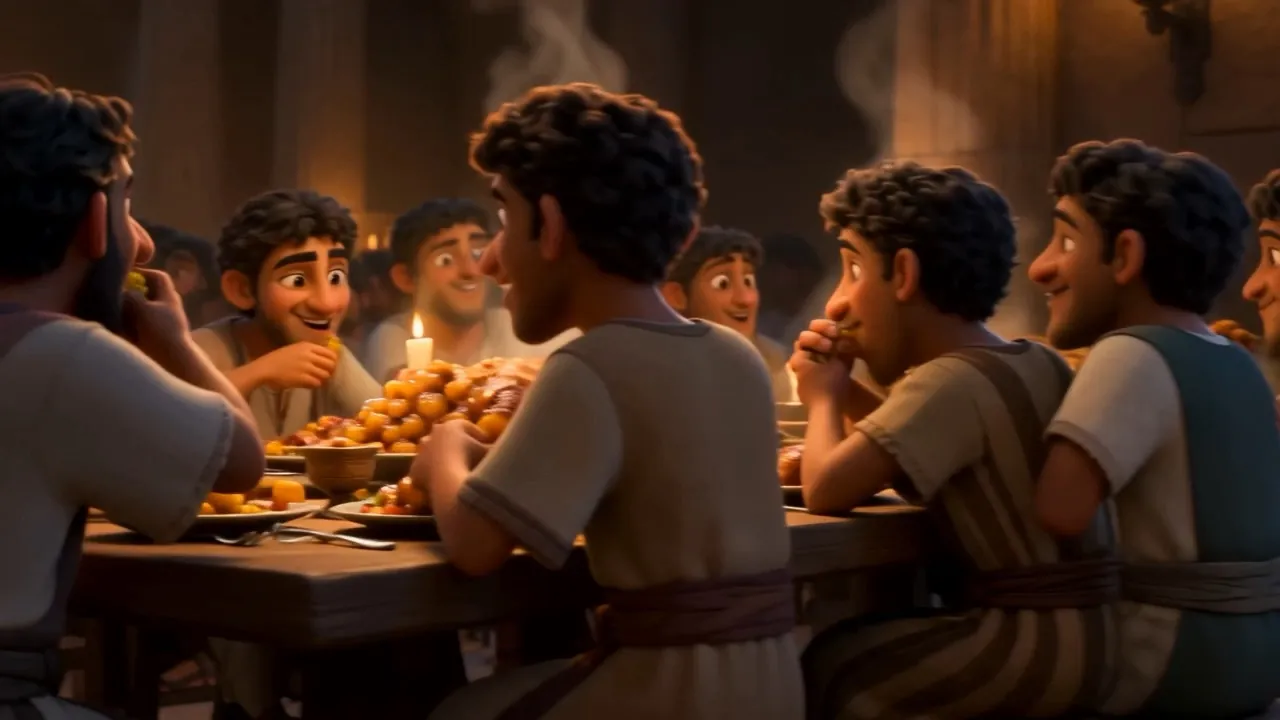
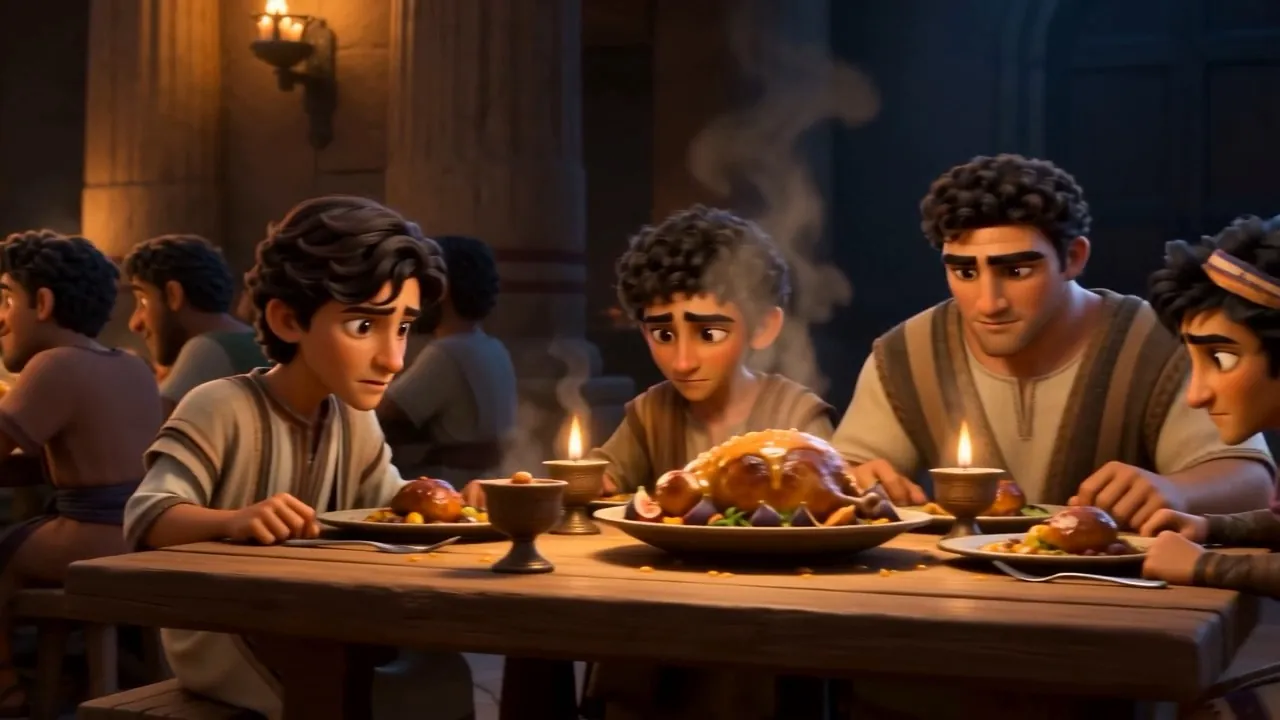

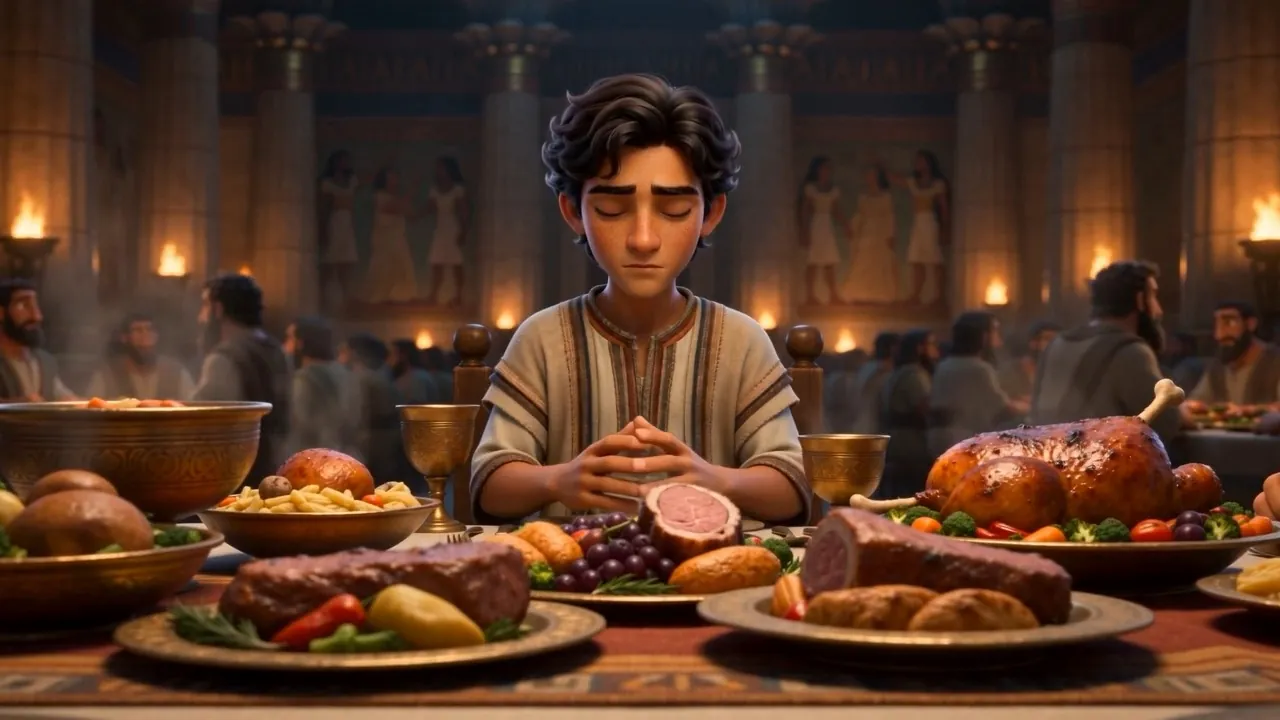
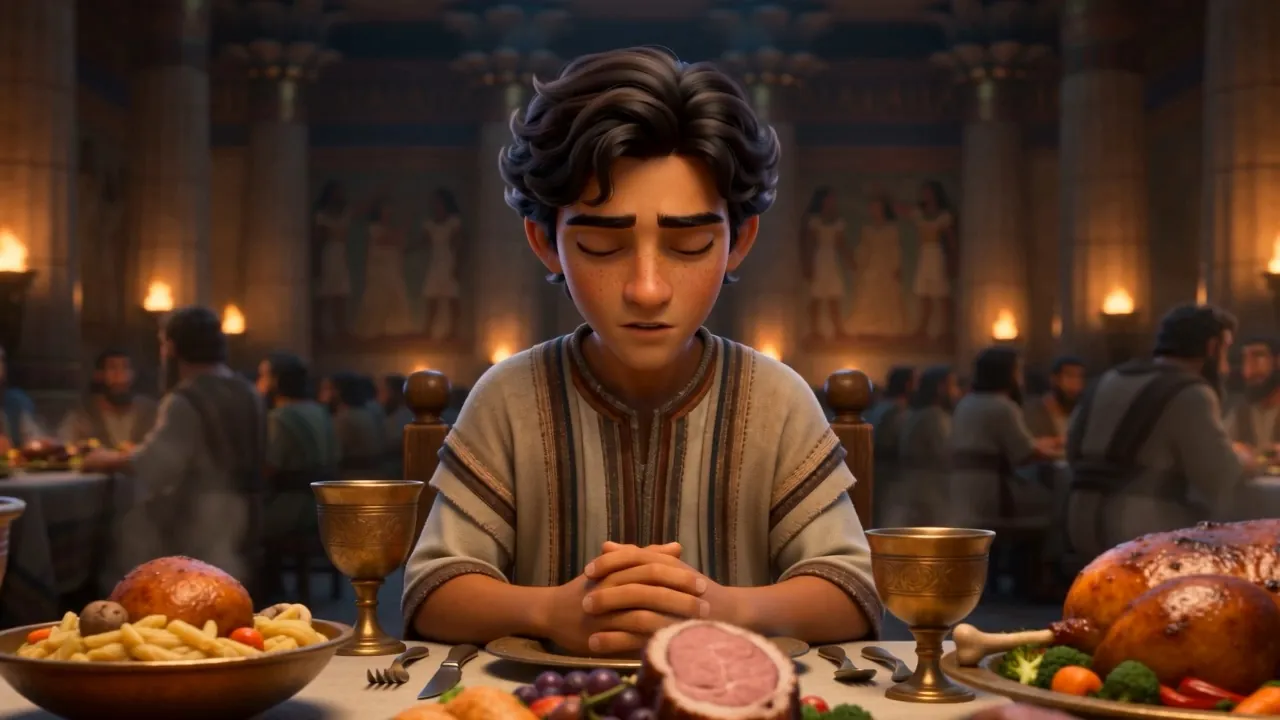

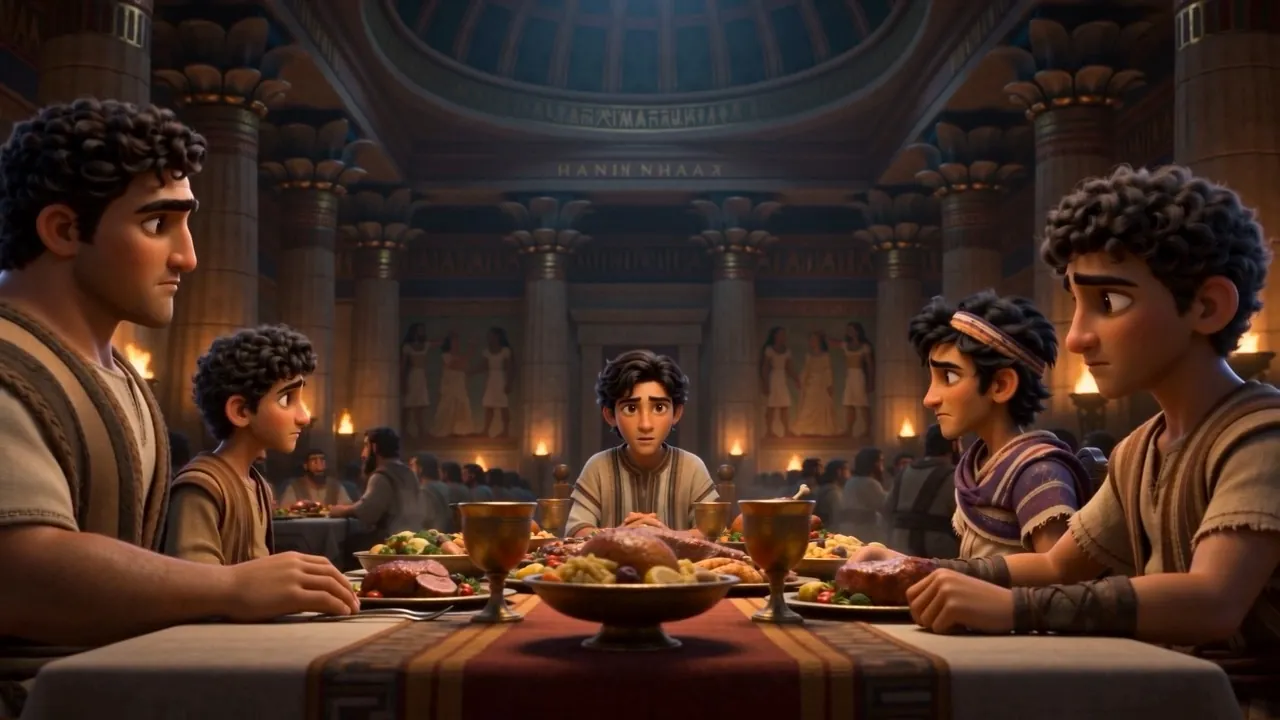


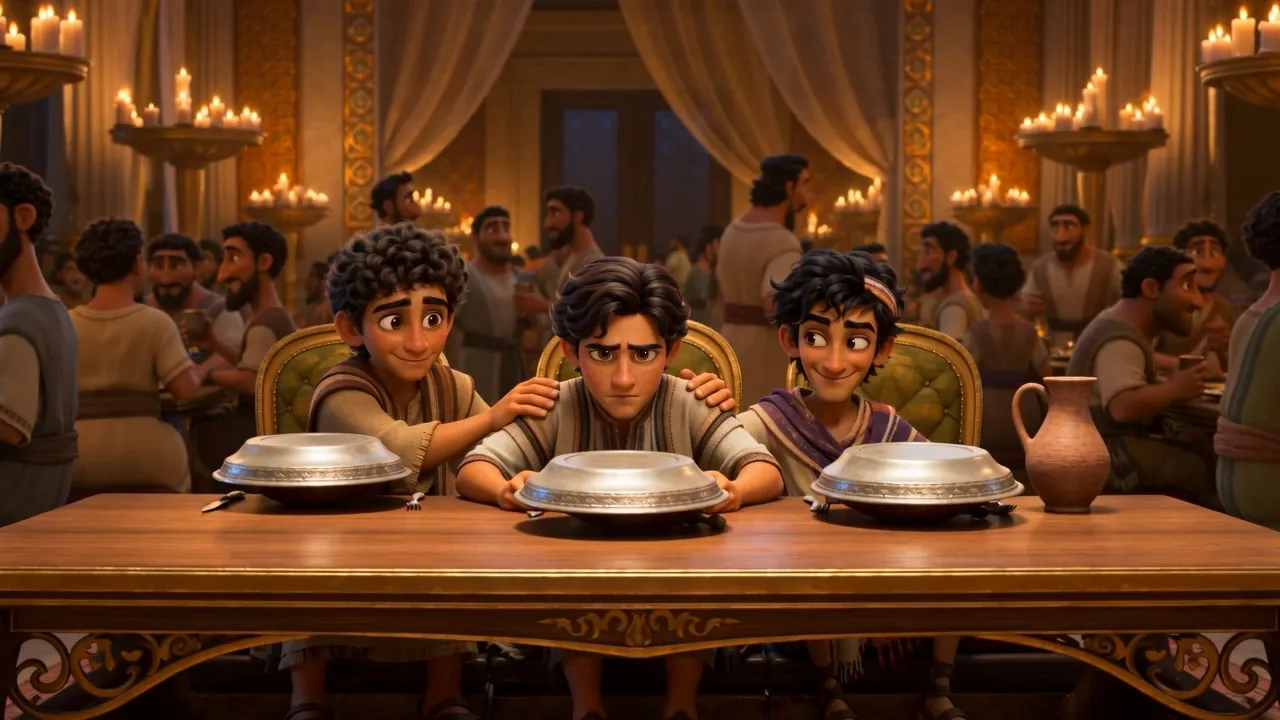
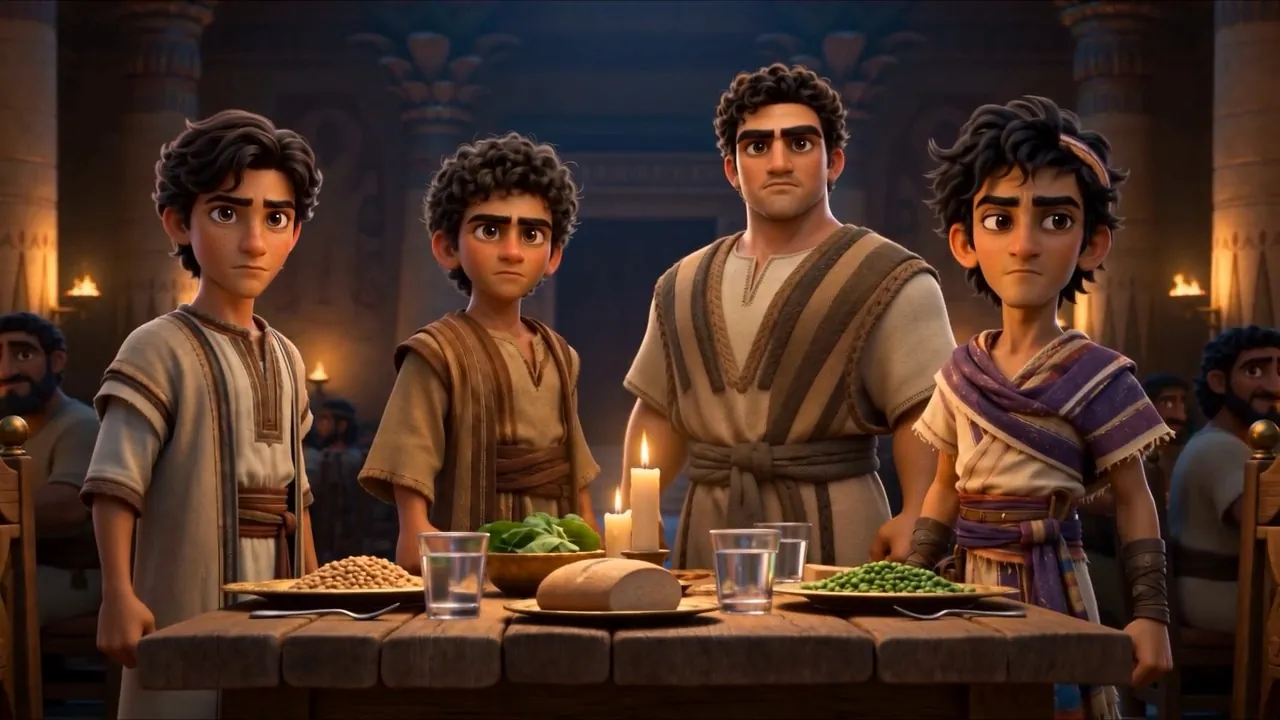
Then came the subtlest weapon in the city: dinner. The king's own dainties, the king's own wine — food offered to Babylon's idols, rich with strings attached. Daniel looked the roast dead in the eye. “We could have been friends,” he told it. And he purposed in his heart that he would not defile himself. The plates went back untouched. Daniel 1 : 8
Daniel purposed in his heart.
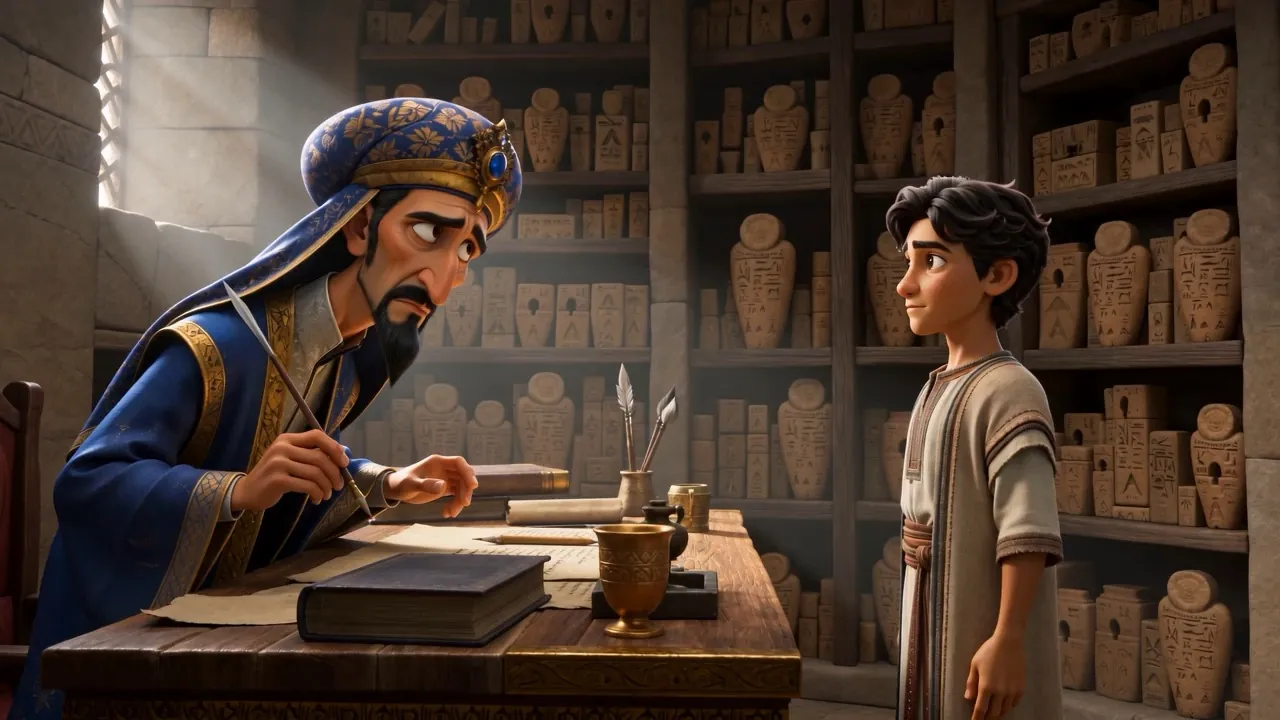



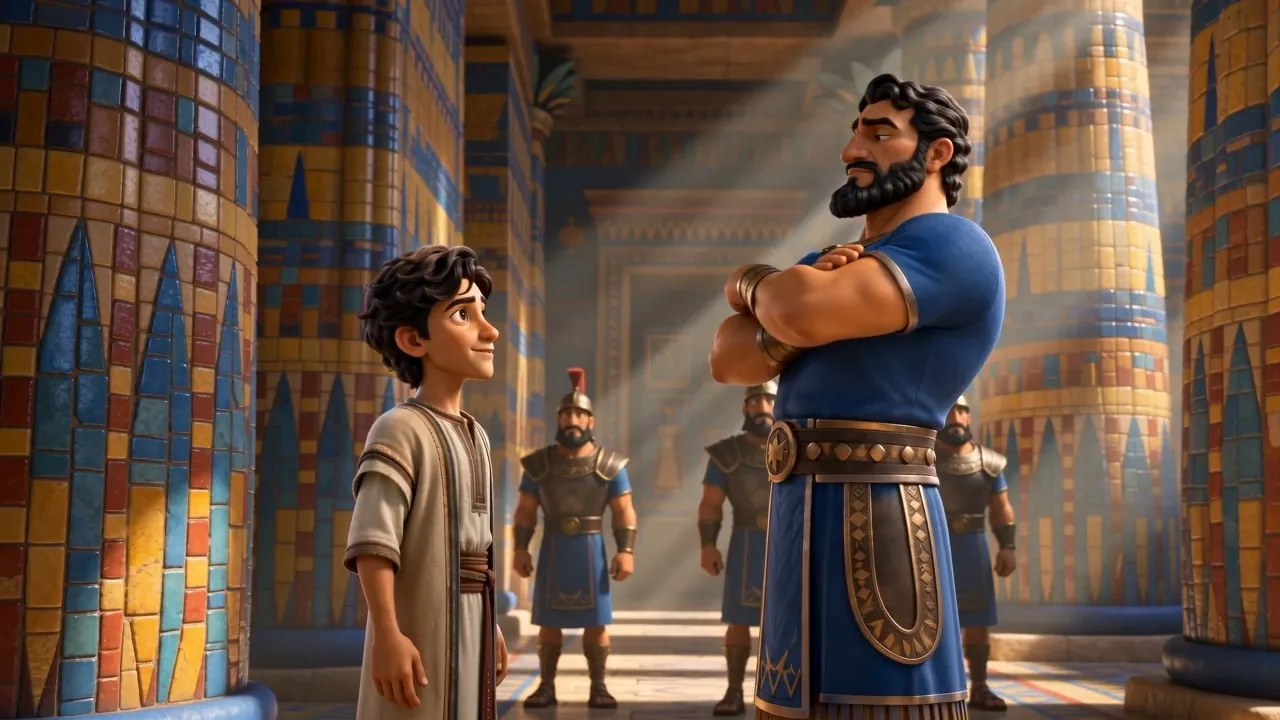

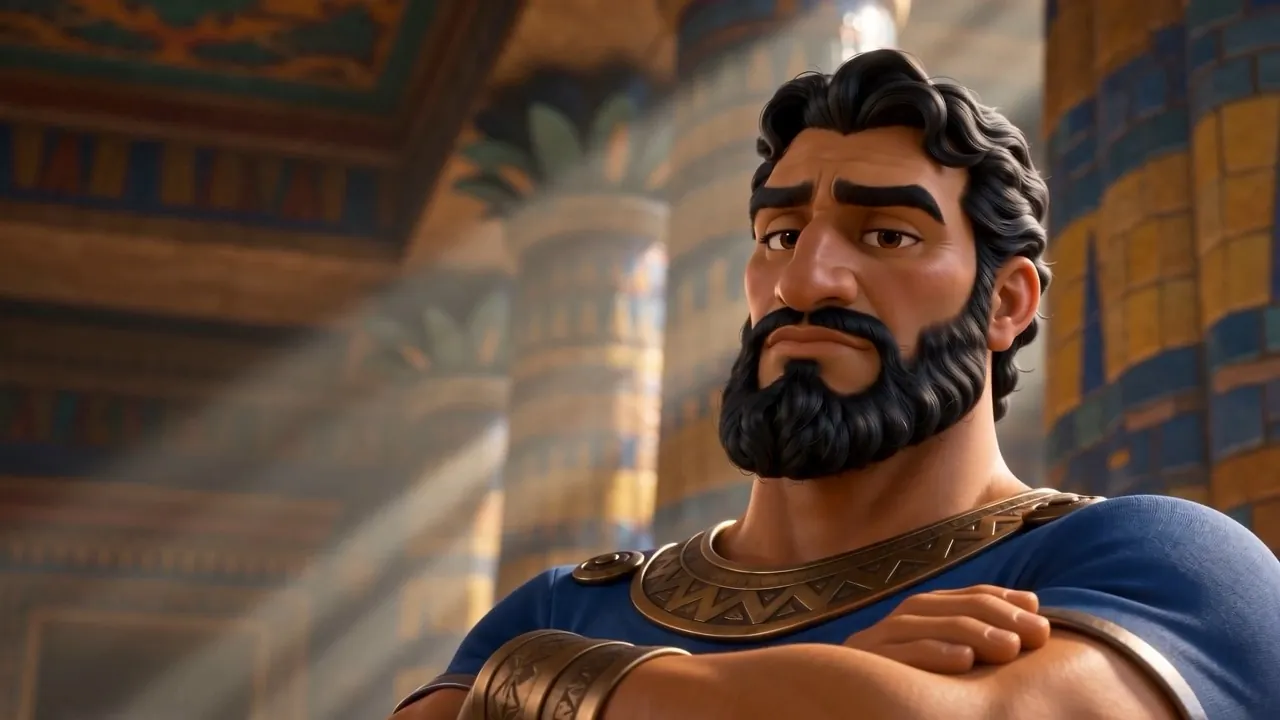


The chamberlain nearly fainted — “you would endanger my head with the king!” — so Daniel went to the steward with a businessman's offer instead: “Test your servants, I beg you, ten days; and let them give us vegetables to eat, and water to drink… and as you see, deal with your servants.” Ten days. Measurable. Reversible. Reasonable. The steward looked at the calm boy for a long moment — and took the bet. Daniel 1 : 10–14
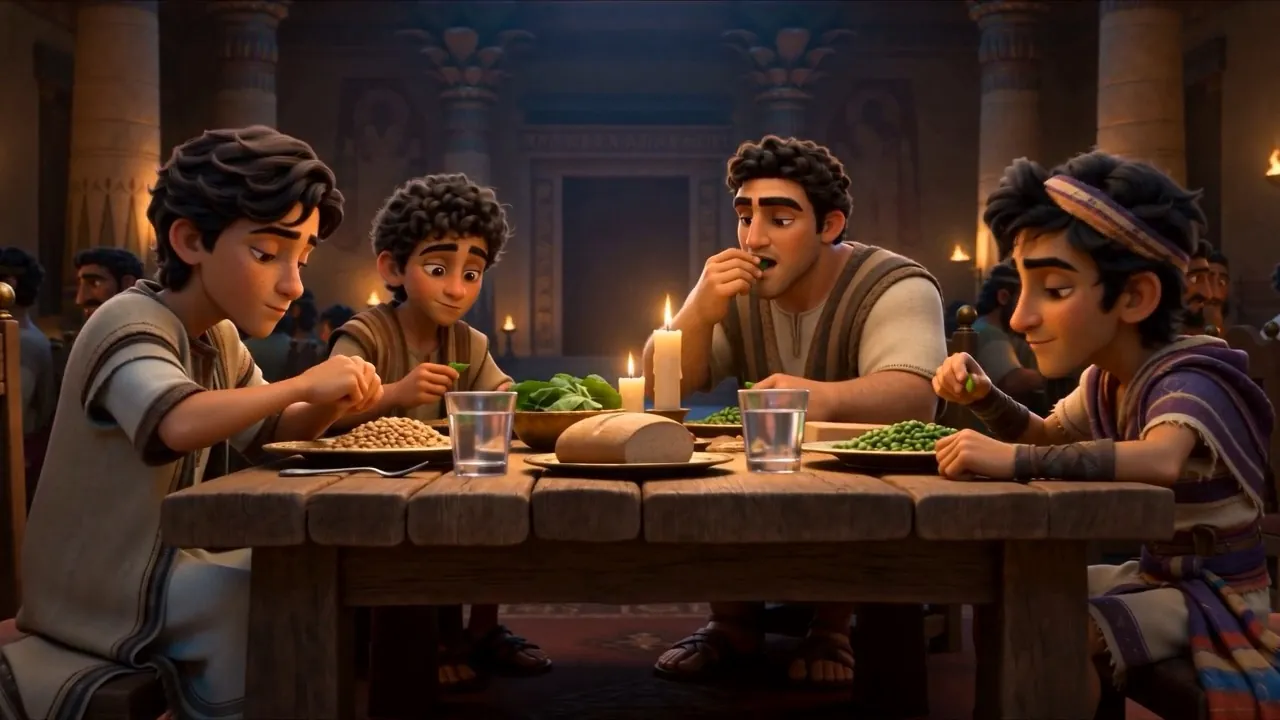

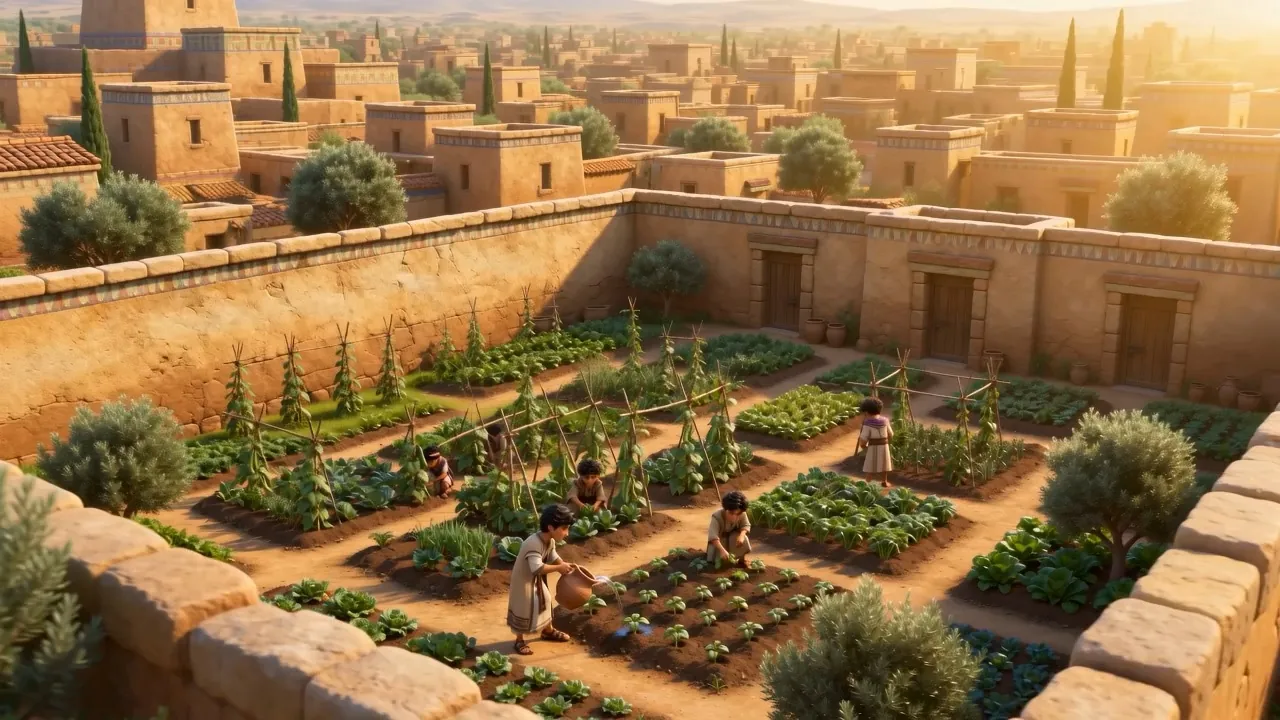
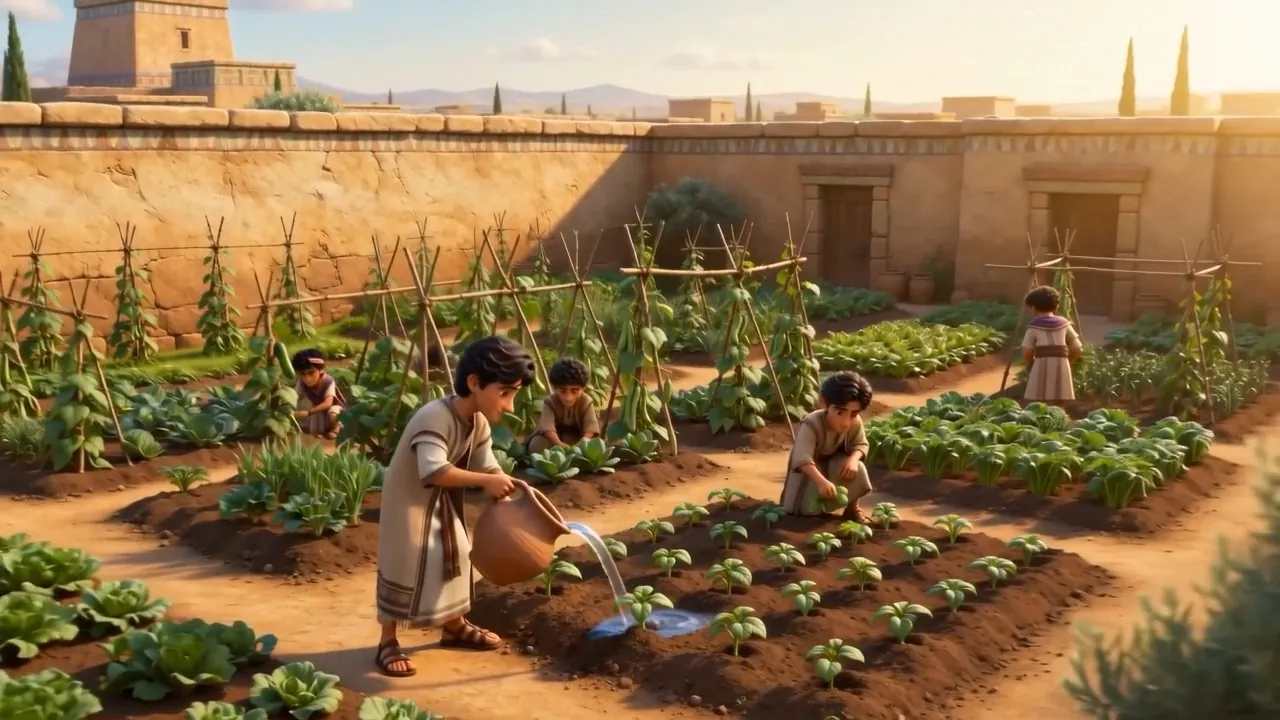




So while the other students ate the king's roast, four trainees ate vegetables and water — and then went further and grew their own. Neat rows. Carried water. A cucumber held up like a trophy of state. Azariah knelt nose-down over one seedling and informed it that it was, possibly, a kingdom. Daniel 1 : 15–16
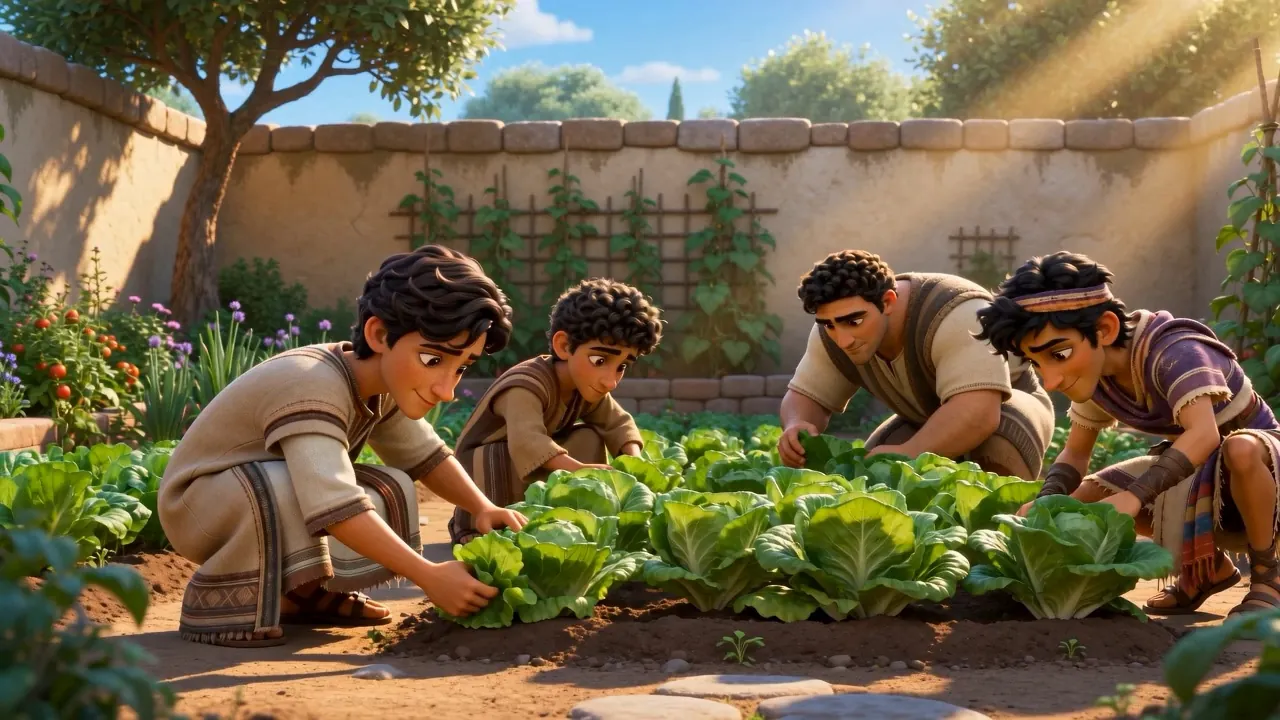


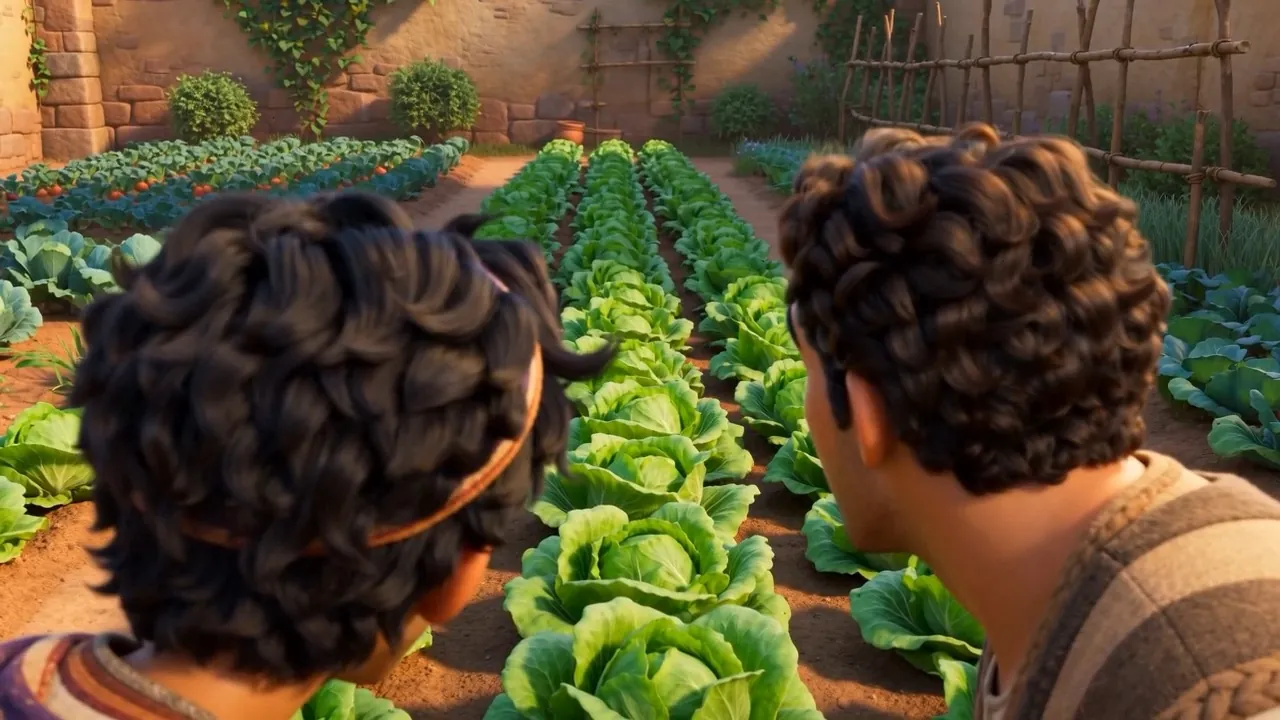

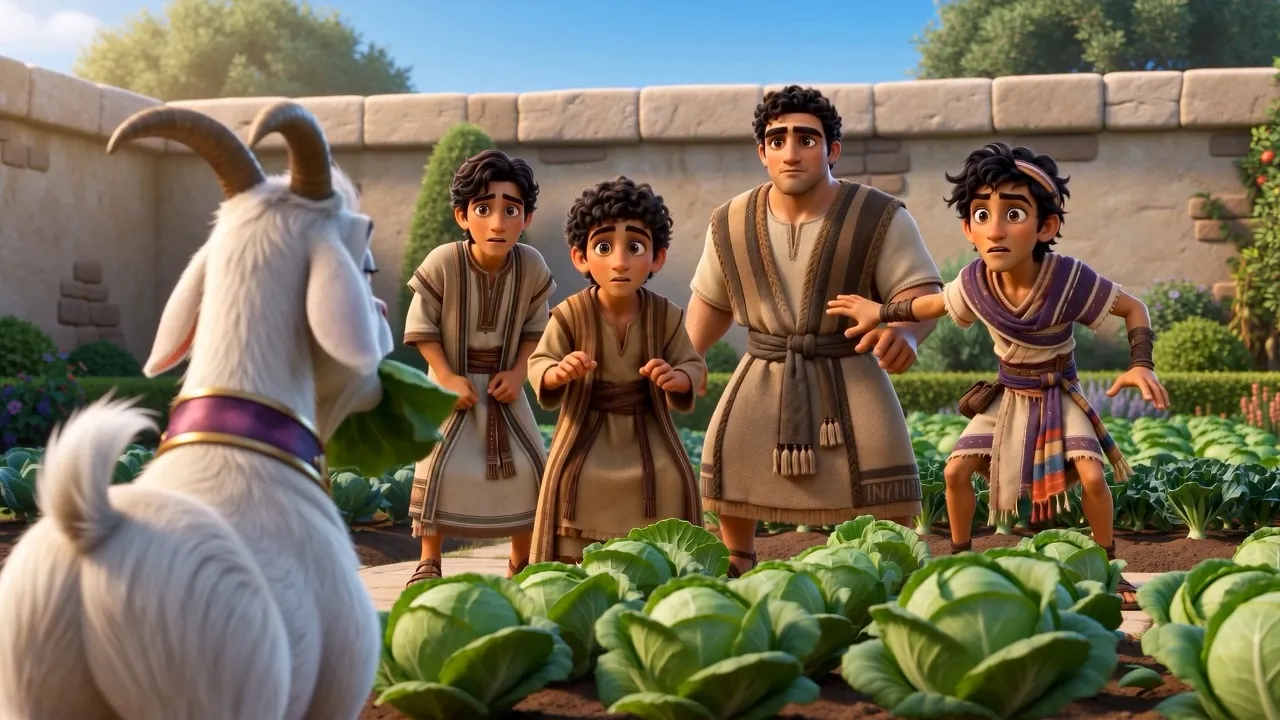





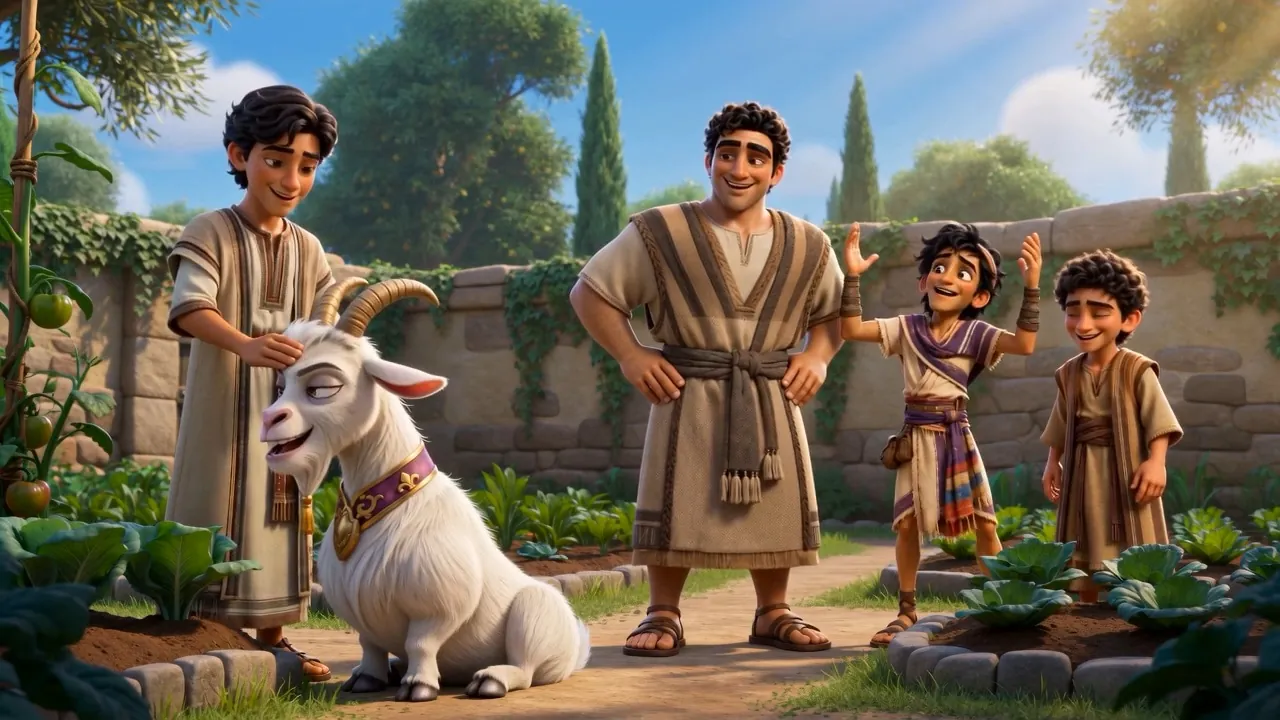
The garden acquired a critic. A palace goat — white, bejeweled, and above the law — discovered the cabbage rows and reviewed them daily. They named her Her Imperial Majesty, fed her by hand, and accepted the verdict. As Azariah pointed out, arms thrown wide: even the goats of Babylon preferred their vegetables to the king's table.






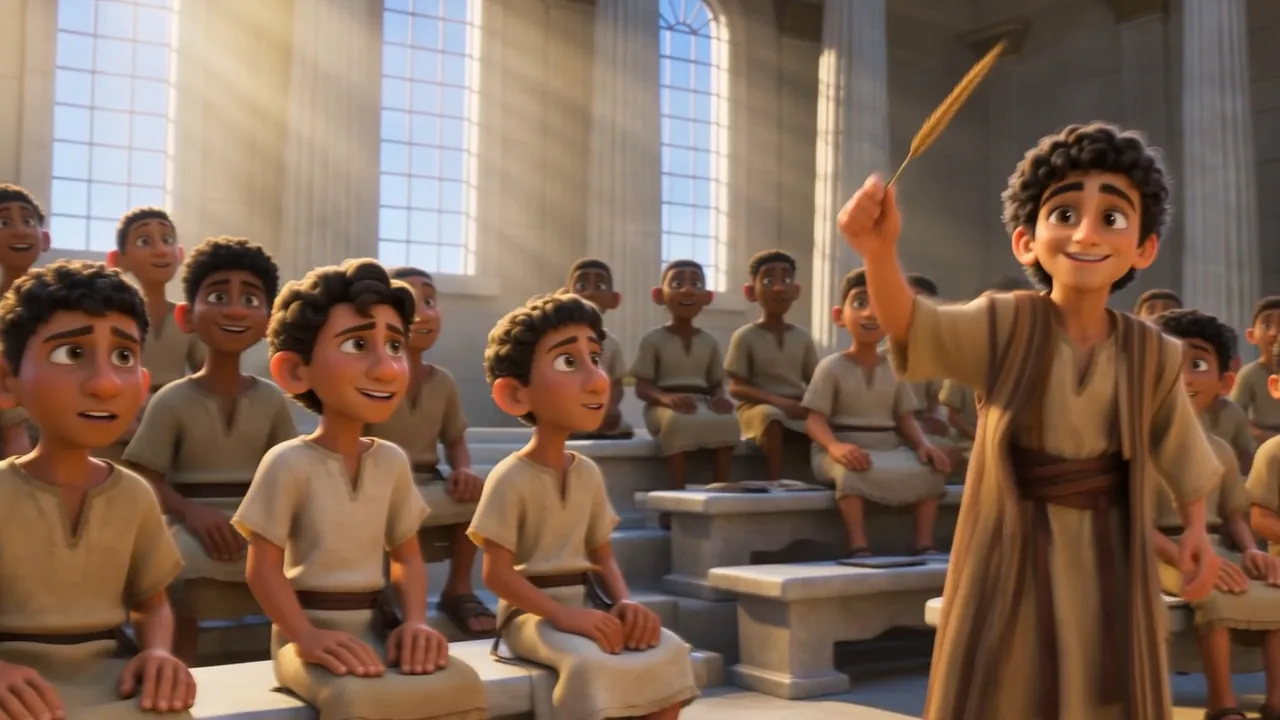
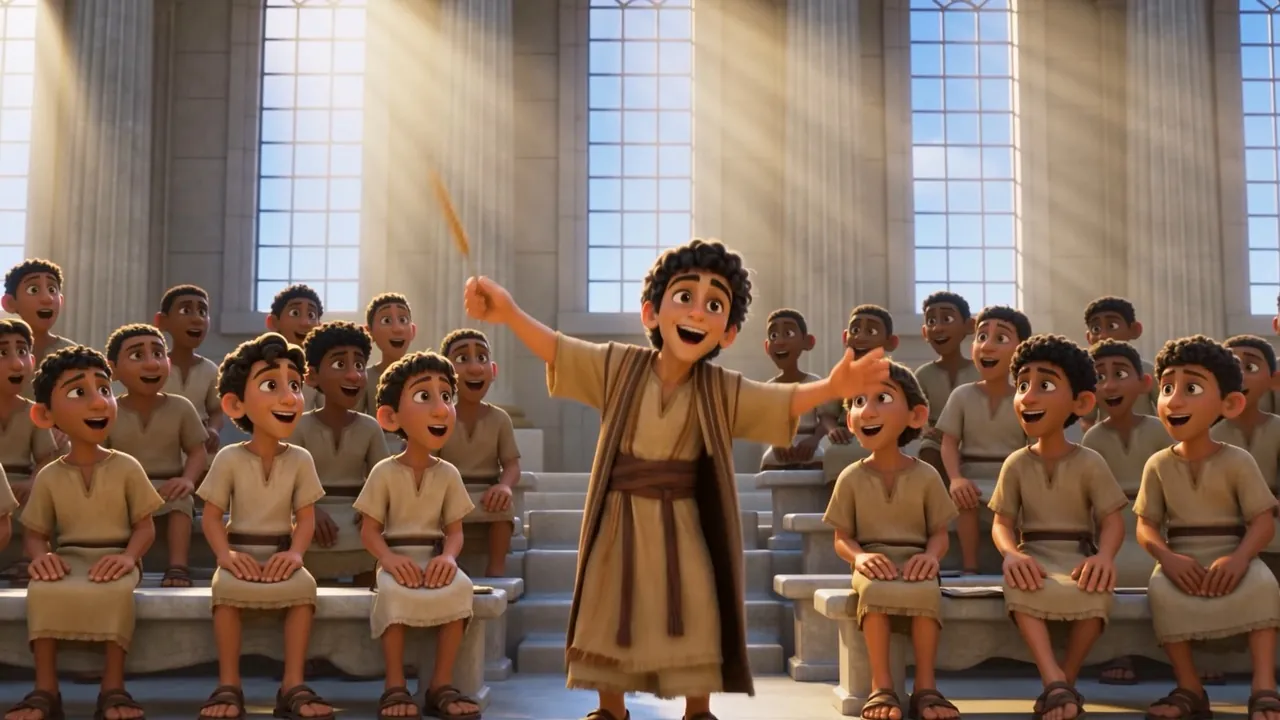


They learned everything Babylon had: star-charts, omen-lists, the verb choir of a new grammar. Daniel learned it best — and kept asking the question the charts couldn't answer: the stars keep perfect time, so who decided them? At night he studied past the lamp oil, then looked up from the scroll to the source material. God gave them knowledge and skill in all learning and wisdom. Daniel 1 : 17
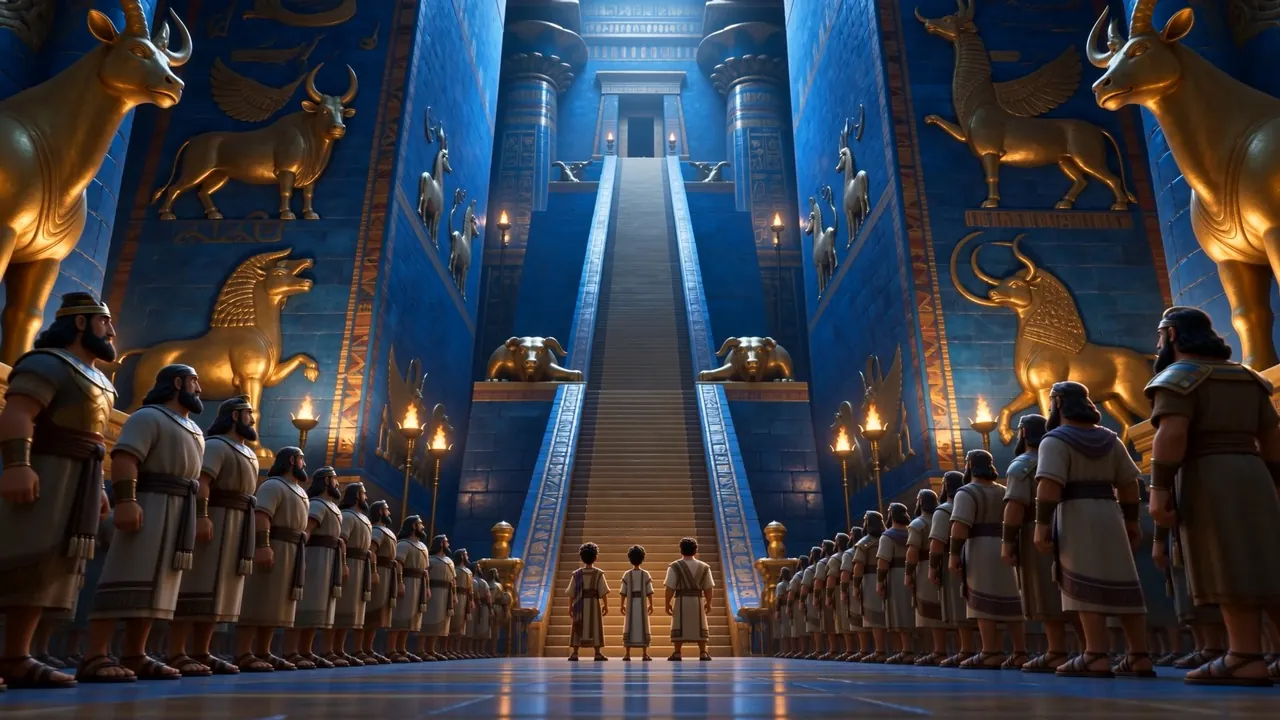
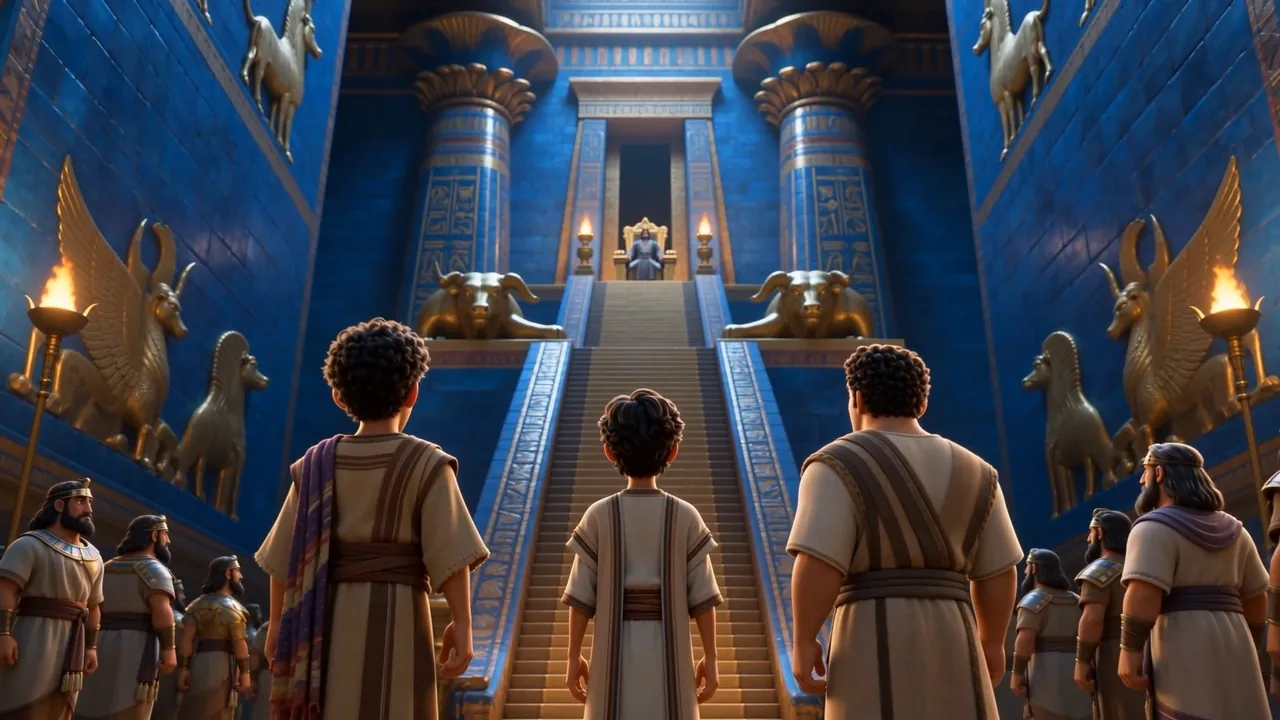

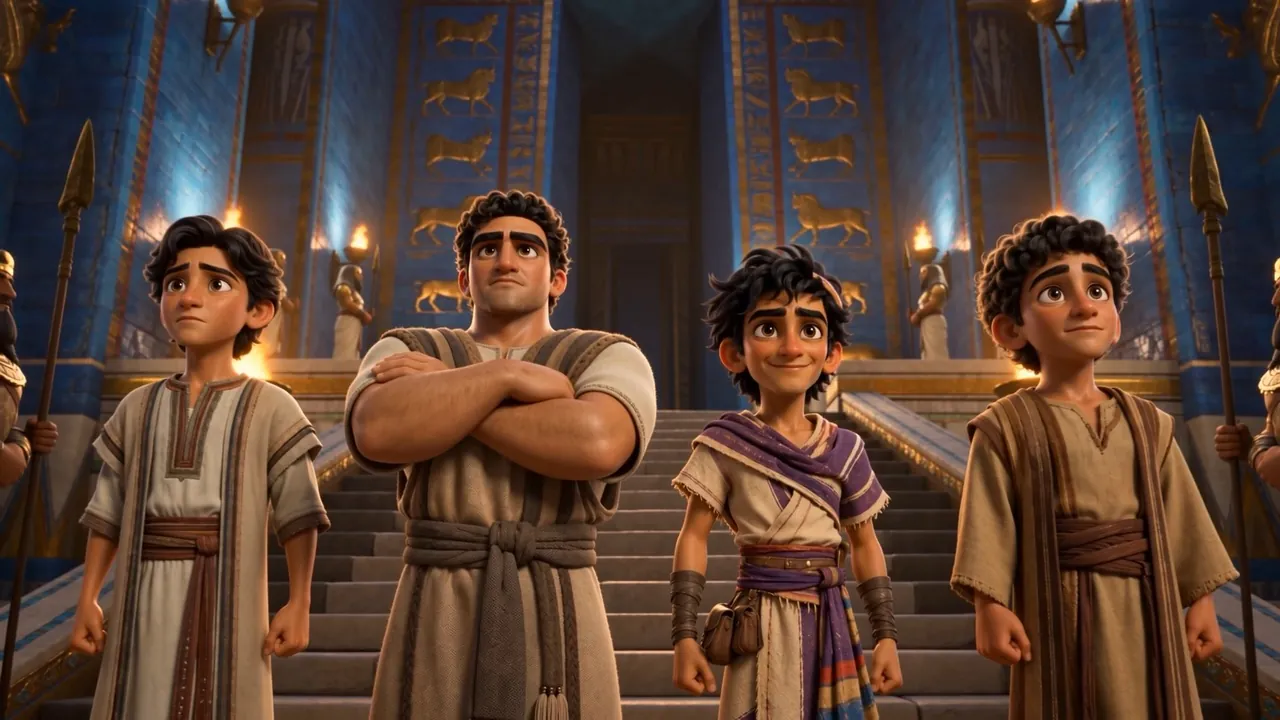
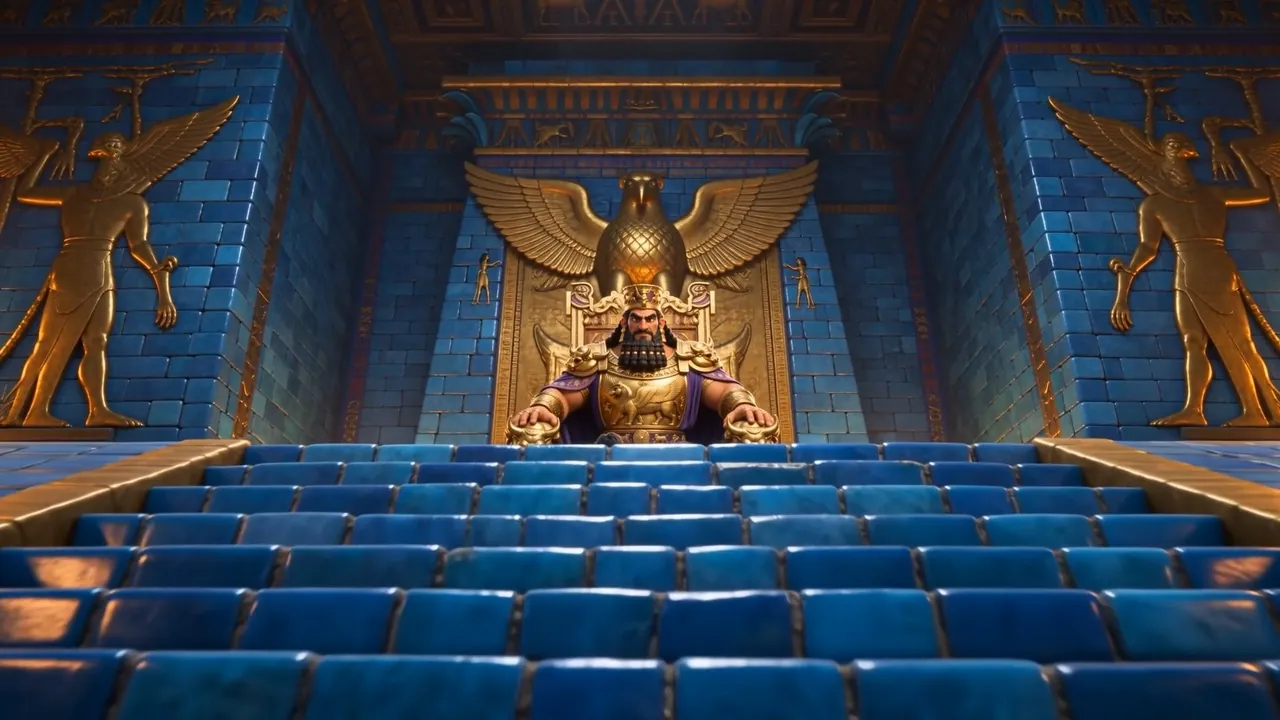
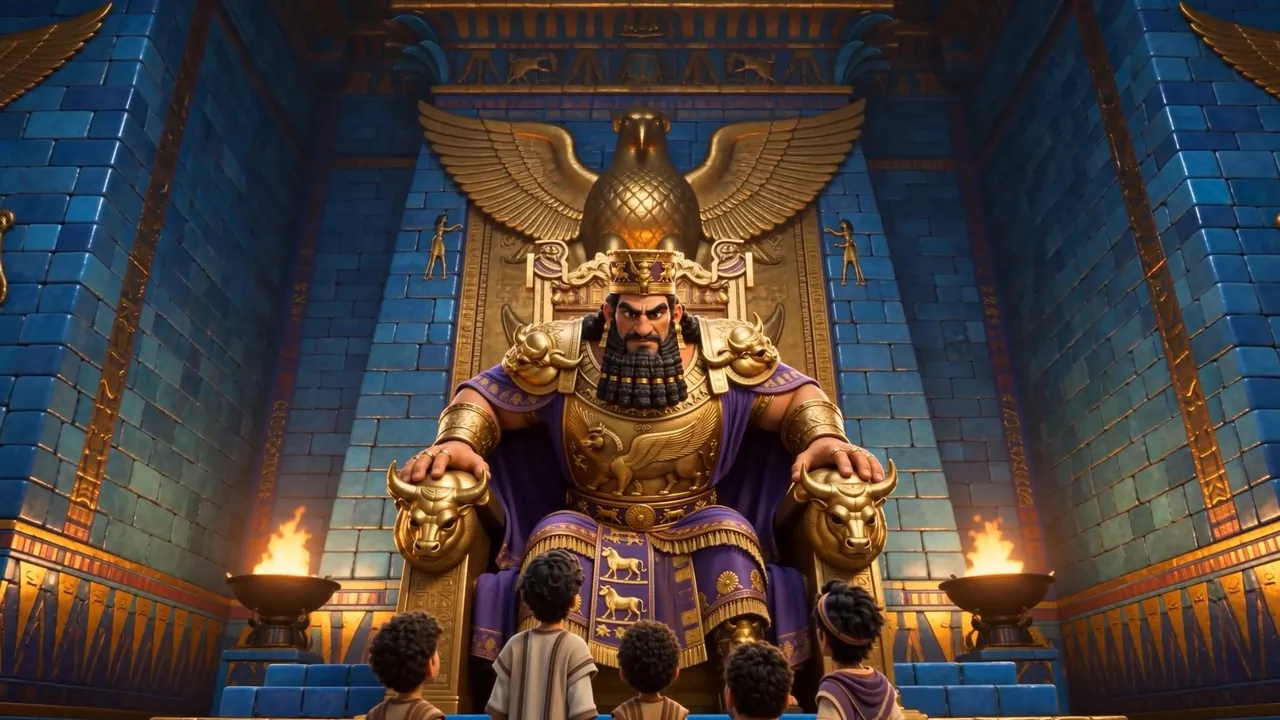


Three years ended at the foot of a blue stone mountain with a throne on top. Nebuchadnezzar — conqueror of their city, wearer of a horned crown, a man built like his own siege engine — came down to inspect the graduating class personally. A finger the size of a door handle tilted Daniel's chin into the light. Daniel 1 : 18
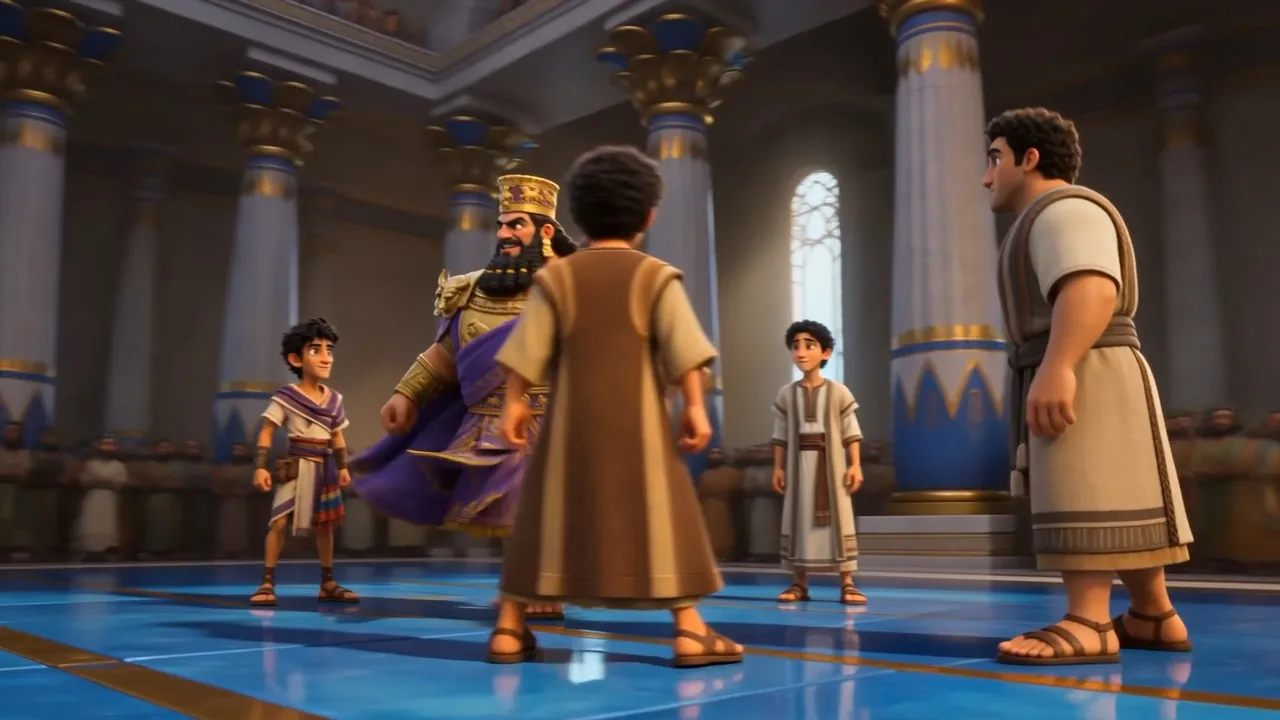



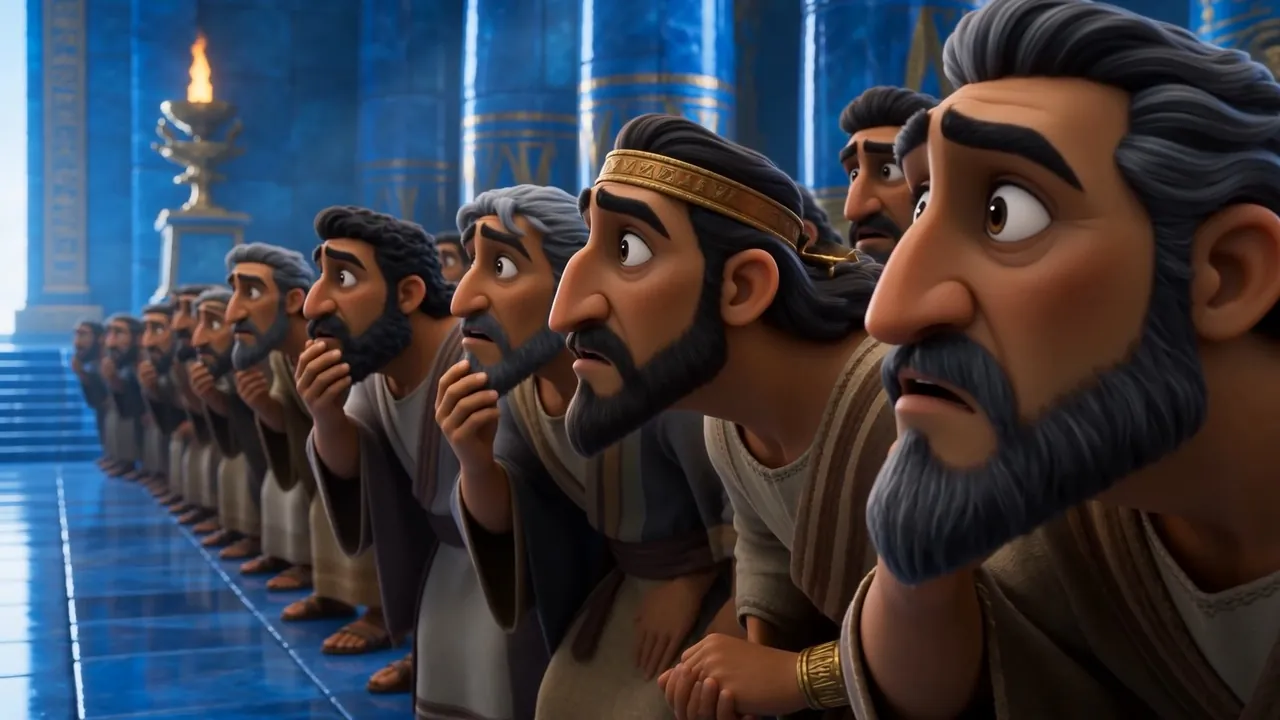
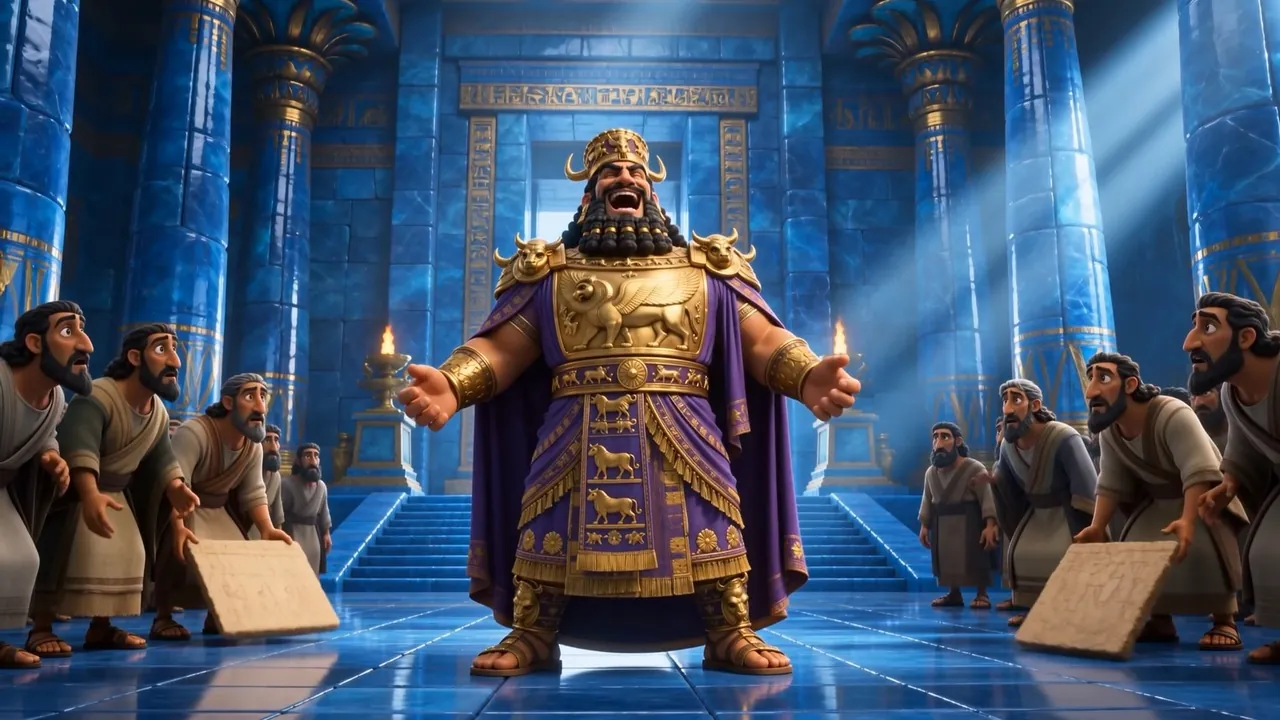

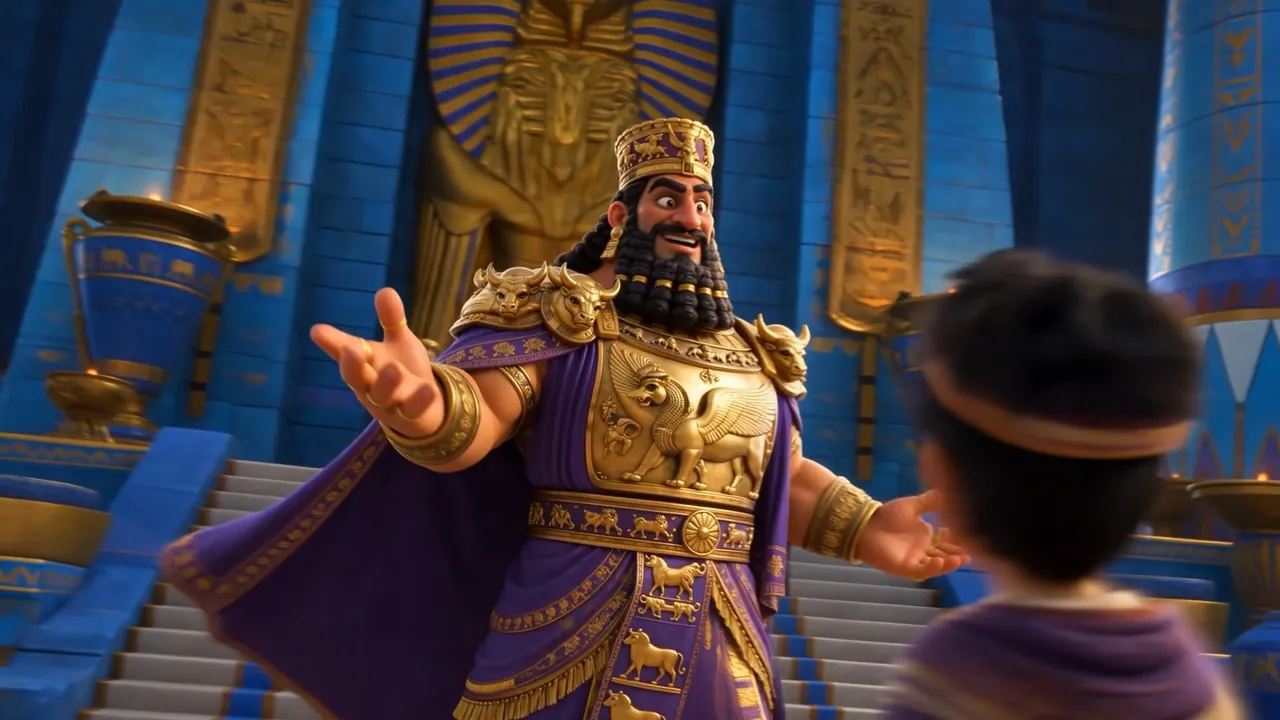

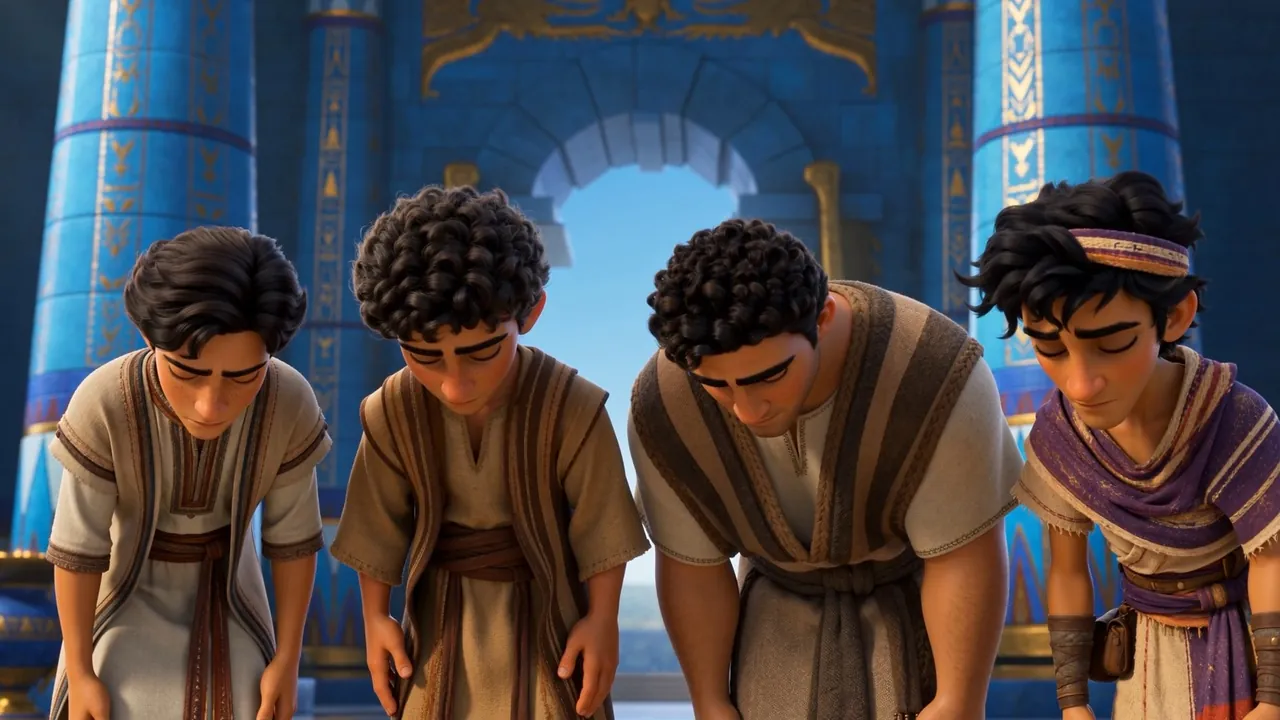
The questions came like arrows — history, law, stars, dreams — and the four vegetable-eaters caught every one. The court's old experts leaned in, appalled. The king started to laugh. In every matter of wisdom and understanding, concerning which the king inquired of them, he found them ten times better than all the magicians and enchanters who were in all his realm. Daniel 1 : 20
Ten times better.
Babylon renamed them, retrained them, and served them its best — and got four young men who remembered exactly who they were. The quiet test of the vegetables came before every loud test to follow: the furnace, the wall, the lions. Faithfulness practiced small was about to be needed large. Daniel continued even to the first year of king Cyrus — he would outlast the empire that captured him.
Voices of the palace · hover or tap to turn
Daniel
"Test your servants, I beg you, ten days; and let them give us vegetables to eat, and water to drink."
— Daniel 1:12
Ashpenaz
"I fear my lord the king… why should he see your faces worse looking than the youths who are of your own age?"
— Daniel 1:10
Nebuchadnezzar
"In every matter of wisdom and understanding… he found them ten times better than all the magicians and enchanters…"
— Daniel 1:20Before the next dream
How well were you paying attention?
1. Why did Daniel refuse the king's food?
The food was tied to Babylon's idols and the king's favor. Daniel decided in his heart first, then asked permission politely (Daniel 1:8).
2. What test did Daniel propose to the steward?
"Test your servants, I beg you, ten days" — measurable, reversible, reasonable. After ten days the four looked better than the feast-eaters (Daniel 1:12–15).
3. What new name did Babylon give Daniel?
Daniel became Belteshazzar; Hananiah, Mishael and Azariah became Shadrach, Meshach and Abednego (Daniel 1:7).
4. How did the four compare to the king's own wise men?
"In every matter of wisdom and understanding… he found them ten times better than all the magicians and enchanters in all his realm" (Daniel 1:20).
What this story teaches
Resolve is quiet.
Daniel didn't stage a protest at the king's table. He purposed in his heart first — and then asked politely. The firmest line in Babylon was drawn without raising a voice.
“Daniel purposed in his heart that he would not defile himself.” Daniel 1 : 8They can rename you. They can't redefine you.
Babylon stamped new names over the old ones and the clay dried. Daniel answered to Belteshazzar for seventy years — and never once became him.
“To Daniel he gave the name Belteshazzar.” Daniel 1 : 7Small tests come first.
Vegetables before furnaces. Ten quiet days before seventy loud years. God grew their faithfulness the way they grew their garden — in rows, small things first.
“God gave them knowledge and skill in all learning and wisdom.” Daniel 1 : 17Read the scripture itself. Daniel 1 · World English Bible
Daniel 1
1In the third year of the reign of Jehoiakim king of Judah Nebuchadnezzar king of Babylon came to Jerusalem and besieged it.
2The Lord gave Jehoiakim king of Judah into his hand, with part of the vessels of the house of God; and he carried them into the land of Shinar to the house of his god. He brought the vessels into the treasure house of his god.
3The king spoke to Ashpenaz the master of his eunuchs, that he should bring in some of the children of Israel, even of the royal offspring and of the nobles;
4youths in whom was no defect, but well-favored, and skillful in all wisdom, and endowed with knowledge, and understanding science, and who had the ability to stand in the king’s palace; and that he should teach them the learning and the language of the Chaldeans.
5The king appointed for them a daily portion of the king’s dainties, and of the wine which he drank, and that they should be nourished three years; that at its end they should stand before the king.
6Now among these were of the children of Judah: Daniel, Hananiah, Mishael, and Azariah.
7The prince of the eunuchs gave names to them: to Daniel he gave the name Belteshazzar; to Hananiah, Shadrach; to Mishael, Meshach; and to Azariah, Abednego.
8But Daniel purposed in his heart that he would not defile himself with the king’s dainties, nor with the wine which he drank. Therefore he requested of the prince of the eunuchs that he might not defile himself.
9Now God made Daniel find kindness and compassion in the sight of the prince of the eunuchs.
10The prince of the eunuchs said to Daniel, “I fear my lord the king, who has appointed your food and your drink. For why should he see your faces worse looking than the youths who are of your own age? So would you endanger my head with the king.”
11Then Daniel said to the steward whom the prince of the eunuchs had appointed over Daniel, Hananiah, Mishael, and Azariah:
12“Test your servants, I beg you, ten days; and let them give us vegetables to eat, and water to drink.
13Then let our faces be examined before you, and the face of the youths who eat of the king’s dainties; and as you see, deal with your servants.”
14So he listened to them in this matter, and tested them for ten days.
15At the end of ten days, their faces appeared fairer, and they were fatter in flesh, than all the youths who ate of the king’s dainties.
16So the steward took away their dainties, and the wine that they would drink, and gave them vegetables.
17Now as for these four youths, God gave them knowledge and skill in all learning and wisdom; and Daniel had understanding in all visions and dreams.
18At the end of the days which the king had appointed for bringing them in, the prince of the eunuchs brought them in before Nebuchadnezzar.
19The king talked with them; and among them all was found no one like Daniel, Hananiah, Mishael, and Azariah. Therefore stood they before the king.
20In every matter of wisdom and understanding, concerning which the king inquired of them, he found them ten times better than all the magicians and enchanters who were in all his realm.
21Daniel continued even to the first year of king Cyrus.
World English Bible (WEB) — a public-domain modern English translation. Read it freely, share it freely.
The Book of Daniel — animated film 40% in production
These scenes are real frames from the film.
Help us finish it — and every story like it — free for the world.